Endometriosis Health Myths vs Health Facts
I’ve watched my wife go through endo flare-up nights where the pain steals her breath, and I’ve also watched how quickly health information online can turn a real chronic illness into doubt, shame, and silence. This is why I decided to explore the most common endometriosis myths vs facts that keep women stuck in confusion when their body is clearly asking for help…
Health myths can delay diagnosis and effective care, leaving endo pain, heavy periods, and endo belly untreated longer. Health facts show endometriosis is a chronic inflammatory condition that needs individual assessment and symptom-focused treatment, protecting the health body and mind too.
If you’ve ever been made to feel “too sensitive” for needing answers, you’re not imagining that wound; it’s health psychology at work, and it can change how you advocate for your own personal health. Endometriosis is common, often takes years to be recognised, and there’s still no cure, which is exactly why myths vs facts matter so much in everyday decision-making.
In the rest of this article, I’m going to walk you through the myths and facts that show up the most, the interesting health facts health science keeps confirming, and the body health tips and good health tips that actually support a more health conscious, holistic health approach, without pretending endometriosis is “just a mindset” or “just a period problem.”
If all of this touches something in you and you need deeper validation, I’ve put my heart into a completely FREE 130+ pages eBook: “You Did Nothing To Deserve This” – filled with 20 chapters of gentle validation for women with endo, written by a husband who’s seen it up close.
It’s my way of telling you, in much more detail, that your pain, your complex response to treatment, and your emotions around all of it are real, understandable, and never your fault.
It’s not a medical guide. It’s a human one. Here’s what’s inside:
- This Was Never Your Fault
- The Girl You Used To Be
- When Your Own Body Feels Like an Enemy
- The Invisible Battles Nobody Sees
- Am I Just Lazy? – The Lie You Have Been Taught
- Gaslighting, Dismissal and the Trauma of Not Being Believed
- Guilt: The Weight You Were Never Meant to Carry
- Love in the Middle of Pain
- Intimacy When Your Body Hurts
- The Loneliness of Being the Strong One
- You Are Allowed To Take Up Space
- Tiny, Gentle Hopes (Not Toxic Positivity)
- If You Could Hear My Voice Every Flare Day
- You Deserve Partners, Not Witnesses
- When You Wish He Understood
- Motherhood, Fertility and the Grief Nobody Sees
- When Anger Is the Only Honest Feeling
- Learning to Trust Your Body Again
- Building a Life That Fits Your Reality
- You Did Nothing To Deserve This
You Did NOTHING To Deserve This!
Endometriosis Validation for Women with Endo
Endometriosis Myths vs Facts
When you live beside endometriosis long enough, you start to see how health myths can be louder than the disease itself. People repeat myths and facts in the same breath, and the person in pain is left to sort out what is real while bleeding, cramping, and still trying to show up to work.
The simplest health facts are also the most powerful…
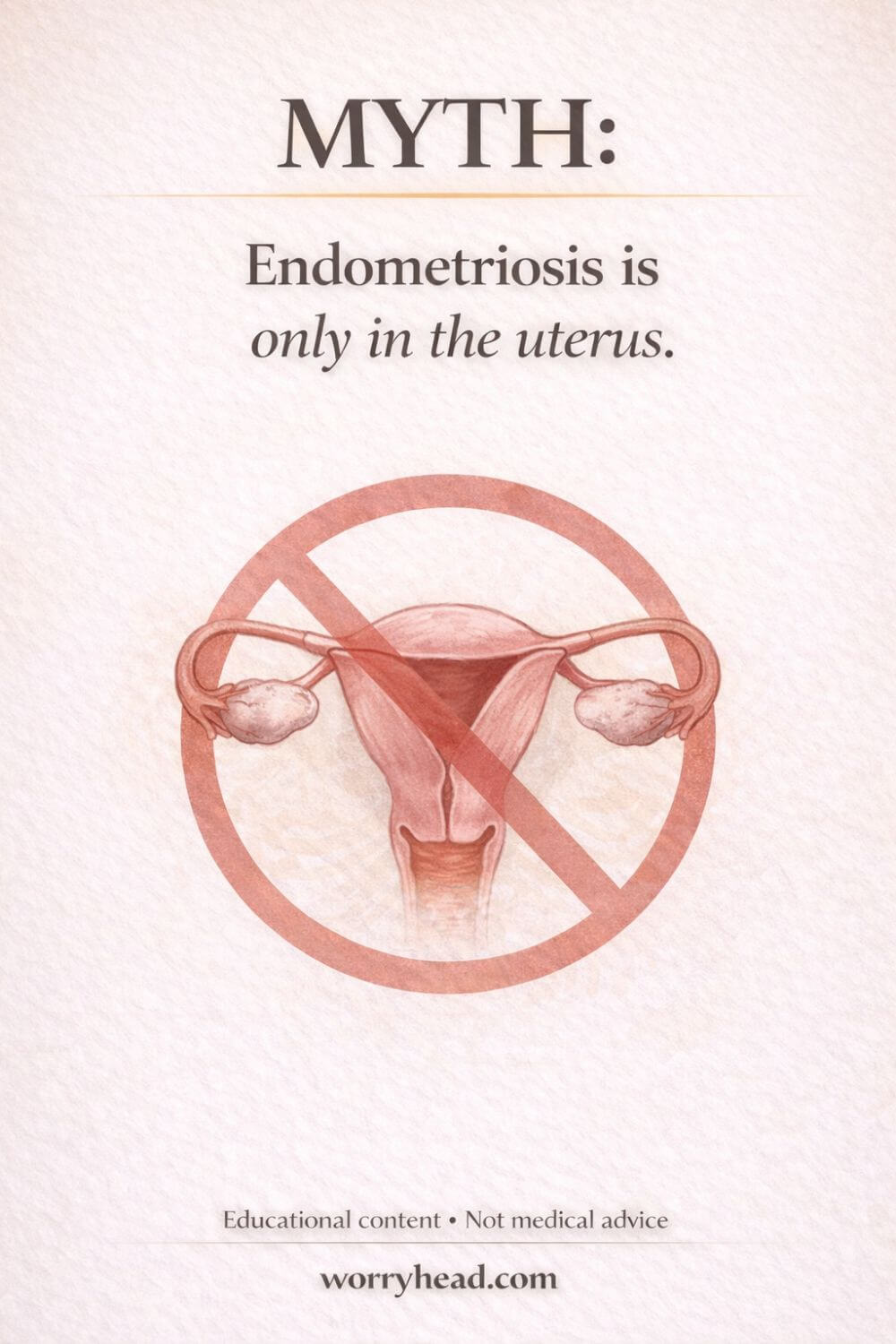
Endometriosis tissue, similar to the lining of the uterus, grows outside the uterus, and it can behave like an inflammatory, long-term condition. That means endo pain can come from irritation, scarring, and nerves being pulled, not from weakness or low pain tolerance.
Another hard truth is that the severity of symptoms does not always match what a scan or a surgeon later sees, so “it can’t be that bad” is not health science; it is guesswork. Many endo warrior women are told their heavy periods are “just part of being a woman”, and that one line can steal years.
In the UK and around the world, the time to diagnosis is often measured in years, not weeks, and global estimates commonly sit in the range of about 4 to 12 years. That delay is not only a health problem issue, it is a health body and mind issue, because chronic illness plus disbelief can change how a person thinks about herself.
The myths vs facts conversation also matters because diagnosis methods have evolved, and today, many guidelines put clinical assessment and imaging up front rather than treating surgery as the first and only door. NICE recommends offering transvaginal ultrasound to people with suspected endometriosis even when the pelvic exam is normal, because it can identify ovarian endometriomas and deep disease and guide referral.
ESHRE’s 2022 guidance also signalled a shift, saying laparoscopy is no longer the diagnostic gold standard in every case and is more often reserved for negative imaging or when empirical treatment is unsuitable. One of the most stubborn pieces of health information is that pregnancy is a cure, but it can at best suppress symptoms for some people, and symptoms can return after childbirth.
Another myth and fact trap is believing surgery automatically ends the story, yet major organisations emphasise that surgery can help, but recurrence is possible, and ongoing management is often needed. If you’ve ever felt your pain being weighed against someone else’s pain, that is where health psychology can quietly trap you into minimising your own experience.
I’ve read hundreds of comments from women who say the worst part was not even the cramps, but the way they were told they were dramatic, anxious, or imagining it. This is why I care about knowledge, facts and interesting science facts: not to win an argument, but to give you language that protects your personal health and helps you ask for the next step with a steady voice.
I still remember the nights my wife sat folded over with endo belly, whispering apologies for a pain she never chose, and I’d be helpless except for my presence. No woman should have to become her own detective just to be believed, and yet so many of you have done it, quietly, while the world kept moving.
So before we go deeper, here are the practical body health tips and good health tips I wish every woman had in her pocket the moment the myths and facts start to collide:
- Name what “normal” is not
- Track patterns of endo flare up
- Ask for imaging, not dismissal
- Separate pain intensity from stage
- Treat pregnancy as a symptom pause
- Blend holistic health with medicine
- Protect the health body and mind
Name What “Normal” Is Not
If you have lived with heavy periods, pelvic pressure, and endo pain for long enough, “normal” can start to feel like a moving target. One of the most damaging health myths is that pain is only real when it looks dramatic, yet chronic pain often hides behind a polite smile.
I’ve seen my wife apologise for needing to lie down, as if her body was an inconvenience to everyone else. That apology is not a personality trait; it is what happens when health information is used to minimise instead of explain.
Name what is not normal in your own words: bleeding that soaks through, pain that interrupts sleep, nausea, bowel or bladder pain, endo belly that appears like a cruel switch. Those are health problems worth documenting, not tolerating.
When you claim that truth, you turn endo awareness into action. You stop negotiating with your pain and start protecting personal health, even before anyone else understands.
Track Patterns of Endo Flare Up
Tracking is not obsessing. It is health knowledge that gives you evidence when your body is already exhausted, and it can help you separate random bad days from a pattern that repeats with your cycle.
Many endo warrior women notice endo flare-up waves around ovulation or bleeding, but also after stress, long shifts, or poor sleep. Write down what happened, when it started, what the pain felt like, and what helped, even slightly.
Include the “small” things too: bloating that becomes endo belly, sharp pain with bowel movements, fatigue, mood changes, or pain with sex. Health psychology matters here because when you are dismissed often enough, you begin to doubt your own memory.
A simple log protects health, body and mind. It turns myths and facts into something practical: a timeline that a clinician can actually use, and a reminder that you are not imagining this.
Ask for Imaging, Not Dismissal
When someone hears your symptoms and answers with “it’s probably stress,” that is not health science; it is a shortcut. Asking for the next step is not being difficult; it is being health-conscious.
In the UK, NICE recommends offering transvaginal ultrasound early for suspected endometriosis, even when the pelvic or abdominal exam is normal, because it can identify ovarian endometriomas and deep disease and guide referral.
That does not mean imaging finds everything, but it does mean you deserve a pathway that moves forward. If a scan is declined or unsuitable, NICE notes alternatives like a transabdominal ultrasound.
Use plain language: “I need health facts, not reassurance.” You can be calm and still be firm. Your pain is not a debate, and your time matters.
Separate Pain Intensity from Stage
One of the most confusing myths vs facts is hearing “your stage is mild” while your pain feels like a storm. Research and clinical guidance repeatedly note that stage does not necessarily match pain severity, so your suffering is not disproved by a number.
Pain can depend on where lesions are, whether nerves are involved, and how the body responds to inflammation. This is why some people with minimal disease have severe endo pain, and others with extensive disease feel less.
For women, this mismatch can become a quiet form of gaslighting. You start thinking you must be weak, anxious, or dramatic. That is health psychology again, pushing you away from your own reality.
Hold the fact close: your symptoms matter. Treatment should follow your lived experience, your goals, and your quality of life, not only a staging label.
Treat Pregnancy as a Symptom Pause
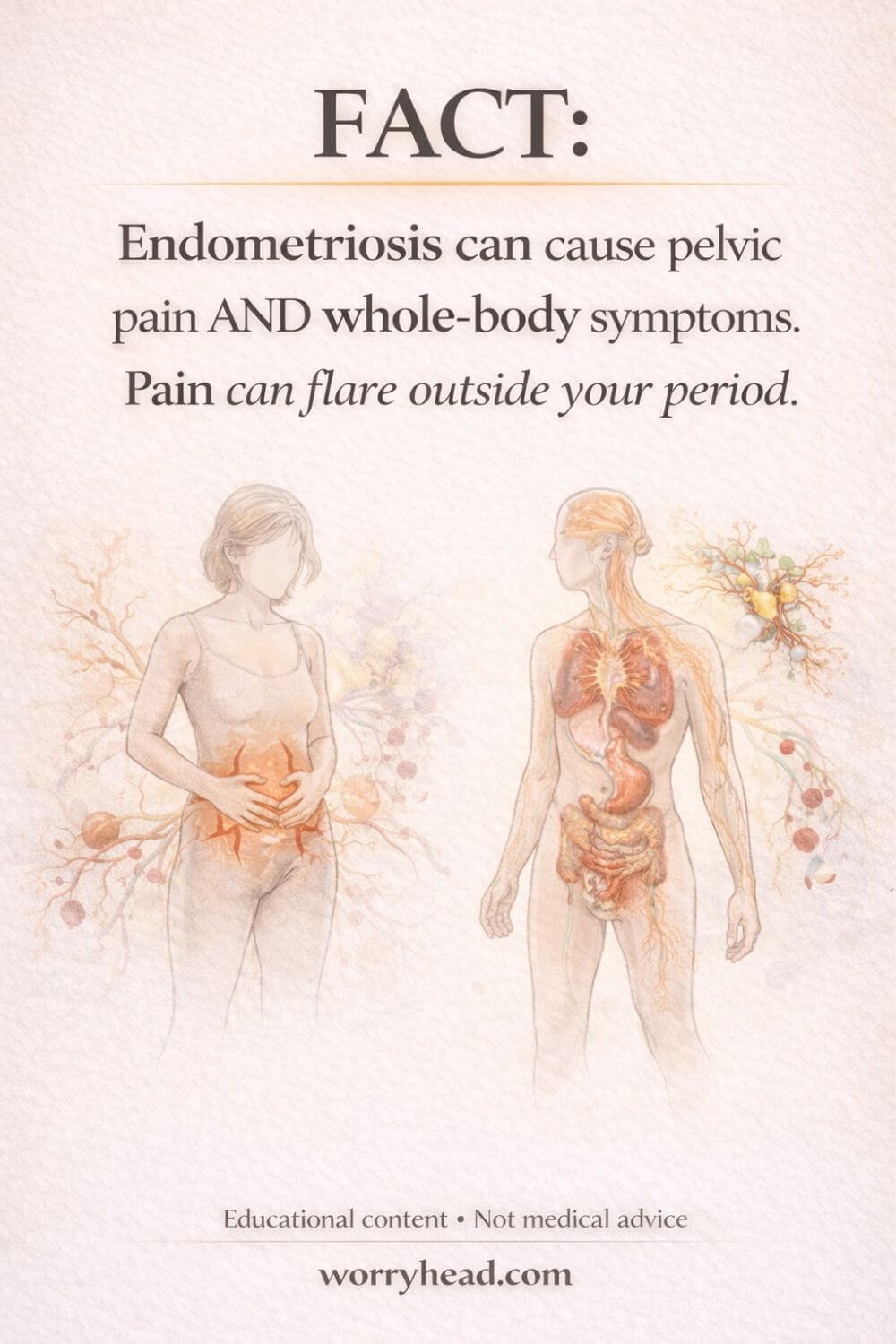
If anyone has told you to “just get pregnant,” please hear me carefully: that is a health myth that can cause real harm. Pregnancy may change hormones, and some people feel temporary relief, but it is not a cure, and symptoms can return after birth when cycles come back.
I have read countless women describing the same emotional whiplash: a calmer body for a while, then the return of endo pain, heavy periods, and fatigue. Some feel guilt for not enjoying motherhood the way they imagined, because pain steals moments.
Choosing pregnancy should be about wanting a child, not about trying to fix a chronic illness. That is personal health, not a treatment plan.
You deserve care that respects your life now, not promises built on myths and facts that ignore your body.
Blend Holistic Health with Medicine
Holistic health is not a replacement for medical care. At its best, it is the layer that supports your nervous system, sleep, digestion, and resilience while you pursue diagnosis and treatment.
Many women use gentle body health tips like heat, pacing, movement that does not flare symptoms, and stress support alongside prescribed options. The point is not perfection; it is steady support for chronic pain without blaming yourself when symptoms break through.
Be wary of health information that claims one supplement will “cure” endometriosis. That language is a red flag, and it often targets women who are desperate for hope.
I’ve watched my wife build small rituals that help her survive flare days, and I’ve learned that good health tips are the ones that make you feel safer in your own body, not ashamed for still hurting.
Protect Health, Body, and Mind
Endometriosis is not only a pelvic condition, but it can also become a full life experience. When pain is repeated and unpredictable, health body and mind start influencing each other: sleep suffers, anxiety rises, and the world can shrink.
I’ve seen my wife spiral after being dismissed, not because she is fragile, but because constant doubt is exhausting. That is why endo awareness must include emotional safety, especially for those living with chronic illness and chronic pain.
Protecting your mind can be practical: boundaries at work, rest without guilt, therapy when available, and support groups where your reality is not questioned. This is not weakness; it is maintenance.
If you have ever felt alone, please know this: your pain deserves tenderness. And partners who step up exist, quietly learning, listening, and choosing love again and again.
How Endometriosis Myths vs Facts Shape Your Next Step?
The longer a woman lives with chronic illness, the easier it becomes for other people to turn her symptoms into a story they prefer. That is how health myths spread, not because you are careless, but because you are tired and you want one clear answer. And when the wrong myth lands at the wrong moment, it can delay the health facts that would have helped you sooner.
The World Health Organisation describes endometriosis as a chronic disease affecting an estimated 10% of reproductive-age women and girls worldwide, with symptoms that can include severe pain during menstruation, heavy periods, chronic pelvic pain, and abdominal bloating that many women recognise as endo belly.
That matters because it means you are not “rare”, and you are not “too much”. It also means your health, body and mind deserve care that treats this as real health science, not as a personality problem.
One of the most painful facts is how long people can wait for answers. A large evidence review led by researchers at the University of York reported an average diagnostic delay of 6.6 years worldwide, and they found extreme delays reported also in the UK. When women are forced to live in that gap, myths and facts blur, endo awareness turns into survival mode, and health psychology starts whispering that maybe you should stop asking.
This is why I pay attention to what changes in guidance, because it changes what you can ask for with confidence. NICE’s updated guidance recommends early transvaginal ultrasound for suspected endometriosis even if the pelvic or abdominal examination is normal, so a clinician has less room to dismiss you as “fine”.
And ESHRE’s 2022 guideline states that laparoscopy is no longer the diagnostic gold standard in every case, reserving it for situations like negative imaging or when empirical treatment is unsuitable or unsuccessful.
I think about my wife here, because I have watched her go quiet after a doctor’s visit, not from weakness, but from the deep exhaustion of having to prove endo pain again and again. I also think about you, because if you are reading this, there is a strong chance you have had to carry your own fear in one hand and your life in the other, like nothing is allowed to fall.
Final Word on Endometriosis Myths vs Facts
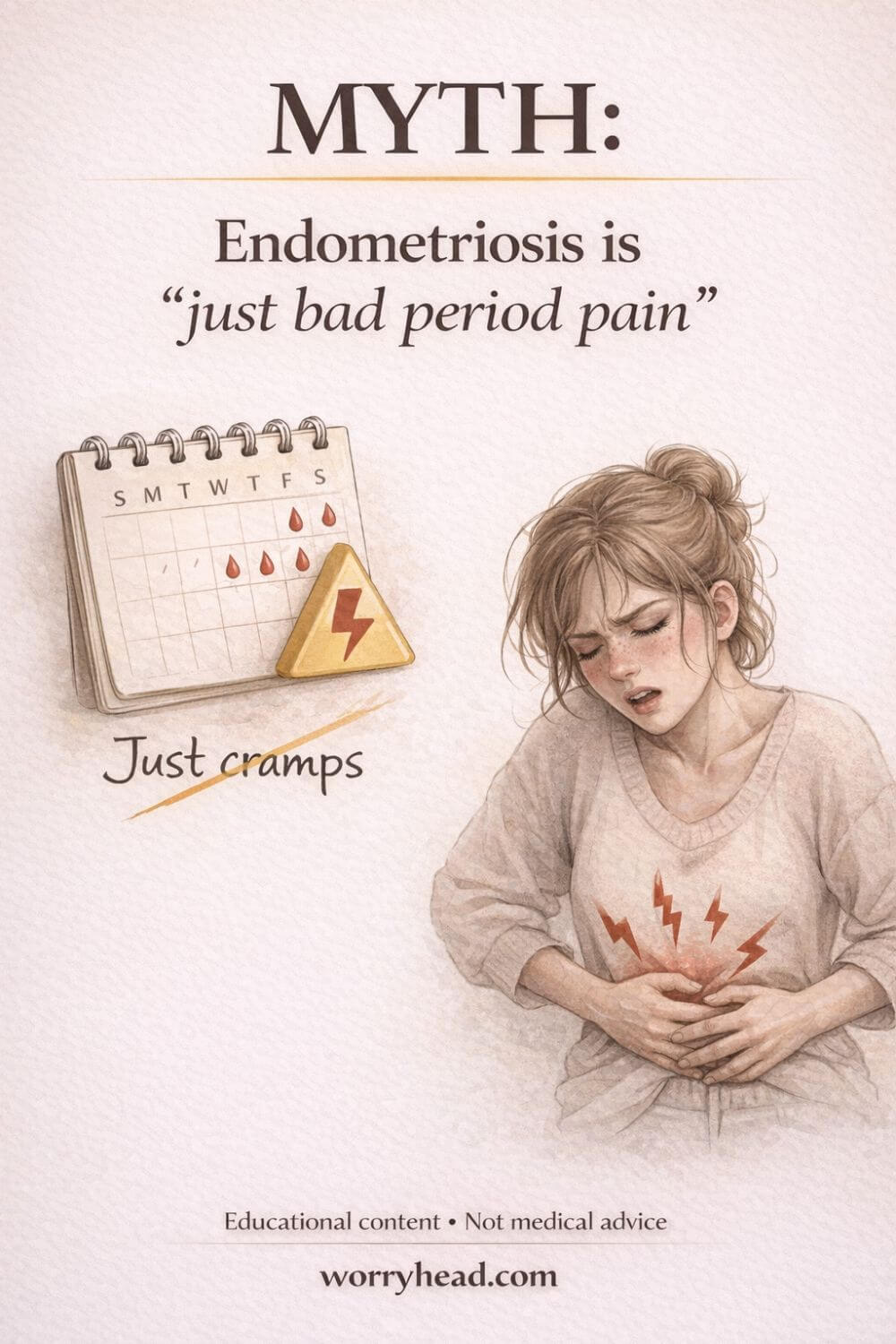
When you are living with endo pain, the loudest battle is not always inside your pelvis. Sometimes it is in the room with you, in the raised eyebrow, in the casual “it’s just bad periods,” in the way your suffering gets translated into attitude. That is why sorting health myths from health facts is not a trivia game. It is a form of self-protection, especially when you are already tired and carrying everything alone.
Endometriosis sits at the intersection of health science and everyday life. It can bring heavy periods, bowel and bladder symptoms, fatigue, pain with sex, and that sudden endo belly that makes you look pregnant by evening. It can also bring chronic pain that trains the body to brace, and chronic illness grief that trains the mind to expect disappointment. None of that is drama. It is a real chain reaction.
The most common myths vs facts confusion usually starts with simple ideas that sound comforting:
- “You’re too young.”
- “You’ll grow out of it.”
- “Pregnancy will fix it.”
- “Surgery ends it.”
- “If the scan is normal, you’re fine.”
Every one of those messages can delay care, because they encourage waiting when your symptoms are already telling the truth.
A more honest approach is health-conscious and practical: document patterns, ask clear questions, push for appropriate assessment, and keep coming back to what your body reports, month after month, without shame or apology.
I write from the husband’s seat, which means I don’t feel the cramps, but I do feel the consequences. I have watched my wife lose confidence after being dismissed. I have watched her become quiet in a car park after an appointment, holding back tears because she did not have the energy to explain herself one more time. I have also seen other women describe the same wound: not just endo pain, but the loneliness of not being believed.
If there is one myth and fact lesson I want you to carry, it is this: you deserve care that treats your symptoms as meaningful data, not as a personality flaw. Your health, body and mind both matter. Support can be medical, emotional, and practical at the same time. Holistic health can sit beside evidence-based treatment.
Spiritual health can sit beside clear boundaries. Good health tips are not about becoming perfect. They are about making life more livable while you keep seeking answers.
Please remember that you are allowed to take up space. You are allowed to ask again. You are allowed to change doctors, bring someone with you, or write your symptoms down so your voice does not shake. You are allowed to be an endo warrior without performing strength for anyone.
And if you have a partner, friend, or family member reading this, I hope they understand something simple: love is not only sympathy. Love is learning. Love is showing up when the endo flare-up arrives, believing her without negotiation, and helping her protect her personal health with steadiness, not pressure.
If you are battling endo pain, heavy periods, and chronic pain, you are not weak, and you are not alone.
Hold tight to health facts, question health myths, and keep asking for care that protects health, body and mind. Your voice is part of endo awareness, and it matters. One step at a time, you can rebuild trust in your body and in your future.
If any part of this felt familiar, leave a comment and tell me what you’ve been told, and what you wish someone had said instead. And if you want extra support, check out my FREE “You Did Nothing to Deserve This!” eBook.

About Me
Hi, I’m Lucjan! The reason why I decided to create this blog was my beautiful wife, who experienced a lot of pain in life, but also the lack of information about endometriosis and fibromyalgia for men…
READ MORE