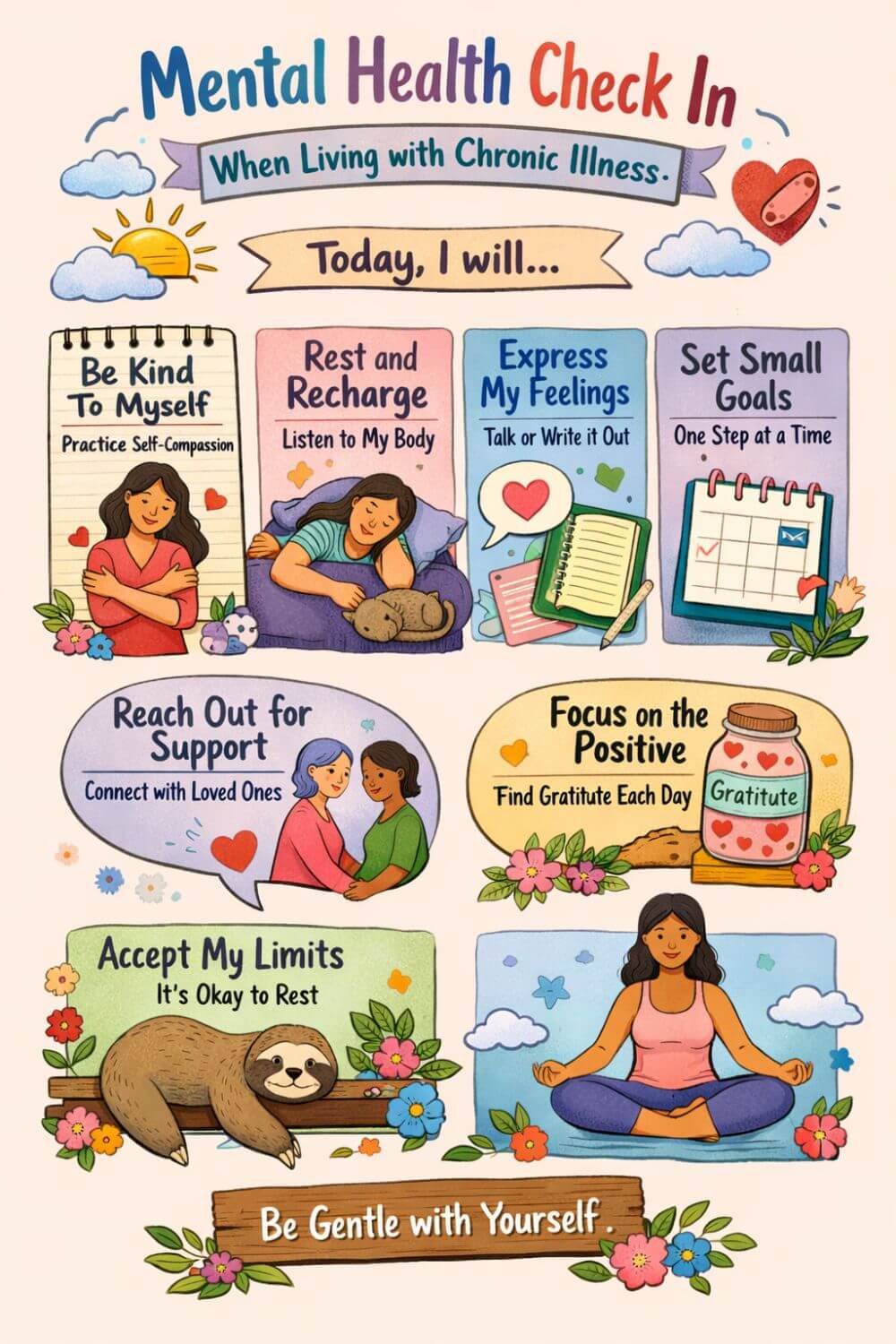
Chronic Illness Mental Health Check In
Have you done a mental health check in lately… the kind where you stop pretending you’re “fine” and actually ask yourself what you’re carrying? And if you live with pain, fatigue, fear, and that invisible grief nobody sees, can a mental health check-in feel like the only moment in the day where you finally get to breathe?
The truth is, your mind doesn’t get a break just because your body is already battling chronic illness. A gentle check-in is not weakness; it’s a lifeline, a way to notice what’s happening before you disappear inside it. And you deserve that kind of care, even if you’ve spent years giving it to everyone else.
I’ve watched what it does to a person when the world keeps asking for strength while their body keeps asking for mercy. And I’ve also watched what starts to soften when that person finally gives themselves permission to look inward with compassion.
Stay with me through the rest of this article, and I’ll walk you through a more honest, kinder way to check in, without shame, without pressure, and without feeling like you have to “fix” yourself to be worthy.
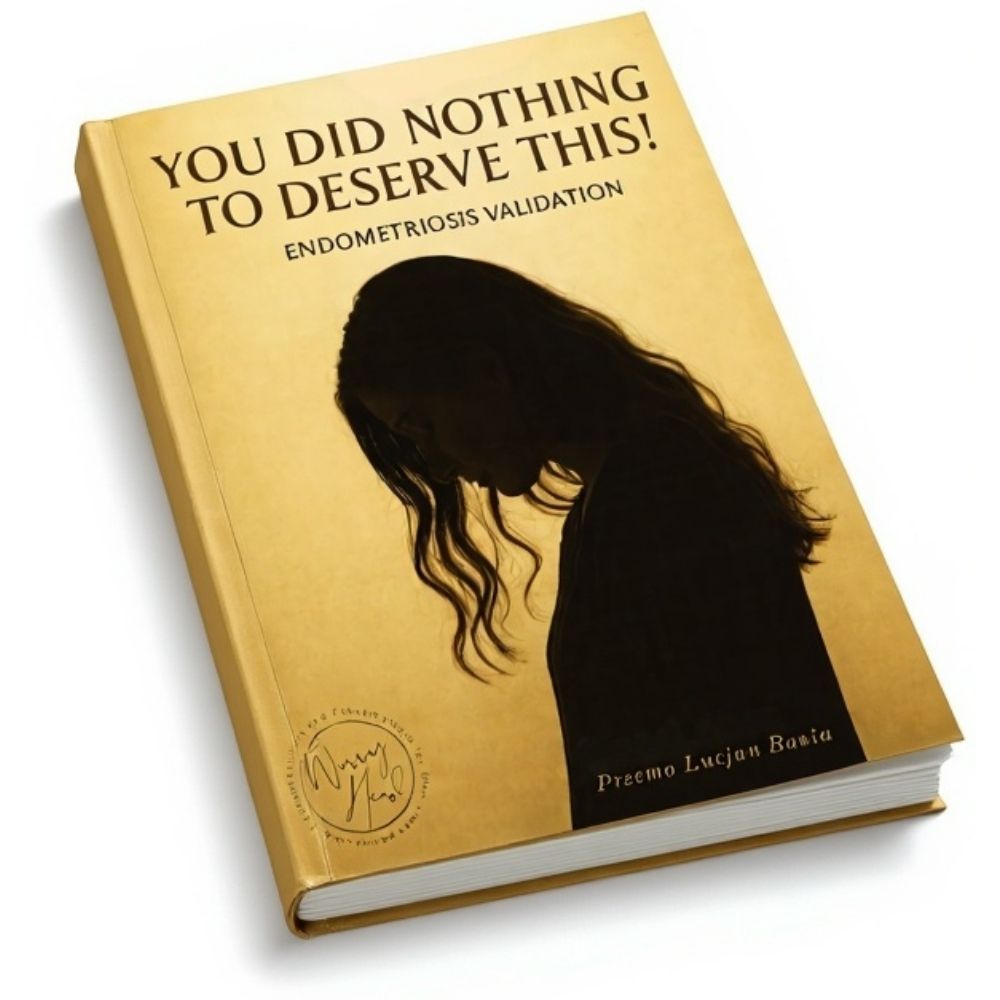
If all of this touches something in you and you need deeper validation, I’ve put my heart into a completely FREE 130+ pages eBook: “You Did Nothing To Deserve This” – filled with 20 chapters of gentle validation for women with endo, written by a husband who’s seen it up close.
It’s my way of telling you, in much more detail, that your pain, your complex response to treatment, and your emotions around all of it are real, understandable, and never your fault.
It’s not a medical guide. It’s a human one. Here’s what’s inside:
- This Was Never Your Fault
- The Girl You Used To Be
- When Your Own Body Feels Like an Enemy
- The Invisible Battles Nobody Sees
- Am I Just Lazy? – The Lie You Have Been Taught
- Gaslighting, Dismissal and the Trauma of Not Being Believed
- Guilt: The Weight You Were Never Meant to Carry
- Love in the Middle of Pain
- Intimacy When Your Body Hurts
- The Loneliness of Being the Strong One
- You Are Allowed To Take Up Space
- Tiny, Gentle Hopes (Not Toxic Positivity)
- If You Could Hear My Voice Every Flare Day
- You Deserve Partners, Not Witnesses
- When You Wish He Understood
- Motherhood, Fertility and the Grief Nobody Sees
- When Anger Is the Only Honest Feeling
- Learning to Trust Your Body Again
- Building a Life That Fits Your Reality
- You Did Nothing To Deserve This
You Did NOTHING To Deserve This!
Endometriosis Validation for Women with Endo
- FREE eBook
- You Did NOTHING To Deserve This!
- Mental Health Check In When Your Body Won’t Cooperate
- Mental Health Check-In That Doesn’t Turn Into Self-Judgement
- Check In Questions That Feel Safe, Not Scary
- A Self-Care Checklist for the Days You’re Barely Functioning
- Boundaries That Protect Love Instead of Ruining It
- Atomic Habits for Better Mental Health, Not Better Productivity
- Body Positivity When Your Body Feels Like the Enemy
- Therapy Quotes That Become Real When You Live Them
- Ways to Improve Mental Health When Chronic Illness Keeps Changing the Rules
- Final Word on the Mental Health Check-In
Mental Health Check In When Your Body Won’t Cooperate
When my wife’s pain got louder, her silence got louder too. I didn’t notice it at first, because she still smiled in public, still said “I’m okay,” still tried to be the strong one.
But at home, the cracks showed, tiny moments of emotional awareness where she’d stare into space like she’d left her body behind. That’s when I learned a mental health check-in isn’t some trendy thing you do when life is calm… It’s what you do when life is heavy, and you’re scared you’re starting to drown.
For her, it began with simple check-in questions:
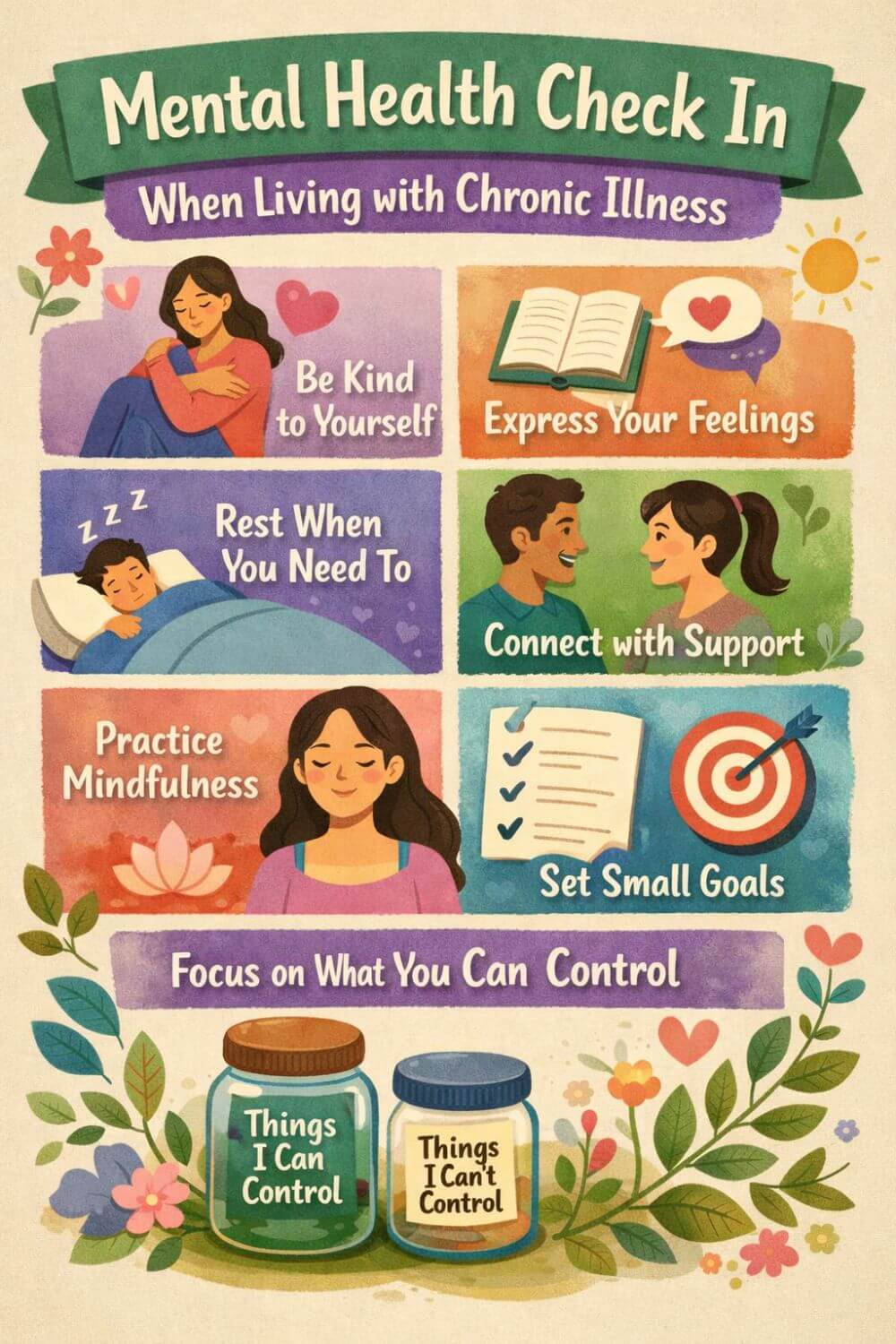
- “What am I feeling right now?”
- “What do I need today?”
- “What am I trying to push down?”
And slowly, those answers made room for boundaries, softer self-care ideas, and less self-blame.
It didn’t cure chronic illness, but it helped her take care of your mental health in a way that made the days feel less brutal. It also helped me, because I finally understood that what she needed from me wasn’t constant solutions, it was presence.
Mental Health Check-In That Doesn’t Turn Into Self-Judgement
After my wife started doing small check-ins, something surprised me: the hardest part wasn’t answering the questions. The hardest part was being gentle with the answers.
Because when you live with chronic illness, your brain can start keeping score. How many tasks didn’t you finish? How many plans have you cancelled? How many times have you needed help again? And if you’ve got childhood trauma sitting under the surface, a simple “How am I?” can quickly turn into “What’s wrong with me?”
So we began treating her mental health check-in like a soft landing, not an interrogation. Some days it was a self care checklist with tiny wins. Drink water. Eat something warm. Take meds. Text one safe friend. Step outside for one minute. Breathe.
Other days, it was body positivity in the most realistic way, not “love your body,” but “stop punishing your body for being unwell.” That shift alone changed the tone of our home.
We also borrowed from atomic habits: make the next right thing smaller, easier, and repeatable. Not to become a productivity robot, but to protect my mental health and hers from the shame spiral that steals more energy than pain does.
And slowly, she started finding ways to improve mental health that didn’t require her to be “fixed” first. Therapy quotes started to feel less like Pinterest words and more like permission. Boundaries became less scary because she finally saw they were a form of helping people understand her limits, not a way of pushing them away.
I’m telling you this as a husband who watched the darkest nights up close: you don’t need a perfect mindset. You need a kinder one. And you deserve better mental health without having to earn it through suffering.
Next, I’ll break this down into simple, specific pieces, so you can build your own check-in in a way that actually fits real life with chronic illness.
Check In Questions That Feel Safe, Not Scary
When my wife couldn’t name what she felt, she’d default to “I’m fine,” and I learned that’s often a shield. So we started with gentle check in questions like:
- “What hurts most today, body or mind?”
- “What am I afraid will happen if I rest?”
- “What do I need to hear right now?”
The goal wasn’t to dig for answers like a test. It was to notice her emotional awareness without judging it. Even one honest sentence could turn a chaotic day into something we could hold together, one breath at a time.
A Self-Care Checklist for the Days You’re Barely Functioning
A self care checklist saved us on the worst days because it removed decision fatigue. No big plans, no perfect routine, just tiny anchors: meds, water, food, a shower or a warm cloth on the face, one message to someone safe.
It sounds small, but chronic illness days are made of small battles. Checking off one box can protect your nervous system from collapsing into shame. It’s not “lazy.” It’s survival with dignity, and it’s a way to take care of your mental health when you’re running on fumes.
Boundaries That Protect Love Instead of Ruining It
Before boundaries, my wife used to say yes and then pay for it with a crash, tears, and that quiet self-hate that follows. Setting boundaries didn’t make her selfish. It made her honest.
We practiced simple scripts like, “I want to, but I can’t today,” and “I need a slower pace.” People who truly care adjust. And the ones who don’t? They were costing her my mental health, too, because I was watching her disappear, trying to keep everyone comfortable.
Atomic Habits for Better Mental Health, Not Better Productivity
We used atomic habits in the gentlest way: make the next step so small it feels almost silly. One stretch. One glass of water. One page of a book. One minute of fresh air.
For my wife, the point wasn’t “discipline.” It was building proof that she could still care for herself, even in pain. Repeating tiny actions created better mental health because it softened the fear that life was completely out of her control.
Body Positivity When Your Body Feels Like the Enemy
Body positivity looked different for us, because “love your body” can feel impossible when your body is hurting you. So we started with neutrality: “My body is struggling, not failing.” “My body deserves care even when it can’t perform.”
I watched her shift from punishing herself to comforting herself, and it changed everything. Not overnight, but slowly. Less self-blame. Less comparison. More softness. And that softness mattered, because harshness never once reduced her symptoms; it only stole her hope.
Therapy Quotes That Become Real When You Live Them
I used to think therapy quotes were just nice words people post when they’re feeling motivated. Then I watched my wife cling to one line in the middle of a panicked night and use it like a rope back to shore.
Some quotes helped her name the truth: that she wasn’t “too much,” she was overwhelmed. That free mental health support can start with permission, not perfection. And when she combined that with actual therapy, her happy mental health moments became more frequent, not because life got easy, but because she felt less alone inside it.
Ways to Improve Mental Health When Chronic Illness Keeps Changing the Rules
If I could sit with you for a moment like a friend, I’d tell you this: I’ve watched chronic illness steal a person’s confidence in slow motion.
I’ve seen my wife wake up already tired, already bracing, already wondering what her body will take from her today. And I’ve seen how that doesn’t just hurt physically, it quietly rewrites my mental health too, because loving someone in pain means you’re always half on alert.
What helped wasn’t a “perfect routine.” It was building small moments of safety, again and again. A calm morning corner. A simple self-care ideas list on the fridge. A boundary that protects rest without apology.
Sometimes it was silly things that worked: music, a warm drink, a quiet room with a soft light that felt almost like a psychologist’s aesthetic. Anything that made her nervous system feel less hunted.
Other times it was deeper: naming old wounds, noticing how childhood patterns can flare when the body flares, and letting that truth exist without shame. That’s where emotional awareness becomes a kind of healing.
And I want to say this gently, especially because so many of my readers are women: your partner might look “fine” while he’s quietly crumbling inside the pressure of trying to hold everything up. I didn’t even realise how heavy it was until I admitted it out loud.
So if you’re reading this and you’re the one suffering, please know, helping men understand this world helps you too. It creates more steadiness in the home, more patience in the hard moments, and more love that doesn’t feel fragile.
We don’t need to become happy overnight. We just need to stop bleeding emotionally in silence and start choosing one small act of care at a time.
Final Word on the Mental Health Check-In
Living with chronic illness can make you feel like you’re always being evaluated: by your body, by doctors, by family, by the version of you who used to cope “better.” I’ve watched my wife carry that pressure quietly, and I’ve carried it too, trying to be strong enough for both of us.
What I want you to remember is this: checking in doesn’t mean you’re falling apart. It means you’re paying attention before the breaking point. It can be as small as one deep breath and one honest sentence: “I’m not okay today.” That honesty is not drama. It’s clarity.
Over time, the most healing thing I saw wasn’t a miracle treatment. It was the way she learned to meet herself with less cruelty.
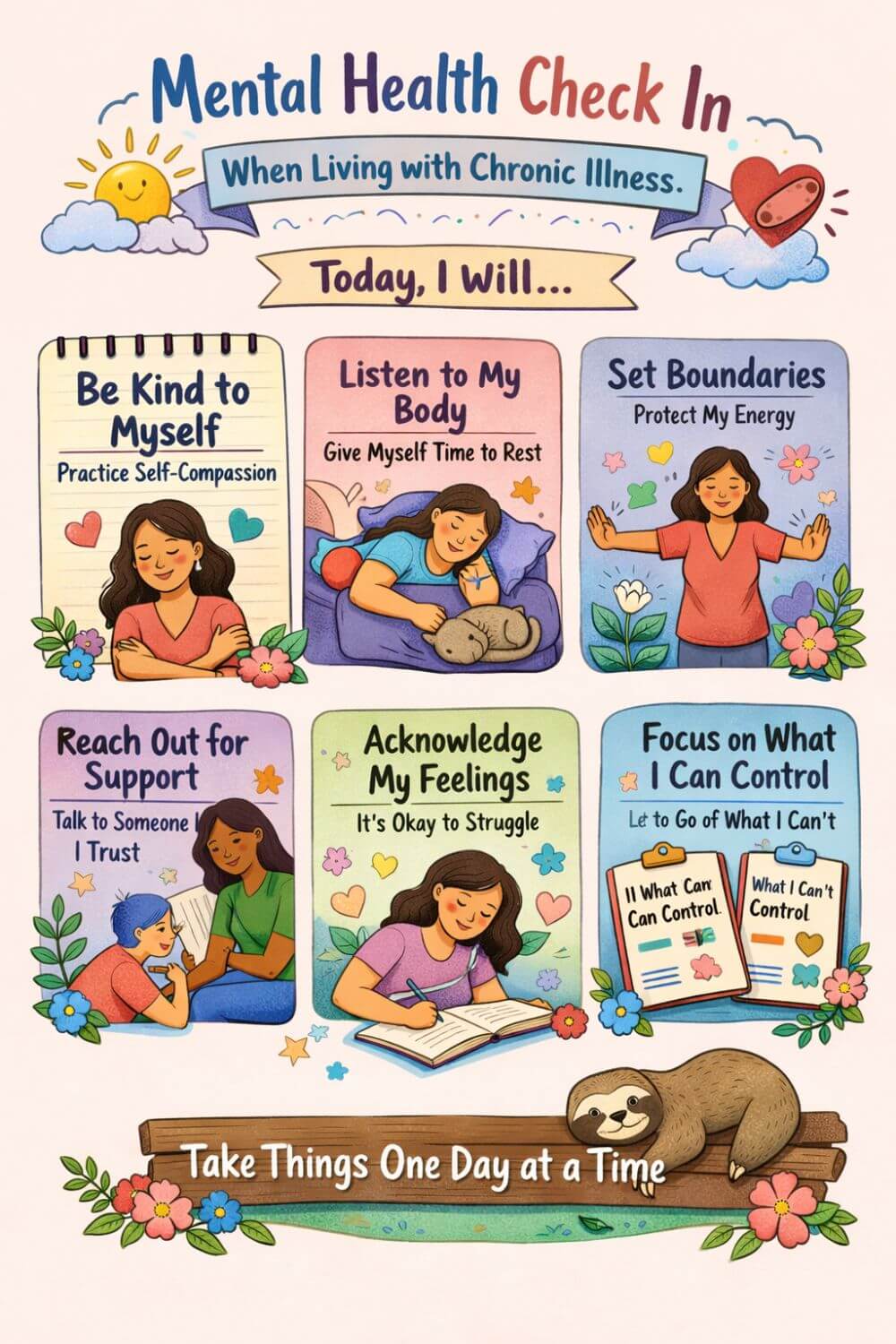
A simple self-care checklist helped on days when thinking felt impossible. Body positivity became less about loving every inch and more about refusing to punish a body that’s already fighting. Boundaries stopped being a wall and became a door she could close when her nervous system needed quiet.
And those tiny choices add up. Atomic habits, done gently, created rhythm when everything else felt unpredictable. A glass of water. One nourishing meal. Ten minutes away from screens. One message to a friend who feels safe. These aren’t “small” when you’re exhausted; they’re brave. There are ways to improve mental health without demanding that your life look normal first.
If you’re the woman reading this, I also want you to hear me: your partner may love you deeply and still struggle. Many men don’t have guidance, language, or support. Some shut down. Some overwork. Some try to fix what can’t be fixed and then feel like failures. When we learn, we become steadier. When we become steadier, you feel safer. Helping people like me learn how to cope isn’t taking attention away from you—it’s building a stronger team around you.
If you’re the man reading this, you don’t need to be perfect to be present. Start with one check in question: “What do I need to stay kind today?” Then do one thing that protects your own better mental health, because love without self-care turns into burnout, and burnout turns into resentment. That’s not your fault, but it is something you can prevent.
And when you can, reach for support that’s truly supportive, counselling, a kind therapist, or even free mental health resources that don’t shame you for struggling. Let mental health awareness be practical, not performative. Put my mental health needs on the same list as everyone else’s. Little by little, happy mental health moments return. Even on the hardest mornings.
I can’t promise easy days. I can promise that you can create softer ones. You can build a home where feelings are allowed, where rest is respected, where therapy quotes become lived truths, and where emotional awareness isn’t frightening; it’s a guide back to yourself.
Keep choosing small kindness. Keep choosing honesty. Keep choosing each other.
You are not failing because you need a pause, a cry, or a quieter day. You’re human, living inside a body that asks more of you than most people will ever understand. Keep choosing one small act of care, one honest boundary, one gentle check-in, your life can feel lighter again. I’m rooting for you, truly. And for the love you carry.


About Me
Hi, I’m Lucjan! The reason why I decided to create this blog was my beautiful wife, who experienced a lot of pain in life, but also the lack of information about endometriosis and fibromyalgia for men…
READ MORE