Endometriosis and Divorce Rates
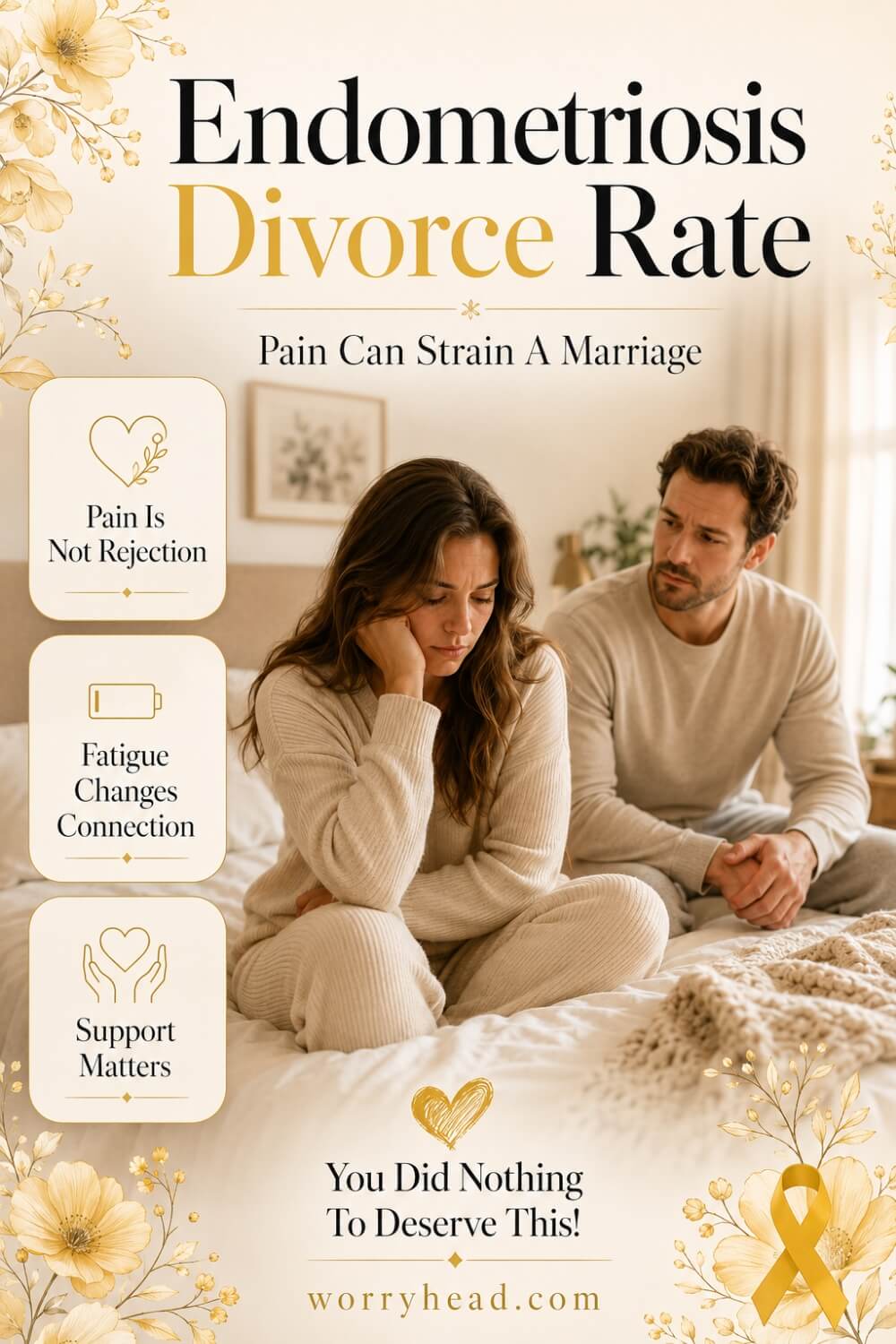
Does searching for endometriosis divorce rate make your chest tighten because part of you is scared this illness could quietly break the relationship you still want to protect? Are you looking up endometriosis and divorce rates because pain, fatigue, painful sex, emotional distance, infertility grief, or constant misunderstanding have started to make love feel harder than it used to?
Here is the truth behind it…
Endometriosis can put serious pressure on relationships, but you are not the reason it is hard. It is the illness, the pain, the dismissal, the exhaustion, and the lack of support that are the real weight. Endo significantly elevates the rates, and studies indicate that couples dealing with this illness face a strikingly high divorce rate, estimated to be as much as 75%. Remember thst you did nothing to deserve this!
If you are here because your relationship feels fragile, I want you to breathe for a moment before we talk more about numbers, studies, marriage stress, intimacy problems, or divorce fear. A statistic can explain risk, but it should never become another weapon you use against yourself.
I have seen this from inside my own marriage. My wife lives with stage IV deep infiltrating endometriosis, but also adenomyosis, and fibromyalgia. The mental health impact this insidious disease brings is horrendous, and I have watched how it can enter a relationship without either person inviting it in.
I’ve been married to a beautiful Italian woman for over 14 years, and even though my marriage blossoms today, it never used to be that way. The reason for it was my lack of knowledge and impatience that caused a bit of friction between us, it was not her!
Endometriosis is a debilitating condition that affects the reproductive system of women. It is characterized by the growth of endometrial-like tissue outside of the uterus, which can lead to chronic pain, heavy menstrual bleeding, and infertility.
While endometriosis may seem like a purely physical issue, its impact on relationships should not be overlooked. This is why I want to explore the topic.
If this topic touches something tender in you, I also wrote a FREE 130+ page eBook called “You Did Nothing To Deserve This!” for women with endometriosis who need to feel believed, validated, and gently held. When you grab it, you also join our Worry Head community, where I share more freebies, big discounts on our books, and pure value to help you adjust to the new normal chronic illness brings to your relationship and life.
The book is filled with 20 chapters of gentle validation for women with endo, written by yours truly, as I have seen it up close… It’s not a medical guide but a human one, and it suits the topic of endometriosis and divorce rates perfectly!
- Why Endometriosis and Divorce Rates Feel So Personal?
- Does the Endo Divorce Rate Mean Your Marriage Is Doomed?
- Pain Can Change the Mood of a Relationship Before Either of You Notices
- Fatigue Can Make You Look Distant When You Are Actually Empty
- Painful Sex Can Be Misread As Rejection
- Medical Dismissal Can Follow You Home
- Guilt Can Make You Apologise for Existing
- Fertility Grief Can Put Silent Pressure On Love
- Money Stress Can Add Weight to An Already Tired Couple
- Partners Can Feel Helpless and Still Need to Learn Better
- Emotional Distance Can Grow From Unspoken Fear
- Support Has to Become a Shared Language
- How the Endometriosis Divorce Rate Conversation Should Validate You, Not Blame You?
- What I Have Learned From Loving a Woman In Pain?
- Final Word On the Endometriosis and Divorce Rates
- Endometriosis and Divorce Rates FAQ
- Endometriosis and Divorce Rates References
Why Endometriosis and Divorce Rates Feel So Personal?
The endometriosis divorce rate is not just a cold search term when you are the woman lying awake at night wondering whether your pain has changed the way your partner looks at you. It can feel like a mirror held up to your deepest fear, the fear that your illness is too heavy, your needs are too much, and your relationship may not survive the version of life endo forced upon you.
But I want you to hear before anything else that a relationship struggling under chronic illness pressure does not mean you are failing as a woman.
It means your relationship is carrying pain, uncertainty, interrupted intimacy, financial stress, medical appointments, recovery time, emotional exhaustion, and sometimes years of not being properly believed by doctors, family, or even the person sleeping beside you.
When I watched my wife battle endometriosis, adenomyosis, fibromyalgia, anxiety, depression, OCD, and the kind of despair chronic pain can create, I learned that illness does not only live in the body. It walks into the kitchen, the bedroom, the car on the way to appointments, the silence after a hard conversation, and the tired look on someone’s face when both people want closeness but neither knows how to reach for it anymore.
I used to think support meant being practical, finding answers, learning medical details, understanding lesions, adhesions, inflammation, surgery, organs, and pain mechanisms.
But over time, I realized that if I wanted to make my wife’s life easier, I also had to understand the emotional side: the guilt she carried, the fear she hid, the way she apologized for pain she never chose, and the quiet heartbreak of feeling like her body had changed the rules of our marriage.
That is why this topic matters so much to me, because behind every statistic is a woman who may already feel blamed enough.
You do not need another article making you feel like your illness is destroying everything. You need someone to say that your pain is real, your relationship deserves support, and you did nothing wrong by needing gentleness in a life that became harder than you ever expected.
Does the Endo Divorce Rate Mean Your Marriage Is Doomed?
Endometriosis divorce rates do not mean that your relationship is doomed, and I do not want you to read any number, article, or study as if it has already written the ending of your love story. What it does mean is that endometriosis can create pressure many couples were never prepared for.
Pain can change plans, moods, sleep, work, money, sex, confidence, communication, fertility hopes, and the simple daily rhythm that keeps two people feeling close.
When all of that happens without enough understanding, couples can begin to drift, not because love vanished overnight, but because exhaustion slowly takes up space where tenderness used to be.
- You may start saying less because you do not want to sound negative again.
- Your partner may start asking less because he does not know what to say without upsetting you.
- You may feel rejected when he pulls away.
- He may feel rejected when painful sex, fatigue, or flares make intimacy difficult.
And in the middle of all that, the illness sits there like an uninvited third presence in the relationship, creating confusion neither of you asked for. This is why I believe endometriosis relationship support has to be about much more than telling couples to communicate better.
Communication matters, but it is hard to communicate clearly when you are in pain, scared, ashamed, sleep deprived, medically dismissed, and worried that the person you love may secretly resent you.
I have learned this beside my wife, not from a perfect marriage, but from moments where I had to grow up emotionally and stop assuming that practical help was enough.
There were times when what she needed most was not another solution, another suggestion, or another attempt to “fix” her life. She needed to feel believed without having to perform her pain in a way that convinced me. She needed to know I still saw her as beautiful, wanted, valuable, and fully herself, even when endometriosis changed what our life looked like.
So if your relationship feels strained, please do not jump straight to self-blame.
Ask instead whether your relationship has been given the tools, language, support, patience, and compassion required to survive a disease that can affect almost every intimate part of life.
A difficult season does not automatically mean the relationship is over. It may mean both of you need to stop fighting each other and start naming the real pressure more honestly.
Next, I want to break down the specific ways endometriosis can place pressure on love, intimacy, communication, trust, and emotional safety, because once you can name the weight, it becomes easier to stop blaming yourself for carrying it.
Pain Can Change the Mood of a Relationship Before Either of You Notices
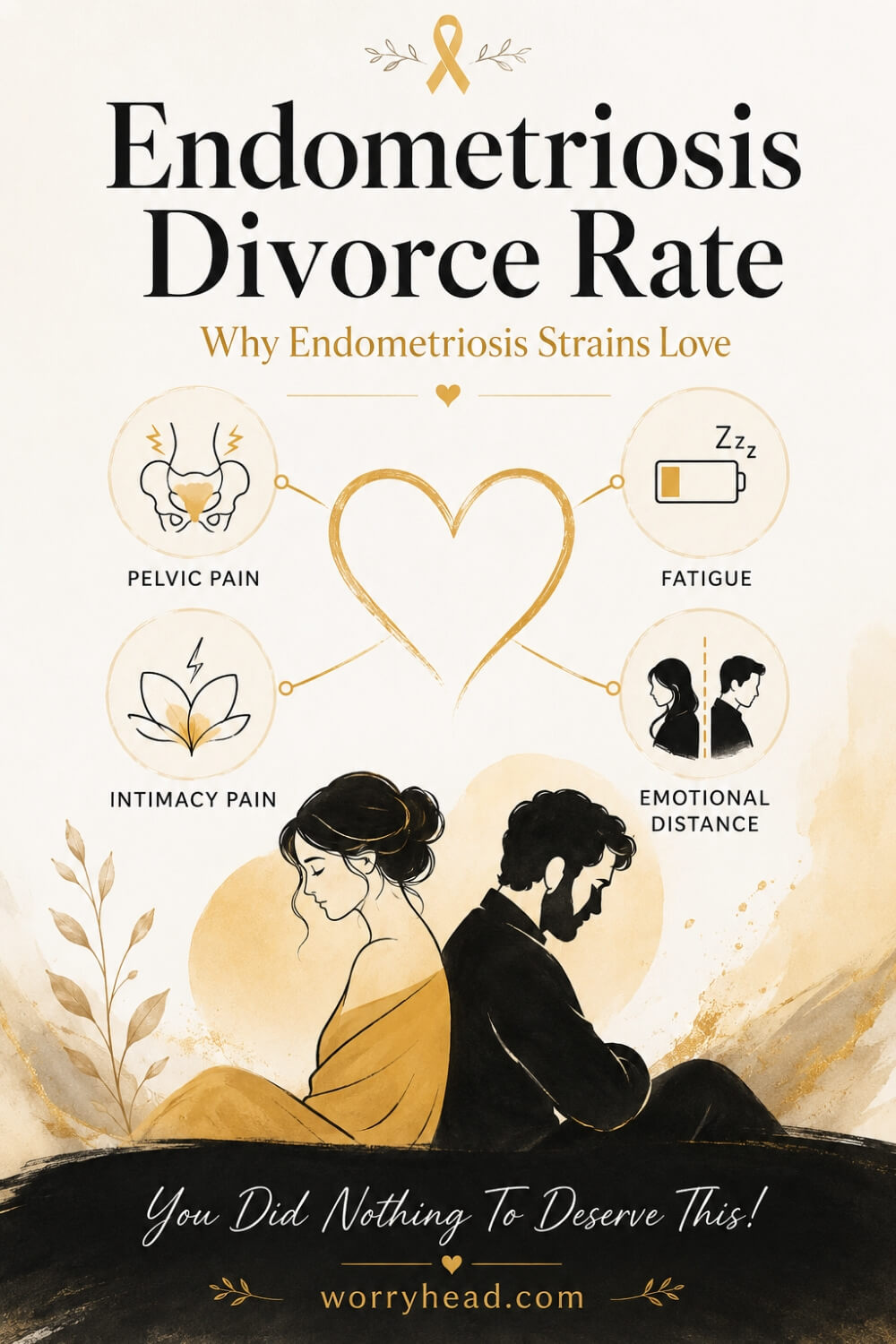
Pain does not only hurt the body. It changes the atmosphere in a home. It can make a normal question sound sharp, a small disappointment feel huge, and a tired silence feel like rejection. When you live with endometriosis, you may not always have the energy to explain every symptom, every flare, every fear, or every reason you suddenly went quiet.
I have seen how quickly pain can steal softness from a room. My wife could be trying her best just to sit upright, while the world around her still expected normal conversation, normal energy, normal plans, and normal patience. That kind of pressure can make a woman feel like she has to apologise for not being cheerful enough while her body is screaming.
If this happens in your relationship, it does not mean you are cold, difficult, or unloving. It means pain is taking up emotional space. The answer is not to blame yourself for the mood shift, but to help your partner understand that pain can change your face, your tone, your focus, and your ability to connect in that moment.
Fatigue Can Make You Look Distant When You Are Actually Empty
Endometriosis fatigue can be brutally misunderstood in relationships because from the outside it can look like disinterest. You may be sitting there, quiet, unable to talk much, unable to laugh the way you used to, unable to hold a long conversation without feeling drained. Someone who does not understand chronic illness may mistake that exhaustion for emotional distance.
But fatigue is not laziness, and it is not a lack of love. It is your body running on a battery most people cannot see. Pain, inflammation, bleeding, poor sleep, medication side effects, stress, and years of pushing through can leave you with almost nothing left by the time you are expected to be a partner, worker, friend, daughter, mother, or wife.
I learned that making my wife’s life easier was not only about doing practical things. It was also about not taking her exhaustion personally. Sometimes love means understanding that silence is not rejection. Sometimes love means sitting beside her without demanding performance, conversation, or reassurance from a body that has already given everything it had that day.
Painful Sex Can Be Misread As Rejection
Painful sex is one of the most painful relationship pressures because it touches the place where love, desire, fear, shame, and physical pain all meet. If intimacy starts to hurt, you may begin to dread something that once felt natural, comforting, or connecting. That dread can create guilt, and guilt can make you feel like you are failing your partner.
But painful sex with endometriosis is not rejection. It is not coldness. It is not you being difficult. Deep pelvic pain, inflammation, adhesions, pelvic floor guarding, nerve sensitivity, bowel involvement, bladder pain, and fear of post-intimacy flares can make sex feel unsafe in your body, even if emotionally you still love and want your partner.
A caring partner needs to understand that intimacy cannot be built on pressure. It has to be rebuilt with safety, patience, tenderness, and permission to stop. You deserve closeness that does not punish your body. You deserve a partner who sees your pain as something to protect you from, not something to take personally.
Medical Dismissal Can Follow You Home
When doctors dismiss your pain, that wound often follows you back into your relationship. You may come home from an appointment feeling small, embarrassed, angry, or confused, trying to explain why another professional made you feel like nothing was wrong. If your partner does not respond with care, that second dismissal can hurt even more than the first.
This is why medical gaslighting can become a relationship problem. If you have spent years being told it is stress, anxiety, hormones, or a normal period, you may already doubt yourself before your partner says a word. Then if they question your pain, minimise your symptoms, or act frustrated by your limitations, it can confirm the fear that nobody truly believes you.
I believe one of the most loving things a partner can do is become a safe witness. Not a fixer who talks over you. Not a judge who decides whether your pain is valid. A witness who says, “I believe you. I am sorry you were treated that way. We will keep looking for better support.” That kind of response can change everything.
Guilt Can Make You Apologise for Existing
Endometriosis can make you say sorry for things you never chose. Sorry for cancelling plans. Sorry for being tired. Sorry for needing help. Sorry for not wanting sex. Sorry for crying again. Sorry for the money spent on appointments, medications, heating pads, scans, surgery, supplements, travel, or time away from work.
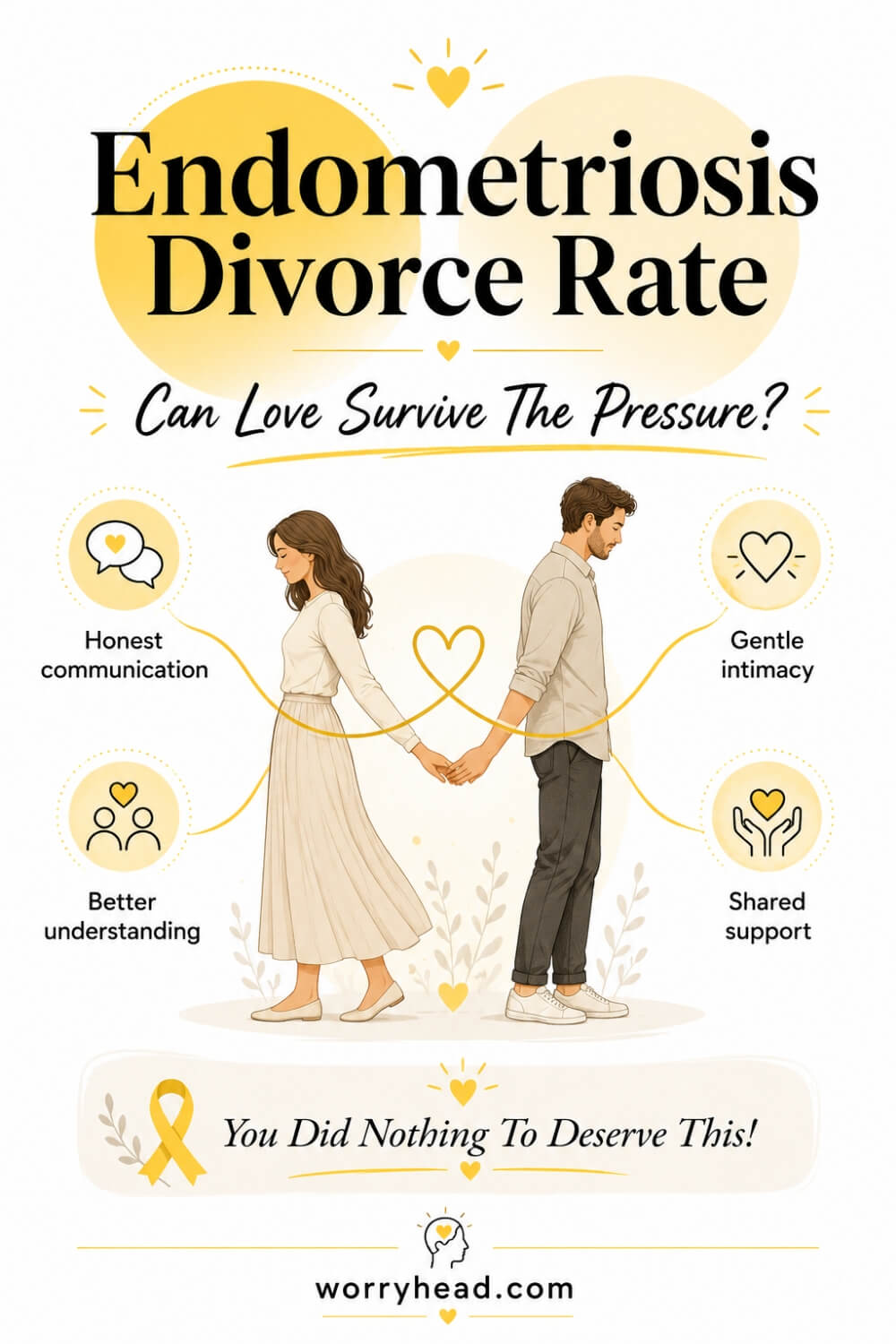
The danger is that over time, guilt can become part of your identity. You may start believing you are a burden instead of a woman living with a painful, complex illness. You may look at your partner doing more around the house or adjusting plans around your symptoms and feel like love has become a debt you can never repay.
Please hear me clearly. Needing support does not make you a burden. It makes you human in a body that needs care. A healthy relationship should make space for seasons where one person needs more. That does not mean your needs are easy, but difficult does not mean undeserving. You did not ask for endometriosis to enter your relationship, and you do not need to apologise for surviving it.
Fertility Grief Can Put Silent Pressure On Love
Fertility grief is one of the quietest pressures endometriosis can bring into a relationship. Even if you are not trying for a baby right now, the fear can sit in the background. You may wonder what your body will allow, what your future will look like, whether your partner secretly feels disappointed, or whether motherhood has become another area where you feel judged by your own body.
This grief can be hard to talk about because it is not always one clear event. Sometimes it is a series of little heartbreaks. A pregnancy announcement. A painful period. A doctor mentioning fertility. A friend asking when you will have children. A partner saying the wrong thing because they do not understand how much you are already carrying.
If this is part of your story, I want you to know your grief is valid even if your situation is still uncertain. You are allowed to mourn possibilities, delays, fears, choices taken from you, and the emotional weight of not knowing. Fertility pressure should never be used to blame you. You are not less worthy of love because your body has made the future more complicated.
Money Stress Can Add Weight to An Already Tired Couple
Chronic illness can quietly change the financial rhythm of a relationship. Appointments, scans, prescriptions, private consultations, travel, recovery time, reduced work hours, missed shifts, special food, comfort tools, and treatment choices can all cost money. Even when a couple loves each other deeply, financial stress can make everything feel tighter and more fragile.
I understand why this matters because one reason I built my online work and home-based life was to create more freedom and safety for my wife. Working from home, building blogs, and creating a calmer environment did not cure her illness, but it gave us more control than a rigid traditional job ever could. It made flare days less impossible and gave her more space to recover without feeling trapped by someone else’s schedule.
Not every couple can change their work life overnight, but the principle matters. Chronic illness needs flexibility. If money stress is affecting your relationship, that does not mean you are expensive, demanding, or a problem. It means endometriosis has practical consequences, and couples need honest plans rather than silent resentment.
Partners Can Feel Helpless and Still Need to Learn Better
A partner may feel helpless watching you suffer, but helplessness cannot become an excuse for withdrawal, frustration, or silence. I say this as a husband. There were moments when I did not know what to do, what to say, or how to make things better. But love is not proven by having all the answers. It is proven by staying willing to learn.
Some partners shut down because they feel useless. Others try to fix everything too quickly. Some become defensive because they do not know how to face the reality that the person they love is hurting and they cannot take it away. But your pain should not become something you have to manage alone just because it makes someone else uncomfortable.
A good partner does not need to be perfect. They need to be teachable. They need to listen when you explain what hurts, what helps, what scares you, and what makes you feel abandoned. They need to understand that presence matters. A hand held during a flare, a meal prepared without being asked, a gentle sentence at the right time can be worth more than grand promises.
Emotional Distance Can Grow From Unspoken Fear
Sometimes the distance in a relationship is not caused by lack of love. It is caused by fear nobody knows how to say out loud. You may fear being too much. Your partner may fear saying the wrong thing. You may fear rejection. They may fear hurting you. You may both protect yourselves so carefully that tenderness begins to disappear.
This is where endometriosis can become especially cruel. It creates situations where both people may be hurting, but the woman with the illness often carries the heavier emotional blame. You may feel responsible for the distance because your symptoms changed the relationship. But illness changing the circumstances does not mean you caused the disconnection.
Sometimes couples need to name the fear directly. “I am scared you resent me.” “I am scared you think I do not want you.” “I am scared this illness has taken too much from us.” These sentences are vulnerable, but they can open doors that silence keeps locked. You deserve a relationship where fear can be spoken gently before it turns into resentment.
Support Has to Become a Shared Language
A relationship affected by endometriosis needs more than love. It needs a shared language. You both need words for flares, fatigue, intimacy pain, emotional shutdown, overwhelm, grief, and the kind of day where even talking feels like too much. Without that language, everything can become personal very quickly.
For example, instead of saying, “I am fine,” when you are clearly not fine, you might need a phrase like, “I am not angry, I am in pain and I need quiet.” Instead of your partner guessing what to do, they might ask, “Do you need comfort, space, practical help, or just for me to sit with you?” These small phrases can prevent many painful misunderstandings.
I believe this is where couples can begin to protect their love from the pressure of illness. Not by pretending endometriosis is small, but by creating habits that make the hard moments less lonely. You should not have to translate your pain from scratch every single time. The person who loves you should be willing to learn your language, because you are worth that effort.
How the Endometriosis Divorce Rate Conversation Should Validate You, Not Blame You?
When people talk about relationship breakdown and chronic illness, they often focus on what the illness “does” to the couple, but they forget the woman sitting in the middle of it all, already carrying more guilt than anyone can see.
I do not want this article to become another heavy thing placed on your shoulders.
You may already blame yourself for needing rest, for not being as sexually available as before, for crying more easily, for being scared about fertility, for needing appointments, for cancelling plans, or for changing the rhythm of your home. But I want to pull that blame away from you and place it where it belongs: on the illness, the lack of understanding, the medical dismissal, the pressure to perform normality, and the systems that leave women fighting too hard for care.
When I look at my wife, I do not see a burden.
I see a woman who has survived pain most people would not handle quietly for one day, let alone for years. I see someone whose dreams, confidence, energy, body trust, and sense of safety were shaken by conditions she never invited into her life.
And when I write for you, I write with that same awareness, because I know there may be a part of you wondering whether love would be easier for everyone if you needed less.
Please do not let that thought become your truth.
The right kind of support should not make you feel guilty for being ill; it should help you feel human, held, and less alone inside a life you never chose.
You Are Not a Burden Because Your Body Needs More Care
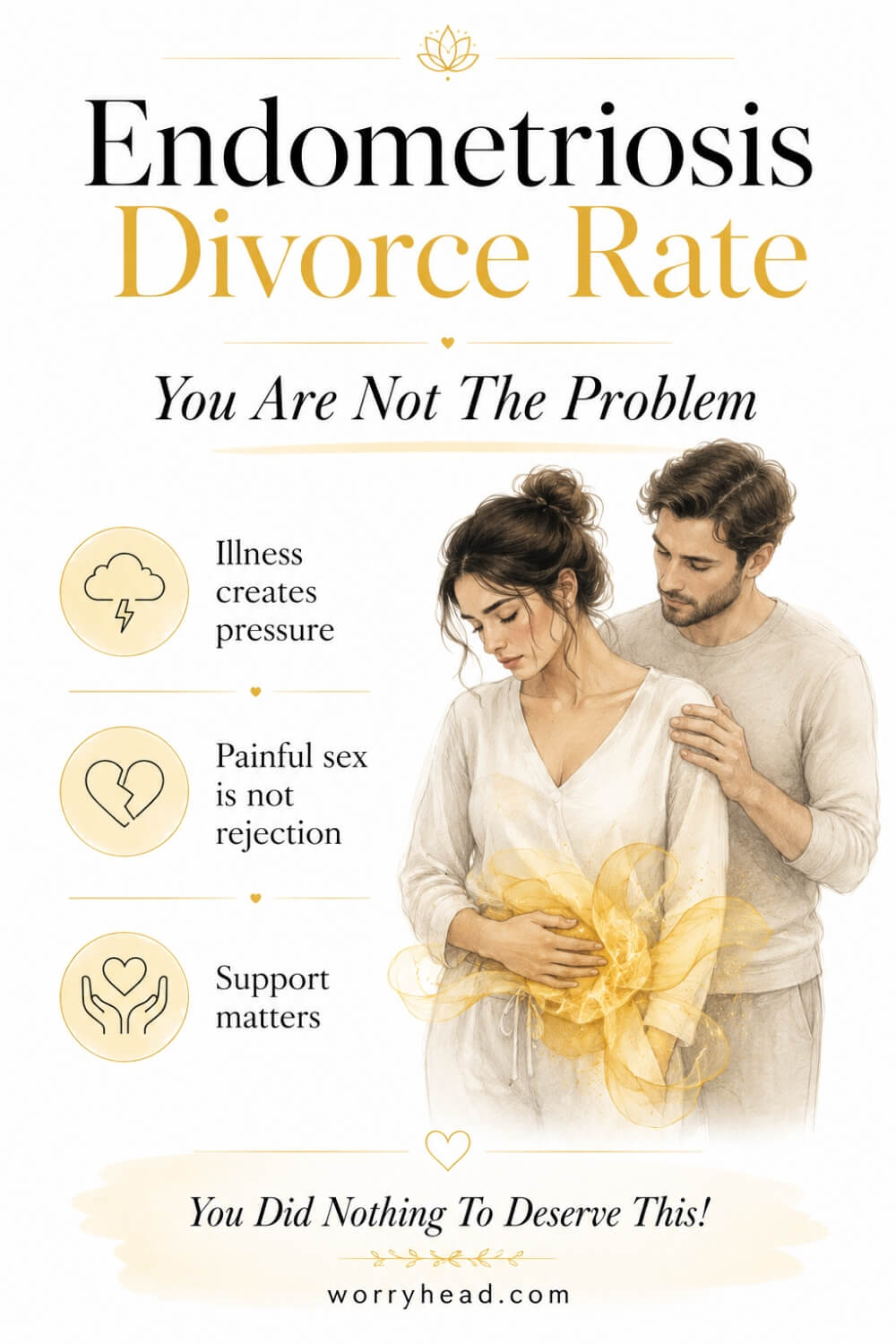
One of the most painful lies endometriosis can teach you is that needing support makes you hard to love. You may watch your partner cook, clean, adjust plans, attend appointments, or hold you through another flare and feel a wave of guilt rise inside you before you can stop it.
But needing care is not the same as taking too much. A relationship is not meant to be a perfect fifty-fifty split every single day, especially when chronic illness changes what your body can give. Some seasons ask one person to carry more practical weight, while the other carries pain, fear, fatigue, grief, and the invisible work of surviving.
I have never looked at my wife and thought she was a burden because her body needed gentleness. I have looked at her and wished the world understood how much strength it takes to keep going while feeling guilty for things she never chose. You are not less worthy of love because endometriosis changed your needs. You are still beautiful, valuable, wanted, and deserving of care that does not make you feel ashamed.
Painful Sex Is Not Rejection or Failure
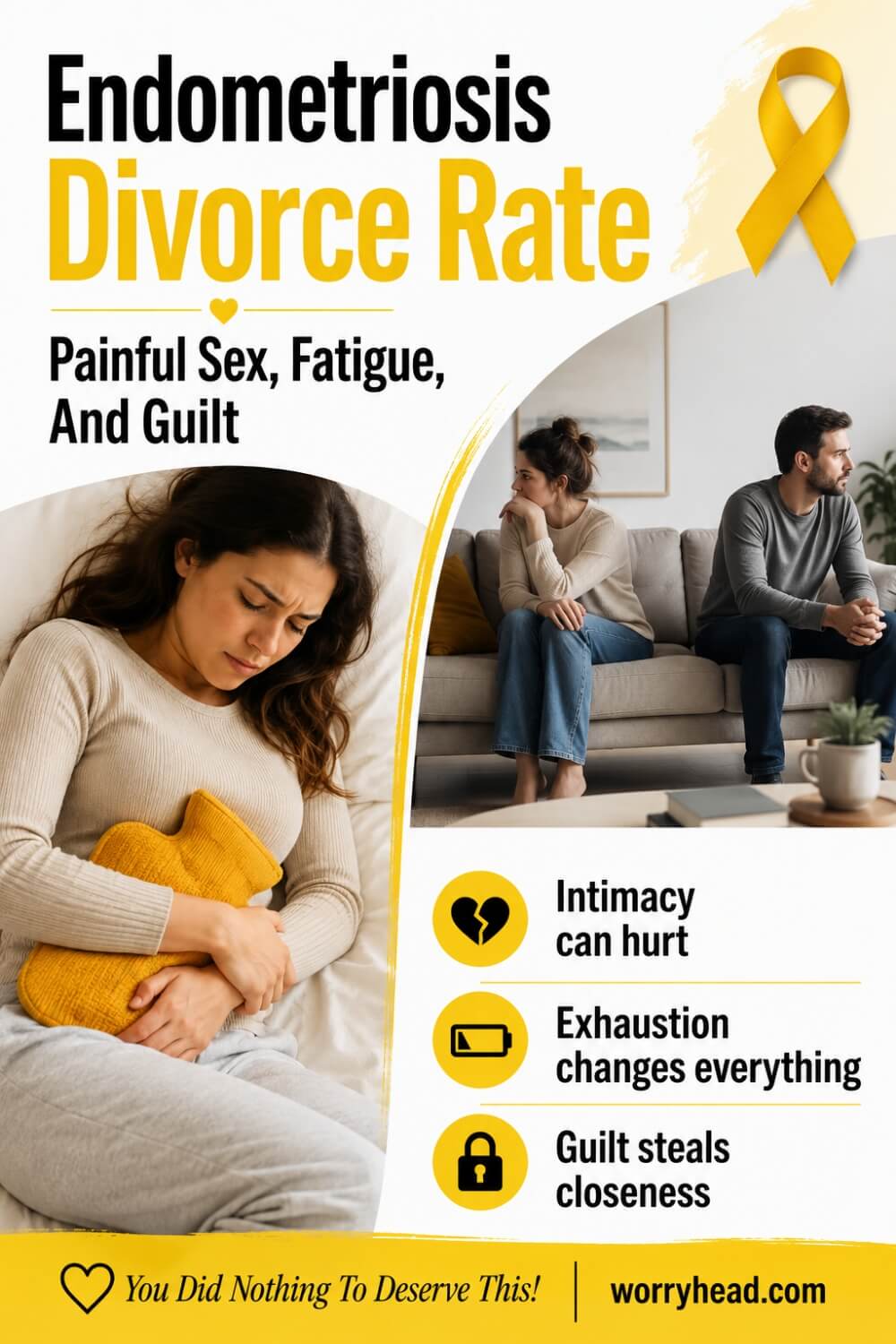
When sex becomes painful, it can shake a relationship in a very deep way because intimacy is not only physical. It is emotional, vulnerable, tender, and often tied to feeling wanted, safe, chosen, and close. So when your body starts associating sex with burning, stabbing, cramping, pressure, fear, or a flare that may come later, it can make you feel guilty before you have even said no.
But painful sex with endometriosis is not rejection. It is your body protecting itself from pain, even when your heart may still want closeness. You are not cold, broken, selfish, or failing as a partner because penetration, orgasm, certain positions, or even the anticipation of pain makes your nervous system tense up.
A loving partner must learn that desire cannot be forced through suffering. Real intimacy asks, listens, adapts, pauses, and protects. You deserve tenderness that does not punish your body for being injured. You deserve closeness that can exist in many forms, not only the one that hurts. Love should never ask you to prove devotion by enduring pain in silence.
Fatigue Is Not Laziness, and Rest Is Not Neglect
Endometriosis fatigue can be devastating because it often looks invisible from the outside. You may be lying on the sofa, unable to move, while your mind lists everything you “should” be doing. Dishes, laundry, work, messages, errands, intimacy, family responsibilities, and relationship effort can all sit there waiting, making you feel like you are failing before the day has even ended.
But fatigue is not laziness. Pain drains energy. Poor sleep drains energy. Heavy bleeding drains energy. Chronic stress, inflammation, medical trauma, and the emotional labor of pretending you are fine drain energy too. When your body stops, it may not be refusing life. It may be trying to protect what little strength you have left.
I have learned that rest can be an act of care, not abandonment. If my wife needs to lie down, that is not her giving up on us. That is her body asking for mercy. You are allowed to rest without earning it first. You are allowed to move slowly. You are allowed to be loved on the days when productivity disappears and survival is the only thing your body can manage.
Medical Dismissal Can Make Relationship Pain Worse
When you have been dismissed by doctors, nurses, family members, workplaces, or friends, you may come into your relationship already carrying bruises nobody can see. Each time someone told you it was normal, stress, anxiety, hormones, or all in your head, they may have taught your nervous system to expect disbelief before care.
That means if your partner sounds impatient, questions your pain, or minimizes your symptoms, it may not feel like one small comment. It can feel like every old dismissal happening again inside the one place you hoped would be safe. This is why endometriosis relationship stress is not only about chores, sex, or cancelled plans. It is also about whether your home feels like a place where your reality is protected.
A partner does not need to understand every medical detail immediately, but they do need to believe you. They need to understand that disbelief can deepen the wound. You should not have to perform pain convincingly enough to deserve kindness. If the world has doubted you, the person who loves you should not add to that doubt. They should help you remember that your experience is real.
Your Relationship Needs Adaptation, Not Blame
Endometriosis can change the shape of a relationship, but change is not the same as failure. You may need different routines, different intimacy, different work arrangements, different expectations, different communication, and different ways of planning a future. That can feel heartbreaking because it may remind you of the life you thought you would have.
But adaptation is not defeat. It is what love does when reality changes. In my own life, building a work-from-home path and creating a calmer home environment became part of how I tried to make life softer for my wife. It did not cure her illness, but it gave us more flexibility, more safety, and more room to breathe when flare-ups, appointments, recovery, or exhaustion disrupted normal plans.
Your relationship may need its own version of that. Maybe it is a flare plan, softer intimacy, honest money conversations, shared appointment notes, flexible housework, or learning how to speak before resentment grows. The goal is not to pretend endometriosis is easy. The goal is to stop blaming you for a disease that entered your life without permission and start building a relationship that can hold your reality with more care.
What I Have Learned From Loving a Woman In Pain?
When I think about the endometriosis and divorce rates, I do not think first about numbers…
- I think about the quiet moments that decide whether a relationship becomes safer or colder.
- I think about the woman who says, “I’m fine,” because she is tired of explaining pain that keeps returning.
- I think about the partner who may love her, but still does not understand that chronic illness needs more than sympathy; it needs learning, patience, adjustment, and emotional maturity.
I have learned beside my wife that love cannot stay shallow when illness becomes this deep.
It has to grow roots.
It has to become practical enough to help with appointments, flexible enough to change plans, gentle enough to handle intimacy fears, and humble enough to admit, “I did not understand before, but I want to understand better now.”
I also learned that a woman with endometriosis does not need to be treated like a fragile project or a permanent patient. She needs to be treated like a whole woman whose body is carrying something cruel, unfair, exhausting, and often invisible.
So if you are reading this and wondering whether your illness has made you harder to love, I want to say what I wish more partners understood sooner. You are not harder to love because your body needs more care. You are asking for a kind of love that is deeper, braver, more honest, and more real than the easy version people talk about before life tests them.
Final Word On the Endometriosis and Divorce Rates
When you search for the endometriosis and divorce rates, I know you may not be looking for a number only…
- You may be looking for reassurance.
- You may be trying to understand why your relationship feels different now, why intimacy feels complicated, why simple plans become emotional conversations, why tiredness keeps stealing the version of you that used to show up more easily.
- You may be wondering whether your partner secretly resents you, whether your pain has become too much, whether your body has changed the future you both imagined, or whether love can survive when illness keeps interrupting it.
I want you to hear this clearly.
You are not the problem. Your pain is not the problem in the way blame wants to make it sound.The problem is a disease that entered your body without permission and started changing things you never agreed to change.
It changed your energy. It changed your confidence. It changed your relationship with sex, rest, work, plans, fertility, your body, and sometimes the people you love most. And because so much of endometriosis is invisible, you may have been forced to explain pain while already exhausted by pain.
That is a cruel thing to ask of any woman.
I have watched my wife carry things I wish I could have taken from her. Stage IV deep infiltrating endometriosis, adenomyosis, fibromyalgia, flare-ups, emotional pain, anxiety, depression, fear, and the heavy silence that can come when a woman starts wondering if her body has become too difficult for the life she wanted.
But when I look at her, I do not see difficulty.
I see courage. I see a woman who has been asked to survive more than she should have ever had to carry. And when I write to you, I want you to feel that same truth for yourself.
- You are not less beautiful because you need rest.
- You are not less desirable because sex can hurt.
- You are not less lovable because your body has limits.
- You are not less worthy because your relationship needs more patience, more adaptation, more honesty, or more support than it once did.
A strong relationship is not one where illness never creates pressure. A strong relationship is one where pressure does not automatically turn into blame.
It is one where both people learn the language of pain, fatigue, fear, intimacy, reassurance, and repair. It is one where your partner does not only ask, “When will you be normal again?” but learns to ask, “How can I love you better in the reality we are living now?”
That kind of love is not always easy. But it is possible.
And if your relationship is hurting, that does not mean you failed. It means something precious needs care, that both of you may need help, language, space, support, and honesty, and it means that endometriosis has made the road harder, not that you are unworthy of being walked beside.
So please, do not take statistics and turn them into a sentence against yourself. Do not let fear convince you that you are a burden before love has been given a chance to grow deeper.
You did nothing to deserve this.
And you still deserve tenderness, loyalty, desire, patience, protection, and a life where your pain is believed instead of used against you.
You are not the damage in your relationship. You are the woman trying to love, survive, heal, and stay soft in a life that has asked you to be strong for far too long. Your illness may change the rhythm of love, but it does not erase your worth. You are still wanted, still beautiful, still worthy of patience, and still deserving of a relationship where your pain is met with tenderness instead of blame.
If this spoke to you, I would love you to leave a comment and share what part of endometriosis has affected your relationship most. And if you need more gentle validation, you can grab my FREE 130+ page eBook, “You Did Nothing To Deserve This!” The physical paperback version is also available on Amazon if you simply type in the Amazon search tab: endometriosis validation.


About Me
Hi, I’m Lucjan! The reason why I decided to create this blog was my beautiful wife, who experienced a lot of pain in life, but also the lack of information about endometriosis and fibromyalgia for men…
Endometriosis and Divorce Rates FAQ
1. Does Endometriosis Increase the Risk Of Divorce?
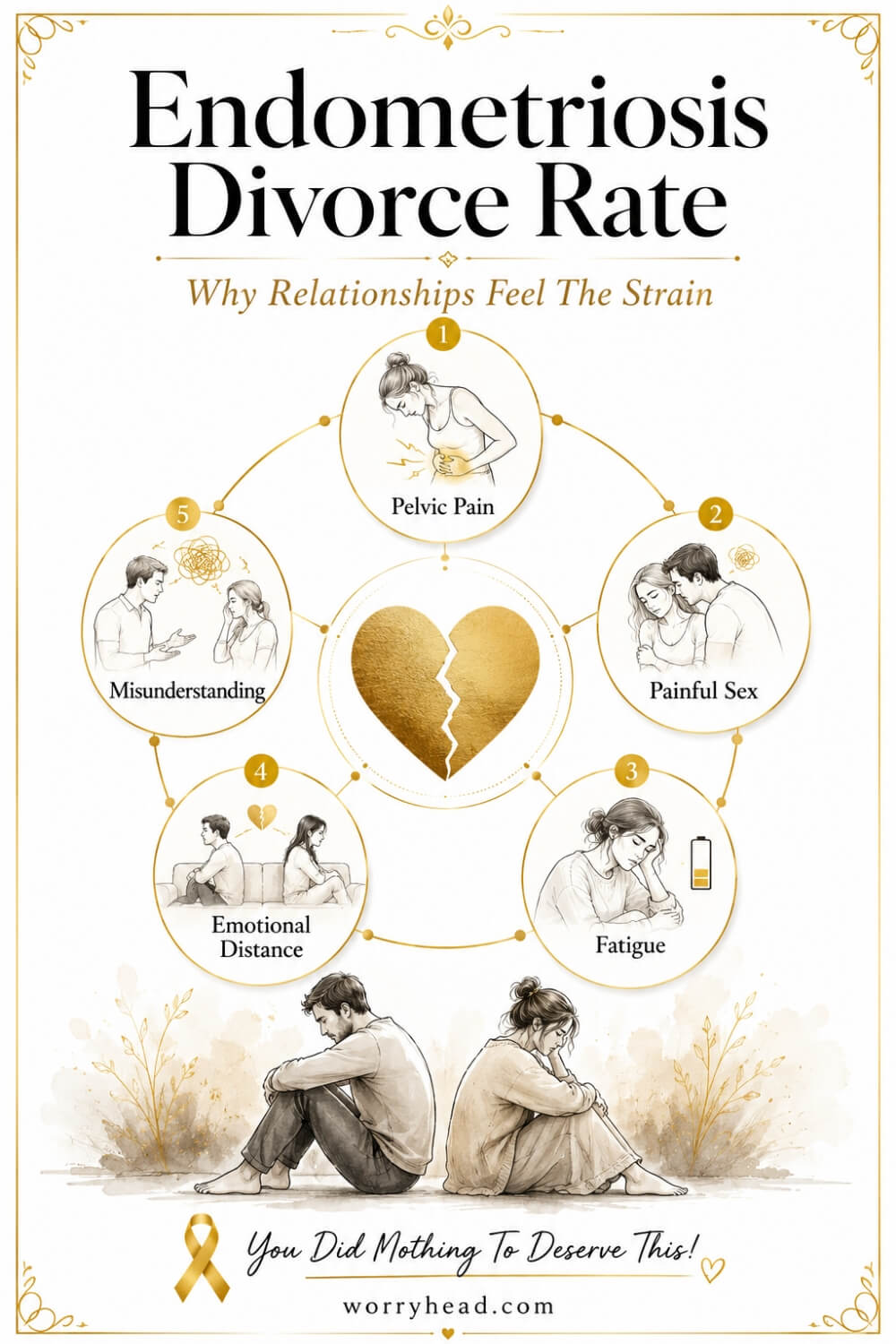
Endometriosis can place serious pressure on relationships, but it does not mean divorce is inevitable. The strain usually comes from pain, fatigue, painful sex, fertility grief, financial pressure, medical trauma, and emotional exhaustion. When these pressures are misunderstood, ignored, or blamed on the woman, the relationship can become fragile. But with honest communication, partner education, emotional support, and practical adjustments, many couples can grow closer instead of breaking apart.
2. Why Does Endometriosis Affect Relationships So Deeply?
Endometriosis affects relationships because it does not only touch one part of life. It can change intimacy, energy, mood, future plans, social life, work, money, fertility conversations, and the way you feel inside your own body. You may start feeling guilty for needing rest or saying no to sex. Your partner may feel helpless or confused. Without the right language and support, both people can begin to feel alone in the same relationship.
3. Can A Sexless Marriage Survive With Endometriosis?
Yes, a sexless marriage can survive with endometriosis, but only if both partners stop treating sex as the only proof of love. Painful sex is not rejection. It is not failure. It is not you being cold or difficult. If sex hurts, intimacy needs to become wider than penetration. Couples may need to rebuild closeness through affection, emotional safety, touch without pressure, honest conversations, patience, and professional support when needed. Love can still exist where the body needs gentleness.
4. How Can I Explain Endometriosis Relationship Strain To My Partner?
You can begin by explaining that endometriosis affects more than periods. You might say: “This illness affects my pain, energy, emotions, intimacy, sleep, confidence, and sometimes my ability to show up the way I want to. When I cancel plans, need rest, or struggle with sex, it is not because I love you less. It is because my body is carrying something I did not choose.” A partner who loves you may not understand everything immediately, but they should be willing to learn.
5. What Should I Remember If I Feel Like A Burden In My Relationship?
Please remember this: needing care does not make you a burden. Endometriosis changed your needs, but it did not reduce your worth. You are not less lovable because you need rest, reassurance, flexibility, or support. You did not ask for pain, fatigue, painful intimacy, fertility grief, medical dismissal, or emotional exhaustion to enter your relationship. You did nothing to deserve this, and you still deserve tenderness, loyalty, patience, and love that does not turn your illness into your fault.
Endometriosis and Divorce Rates References
- https://www.endometriosis-uk.org/endometriosis-and-couples
- https://pmc.ncbi.nlm.nih.gov/articles/PMC8535360/
- https://pubmed.ncbi.nlm.nih.gov/28621048/
- https://www.frontiersin.org/journals/psychology/articles/10.3389/fpsyg.2024.1382067/full
- https://pmc.ncbi.nlm.nih.gov/articles/PMC9967948/
- https://pmc.ncbi.nlm.nih.gov/articles/PMC7930843/
- https://pmc.ncbi.nlm.nih.gov/articles/PMC11932512/
- https://www.mmu.ac.uk/news-and-events/news/story/endometriosis-patients-being-failed-new-study-shows
- https://www.pslhub.org/learn/patient-safety-in-health-and-care/womens-health/%E2%80%9Cdismissed-ignored-and-belittled%E2%80%9D-the-long-road-to-endometriosis-diagnosis-in-the-uk-endometriosis-uk-march-2024-r11169/
- https://www.theguardian.com/society/2024/mar/04/women-in-uk-waiting-almost-nine-years-for-endometriosis-diagnosis-study-finds