Symptoms of Fibromyalgia
What are the symptoms of fibromyalgia? Let’s begin with the basics of fibro…
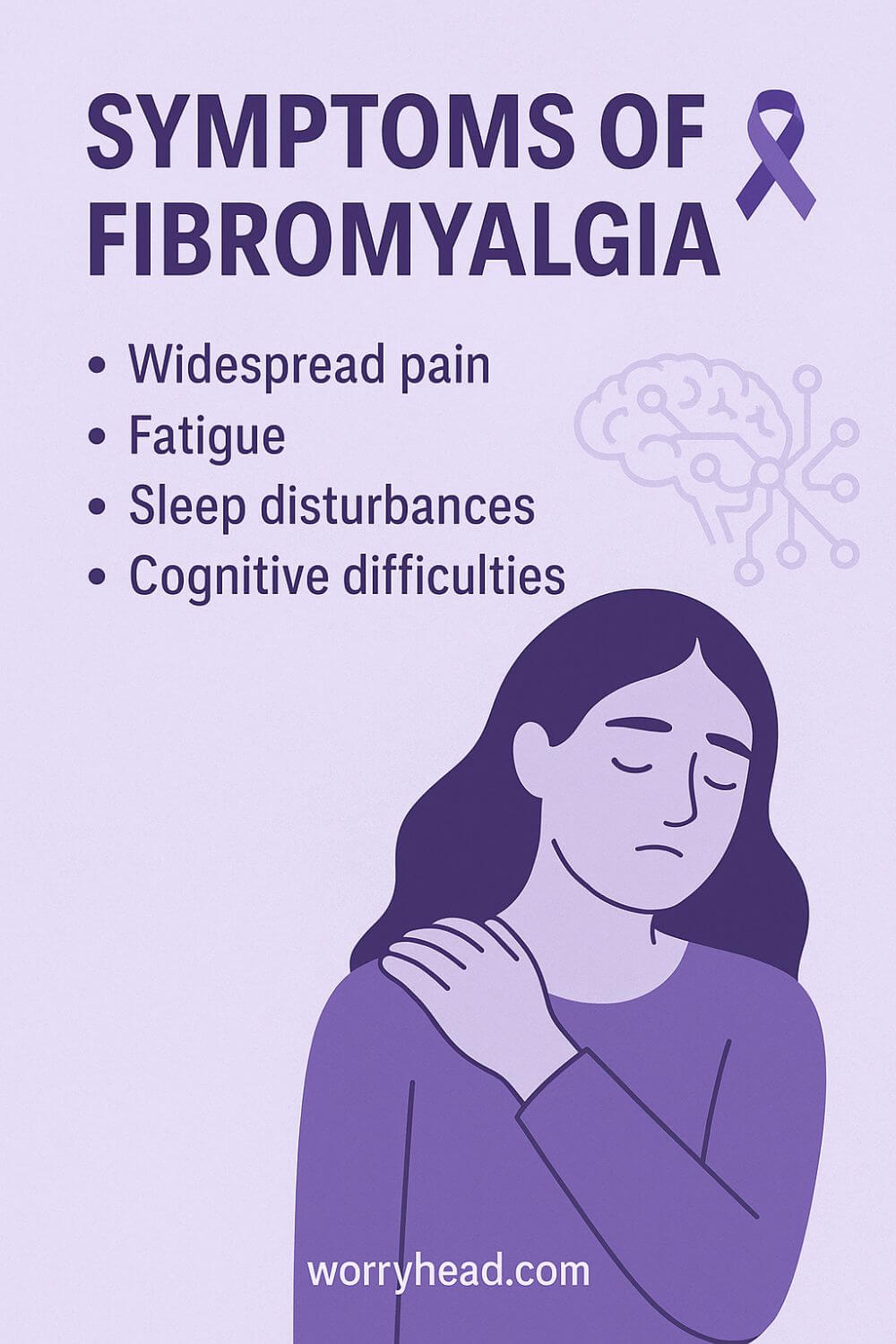
Fibromyalgia is defined by chronic widespread musculoskeletal pain with tenderness, profound fatigue, unrefreshing sleep, and cognitive difficulties (‘fibro-fog’). Mood symptoms, headaches, and sensory hypersensitivity are common. Diagnosis is clinical after excluding other causes. IBS may occur.
Beyond the headline list, patterns matter: symptoms often cluster, flare, and overlap with conditions like irritable bowel syndrome, migraines, restless legs, and sleep apnea. Many people feel worse after poor sleep and stress, but better with pacing and gentle movement. Scientists point to nervous-system hypersensitivity as a key driver.
My wife lives inside this mix of pain, fatigue, brain fog, and nights that do not restore her. I’ve learned to read the tiny cues that say a flare is coming, and to build our days around what her body can actually give.
If fibromyalgia is part of your story, you can grab 3 free chapters of my book “Fibromyalgia for Caring Partners.” By joining, you’ll also become part of our community, where I send practical freebies, big discounts on all our books, and honest emails that help couples adjust to the new normal together.
These 3 chapters alone explain how to accept the new normal, understand fibromyalgia, and its diagnosis. They include:
- The new you.
- The new her.
- The new reality.
- Introduction to fibromyalgia.
- What is fibromyalgia?
- The early days.
- When you first realize something is wrong.
- Spotting the signs that something is wrong.
- Coming to terms with a chronic illness.
- The role of a partner in fibromyalgia.
- The process of getting diagnosed.
Get Your 3 FREE Chapters!
Fibromyalgia for Caring Men

Understanding the Symptoms of Fibromyalgia
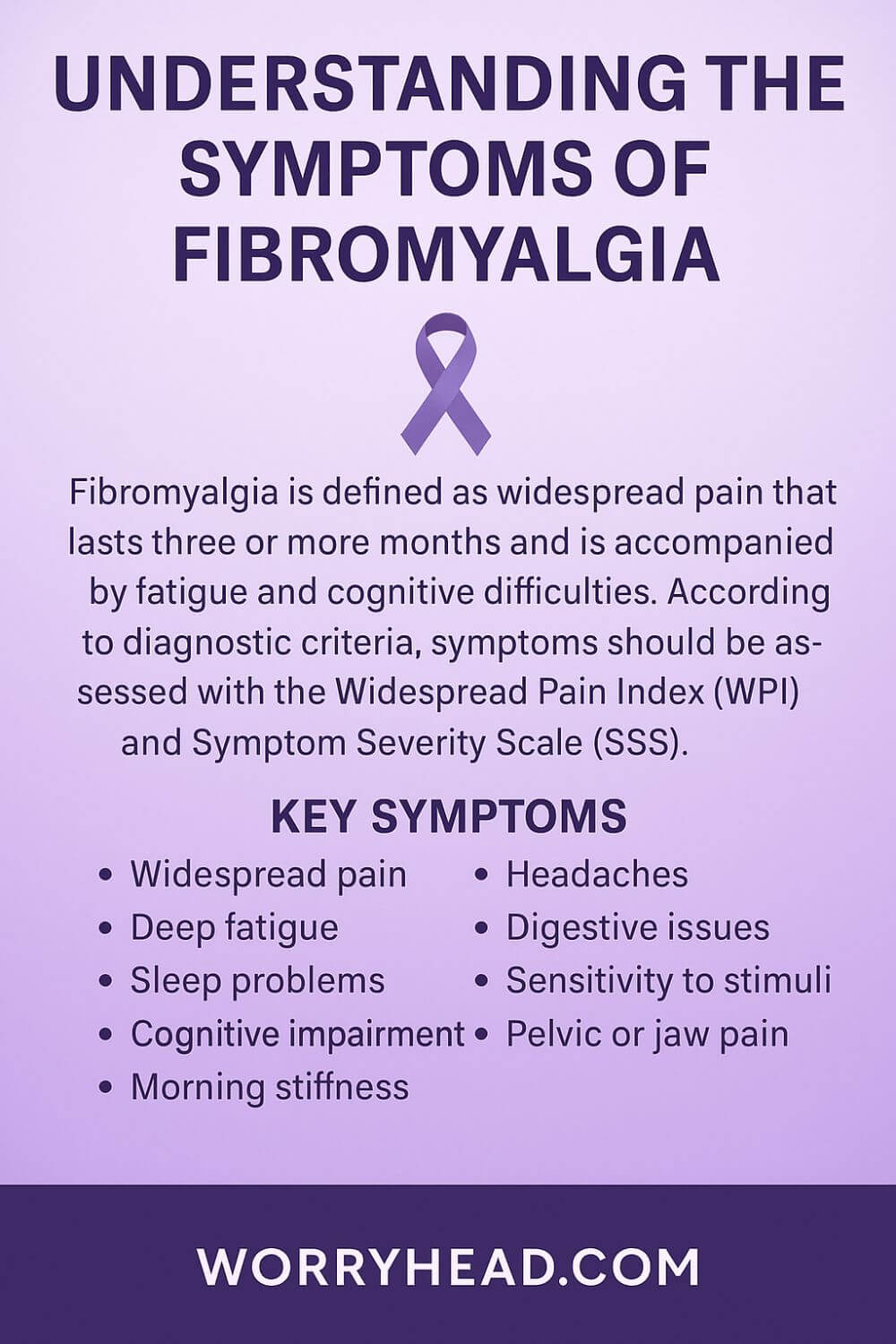
Pain isn’t just “everywhere”, it’s mapped. Clinicians define widespread pain as present on both sides of the body and both above and below the waist, typically persisting for at least three months. That pattern is paired with deep fatigue, non-restorative sleep, and cognitive problems often called “fibro fog.”
Many people also live with morning stiffness, headaches or migraines, and irritable bowel–type symptoms like bloating or cramping. Sensitivities can extend beyond touch to sound, light, temperature, and even odors, which helps explain why busy environments feel overwhelming on flare days.
Sleep issues are common: restless legs or sleep apnea may disrupt the night and worsen daytime exhaustion. That exhaustion isn’t fixed by extra hours in bed because the sleep architecture itself is disrupted.
Diagnosis today relies on a clinical score, the Widespread Pain Index and Symptom Severity Scale, after other explanations have been ruled out. It’s not about hitting “tender points” anymore; it’s about the overall symptom picture and its consistency over time.
Symptoms can ramp up after stress, illness, travel, or lost sleep, and they can ease when pacing, gentle movement, and stress reduction are in place. Many women report heavier daily loads of pain and fatigue, though men and children can be affected too.
When my wife crashes after a string of broken nights, it’s not laziness; it’s biology showing its teeth. Learning to read those patterns, then adjusting our day, keeps us connected instead of at odds and sets up the practical steps that help most.
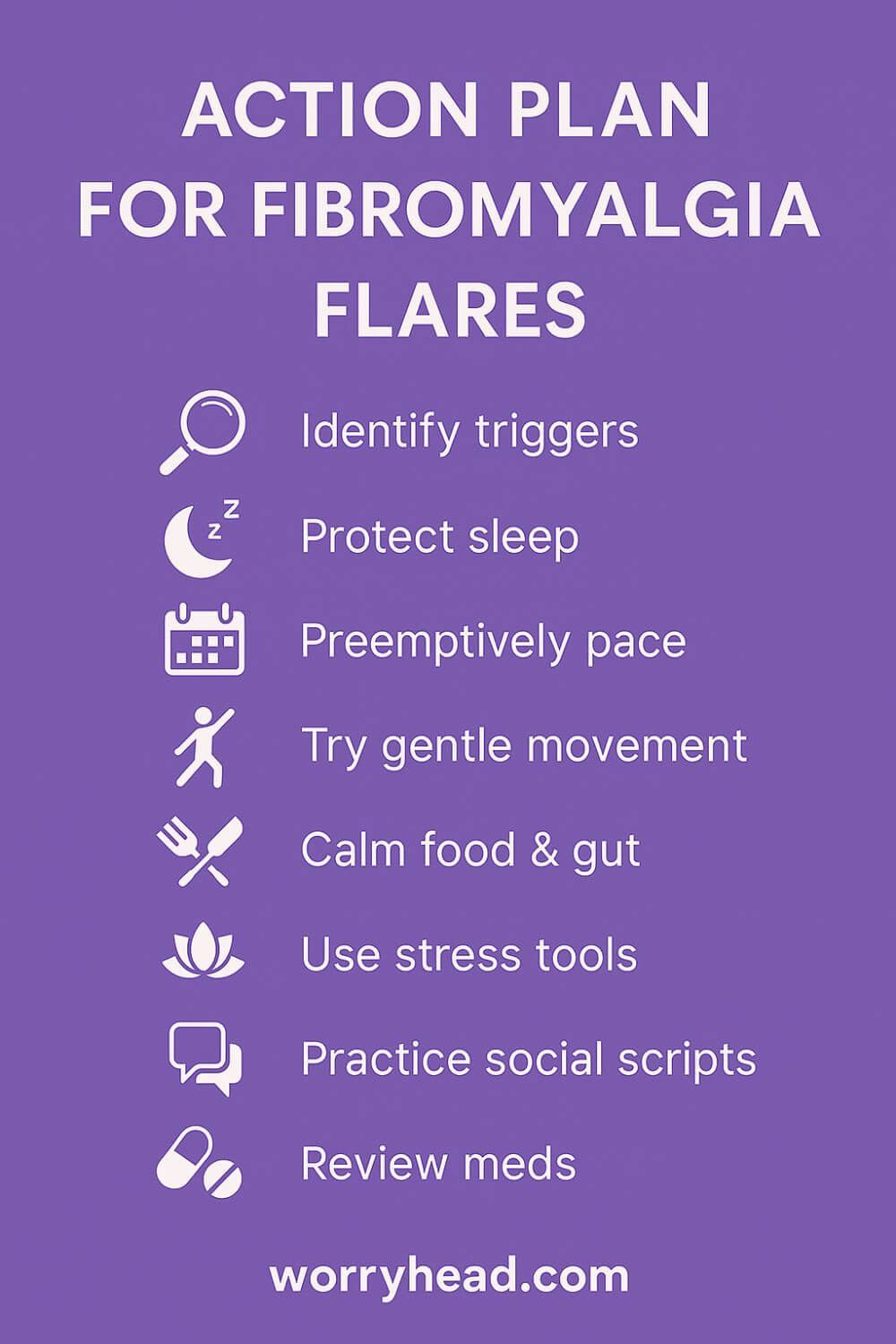
Here’s what we focus on next (and what I’ll break down in detail for you in the next section):
- Track triggers and early warning signs
- Protect sleep with routine and screening
- Pace activity to prevent boom–bust crashes
- Gentle movement that calms the system
- Food and gut habits that reduce flares
- Stress tools you’ll actually use daily
- Social scripts for work, friends, family
- Medication options and realistic expectations
- Building a home setup that supports recovery
Track Triggers, Early Warnings
Start by noticing patterns before a flare roars to life. Keep a simple daily log of sleep quality, stress level, activity, weather, menstrual cycle, and foods, then circle days that end in payback. Over a month, your own data will whisper the truth louder than any general list.
Look for early signals: a specific band of backache, cotton-wool thinking, or that glass-skin feeling where touch stings. That is your yellow light.
When I see those signs in my wife, we scale back plans and add rest breaks. We protect tomorrow instead of chasing today. That shift alone reduces the severity and length of flares, and it gives back a sense of control in a body that often feels unpredictable.
Protect Sleep, Get Screening
Sleep is the foundation, not a luxury. Set anchor times for bed and wake, dim lights an hour earlier, and guard a quiet, cool room. Naps are fine when short and early, but long, late naps can steal deep sleep at night.
If snoring, gasping, or twitchy legs are present, ask for screening for sleep apnea or restless legs. Treating these can drop daytime pain and brain fog significantly.
My wife’s worst weeks almost always follow fractured nights. When we made evenings boring on purpose and prioritized screening, mornings stopped feeling like jet lag without the holiday. The goal is not perfection; it is fewer broken nights and kinder mornings.
Pace Activity, Avoid Boom–Bust
Pacing means doing less today so you can do more this week. Break tasks into chunks, work to a timer, and stop before pain and fatigue spike. It feels strange at first, because stopping early looks like quitting. It is actually investing.
Use an activity ladder: if yesterday was a crash, today’s goal is one rung up, not the rooftop. Celebrate consistency more than hero days.
When we stopped treating good days as a race to catch up, the whiplash of two great days followed by three in bed softened. Life got steadier, arguments eased, and we traded guilt for a plan. Predictability is medicine in a nervous system that hates surprise.
Gentle Movement to Soothe
Movement should quiet the body, not punish it. Think warm-water walking, short strolls, tai chi, light mobility, or a few minutes on the floor with breath-led stretching. The test is simple: you should feel calmer within an hour, not wrecked tomorrow.
Use micro-sessions: five minutes in the morning, five later, five before dinner. That often beats one brave half-hour.
For my wife, breathing with slow nasal inhales and longer exhales drops her heart rate and pain sensitivity. Pair it with soft music or a guided body scan. The goal is to teach the system safety again, one gentle rep at a time.
Food and Gut Habits
There is no single fibromyalgia diet, but patterns matter. Aim for regular meals, hydration, and fiber for a calmer gut. Many find that reducing ultra-processed foods, added sugars, and alcohol steadies energy.
If bloating, reflux, or IBS-type cramps join the party, keep a brief symptom-food log and trial small, time-limited changes with a clinician’s input.
In our home, predictable meals and a simple evening routine reduced both midnight wakeups and morning nausea. We learned to respect the gut–brain conversation. Less chaos on the plate often means less chaos in the nervous system.
Daily Stress Tools That Stick
Stress is gasoline on pain. Pick one tool you’ll actually use: box breathing, a five-minute body scan, journaling two sentences, a brief prayer, or a walk outside. Small and daily beats are perfect and rare.
Stack the habit onto something you already do, like kettle-on breathing or teeth-brushing gratitude. Let it be imperfect and brief.
When my wife feels the world closing in, we step outside, name five things we can see, four we can feel, three we can hear. That sensory reset anchors us in the present. Over time, these tiny practices lower baseline tension and widen the window for ease.
Social Scripts That Protect
You do not owe an essay to everyone. Prepare one-sentence scripts for work, family, and friends: “I can join for an hour, then I’ll rest.” “I’m dealing with a flare, I’ll reply tomorrow.” “I need quiet today.”
Boundaries are love with edges. They protect the energy that keeps you human, not just functional.
We learned to plan exits before events and to choose seats near doors. Saying less but earlier prevents crashes and resentment. The people who love you will adjust; the ones who won’t were already expensive. Scripts make brave choices easier in the moment.
Meds: Options, Expectations
Medication is a toolbox, not a magic wand. Discuss options for sleep quality, nerve pain modulation, and mood support, and expect gradual benefits rather than instant relief of pain. Titrate slowly, track changes, and judge by function, not just numbers on a scale.
Side effects can be managed when someone listens and adjusts. Keep that log handy at reviews.
With my wife, we learned that the right low-dose combination plus pacing improved her “reachable day,” not just her pain score. That was our metric: more life inside the day. Medication should open space for the strategies that make you stronger.
Home Setup for Recovery
Make your space reduce friction. A supportive chair, adjustable desk, soft lighting, and noise control matter when sensory overload is real. Keep heat pads, a water bottle, and meds where you actually rest, not across the house.
Design routes with sit-stops and keep essentials duplicated in key rooms. That shrinks the energy tax on bad days.
Our home office became a quiet harbor: gentle colors, clutter-free surfaces, and a small speaker for calming tracks. When your environment says “you’re safe,” your body listens. Recovery is faster when your space stops picking a fight with your nervous system.
How the Symptoms of Fibromyalgia Reshape a Life?
On paper, the symptoms of fibromyalgia look like bullet points; in a home, they rearrange everything: mornings, plans, even the way you hold each other.
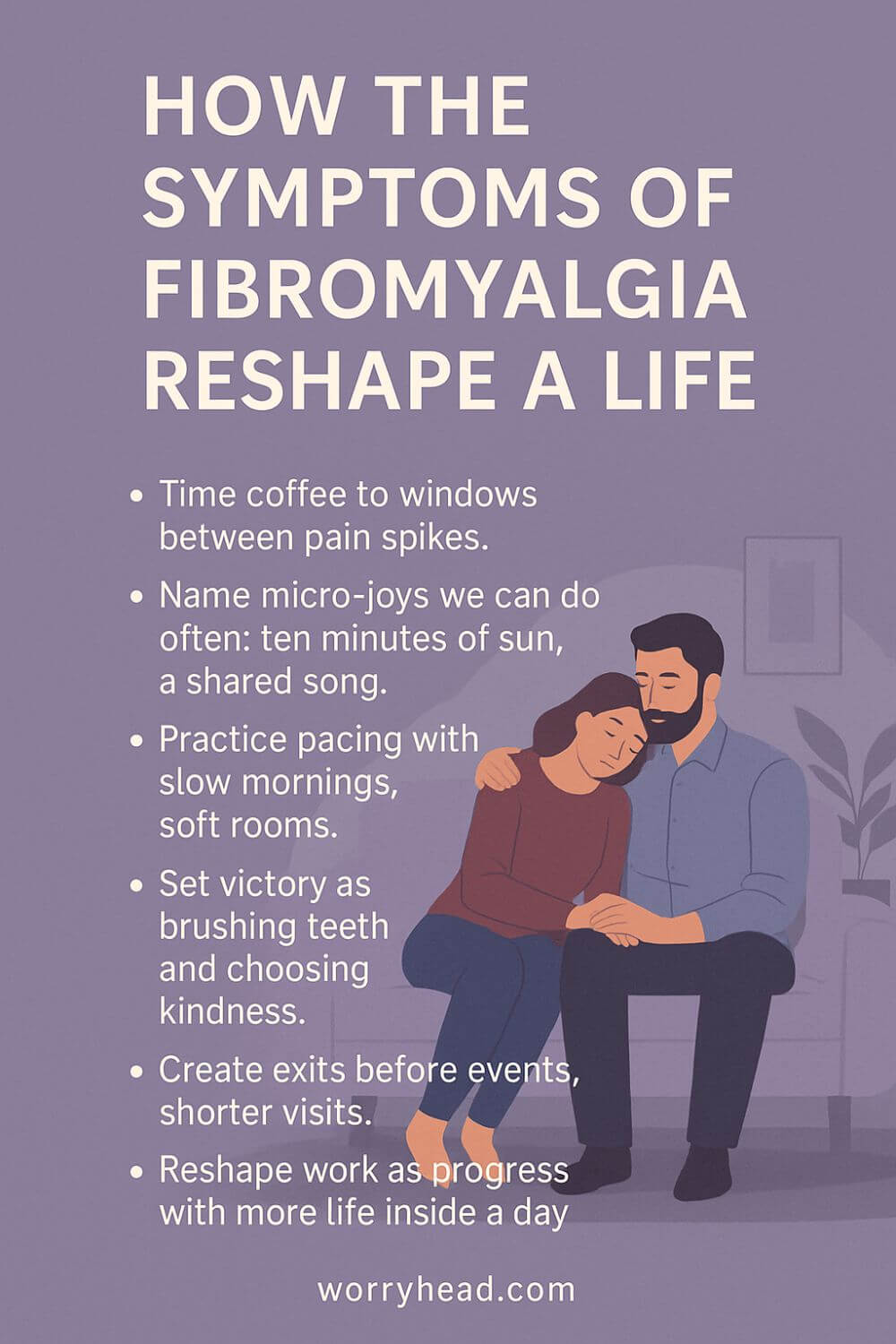
There were days my wife and I timed coffee to the smallest window between pain spikes, because warmth in a mug felt like the only softness we could guarantee.
I learned to read the micro-expressions: the way her eyes dim when touch turns sharp, the way silence grows heavy when words won’t line up. That’s not drama; that’s a nervous system pleading for safety.
We stopped chasing the life we had “before” and started building one that loved her body as it is, slow mornings, gentler light, routes through the day with places to sit and breathe.
On good days, we practice joy like physiotherapy, short and frequent, so it doesn’t overreach and turn into tomorrow’s crash. On hard days, victory is brushing teeth, sending one text, and choosing kindness over self-blame.
I used to think support meant fixing things; now it means noticing early, protecting energy, and saying, “We’ll make the world smaller today and that’s okay.”
There is grief in this, and there is grace. We grieve the effortless spontaneity, and we find grace in the rituals that keep her steady—warm showers, a quiet playlist, a walk to the window when outside is too much.
Friends don’t always understand; that hurts. But the ones who stay learn the new choreography: shorter visits, softer rooms, open-ended invitations with no guilt attached.
Work changed, too. We moved deadlines, reshaped goals, and measured progress by how much life fits inside a day, not by how much pain she hides from others.
Love didn’t get smaller; it got specific. Pillow under knees. Timer set for rests. Meals that don’t fight her gut. A chair that doesn’t ask her back to be brave.
I won’t romanticize it. Some nights end in tears and breath work; some mornings begin with apologies for plans we can’t keep. But the more we choose gentleness, the more we reclaim space from fear.
In that space, we laugh again. We plan tiny adventures we can actually finish. We remember that dignity isn’t earned by endurance, it’s honored by care. And if you’re reading this on a flare day, let me say what I tell my wife when she can’t lift her head:
- You are not failing.
- Your body is loud.
- We’ll make the day quieter around it.
Rebuilding Life Around the Symptoms of Fibromyalgia
We redesigned our days like a floor plan, moving walls to let light in where pain used to cast shadows. Instead of chasing old routines, we built new ones that fit her body, not the other way around.
On paper, the symptoms of fibromyalgia look fixed; in real life, they move. So we made our plans movable too, modular tasks, soft deadlines, and exits that don’t feel like failure.
Work-from-home became more than a convenience; it was permission to pause without apology. We learned that progress measured in minutes still counts when minutes are hard-won. I adjusted my role from fixer to forecaster, watching for tiny tells, protecting sleep, guarding quiet. She leads the pace; I shape the path so it costs her less.
We stopped saving energy for “big days” and started making ordinary days kinder. That lowered the peaks and softened the crashes, which gave us more usable life between flares.
Our home turned into a sanctuary on purpose, supportive chair, calmer colors, and warm packs within reach. Small comforts aren’t small when your nervous system is scanning for safety.
Money worries used to steal our bandwidth, so I doubled down on the online work that keeps income steady during her hard weeks. Security softened the edge of each flare. We learned to say yes to tiny joys that fit inside a gentle day, ten minutes of sun, a shared song, a slow stretch. Joy practiced small still heals big.
When guilt crept in, we named it, then replaced it with data: what helped, what hurt, what to try next. That shifted us from blame to teamwork.
Most importantly, we chose language that doesn’t wound, fewer “shoulds,” more “let’s.” Love stayed the same size, but the way we carry it changed, and that change is how we keep going.
Final Word on the Symptoms of Fibromyalgia
If you’ve made it this far, I hope you feel less alone and more equipped. What began as a scattered list of aches, fatigue, and fog has, in truth, a shape and a rhythm. Once we named it, once we tracked it with honesty instead of guilt, the chaos softened. We learned that small decisions made early, protecting sleep, pacing good days, planning exits, change the whole week.
We also learned that compassion is an intervention, not a luxury, and that validation calms a frightened nervous system faster than disbelief ever could.
Living with this condition is not a straight road. It loops through flare and remission, grief and grit, hope and hesitation. That’s why plans must be adjustable and love must be specific.
The goal isn’t to “beat” pain; it’s to build a life that stays meaningful even when pain is loud. In our house, that looks like gentle mornings, modular work, and micro-joys we can finish. Progress is measured in participation: more music, more sunlight, more conversations we can stay present for.
Clinically, we respect what we can measure, patterns in sleep, activity, and stress, and we act on them. We screen for treatable sleep problems. We try movement that soothes rather than punishes. We use medication to open a window for the habits that truly move the needle. We revisit choices without shame, because bodies change and plans should, too.
Data helps, but so does story: the lived details that tell you when to push and when to pause. Relationships also need a new language. We stopped asking “Why can’t you?” and started asking “What would make this gentler?”
Boundaries became invitations to stay connected: shorter visits, quieter rooms, honest exits. Work shifted from performative to sustainable, less about masking, more about matching tasks to energy. That is not lowering the bar; it is engineering success under honest constraints.
If you are a partner, your steadiness is medicine. Learn the patterns, guard the routine, celebrate the small. If you are the one in pain, you are not failing. Your body is doing its best to protect you, even when the signals misfire. Together, you can trade perfection for progress and rebuild trust with a body that has felt unsafe for too long.
Here is the quiet promise I keep to my wife and to you: we will make the day smaller when it needs to be, and we will make it bigger when we can. Either way, it will still be our day, chosen on purpose, lived with care, and full of dignity.
When you map your own symptoms of fibromyalgia clearly, where they start, what triggers them, and which tools help, you turn mystery into a plan. Use a simple log, review it every two weeks, and adjust one lever at a time. Keep what works, discard what doesn’t.
The aim is steadier days, not perfect ones, and enough energy left for the people and moments that make life yours. That is a worthy target, every single day.
You are allowed to live at a kinder pace. Start with sleep, pacing, and one gentle movement you can repeat tomorrow. Track patterns, protect your wins, and ask for help early. Small choices stack into steadier weeks and steadier weeks make room for joy, work, and the relationships that keep you human.
If this resonated, leave a comment below and tell me what helps you most on hard days, and grab 3 free chapters of my “Fibromyalgia for Caring Partners” book to join our community for more value, freebies, and honest support.


About Me
Hi, I’m Lucjan! The reason why I decided to create this blog was my beautiful wife, who experienced a lot of pain in life, but also the lack of information about endometriosis and fibromyalgia for men…
READ MORESymptoms of Fibromyalgia FAQs
1) What are the symptoms of fibromyalgia in a woman?
The pattern is widespread musculoskeletal pain on both sides of the body and above and below the waist, lasting at least three months, with deep fatigue, unrefreshing sleep, and cognitive problems often called fibro fog. Many women also report headaches or migraines, morning stiffness, gut issues, temperature and sound sensitivity, restless legs, and pelvic or TMJ pain.
2) Where does fibromyalgia hurt and does it come and go?
Pain often feels deep, aching, or burning across the neck, shoulders, back, hips, arms, and legs. It can shift location and intensity, flaring after poor sleep, illness, travel, stress, or overexertion, then easing with pacing, restorative sleep, gentle movement, and stress reduction. The variability is part of the condition.
3) What are the worst symptoms of fibromyalgia during a flare up?
Common flare features are amplified widespread pain, severe fatigue, nonrestorative sleep, and cognitive overload that makes concentration and word-finding hard. Some also experience light and noise sensitivity, allodynia to touch, dizziness, irritable bowel symptoms, and heightened anxiety. Planning exits, protecting sleep, and pre-emptive pacing help shorten flares.
4) How is a diagnosis made if blood tests are normal?
Diagnosis is clinical, based on a consistent symptom picture using the Widespread Pain Index and Symptom Severity Scale after other causes are ruled out. Normal labs do not invalidate symptoms; they are used to exclude mimics such as thyroid disease, inflammatory arthritis, or anemia. A thorough history, exam, and attention to sleep and comorbidities are key.
5) Can fibromyalgia get worse or go away, and what helps most?
Symptoms can worsen without management, especially with chronic sleep disruption, unmanaged stress, and boom–bust activity cycles. Many improve with a combined plan: sleep screening and routine, pacing, gentle graded movement, stress tools you’ll actually use, nutrition that calms the gut, and medication tailored to goals like sleep quality and function. The aim is steadier weeks and more life inside the day—not perfection.
Symptoms of Fibromyalgia References
https://www.mayoclinic.org/diseases-conditions/fibromyalgia/symptoms-causes/syc-20354780
https://www.cdc.gov/chronic-disease/fibromyalgia/index.html
https://www.nhs.uk/conditions/fibromyalgia/symptoms/