
The Invisible Rules of Endo
Do the invisible rules of endo ever make you feel like you have to stay quiet to be loved, and stay strong to be believed? Have the invisible rules endometriosis taught you to apologise for pain you never chose, as if your body’s truth is something you must earn the right to mention?
Yes, those endo rules are real, and they’re not your personality. They’re survival lessons built by endometriosis, shaped by dismissal and fear, and you can begin to loosen them gently without becoming “too much.”
You might not call them rules out loud, but you live by them. You edit yourself in conversations, you measure your words, you calculate what you can handle, and you carry the quiet worry that if people see the full reality, they’ll step back.
If you keep reading, I’ll walk with you through where these rules come from, how they hide inside daily life, and how you can start breaking them in a way that feels safe, especially when you’re already carrying more than anyone can see.
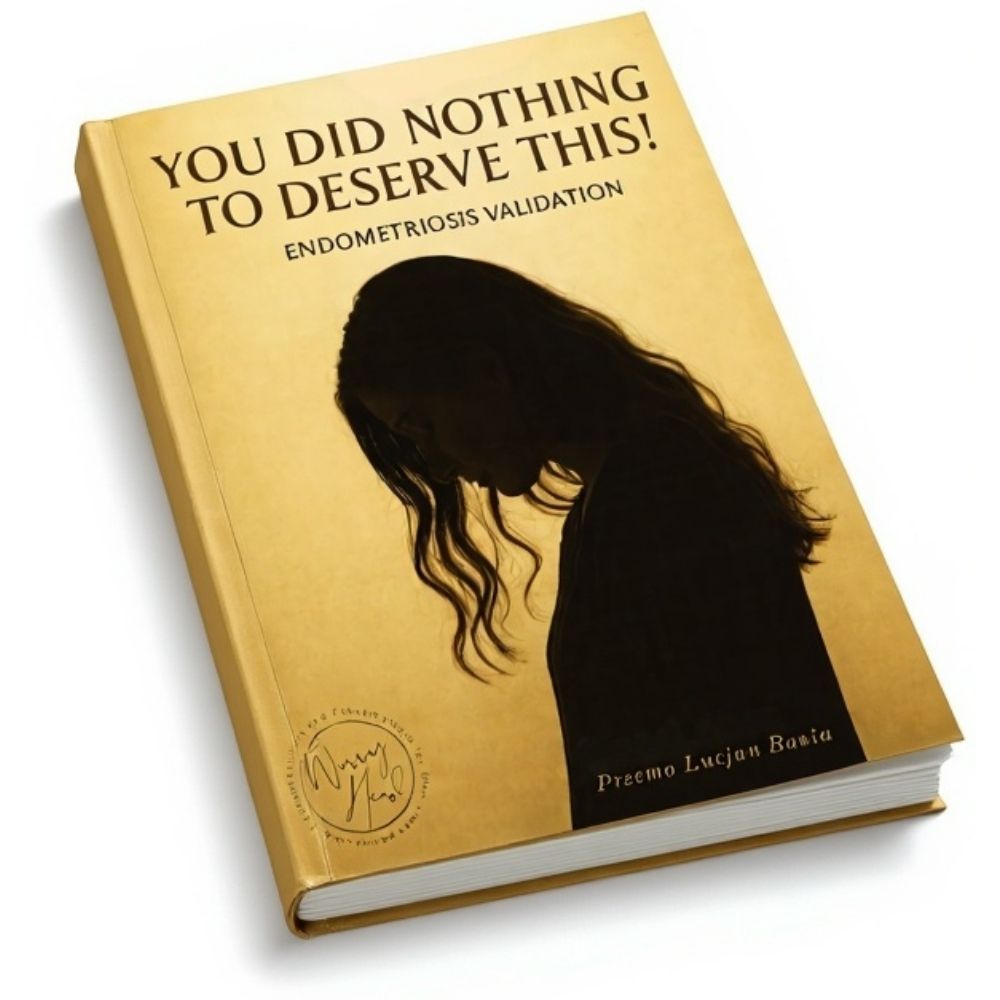
If you didn’t get it yet, and all of this touches something in you, and you feel the need for deeper validation, I’ve put my heart into a completely FREE 130+ pages eBook: “You Did Nothing To Deserve This” – filled with 20 chapters of gentle validation for women with endo, written by a husband who’s seen it up close.
It’s my way of telling you, in much more detail, that your pain, your complex response to treatment, and your emotions around all of it are real, understandable, and never your fault.
It’s not a medical guide. It’s a human one. Here’s what’s inside:
- This Was Never Your Fault
- The Girl You Used To Be
- When Your Own Body Feels Like an Enemy
- The Invisible Battles Nobody Sees
- Am I Just Lazy? – The Lie You Have Been Taught
- Gaslighting, Dismissal and the Trauma of Not Being Believed
- Guilt: The Weight You Were Never Meant to Carry
- Love in the Middle of Pain
- Intimacy When Your Body Hurts
- The Loneliness of Being the Strong One
- You Are Allowed To Take Up Space
- Tiny, Gentle Hopes (Not Toxic Positivity)
- If You Could Hear My Voice Every Flare Day
- You Deserve Partners, Not Witnesses
- When You Wish He Understood
- Motherhood, Fertility and the Grief Nobody Sees
- When Anger Is the Only Honest Feeling
- Learning to Trust Your Body Again
- Building a Life That Fits Your Reality
- You Did Nothing To Deserve This
You Did NOTHING To Deserve This!
Endometriosis Validation for Women with Endo
- FREE eBook
- You Did NOTHING To Deserve This!
- Living With Invisible Rules of Endo
- Why Do the Invisible Rules of Endo Feel Like Survival?
- When Dismissal Becomes Self-Silencing
- The Appointment Script You Write In Your Head
- How Gaslighting Trains Your Body To Freeze
- The Burden Story That Steals Your Self-Worth
- Loneliness Inside a Full Room
- Endometriosis and Relationship Fear After Flares
- When Endometriosis and Anxiety Arrive Before Pain
- Endometriosis and Depression: When Your World Shrinks
- Endometriosis and OCD As a Search For Control
- Trauma Echoes In Endometriosis and PTSD
- Gently Breaking the Invisible Rules of Endo
- Building a Life Beyond the Invisible Rules of Endo
- Final Word On Invisible Rules of Endo
Living With Invisible Rules of Endo
The invisible rules of endo don’t usually arrive as thoughts; they arrive as reactions. I saw it in my wife when she would flinch at the idea of cancelling plans, even on days when endometriosis had already taken everything from her.
She wasn’t being unreliable; she was trying to avoid the loneliness that comes after people stop believing.
After enough dismissal, you start rehearsing your pain like you’re preparing for court. You learn to speak softly so you don’t sound “dramatic,” and you learn to smile so nobody accuses you of making it all about you. That is how an invisible illness teaches fear to live in ordinary moments.
In our home, I watched how anxiety and depression didn’t show up as separate problems, but as echoes of being gaslighted and blamed. OCD latched onto control because living with endometriosis can feel like standing on a floor that moves without warning. And when trauma builds quietly, self-worth can shrink until you start calling yourself a burden for needing basic care.
What made me want to write about this is simple: I want her to feel safe in her own body, and I want you to feel that too. Endometriosis support is not just treatment, it’s being believed, being held, and being allowed to take up space without apologising.
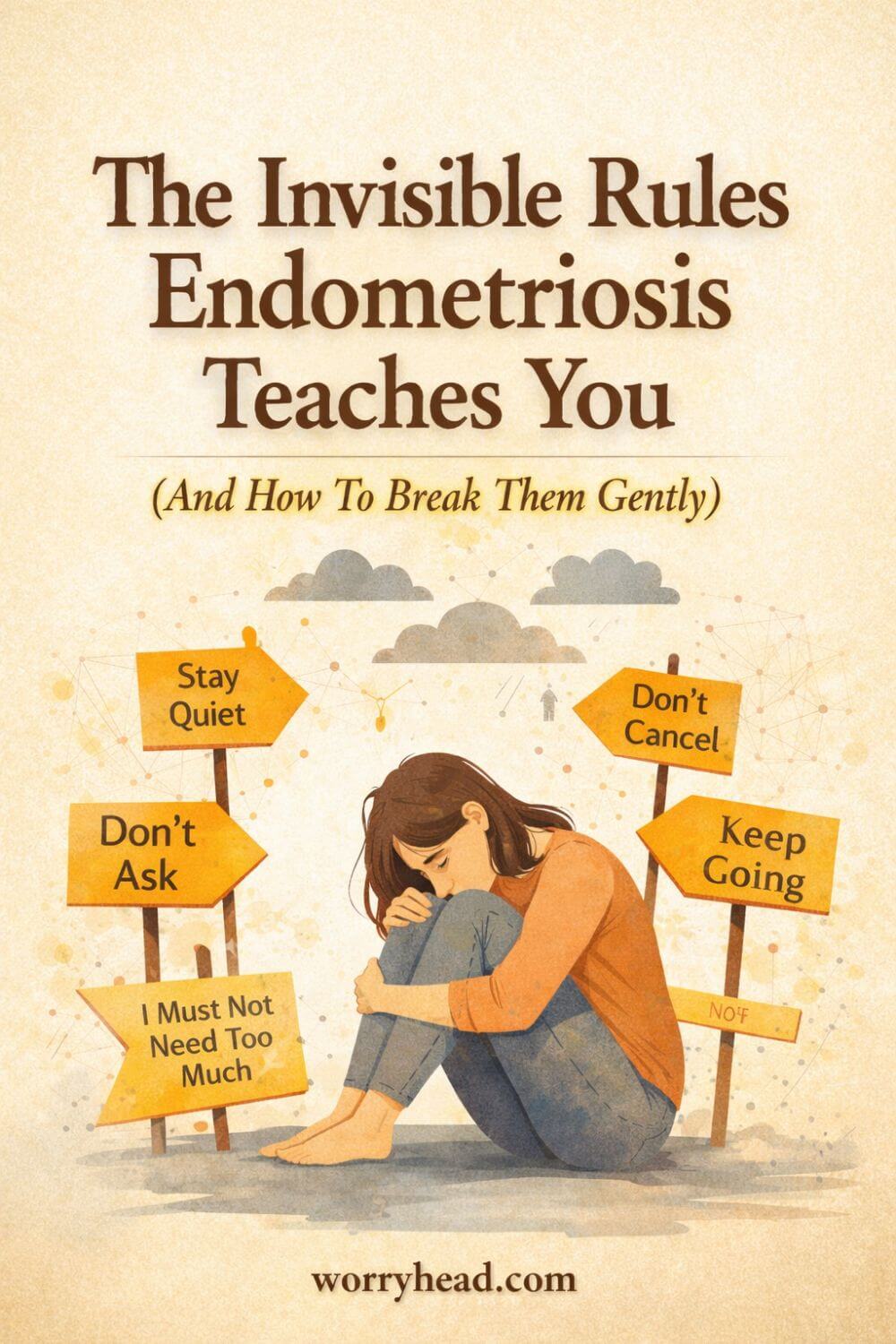
Why Do the Invisible Rules of Endo Feel Like Survival?
The invisible rules of endo start as protection, and that’s why they can feel impossible to break. When my wife learned that tears in a waiting room could be read as “overreacting,” her body started treating emotions like danger. She didn’t choose that; her nervous system did, because it was trying to keep her from more dismissal.
Living with endometriosis can train you to expect a fight for basic care. After enough gaslighting, you stop asking for help in a normal voice, and you either overexplain or you go silent. Both are attempts to avoid being hurt again, and both can leave you feeling lonely even when people are around you.
I’ve also seen how endometriosis and anxiety feed each other in a loop. Fear shows up before the flare does, because your body remembers the last time pain stole a day, a plan, or a piece of your self-worth. Endometriosis and depression can follow when your world keeps shrinking, not because you lack strength, but because your life gets built around avoidance.
Then there’s the relationship side, the part nobody prepares you for. Endometriosis and relationship stress are not just about intimacy; it’s about the constant mental math of not wanting to be a burden. You can love someone deeply and still feel panic when you need to ask for gentleness, because endometriosis and PTSD are often the memory of not being believed.
What breaks my heart is how quickly the rules become identity. A woman starts saying “I’m just like this,” when really she’s adapting to trauma and worry in a body that keeps getting dismissed. And if you relate to that, I want you to know this is not a character flaw, it’s the emotional impact of endometriosis doing what it always does, shaping behaviour so you can survive the next conversation.
You might notice it at work, where you push through and then crash in private. You might notice it in a family, where you stay quiet to keep peace, even if peace costs you. You might notice it with doctors, where you try to sound calm while your whole body is screaming.
But there is a gentle way forward, and it doesn’t start with confrontation. It starts with naming the invisible rules, translating them into needs, and building safety one small decision at a time. That’s what I’ve been learning beside my wife, and it’s what I want to offer you here without judgment.
Next, I’ll break these survival rules into clear, real-life patterns so you can spot them in relationships, family, work, and medical settings, and begin loosening them without fear.
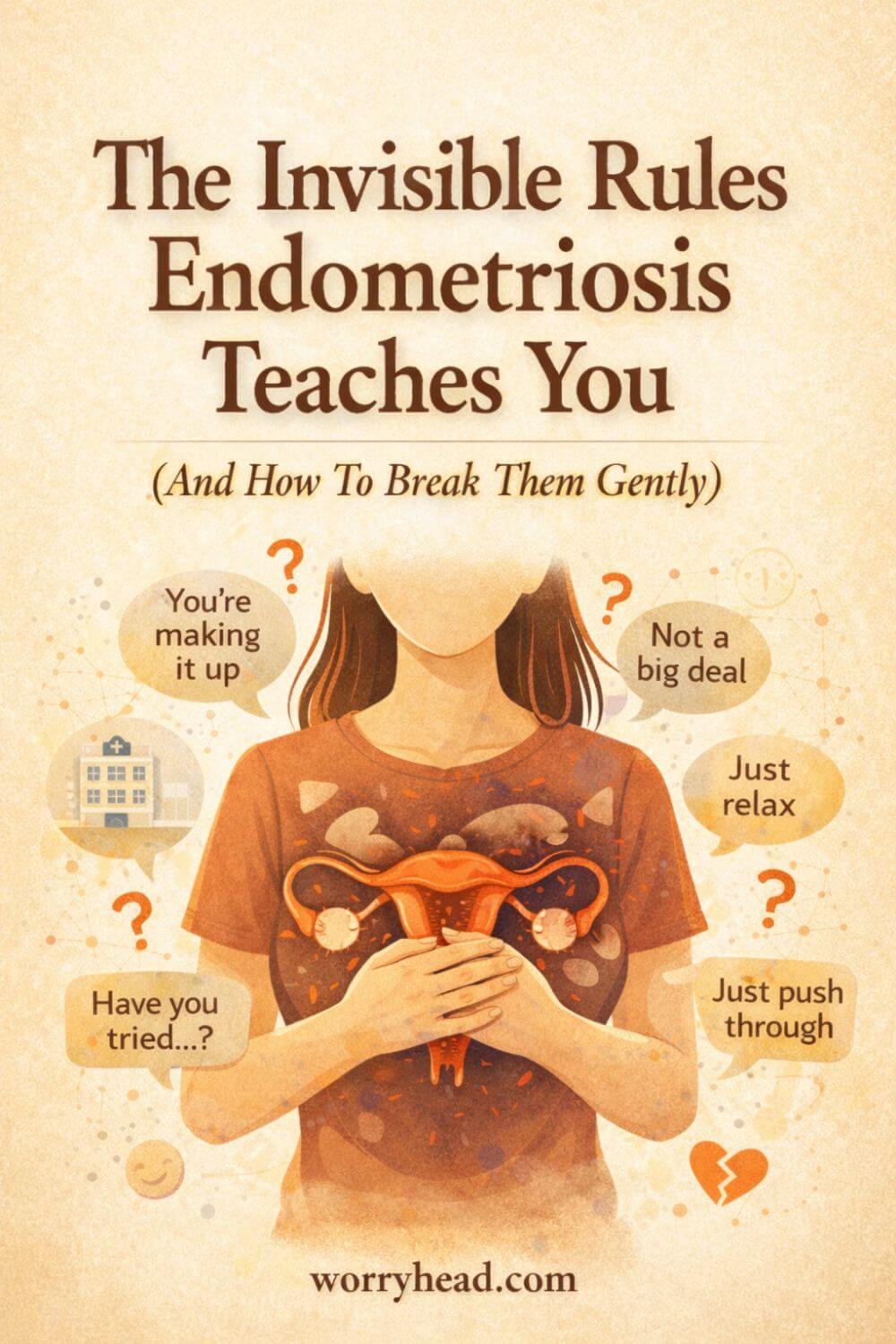
When Dismissal Becomes Self-Silencing
I remember watching my wife come home from yet another appointment where her endometriosis was treated like a footnote. That kind of dismissal does something quiet but permanent, it teaches you to speak shorter next time.
Living with endometriosis can turn an invisible illness into an invisible voice. You start editing your symptoms, softening your truth, and carrying fear that if you say it plainly, you will be labelled difficult. Over time, the emotional impact of endometriosis can look like politeness, but underneath it is trauma trying to keep you safe.
If you recognise this, I want you to hear me clearly: being careful with words is not proof that you are a burden. It is proof you have been through gaslighting, and your self-worth deserves protection, not punishment.
The Appointment Script You Write In Your Head
Before my wife speaks to a doctor, I can see the worry start building in her eyes. She tries to organise every detail so she will not be dismissed, and that is exhausting in a way most people never notice.
Endometriosis support should not require perfect wording, but many women feel they must present pain as evidence. So the invisible rules show up as rehearsed sentences, dates, numbers, and a calm voice that hides panic. When the room has a history of gaslighting, your body learns that one wrong phrase could cost you care.
If you do this too, it does not mean you are dramatic. It means you have learned survival in a system that can confuse symptoms with personality. I want a different story for you, one where your living with endometriosis is met with respect, not suspicion.
How Gaslighting Trains Your Body To Freeze
Gaslighting is not always loud. Sometimes it is a small smile, a shrug, a sentence that makes you doubt your own memory of pain.
I have seen my wife leave a conversation and immediately question herself, even when the endometriosis symptoms were obvious. That is how an invisible illness becomes a fight with your own mind, and that is how trauma takes root. The mental health impact of endometriosis often starts with one message repeated too many times: you are not a reliable narrator.
When your self-worth gets shaken like that, fear becomes a reflex. You freeze, you overexplain, or you go numb, because worry is trying to stop more dismissal. If you feel this in your chest, it is not weakness; it is your nervous system protecting you after years of being doubted.
The Burden Story That Steals Your Self-Worth
One of the hardest invisible rules I have watched is the rule that says you must not need too much. My wife would apologise for resting, apologise for asking, apologise for existing on a hard day.
Endometriosis and relationship strain often begin right there, not with a lack of love, but with the fear of becoming a burden. Loneliness can grow even in a caring home when you feel you must earn support by staying pleasant. The emotional impact of endometriosis can convince a woman that her value is measured by how little she asks for.
I want to push back on that with everything I have. Your self-worth is not a reward for coping quietly. If you need gentleness, that need is not too much; it is human, and endometriosis support should meet it without conditions.
Loneliness Inside a Full Room
There is a particular loneliness that comes with living with endometriosis, the kind that arrives even when you are surrounded by people. You laugh at the table, but inside you are doing mental math about pain, fatigue, and how long you can stay upright.
Because endometriosis is an invisible illness, others can forget it is there, the moment you look okay. So you learn invisible rules like do not ruin the mood, do not cancel, and do not talk about it too much. Those rules create distance, and the distance feeds worry and fear, especially if you have been met with dismissal before.
When I saw this in my wife, I realised how easy it is to become lonely without anyone meaning harm. If this is you, I hope you know that your loneliness is not proof that you are broken. It is proof that you have been carrying trauma in silence, and you deserve endometriosis support that makes you feel seen.
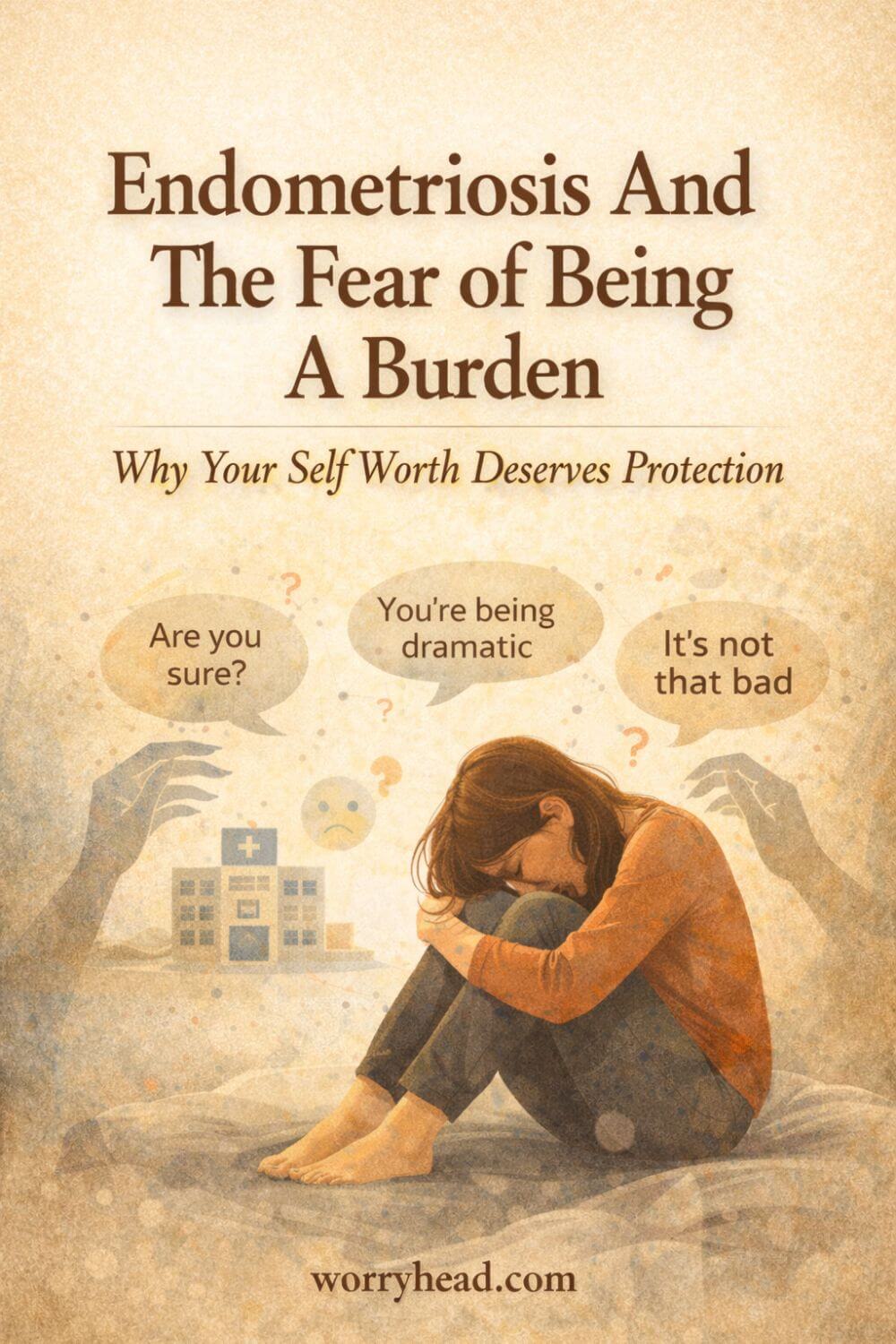
Endometriosis and Relationship Fear After Flares
Endometriosis and relationship life can feel like walking on thin ice, not because love is fragile, but because your body is unpredictable. I have watched my wife brace herself before dates, trips, even simple evenings, afraid a flare will turn joy into disappointment.
That fear can write invisible rules, such as do not promise, do not initiate, do not ask for what you really need. After enough pain and enough worry, you may start protecting others from your reality by hiding it, and that creates loneliness on both sides. The emotional impact of endometriosis is not only physical, but it is also the constant vigilance that keeps your heart half-guarded.
If you are scared of being left, please hear this gently: needing care does not make you a burden. A real endometriosis and relationship bond is built on truth, not performance. You deserve to be loved in the body you have, not the body you are forced to pretend to have.
When Endometriosis and Anxiety Arrive Before Pain
Endometriosis and anxiety often arrive early, sometimes before the pain fully speaks. It can feel like your body is sounding an alarm because it remembers what the last flare cost you.
I have seen my wife wake up with fear in her stomach, not from imagination, but from experience. The invisible rules whisper: stay ready, stay small, stay in control, because life can change in an hour. When you live with endometriosis, worry becomes a companion, and that worry can shape your day more than anyone outside can see.
If this is familiar, I want to name it without judgment. It is a mental health impact of endometriosis that deserves care, not shame. Anxiety is not your personality; it is your nervous system trying to prevent another moment of dismissal, another round of gaslighting, another fall in self-worth.
Endometriosis and Depression: When Your World Shrinks
Endometriosis and depression can grow slowly, like a shadow spreading as plans get smaller and options get fewer. It is not always sadness first; sometimes it is numbness, the feeling that joy takes too much effort.
Living with endometriosis can mean missing birthdays, skipping work events, and watching friendships fade through repeated cancellations. Because the illness is invisible, people may not connect the dots, and that can leave you alone with your thoughts. When loneliness becomes routine, self-worth can start to crumble, especially if you have already faced gaslighting and dismissal.
I have learned that depression is often a signal, not a failure. It can be the emotional impact of endometriosis telling you that your life needs softness, support, and room to breathe. If you feel this heaviness, please know you deserve endometriosis support that treats your mind with the same seriousness as your pain.
Endometriosis and OCD As a Search For Control
Endometriosis and OCD can be a cruel pairing because the body feels unpredictable, and the mind reaches for patterns to feel safe. I have watched my wife check, plan, clean, and repeat small rituals, not because she wants to, but because fear is demanding certainty.
When endometriosis is an invisible illness, you cannot always point to proof that others accept, so you worry and look for control in the places it can reach.
The invisible rules become rigid: do it right, do it now, do not let anything slip, because slipping feels like danger. After years of dismissal, that tight grip can feel like the only way to keep life from falling apart.
If you recognise this, I want you to feel compassion for yourself. OCD is not a character flaw; it is often trauma wearing a mask. Endometriosis support can include gentle help for the mind, so self-worth is not held hostage by fear.
Trauma Echoes In Endometriosis and PTSD
Endometriosis and PTSD is not always about one dramatic moment. It can be a collection of smaller moments that never felt safe. A doctor laughing, a partner doubting, a manager judging, a parent minimising, each one leaving a mark.
Over time, trauma can turn ordinary places into triggers. A clinic smell can spike fear, a phone call can bring worry, a calendar invite can create panic because your body remembers pain and dismissal. Gaslighting teaches your mind to doubt, and that doubt can make you feel alone inside your own experience.
I have seen this in my wife, and it changed how I speak, how I listen, how I show up. If your past has trained you to expect harm, it makes sense that the invisible rules feel like survival. You deserve endometriosis support that rebuilds safety, protects your self-worth, and reminds you that you are not a burden for needing care.
Gently Breaking the Invisible Rules of Endo
When I started noticing the invisible rules of endo in my wife, I realised they were not habits, they were fear shaped by years of dismissal. If you live with endometriosis long enough, your mind learns to protect you by keeping you small, even when you deserve space.
I have seen how gaslighting can make self-worth feel fragile, like it depends on how calm you sound while you are falling apart. And I have seen how quickly an invisible illness can turn into loneliness, because people only understand what they can see.
So I want to offer you something different, not pressure to fight harder, but permission to soften the rules gently. Endometriosis support can begin with one quiet truth: you are not a burden for having needs, and you are not difficult to name.
Breaking an invisible rule does not have to mean conflict. It can mean choosing yourself once, then again, until worry stops running your life and you start feeling safe in your own skin.
Name the Rule Without Shaming Yourself
The first gentle break is simply naming what is happening, without calling yourself broken. When my wife would whisper “I’m sorry” for resting, I learned that apology was not politeness, it was fear shaped by dismissal.
So I invite you to try one sentence in private: “An invisible rule is telling me I must…” and finish it honestly. “I must push through.” “I must stay quiet.” “I must not cancel.” Naming it takes it out of your identity and puts it where it belongs, in the trauma of gaslighting and being doubted.
If shame shows up, treat it like a nervous system alarm, not a verdict. Anxiety often rides on top of these rules because fear wants you to stay safe by staying small. You learned them while trying to survive living with endometriosis, and survival deserves compassion, not criticism.
Turn a Rule Into a Need You Can Honour
Most invisible rules are a twisted way of meeting a real need. The rule says “Don’t be a burden,” but the need underneath is safety, love, and belonging. The rule says “Don’t cry at the doctor,” but the need is to be believed instead of met with dismissal.
When you translate a rule into need, something softens. You stop fighting yourself, and you start caring for the part of you that is scared. I’ve watched my wife’s worry calm down when I said, “I believe you,” because belief is endometriosis support that reaches the emotional impact of endometriosis.
Write it like this: “This rule is here because I need…” and let the answer be simple. Sometimes the need is rest. Sometimes it is reassurance. Sometimes it is protection from trauma that looks like endometriosis and PTSD, or control that shows up as endometriosis and OCD. Needs are not demands; they are the truth under fear.
Ask For Support Without Apologising For Pain
A boundary can be quiet and still be powerful. Many women with endometriosis have learned to wrap every request in apology, because gaslighting taught them that asking equals trouble and that pain must be proven.
Try swapping apology for clarity. “I’m having a flare, and I need to rest.” “I can’t make it today, but I want to reschedule.” “I need you to listen without fixing.” With doctors, it can sound like, “I need you to note that this affects my daily life.” When you speak like that, you are not being difficult; you are protecting your self-worth.
This matters because loneliness often grows when you hide your needs. The people who can love you well need the chance to show up, and the ones who cannot will reveal themselves without you begging for permission to be human. That is how you loosen invisible rules without breaking yourself.
Protect Your Heart In Endometriosis and Relationship Moments
Endometriosis and relationship fear often live in the small moments, not the dramatic ones. A partner sighs, plans change, intimacy feels complicated, and suddenly your mind starts counting the ways you might be too much.
In our home, I learned to slow everything down. I stopped asking my wife to explain her pain like a report, and I started asking, “What would feel safe right now?” Safety is the opposite of trauma, and it is also the opposite of the invisible rule that says you must perform to be loved.
If you are with someone who cares, let them learn your language, even if it takes repetition. If you are with someone who keeps dismissing you, notice what that does to your anxiety and depression, and how quickly self-worth turns into silence. Love should not feel like another place you must hide, and endometriosis support should include tenderness, not pressure.
Build Safety After You Break a Rule
Breaking a rule can feel like danger even when nothing bad happens. That is why people set a boundary and then spiral into worry, replaying every word, feeling guilt like a weight in the chest.
After my wife takes a brave step, we do aftercare on purpose. We name what went well, we let the body settle, and we don’t let fear rewrite the moment into a disaster. This is especially important if you carry endometriosis and PTSD, or if endometriosis and OCD pull you into overthinking and checking.
Choose one small safety cue after a boundary: a slow breath, a warm drink, a quiet room, a kind message to yourself. Then remind your body, “I am not a burden for having limits.” You are teaching your nervous system that you can take up space and still be safe inside an invisible illness, even if loneliness once taught you otherwise.
Building a Life Beyond the Invisible Rules of Endo
The invisible rules of endo can shrink a woman’s world so slowly that one day she forgets what freedom used to feel like. I have watched that happen to my wife, not because she lacked strength, but because fear and worry kept convincing her that taking up space would lead to more dismissal.
I learned that real endometriosis support is not only about managing symptoms. It is also about rebuilding self-worth after years of gaslighting, and making sure loneliness does not become your normal. When endometriosis and anxiety are always humming in the background, even good days can feel fragile, like you are only one flare away from losing control again.
That is why I care so much about the life you build around the illness. In our case, blogging and working from home helped us create safety, not as an escape from reality, but as a way to stop forcing her body into environments that triggered trauma. A life that can flex with pain is not a luxury; it is a form of protection.
I am not saying work is a cure, because endometriosis and depression do not disappear just because you change jobs. But I have seen what happens when a woman no longer has to beg for sick leave, no longer has to hide in toilets, no longer has to fear a manager’s tone. The nervous system starts to unclench, and the invisible rules loosen because the danger around them reduces.
I also want to say something to the women who feel trapped by a dreaded 9-to-5. If you are exhausted and your body is tired of surviving, you deserve options, not judgment. You deserve a future where your illness does not decide your entire identity, and where your worth is not measured by how much you can endure in silence.
The quiet truth is that breaking rules is easier when your life supports you. When your home feels safe, when your work allows rest, when your relationship holds you with tenderness instead of dismissal, fear stops being the loudest voice. And little by little, you start living with endometriosis without living under it.
Final Word On Invisible Rules of Endo
If you have lived with endometriosis for years, you may not realise how many decisions you make to avoid being judged. You learn to scan faces for impatience, to measure your honesty, to choose silence so you can keep peace. Those choices can look like strength from the outside, but inside, they can feel like fear that never turns off.
Watching my wife live with an invisible illness taught me that rules often form after one too many moments of dismissal. A doctor sighs, a friend changes the subject, a family member minimises, and your body files it away as danger. The next time you need care, anxiety shows up first, and your words come out smaller than your pain.
That is why breaking rules cannot start with pushing harder. It has to start with safety, because trauma makes even gentle honesty feel risky. When you have been gaslit, your self-worth can depend on how convincing you sound, and that is an exhausting way to survive. You deserve endometriosis support that treats your reality as enough, even before you can explain it perfectly.
I want you to remember something simple. The rules were not created because you are weak, needy, or dramatic. They were created because you are trying to keep love, keep work, keep care, keep belonging, while pain keeps moving the goalposts. Loneliness can grow in that gap, especially when endometriosis and depression make you feel like your world is shrinking.
So let the next chapter of your life be quieter and kinder. When you notice an invisible rule, name it without shame. Translate it into the need underneath, whether that need is rest, belief, or protection from fear. Then choose one tiny act that honours that need, even if it is only telling the truth to one safe person.
If relationships have been strained, start there with gentleness. An endometriosis and relationship bond can survive hard truths when it is built on respect, not performance. If your mind runs toward worry, remind yourself that endometriosis and anxiety is not a character flaw, it is a nervous system response to past dismissal. If OCD shows up, treat it as a sign you need more steadiness, not more self-blame.
Some days, you may feel the old panic in clinics, the way endometriosis and PTSD can make your chest tighten before you even speak. If that happens, pause and ground yourself. You are allowed to ask for clarity, to request notes, to repeat yourself, and to bring someone with you. Being persistent is not being difficult in that room.
You do not have to break every rule to reclaim your life. You only have to loosen one, then practise that new freedom until your body believes it. Over time, those small moments become proof that you can take up space and still be loved. That is the opposite of gaslighting, and it is how self-worth comes back, not in speeches, but in daily choices that respect your limits.
You are not a burden for needing rest, belief, and gentleness. The rules you learned were built from fear and dismissal, not from who you are. Start with one small truth today, protect your self-worth, and let support find you. Little by little, your life can feel like yours again. You deserve to be believed, every time.
If any of this felt familiar, please leave a comment with the rule you’re trying to unlearn, and if you want extra support, check out my FREE eBook.


About Me
Hi, I’m Lucjan! The reason why I decided to create this blog was my beautiful wife, who experienced a lot of pain in life, but also the lack of information about endometriosis and fibromyalgia for men…
READ MORE