
The Lie That You Are Too Much
Some nights, I watched my wife apologise for taking up space in her own pain, like her endometriosis and fibromyalgia were an inconvenience she owed the world an explanation for. Have you been carrying the lie that you are too much and calling it “being strong” just to survive?
The phrase describes internalised stigma: when repeated dismissal or criticism makes you believe your needs, pain, or emotions are excessive. It is not a personality flaw; it’s a learned survival belief that can fuel shame, silence, and over-apologising, especially in chronic illness and love.
When you live with symptoms people can’t see, you start doing emotional math all day long:
- How much can I say before they roll their eyes?
- How much can I cancel before they stop inviting me?
- How much truth can I share before they label me difficult?
I’ve heard this from so many women, not as drama, but as a pattern that the more your body demands care, the more the world hints you should be quieter about it. Research on chronic illness stigma breaks it down in a way that matches what I’ve watched at home:
- What people do to you.
- What you fear they’ll do.
- What you start doing to yourself.
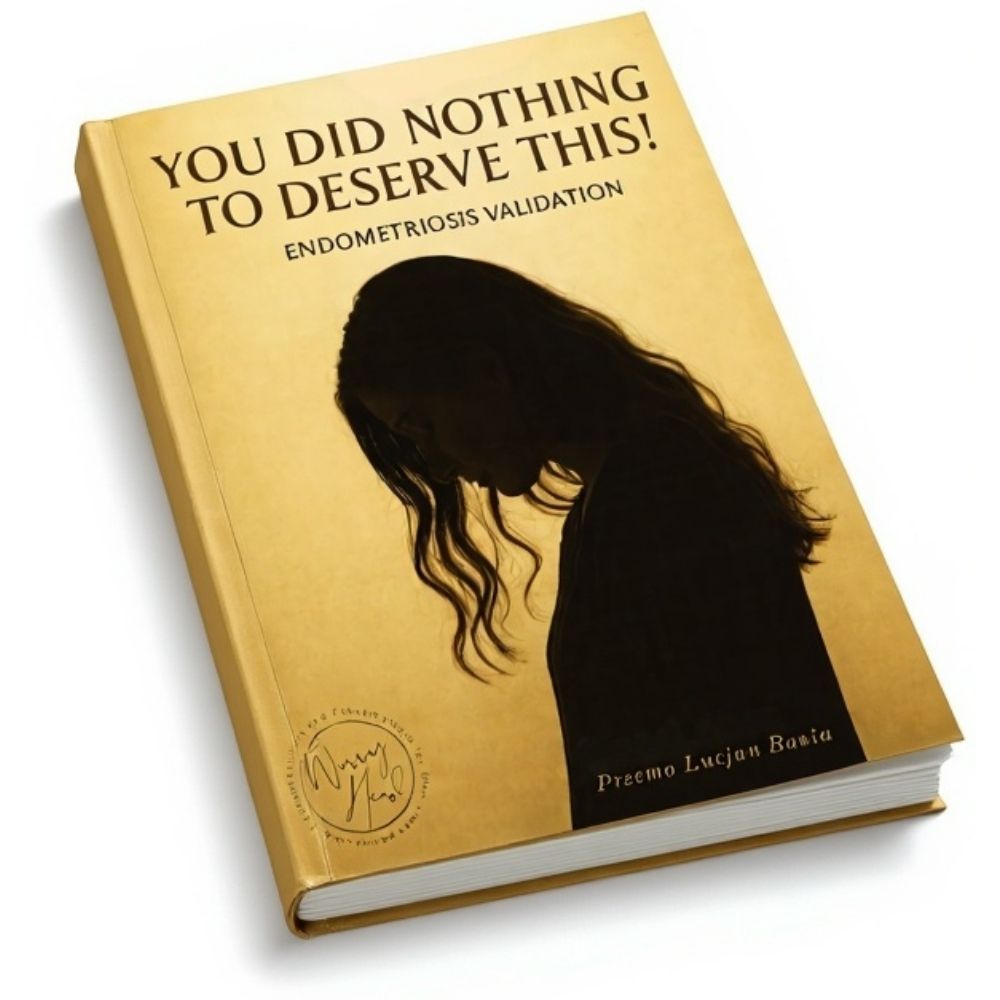
If you want something gentle to hold onto today, you can grab my FREE “You Did Nothing to Deserve This!” eBook. And if you join our community, you’ll also get more freebies, big discounts on our books, and simple emails that help you adjust to the new normal chronic illness brings to your relationship and life.
The book is filled with 20 chapters of gentle validation for women with endo, written by yours truly, as I have seen it up close...
It’s my way of telling you, in much more detail, that your pain, your complex response to treatment, and your emotions around all of it are real, understandable, and never your fault.
It’s not a medical guide but a human one. Here’s what you will find inside:
- This Was Never Your Fault
- The Girl You Used To Be
- When Your Own Body Feels Like an Enemy
- The Invisible Battles Nobody Sees
- Am I Just Lazy? – The Lie You Have Been Taught
- Gaslighting, Dismissal and the Trauma of Not Being Believed
- Guilt: The Weight You Were Never Meant to Carry
- Love in the Middle of Pain
- Intimacy When Your Body Hurts
- The Loneliness of Being the Strong One
- You Are Allowed To Take Up Space
- Tiny, Gentle Hopes (Not Toxic Positivity)
- If You Could Hear My Voice Every Flare Day
- You Deserve Partners, Not Witnesses
- When You Wish He Understood
- Motherhood, Fertility and the Grief Nobody Sees
- When Anger Is the Only Honest Feeling
- Learning to Trust Your Body Again
- Building a Life That Fits Your Reality
- You Did Nothing To Deserve This
You Did NOTHING To Deserve This!
Endometriosis Validation for Women with Endo
- FREE eBook
- You Did NOTHING To Deserve This!
- The Lie That You Are Too Much
- Name The Moment You Shrink
- Trade Apologies For Clear Facts
- Use a One-Sentence Needs Script
- Practice Boundaries Before the Flares
- Make Room for Imperfect Rest
- Stop Proving Pain to Others
- Choose One Safe Person Weekly
- Document Symptoms Gently, Without Self-Blame
- Replace Self-Silence With Tiny Truths
- Build a Life That Fits
- When The Lie That You Are Too Much Enters Love
- Final Word On The Lie That You Are Too Much
The Lie That You Are Too Much
When pain is invisible, you start editing your own truth before anyone else can. You soften the words, you swallow the tears, you smile through symptoms, because you learned that being “easy” gets you believed faster. My wife did that for years, and the scariest part was how natural it became.
Researchers describe this as stigma that gets under the skin: not only what others say, but what you begin to expect, and then what you start telling yourself.
That expectation can make you pre-apologise before you even ask for help, and it’s so common that whole pieces have been written just about stopping the constant “sorry” that chronic illness trains into you. It is not a weakness, but a protection that overstays.
Here is how it usually plays out: you notice a flare, you measure the room, and you decide your body is the problem to manage quietly. You cancel plans and then rehearse your excuses like you are on trial. You push through on a “good day,” and when the crash comes, you feel like you proved everyone right.
In the lie that you are too much psychology, self-silencing is one of the traps: keeping your needs small to keep love close.
Studies and reviews on self-silencing link this pattern to higher distress and poorer health outcomes for many women, because the nervous system never gets the signal that it is safe to stop performing.
And when doctors or family dismiss symptoms, that silence hardens into shame…
Endometriosis and fibromyalgia communities describe the same wound: being doubted so often that you start doubting yourself, even while living with daily pain.
That is when the lie of it all becomes personal, like your body is asking for too much simply by existing. You might even catch yourself thinking you lie too much, not because you are dishonest, but because you have been trained to defend every symptom with evidence you should never have had to bring. The truth is, your needs are information, and love that lasts does not require you to disappear.
I still remember my wife whispering “sorry” after a panic attack, as if the act of surviving was an inconvenience to me. I held her and thought, if the person I love most believes she is a burden, then this lie has already stolen too much. So, in the next section, I want to give you small, usable ways to take your space back, one moment at a time.
- Name the moment you shrink
- Trade apologies for clear facts
- Use a one-sentence needs script
- Practice boundaries before the flare
- Make room for imperfect rest
- Stop proving pain to others
- Choose one safe person weekly
- Document symptoms gently, without self-blame
- Replace self-silence with tiny truths
- Build a life that fits

Name The Moment You Shrink
You know the moment I mean. Your chest tightens, your throat closes, and you make yourself smaller before anyone even speaks.
My wife used to do it when her endometriosis pain hit in public. She would scan faces, then apologise for breathing too loudly, for sitting down, for needing help.
Women tell me they do the same thing at work, at family dinners, even in the doctor’s office, because they are bracing for dismissal before it arrives. The stigma keeps describing that pattern of the social cost becomes part of the illness.
That shrinking is not your personality. It is a learned reflex after enough “you’re fine,” enough jokes, enough days when your symptoms were treated like a mood.
If you can name the moment you shrink, you can interrupt it. Just labelling it helps your brain switch from panic to choice, even if the choice is only: “I’m allowed to sit.”
Trade Apologies For Clear Facts
Apologising can feel polite, but in chronic illness, it often becomes a hiding place until your needs sound like crimes. My wife once said sorry for needing the bathroom floor during a flare, and I felt my heart split. Nothing about pain deserves an apology.
Try trading apologies for clear facts. Facts are calmer, harder to argue with, and kinder to your nervous system:
- “I’m in a flare today.”
- “I can’t stand for long.”
- “I need to leave early.”
This is especially important after medical dismissal, because gaslighting can make you wonder if you lie too much about what you feel. But clarity is not exaggeration; it is self-respect.
Over time, people learn how to meet you when you speak like this. And the ones who don’t, reveal that the problem was never your body, it was the room.
Use a One-Sentence Needs Script
When you’re overwhelmed, long explanations make you more vulnerable. The more you talk, the more you feel you must persuade, and the old fear returns that you are “too much.”
A one-sentence needs script protects you on the hardest days. It is short, steady, and it tells the truth without begging: “I’m having symptoms and I need quiet.” Or: “I’m not okay today, please stay close.”
This is where the lie that you are too much meaning gets exposed. You were never asking for too much; you were asking for something specific, and specific needs are easier to meet than a storm of panic.
Women in my community share scripts like these for partners, bosses, and friends, because they have learned the hard way that clarity saves relationships. The sentence becomes a doorway back to safety, not a debate.
Write yours down when you feel calm. Then, when the flare comes, you don’t have to invent language while you’re hurting.
Practice Boundaries Before the Flares
Most boundaries fail because we try to set them mid-crisis. When pain spikes, your body is already in survival mode, and you end up negotiating while you are shaking.
Practising boundaries before the flare means choosing your “no” in advance. It can be as simple as deciding that you won’t explain yourself more than once, or that you will leave gatherings after a set time.
My wife and I started doing this because flare-ups don’t just hurt her body, they flood our whole home with fear. When we plan ahead, the fear has less power.
This isn’t about controlling anyone. It’s about protecting your limited energy, the way you protect something precious.
Research on self-silencing shows how easily people suppress needs to keep the peace in relationships. Boundaries are the opposite: a way to stay connected without disappearing.
The right people won’t demand silence as proof of love.
Make Room for Imperfect Rest
Rest can feel like failure when your whole life has been graded on productivity. So you “earn” rest by collapsing, and then you hate yourself for collapsing.
My wife used to bargain with her body: one more task, one more hour, one more clean kitchen, and then she’d rest. That bargain always ended the same way, with pain and tears and the quiet thought that she was letting everyone down.
Make room for imperfect rest. Not the perfect spa version, not the “I rested correctly” version, but the real one: lying down without permission, eating something simple, turning off the bright lights, letting the day be messy.
Fibromyalgia and endometriosis both teach you that symptoms flare when stress and exhaustion pile up, and that pacing matters even when it is boring. Many women describe grief for the old pace of life, and that grief needs gentleness, not guilt.
Rest is how you stop the crash from owning tomorrow.
Stop Proving Pain to Others
If you have ever rehearsed your symptoms like a courtroom statement, you know this weight. Dates, timelines, photos, lab results, the “right” tone of voice, all to convince someone you are not dramatic. That pressure is one reason the lie that you are too much psychology lands so hard.
When the world doubts you, you start collecting proof instead of receiving care.
Stopping the need to prove pain does not mean you stop advocating. It means you stop performing. You can bring information to appointments, but you do not have to bring shame.
Medical gaslighting has been described as invalidating a patient’s genuine concern, and people who experience it often report reduced trust and more fear about seeking care.
Borrow this boundary:
- I’m not here to debate whether I’m suffering.
- I’m here to discuss what helps.
- The right clinician leans in when you say that.
Choose One Safe Person Weekly
Isolation is a quiet partner of chronic illness. Not because you don’t love people, but because every interaction can feel like a risk, such as: will they believe me, will they get bored, will they resent my limits?
Choosing one safe person weekly is a small rebellion against that loneliness. One message. One voice note. One coffee with someone who doesn’t make you pay for accommodations with guilt.
So many women have told me they survived by telling the lies you told to keep the peace:
- “I’m fine.”
- “It’s nothing.”
- “I’m just tired.”
Those were survival tools, not moral failures.
A safe person helps you retire those lies. They don’t force positivity. They don’t rush you to be “better.” They stay steady when your symptoms and emotions change hour to hour.
The fibromyalgia stigma literature shows how disbelief can harm identity and relationships, not just comfort. A safe person is how you rebuild trust in being seen.
Document Symptoms Gently, Without Self-Blame
Symptom tracking can help, but it can also turn into self-interrogation if you do it like you’re building a case against yourself. I’ve seen my wife stare at a calendar and whisper, “What if I’m overreacting,” even while she was shaking in pain.
Document symptoms gently, without self-blame. Think of it as a compassionate log, not a report card. A few lines: what you felt, what helped, what made it worse, and what you needed.
This matters because dismissal is common in conditions people can’t “see.” Qualitative studies in endometriosis describe being minimised and misheard in care journeys, and that experience changes how confidently patients speak.
Gentle notes give you language when your mind goes blank in an appointment. They also show patterns that can support pacing, medication timing, food choices, and rest. Most importantly, your notes remind you of your own reality on the days your brain tries to convince you it was all “in your head.”
Replace Self-Silence With Tiny Truths
Self-silence rarely starts as a choice. It starts as a lesson: speak up, and you get dismissed, judged, or left. So you learn to be “low maintenance,” even when your body is screaming.
Replacing self-silence with tiny truths is not about unloading everything on everyone. It is about giving your life a few honest sentences again…
- “That comment hurt.”
- “I can’t do that today.”
- “I need you to slow down.”
Silencing the Self theory describes how people, especially women, may inhibit self-expression to preserve relationships, and how that pattern can link to distress. Tiny truths rebuild the bridge between your inner world and your outer life. They also teach your partner what support looks like in real time, not in hindsight.
I have watched my wife change when she practices tiny truths. Her body still flares, but her shame flares less. And that is a kind of healing that deserves to be protected.
Build a Life That Fits
When people say “you’re too much,” what they often mean is: your needs don’t fit the system I’m used to. The problem is not you. The problem is a life built for bodies that never flare.
Building a life that fits can start tiny: a quieter morning, fewer back-to-back plans, a chair that supports your pelvis, a rule that home is a safe place to crash. Then it can grow into wider choices.
For us, it meant work that could bend. Blogging and building a home office did not cure my wife, but it gave her control: heating pad breaks without shame, naps without permission, and the ability to work from anywhere when she had strength.
It also gave us moments that illness tried to steal, like travelling through Italy when she could, and visiting my mum in Poland, where my love for home and calm was born. You deserve a life where support is built in, not begged for, and where your needs are treated as normal parts of love.
When The Lie That You Are Too Much Enters Love
After you start telling yourself you’re a burden, you begin to treat love like a test you might fail. You watch people’s moods like the weather, and you try to keep the sky clear by keeping your needs quiet. That is how the lie that you are too much slips into a relationship without anyone inviting it.
I saw it with my wife when her body flared, and her mind followed, anxiety tightening, OCD grabbing for control, panic rising because pain already stole her sense of safety. She wasn’t trying to be difficult; she was trying to survive the next hour. And when she snapped or shut down, she would cry afterwards, not only from pain, but from the fear that she was ruining our life.
Here’s the part I wish more partners understood: reassurance is not just words, it’s tone, timing, and staying present when the room goes tense. On the hardest days, I learned to slow my voice, soften my face, and offer simple choices instead of questions that feel like pressure. It doesn’t fix the illness, but it tells her nervous system, over and over, you are safe with me.
The same is true for you, even if you are the one in pain and the one carrying guilt. Remember that a healthy relationship can hold accommodations without turning them into debt, and it can hold grief without turning it into blame.
If you’ve ever apologised for needing comfort, I want you to picture my wife in my arms after a flare, whispering sorry like she had done something wrong, and me wishing I could take that word out of her mouth forever. You are not too much for the right kind of love; you are a human being asking to be treated gently while your body fights a war no one can see.

Final Word On The Lie That You Are Too Much
The lie doesn’t always arrive as an insult. Sometimes it arrives as a sigh when you cancel again. Sometimes it arrives as a raised eyebrow when you say you’re in pain for the third day in a row. Sometimes it arrives as silence, the kind that makes you feel like your body is embarrassing. Over time, you start translating other people’s discomfort into a story about your worth.
I’ve watched my wife do this after endometriosis flare-ups that left her curled up, sweating, trying to breathe through pain that had no visible wound.
I’ve watched it after fibromyalgia days where even a soft touch felt like bruising, and the fatigue didn’t feel like “tired,” it felt like gravity. Then anxiety would join in, and OCD would try to create rules to control what cannot be controlled, and panic would come like a wave. The hardest part was never only the symptoms. It was the way she looked at me afterwards, as if love should require less of her.
That is what this lie does. It takes the normal human need for care and turns it into shame. It teaches you to apologise for the rest. It trains you to keep your voice small so nobody rolls their eyes. It makes you rehearse your pain like evidence, as if you have to earn compassion. It can even twist your memory so you start thinking you lie too much, when the real truth is you’ve been forced to defend your reality for too long.
The truth is simpler than the lie, but it takes time to believe: your needs are not proof you are broken. They are proof that you are alive. Everybody has limits. Yours just speaks louder, and that doesn’t make you dramatic, weak, or “too sensitive.” It makes you someone who deserves a life designed with care.
In our home, I learned that love isn’t measured by how little support you require. Love is measured by how safe you feel being honest.
- When my wife can say, “I can’t do today,” and I don’t flinch, something in her softens.
- When she can cry without apologising, the air changes.
- When she can ask for reassurance without feeling childish, the room becomes gentler.
That doesn’t happen because she “pushes through.” It happens because the relationship stops demanding performance.
If you’re the one living with symptoms, I want to say this plainly. You are not asking for too much when you ask for patience, quiet, flexibility, or a hand to hold.
- You are asking for what chronic illness makes necessary.
- You are asking for what your nervous system needs to settle.
- You are asking for what your body needs to heal in the ways it can.
If you’re the partner reading this, wondering how to help, here is what I’ve learned as a man who loves a woman in pain…
You cannot fix her body, but you can protect her dignity. You can refuse to treat her accommodations like an inconvenience. You can remind her that she is still desirable, still wanted, still allowed to take up space. You can say, “I believe you,” and mean it, even when the world has trained her to doubt herself. You can help build a life that fits her reality, not the other way around.
That is why I built a work-from-home life around blogging and a home office that feels like a refuge, not a workplace that punishes weakness. It wasn’t about chasing money for ego. It was about giving my wife safety: the ability to rest without risking a job she hated, the ability to work when she could, the ability to travel when her body allowed it, and the ability to feel like life still belonged to her.
For us, it meant mornings where she could heal instead of commuting. It meant sitting in Italy when she had strength, breathing in the beauty of a place that feels like part of her blood. It meant visiting my mum in Poland, where my love for calm homes and small comforts began, and bringing that comfort back to my wife.
You do not have to accept a life where you are constantly shrinking. You can start with tiny truths, a single boundary, one safe person, one sentence that replaces apology with clarity. You can build a life that holds your limits with kindness. And you can unlearn the voice that says your needs make you unlovable.
Because the real problem was never that you were “too much.” The real problem was that you were surrounded by people and systems that had no idea how to hold a human being in pain.
And if nobody has told you this in a long time, let me tell you now, as someone who has held the trembling hands, heard the midnight sobbing, and stayed through the storms: you are allowed to be fully human. You are allowed to need. You are allowed to take up space.
Your body is not a moral failure. Your emotions are not an inconvenience. And your love is not something you have to earn by disappearing.
You deserve to be met, not managed. You deserve to be loved, not tolerated. You deserve a life where support is normal. And you deserve to hear, until it finally sinks in, that the lie that you are too much was never the truth about you.
Your needs are not “too much.” They are the map to what you need next.
If you take one thing from this, let it be this: stop measuring your worth by how little you require. Measure it by how bravely you tell the truth, and how gently you treat yourself while you do.
You were never “too much.” You were carrying pain, fear, and survival in a world that wanted you quiet. Start small: one honest sentence, one boundary, one act of rest without guilt. The right love won’t ask you to shrink. It will help you breathe again.
If any part of this felt like your story, I’d truly love to hear from you in the comments. And if you need a gentle reminder today, check out my FREE “You Did Nothing to Deserve This!” eBook.
About Me
Hi, I’m Lucjan! The reason why I decided to create this blog was my beautiful wife, who experienced a lot of pain in life, but also the lack of information about endometriosis and fibromyalgia for men…
READ MORE