Why Endometriosis Destroys Marriages?
Have you ever wondered why endometriosis can feel as if it is not only attacking your body, but also the relationship you tried so hard to protect? The painful truth behind why endometriosis destroys marriages is not that love suddenly disappears.
It is that pain, exhaustion, fear, guilt, intimacy struggles, and years of being misunderstood can slowly make two people feel lonely in the same home.
Endometriosis can damage marriages when pain, fatigue, painful sex, infertility fears, money stress, medical trauma, and feeling disbelieved slowly replace safety, closeness, and teamwork. It does not destroy love by itself, but unsupported symptoms can quietly erode the relationship around it.
I am not a clinician, and this article is not medical advice. I write as a husband, blogger, and researcher who has spent years learning beside my wife, and at the bottom of this article I have attached the sources I used to understand the medical context, including guidance and research from places such as NICE, NHS, ESHRE, and peer-reviewed studies.
What many people miss is that endometriosis does not enter a relationship only through the bedroom, the hospital room, or the calendar full of cancelled plans. It enters through the tiny daily losses nobody else sees: the touch you start to fear, the plans you stop making, the guilt you carry, the arguments that are really grief wearing a different face.
Research keeps showing that endometriosis can affect physical health, sexual wellbeing, emotional health, social life, fertility, work, and the partner too, which means the relationship often becomes part of the battlefield. If nobody teaches both people how to stay on the same side, the illness can begin to speak louder than the love, even increase the chances of divorce.
I have watched my wife live with endometriosis, adenomyosis, fibromyalgia, anxiety, depression, OCD, panic attacks, and the kind of exhaustion that changes the whole atmosphere of a home. I have also watched how love can survive when a man stops taking symptoms personally and starts learning what her body has been trying to say all along.
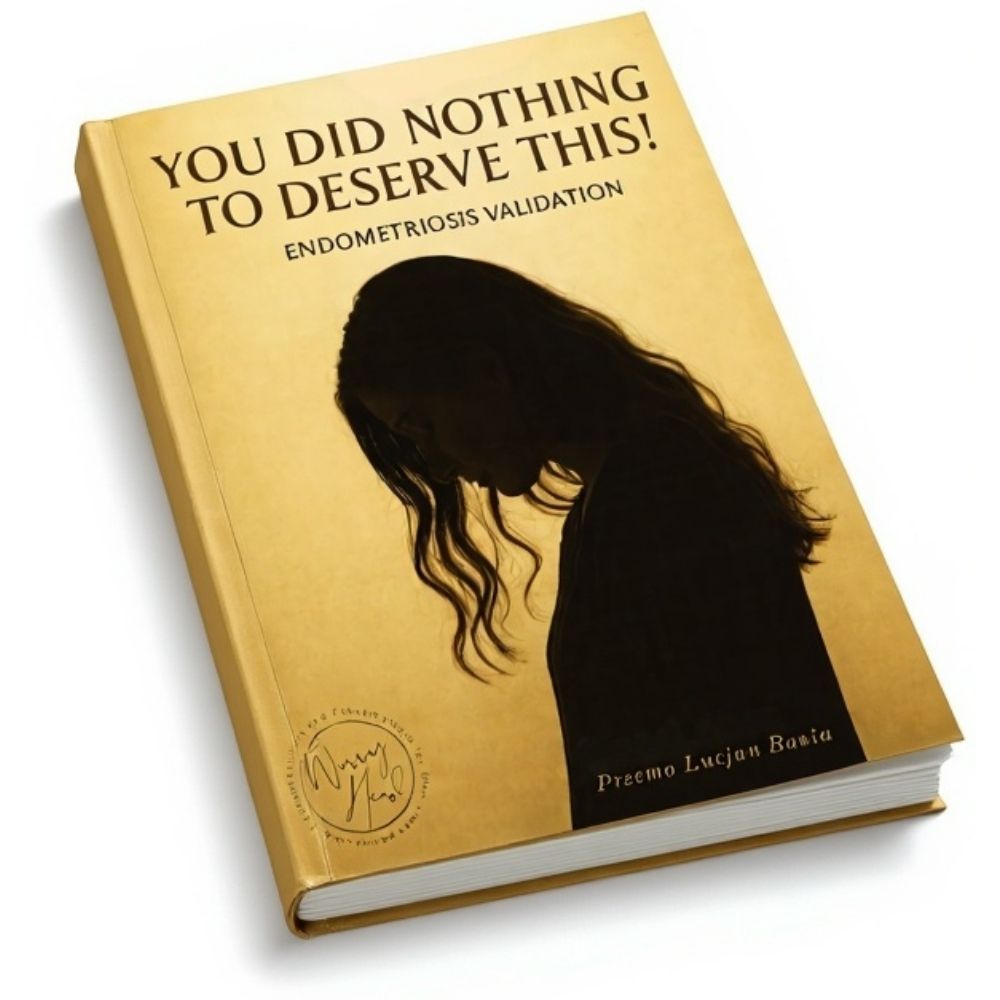
If this already feels close to your heart, you can also grab my free 130+ page eBook, “You Did Nothing To Deserve This!”, written to validate the feelings of women living with endometriosis. When you get it, you also join our Worry Head community, where I share more freebies, big discounts on my books, and honest emails that help you adjust to the new normal chronic illness can bring to your body, relationship, and life.
When endometriosis creates distance in a marriage, it can be hard to separate the condition from the hurt that has grown around it. My free eBook speaks to the loneliness and misunderstanding women may carry, and it can also help a partner begin to hear those feelings more clearly.
You Did NOTHING To Deserve This!
Endometriosis Validation for Women with Endo
Why Endometriosis Destroys Marriages Slowly, Not Suddenly?
The reason why endometriosis destroys marriages is rarely one dramatic argument, one bad day, or one partner waking up and deciding they no longer care.
More often, it happens slowly, quietly, almost invisibly, while both people are trying to survive something neither of them fully understands.
Endometriosis can bring pelvic pain, painful sex, bowel symptoms, bladder symptoms, fatigue, fertility struggles, anxiety, depression, medical trauma, and repeated disappointment in the same relationship. The NHS lists symptoms such as pelvic pain, pain during or after sex, pain when peeing or opening the bowels, and extreme tiredness, and every one of those can affect the daily rhythm of a couple’s life.
When your body becomes unpredictable, your relationship can become unpredictable too.
You may want closeness but fear touch. You may want to go out, but know your body may punish you later. You may want to explain yourself, but you are tired of explaining the same pain to doctors, family, friends, and the person sleeping beside you.
From the partner’s side, there can be love, worry, helplessness, frustration, and confusion all sitting in the same chest. Studies on partners show that endometriosis can affect not only the woman living with it, but also the person who loves her, especially around intimacy, planning, emotional pressure, and feeling unsure how to help.
But this is where many couples lose their way: the illness becomes the enemy, yet they start fighting each other instead. Sex plays a big part, and if you ever wanted to learn how to survive a sexless marriage, I wrote an article on this very topic.
Pain can make you withdraw. Fear can make your partner push for answers. Exhaustion can make small conversations feel too heavy. Rejection can be misunderstood when it is really protection from pain.
And when sex becomes painful, cancelled, cautious, or emotionally complicated, it can touch places in a relationship that words do not always reach. Research keeps showing that endometriosis can affect sexual wellbeing and intimate relationships, especially when dyspareunia, which means painful sex, becomes part of daily life.
That does not mean your relationship is weak.
It means your relationship is being asked to carry more than most people ever see.
I have seen this in my own home with my wife. I have seen how pain can change the tone of a room, how fatigue can steal a whole day before it begins, and how fear can sit between two people even when they deeply love each other.
There were times when I did not have the right words, only the wish to understand her better. And if I could go back, I would tell my younger self that support is not only about fixing, solving, earning, protecting, or being strong.
Sometimes support is learning how not to take her pain personally, how not to make her guilt heavier, and how to stay soft when the illness has made both of you tired.
That is why the next part matters so much. Because while endometriosis can put unbearable pressure on a marriage, there are ways to protect love, rebuild safety, and stop the illness from becoming the loudest voice in the relationship.
- Learn The Real Enemy
- Stop Taking Pain Personally
- Protect Emotional Safety First
- Talk Before Resentment Grows
- Redefine Intimacy With Compassion
- Share The Invisible Load
- Respect Medical Trauma
- Build A New Normal Together
- Let Love Become Practical
Learn the Real Enemy
The first shift that can save a relationship is learning to stop seeing each other as the problem. Endometriosis can make everything feel personal, even when it is not. Her silence can look like distance, her cancelled plans can look like lack of effort, and her fear of intimacy can look like rejection, when often it is her body trying to protect her from more pain.
When a couple does not name the real enemy, the illness starts wearing both faces.
You may feel hurt because she pulls away, and she may feel hurt because she thinks you are disappointed in her. That is how two people who love each other can end up defending themselves instead of defending the relationship. I had to learn this with my wife. Her pain was not against me.
Her exhaustion was not laziness. Her emotional overwhelm was not lack of love. The enemy was the illness, the medical dismissal, the fear, the tired nervous system, and the grief of losing parts of life we both thought we would have.
Stop Taking Pain Personally
One of the hardest lessons for a partner is this: her pain is not a statement about your worth. If she cannot be touched, it does not mean you are unwanted. If she cannot go out, it does not mean she does not care. If she cries, snaps, shuts down, or needs space, it may mean her body has reached a limit long before her heart did.
Endometriosis can make a woman feel trapped inside a body that keeps changing the rules. She may already be blaming herself for what she cannot give, do, finish, plan, or enjoy.
When a partner adds hurt pride on top of that, even quietly, she can feel like she is failing twice. I say this as a man who had to grow into better understanding. Love becomes safer when you stop asking something that changes can soften a whole home:
- “Why is she doing this to me?”
- “What is her body forcing her to survive today?”
Protect Emotional Safety First
Before a couple can solve anything, the relationship has to feel emotionally safe. A woman with endometriosis may already feel disbelieved by doctors, misunderstood by family, judged at work, and betrayed by her own body. If she also feels she has to perform strength inside her relationship, she may stop sharing the truth of what she is carrying.
Emotional safety means she can say, “I am scared,” without you rushing to fix her. She can say, “I cannot do this today,” without being punished with silence. She can say, “I miss who I used to be,” without being told to be positive. I learned that my wife did not always need a solution first.
Sometimes she needed a soft landing. She needed proof that her pain would not make me colder, her tears would not make me leave, and her bad days would not make her less loved. That kind of safety does not cure endometriosis, but it can stop the relationship from becoming another place she has to survive.
Talk Before Resentment Grows
Resentment rarely begins loudly. It often starts as one swallowed sentence, then another, then another, until both people are carrying private pain they never properly named.
Endometriosis can create many silent resentments because so much changes: sex, money, sleep, chores, plans, work, fertility, social life, and emotional energy.
She may resent that her body keeps taking things away. You may resent that life feels heavier than you expected. She may feel guilty for needing help. You may feel guilty for feeling tired. And if neither of you speaks gently about it, resentment can begin to look like blame.
The goal is not to dump every emotion on each other in the middle of a flare. The goal is to build small honest conversations before everything explodes. I wish more partners knew how powerful it is to say, “I am not angry at you, I am scared too,” or “I miss us, but I do not blame you.” Those words can open a door that silence was slowly locking.
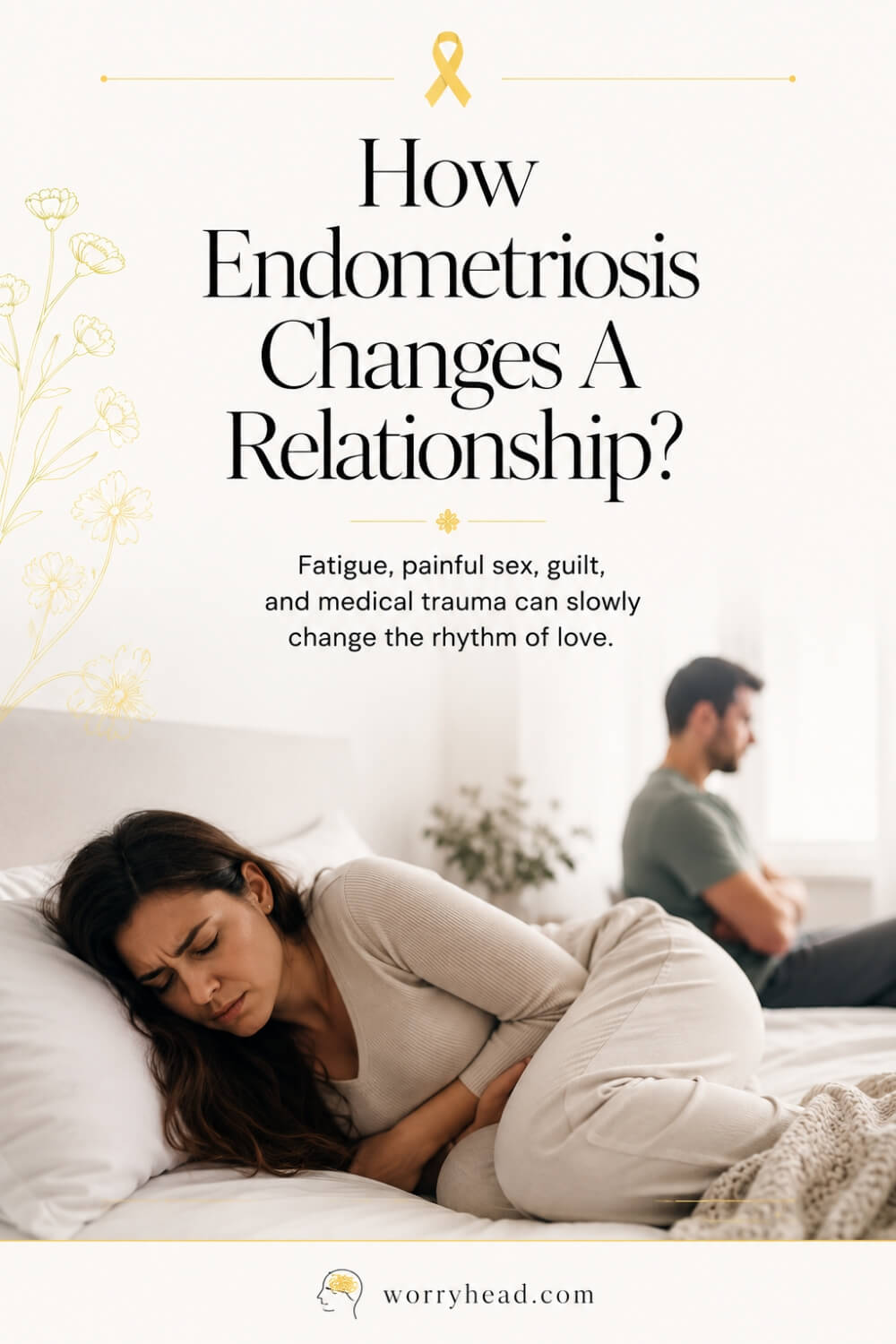
Redefine Intimacy with Compassion
Painful sex can be one of the most heartbreaking parts of endometriosis because it touches the body, the heart, the confidence, and the relationship at the same time.
A woman may want closeness deeply, yet fear the pain that may come with it. She may miss desire, miss spontaneity, miss feeling relaxed in her body, and still feel ashamed for something she did not choose. This is where many relationships become fragile, especially when intimacy is reduced to one act.
Real intimacy has to become wider than that. It can be holding her without expectation, kissing without pressure, sitting close while she rests, making her tea, brushing her hair, warming a heat pad, or simply letting her feel wanted without feeling used.
A woman should never feel that pain makes her less desirable. I believe a good man learns how to love her body without demanding that it performs like a healthy body. Compassion does not remove every ache, but it can remove the fear of being abandoned because of it.
Share the Invisible Load
Endometriosis creates visible tasks, but it also creates invisible ones.
Appointments, medication reminders, symptom tracking, blood tests, scans, surgery recovery, bowel issues, bladder worries, pain flares, fatigue, research, insurance, work problems, emotional crashes, and the constant mental question of “Can I handle today?” can become a full-time load inside her mind.
If she carries all of that alone, she may look calm on the outside while drowning inside. A partner may think he is helping because he does a few practical things, but she may still be the manager of the entire illness. That mental load can break a woman down, especially when she has already spent years trying to be believed.
Sharing the load means noticing without being asked every time. It means learning the names of her conditions, remembering what triggers flares, helping prepare for appointments, and taking some responsibility for the life around the illness. My wife should not have to educate me every day for me to care properly. That was my lesson.
Respect Medical Trauma
Many women with endometriosis have not only lived with pain, but with years of being dismissed, doubted, delayed, misdiagnosed, or told symptoms were normal. That experience can leave a deep mark.
So when she reacts strongly to another appointment, another scan, another surgery conversation, or another doctor who does not listen, it may not be “too emotional.” It may be medical trauma speaking. This matters in a marriage because a partner may accidentally push her too hard in the name of helping.
He may say, “Just go back to the doctor,” when she is already exhausted from not being heard. He may ask for updates when she has no energy to repeat another disappointing conversation.
Respecting medical trauma means slowing down and listening beneath the reaction. It means understanding that her fear may have history. With my wife, I learned that support was not only driving to appointments or asking what the doctor said. It was believing her before anyone else did, especially on the days when the system made her doubt herself.
Build a New Normal Together
One of the cruelest parts of chronic illness is that it can keep asking a couple to grieve a life nobody officially lost. The old normal may have included more energy, more sex, more travel, more plans, more certainty, or more freedom.
When endometriosis changes those things, both people may keep reaching for a version of life that no longer fits the body in front of them. Building a new normal does not mean giving up. It means refusing to punish the relationship for needing different rules.
- Maybe dates become shorter.
- Maybe rest becomes part of the plan.
- Maybe intimacy becomes gentler.
- Maybe success becomes a peaceful evening instead of a packed weekend.
I have had to learn that love is not proven by pretending nothing changed. Love is proven by adapting without making her feel like a burden. A new normal can still have laughter, closeness, purpose, work, dreams, and beauty. It may look different from what you imagined, but different does not have to mean destroyed.
Let Love Become Practical
Love sounds beautiful when it is spoken, but chronic illness tests whether love can become useful.
Flowers are kind, but so is cleaning the kitchen when she cannot stand. Compliments matter, but so does learning what endometriosis does to the body. Saying “I love you” matters, but so does not sulking when pain changes the plan. Practical love is not cold.
It is one of the most romantic things a woman with chronic illness can receive because it tells her, “You are not carrying this alone.” It turns care into action. It turns concern into steadiness. It turns a partner from a spectator into someone safe.
I do not believe men have to be perfect. I know I am not. But I do believe we have to be willing to learn, apologise, adjust, and show up again. When love becomes practical, a woman does not have to beg to be understood every day. She can rest inside the relationship, and sometimes that rest is the beginning of healing something the illness tried to break.
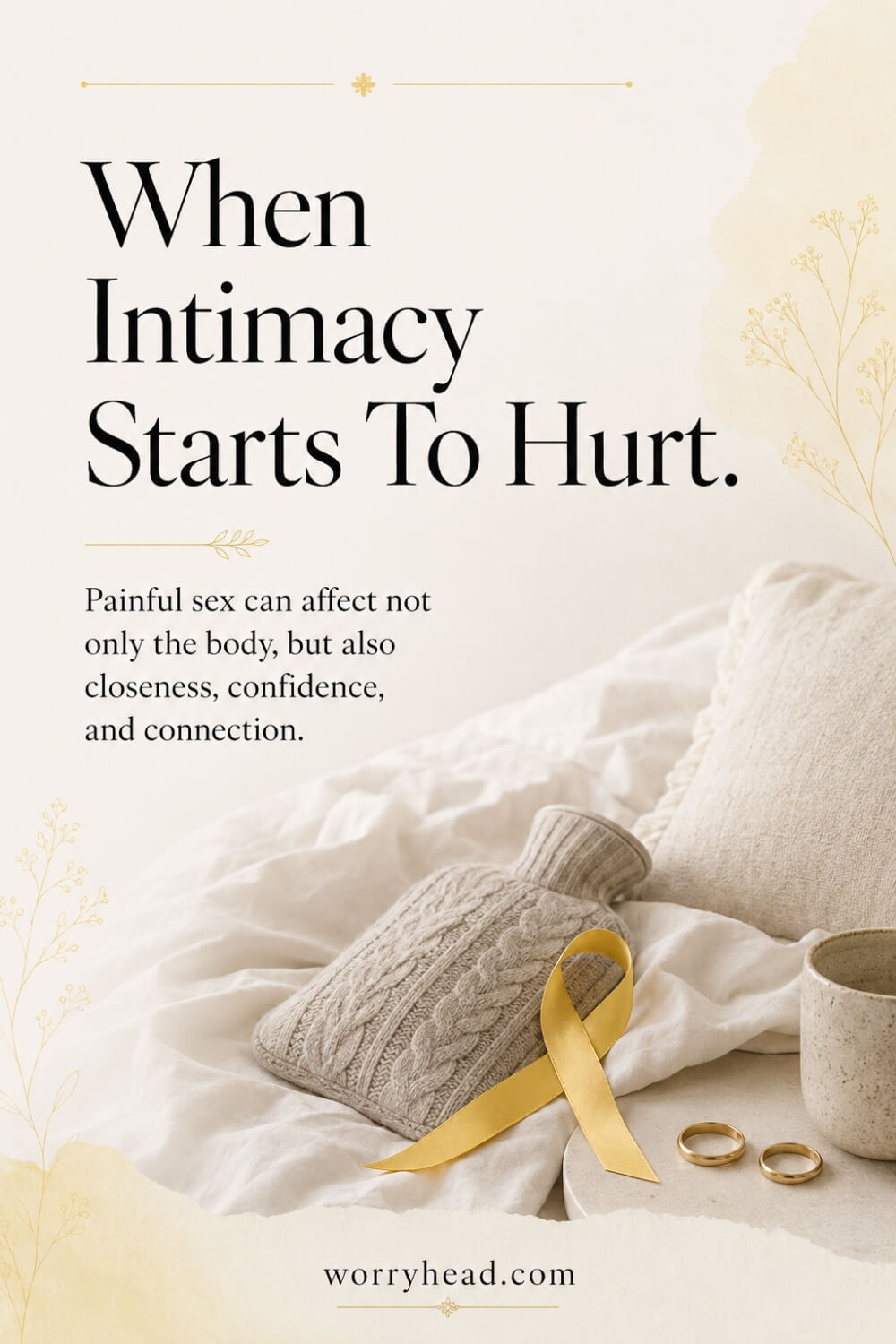
When Pain Changes Intimacy
One of the most painful reasons why endometriosis destroys marriages is that it can turn intimacy into something complicated, frightening, and full of guilt.
For many couples, sex is not only physical. It is closeness, reassurance, playfulness, comfort, desire, and a private language that belongs only to them.
But when endometriosis causes pain during or after sex, that language can suddenly become difficult to speak.
A woman may still love her partner deeply, still want to feel close, still miss the old ease between them, but her body may react with stabbing pain, burning, cramping, pelvic pressure, bladder symptoms, bowel pain, or days of flare afterwards.
That is not rejection.
That is a body trying to avoid harm, even when the heart still wants connection.
This is where a marriage can quietly start to ache. She may feel broken, guilty, embarrassed, or scared that he will eventually want someone easier to love.
He may feel unwanted, confused, lonely, or ashamed for even missing that part of the relationship when he can see how much she is suffering.
If both people stay silent, the space between them can grow.
The woman begins to protect herself from pain, and the partner begins to protect himself from rejection.
Nobody says the cruel thing out loud, but both can feel it: “Are we still us?”
I have seen how illness can change the emotional temperature of a relationship. With my wife, I learned that intimacy cannot survive pressure, but it can survive tenderness.
There were times when the most loving thing was not asking for more, not making her explain, not letting my own disappointment become another weight on her chest.
It was learning to hold her without expectation, to make her feel wanted without making her feel responsible for my emotions, and to remind her that her body’s limits did not make her less beautiful, less feminine, or less loved.
That is the part people do not talk about enough.
Endometriosis may affect sex, but what often hurts the relationship most is not the absence of sex itself. It is the shame, silence, fear, pressure, and loneliness that can grow around it.
A marriage becomes safer when intimacy becomes wider than intercourse.
It becomes safer when touch is allowed to be gentle again, when affection does not always have to lead somewhere, when the woman can say “not today” without fear, and the partner can say “I miss you” without blame.
Because the goal is not to pretend nothing changed.
The goal is to protect closeness while her body is already fighting enough.
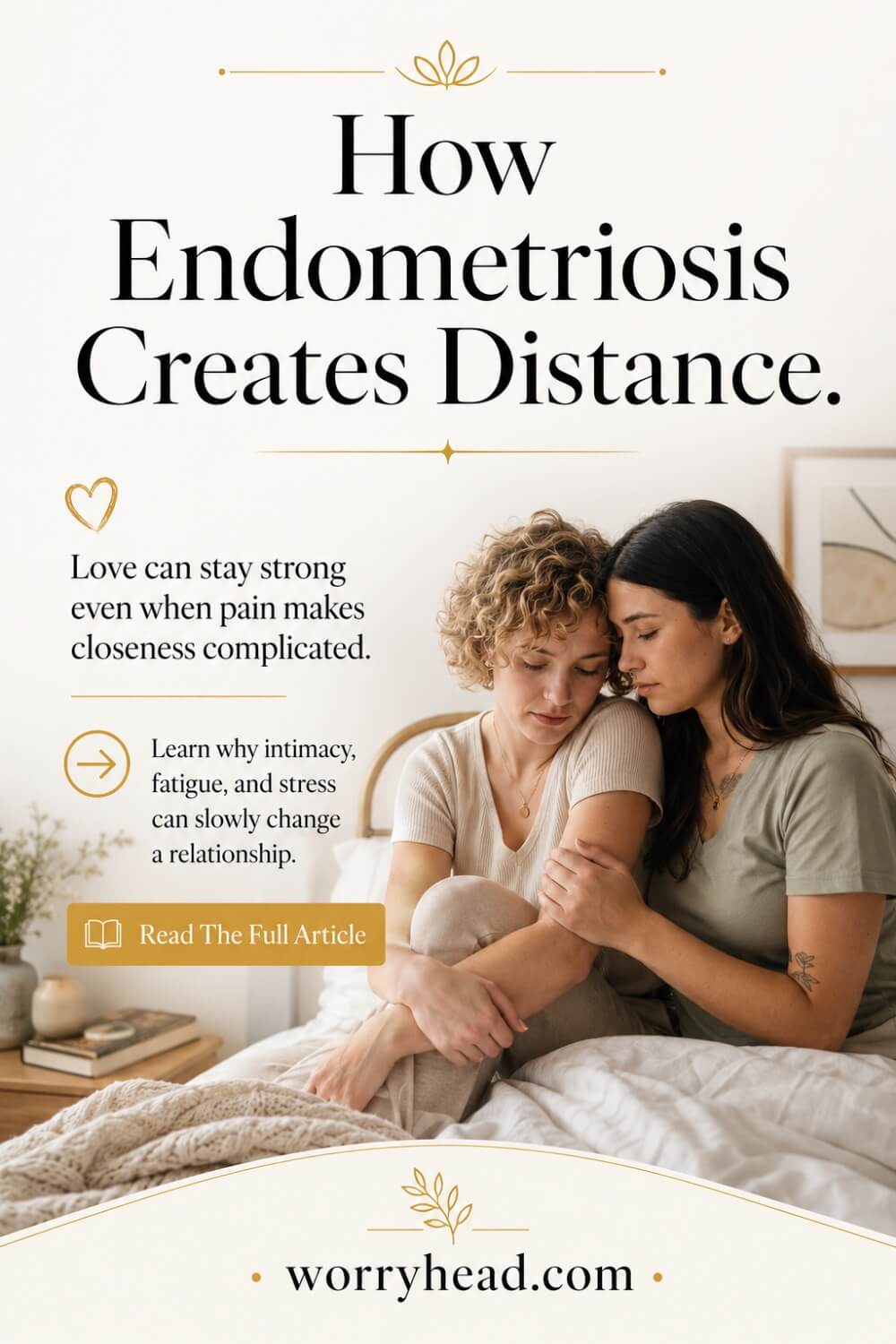
When Both People Grieve Different Losses
Another reason why endometriosis destroys marriages is that it does not take only one thing from a couple.
It can take pieces from both lives, but not always in the same way.
For the woman living with endometriosis, the grief can feel brutally personal. She may grieve the body she used to trust, the energy she used to have, the sex life that once felt easier, the clothes that no longer feel comfortable during bloating, the fertility dreams that now feel uncertain, and the version of herself who did not have to calculate every plan around pain.
For the partner, the grief may look different. He may grieve the ease the relationship once had, the future he thought would be simple, the holidays that were cancelled, the emotional lightness that illness slowly replaced, and the helpless feeling of watching someone he loves suffer without being able to take it away.
These two griefs can live in the same home, but if they are not spoken about with care, they can start to compete.
She may feel, “How can you be tired when I am the one in pain?”
He may feel, “How can I admit this is hard for me when she is the one suffering?”
And just like that, both people become lonely for different reasons.
I have felt this as a husband, but I never want to make myself the victim of my wife’s illness. She is the one living inside the pain, the fatigue, the flares, the operations, the fear, and the emotional weight of a body that keeps betraying her.
But I also learned that if a man never speaks honestly about the weight he carries, he can become quiet, tense, distant, and emotionally unavailable without meaning to.
That silence does not protect her.
It only creates another wall.
What helped me was learning that my grief does not have to compete with hers. It can sit beside it, humbly, honestly, without taking the centre of the room.
A healthy relationship makes space for both truths: her pain is the priority, and his emotional wellbeing still matters.
When my wife was struggling with endometriosis, adenomyosis, fibromyalgia, and the mental health storms that came with years of suffering, I had to learn that love was not just staying.
Love was adjusting, listening, apologising, learning, softening, and choosing not to let resentment become the third person in our marriage.
Because chronic illness does not only ask, “Can you love me when I am well?”
It asks a much deeper question.
“Can you still love me when life no longer looks the way we planned?”
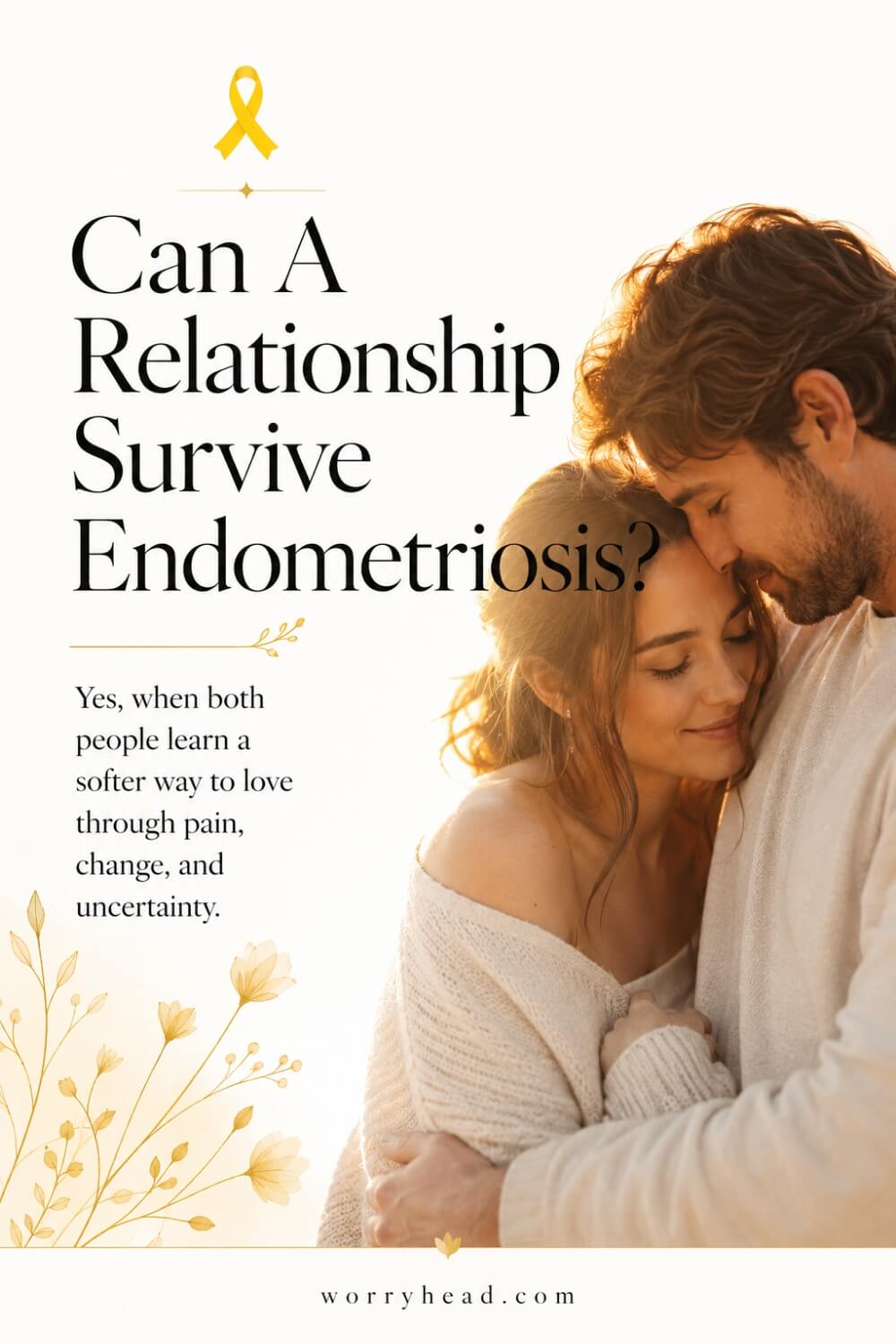
Final Word On Why Endometriosis Destroys Marriages
When I think about this topic, I do not think about statistics first.
I think about the quiet moments nobody photographs.
The woman sitting on the edge of the bed, holding her stomach, wondering how many more times she can cancel plans before people stop inviting her. The partner standing nearby, wanting to help, but not knowing whether to speak, touch, offer advice, or simply stay silent. The couple who still love each other, but feel as if pain has moved into the home and taken up space at the table.
That is the real answer to why endometriosis destroys marriages.
Not because women with endometriosis are difficult to love.
Not because partners are automatically selfish.
Not because the relationship was fake.
It happens when pain is misunderstood. It happens when fatigue is mistaken for laziness, when painful sex is mistaken for rejection, when depression is mistaken for distance, when fear is mistaken for negativity, and when medical trauma is treated like drama.
It happens when both people are grieving, but neither knows how to say it without hurting the other.
Endometriosis can change the body, but it can also change the emotional rhythm of a relationship. A couple may stop planning freely. They may stop touching easily. They may stop talking honestly because every conversation feels heavy. Over time, the illness can make both people feel alone, even when they are still sleeping in the same bed.
But I also believe this deeply: endometriosis does not have to be the end of love.
A relationship can survive when the couple stops treating symptoms as personal attacks and starts treating them as shared challenges. A man can learn to support without trying to control. A woman can be loved without having to pretend she is okay. Both can learn to speak before resentment grows, rest before burnout takes over, and rebuild intimacy in ways that feel safe, gentle, and real.
With my wife, I learned that love is not only the big promise you make when life looks beautiful.
Love is the heat pad. The quiet apology. The appointment remembered. The pain believed. The cancelled plan accepted without punishment. The hand held after surgery. The words, “I know this is not your fault,” said again and again until her body no longer has to carry shame on top of pain.
If you are the woman reading this, please hear me clearly: your illness does not make you unlovable. Your symptoms do not make you a burden. Your changed body does not make you less worthy of tenderness, patience, desire, respect, or commitment.
And if you are the partner reading this, please understand that support is not about being perfect.
It is about learning.
It is about staying soft when life gets hard.
It is about becoming someone safe in a world that has already dismissed her too many times.
Endometriosis can destroy marriages when love is left without language, support, education, and emotional safety. But when two people learn to name the real enemy, protect each other from shame, and build a new normal with honesty, the relationship can become something deeper than it was before.
Not untouched by pain, but still full of love. Still full of meaning. Still worth fighting for.
Endometriosis may change the rhythm of your relationship, but it does not erase your worth, your tenderness, or your right to be loved well. With understanding, support, honesty, and emotional safety, a couple can stop fighting each other and start facing the illness together.
If this touched something in you, I would love you to leave a comment and share what part of endometriosis has affected your relationship the most. You can also check out the free chapter of my eBook, “You Did Nothing To Deserve This!”, written to help you feel seen, validated, and less alone.


About Me
Hi, I’m Lucjan! The reason why I decided to create this blog was my beautiful wife, who experienced a lot of pain in life, but also the lack of information about endometriosis and fibromyalgia for men…

Grab a FREE eBook!
“You Did NOTHING To Deserve This!”
Finally hear the words nobody ever said to you, that your pain is real, your tears make sense, and you did nothing to deserve endometriosis, the dismissal, or the way it has rewritten your life.
Why Endometriosis Destroys FAQ
1. Can endometriosis really affect a marriage?
Yes, endometriosis can affect a marriage because it does not only cause physical pain. It can affect energy, intimacy, mood, fertility, work, money, plans, sleep, confidence, and emotional closeness. When a woman feels misunderstood and her partner feels helpless, both can become lonely in different ways. The relationship usually suffers most when symptoms are taken personally instead of being treated as something the couple needs to face together.
2. Does painful sex from endometriosis mean she does not want her partner?
No, painful sex does not mean she does not love or want her partner. It may mean her body associates touch, penetration, pressure, or even anticipation with pain. Many women still want closeness deeply, but they become afraid of the pain that may come during or after intimacy. A safe partner learns not to pressure her, not to sulk, and not to turn her pain into rejection. Love becomes much safer when intimacy is allowed to be gentle, flexible, and free from expectation.
3. Why do some partners struggle to understand endometriosis?
Some partners struggle because endometriosis is often invisible from the outside. They may see cancelled plans, tiredness, low mood, less intimacy, or emotional overwhelm, but not the pain, inflammation, fear, bowel symptoms, bladder symptoms, bleeding, fatigue, or medical trauma behind it. This does not excuse poor support, but it explains why education matters. A partner who learns what endometriosis does to the body usually becomes less defensive and more compassionate.
4. How can a couple protect their relationship when endometriosis is severe?
A couple can protect their relationship by naming the illness as the shared enemy, not each other. Honest conversations, emotional safety, practical help, flexible plans, gentle intimacy, and respect for medical trauma all matter. The partner should learn about symptoms, attend appointments when helpful, help with daily tasks, and reassure her that her illness does not make her a burden. The woman should not have to carry the relationship and the illness alone.
5. Can a marriage survive endometriosis?
Yes, a marriage can survive endometriosis, but love needs support, education, patience, and a new normal. It may not look like the relationship you imagined before chronic illness entered your life, but different does not mean broken. Some couples become closer when they learn to communicate honestly, stop blaming each other, and build routines that protect both partners. Endometriosis can put pressure on love, but it does not have to erase it.
Why Endometriosis Destroys Marriages References
- https://www.nice.org.uk/guidance/ng73
- https://www.nice.org.uk/guidance/ng73/chapter/recommendations
- https://www.nhs.uk/conditions/endometriosis/
- https://www.eshre.eu/Guideline/Endometriosis
- https://www.eshre.eu/-/media/sitecore-files/Guidelines/Endometriosis/ESHRE-GUIDELINE-ENDOMETRIOSIS-2022_2.pdf
- https://pubmed.ncbi.nlm.nih.gov/35350465/
- https://www.rcog.org.uk/for-the-public/browse-our-patient-information/endometriosis/
- https://www.mayoclinic.org/diseases-conditions/endometriosis/symptoms-causes/syc-20354656
- https://www.endometriosis-uk.org/symptoms
- https://www.endometriosis-uk.org/endometriosis-and-couples
- https://pmc.ncbi.nlm.nih.gov/articles/PMC7580264/
- https://pmc.ncbi.nlm.nih.gov/articles/PMC5850214/
- https://academic.oup.com/humrep/article/32/8/1667/3868349
- https://pubmed.ncbi.nlm.nih.gov/28621048/
- https://www.sciencedirect.com/science/article/abs/pii/S0301211524005876
- https://www.pelvicpain.org.uk/wp-content/uploads/2018/07/Endopart-study-summary-report-and-recommendations.pdf
