Endometriosis and Losing Your Old Self
Have you ever felt that endometriosis and losing your old self are painfully tied together in a way people around you do not fully understand? Do you sometimes miss the woman you were before pain, fatigue, fear, appointments, flare-ups, and being dismissed started changing how you lived?
Endometriosis and losing your old self mean grieving the parts of life that pain, fatigue, uncertainty, surgery, fertility worries, intimacy changes, work limits, and dismissal can disrupt. Research links endometriosis with poorer quality of life, anxiety, depression, and a lost sense of identity.
What many people still miss is that endometriosis is not only a condition of lesions, inflammation, adhesions, organs, hormones, and pelvic pain. It can also touch the quiet parts of your life that do not show on a scan, like your confidence, your sexuality, your work, your friendships, your dreams, and the way you look at yourself in the mirror.
And then, you may begin to wonder why endometriosis makes you feel like a patient, not yourself. My wife actually always says that she feels like an 80-year-old woman rather than 51. Let’s face it, endometriosis can make you feel older inside, because your body seems like it fails you.
A 2023 qualitative study on endometriosis described themes of “a life disrupted”, “lost sense of self”, and complex emotional responses, which are exactly the human side that many women try to explain for years.
If you ever wondered how to cope when endometriosis changes who you are, I can tell you a lot about the experiences of the love of my life…
I have seen this in my own wife, not as a theory, but in the room beside me, in the tears, in the cancellations, in the moments where she tried to be who she used to be while her body kept asking for a different life. Supporting her through endometriosis, fibromyalgia, anxiety, depression, OCD, panic attacks, self-harm, and the darkest moments of mental health taught me that losing your old self is not a weakness. Sometimes it is the grief of surviving something nobody else could see clearly enough.
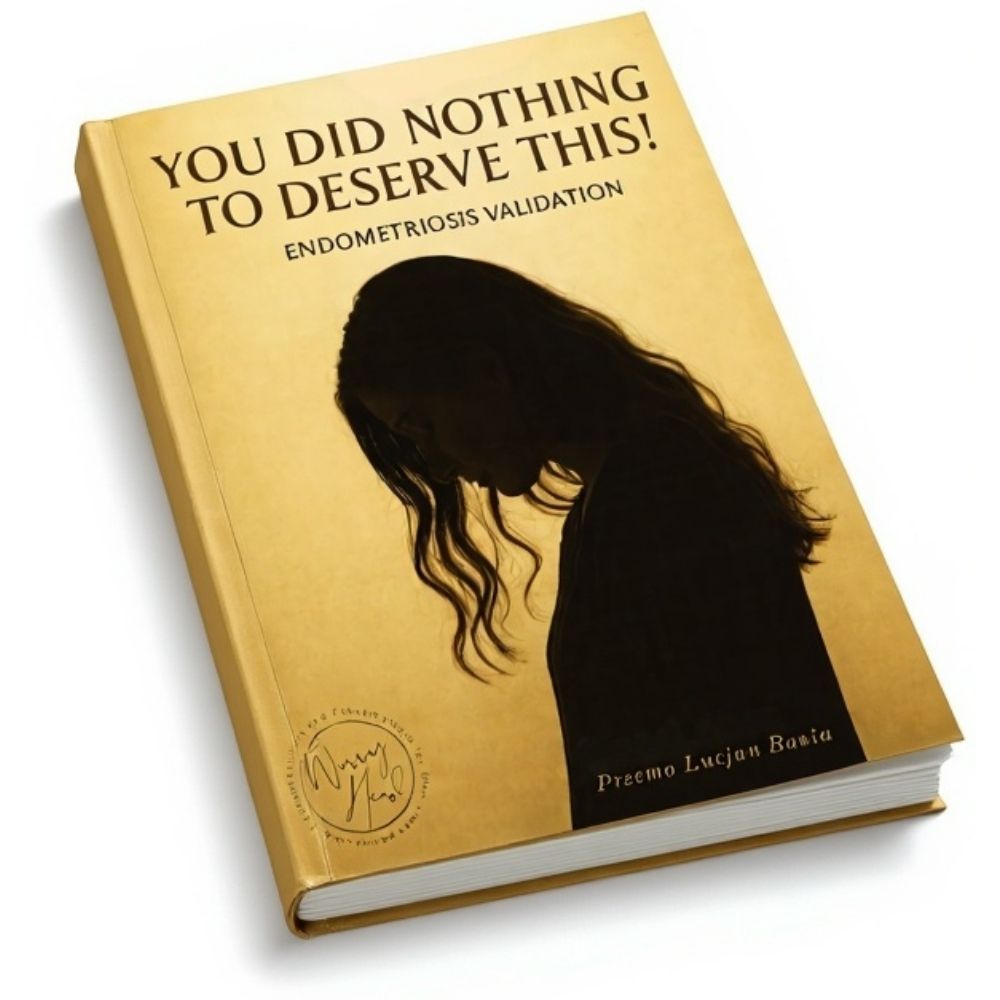
It can be really hard to learn how to accept a new life with endometriosis, and this is why I wrote something that may feel close to your heart. I gently invite you to grab my FREE 130+ page eBook, “You Did Nothing To Deserve This!”, written to validate the feelings of women with endometriosis. By taking the free book, you also join our Worry Head community, where I share more freebies, big discounts on our books, and honest emails that help you adjust to the new normal chronic illness can bring to your body, relationship, and life.
The book is filled with 20 chapters of gentle validation for women with endo, written by yours truly, as I have seen it up close...
It’s my way of telling you, in much more detail, that your pain, your complex response to treatment, and your emotions around all of it are real, understandable, and never your fault.
It’s not a medical guide but a human one. Here’s what you will find inside:
- This Was Never Your Fault
- The Girl You Used To Be
- When Your Own Body Feels Like an Enemy
- The Invisible Battles Nobody Sees
- Am I Just Lazy? – The Lie You Have Been Taught
- Gaslighting, Dismissal and the Trauma of Not Being Believed
- Guilt: The Weight You Were Never Meant to Carry
- Love in the Middle of Pain
- Intimacy When Your Body Hurts
- The Loneliness of Being the Strong One
- You Are Allowed To Take Up Space
- Tiny, Gentle Hopes (Not Toxic Positivity)
- If You Could Hear My Voice Every Flare Day
- You Deserve Partners, Not Witnesses
- When You Wish He Understood
- Motherhood, Fertility and the Grief Nobody Sees
- When Anger Is the Only Honest Feeling
- Learning to Trust Your Body Again
- Building a Life That Fits Your Reality
- You Did Nothing To Deserve This
You Did NOTHING To Deserve This!
Endometriosis Validation for Women with Endo
Prefer to listen?
I’ve turned this article into a brief, gentle podcast-style conversation, so you can absorb it without having to read everything on a hard day. The discussion is AI-assisted and based on this article, but the care, research, and intention behind it are mine.
How Losing Your Old Self Can Change The Way You See Your Life?
When I think about endometriosis and losing your old self, I do not only think about pelvic pain, painful periods, heavy bleeding, painful sex, bowel symptoms, bladder symptoms, fatigue, infertility worries, or the long road to diagnosis.
Let’s face it, endometriosis can make you feel left behind. This is how my wife feels almost on a daily basis.
I think about the woman who slowly starts planning her life around pain before she even realises she is doing it. She checks where the toilets are before going somewhere. She wonders whether she will be able to sit through a meal, a car journey, a family event, or another appointment where she has to explain herself again. She smiles when people ask how she is because the honest answer would take too long and might still not be believed.
Not because she has disappeared, and not because she is weak, but because endometriosis can force a person to become cautious in a body that used to feel more predictable. Studies keep showing that endometriosis is linked with poorer quality of life, anxiety, depression, work disruption, relationship strain, and reduced emotional well-being, which means the “identity loss” many women describe is not dramatic wording. It is a real human consequence of a real chronic disease.
I have learned that this kind of loss is often invisible to everyone except the woman living it.
People may see her cancelling plans, needing rest, avoiding intimacy, changing jobs, delaying dreams, or becoming quieter, but they may not see the grief underneath. They may not see that she is not only managing symptoms, but also trying to understand who she is now when her body keeps changing the rules.
That is why cold medical information alone is never enough. This disease can severely impact a woman’s self-esteem.
Medical facts matter deeply, and I respect them, but facts without validation can still leave a woman feeling alone. Even the 2022 ESHRE guideline recognises that endometriosis care needs to consider pain symptoms, infertility, recurrence, and long-term management, not just one quick answer or one simple test.
But in real life, behind those guidelines, there is a woman lying in bed, wondering why she cannot keep up anymore.
There is a partner watching her blame herself for something she did not choose. There is a relationship between learning a new language and pain, fatigue, fear, surgery, hormones, flare-ups, intimacy, and mental health. There is a home that slowly adapts around illness, even when nobody outside the home understands how much has changed.
With my wife, I saw this grief in the small moments.
I saw it when she wanted to be spontaneous but had to think about pain first. I saw it when she missed the version of herself who could push through more easily. I saw it when endometriosis and fibromyalgia did not only affect her body, but her confidence, her nervous system, her trust in herself, and the way she felt seen by the world.
And as her husband, I had to learn that love is not only saying “I’m here.”
Sometimes love is believing her before she has proof. Sometimes it is changing plans without making her feel guilty. Sometimes it is sitting beside the woman you love while she grieves who she used to be, and gently reminding her that she is not less worthy because life now asks more from her.
The truth I wish more women heard is this: losing your old self does not mean losing your value.
It may mean your life needs gentler rules now. It may mean your body needs protection, pacing, better care, better doctors, better support, and a partner who learns instead of judges. It may mean that the woman you were is not gone, but buried under years of pain, dismissal, survival, fear, exhaustion, and trying to look okay for everyone else.
And I know this can hurt to read, because my wife’s illness taught me that chronic illness grief does not always arrive loudly.
Sometimes it arrives when she looks at old photos. Sometimes it arrives when another woman announces a pregnancy. Sometimes it arrives when intimacy becomes complicated, when energy disappears, when work feels impossible, when plans are cancelled again, or when she has to explain pain to someone who has already decided not to listen.
That is why the next part matters so much.
Because if you feel like endometriosis has taken pieces of your old self, you deserve more than a simple “stay strong.” You deserve practical, gentle ways to protect your identity, your relationship, your confidence, your body, and your future while living with a condition that can change so much.
Here are the life-useful truths I wish every woman with endometriosis, and every partner who loves her, understood sooner:
- Your Old Self Is Not Gone
- Grief Can Be Part Of Healing
- Pain Does Not Define Womanhood
- Your Body Still Deserves Trust
- Rest Is Not Personal Failure
- Intimacy Needs Gentler Conversations
- Support Must Feel Emotionally Safe
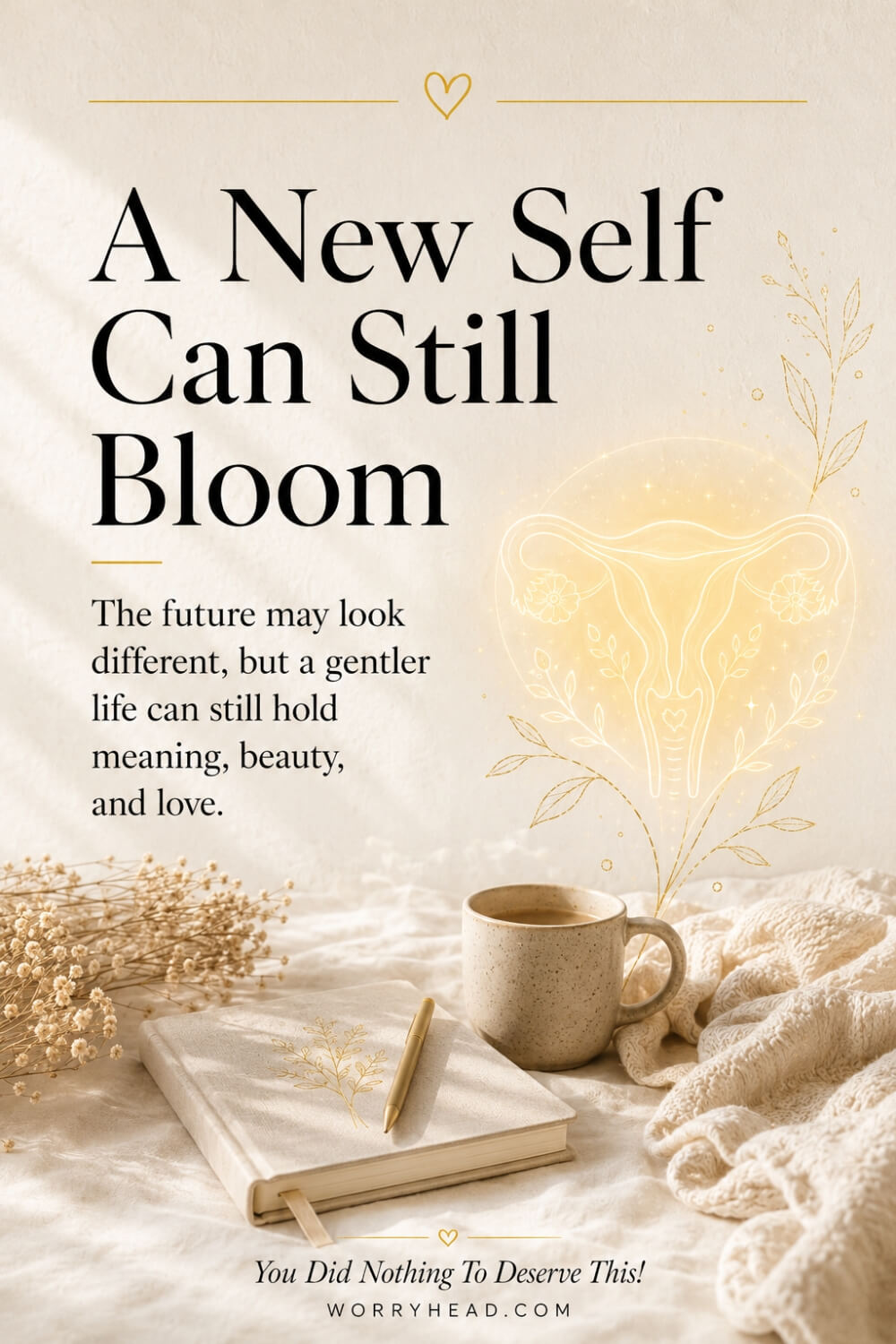
- A New Self Can Still Bloom
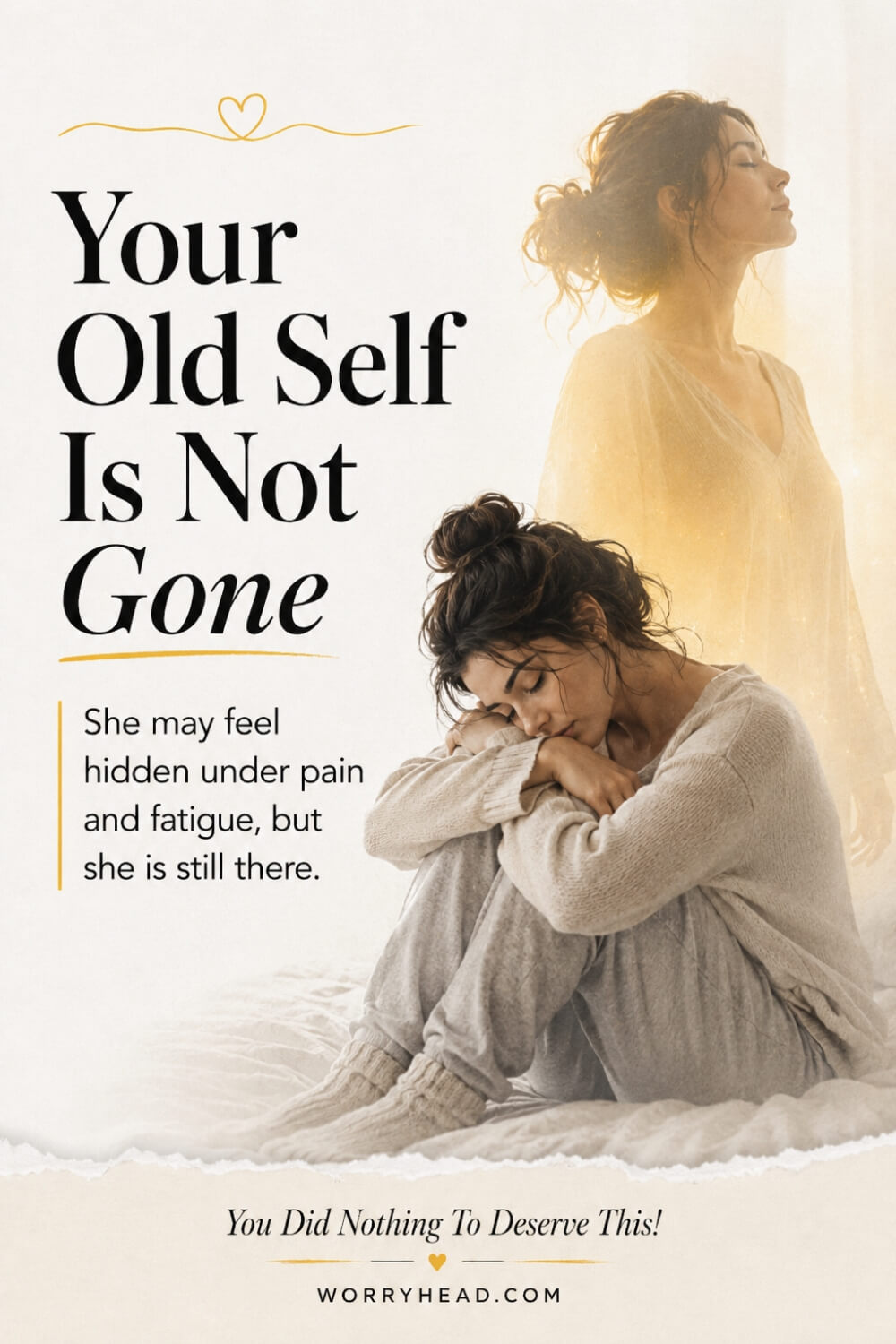
Your Old Self Is Not Gone
Your old self is not dead. She may be tired, hidden, quieter, more careful, and harder to reach on the days when pain takes over, but she is not gone. I have seen this with my wife. Under the exhaustion, under the grief, under the fear of another flare, the same woman is still there. The illness may have changed her pace, but it did not erase her heart.
This matters because many women with endometriosis begin to think, “I am not myself anymore,” when what may really be happening is that their nervous system, energy, hormones, pain, mental health, and daily life have been under pressure for too long. Research describes how endometriosis can disrupt quality of life and create a lost sense of self, especially when symptoms continue for years, and people feel misunderstood.
So please do not measure yourself only against the woman you used to be. She lived under different rules. You are not failing her. You are carrying her forward in a body that now needs more tenderness, more truth, and more support.
Grief Can Be Healing
Grief is not always about death. Sometimes grief is looking at your old clothes, old photos, old plans, old routines, old confidence, old intimacy, old freedom, and realising endometriosis has changed more than your calendar. That grief can feel confusing because people may expect you to be grateful that you are still here, still working, still smiling, still coping. But inside, you may be mourning a version of life nobody else knew you lost.
I wish more partners understood this. When my wife grieved what illness had taken, my job was not to rush her back to positivity. It was to sit beside her without making her pain smaller. It was to let her say, “I miss who I was,” without answering, “But look what you still have.” Sometimes love means not correcting the grief.
Endometriosis can affect work, social life, relationships, fertility, sex, emotional well-being, and daily independence, so grief makes sense. You are not being negative. You are naming the cost, and naming the cost can be the first step toward rebuilding.
Pain Does Not Define Womanhood
Pain can steal so much from a woman’s sense of identity, especially when it touches periods, sex, fertility, energy, body image, and the ability to care for others in the way she used to. I have seen how easily a woman can start asking, “Am I still enough?” when her body no longer behaves the way the world expects a woman’s body to behave. That question can cut deeper than people realise.
But your womanhood is not measured by how much pain you can hide. It is not measured by whether you can have children, enjoy intimacy without fear, keep up with everyone, or look well while your body is screaming. You are not less feminine because you need rest. You are not less lovable because sex has become complicated. You are not less of a woman because your body needs medical care.
The medical world may talk about symptoms, treatment, recurrence, fertility, and pain relief, and those things matter. But the human truth is this: you were worthy before the diagnosis, you are worthy in the middle of it, and you will still be worthy even if your life has to change.
Your Body Deserves Trust
One of the cruellest parts of endometriosis is how often women are taught to doubt themselves before they are properly heard. Pain is called normal. Fatigue gets brushed away. Bowel pain, bladder pain, painful sex, leg pain, back pain, nausea, heavy bleeding, and flare-ups can be separated into little pieces instead of being seen as part of a bigger story.
After enough dismissals, a woman can begin to wonder if she is the problem.
I have learned from my wife that rebuilding trust in your body does not mean every symptom is easy to understand. It means you stop treating your own pain like an inconvenience to other people. It means you write things down, ask better questions, seek another opinion when something still feels wrong, and remind yourself that being dismissed is not the same as being disproven.
NICE updated its guidance in 2024 to improve diagnosis and help close the symptom-to-diagnosis gap, which matters because delayed recognition can deepen the emotional damage around being believed. Your body has been trying to speak. You are allowed to listen.
Rest Is Not Failure
Rest can feel like defeat when you remember the woman who used to push through everything. You may look at the laundry, messages, work, children, partner, friends, home, dreams, and think, “I should be able to do more.” But chronic illness changes the cost of ordinary life. What looks simple from the outside can take a level of energy that nobody sees.
I had to learn this as a husband. At first, I thought helping meant encouraging, motivating, and trying to lift my wife back into life. Over time, I understood that sometimes the most loving thing was not pushing her to do more, but protecting her from the guilt of needing less. Rest was not her giving up. Rest was her body asking not to be punished for surviving.
Endometriosis is associated with pain, fatigue, poorer quality of life, anxiety, depression, and reduced daily functioning for many people. So please hear this gently: if your body needs rest, you are not lazy. You are not dramatic. You are not wasting your life. You are trying to keep living inside a body that keeps asking for mercy.
Intimacy Needs Gentler Talks
When endometriosis affects intimacy, it can touch a very private part of identity. Painful sex is not just a symptom on a medical page. It can bring fear, guilt, shame, avoidance, sadness, pressure, relationship tension, and the heartbreak of wanting closeness while your body feels unsafe. Many women carry this silently because they do not want to disappoint their partner or explain something that already hurts enough.
This is where men need to grow up emotionally. A loving partner should never make a woman feel like her pain is rejection. He should not turn her symptoms into his ego wound. He should learn, ask gently, slow down, listen, and understand that intimacy is bigger than sex. Holding her without expectation can be intimacy. Reassuring her without sulking can be intimacy. Making her feel wanted without making her feel pressured can be intimacy.
Sexual problems and relationship strain are commonly reported in endometriosis research, and they can strongly affect quality of life. If this is part of your story, you are not broken. You deserve tenderness that makes your body feel safer, not pressure that makes you disappear inside yourself.
Support Must Feel Safe
Support is not only about doing practical things. It is not only driving to appointments, picking up medication, helping with chores, or saying, “Let me know if you need anything.” Real support must feel emotionally safe. A woman should not have to perform pain correctly to be believed. She should not have to cry enough, explain enough, collapse enough, or prove enough before the people around her take her seriously.
I learned this the hard way. There were times I did practical things for my wife, but I still had to learn deeper emotional support. I had to learn that the tone of my voice mattered. My face mattered. My patience mattered. My willingness to hear the same fear again mattered. When a woman has been dismissed by doctors, family, workplaces, or past partners, one cold reaction at home can hurt more than we think.
Endometriosis is increasingly understood as a condition that needs long-term, person-centred care, not just isolated medical appointments. The same is true at home. Support should not make you feel like a burden. It should make your nervous system whisper, “I am not alone in this anymore.”
A New Self Can Bloom
The new self is not a replacement for the old one. I do not like when people talk as if chronic illness automatically makes someone stronger, wiser, or better, because that can sound like pain is a gift. Pain is not a gift. Endometriosis is not a lesson women needed. But sometimes, after the grief, after the anger, after the exhaustion, a different kind of self begins to form.
This new self may have stronger boundaries. She may stop apologising for needing care. She may choose people who believe her faster. She may build a slower life, a gentler home, a more honest relationship, a different career path, or a deeper connection with her own body. She may still miss who she was, and that is allowed. Missing your old life does not mean you cannot build a meaningful new one.
I saw my wife lose parts of herself, but I also saw pieces of her return in softer ways. Not because illness made life easy, but because love, validation, pacing, and being believed gave her room to breathe. You are not finished. You are still becoming, even here, even now, even after everything endometriosis has changed.
Living Between Two Versions Of You
There is a strange in-between place that many women with endometriosis and losing your old selves seem to live in.
One part of you remembers how life felt before everything had to be measured against pain, fatigue, bleeding, flare-ups, appointments, scans, surgery decisions, hormone side effects, and the fear of being dismissed again. Another part of you is trying to survive the life you have now, while people around you still expect the same energy, the same smile, the same availability, the same patience, and the same version of you they used to know.
That gap can hurt deeply because it is not always visible.
You may still look “fine” in a photo, still answer messages, still go to work, still laugh at the right moments, still show up for others, but inside, you may feel like you are constantly translating a private life nobody else can see.
Endometriosis can involve chronic pelvic pain, painful periods, painful sex, bowel and bladder symptoms, fatigue, infertility concerns, and symptoms that overlap with other conditions, which means the emotional loss often grows from years of trying to make sense of a body that keeps changing the rules.
I saw my wife live inside that gap.
There were days when she wanted to be spontaneous, social, romantic, productive, playful, and free, but her body had already spent the day fighting a battle nobody had witnessed. And when fibromyalgia layered more pain, fatigue, sensory overwhelm, brain fog, and emotional exhaustion on top of her endometriosis, I could see how quickly life could begin to feel smaller, not because she lacked courage, but because every ordinary thing cost more.
That is the part many people do not understand.
A woman is not only grieving the cancelled plans. She may be grieving the ease she used to have inside her own body. She may be grieving the loss of confidence in making plans without fear. She may be grieving the way intimacy used to feel before pain became part of the room. She may be grieving the belief that if she explained herself clearly enough, people would finally understand.
And when that grief is not validated, she can begin to feel even more alone.
I have learned, sometimes through my own mistakes, that partners must stop trying to “fix” this grief too quickly. We can love her, support her, research with her, attend appointments, help at home, and fight beside her, but we should not rush her into pretending she is okay just because we feel helpless watching her hurt.
Because sometimes the most loving sentence is not, “You will get back to normal.”
Sometimes it is, “I know normal changed, and I am still here.”
That sentence matters because chronic illness can make a woman feel as if she has become difficult to love, difficult to plan with, difficult to touch, difficult to understand, or difficult to build a future around. And I want you to hear this clearly, whether you are the woman living with endometriosis or the partner loving her: needing a different kind of life does not make you less lovable.
It means your life needs to be built with more honesty now.
It means the people around you need to stop loving only the convenient version of you and start learning the real one. It means your worth cannot be tied to how much you can produce, tolerate, hide, perform, or sacrifice while your body is asking for care.
With my wife, I slowly learned that losing the old self does not always mean the old self has vanished.
Sometimes she is still there in small flashes. In the way she laughs when she feels safe. In the way her eyes soften when she is believed. In the way she dreams again after a good day. In the way she still loves deeply, even when her body gives her so little back.
And that is why this topic makes me emotional, because I know there are women reading this who have quietly wondered whether anyone will love the version of them that illness left behind.
Please let my answer be gentle but firm.
The right person will not only love the easier chapters of you. The right person will learn the painful chapters. They will not always get it perfect, but they will care enough to listen, soften, adapt, and stay emotionally present while you learn who you are now.
Your old self deserves to be mourned. Your current self deserves to be protected. And your future self deserves to be built slowly, gently, and without shame.
Your Relationship with Yourself and the Person Who Loves You
When endometriosis and losing your old self become part of your life, it can quietly change the way you relate to yourself before it even changes the way you relate to anyone else.
You may start questioning your body, your moods, your limits, your reactions, your needs, and even your right to ask for help. You may become harsher with yourself because you remember what you used to manage, how much you used to do, how easily you used to keep going, and how much less explanation life used to require.
That inner comparison can become one of the most painful parts of chronic illness.
It is not only “I am in pain.” Sometimes it is, “I do not recognise the woman I have become.” Sometimes it is, “I miss the version of me who did not have to calculate everything.” Sometimes it is, “I hate that my partner has to see me like this,” even when the partner who truly loves you would rather see your truth than watch you suffer alone behind a brave face.
I saw this with my wife many times.
There were moments when her pain affected her, but her guilt affected both of us. She would feel guilty for needing rest, guilty for cancelling plans, guilty for the emotional weight, guilty for intimacy becoming complicated, guilty for not being the version of herself she thought I deserved. And I had to learn that telling her “don’t feel guilty” was not enough.
I had to show her, again and again, that her worth in our relationship was not based on how convenient her body was.
That is where partners need to become emotionally mature. We cannot make a woman feel safe if we only love her when she is smiling, available, energetic, intimate, productive, and easy to understand. We have to love her in the curled-up days, the quiet days, the angry days, the anxious days, the tearful days, and the days when she says, “I do not feel like myself anymore.”
For me, supporting my wife has never meant pretending her illness does not affect me.
It has meant choosing not to make my emotional discomfort heavier than her physical reality. It has meant learning how to feel my own fear without handing it back to her as pressure. It has meant understanding that when she breaks down, she may not need a solution first. She may need evidence that she is still loved before she can even think about what comes next.
And this is where the relationship with yourself and the relationship with your partner begin to meet.
If you believe you are now a burden, you may hide more. If you hide more, your partner may misunderstand more. If your partner misunderstands more, you may feel even less safe. That cycle can quietly damage a relationship, not because love has disappeared, but because pain, shame, fear, and silence have taken up too much space between two people who still care.
So please hear this gently.
You are allowed to be different now. You are allowed to need more patience, more planning, more rest, more reassurance, more medical support, more emotional safety, and more honesty. A loving relationship should not ask you to perform your old self forever just so everyone else can avoid grieving what changed.
My wife’s endometriosis and fibromyalgia changed her, changed me, and changed us.
But they also taught me something I will never forget: love becomes real when life stops being easy. Not perfect love. Not movie love. Not the kind of love that always says the right thing. Real love is the kind that keeps learning, keeps softening, keeps apologising when it gets it wrong, and keeps reminding the woman in pain that she is still wanted, still needed, still beautiful, still worthy, and still deeply, deeply loved.
Final Word on Endometriosis and Losing Your Old Self
When endometriosis changes your life, it can feel as if the woman you used to be has been slowly taken from you, piece by piece.
Not all at once. Not loudly. Not in a way everyone can easily understand.
It may happen when you stop making plans too far ahead because you no longer trust your body. It may happen when you begin choosing clothes based on bloating, pain, bleeding, or comfort instead of confidence. It may happen when intimacy becomes wrapped in fear, when work becomes harder to manage, when social life feels exhausting, or when your dreams begin to shrink around symptoms you never asked for.
And because so much of this happens quietly, many women blame themselves before anyone else even notices the loss.
That is one of the reasons I wanted to write about endometriosis and losing your old self from a human place, not just a medical one. Because the medical side matters, of course, it does, but the emotional side is where many women are left alone. They are told about treatment options, pain relief, scans, surgery, hormones, fertility, and referrals, but not always about the grief of looking at your own life and wondering where the old version of you went.
I have seen my wife live through that kind of grief.
I have seen how endometriosis and fibromyalgia can affect not only the body, but the nervous system, the relationship, the home, the confidence, the mind, and the smallest parts of daily life. I have seen how pain can make a woman question herself. I have seen how being dismissed can make her speak more softly. I have seen how much courage it takes to keep going when even ordinary days feel like they require planning, energy, and emotional strength that other people never see.
But I have also learned something important.
The old you may be changed, but she is not erased.
She may be buried under exhaustion, pain, fear, appointments, grief, medical gaslighting, fatigue, flare-ups, and years of trying to look okay. She may not come back in the exact same way. She may need a gentler life now. She may need better boundaries, better pacing, better support, better doctors, better rest, and better people around her.
But she is still there.
And the woman you are becoming now is not a failed version of who you used to be. She is a woman learning how to live after her body forced her to rewrite the rules. She is a woman who deserves love without pressure, support without guilt, intimacy without fear, and care without having to prove her pain first.
So if you miss your old self, please do not shame yourself for that.
Grieve her. Honour her. Cry for her if you need to. But do not believe that your worth stayed behind with her.
You are still here. You are still worthy. And you still deserve a life that makes room for your pain without making pain the only thing people see.
You are not weak for missing who you used to be. You are human. And even if endometriosis changed your body, your plans, your confidence, and your life, it did not take away your worth, your softness, your beauty, or your right to be deeply loved.
If this touched something in you, I would love you to leave a comment and share what part of your old self you miss most. And if you need more validation, you can also check out the free chapter of my eBook, “You Did Nothing To Deserve This!”, written for women with endometriosis who deserve to feel believed, held, and understood.
About Me
Hi, I’m Lucjan! The reason why I decided to create this blog was my beautiful wife, who experienced a lot of pain in life, but also the lack of information about endometriosis and fibromyalgia for men…
READ MOREFAQ About Endometriosis and Losing Your Old Self
1. Can Endometriosis Make You Feel Like You Have Lost Yourself?
Yes, endometriosis can make you feel like you have lost yourself because it can affect far more than your pelvis. It can change your energy, your confidence, your work life, your social life, your intimacy, your fertility worries, your mental health, and the way you trust your own body.
Many women not only grieve pain. They grieve the version of themselves who used to feel freer, more spontaneous, more productive, more sexual, more hopeful, or simply more in control of daily life.
That grief is real. It does not mean you are weak. It means something meaningful has changed, and your heart is trying to understand the size of that loss.
2. Is It Normal To Grieve Your Old Life With Endometriosis?
Yes, it is normal to grieve your old life with endometriosis. Chronic illness grief can happen when your body starts needing different rules than your dreams, routines, relationships, or responsibilities expected.
You may grieve cancelled plans, lost confidence, painful intimacy, fertility fears, missed work, changed friendships, or the feeling that life now needs more planning than freedom.
From my perspective as a husband, I wish more partners understood this. A woman does not need to be told to “stay positive” every time she breaks down. Sometimes she needs someone to sit beside her and say, “I understand why this hurts.”
3. Does Losing Your Old Self Mean You Will Never Feel Like Yourself Again?
No, losing your old self does not mean you will never feel like yourself again. But it may mean you need time, support, medical care, pacing, emotional safety, and a gentler way of living before parts of you begin to feel reachable again.
The old version of you may not return exactly as she was, and that can hurt. But a new version of you can still carry your humour, your softness, your intelligence, your beauty, your love, your dreams, and your worth.
You are not starting from nothing. You are rebuilding from survival.
4. How Can A Partner Support Someone Who Feels She Has Lost Herself?
A partner can support her by believing her pain, learning about endometriosis, listening without rushing to fix everything, helping practically, being patient with cancelled plans, and reassuring her that she is still loved even when illness changes daily life.
The biggest thing I learned with my wife is that support must feel safe, not performative. A woman should not feel like she has to prove her pain, apologise for needing rest, or hide her grief to protect her partner’s mood.
A loving partner should remind her often: “You are not a burden. I miss the easy days, but I do not miss them more than I love you.”
5. How Do You Rebuild Your Identity After Endometriosis Changes Your Life?
You rebuild slowly, honestly, and without forcing yourself to become who you were before. Start by naming what has changed, allowing yourself to grieve, learning your new limits, asking for better support, protecting your energy, and choosing people who believe you.
Rebuilding your identity does not mean pretending endometriosis has not affected you. It means creating a life where your pain is respected, your needs are not treated as drama, and your worth is not measured by how much you can still push through.
You are allowed to become someone softer, wiser, slower, clearer, and more protective of herself. That is not failure. That is survival becoming self-respect.
Endometriosis and Losing Your Old Self References
- https://pmc.ncbi.nlm.nih.gov/articles/PMC10571435/
- https://strathprints.strath.ac.uk/85687/13/Moore_etal_JHP_2023_A_qualitative_investigation_into_the_role_of_illness_perceptions.pdf
- https://www.eshre.eu/Guideline/Endometriosis
- https://academic.oup.com/hropen/article/2022/2/hoac009/6537540
- https://www.nice.org.uk/guidance/ng73
- https://www.nice.org.uk/news/articles/nice-updated-guideline-to-improve-the-diagnosis-of-endometriosis
- https://www.ncbi.nlm.nih.gov/books/NBK604070/
- https://pmc.ncbi.nlm.nih.gov/articles/PMC10512020/
- https://jamanetwork.com/journals/jamanetworkopen/fullarticle/2800556
- https://www.sciencedirect.com/science/article/pii/S2949838424000483
- https://keele-repository.worktribe.com/OutputFile/456044
- https://www.theguardian.com/society/article/2024/jul/11/endometriosis-needs-to-be-treated-by-nhs-as-chronic-condition-experts-say
