
The Invisible Battles Nobody Sees with Endometriosis
Have you ever smiled through pain because explaining it again felt heavier than carrying it? Have you ever wondered why the invisible battles nobody sees can hurt just as much as the symptoms people finally believe? Maybe you question why endo is seen as an invisible illness if it is proven with surgery?
The invisible battles nobody sees are the hidden physical, emotional, social, and relationship struggles caused by endometriosis, including pain, fatigue, bleeding, anxiety, isolation, medical dismissal, grief, and the daily effort of appearing fine while your body is barely coping.
Endometriosis is not “just bad periods.” It is a chronic disease affecting an estimated 190 million women and girls of reproductive age worldwide, and it can cause severe period pain, chronic pelvic pain, heavy bleeding, bloating, nausea, infertility, fatigue, and pain that follows women into work, relationships, sleep, intimacy, and ordinary daily life.
This horrible disease makes you look fine when you are not okay. What makes it even harder is that the outside world often sees none of it. The mental toll of endometriosis is hidden and very difficult to manage. You may even feel very lonely, despite being surrounded by a loving partner and family. Endometriosis and loneliness go hand in hand.
A woman may look calm while fighting stabbing pelvic pain, bowel symptoms, bladder pain, exhaustion, anxiety, low mood, and the quiet trauma of being dismissed for years. Research now clearly links endometriosis with poorer quality of life, depression, anxiety, stress, social isolation, and dissatisfaction with care, which is why validation is not a soft extra. It is part of survival.
I know this because I have watched my wife live through battles that no scan, no smile, no polite conversation, and no “you look fine” could ever explain. I started Worry Head because loving her through endometriosis, adenomyosis, fibromyalgia, anxiety, depression, OCD, panic attacks, self-harm, and suicidal moments taught me that women do not only need information.
They need someone to say, “I believe you,” and mean it.
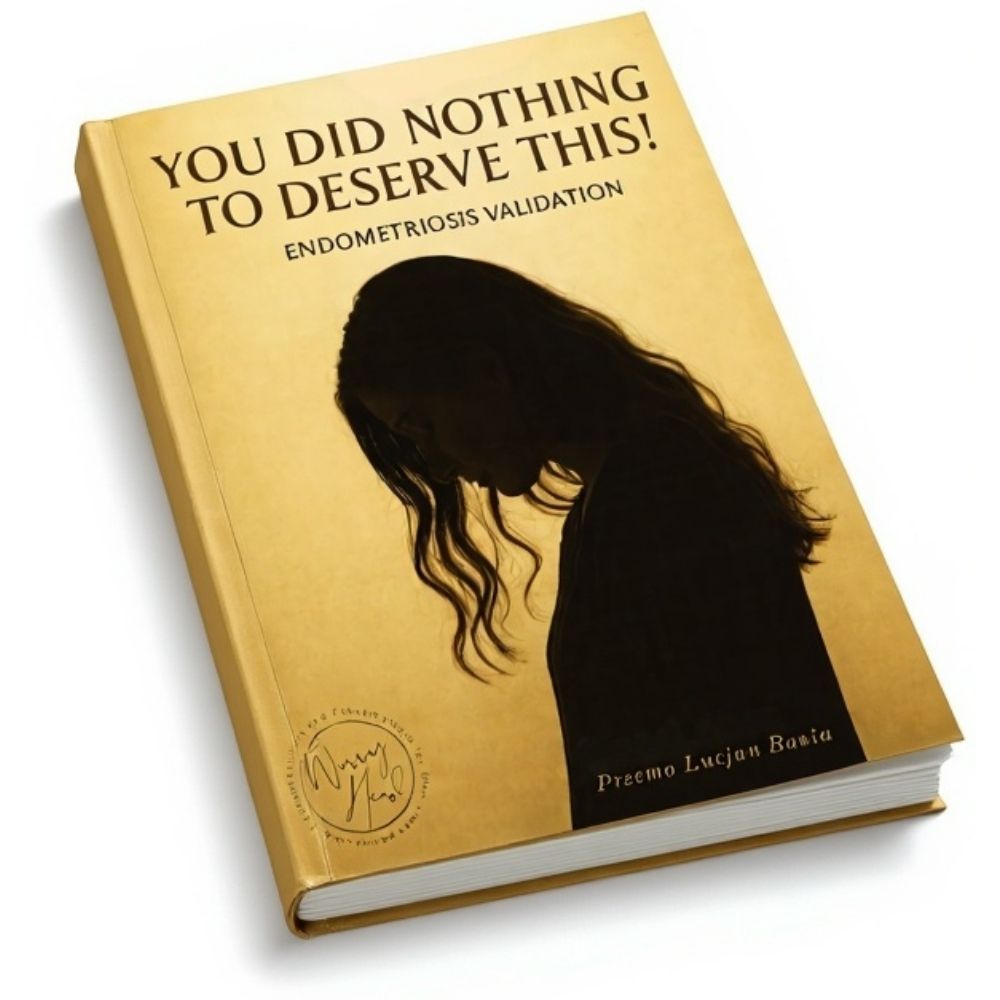
If your heart is tired from being strong, I wrote my free 130+ page book, “You Did Nothing To Deserve This!”, for women with endometriosis who need to feel validated, believed, and less alone. When you grab it, you also join our Worry Head community, where I share more freebies, big discounts on our books, and honest emails to help you adjust to the new normal chronic illness brings to your body, relationship, and life.
The book is filled with 20 chapters of gentle validation for women with endo, written by yours truly, as I have seen it up close...
It’s my way of telling you, in much more detail, that your pain, your complex response to treatment, and your emotions around all of it are real, understandable, and never your fault.
It’s not a medical guide but a human one. Here’s what you will find inside:
- This Was Never Your Fault
- The Girl You Used To Be
- When Your Own Body Feels Like an Enemy
- The Invisible Battles Nobody Sees
- Am I Just Lazy? – The Lie You Have Been Taught
- Gaslighting, Dismissal and the Trauma of Not Being Believed
- Guilt: The Weight You Were Never Meant to Carry
- Love in the Middle of Pain
- Intimacy When Your Body Hurts
- The Loneliness of Being the Strong One
- You Are Allowed To Take Up Space
- Tiny, Gentle Hopes (Not Toxic Positivity)
- If You Could Hear My Voice Every Flare Day
- You Deserve Partners, Not Witnesses
- When You Wish He Understood
- Motherhood, Fertility and the Grief Nobody Sees
- When Anger Is the Only Honest Feeling
- Learning to Trust Your Body Again
- Building a Life That Fits Your Reality
- You Did Nothing To Deserve This
You Did NOTHING To Deserve This!
Endometriosis Validation for Women with Endo
Why Battles Nobody Sees Matter So Deeply?
Endometriosis becomes even harder to live with when the outside world only measures suffering by what it can see.
A woman may be standing in a kitchen, answering messages, smiling at work, or sitting at a family table while her pelvis feels like it is being squeezed from the inside, her back aches, her bowels hurt, her bladder burns, and her energy has already disappeared before the day has properly begun.
That is why the invisible battles nobody sees are not small emotional side effects, but part of the real burden of this disease. Endometriosis may even leave you feeling emotionally numb, although the numbness is not a direct symptom of endo.
Endo affects about 10% of women and girls of reproductive age globally, which is around 190 million people, and it can cause severe period pain, chronic pelvic pain, pain during sex, heavy bleeding, bloating, nausea, infertility, and symptoms outside the pelvis.
But numbers alone do not explain what it feels like to live inside a body that can change the plan without asking you first.
One day, you may feel almost normal, and the next day you may be curled around a heating pad, wondering how something invisible can steal so much of your life. That unpredictability is one of the cruellest parts, because it trains you to stop trusting your calendar, your body, your energy, and sometimes even your own hope.
And sometimes that constant adjusting does something even quieter: it starts emptying the emotional reserves you have been relying on to keep functioning. I have written more deeply about when constant coping becomes emotional exhaustion, because this kind of wearing down can happen so gradually that you start blaming your personality before recognising how much your body and mind have been carrying.
Research keeps showing that endometriosis can deeply affect quality of life, mental health, work, relationships, sexuality, fertility worries, and social confidence, especially when pain, infertility, stress, depression, and anxiety pile on top of each other.
And still, many women are expected to explain it calmly, neatly, and repeatedly, as if they have not already spent years trying to be believed.
In the UK, the reported average diagnosis takes 9 years and 4 months, which means many women spend almost a decade being told to wait, cope, try painkillers, go on the pill, relax, lose weight, have a baby, or accept that this is normal.
That delay does something to the heart. It can make you question yourself before anyone else even questions you. It can make you rehearse your symptoms before appointments, soften your language so you do not sound dramatic, and apologise for pain that was never your fault.
I have seen how that kind of dismissal changes a woman…
It is not only the pain that hurts her, but the look on someone’s face when they do not understand why she cannot do the simple thing they asked of her. It is all of it: the cancelled plans, the intimacy interrupted by pain, the exhaustion that looks like laziness to people who never see the night before, and the grief of watching life move while your body keeps asking you to stop.
When I think about my wife, I do not only remember hospital appointments, flare-ups, medications, and long nights.
I remember the quiet moments when she tried to be “easy to love” while living with pain that was anything but easy, and those moments are the reason I want this next part to feel practical, not just emotional.
Because if you live with endometriosis, or you love someone who does, these are the battles that deserve words, care, and support:
- Believe the pain before proof
- Notice fatigue without judgement
- Respect cancelled plans gently
- Understand intimacy can hurt
- Protect her from medical dismissal
- Support her mental health daily
- Help during flare-up days
- Make home feel emotionally safe
- Remind her she is still loved

Believe the Pain Before Proof
Believing pain before proof does not mean pretending to know everything about endometriosis. It means refusing to make a woman fight for basic compassion while she is already fighting her own body. So many women learn to explain their pain like lawyers presenting evidence, because somewhere along the way, someone made them feel that their words were not enough. That breaks something inside a person.
When my wife tells me she is in pain, my first job is not to challenge her, measure it, compare it, or ask whether it is “that bad.” My first job is to believe her. Pain does not become real only when a scan shows something, a doctor confirms something, or someone else finally agrees.
Sometimes the most healing sentence a woman can hear is, “I believe you, and I am here.” It sounds simple, but for a woman who has been dismissed, doubted, minimised, or told to push through, that sentence can feel like oxygen.
Notice Fatigue Without Judgement
Endometriosis fatigue is not ordinary tiredness after a busy day. It can feel like the body has been drained from the inside, as if every small task costs more energy than anyone around you realises.
A woman may look rested and still feel completely depleted. She may have slept and still wake up heavy. She may want to do more, show up more, love more, work more, and still find herself trapped inside a body that refuses to cooperate.
I had to learn that fatigue should not be judged by what I think should be possible. It should be understood by what her body is going through. When my wife is exhausted, she does not need pressure disguised as encouragement. She needs patience, softness, and practical help.
Sometimes love looks like making food, lowering the noise, handling the small things, or simply not making her explain why she cannot be productive today. Fatigue is not failure. It is a body asking for mercy.
Respect Cancelled Plans Gently
Cancelled plans can carry so much hidden grief. From the outside, it may look like a woman simply changed her mind, stayed home, or did not make enough effort. But inside, she may be grieving the version of herself who wanted to go, who got dressed in her mind, who imagined being present, who hoped this time her body would allow it.
Then pain, bleeding, nausea, bloating, fatigue, bowel symptoms, or anxiety made the decision away from her. And I learned not to make my wife feel punished for something she did not choose.
There is a big difference between disappointment and making someone feel guilty. Of course, plans matter. Of course, partners can feel sad too. But when a woman with endometriosis cancels because her body is flaring, she needs to feel safe, not like she has become a burden.
A gentle response can protect her heart. “We can change the plan. I’m not angry. Your body matters more than the schedule.” That kind of love stays with her.
Understand Intimacy Can Hurt
Intimacy is one of the most misunderstood invisible battles in endometriosis. Pain during or after sex can affect confidence, desire, closeness, and the way a woman feels inside her own body. It is not rejection. It is not a lack of love. It is not coldness. Sometimes it is pain, fear of pain, pelvic tension, inflammation, trauma from previous painful experiences, or the emotional exhaustion of wanting closeness while being afraid of what it may cost.
As a husband, I had to understand that love cannot be selfish in this area. A woman should never feel pressured to prove her love through pain.
Real intimacy begins with safety, not performance. It begins with patience, tenderness, communication, and the ability to stop without sulking, blaming, or turning quiet in a way that makes her feel guilty. When a man protects her body instead of demanding from it, he becomes safe to her. And sometimes, safety is the very thing that allows love to breathe again.
Protect Her from Medical Dismissal
Medical dismissal can leave wounds that last long after the appointment ends. Many women with endometriosis know what it feels like to sit in a room, describe life-changing pain, and leave with the feeling that they were too emotional, too sensitive, too anxious, or not clear enough.
That can make future appointments frightening. It can make a woman question her own memory, minimise her own symptoms, or feel ashamed for needing help.
One of the strongest things a partner can do is become a calm witness. Not someone who speaks over her, but someone who stands beside her.
I learned that support can mean helping my wife write symptoms down, remembering dates, asking respectful questions, and gently backing her up when she feels too tired to repeat herself again. A woman should not have to become louder just to be taken seriously. Sometimes the presence of someone who believes her can make the room feel less hostile and remind her that she is not facing the system alone.

Support Her Mental Health Daily
The mental health side of endometriosis is not a weakness. It is what can happen when pain, fear, fatigue, hormonal changes, medical trauma, isolation, and uncertainty keep pressing on a person for years.
Anxiety can grow around flare-ups. Depression can grow around lost dreams. Panic can appear when the body feels unsafe. OCD, health anxiety, emotional shutdown, or hopeless thoughts can become part of the struggle when someone has been pushed beyond what anyone should have to carry.
My wife’s mental health battles taught me that support cannot only appear during a crisis. It has to exist in ordinary moments too. It is in the way I speak. The way I respond. The way I notice when she goes quiet. The way I do not make her feel dramatic for feeling overwhelmed.
Sometimes support means encouraging professional help. Sometimes it means sitting beside her in silence. Sometimes it means reminding her that she is not broken, not too much, and not alone in the dark place her illness sometimes takes her.
Help During Flare-Up Days
Flare-up days are not the time for lectures, pressure, or motivational speeches. They are the time for gentleness, practical help, and fewer demands.
During a flare, a woman may be dealing with pelvic pain, back pain, bowel pain, bladder discomfort, nausea, dizziness, bleeding, migraines, crushing fatigue, or emotional overwhelm. Even simple decisions can feel too heavy when the body is already using everything it has just to get through the day.
This is where love becomes visible. Bring the heating pad. Make the tea. Handle the meal. Dim the lights. Cancel what needs cancelling. Ask what helps, but do not make her manage every detail when she is already in survival mode.
I have learned that small acts matter because they tell her, “You do not have to perform wellness for me.” A flare-up can make a woman feel helpless, ashamed, or afraid that she is ruining everyone’s day. A steady partner can make her feel held instead of blamed.
Make Home Feel Emotionally Safe
Home should not become another place where a woman has to defend her pain. When endometriosis follows her into every room, the emotional atmosphere around her matters deeply. If home feels tense, critical, impatient, or unpredictable, her nervous system may never get a chance to soften. But if home feels safe, calm, and accepting, it can become one of the few places where she does not have to pretend.
I believe this more now than I ever did before. A safe home is not only clean rooms and warm blankets. It is the tone of voice used when plans change. It is not making her feel lazy when she rests. It is not turning her symptoms into an argument. It is giving her space to cry without trying to fix everything too quickly.
For my wife, emotional safety has often mattered as much as physical comfort. Because when the world outside misunderstands her, home should be the place that says, “You can stop pretending here.”
Remind Her She Is Still Loved
Endometriosis can make a woman feel like she is losing pieces of herself. The reliable body. The social life. The easy intimacy. The energy. The confidence. The version of her that could say yes without calculating the cost. And beneath all of that, there may be a quiet fear she does not always say out loud: “Am I still lovable like this?”
Please do not wait for her to ask that question before you answer it with your actions.
Remind her she is loved when she is in pain, not only when she is smiling. Remind her she is wanted when intimacy is complicated, not only when everything is easy. Remind her she is beautiful when bloating changes her body, when exhaustion changes her face, when tears come quickly, when she feels like a burden.
My wife helped me understand that love is not proven by staying only when life is convenient. Love becomes real when illness makes everything harder, and you still choose tenderness.

How the Invisible Battles Nobody Sees Change the Way a Woman Feels About Herself?
Endometriosis can quietly change the way a woman sees herself, even before anyone around her notices anything has changed.
It can make her feel unreliable because her body cancels plans she truly wanted to keep. It can make her feel guilty because pain steals energy from the people she loves, even though she never asked for any of this.
The hardest part is that many women still try to look normal while carrying the invisible battles nobody sees in their body, mind, relationship, work, and private thoughts. They may dress nicely, answer messages, cook dinner, go to work, or sit in a room full of people while feeling like they are disappearing inside themselves.
That kind of hidden suffering can slowly make a woman wonder whether she is too complicated, too emotional, too tired, too needy, or too difficult to love.
But she is not too much. She is carrying too much.
I have seen this in my wife, not as a theory, not as something I read once, but as something that lived in our home and changed the air between us. There were days when she was not only fighting pain, fatigue, bleeding, bowel symptoms, fibro flares, anxiety, or panic, but also fighting the shame of needing help again.
And I wish more people understood that shame is often not born inside the woman. It is planted there by years of being dismissed, rushed, doubted, misunderstood, or made to feel like her illness is an inconvenience instead of a wound.
As her husband, I had to learn that love is not only about being present when things look dramatic.
Sometimes love is noticing the tiny moment when her voice gets quieter, when her face changes, when she says “I’m fine” but her body is asking me to hear the sentence underneath.
And if there is one thing I want every woman reading this to feel in her chest right now, it is this: your illness may affect your life, but it does not lower your worth, your beauty, your femininity, your strength, or your right to be loved gently.
What the Invisible Battles Nobody Sees Impacts Marriage and Daily Life?
Endometriosis does not stay neatly inside the body. It walks into the bedroom, the kitchen, the calendar, the bank account, the friendship circle, the working day, and the quiet moments when a couple is too tired to explain what hurts anymore.
For my wife and me, the invisible battles nobody saw were never only about symptoms.
- They were about learning how to love when pain interrupts closeness, fatigue interrupts plans, and fear interrupts the future.
- There were times when I had to stop seeing cancelled plans as rejection and start seeing them as evidence that her body was already asking too much of her.
- There were times when she had to learn that needing support did not make her a burden, even when her illness made ordinary life feel heavy for both of us.
This is where many relationships either become colder or become deeper. Not because love magically fixes endometriosis, but because love can decide whether a woman feels punished for her illness or protected inside it.
I have learned that a partner does not need to understand every medical detail to be kind, steady, and useful.
He needs to listen without turning pain into a debate, help without waiting to be praised, and stay emotionally present without making her feel guilty for having needs. Daily life changes when chronic illness enters a relationship, but it does not have to become loveless.
Sometimes love becomes quieter, more practical, and more honest.
It becomes making the meal, sitting beside her during a flare, holding her when she cries, defending her when others minimise her pain, and reminding her that she is still wanted when her body makes her feel hard to love.

Final Word on The Invisible Battles Nobody Sees
Endometriosis can make a woman feel as if she is living two lives.
There is the life people can see, where she answers messages, smiles politely, tries to work, tries to love, tries to keep going, and tries not to make everyone uncomfortable with the truth of what she is carrying.
Then there is the life people do not see, where pain bends her body in private, fatigue steals her voice, bloating changes how she sees herself, intimacy becomes complicated, appointments become emotionally exhausting, and hope sometimes has to be rebuilt from the floor up.
That is why I believe the invisible battles nobody sees deserve to be spoken about with tenderness, not judgment, because when a woman with endometriosis says she is tired, she may not mean she needs one good night of sleep.
She may mean she is tired of explaining.
- Tired of being doubted.
- Tired of pretending the pain is smaller than it is.
- Tired of planning her life around symptoms that other people still do not understand.
- Tired of grieving the woman she used to be while trying so hard to love the woman she is becoming.
And if you are that woman, I want you to hear this clearly: you are not weak because this disease has changed you. You are not dramatic because pain affects your mood, your patience, your relationship, your confidence, your dreams, or the way you move through the world.
You are not difficult to love because your body has needs. You are not a burden because illness sometimes asks more from the people around you. You are a woman living with something heavy, unfair, unpredictable, and often deeply misunderstood.
And still, you are here.
Still trying. Still loving. Still hoping. Still surviving days that others may never know how to measure.
As a husband, I cannot pretend I have always understood everything perfectly. I have made mistakes. I have missed signs. I have learned some things too late. But loving my wife through endometriosis, adenomyosis, fibromyalgia, anxiety, depression, OCD, panic, self-harm, and terrifyingly dark moments taught me something I will never forget.
Women do not only need medical facts.
- They need to feel safe inside their own story.
- They need partners who do not disappear emotionally when illness becomes inconvenient.
- They need doctors who listen before judging.
- They need families who stop saying “but you look fine.”
- They need communities that remind them they are not broken, not lazy, not crazy, and not alone.
Most of all, they need to know that their pain does not erase their worth.
If endometriosis has made you feel unseen, I hope this article feels like someone sitting beside you and saying, “I see more than your symptoms. I see the woman carrying them”, because your body may be fighting a disease, but you are still worthy of gentleness.
- You are still worthy of desire.
- You are still worthy of rest.
- You are still worthy of joy.
- You are still worthy of being believed before you have to break down to prove it.
And you did nothing to deserve this. You did nothing to cause this. You did nothing wrong by needing support. You deserve a life where your pain is taken seriously, your emotions are treated with care, and your invisible battles are finally met with visible love.
Endometriosis may change parts of your life, but it does not get to define your whole identity. You are still a woman with dreams, beauty, softness, strength, and a future worth protecting. Even on the days you feel unseen, your pain matters, your story matters, and you matter.
If this touched something tender in you, leave a comment and tell me what invisible battle you wish more people understood. And if you need more validation, check out the free chapter of “You Did Nothing To Deserve This!” because sometimes the heart needs proof that it was never your fault.


About Me
Hi, I’m Lucjan! The reason why I decided to create this blog was my beautiful wife, who experienced a lot of pain in life, but also the lack of information about endometriosis and fibromyalgia for men…
READ MOREFAQ About the Invisible Battles Nobody Sees
1. What are the invisible battles nobody sees with endometriosis?
They are the hidden struggles that happen behind the symptoms people already know about. This can include chronic pelvic pain, fatigue, bloating, heavy bleeding, bowel pain, bladder discomfort, painful intimacy, anxiety, depression, grief, shame, medical dismissal, relationship stress, and the emotional effort of looking “fine” when your body is not fine at all.
2. Why do women with endometriosis often feel unseen?
Many women feel unseen because endometriosis does not always show on the outside. A woman may be dressed, smiling, working, parenting, or sitting quietly in a room while fighting pain, exhaustion, nausea, fear, or emotional overwhelm inside. When people judge her by appearance alone, they miss the private battle she is carrying.
3. Can endometriosis affect mental health?
Yes. Endometriosis can affect mental health because chronic pain, years of dismissal, fertility worries, unpredictable symptoms, fatigue, and relationship pressure can wear down a woman’s emotional strength. Anxiety, depression, panic, isolation, and grief are not signs of weakness. They can be human responses to living with a painful, misunderstood disease.
4. How can a partner support a woman with endometriosis?
A partner can support her by believing her pain, listening without judgment, helping during flare-ups, respecting cancelled plans, understanding that intimacy can hurt, attending appointments when needed, and making the home feel emotionally safe. The goal is not to fix everything. The goal is to make sure she does not feel alone while living through it.
5. What should a woman remember when endometriosis makes her feel like a burden?
She should remember that needing support does not make her a burden. Pain may change her energy, plans, body, intimacy, and emotions, but it does not lower her worth. She is still lovable, still needed, still beautiful, and still deserving of tenderness, patience, respect, and belief.
The Invisible Battles Nobody Sees References
- Royal College of Nursing PDF: Endometriosis Fact Sheet
- World Health Organisation: Endometriosis Fact Sheet
- Endometriosis UK: Endometriosis Facts and Figures
- Royal College of Obstetricians and Gynaecologists: Response to Endometriosis Diagnosis Time Report
- Office on Women’s Health: Endometriosis
- Mayo Clinic: Endometriosis Symptoms and Causes
- PMC: The Impact of Endometriosis on Depressive and Anxiety Symptoms and Health-Related Quality of Life
- PMC: Psychological Distress and Quality of Life in Women with Endometriosis
- PMC: Time to Diagnose Endometriosis: Current Status, Challenges and Regional Differences
- PMC: Endometriosis, Mental Health, and Quality of Life Review
