Feeling Betrayed by My Body with Endometriosis
Have you ever sat in pain and quietly wondered things like why am I feeling betrayed by my body when all I want is one normal day with endometriosis?
Endometriosis can change how you feel about your body, especially before and after surgery for endo.
Feeling betrayed by your body with endometriosis means your pain, bleeding, fatigue, bloating, fertility fears, and medical dismissal have made your own body feel unsafe, unpredictable, and unfamiliar. It is grief, not weakness, and it deserves care, answers, validation, and the right support.
Endometriosis is not just “bad periods.” It is a chronic disease where tissue similar to the lining of the uterus grows outside the uterus, causing inflammation, scar tissue, pain, bowel or bladder symptoms, painful sex, fatigue, and sometimes fertility struggles.
All of this makes you feel angry and hateful towards yourself. If that’s so, I wrote an article on how to stop hating your body with endometriosis.
The World Health Organisation estimates that endometriosis affects about 10% of reproductive-age women and can also affect mental health, including depression and anxiety, which is why the emotional side of this illness should never be treated as separate from the physical one.
And this is where the feeling of betrayal begins, and why endometriosis makes your body feel unsafe. Not because your body is your enemy, but because it has become unpredictable. One day you may try to work, love, clean, smile, plan, be intimate, or simply exist, and then pain comes in like it owns the room.
Research on struggles with body image in endometriosis describes how women can feel disconnected from, angry at, or unsafe inside their own bodies, which matches what so many women in our community have told me in words that sound almost the same: “I do not feel like myself anymore.”
I have seen this in my wife, not as a theory, not as a headline, but across years of pain, exhaustion, anxiety, panic, lost confidence, and days when she looked at herself as if her own body had taken something precious from her. I started Worry Head because I saw that women were often given medical facts, but far too little validation, and I wanted to be one of the men who says clearly: I believe you, I see you, and this was never your fault.
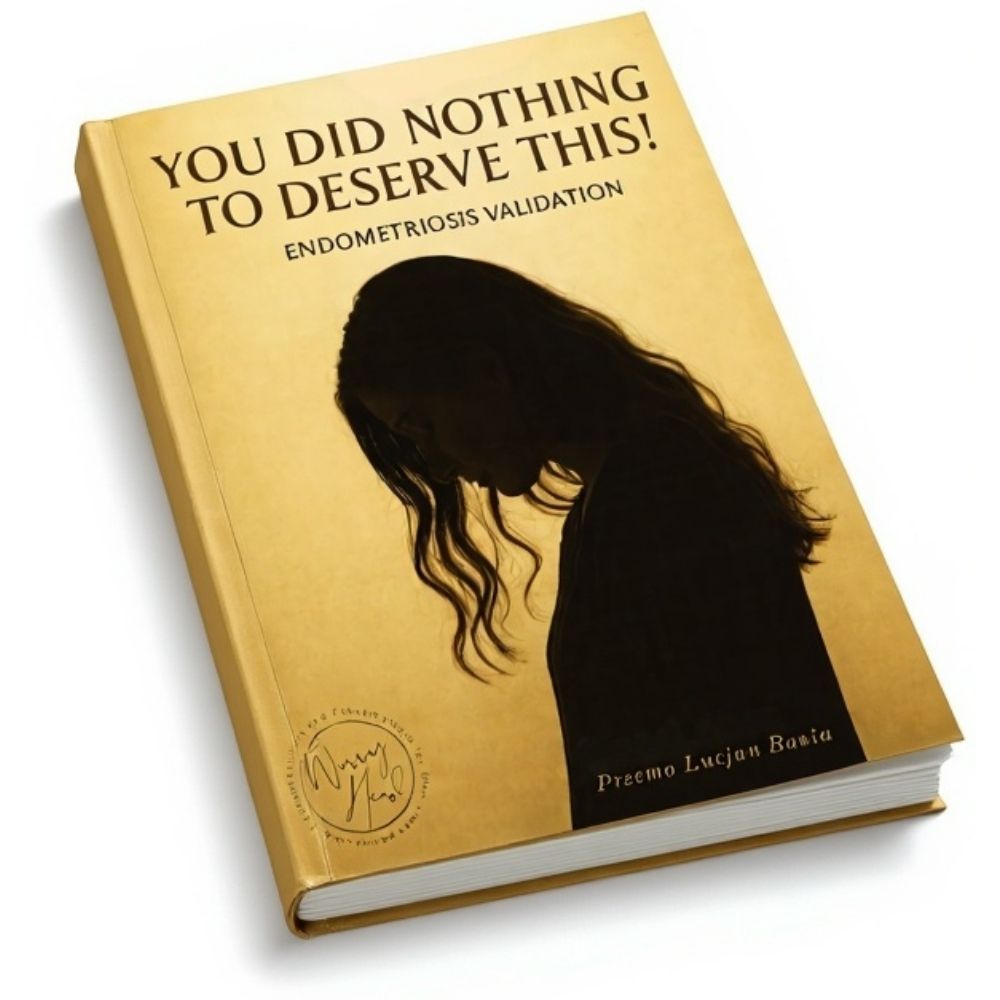
If this is how you feel, you are welcome to grab my free 130+ page eBook, “You Did Nothing To Deserve This!”, written to validate the feelings of women with endometriosis.
When you download it, you also join our Worry Head community, where I share more freebies, big discounts on our books, and gentle emails full of real value to help you adjust to the new normal chronic illness can bring into your body, your relationship, and your life.
The book is filled with 20 chapters of gentle validation for women with endo, written by yours truly, as I have seen it up close...
- This Was Never Your Fault
- The Girl You Used To Be
- When Your Own Body Feels Like an Enemy
- The Invisible Battles Nobody Sees
- Am I Just Lazy? – The Lie You Have Been Taught
- Gaslighting, Dismissal and the Trauma of Not Being Believed
- Guilt: The Weight You Were Never Meant to Carry
- Love in the Middle of Pain
- Intimacy When Your Body Hurts
- The Loneliness of Being the Strong One
- You Are Allowed To Take Up Space
- Tiny, Gentle Hopes (Not Toxic Positivity)
- If You Could Hear My Voice Every Flare Day
- You Deserve Partners, Not Witnesses
- When You Wish He Understood
- Motherhood, Fertility and the Grief Nobody Sees
- When Anger Is the Only Honest Feeling
- Learning to Trust Your Body Again
- Building a Life That Fits Your Reality
- You Did Nothing To Deserve This
You Did NOTHING To Deserve This!
Endometriosis Validation for Women with Endo
Prefer to listen?
I’ve turned this article into a brief, gentle podcast-style conversation, so you can absorb it without having to read everything on a hard day. The discussion is AI-assisted and based on this article, but the care, research, and intention behind it are mine.
Why Feeling Betrayed Hurts So Deeply?
Grief happens when the place you live in every second of your life no longer feels safe. It is not dramatic to say that endo can change the way you see your own body, because pain does not only happen in the pelvis, the abdomen, the back, the legs, or the bowel.
Pain changes the relationship you have with yourself. Endo also makes you even fearful of movement. That is where the old self can begin to feel far away.
When you wake up already tired, when bleeding takes more from you than people realise, when bloating changes the shape of your belly within hours, when sex becomes painful, when fatigue feels heavier than sleep can fix, something inside you can begin to whisper that your body has turned against you.
That whisper can become louder when doctors dismiss you, scans look “normal,” family members do not understand, or people act as if you are simply too sensitive.
This is why feeling betrayed by my body is not just an emotional phrase; it is often the honest language women use when their daily life has been changed by symptoms they never asked for and cannot simply think away.
I have watched my wife carry that silent heartbreak, and it taught me something I wish more partners understood earlier. Endo not only hurts during flare-ups…
It can hurt before plans are made, because you already fear cancelling them. It can hurt in the mirror, because the body you see may not feel like the body you remember. It can hurt in relationships, because you may want closeness, intimacy, laughter, and normality, but your symptoms keep interrupting moments that should have felt simple and safe.
And when this happens over months or years, you may not just lose energy, you may lose trust in your own body.
That does not mean you are broken. It means your nervous system, your emotions, your memories, and your daily reality have been living under pressure for far too long.
One thing I learned through loving my wife is that women with endometriosis often do not need someone to rush in with perfect answers first. They need someone to sit beside them long enough to say, “I understand why you feel this way, and I am not going to make you carry it alone.”
There were days when I could not take my wife’s pain away, and as a man, that humbled me more than I can explain. But I could believe her, protect her peace, learn her symptoms, notice her limits, soften my voice, stop taking cancellations personally, and remind her that her body was not disgusting, lazy, weak, or failing as a woman.
That is why the next part matters so much, because when your body feels unpredictable, you need more than sympathy. You need small, practical, emotionally safe ways to rebuild trust with yourself one painful day at a time.
- Name the betrayal without shame
- Separate your body from blame
- Track patterns without obsessing
- Prepare for flare-up days
- Protect intimacy with honesty
- Let grief have language
- Ask for better support
- Rebuild body trust gently
Name the Betrayal Without Shame
The first step is not to pretend you are fine when your body has made you feel frightened, embarrassed, angry, or trapped.
Sometimes the most healing sentence is the honest one: “I feel betrayed by my body, and I hate that I feel this way.” That sentence does not make you ungrateful. It does not mean you are weak. It means you are finally giving language to something that has been living quietly inside you for too long.
I have learned from my wife that pain becomes even heavier when a woman feels she has to make it sound smaller for everyone else. You should not have to dress your suffering in polite words just to make other people comfortable.
Endometriosis can affect your energy, your bleeding, your belly, your intimacy, your sleep, your confidence, and your plans. Of course, that can feel personal. Of course, it can feel unfair. Naming the betrayal is not surrender, but is the beginning of being honest with yourself.
Separate Your Body From Blame
Your body is not doing this because it hates you. I know it can feel that way when pain arrives without warning, when your belly swells, when fatigue steals your day, or when you have to cancel something you were excited about again.
But your body is not your enemy. Your body is trying to survive inside a disease process that creates inflammation, pain signals, hormonal disruption, scar tissue, and exhaustion. That distinction matters because blame adds another wound on top of the one you are already carrying.
I have had to remind my wife, gently and repeatedly, that her body was not failing morally, spiritually, or as a woman. It was struggling. There is a difference.
When you blame your body, you may start speaking to yourself with cruelty. When you separate your body from blame, you can begin speaking to yourself with mercy. You do not have to love your body every day to stop punishing it.
Track Patterns Without Obsessing
Tracking symptoms can help you feel less powerless, but it should never become another full-time job that makes you scared of your own life.
You can write down pain levels, bleeding changes, bowel symptoms, bladder symptoms, fatigue, mood shifts, flare triggers, food reactions, cycle timing, medication effects, and what helped you cope. But the goal is not to prove your pain every minute. The goal is to notice patterns that may help you advocate for better care and plan your days with more kindness.
I say this because I have seen how easy it is for chronic illness to turn a woman into a detective of her own suffering. That can be useful, but it can also become exhausting. Keep it simple enough that it supports you rather than consumes you. A few notes can help you walk into appointments with more clarity. They can also help your partner understand what is happening instead of guessing, minimising, or taking your limits personally.
Prepare for Flare-Up Days
A flare-up day should not have to feel like an emergency every single time. One of the kindest things you can do for yourself is prepare for the days when your body cannot perform as the world expects it to.
That might mean having heat pads, loose clothes, easy meals, pain relief agreed with your clinician, electrolyte drinks, gentle distractions, clean bedding, medication reminders, or a small comfort basket near your bed. But preparation is not only physical. It is emotional too. It means giving yourself permission to lower the standard before the pain forces you to.
I wish more partners understood this, because sometimes love looks like making dinner without being asked, cancelling plans without resentment, answering messages for her, or simply creating a quiet room where she does not have to explain why she cannot move. Preparing for flares is not pessimism. It is protection. It says, “When my body struggles, I will not abandon myself.”
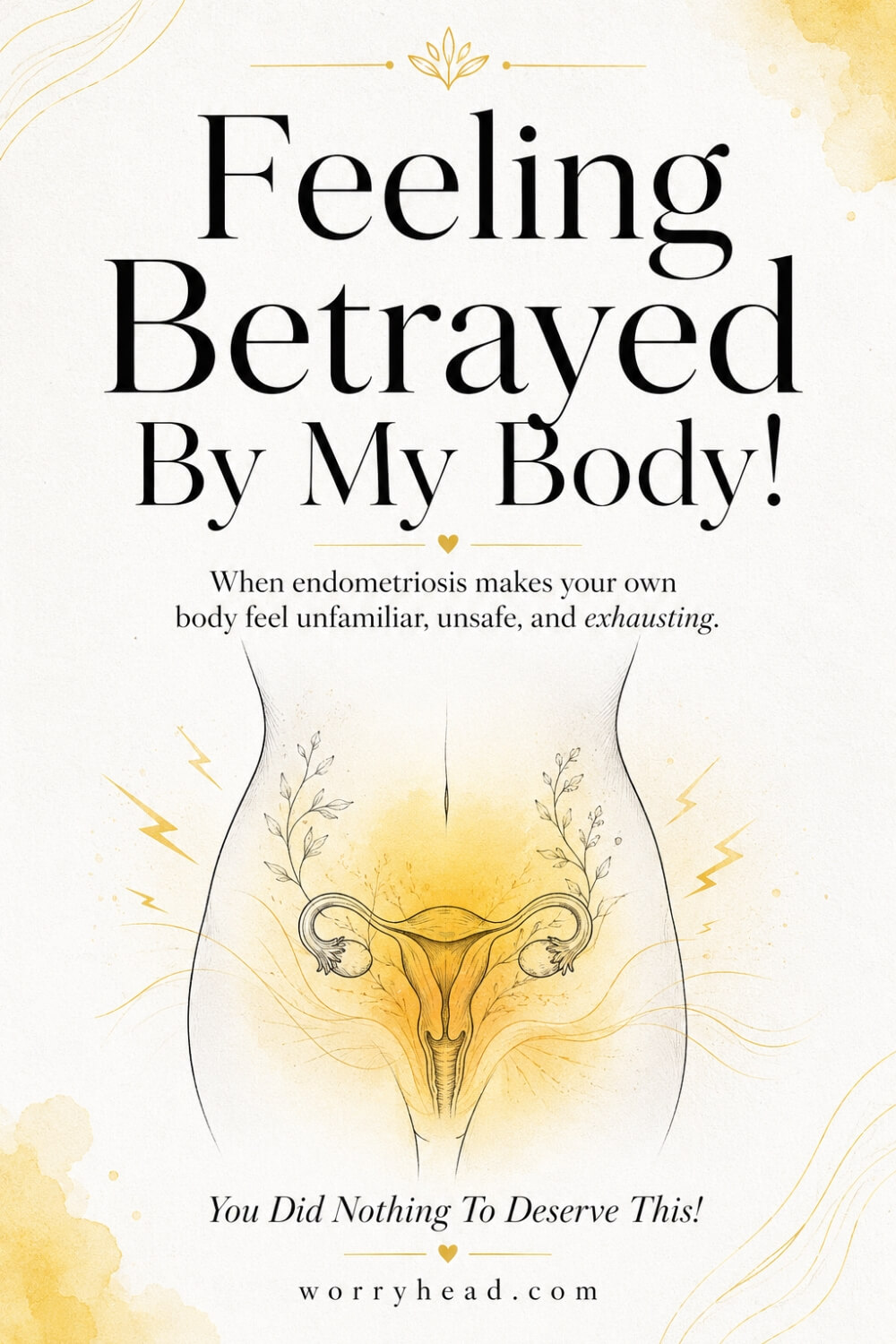
Protect Intimacy with Honesty
Endometriosis can make intimacy complicated, and that can hurt deeply because closeness is not only physical. Painful sex, pelvic tension, bleeding fears, fatigue, bloating, trauma from being dismissed, and fear of disappointing a partner can all make intimacy feel unsafe.
If this is your reality, please hear me clearly: you are not broken, cold, difficult, or less lovable. Your body may be protecting you from pain, and that deserves tenderness, not pressure.
As a husband, I had to learn that support is not about taking rejection personally. It is about creating enough safety that my wife never feels she must perform love while her body is begging for rest. Honest intimacy can mean holding hands, lying together, talking openly, changing timing, slowing down, asking what feels safe, and letting affection exist without expectation.
The right partner should not make your pain compete with their ego. Real love adapts.
Let Grief Have Language
There is grief in endometriosis that many people never see. You may grieve the body you thought you had, the fertility journey you imagined, the energy you used to rely on, the relationship ease you miss, the career choices that became harder, the social life that became smaller, or the version of yourself who did not have to calculate pain before saying yes.
That grief deserves language. It does not mean you are negative. It means something has been taken, interrupted, delayed, or changed. I have seen my wife grieve things that other people would not even think to name.
A normal morning, a peaceful body, a simple plan, a day without managing symptoms. When grief is unnamed, it often turns into shame, anger, anxiety, or loneliness. When it is named, it becomes something you can hold with compassion. You are allowed to miss the life you thought you would have while still building a life that can hold you now.
Ask For Better Support
You should not have to beg people to believe you before they support you. Better support begins with clearer conversations, but it also requires the right people to be willing to learn. You may need to tell your partner what helps during pain, what words hurt, what appointments you need support with, what tasks become impossible during flares, and what kind of emotional response makes you feel safe.
Sometimes people love you but do not know how to love you through illness yet. That does not excuse neglect, but it does create a place where learning can begin. I say this as a man who had to learn by listening, making mistakes, apologising, and paying attention to what my wife did not always have the strength to explain.
Good support is not loud. It is consistent, it remembers, it notices, it stops turning your pain into an argument. It says, “I may not feel what you feel, but I will not leave you alone inside it.”
Rebuild Body Trust Gently
Rebuilding trust with your body does not happen by forcing positivity. It happens slowly, through small experiences where your body feels a little less like a battlefield.
That might be resting before you collapse, eating without punishment, stretching gently if it feels safe, using heat when pain rises, choosing clothes that do not shame your belly, asking for help earlier, or speaking to yourself with less cruelty during symptoms.
You do not need to wake up tomorrow and love everything about your body. That may feel impossible, and I would never ask you to fake peace you do not feel. But maybe you can begin with one softer thought: “My body is suffering, and I can still care for it.” I have watched my wife rebuild pieces of herself not through grand transformations, but through tiny moments of being treated with tenderness.
Sometimes body trust begins when someone else looks at you in pain and still sees beauty, worth, and womanhood.
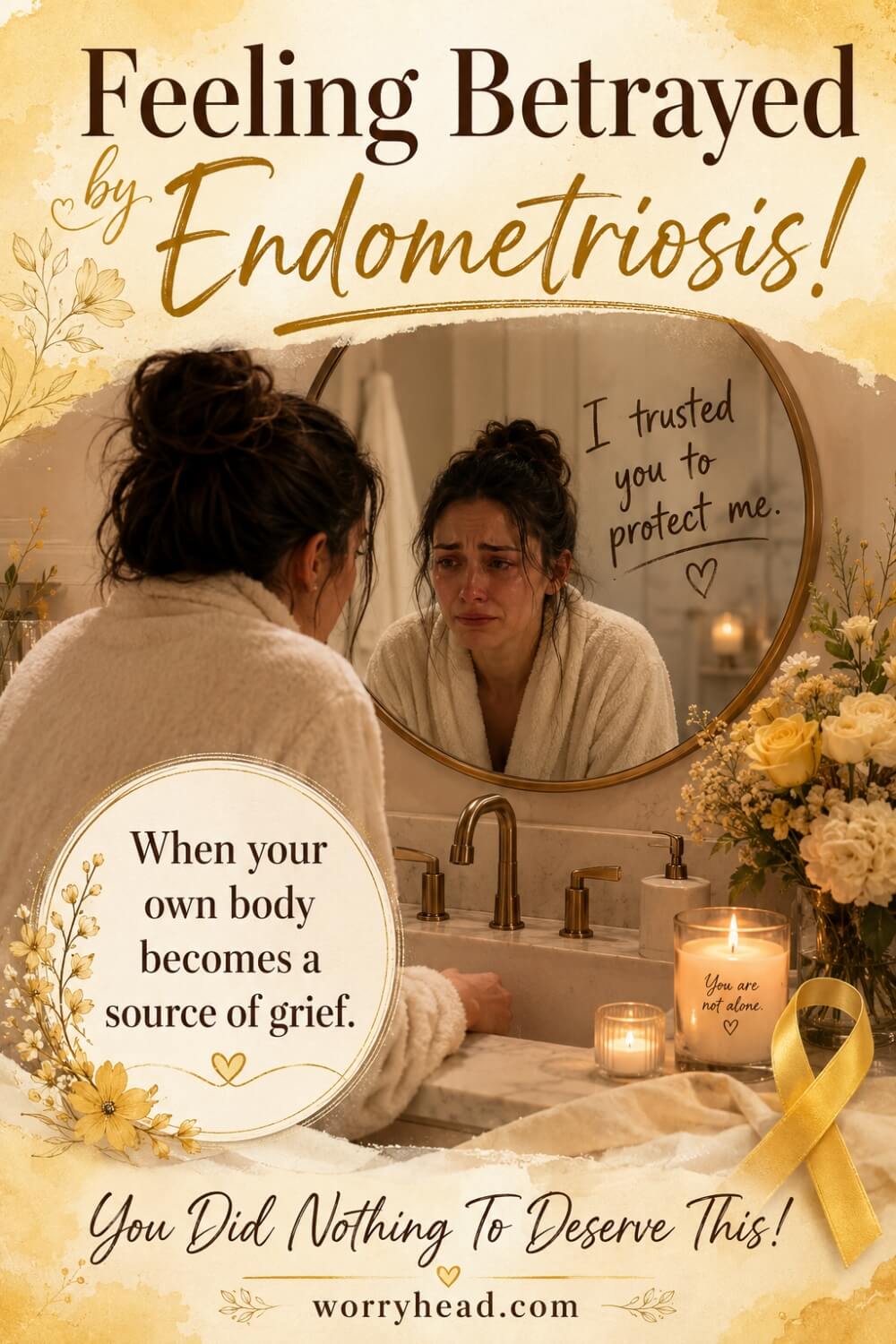
How Feeling Betrayed Changes the Way You See Yourself?
Endometriosis can make you question parts of yourself that once felt simple, natural, and private.
You may look in the mirror and not recognise the woman looking back, not because you disappeared, but because pain, bloating, fatigue, bleeding, medical appointments, fear, and disappointment have slowly changed the way you experience your own body.
That is one of the cruellest parts of chronic illness, because it not only interrupts your day, but it can also interrupt your identity.
You may start wondering if you are still attractive, still easy to love, still capable, still feminine, still desirable, still strong, still you. And when those thoughts arrive, they can feel shameful, but they are not shameful at all.
They are human.
When my wife struggled with endometriosis, adenomyosis, fibromyalgia, anxiety, depression, OCD, and panic attacks, I saw how much of the suffering happened quietly, in the spaces nobody clapped for and nobody documented. I saw the way she could be physically present in a room while emotionally carrying a storm that nobody else could see.
There were moments when she did not need me to explain her illness back to her; she needed me to help her remember she was still herself beneath it. She needed to know that pain had not made her less lovable, less beautiful, less worthy of patience, or less deserving of tenderness.
This is why “feeling betrayed by my body” can become so heavy, because it touches the private place where your body, your womanhood, your confidence, your memories, your relationships, and your future all meet.
But I want you to hear this from a man who has watched the woman he loves suffer and still sees her with deep respect: your symptoms are not your identity, your flare-ups are not your failure, and your hardest days do not erase the woman you are.
You are still allowed to want beauty, romance, intimacy, softness, ambition, peace, laughter, and a life that feels bigger than your diagnosis. And even if your body feels unfamiliar right now, that does not mean you are lost forever. Sometimes healing starts not with forcing yourself to love your body, but with allowing yourself to stop hating the body that has been trying to carry you through something unbearably hard.
What Feeling Betrayed Does to Love and Marriage?
Endometriosis does not stay politely inside one part of life.
It follows you into the bedroom, the kitchen, the car, the calendar, the workplace, the shower, the sofa, the family gathering, the quiet evening, and the moment when you were finally hoping to feel normal. It can make love feel complicated, not because love is missing, but because pain keeps interrupting it.
My wife’s symptoms affected her, of course, but they also affected me, our routines, our plans, our emotional safety, and the way we had to learn each other again. There were days when I had to understand that silence did not mean she was distant; it meant she was surviving. There were nights when I had to learn that tenderness mattered more than solutions, because you cannot fix a body in pain with a motivational speech.
That is something many partners, especially men, need to understand better.
When a woman says she feels exhausted, touched out, swollen, anxious, ashamed, scared, or disconnected from herself, she is not rejecting love. She may be trying to love you while living inside a body that no longer gives her peace.
This is why feeling betrayed by your body can affect a relationship so deeply, because it can make even ordinary closeness feel emotionally loaded.
The woman may feel guilty for cancelling plans, guilty for needing help, guilty for not being intimate, guilty for being tired, guilty for crying, guilty for not being the version of herself she thinks everyone prefers.
The partner may feel helpless too, but helplessness should never become pressure, resentment, or emotional distance. I had to learn that supporting my wife meant protecting the relationship from becoming another place where she had to perform strength.
It meant telling her, with my actions more than my words, that she was not a burden, not too much, not broken, and not difficult to love.
And if you are reading this as the woman with endometriosis, please let this sink in, that the right kind of love will not ask you to apologise for having a body that hurts.
It will teach you. It will adjust with you. It will sit beside you when your body feels like a stranger and still remind you, gently and consistently, that you are wanted, needed, and deeply worthy of care.
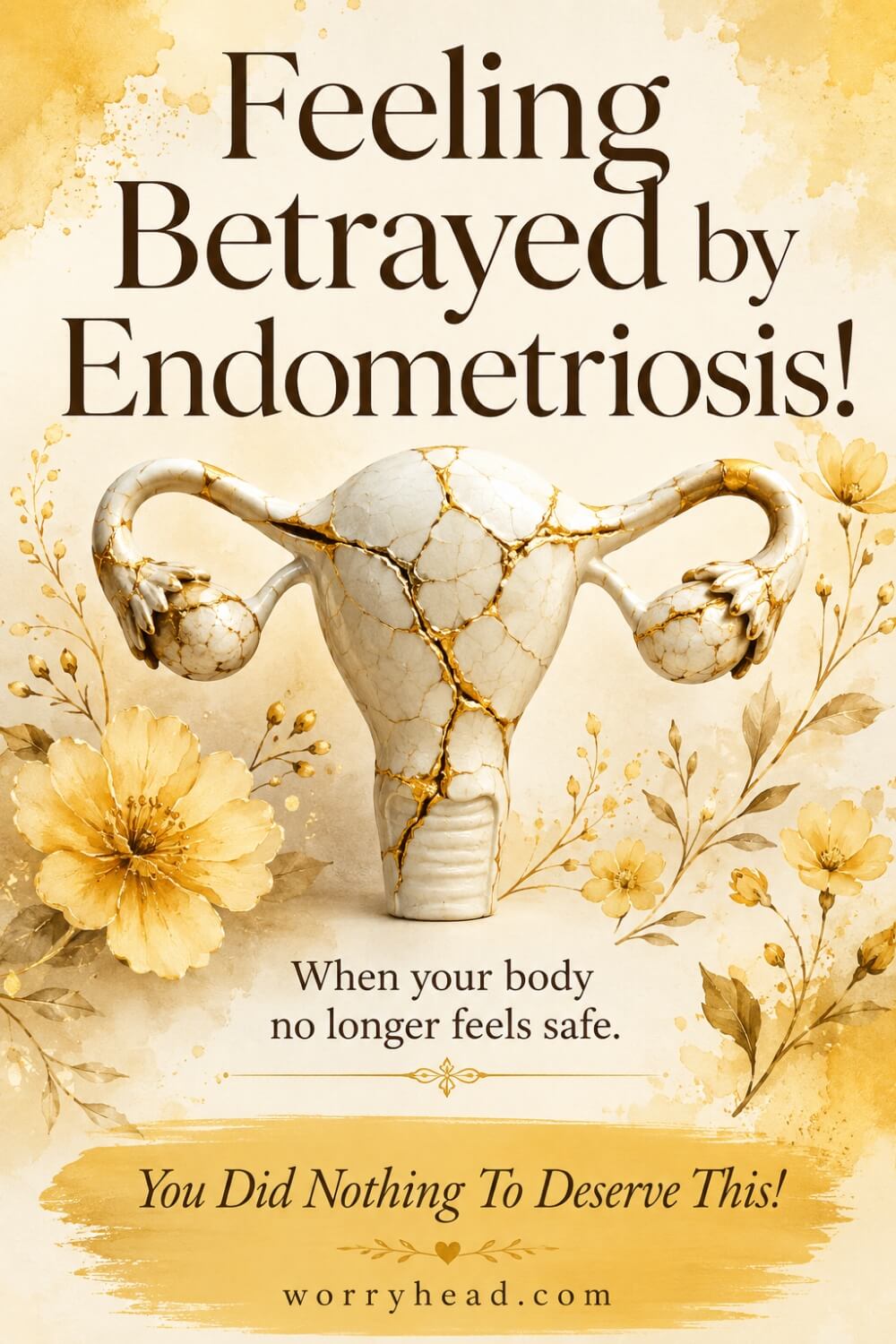
Final Word On Feeling Betrayed By My Body
If endometriosis has made you feel as if your own body has turned against you, I want you to know something before you leave this page: that feeling is not something you need to be ashamed of.
It is not a weakness. It is not attention-seeking. It is not you being dramatic, ungrateful, negative, or “too focused” on your illness.
It is what can happen when pain keeps interrupting your life, when fatigue keeps stealing your plans, when bloating changes the way you see yourself, when bleeding leaves you drained, when intimacy becomes complicated, when doctors dismiss you, when people expect you to function as if nothing is happening, and when your own body no longer feels predictable or safe.
That kind of suffering reaches deeper than symptoms. It reaches into identity, confidence, relationships, hope, womanhood, and the quiet private places you may not even know how to explain.
And maybe that is one of the hardest parts.
You may be able to tell someone, “I am in pain,” but it is much harder to say, “I do not feel like myself anymore.”
- It is harder to say, “I miss the woman I used to be.”
- It is harder to say, “I feel guilty for needing help.”
- It is harder to say, “I am scared my partner will get tired of this.”
- It is harder to say, “I want to love my body, but right now I feel trapped inside it.”
That is why feeling betrayed by my body is not just a sentence about pain.
It is a sentence about grief. It is a sentence about loss. It is a sentence about the way chronic illness can make you question the very place you are supposed to feel at home. But please hear me with all the gentleness I can put into these words: your body is not your enemy, even when it feels like one.
Your body is struggling. Your body is tired. Your body is reacting to something real.
Your body may need better care, better investigation, better pain support, better rest, better boundaries, better treatment, and better people around you who do not make you prove your suffering over and over again.
But your body does not make you less of a woman.
It does not make you less lovable. It does not make you less attractive, less worthy, less valuable, or less deserving of tenderness.
I have watched my wife suffer in ways that changed both of us.
I have seen how endometriosis, adenomyosis, fibromyalgia, anxiety, depression, OCD, and panic can slowly pull pieces of peace out of a person’s hands. But I have also seen that love can become deeper when it learns to stop demanding perfection and starts offering safety.
A good partner cannot cure endometriosis, but…
I could not cure my wife’s pain. But I could believe her.
- I could learn.
- I could stop taking her symptoms personally.
- I could hold space for the grief without making her feel guilty for having it.
- I could remind her that even on the days when she felt broken, I still saw the woman I loved.
And that is what I want you to carry with you.
You are not broken because your body hurts. You are not difficult because your needs have changed. You are not failing because your life had to be adjusted around a disease you never chose.
You are still here. Still worthy, still deeply lovable. Still allowed to want softness, intimacy, support, answers, rest, and a future that feels kinder than the past. Endometriosis may have changed your relationship with your body, but it does not get to decide your worth.
Your pain is real, your grief makes sense, and your body deserves care instead of blame. You are not weak for needing rest, support, answers, or tenderness. You are a woman carrying something heavy, and you deserve to be met with belief, patience, protection, and love.
If this touched something in you, leave a comment and tell me what part of this felt most true. And if you need more validation, you can check out the FREE chapter of my eBook, “You Did Nothing To Deserve This!”


About Me
Hi, I’m Lucjan! The reason why I decided to create this blog was my beautiful wife, who experienced a lot of pain in life, but also the lack of information about endometriosis and fibromyalgia for men…
READ MOREFeeling Betrayed By My Body With Endometriosis FAQ
Why do I feel betrayed by my body with endometriosis?
You may feel betrayed by your body because endometriosis can make your body feel unpredictable, painful, exhausting, and unsafe. When symptoms affect your period, energy, belly, intimacy, fertility fears, work, relationships, and daily plans, it can feel as if your own body is interrupting the life you are trying to live.
Is feeling angry at my body normal with endometriosis?
Yes, it can be normal to feel anger, grief, sadness, fear, or resentment toward your body when you live with chronic pain. Those feelings do not mean you hate yourself. They often mean you are exhausted from carrying symptoms that were never your fault.
How can I stop blaming my body for endometriosis?
Start by separating your body from the disease. Your body is not choosing to hurt you. It is struggling with inflammation, pain signals, hormonal changes, fatigue, and symptoms that deserve care. You may not be able to love your body every day, but you can begin by speaking to it with less punishment and more mercy.
Can endometriosis affect body image and confidence?
Yes. Endometriosis can affect body image through bloating, pain, scars, fatigue, bleeding, weight changes, painful intimacy, and the emotional stress of living with a chronic illness. Many women feel disconnected from the body they once trusted, and that deserves validation, not shame.
How can my partner support me when I feel betrayed by my body?
A supportive partner can believe you, listen without minimising, learn about endometriosis, help during flare-ups, protect your rest, avoid pressuring you around intimacy, attend appointments if you want them there, and remind you that your symptoms do not make you less lovable, desirable, or worthy of care. FAQ
Feeling Betrayed by My Body References
- World Health Organization: Endometriosis
- Wikipedia: Endometriosis
- NICE: Endometriosis Diagnosis And Management
- NICE: Updated Guideline To Improve The Diagnosis Of Endometriosis
- Office On Women’s Health: Endometriosis
- PMC Study: “My Body… Tends To Betray Me Sometimes”: A Qualitative Analysis Of Body Image In Individuals Living With Endometriosis
- Endometriosis Foundation Of America: A Love Letter To A Partner With Endometriosis
