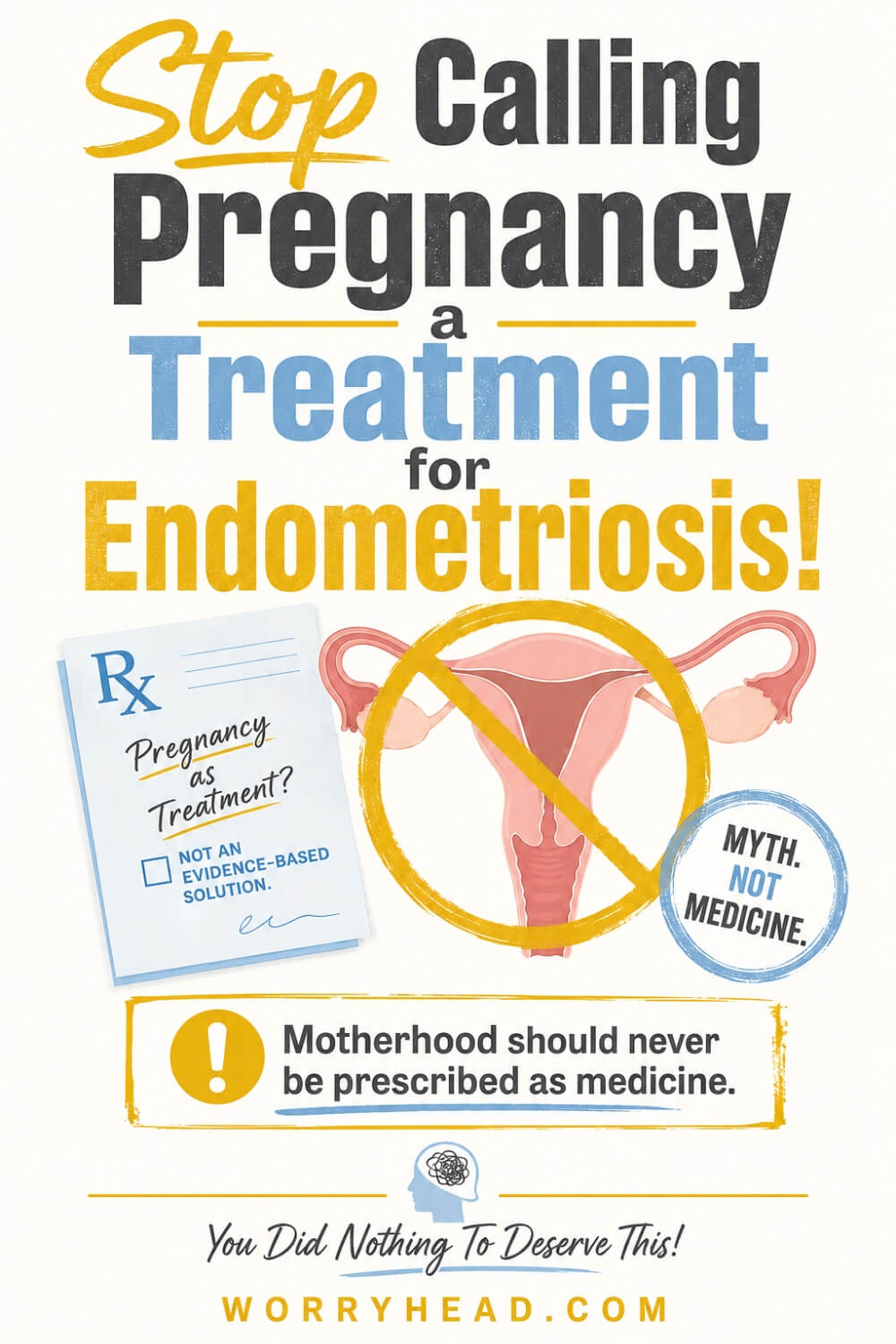
Are You Told That Pregnancy Cures Endometriosis?
Are you told that pregnancy cures endometriosis, perhaps by someone who says nine months without periods will make the disease disappear? Well, if you were told this by a medical professional, you may have been medically gaslit.
You may have also heard it while already frightened about pain, fertility, ageing, or whether your body will ever feel predictable again. Instead of receiving a thoughtful care plan, you may have been left carrying pressure to become a mother, as though you were responsible for remaining ill because you had not become pregnant.
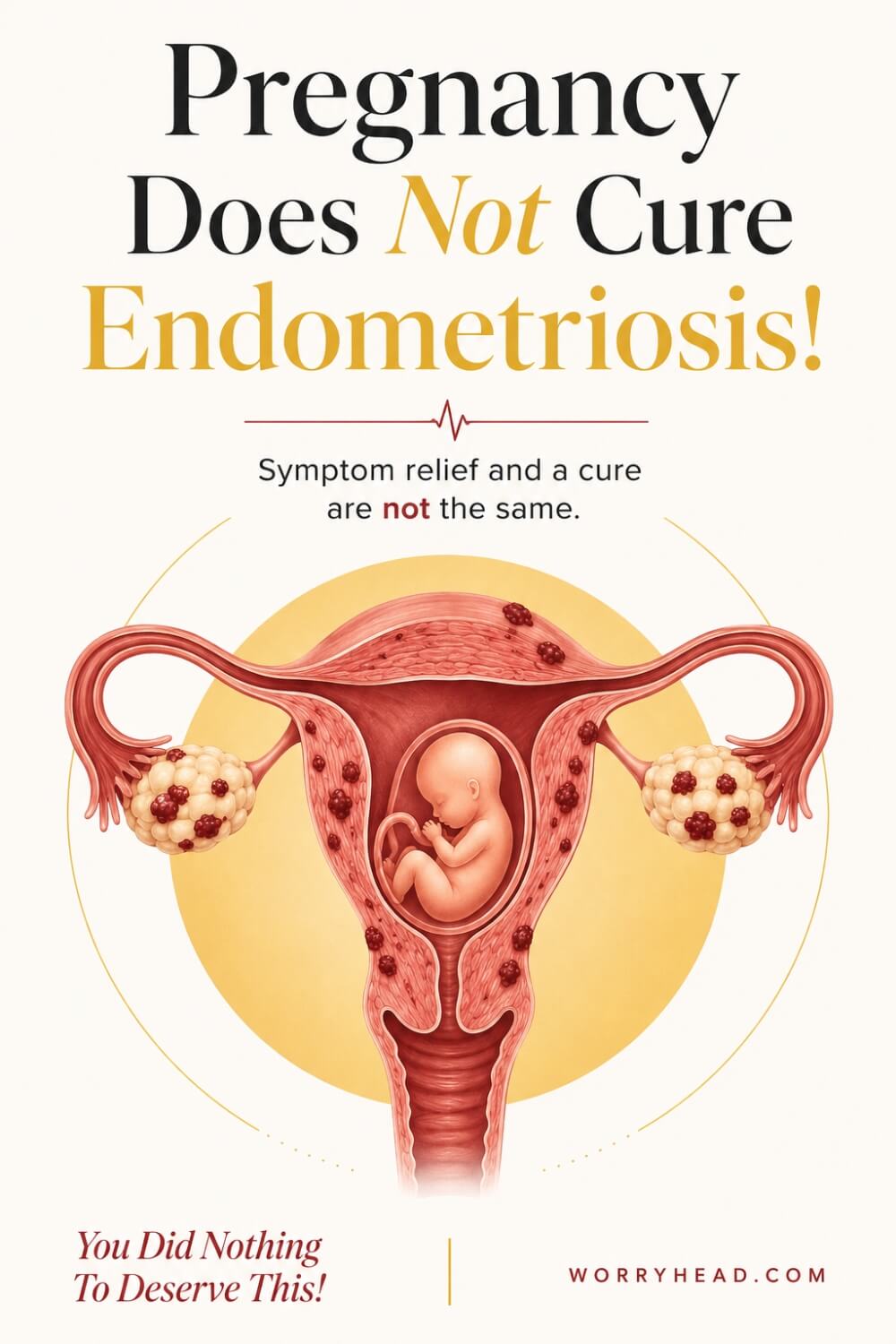
Pregnancy does NOT cure endometriosis. Hormonal and menstrual changes may ease symptoms for some, but others feel no relief or get worse, and lesions can remain, regress, or grow. Symptoms may return after birth, so pregnancy should never be recommended as medical treatment for this chronic disease.
I am not a clinician; I write as a husband, blogger and careful researcher learning beside my wife, and I have placed the medical sources behind this article at the bottom, including WHO, NHS, NICE, ESHRE and peer-reviewed studies.
What shocked me most was not only that this myth still survives, but how often it reaches you through people whose words carry authority. In a 2025 Endometriosis UK survey of more than 1,000 women, 79% said they had been told to get pregnant to cure endometriosis or ease its symptoms.
The evidence tells a far less convenient story: lesions may shrink, remain unchanged, disappear from view or grow during pregnancy, and reliable long-term pain relief cannot be promised. A temporarily quieter period can be real, but it does not prove the disease has gone, and the return of pain after birth is not your body failing you.
For my wife and me, pregnancy was never possible, let alone be a neat medical answer, as stage IV endometriosis helped take away the future with children that we once imagined. That is why I cannot accept a baby being spoken of like medicine, especially when the woman hearing it may already be grieving, frightened, or unsure whether motherhood is even possible for her.
Stay with me, because the difference between temporary symptom relief and a cure matters more than it first appears. Once you understand what pregnancy can and cannot change, this old advice becomes much easier to question without doubting yourself.
- Why Are You Told That Pregnancy Cures Endometriosis?
- What Happens When You Are Told that Pregnancy Cures Endometriosis?
- Are You Told That Pregnancy Cures Endometriosis and Left Carrying the Consequences?
- When to Seek Medical Help?
- Questions to Ask Your Doctor
- Final Word on Are You Told that Pregnancy Cures Endometriosis
- FREE eBook
Why Are You Told That Pregnancy Cures Endometriosis?
You may still be wondering, “Why are you told that pregnancy cures endometriosis when the evidence says something very different?”
Part of the reason is historical: doctors once mistook a pause in cyclical symptoms for removal of the disease itself.
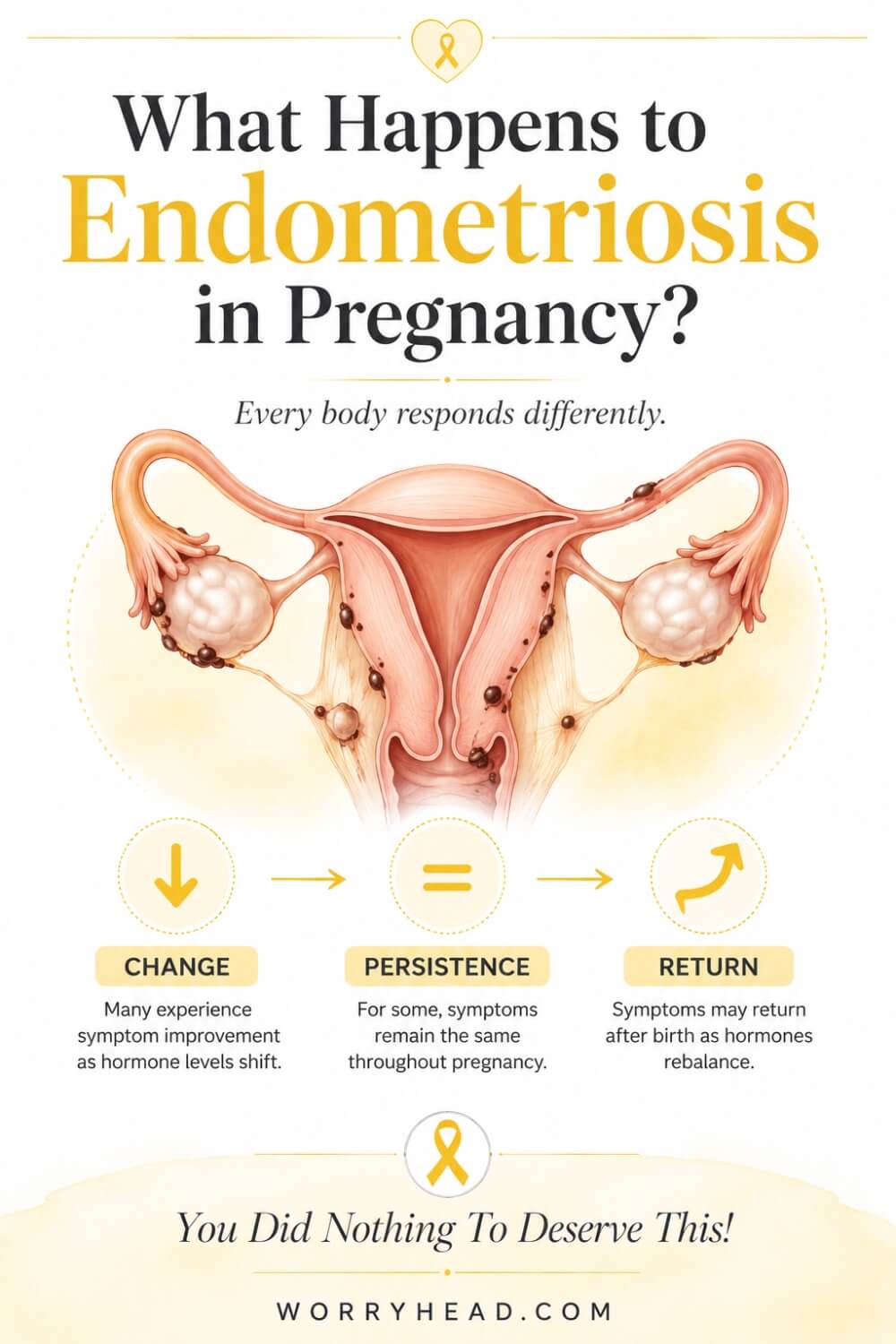
During pregnancy, ovulation and menstruation usually stop, while major hormonal changes may reduce period-linked pain and inflammation for some women.
Feeling better, however, does not show that lesions, fibrosis or adhesions have vanished. Endometriosis behaves differently from one body and one lesion to another, so there is no single pregnancy response that can be promised. Reviews have found that lesions may shrink, remain stable or grow, while ovarian endometriomas can change in size and appearance.
One reason is decidualisation, a pregnancy-related tissue change driven largely by progesterone that can alter how an endometrioma looks on a scan. That change is not proof of healing, and an atypical-looking cyst may require assessment by clinicians with suitable expertise.
Pain is also unpredictable: some women improve, some notice little difference, and some experience greater discomfort, particularly in early pregnancy or as scarred tissues stretch. A break from periods cannot reverse every source of suffering, such as adhesions, pelvic floor tension, sensitised nerves or pain coming from affected organs.
After birth, hormone levels shift again, ovulation and periods may eventually return, and symptoms can return with them. Breastfeeding may delay menstruation for some mothers, but the timing is individual, and it cannot be relied upon as ongoing treatment.
This myth becomes especially harmful when a deeply personal decision about parenthood is presented as a prescription.
It can pressure you to try to conceive before you are ready, even when you are facing infertility, pregnancy loss, financial worries, relationship circumstances, other health concerns or a clear wish not to have children. It may also delay pain treatment, specialist referral, imaging, fertility assessment or a proper discussion about surgery and long-term management.
Evidence-based care separates two questions that should never be confused: whether you want to become pregnant and how your endometriosis should be treated. Your plan should be shaped by your symptoms, disease pattern, fertility priorities, age, previous care and personal wishes, not by the belief that motherhood is medicine.
When I think of my wife, I do not see a body that failed to fulfil an old medical promise; I see a woman who lived with stage IV disease and lost the future with children that we once imagined together. I would have carried every injection, operation and frightened night for her if love could transfer pain from one body to another, but the least I can do is refuse advice that places more weight upon the woman already carrying so much.
The next section will help you protect your choices, question this myth and seek care without allowing anyone to turn pregnancy into an obligation.
- Separate Symptom Relief from Cure
- Protect Your Reproductive Choices
- Ask What Evidence Supports Advice
- Track Symptoms During Pregnancy
- Plan Care Before Trying
- Discuss Fertility Without Pressure
- Prepare for Postpartum Symptom Return
- Request Specialist Endometriosis Support
- Include Your Partner in Care
Separate Symptom Relief from Cure
When someone says pregnancy “helps”, it is important to slow the conversation down and ask what that actually means. Help can mean temporary symptom relief for some women because ovulation usually stops and menstrual bleeding pauses, but that is not the same as saying the disease has gone. Endometriosis lesions, scar tissue, inflammation, organ tethering and nerve sensitisation do not simply vanish because somebody conceived.
This distinction matters more than people realise, because false hope can become a second wound when pain returns later. I have seen how damaging it is when a woman is told to expect a cure and then feels confused, guilty or broken when her body does not follow the promise.
If you remember one thing, let it be this: feeling different for a season is not proof that the disease has been removed. Symptom change is a response, not a cure, and you deserve language that respects that truth.
Protect Your Reproductive Choices
Your womb is not a treatment plan, and your future should never be pushed into a corner by careless advice.
If you want children, that wish deserves tenderness and proper support. If you are unsure, not ready, unable to conceive, or simply do not want pregnancy, that deserves the same respect and the same quality of care.
What troubles me deeply is how easily a medical myth can become pressure. A woman already living with pain may then feel she must hurry, force herself, grieve in silence, or defend a private life decision while still trying to function day to day.
My wife and I know how painful reproductive uncertainty can be, and that is why I want you to hold this line firmly: treatment decisions and family decisions are not the same conversation. Good care protects both your health and your right to choose what happens next in your own life.
Ask What Evidence Supports Advice
When a clinician, relative or stranger says pregnancy cures endometriosis, it is completely reasonable to ask, “What evidence are you basing that on?” That is not being difficult. That is you protecting yourself from outdated beliefs dressed up as certainty. A trustworthy answer should separate symptom patterns, fertility goals, disease activity, and long-term management instead of blending them into one simplistic statement.
You are allowed to ask whether current guidelines support that advice, whether it applies to your specific symptoms, and what the alternatives are if pregnancy is not wanted or not possible. I say this with care because many women have been taught to stay polite at the cost of staying silent. But your future matters too much for that.
One clear question can expose whether someone is offering evidence-based care or repeating old assumptions that sound confident yet leave you carrying the consequences.
Track Symptoms During Pregnancy
If you do become pregnant, symptom tracking can still matter, even if some things feel better for a time. Many women are told to stop paying attention because pregnancy is supposed to “sort it out”, but your body still deserves to be listened to carefully. Pelvic pain, bowel symptoms, bladder discomfort, heavy fatigue, severe one-sided pain, bleeding, or anything that feels different from what you were told to expect should be noted and discussed.
Tracking does not mean becoming fearful or obsessive. It means creating a gentle record that helps you notice patterns, explain concerns clearly, and avoid dismissing yourself. My wife taught me how much confusion can grow when symptoms are brushed aside until memories become blurred and details are lost.
A small note on your phone, a diary entry, or a simple symptom log can make you feel more anchored. When your body has already been misunderstood, keeping track is not overreacting. It is self-respect.
Plan Care Before Trying
If pregnancy is something you hope for, a care plan before trying can save heartache later.
That can include reviewing symptoms, current medicines, pain strategies, fertility factors, previous scans, surgery history, and whether you need support from a specialist team. It also means thinking about practical life things, such as energy, work, finances, transport, emotional support and who will help if pain flares while you are trying to conceive.
I know this may sound less romantic than people imagine, but real love often looks like planning rather than pretending. Before my wife and I had to face what severe disease had already taken from us, I learned how important it is to talk about reality early, not after you are already overwhelmed.
Planning care does not remove uncertainty, but it gives you more ground under your feet. It turns hope into something steadier, kinder, and far less lonely than simply being told to “just get pregnant”.
Discuss Fertility Without Pressure
Fertility conversations should be honest, not forceful. Endometriosis can affect fertility in some women, but that does not mean every woman will struggle, and it certainly does not mean she should be rushed into decisions from a place of fear. A calm conversation should cover what is known, what is uncertain, what tests may help, and what options exist, all without treating motherhood as a duty or proof of womanhood.
This topic is tender for me because my wife and I carried dreams that stage IV disease did not allow us to live out. I know how quickly clinical words can become private grief. That is why I want every woman reading this to know that being spoken to gently matters just as much as being given facts.
If fertility is part of your story, you deserve compassion with the information, not pressure wrapped around it. No woman should feel pushed to outrun pain, age, or loss while already hurting.
Prepare for Postpartum Symptom Return
One of the cruellest parts of the pregnancy cure myth is that it leaves women unprepared for what may happen afterwards. If symptoms return after birth, you may feel shocked, betrayed, or ashamed, as though your body failed a test it was promised it would pass. But postpartum symptom return is not a personal failure. It is one of the reasons pregnancy should never be described as a cure in the first place.
Preparing early can soften some of that shock. It helps to discuss follow-up care, feeding plans if hormones matter to your situation, pain support, sleep strain, pelvic floor recovery, and when to seek reassessment if symptoms reappear. A new baby already changes everything, and adding unmanaged pain to that can feel crushing
I want you to have something my wife and so many women were not given enough of: honesty in advance. When you know symptom return is possible, you are less likely to blame yourself for something that was never your fault.
Request Specialist Endometriosis Support
Not every clinician has the same depth of knowledge about endometriosis, and that is important to remember when advice sounds vague, outdated, or dismissive. Specialist support can help when symptoms are complex, fertility is a concern, previous treatment has not helped, or pregnancy-related questions are being answered with broad statements rather than clear individual guidance.
You are not being demanding by wanting someone who understands the disease properly. I often think of how many years women lose before meeting somebody who finally joins the dots with care and competence.
My wife lived that reality, and it taught me how much damage can be done by half-informed reassurance. A specialist may not fix everything overnight, but the right support can change the quality of your decisions, your timing, and your sense of safety. Sometimes the first real step forward is simply getting in front of someone who stops repeating myths and starts listening to your actual body.
Include Your Partner in Care
If you have a supportive partner, bring them into the conversation when it feels right for you. A good partner can help remember what was said, take notes, ask respectful follow-up questions, and hold onto the truth when you are tired or overwhelmed. This is not because you are incapable. It is because pain, fear, and years of dismissal can make even simple appointments feel heavier than they look from the outside.
I say this as a husband who has sat beside the woman I love, watching her try to explain pain while also managing the emotion of not being believed enough times before. Sometimes my role was to speak. Sometimes it was simply to be steady.
If you are a partner reading this, do not dominate the room, but do not disappear either. Be calm, informed, and protective in the best sense of the word. And if you are the woman carrying this illness, please know this: you deserve support that makes you feel more held, not more alone.
What Happens When You Are Told that Pregnancy Cures Endometriosis?
A medical myth does more than give you incorrect information; it can shape the choices you make while you are frightened, hurting, and desperate for relief.
When you hear it, you may quietly wonder, “Why are you told that pregnancy cures endometriosis when specialists do not recommend pregnancy as a treatment?” That pressure becomes especially cruel if you are not ready for motherhood, do not want children, cannot conceive easily, or have already experienced reproductive loss.
Current guidance warns against encouraging pregnancy primarily to treat the disease because improvement is neither certain nor permanent.
Pregnancy changes menstruation, ovulation and hormone levels, but individual lesions may shrink, remain stable, grow or develop changes that affect how they look on medical imaging. Adhesions and fibrosis can still restrict organs, while sensitised nerves, pelvic floor tension and pain from deeply affected tissues may continue even without monthly bleeding.
A quieter period of symptoms cannot safely prove that the disease has disappeared. Symptoms returning after birth should not be blamed on stress, feeding choices, insufficient rest or anything you supposedly did wrong. The promise was medically unsound, so your body has not broken a contract with you.
I watched my wife search through her own memories for something she might have done differently, as though love, timing or determination could have changed the course of stage IV disease. There were moments when I could see her grieving two things at once: the pain inside the body she had fought so hard to live in and the children we would never hold.
I could not give her the future we had once imagined, but I could make certain she never carried the blame for losing it.
A man who loves you should never turn this myth into pressure; he should stand beside you while you decide what motherhood, treatment and safety mean for your own life. You deserve care that tells you the truth gently, protects your choices and leaves room for grief without pretending that pregnancy is medicine.
Are You Told That Pregnancy Cures Endometriosis and Left Carrying the Consequences?
The harm caused by this belief is not limited to medical misunderstanding; it can reach into your confidence, relationships, and picture of the future. You may eventually ask yourself, “Why are you told that pregnancy cures endometriosis when no responsible clinician can promise what pregnancy will do to your symptoms?”
Current evidence does not support becoming pregnant as a strategy for managing the disease, and a life-changing decision about having a child should never be presented as treatment.
If conceiving is difficult, the advice can make your body feel like both the problem and the supposed solution.
Even when pregnancy brings quieter months, symptoms can return as the menstrual cycle resumes, and that return may feel like betrayal only because somebody gave you a promise medicine could not keep. That disappointment can enter intimacy, fertility decisions, finances, and identity, leaving you and your partner grieving differently while sitting in the same room.
My wife lived with stage IV disease, and I saw how infertility could turn an ordinary conversation about children into something that stayed with her long after the words had ended.
I watched her question a body that had already endured pain, surgery and years of uncertainty, while I carried the helplessness of loving her deeply without being able to change what this horrible disease had taken. We did not need somebody to suggest that pregnancy might repair her; we needed honesty, sensitive fertility support and permission to grieve the life we had once pictured together.
For a partner, real support means removing pressure, listening without trying to force optimism and making it clear that her worth has never depended upon becoming a mother.
Once that burden is lifted, you can look at pain, bleeding, fertility concerns, and new symptoms as health matters deserving proper assessment, which is why the next essential question is knowing when to seek medical help.
When to Seek Medical Help?
Being told that pregnancy may quieten endometriosis should never make you feel that you must wait, conceive, or tolerate worsening symptoms before asking for help. You do not need to prove that your pain is unbearable, and you do not have to wait until it becomes an emergency. A change in symptoms deserves attention because pelvic pain can have several causes, and not every new problem should automatically be blamed on endometriosis.
Arrange an appointment with your GP or gynaecology team when pelvic pain keeps returning, does not settle, interferes with work, sleep, walking, sex, bowel movements, urination, or normal daily life. You should also return when treatment is no longer helping, causes side effects you cannot tolerate, or your symptoms come back after previously improving. NICE recommends gynaecology referral when symptoms persist, recur, harm daily life, or are not controlled by initial treatment.
Please mention new bowel or bladder changes rather than assuming they are simply part of your usual pattern. Pain when passing urine or opening your bowels, blood in your urine or stool, difficulty emptying your bladder, worsening constipation, repeated diarrhoea or pain around the kidneys or sides of your back all deserve discussion.
Suspected endometriomas, deep disease involving the bowel, bladder or ureter, and disease outside the pelvis are reasons for referral to a specialist endometriosis service.
A normal scan should not close the conversation when your symptoms continue. NICE specifically states that endometriosis should not be ruled out simply because an examination or ultrasound appears normal, and referral may still be appropriate. Keeping a brief symptom diary can help you explain what is happening, including where the pain sits, what brings it on, whether it follows your cycle, and how it affects your daily life.
If you are trying to conceive, ask for medical advice when you are worried about fertility rather than accepting “keep trying” as the whole plan. Your age, ovarian reserve, length of time trying, symptoms, disease severity and any fertility factors affecting your partner should all be considered together.
Updated NICE guidance now provides a specific fertility pathway for endometriosis, with discussions about expectant management, surgery and fertility treatment based on individual circumstances rather than the idea that pregnancy itself is treatment.
If you are already pregnant, mild cramping or a small amount of bleeding does not always mean something is wrong, but it should still be discussed with your GP, midwife, early pregnancy service or NHS 111. Do not let anyone dismiss the symptoms solely because you have previously experienced pelvic pain. Pain or bleeding in early pregnancy may need an assessment, which can include blood tests and an ultrasound to check how the pregnancy is developing.
Seek urgent assessment if you may be pregnant and develop low abdominal pain, especially on one side, vaginal bleeding or brown watery discharge, shoulder-tip pain, or discomfort when urinating or opening your bowels. These symptoms can have less serious explanations, but they may also occur with an ectopic pregnancy, so the NHS advises contacting a GP or NHS 111 promptly, even when you have not yet had a positive pregnancy test.
Go to A&E or contact your early pregnancy assessment service immediately if you have:
- heavy vaginal bleeding
- severe or rapidly worsening abdominal pain
- pain in the tip of your shoulder
- marked dizziness, weakness or fainting
Call 999 if you develop sudden, intense abdominal pain with faintness, severe dizziness, sickness or unusual paleness. These combinations may signal internal bleeding and need emergency assessment. They are uncommon, but knowing the signs is not about frightening you; it is about making sure you do not stay at home trying to explain away something serious as “just endometriosis”.
After birth, ask for a review if pelvic pain, painful periods, bowel symptoms, bladder problems or painful sex return and begin affecting your recovery or daily life. A return of symptoms does not mean pregnancy failed, and it certainly does not mean you caused the disease to come back. It means you still deserve an individual management plan rather than being told to wait and see indefinitely.
I learned beside my wife that women often ask for help later than they should because they have already been made to feel dramatic once before. I would rather help her write down every symptom, sit beside her and ask the forgotten question than watch her minimise pain to make somebody else comfortable. A partner should not speak over you, but they can help you remember details, support your choices and remind you that asking for proper care is never wasting anyone’s time.
Questions to Ask Your Doctor
Appointments can feel surprisingly short when you have spent months or years collecting pain, unanswered questions, and fear about your fertility. You may arrive determined to speak, then hear the words “pregnancy might help” and suddenly forget half of what you wanted to ask. Writing your questions down beforehand can help you keep the conversation focused on your health rather than allowing a myth to become the plan.
You do not need to ask every question below in one appointment. Choose the ones that matter most to you, take a symptom diary or a short written history, and bring a supportive partner if that would make you feel steadier. ESHRE guidance clearly says that women should not be advised to become pregnant for the sole purpose of treating endometriosis because symptoms do not always improve and disease progression is not reliably reduced.
Are you recommending pregnancy as treatment, or discussing it because I want a child?
This is one of the most important questions you can ask because it separates your medical needs from your reproductive choices. Your doctor may reasonably discuss fertility if you have said that you want to conceive, but pregnancy should not be prescribed as a way of controlling pain or removing the disease.
Ask for the purpose of the recommendation to be stated clearly. You deserve to know whether you are discussing symptom management, fertility planning, pregnancy care or all three, because each requires a different conversation.
What evidence shows that pregnancy would improve my particular symptoms?
General statements such as “many women feel better” do not tell you what may happen in your body. Ask which symptoms might temporarily change, which may continue, and whether adhesions, fibrosis, endometriomas, deep lesions, pelvic floor dysfunction or sensitised nerves could still cause pain without menstruation.
Your doctor may not be able to predict your individual response with certainty, and an honest “we cannot know” is more useful than a comforting promise. Pregnancy has a variable effect on symptoms and lesions, which is why specialist guidance does not support presenting it as treatment.
What are my treatment options if I do not want to become pregnant?
You should never have to justify why pregnancy is not right for you. Ask about the choices that match your symptoms and circumstances, which may include pain relief, hormonal treatment, physiotherapy, specialist pain support, surgery, or further investigation depending on your clinical picture.
Ask what each option is intended to achieve, how long it may take to help, what side effects may occur and what the next step will be if it does not work. The NHS describes endometriosis treatment as individual care intended to manage symptoms, with options depending on factors such as symptom severity and whether pregnancy is a priority.
Could something besides active bleeding be causing my pain?
Pain does not always disappear when periods stop because menstrual bleeding is only one possible part of the picture. Adhesions may restrict movement between organs, deep disease may affect sensitive structures, pelvic muscles may remain tense, and the nervous system can continue reacting protectively after repeated pain.
This question can move the appointment beyond a narrow discussion about hormones. Ask whether bowel, bladder, pelvic floor, musculoskeletal or nerve-related factors need to be considered, especially when your symptoms do not follow a simple monthly pattern.
Do my symptoms suggest deep endometriosis or an endometrioma?
Tell your doctor about deep pain during or after sex, painful bowel movements, urinary symptoms, blood in the urine or stool, one-sided ovarian pain, cyclical shoulder or chest symptoms, and pain that reaches your back, hip or leg. Do not leave out symptoms because they feel embarrassing or seem unrelated.
Ask whether you need a specialist ultrasound, MRI or referral to an endometriosis service. NICE recommends specialist referral when an endometrioma or deep endometriosis involving areas such as the bowel, bladder or ureter is suspected.
If my scan is normal, what happens next?
A normal ultrasound does not automatically explain away your symptoms or exclude endometriosis. Ask your doctor what diagnosis is being considered, whether treatment can begin based on your symptoms, and when referral or further imaging would be appropriate.
You might calmly say, “I understand nothing obvious appeared on the scan, but my symptoms are still affecting my life. What is the next step?” NICE guidance says endometriosis should not be ruled out solely because examination or ultrasound findings are normal.
How could my current treatment affect trying to conceive?
Some treatments used to control pain prevent pregnancy while they are being taken, but this does not mean that they permanently damage fertility. Ask how quickly your cycle may return after stopping treatment, whether you need to change any medicines before trying, and how pain will be managed during that transition.
Do not stop prescribed medication without discussing it first. A preconception review gives you the chance to talk through medicines, supplements, previous operations, other health conditions and any support you may need before trying to conceive.
Should my fertility be assessed now rather than later?
There is no single waiting period that suits every woman with endometriosis. Your age, how long you have been trying, previous surgery, ovarian involvement, fallopian tube health, menstrual history and your partner’s fertility may all influence when assessment is appropriate.
Ask whether ovarian reserve testing, semen analysis, tubal assessment or referral to a fertility specialist should be considered. NICE introduced a dedicated fertility pathway for endometriosis in March 2026, with options such as a period of trying naturally, surgery or assisted conception discussed according to the individual situation rather than assuming pregnancy will simply occur and solve the problem.
Would surgery help my pain, fertility, both or neither?
Surgery should never be discussed as though it guarantees pregnancy or permanent relief. Ask what the proposed operation is meant to achieve, which areas may be treated, who will perform it, and what risks it may carry for the ovaries, surrounding organs, or future fertility.
When an endometrioma is involved, ask specifically how surgery could affect healthy ovarian tissue and ovarian reserve. Also ask what may happen if you choose not to have surgery now, because informed consent includes understanding both action and watchful waiting.
What should I expect if I become pregnant?
Ask who should oversee your care and whether your endometriosis history needs to be included clearly in your maternity notes. Discuss what kinds of discomfort may be expected, which symptoms should prompt assessment, and whether any previous surgery, bowel involvement, bladder involvement or ovarian cysts could affect monitoring.
The purpose of this conversation is not to frighten you or suggest that something will go wrong. It is to make sure that your history is taken seriously and that you know whom to contact if pain, bleeding or another concerning symptom appears.
What is our plan if symptoms return after birth?
Postpartum care is often forgotten while everyone focuses on the pregnancy and baby. Ask when you should be reviewed, what pain relief may be suitable, how feeding choices could affect medication options, and when longer-term hormonal or surgical management might be reconsidered.
Most importantly, ask your doctor to record that symptom improvement during pregnancy would not mean the disease had been cured. Having a plan before birth may protect you from being dismissed later if pain, painful periods, bowel problems, bladder symptoms or painful sex return.
When should I seek urgent medical help?
Ask your doctor to explain warning signs in language you can remember. If you become pregnant, make sure you understand where to seek help for significant bleeding, severe or one-sided abdominal pain, shoulder-tip pain, dizziness, fainting or rapidly worsening symptoms.
You are not inviting trouble by asking about urgent signs. You are preparing yourself so that you do not stay at home questioning whether you are “making a fuss” when you need assessment.
Can you document my symptoms and what we have agreed today?
Medical appointments can blur together, particularly when you are tired, anxious or in pain. Asking for your symptoms, concerns and agreed next steps to be documented creates a clearer record for you and for any clinician you see later.
Before leaving, try asking, “Could we summarise the plan, including what happens if this treatment does not help?” You should know who is responsible for the next step, how long you may wait, and when you should return rather than being left in uncertainty.
I learned beside my wife that a good appointment is not one where you obediently accept every sentence. It is one where you leave understanding what is happening, what remains uncertain, and what choices still belong to you. I have sat beside the woman I love while she tried to remember years of pain in a few rushed minutes, and I know how much it matters when somebody helps her hold onto the question she was too exhausted to ask.
A supportive partner can take notes, remind you of symptoms and help you feel less alone, but they should never speak over you or turn your care into their decision. The centre of the conversation must remain your body, your pain, your fertility wishes and your future. You are not difficult for asking for evidence, clarity or another opinion; you are asking for the kind of care you should have received from the beginning.
Final Word on Are You Told that Pregnancy Cures Endometriosis
Being told that pregnancy will cure endometriosis can sound hopeful, especially when you are exhausted by pain and desperate for one clear answer. Yet hope becomes harmful when it is built on a promise medicine cannot honestly make.
Pregnancy may change symptoms for some women, but it does not reliably remove lesions, adhesions, fibrosis, endometriomas, nerve sensitisation or every source of pelvic pain.
This is why the question, “Are you told that pregnancy cures endometriosis?” matters far beyond correcting one outdated sentence. It asks whether your reproductive choices are being respected, whether your care is based on evidence, and whether anyone has taken time to understand what motherhood means to you. A pregnancy should begin because you want to pursue parenthood, not because pain has cornered you into using your body as its own prescription.
Some women experience fewer symptoms while pregnant because ovulation and menstruation usually pause and hormone levels change. Others continue to hurt, develop different discomfort, or notice symptoms returning after birth. None of those experiences proves that a woman succeeded or failed. Bodies respond differently, and temporary relief should be welcomed without being renamed a cure.
You also deserve to hear that fertility and treatment are connected but separate matters. Endometriosis can make conception more difficult for some women, while others become pregnant without assistance.
Your age, symptoms, ovarian involvement, previous surgery, fallopian tubes, partner’s fertility and personal priorities all deserve individual discussion. A hurried instruction to “have a baby” cannot replace proper assessment, treatment choices or sensitive fertility support.
For my wife and me, this subject carries a grief that cannot be reduced to medical terminology. Stage IV disease became part of why the children we once imagined never entered our lives. I could not repair that loss, but I could stand beside her, refuse to let her blame herself, and remind her that her worth had never depended upon giving me a child.
That is what support should look like. It does not pressure you to become pregnant, dismiss your fear, or promise that motherhood will rescue you from chronic illness. It listens when the future feels uncertain, helps you prepare questions, respects your decisions and stays when there is no easy answer.
The right plan may include pain relief, hormonal treatment, specialist imaging, physiotherapy, surgery, fertility care or review, chosen with you rather than imposed upon you by someone repeating a myth.
Please keep asking for care that sees the whole of you. Ask what a recommendation is meant to achieve, what evidence supports it, what alternatives exist, and what happens if symptoms continue. Seek another opinion when your pain is minimised or your choices are ignored.
You are not difficult for questioning an old myth. You are not ungrateful for wanting honest information. You are not less of a woman if pregnancy is impossible, unwanted, delayed or never part of your story. You deserve treatment because you are hurting, support because this is heavy, and love that never makes your value conditional.
Pregnancy may change endometriosis symptoms, but it cannot be promised as a cure. Your wish to become a parent must remain your choice, never a treatment imposed upon you. You deserve evidence-based care, honest fertility support, and a partner who reminds you that your worth has never depended upon motherhood.
Have you ever been told that pregnancy would cure your endometriosis? Please leave a comment and share what those words made you feel. You can also find my FREE 130+ page eBook, “You Did Nothing To Deserve This!”, at the bottom of this post.


About Me
Hi, I’m Lucjan! The reason why I decided to create this blog was my beautiful wife, who experienced a lot of pain in life, but also the lack of information about endometriosis and fibromyalgia for men…
READ MORE
Grab a FREE eBook!
“You Did NOTHING To Deserve This!”
Finally hear the words nobody ever said to you, that your pain is real, your tears make sense, and you did nothing to deserve endometriosis, the dismissal, or the way it has rewritten your life.
Related Questions You May Be Asking About: Are You Told That Pregnancy Cures Endometriosis?
1. Why can endometriosis symptoms improve during pregnancy if it is not a cure?
Pregnancy usually stops ovulation and monthly bleeding for a time, while hormone levels change substantially. That may reduce period-linked inflammation and pain for some women. However, adhesions, fibrosis, endometriomas, deep lesions, pelvic floor tension and sensitised nerves may remain, so improvement is temporary symptom change rather than proof that the disease has disappeared.
2. Can endometriosis lesions grow or change during pregnancy?
Yes. Research reviewed by ESHRE shows that pregnancy has a variable effect on endometriosis lesions: some may become smaller or less visible, while others remain or grow. Endometriomas can also change appearance because of pregnancy-related decidualisation. An unusual-looking ovarian cyst should therefore be assessed by a team experienced in endometriosis imaging rather than assumed to be cured.
3. When can endometriosis pain return after childbirth?
There is no fixed timetable. Pain may return when ovulation and periods resume, but some symptoms can reappear earlier because not every source of pain depends upon menstruation. Postpartum hormone changes, healing, sleep loss and physical strain may also affect how you feel. Returning pain deserves reassessment, not blame or the suggestion that pregnancy somehow failed.
4. Should I stop endometriosis follow-up after giving birth?
No. Even if pregnancy brings months of relief, ESHRE notes that it does not consistently reduce disease progression and should not replace follow-up. Arrange a review if pain, bowel or bladder symptoms, painful sex or difficult periods return. A postpartum plan can help you seek support early instead of waiting until your life is again controlled by symptoms.
5. Can endometriosis affect the health of a pregnancy?
Endometriosis has been associated with higher risks of ectopic pregnancy, first-trimester miscarriage and some uncommon obstetric complications, although the quality of evidence varies. This does not mean your pregnancy will go wrong or that every woman needs extra monitoring. Tell your maternity team about your diagnosis and seek prompt assessment for bleeding, severe one-sided pain, shoulder-tip pain, dizziness or fainting.
Are You Told That Pregnancy Cures Endometriosis? References
- https://www.who.int/news-room/fact-sheets/detail/endometriosis
- https://en.wikipedia.org/wiki/Endometriosis
- https://www.nhs.uk/conditions/endometriosis/
- https://www.eshre.eu/guideline/endometriosis
- https://www.eshre.eu/-/media/sitecore-files/Guidelines/Endometriosis/ESHRE-GUIDELINE-ENDOMETRIOSIS-2022_2.pdf
- https://pubmed.ncbi.nlm.nih.gov/29471493/
- https://academic.oup.com/humupd/article/24/3/290/4859612
- https://pubmed.ncbi.nlm.nih.gov/31280954/
- https://pmc.ncbi.nlm.nih.gov/articles/PMC10820275/
- https://www.nice.org.uk/guidance/ng73
- https://www.nice.org.uk/guidance/ng73/chapter/recommendations
- https://www.nice.org.uk/guidance/ng257/chapter/Management-of-female-factor-fertility-problems
- https://www.nice.org.uk/news/articles/nice-recommends-new-dedicated-fertility-treatment-pathway-for-endometriosis
- https://www.endometriosis-uk.org/endometriosis-fertility-and-pregnancy
- https://www.endometriosis-uk.org/endometriosis-uk-team-metro-news-end-myth-pregnancy-can-cure-endometriosis
- https://www.endometriosis-uk.org/jos-hot-topics-myths-curing-endometriosis
- https://www.endometriosis-uk.org/faqs
- https://www.endometriosis-uk.org/sites/default/files/2022-09/Treatment%20Options%20January%202022_0.pdf
- https://www.endometriosis-uk.org/sites/default/files/files/Endometriosis%20APPG%20Report%20Oct%202020.pdf
- https://www.nhs.uk/symptoms/pelvic-pain/
- https://www.nhs.uk/conditions/ectopic-pregnancy/
- https://www.rcog.org.uk/for-the-public/browse-our-patient-information/bleeding-andor-pain-in-early-pregnancy/
