Why Endometriosis Makes You Blame Yourself?
Have you ever sat alone after another flare and quietly wondered why endometriosis makes you blame yourself when you already suffer enough?
The reason endometriosis makes you blame yourself is not that you are weak, dramatic, broken, or difficult. It is because years of pain, dismissal, uncertainty, and trying to hold life together can make even the strongest woman start questioning herself.
Endometriosis can make you blame yourself because chronic pain, delayed diagnosis, dismissal, fatigue, intimacy struggles, fertility fears, and unpredictable flares can train your mind to search for fault. But the disease is not caused by weakness, failure, emotions, or anything you did at all.
I am not a clinician, but I write as a husband, blogger, and researcher who has spent years learning beside my wife, and at the bottom of this article I have attached the sources I used to understand the medical context and health facts, including WHO, NICE, NHS, ESHRE, and published studies.
Prefer to listen?
I’ve turned this article into a brief, gentle podcast-style conversation, so you can absorb it without having to read everything on a hard day. The discussion is AI-assisted and based on this article, but the care, research, and intention behind it are mine.
What surprises many people is that self-blame is not just “negative thinking.” It can grow from the way endo behaves, meaning the pain can be invisible, the diagnosis can take years, symptoms can move through the bowel, bladder, pelvis, back, legs, periods, intimacy, sleep, work, and mood, and yet the outside world may still expect you to function like nothing is happening. If you are blaming yourself for the wait, our guide asks whether a late endometriosis diagnosis was your fault and helps separate hindsight from responsibility.
That is where the mind begins to fill the silence. When doctors miss it, partners misunderstand it, family minimises it, employers question it, and your own body changes without warning, you may start thinking, “Maybe it is me.” But it was never you. Endo was never your fault!
I saw this with my wife long before I had the words for it. I saw how endometriosis could make her apologise for pain she never asked for, for plans she had to cancel, for intimacy that became complicated, for exhaustion that came from surviving a body that would not give her peace.
And as her husband, one of the most painful things was watching her carry guilt on top of pain. Because pain already takes so much from a woman, but self-blame tries to take her dignity too.
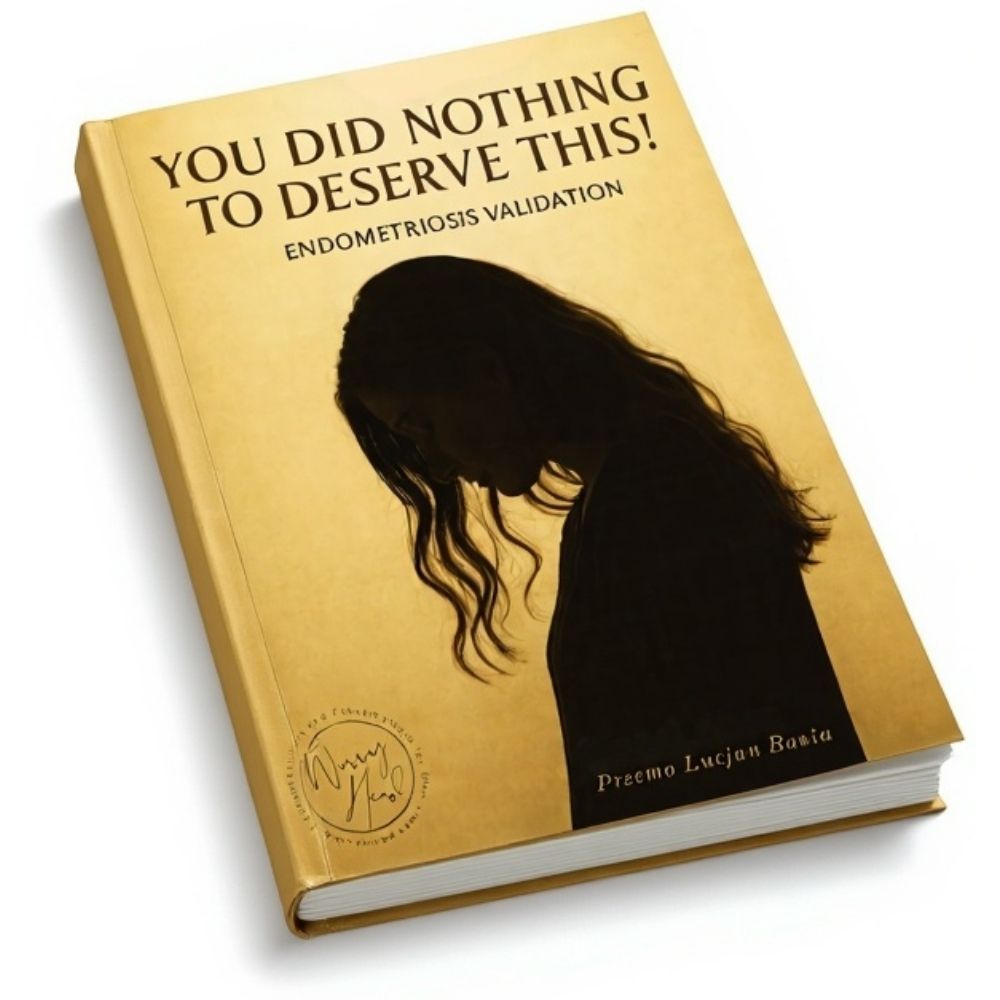
If this article speaks to the quiet place inside you, you can also grab my free 130+ page eBook, “You Did Nothing To Deserve This!”, written to validate the feelings of women with endometriosis. When you get it, you also join our community, where I share more freebies, gentle support, big discounts on our books, and emails filled with real value to help you and your relationship adjust to the new normal chronic illness can bring.
It’s not a medical guide but a human one. Here’s what you will find inside:
- This Was Never Your Fault
- The Girl You Used To Be
- When Your Own Body Feels Like an Enemy
- The Invisible Battles Nobody Sees
- Am I Just Lazy? – The Lie You Have Been Taught
- Gaslighting, Dismissal and the Trauma of Not Being Believed
- Guilt: The Weight You Were Never Meant to Carry
- Love in the Middle of Pain
- Intimacy When Your Body Hurts
- The Loneliness of Being the Strong One
- You Are Allowed To Take Up Space
- Tiny, Gentle Hopes (Not Toxic Positivity)
- If You Could Hear My Voice Every Flare Day
- You Deserve Partners, Not Witnesses
- When You Wish He Understood
- Motherhood, Fertility and the Grief Nobody Sees
- When Anger Is the Only Honest Feeling
- Learning to Trust Your Body Again
- Building a Life That Fits Your Reality
- You Did Nothing To Deserve This
You Did NOTHING To Deserve This!
Endometriosis Validation for Women with Endo
Why Endometriosis Makes You Blame Yourself?
Endometriosis makes you blame yourself because this disease does not only attack the body, but it also slowly attacks the way a woman sees herself.
When pain keeps returning, when doctors do not always have quick answers, when scans may look “normal,” when family members say “but you looked fine yesterday,” the mind begins to search for a reason.
And because women are often taught to be polite, strong, useful, attractive, available, patient, and endlessly understanding, many begin looking for that reason inside themselves.
- You may blame yourself for cancelling plans, but you did not choose the flare.
- You may blame yourself for needing rest, but you did not choose the fatigue.
- You may blame yourself for struggling with intimacy, but you did not choose pain during or after sex, pelvic tenderness, fear, bleeding, bloating, or the emotional shutdown that can follow repeated hurt.
This is one of the cruellest parts of endometriosis, because the illness can already take enough from your day, yet guilt tries to take even more from your heart.
Medical guidance recognises that endometriosis can affect quality of life, work, relationships, fertility, sex, bowel symptoms, bladder symptoms, energy, and mental wellbeing, but many women are still made to feel as if they are “too sensitive” for reacting to all of that.
I need you to hear this clearly: reacting to a painful, unpredictable, often dismissed chronic disease is not weakness.
It is a human nervous system trying to make sense of something that keeps interrupting your body, your plans, your confidence, and sometimes even your identity.
When you live with repeated pain, your brain naturally starts predicting danger.
You may become hyperaware of every cramp, every bowel movement, every twinge near your ovary, every strange heaviness in your pelvis, every sign that another bad day may be coming.
That does not mean you are obsessive or dramatic. It means your body has taught your brain that pain can arrive without warning, and your mind is trying to protect you before it happens again.
But protection can become punishment when fear turns into “What did I do wrong?”
This is where self-blame can grow quietly, especially when the people around you do not understand how much effort it takes just to appear “normal.”
I saw this with my wife, and I still remember the kind of apologies that should never have had to leave her mouth. She would apologise for being tired, for needing quiet, for not feeling like herself, for pain changing the way we lived as a couple, and each time I wished I could take that guilt out of her hands and place it where it belonged.
Not on her. Not on her body. Not on her worth.
On the disease, on the delays, on the lack of understanding, and on a world that too often asks women to prove pain before it believes them.
Before we go deeper, I want to give you something practical, because validation should not only make you feel understood for a moment, it should also help you breathe differently when guilt comes back later.
These are the small truths I wish every woman with endometriosis could keep close on the days when self-blame gets loud:
- Name The Disease, Not Yourself
- Separate Guilt From Responsibility
- Stop Apologising For Pain
- Believe Your Body’s Signals
- Let Rest Count As Care
- Protect Intimacy With Honesty
- Question Medical Dismissal
- Let Love Adjust With You
- Keep Proof For Hard Days
Name the Disease, Not Yourself
One of the first things I would gently tell you is this: stop calling yourself the problem when the disease is the problem.
I know that may sound simple, but when endometriosis has followed you through periods, workdays, relationships, sex, family plans, fertility fears, surgeries, appointments, and nights where you cried quietly so nobody would worry, the line between “I am ill” and “I am the burden” can become painfully blurred.
But you are not the burden.
The burden is the pain, the inflammation, the uncertainty, the years of being misunderstood, and the pressure to keep acting normal while your body is screaming for care.
I saw my wife carry shame for things she never caused, and it broke my heart because I knew the woman in front of me was not difficult. She was exhausted. She was hurting. She was trying. So when guilt says, “I am ruining everything,” answer it with truth: “Endometriosis is making this hard, not me.”
Separate Guilt from Responsibility
There is a big difference between guilt and responsibility, and many women with endometriosis are forced to carry both as if they are the same thing.
- Guilt says, “This is my fault.”
- Responsibility says, “This is hard, and I still deserve support while I manage it.”
That difference matters because guilt crushes you, while responsibility can help you make choices without hating yourself for needing those choices in the first place.
You may need to cancel plans, change routines, ask for help, avoid certain foods, rest more, say no to sex, speak to a doctor again, or tell someone that you are not coping. None of that means you caused the illness. It only means you are responding to it. I learned this through marriage, not from a textbook.
My wife was never responsible for having endometriosis, but together we had to learn how to respond to what it did to our life. That is not blame. That is survival with love.
Stop Apologising for Pain
If you have apologised for being in pain, I want you to pause for a second and ask yourself who taught you that your suffering needed manners before it could be accepted.
Women with endometriosis often say sorry for things no healthy person would ever apologise for: needing to sit down, needing the bathroom, needing to go home, needing a slower day, needing their partner to understand, needing to protect their body from more pain.
I watched my wife apologise when she could barely stand straight. She would say sorry as if pain had made her less lovable, less feminine, less present, or less enough. And every time, I wished she could see herself through my eyes.
Pain did not make her less. It made me want to be softer with her, not colder. You do not owe people an apology for symptoms you did not choose. You can be kind without shrinking. You can explain without begging. You can say, “I need to stop,” without adding, “I am sorry I exist.”
Believe Your Body’s Signals
One of the most damaging things about endometriosis is that many women spend years being told their body is exaggerating when, in truth, their body may have been warning them all along. You may have been told it was normal period pain, stress, IBS, anxiety, hormones, low pain tolerance, or “just part of being a woman.” After hearing that enough times, you may start doubting your own signals before anyone else even speaks.
But your body is not your enemy for trying to get your attention. Pain is not a character flaw. Bloating, fatigue, bowel pain, bladder pressure, pelvic heaviness, leg pain, painful sex, and flares that knock you down are not proof that you are weak. They are signals that deserve care.
I wish more women were told earlier that you are allowed to believe your body even before someone else validates it. My wife lived through years of symptoms before everything made sense, and I know now that her body was not lying. It was asking to be heard.
Let Rest Count As Care
Rest can feel like failure when you live in a world that praises women for pushing through everything. But when you have endometriosis, rest is not laziness, weakness, or giving up. Rest can be one of the most honest forms of care you give your body, especially when pain, inflammation, blood loss, poor sleep, medication side effects, or emotional exhaustion have already drained more from you than people can see.
I know how hard this can be because I watched my wife struggle with stopping. She wanted to do more, be more, give more, and keep up with the version of herself she missed. But there were days when the most loving thing she could do was lie down, not because she was defeated, but because her body had fought enough for one day. Please do not measure your worth by productivity on a flare day. Sometimes healing looks like a hot water bottle, silence, sleep, loose clothing, gentle food, and letting yourself be cared for without guilt.
Protect Intimacy with Honesty
Endometriosis can affect intimacy in ways that are deeply emotional, not just physical. Pain during sex, fear of pain afterwards, pelvic tenderness, bleeding, bloating, fatigue, low mood, body changes, and the shame of feeling “not enough” can quietly enter the bedroom before either partner knows how to talk about it. And when silence grows there, self-blame often follows.
I want to say this gently but clearly: painful intimacy is not your failure as a woman. You are not less loving because your body needs safety. You are not rejecting your partner by protecting yourself from pain. A good man needs to understand that intimacy is not owed, taken, pressured, or measured only by sex.
I had to learn that love sometimes means holding my wife without expectation, choosing tenderness over frustration, and making sure she never felt punished for a body already punishing her enough. Honesty does not destroy intimacy. Hidden pain does.
Question Medical Dismissal
Medical dismissal can leave a scar that is hard to explain. When you finally gather the courage to describe symptoms that affect your periods, bowel, bladder, sex life, energy, mental health, and daily functioning, and someone reduces it to stress or normal cramps, it can make you feel foolish for speaking.
That feeling can follow you home. It can sit beside you at night and whisper, “Maybe I am overreacting.”
But being dismissed does not mean your pain was not real. It means the response you received was not enough. Endometriosis is complex, and many women wait years for answers. Some have symptoms that do not show clearly on basic tests. Some are told everything looks fine when deep pain continues.
Please do not turn a poor response into self-blame. My wife’s pain was real before it was fully understood. Yours is too. You are allowed to ask again, seek another opinion, keep records, and expect your symptoms to be taken seriously.
Let Love Adjust with You
One of the quiet fears women carry is that endometriosis will make them too much to love.
- Too tired.
- Too sore.
- Too emotional.
- Too unavailable.
- Too complicated.
- Too changed.
But real love should not demand that you stay convenient in order to stay cherished. Chronic illness changes routines, but it should not erase your worth inside the relationship.
I learned that marriage had to adjust with my wife, not against her. There were plans we changed, evenings we lost, conversations we repeated, and dreams we had to reshape. But I never wanted her to feel that she had to earn love by pretending to be well.
A partner may need support too, because chronic illness affects the whole relationship, but support should never become blame. The woman with endometriosis already carries the body. She should not have to carry the emotional guilt of everyone else’s discomfort too. Love must learn the new language of her pain.
Keep Proof for Hard Days
When self-blame gets loud, memory can become unfair. You may forget how much you endured, how many appointments you attended, how many times you pushed through work, how often you smiled through pain, how many nights you slept badly, how many symptoms you managed quietly, and how much strength it took just to keep going. That is why keeping proof can help.
Proof can be a symptom diary, photos of bloating, notes after appointments, a list of flare triggers, messages you sent when you were scared, or even a private page where you write what happened on the worst days.
This is not about obsessing over illness. It is about protecting yourself from the lie that says, “It was not that bad.” I wish every woman with endometriosis had a record that said, “Look how much I survived” because when guilt returns, you need evidence stronger than shame.
You need something that reminds you: I did not make this up. I lived through it!
How Endometriosis Makes You Blame Yourself in Relationships?
One of the hardest places where endometriosis makes you blame yourself is inside relationships, because love is supposed to feel safe, but pain can make even safe love feel complicated. You may look at your partner and think, “I am changing his life,” “I am too much,” or “He would be happier with someone easier,” even when he has never said those words.
That kind of fear does not come from nowhere.
It often grows after too many cancelled dates, too many painful nights, too many moments where your body says no before your heart gets a chance to speak. And because endometriosis can affect sex, energy, mood, sleep, confidence, fertility hopes, work, social life, and the simple ability to plan tomorrow, the guilt can start touching every corner of your relationship.
You may feel guilty for needing comfort, then guilty for pulling away, then guilty for being emotional, then guilty for not explaining it perfectly.
But love should not require you to present your pain in a neat little package before you are allowed to be believed.
A woman in pain should not have to become a lawyer in her own home, building a case for why she deserves tenderness.
I learned this through my wife, and I am not proud of every version of myself in the early years, because like many men, I understood effort before I understood illness.
I knew how to work hard, fix things, protect, provide, push through, and stay strong, but I had to learn that endometriosis was not something I could fix with logic, motivation, or a simple plan.
There were nights when my wife did not need advice, questions, solutions, or my worry dressed up as frustration.
She needed me to sit beside her and make her feel that she was still wanted, still beautiful, still my woman, still safe, even when her body had taken the evening from us again.
That is what many women with endometriosis are missing, not because they are unlovable, but because the people around them often do not understand that repeated pain can make a woman question her place in the very arms that love her.
If you are reading this with tears in your eyes, please hear me as a husband: the right kind of love does not blame you for being ill; it learns how to hold you differently.
Why Endometriosis Makes You Blame Yourself When Your Body Changes?
Endometriosis makes you blame yourself in a very private way when your body begins to feel unfamiliar, unpredictable, or hard to trust.
You may look in the mirror during endo belly, after surgery, during bleeding, after weight changes, through exhaustion, or on a day when pain has drained the light from your face, and quietly wonder where the old version of you went.
That grief is real, and I wish more people understood that chronic illness does not only change how a woman feels, but it can also change how she sees herself.
You may feel less feminine, less attractive, less confident, less easy to love, or less connected to the body you once knew.
But your body is not betraying you because it is ugly, weak, or damaged beyond love. Your body is trying to survive a disease that can create pain, inflammation, scar tissue, adhesions, bowel symptoms, bladder symptoms, heavy bleeding, fatigue, and flares that arrive without asking permission.
I saw my wife go through moments where she did not feel like herself, and I could feel the sadness in the room before she even spoke.
There is a special kind of heartbreak in watching the woman you love become cruel to herself because pain has made her feel disconnected from her own reflection.
As her husband, I never saw a woman who was less beautiful because she was ill.
I saw a woman fighting battles most people would never notice, still trying to smile, still trying to love, still trying to be present, even when her body gave her every reason to disappear into silence.
If endo has changed your body, your energy, your confidence, your intimacy, your clothes, your plans, or your relationship with the mirror, please do not confuse change with failure.
You are still here, still worthy, still wanted, still a woman, and still deserving of love that does not require you to look painless before it calls you beautiful.
Final Word on Endometriosis Makes You Blame Yourself
If there is one thing I want you to take from this article, it is this: the guilt you feel may be real, but that does not make it true.
Pain can make a woman question herself. Years of symptoms can make her wonder if she missed something, caused something, ignored something, ate the wrong thing, moved the wrong way, loved the wrong way, rested too much, pushed too hard, asked for too much, or became too difficult to understand.
That is how deeply endometriosis can get into daily life. It does not stay neatly inside the pelvis. It can touch your confidence, your work, your sex life, your friendships, your relationship, your sleep, your plans, and the quiet way you speak to yourself when nobody else is listening.
But blaming yourself does not heal the disease. It only wounds the woman who is already trying to survive it.
I have seen what this does to my wife. I have seen how pain can make a strong woman feel small. I have seen how guilt can enter a room before she even says a word. I’ve heard apologies that should never have been spoken, because she was not responsible for the flare, the fatigue, the cancelled plans, the complicated intimacy, the fear, the tears, or the days when her body simply could not do what her heart wanted.
And as her husband, I need to say this to you with the same tenderness I have tried to give her: you did not choose this.
- You did not choose the inflammation.
- You did not choose the pain.
- You did not choose the medical dismissal.
- You did not choose the body changes.
- You did not choose the fear of being misunderstood.
- You did not choose the emotional exhaustion of explaining something that should have been believed sooner.
When endometriosis makes you blame yourself, it is often because you have been carrying not only symptoms, but also silence, shame, pressure, and the emotional labour of making everyone else comfortable with your illness.
That is too much for one woman. You are allowed to put some of it down.
You are allowed to say, “This is hard, but it is not my fault.” You are allowed to need help without feeling weak. You are allowed to rest without proving you earned it. You are allowed to protect your body without apologising for having boundaries. You are allowed to grieve the version of life you expected while still building a life that fits the body you live in now.
And if you have a partner, I hope he learns that love is not only shown in good days, holidays, sex, smiles, and easy moments. Love is also shown in the bathroom floor moments, the cancelled dinner moments, the swollen belly moments, the silent car rides after appointments, the nights when fear is heavier than words, and the mornings when he reminds you that you are still wanted before the world asks you to be useful.
You are not a burden. You are not broken. You are not hard to love because your body is hard to live in.
You are a woman living with a disease that asks too much of you. You deserve support that gives something back, and deserve to be believed, held, respected, listened to, and loved without having to shrink your pain into something more convenient for other people.
You did nothing to deserve this, and you do not have to blame yourself for surviving it.
You are still worthy on the days you cry. You are still lovable when your body says no. You are still beautiful when pain changes your reflection. You are still enough when illness interrupts your plans. And even when guilt whispers that you are the problem, I hope something in you whispers back, “No, I am the woman still standing.”
Pain may change your life, but it does not get to define your worth. Endometriosis may interrupt your body, plans, confidence, and relationships, but it does not make you guilty. You deserve softness, truth, love, and support that remind you who you are beyond the disease.
If you feel like endometriosis can make you blame yourself, and if this touched something in you, please leave a comment below and tell me what self-blame has sounded like in your life. And if you need more gentle validation, you can also check out the free chapter of my eBook, “You Did Nothing To Deserve This!”

About Me
Hi, I’m Lucjan! The reason why I decided to create this blog was my beautiful wife, who experienced a lot of pain in life, but also the lack of information about endometriosis and fibromyalgia for men…
READ MORE
Grab a FREE eBook!
“You Did NOTHING To Deserve This!”
Finally hear the words nobody ever said to you: that your pain is real, your tears make sense, and you did nothing to deserve endometriosis, the dismissal, or the way it has rewritten your life.
Endometriosis Makes You Blame Yourself FAQ
1. Why Do I Blame Myself For Having Endometriosis?
You may blame yourself because endometriosis can wear you down emotionally as well as physically. When pain keeps interrupting your life, when people dismiss your symptoms, when relationships become harder, and when your body feels unpredictable, your mind may start searching for a reason. Sadly, many women turn that search inward and think, “Maybe I did something wrong.”
But you did not cause endometriosis by being stressed, weak, emotional, unhealthy, difficult, or not strong enough. Self-blame is often a response to years of pain, confusion, pressure, and not being properly understood. It is not proof that you are at fault.
2. Can Endometriosis Affect My Mental Health?
Yes, endometriosis can affect mental health because chronic pain, fatigue, medical dismissal, fertility fears, painful intimacy, work problems, and uncertainty can become emotionally heavy over time. Many women with endometriosis experience anxiety, low mood, grief, fear, anger, shame, or a deep feeling of being trapped inside a body they cannot fully control.
This does not mean the illness is “all in your head.” It means your mind and body are connected. When your body suffers for years, your heart can suffer too. You deserve support for both.
3. Is It Normal To Feel Like My Body Betrayed Me?
Yes, feeling betrayed by your body can be a very real emotional response to endometriosis. When your body causes pain, bloating, bleeding, fatigue, bowel symptoms, bladder symptoms, painful sex, or flares that ruin plans, it can begin to feel like your own body is working against you.
But your body is not betraying you because you are broken. Your body is trying to survive a disease that can be painful, inflammatory, and deeply disruptive. You are allowed to grieve what has changed, but please do not confuse body changes with personal failure.
4. How Can I Stop Feeling Guilty About Endometriosis?
You may not stop guilt overnight, but you can begin by separating the disease from your identity. Instead of saying, “I am ruining everything,” try saying, “Endometriosis is making this hard today.” Instead of apologising for pain, try explaining your needs clearly and gently. Instead of forcing yourself through every flare, allow rest to count as care.
It also helps to keep proof of your symptoms, talk to people who understand, seek proper medical advice, and remind yourself often that needing help does not make you a burden. Guilt grows in silence. Truth makes it smaller.
5. What Should My Partner Understand About My Self-Blame?
Your partner should understand that self-blame is not attention-seeking, drama, or emotional weakness. It is often what happens when a woman has carried pain, dismissal, fear, body changes, and relationship pressure for too long. She may need reassurance not because she doubts your love, but because the illness has made her doubt herself.
A supportive partner should not make you feel guilty for symptoms you cannot control. He should learn, listen, adjust, and remind you that you are still wanted, still loved, and still enough, even when endometriosis changes the day.
Endometriosis Makes You Blame Yourself References
- https://www.who.int/news-room/fact-sheets/detail/endometriosis
- https://www.nhs.uk/conditions/endometriosis/
- https://www.nice.org.uk/guidance/ng73
- https://www.nice.org.uk/guidance/ng73/chapter/recommendations
- https://www.nice.org.uk/news/articles/nice-updated-guideline-to-improve-the-diagnosis-of-endometriosis
- https://www.eshre.eu/Guideline/Endometriosis
- https://www.eshre.eu/-/media/sitecore-files/Guidelines/Endometriosis/ESHRE-GUIDELINE-ENDOMETRIOSIS-2022_2.pdf
- https://pubmed.ncbi.nlm.nih.gov/35350465/
- https://academic.oup.com/hropen/article/2022/2/hoac009/6537540
- https://www.womenshealth.gov/a-z-topics/endometriosis
- https://pmc.ncbi.nlm.nih.gov/articles/PMC10465859/
- https://pmc.ncbi.nlm.nih.gov/articles/PMC8037734/
- https://pmc.ncbi.nlm.nih.gov/articles/PMC10299570/
- https://pmc.ncbi.nlm.nih.gov/articles/PMC11972425/
- https://pmc.ncbi.nlm.nih.gov/articles/PMC12231635/
- https://pubmed.ncbi.nlm.nih.gov/40660656/
- https://www.frontiersin.org/journals/public-health/articles/10.3389/fpubh.2023.1230303/full
- https://www.ranzcog.edu.au/womens-health/endometriosis/
- https://www1.racgp.org.au/ajgp/2024/january-february/endometriosis
- https://www.endometriosis-uk.org/endometriosis-facts-and-figures
