How to Stop Hating Your Body with Endometriosis?
Have you ever looked at your bloated, painful, exhausted body and wondered how to stop feeling angry at it? My wife did, many times. Hating your body with endometriosis can feel like a quiet war with the one place you are supposed to feel safe. So if that thought has made you cry in silence, please know that I see you, and you are not cruel for struggling.
Saying that, is there anything you can do?
You stop hating your body with endometriosis by separating your worth from your symptoms. Pain, bloating, scars, fatigue, bleeding, sex pain, and fertility grief can make your body feel like an enemy, but it is not betraying you; it is surviving a complex chronic disease and asking for gentler care.
I am not a clinician, and I do not diagnose or replace medical care; I write as a husband, blogger, and researcher, and I have attached at the bottom of this article the sources I used to learn the medical context and health facts, including WHO, NICE, NHS, ESHRE, and research studies.
What surprised me most when I began learning about endometriosis was not only how much pain it can cause, but how deeply it can change the way you feel inside your own skin. You may be feeling betrayed by your body with endo, because this disease can affect periods, pelvic pain, bowels, bladder, sex, energy, fertility, mental health, confidence, and the simple feeling of being at home in your body.
And when your body keeps changing without asking your permission, it is easy to start blaming the body instead of blaming the illness, the delays, the dismissal, and the lack of support you should have received much earlier. That is the part many cold medical pages miss, because they explain the disease but not the grief of living inside a body that feels unpredictable.
I have seen this in my wife, not as a theory, but in real life, in the quiet moments when pain changed her plans, her confidence, her clothes, her intimacy and the way she looked at herself. As her husband, I learned that loving her meant more than saying “you are beautiful”; it meant helping her feel safe, believed, and wanted on the days she could not believe it for herself.
If this feels like you, grab my FREE 130+ page eBook, “You Did Nothing To Deserve This!”, created to validate the feelings of women with endometriosis. By grabbing it, you also join our community, where I share more freebies, big discounts on all our books, and gentle emails filled with pure value to help you adjust to the new normal chronic illness brings to your relationship and life.
It’s my way of telling you, in much more detail, that your pain, your complex response to treatment, and your emotions around all of it are real, understandable, and never your fault. It’s not a medical guide but a human one. Here’s what you will find inside:
- This Was Never Your Fault
- The Girl You Used To Be
- When Your Own Body Feels Like an Enemy
- The Invisible Battles Nobody Sees
- Am I Just Lazy? – The Lie You Have Been Taught
- Gaslighting, Dismissal and the Trauma of Not Being Believed
- Guilt: The Weight You Were Never Meant to Carry
- Love in the Middle of Pain
- Intimacy When Your Body Hurts
- The Loneliness of Being the Strong One
- You Are Allowed To Take Up Space
- Tiny, Gentle Hopes (Not Toxic Positivity)
- If You Could Hear My Voice Every Flare Day
- You Deserve Partners, Not Witnesses
- When You Wish He Understood
- Motherhood, Fertility and the Grief Nobody Sees
- When Anger Is the Only Honest Feeling
- Learning to Trust Your Body Again
- Building a Life That Fits Your Reality
- You Did Nothing To Deserve This
You Did NOTHING To Deserve This!
Endometriosis Validation for Women with Endo
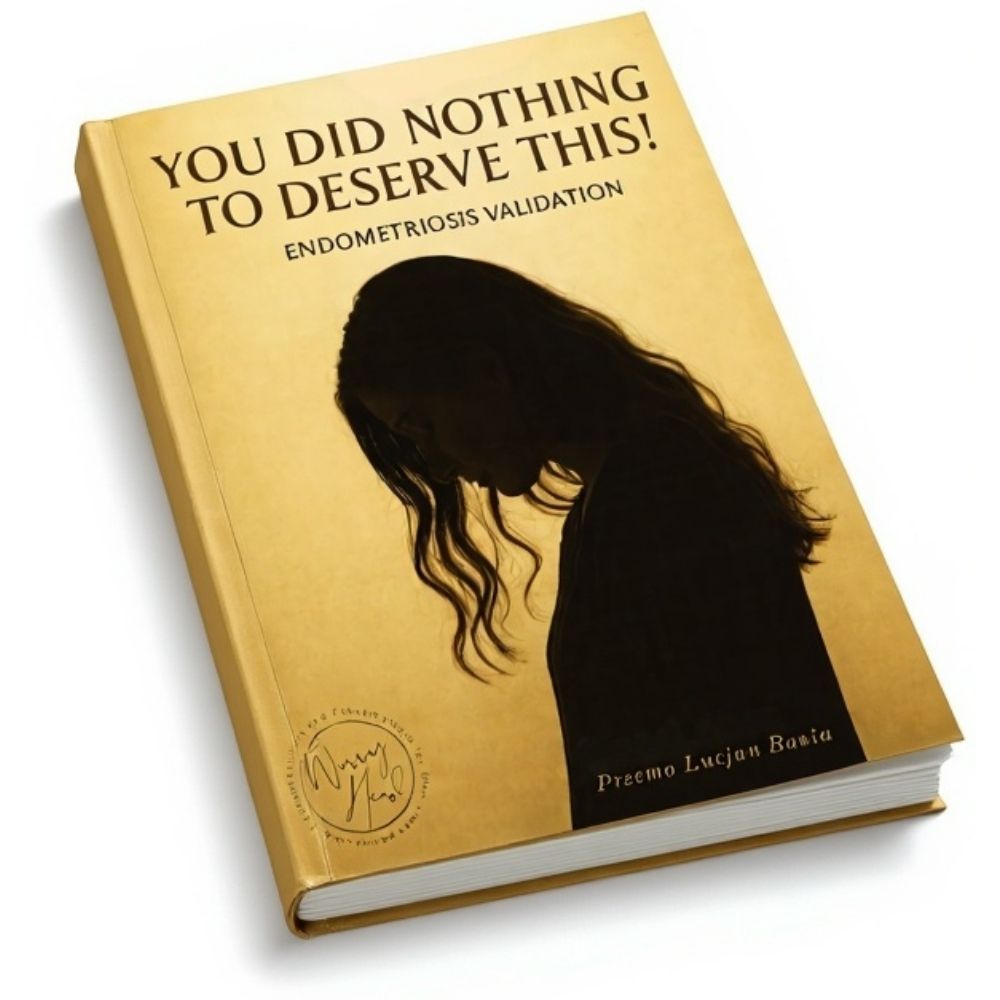
- You Did NOTHING To Deserve This!
- Why Hating Your Body with Endometriosis Feels So Heavy?
- How Hating Your Body with Endometriosis Can Steal Your Sense of Self?
- Rebuilding Body Trust After Hating Your Body with Endometriosis
- When to Seek Medical Help?
- Questions to Ask Your Doctor
- Final Word On Hating Your Body with Endometriosis
- FREE eBook
Why Hating Your Body with Endometriosis Feels So Heavy?
Hating your body with endometriosis often begins when your body stops feeling predictable, private and safe.
One day you may fit into your clothes, make plans, feel close to your partner and recognise yourself in the mirror, and the next day pain, swelling, bleeding or exhaustion can make you feel like everything has been taken from you without warning.
That kind of change does something to your mind, not because you are vain, dramatic or weak, but because your body is part of your identity.
When endometriosis keeps interrupting your life, you may start seeing your body as the problem, even though the real problem is the disease, the inflammation, the missed diagnoses, the years of being dismissed and the lack of proper support around you.
I want to say this gently, because I know this can land in a tender place: your body has not failed you.
Your body may be inflamed, tired, sensitive, overwhelmed and frightened by pain signals, but it is still trying to protect you, even when its protection feels like punishment.
Endometriosis can make you feel disconnected from parts of yourself that used to feel natural. You may feel embarrassed by endo belly, ashamed of needing rest, scared of intimacy, frustrated by weight changes, angry about scars, or heartbroken that fertility became a subject full of grief instead of joy.
And then, when the outside world only sees you dressed, smiling, working, parenting, studying or “looking fine”, you may carry an extra layer of loneliness.
That loneliness can turn inward, and suddenly the pain is not only in your pelvis, back, bowel, bladder or legs, but also in the way you speak to yourself when nobody is listening.
You may think, “Why can’t I just be normal?” or “Why does my body keep ruining everything?”
But those thoughts are not proof that you hate yourself; they are often proof that you have been carrying too much pain without enough tenderness, answers or validation.
This is why body image with endometriosis is not only about appearance. It is about safety, trust, grief, intimacy, control, medical trauma, confidence and the exhausting work of living inside a body that can change the plan in one cruel minute.
From my side as a husband, I have learned that the worst thing I can do is reduce my wife’s pain to reassurance like “don’t worry, you look fine.” Sometimes what she needs more is for me to understand that the mirror is not the real enemy; the real wound is feeling trapped in symptoms she never chose.
I have seen how one flare can change the way my wife stands, dresses, rests, speaks and sees herself, and it breaks something in me because I still see the woman I love while she may only see the body that hurts. That is why the next part matters so much, because learning to soften body hatred is not about pretending everything is beautiful, but about finding small, honest ways to feel less at war with yourself.
These tips are written for the days when loving your body feels too far away, but treating it with mercy might still be possible.
- Separate Yourself From The Disease
- Speak To Your Body Differently
- Dress For Comfort And Dignity
- Rebuild Trust In Small Steps
- Protect Intimacy Without Pressure
- Honour Grief Without Shame
- Ask For Support Clearly
- Create Gentle Body Safety Rituals
Separate Yourself From the Disease
One of the first steps is learning to say, “This is endometriosis affecting my body,” instead of “my body is disgusting, broken or useless.” I know that may sound small, but the words you use inside your own mind can either deepen the wound or begin to soften it.
You are not the bloating. You are not the scar. You are not the flare, the painful sex, the heavy bleeding, the cancelled plan, the infertility grief, the tired face in the mirror or the body that needs more rest than you wish it did. These are things happening to you, not things that define your worth.
I have seen my wife carry shame that never belonged to her, and as her husband, I wish I could lift it from her body with my hands.
When you separate yourself from the disease, you are not denying your pain; you are finally putting the blame where it belongs. Endometriosis may affect your body, but it does not get to own your identity.
Speak to Your Body Differently
You do not have to wake up tomorrow and suddenly love every part of your body. That would be too much pressure, and honestly, it may feel impossible when you are in pain, swollen, bleeding, exhausted or frightened by symptoms that keep changing. A more realistic place to begin is changing the cruelty of the conversation.
Instead of saying, “I hate my stomach,” you might try, “My stomach is swollen today, and I feel upset, but I will not punish myself for being unwell.” Instead of saying, “My body ruins everything,” you might say, “My body is struggling, and I am allowed to feel sad without turning against myself.”
I learned this from watching how words can either comfort my wife or cut her deeper. When she cannot be gentle with herself, I try to lend her my gentleness until she can borrow it. You deserve that same softness from yourself, one sentence at a time.
Dress for Comfort and Dignity
Clothes can become emotional when you live with endometriosis. Something as simple as a waistband can remind you that your body has changed again, and suddenly getting dressed is not just about fabric; it is about grief, frustration, bloating, pressure, pain and the fear of being seen on a day you do not feel like yourself.
Please do not treat comfortable clothes as “giving up.” Choosing soft waistbands, looser shapes, breathable fabrics or outfits that make room for endo belly is not failure; it is self-respect.
Your body is already working hard, and it does not need punishment from jeans, tights or dresses that dig into tender areas just to prove you are coping.
I have watched my wife change clothes because pain decided for her, not because she lacked confidence. And I wish every woman reading this knew that dignity is not found in forcing your body into discomfort. Dignity is saying, “I deserve to feel as safe as possible in this body today.”
Rebuild Trust In Small Steps
When your body has surprised you with pain for years, trust does not return because someone tells you to think positively. Trust returns slowly, through small experiences where your body feels a little safer than before. That may be five minutes of stretching, a warm shower, resting before you crash, eating without judging yourself, or saying no before your body has to scream.
You may not trust your body fully right now, and I understand why. Endometriosis can make ordinary things feel risky, like going out, having sex, travelling, working, wearing certain clothes or planning anything more than a few hours ahead. That uncertainty can make you feel like your own body is waiting to embarrass you.
But small acts of care can become quiet proof that you and your body are not enemies. I have seen my wife regain tiny pieces of safety through routine, warmth, pacing and being believed. Not cured, not magically fine, but less alone inside herself. Sometimes that is where healing begins.
Protect Intimacy Without Pressure
Endometriosis can make intimacy complicated in a way many people still do not understand. Painful sex is not rejection, coldness, failure or lack of love; it can be a real symptom that brings fear, grief, guilt and body shame into the most tender part of a relationship. If your body tenses before touch, it may be remembering pain, not pushing love away.
You deserve intimacy that does not demand performance from a hurting body. That might mean slower affection, more talking, different forms of closeness, stopping without guilt, or agreeing that no partner should treat pain as an inconvenience to their needs. Love should make your body feel safer, not more pressured.
As a husband, I had to learn that reassurance is not enough if my wife feels scared inside her own skin. I cannot claim to love her and ignore the pain her body associates with closeness. Protecting intimacy means protecting trust first, because a woman should never have to hurt herself to prove she loves someone.
Honour Grief Without Shame
There may be parts of your old life, old body or old confidence that you miss deeply. Maybe you miss wearing what you wanted without planning around bloating. Maybe you miss sex without fear, periods without dread, energy without negotiation, or looking in the mirror without scanning for what changed. That grief is not vanity; it is loss.
You are allowed to grieve the body experience you wanted. You are allowed to cry over scars, swelling, fatigue, fertility fears, medical trauma and the strange sadness of feeling like your body became unfamiliar. None of that means you are ungrateful, shallow or weak. It means something painful happened to your relationship with yourself.
I have seen my wife grieve things she never asked to lose, and I have learned not to rush her into hope before she has been allowed to be honest. Sometimes validation has to come before encouragement. You cannot shame yourself into peace, but you can begin to meet your grief with compassion.
Ask for Support Clearly
One of the hardest things about endometriosis is that people may not know what kind of support you need unless you tell them clearly. That feels unfair, because you may already be exhausted from explaining pain that should be obvious by now. But clear support requests can protect you from vague disappointment and help the right people step closer.
Instead of saying, “I am fine,” when you are breaking inside, you might say, “I need you to believe me today and not try to fix it.” You might say, “Please do not comment on my body,” or “I need help with dinner,” or “I need reassurance that I am still wanted even when I cannot be physically close.” These sentences are not needy; they are honest.
As a husband, I have made mistakes by guessing when I should have listened better. Clear words helped me love my wife more accurately. You deserve support that meets the real wound, not the version other people imagine.
Create Gentle Body Safety Rituals
A body safety ritual is not a cure, and it should never be sold as one. It is simply a small repeated act that tells your nervous system, “I am not attacking you today.” That might be placing a warm heat pad on your pelvis, wearing soft clothes after work, dimming the lights during a flare, moisturising scars without judgement, breathing with one hand on your belly, or resting before pain becomes unbearable.
These rituals matter because endometriosis can make your body feel like a place of threat. Pain can train you to brace, scan, tense, fear and prepare for the next symptom. Gentle routines cannot erase the disease, but they can create moments where your body receives care instead of criticism.
I have seen how much difference small kindness can make when my wife is overwhelmed. Not dramatic, not perfect, not a miracle, but human. When you repeat gentle care often enough, you begin teaching your body that it does not have to earn tenderness. It deserves it because it is carrying you through something hard.
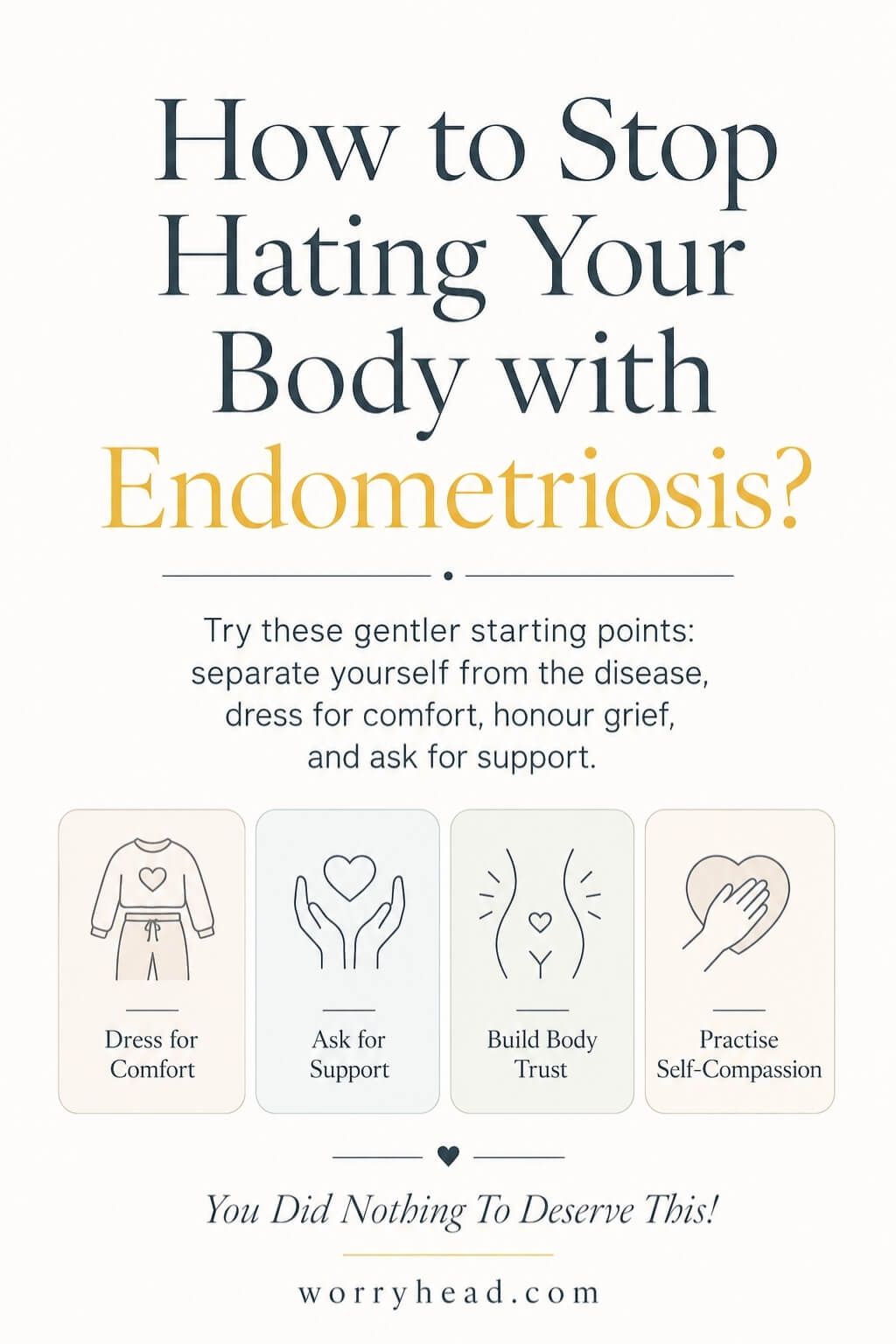
How Hating Your Body with Endometriosis Can Steal Your Sense of Self?
There is a particular kind of heartbreak that happens when you no longer recognise the body you are living in. It is not just the swelling, the pain, the scars, the bleeding, the fatigue or the clothes that suddenly feel wrong; it is the quiet feeling that the version of you before all this has been pushed further away.
For many women, hating your body with endometriosis is not really about vanity at all.
It is about losing trust in a body that can change your plans, your intimacy, your confidence, your mood, your energy and your sense of normality without asking you first.
You may start measuring your worth by how productive you were, how flat your stomach looked, how well you coped with pain, how much you could give to others, or how little you complained. But none of those things measures your value, and I wish someone had told my wife that more often before illness made her feel like she had to apologise for existing differently.
I have watched her stand in front of the mirror and see what pain had taken, while I stood behind her seeing what pain had never touched. I still saw her courage, softness, humour, intelligence, beauty and the woman I chose, but I also learned that my love did not automatically erase the cruel thoughts she had learned to carry alone.
That taught me something important about support. A partner cannot simply say “you are beautiful” and expect years of pain, dismissal, bloating, scars, medical trauma and fear to disappear.
Real support is slower than that.
It means staying emotionally present when she feels ashamed, not rushing her feelings, not making her body the centre of the conversation, and reminding her that she is still wanted on the days she feels least lovable.
And if you are reading this with tears in your eyes, please let this land softly: your body may have changed, but your need for tenderness has not become too much. You are not difficult to love because your body hurts; you are someone who deserves a love gentle enough to make pain feel less lonely.
Rebuilding Body Trust After Hating Your Body with Endometriosis
Rebuilding body trust is not about forcing yourself to love every symptom, every scar, every swollen day or every painful memory. It begins much more quietly, with the decision to stop treating your body like the enemy when it is already carrying a disease that has taken enough from you.
For my wife, the hard part has never only been the pain itself, but the way pain can make her question whether her body is still hers. I have seen how one bad flare can affect her mood, her confidence, her patience, her appetite, her sleep and the way she allows herself to be held.
And if I am honest, it affects me too, because I love the woman inside that body and I sometimes feel helpless when she cannot see herself the way I see her.
But I have learned that my job is not to argue her into confidence; my job is to stay gentle enough that she does not feel even more alone with the thoughts she is already fighting.
As a couple, endometriosis can quietly change the room between you. It can change how you plan days out, how you talk about sex, how careful touch becomes, how often you cancel things, and how much reassurance is needed just to feel emotionally safe.
That is why healing your relationship with your body cannot be separated from how safe you feel in your life and relationships.
You need support that does not rush you, doctors who take symptoms seriously, clothes that do not punish your belly, rest that is not treated like laziness, and people who understand that body grief is still grief.
You may not wake up tomorrow and say, “I love my body,” and that is okay. For now, maybe the softer sentence is enough: “My body is hurting, but I will not hate it for needing help.”
When to Seek Medical Help?
Please do not wait until you are completely broken before asking for help. I know many women with endometriosis learn to minimise pain because they have been told, directly or indirectly, that painful periods, painful sex, bowel pain, bladder pain, exhaustion or a swollen belly are just “part of being a woman.” But if your symptoms are changing the way you live, work, love, rest, dress, eat, sleep or see yourself, they deserve medical attention.
You should speak to a GP, gynaecologist or endometriosis specialist if pelvic pain, painful periods, pain during or after sex, bowel symptoms, bladder symptoms, heavy bleeding, fatigue, infertility worries or flare-ups are affecting your everyday life. You should also ask for help if treatment has not worked, if symptoms are getting worse, or if you feel you keep being sent away without a clear plan.
And when body hatred becomes heavy, please treat that as important too. If you are avoiding mirrors, feeling disgusted by your body, crying over bloating, feeling scared of intimacy, or thinking your body has ruined your life, that emotional pain matters. It may not show on a scan, but it still deserves care.
There are also times when you should not quietly push through. Seek urgent medical advice if you have sudden severe pelvic or abdominal pain, fainting, fever, vomiting, heavy bleeding that feels unsafe, new chest or shoulder pain around your cycle, blood in urine or stool, severe pain after surgery, or symptoms that feel frighteningly different from your usual pattern.
I say this gently because I have seen my wife carry pain for too long. I have seen how easy it is to become used to suffering until suffering feels normal. But normal does not mean acceptable, and familiar pain can still deserve investigation.
If you feel emotionally unsafe with yourself, if you are having thoughts of self-harm, or if you feel like you do not want to be here, please seek urgent support now rather than sitting with it alone. That is not weakness. That is your life asking to be protected, and you are worth protecting.
When you speak to a doctor, try to bring a symptom diary if you can. Write down pain days, period days, bowel and bladder symptoms, bleeding changes, fatigue, bloating, intimacy pain, medication use, missed work, cancelled plans and how your symptoms affect your mood and body image. You should not have to prove your suffering like a court case, but sometimes clear notes help make invisible pain harder to dismiss.
And if you feel dismissed, you are allowed to ask again. You are allowed to request a second opinion. You are allowed to ask about referral to a specialist endometriosis service, especially if deep endometriosis, bowel, bladder, ureter or severe symptoms are suspected.
I wish my wife had been believed earlier in many ways. I cannot rewrite that for her, but I can say this to you: please do not measure whether you deserve help by how well you hide pain. You deserve help because pain is affecting your life.
Questions to Ask Your Doctor
When you are sitting in front of a doctor, it is easy to forget what you wanted to ask, especially if you feel nervous, dismissed, embarrassed or rushed. I have learned that writing questions down is not dramatic; it is wise. Pain can steal your words in the room, so let paper hold them for you.
You might ask: “Could my symptoms be linked to endometriosis, even if previous scans were normal?” This matters because some endometriosis can be missed, and a normal scan does not always explain away real symptoms.
You can ask: “Do my symptoms suggest deep endometriosis, bowel involvement, bladder involvement, pelvic floor problems or nerve-related pain?” You are not trying to diagnose yourself; you are asking for the right possibilities to be considered instead of being reduced to “just periods” or “just stress.”
You might ask: “What are my treatment options, and what are the benefits and risks of each one?” This can open a proper conversation about pain relief, hormonal treatment, physiotherapy, specialist referral, imaging, surgery, fertility goals and long-term management.
You can ask: “When should I be referred to a specialist endometriosis clinic?” If your symptoms are severe, complex, worsening, affecting daily life, or possibly involving bowel, bladder or deeper tissues, you deserve to know what the referral pathway looks like.
You might ask: “How can we manage pain without ignoring the emotional impact?” This is important because body hatred, fear, shame, anxiety around sex, medical trauma and grief are not separate from chronic illness. They are part of the lived experience.
You can ask: “Could pelvic floor physiotherapy, pain management support, counselling, sex therapy or mental health support help alongside medical treatment?” Asking this does not mean the pain is “in your head.” It means your whole life deserves support, not only your pelvis.
You might ask: “What symptoms should make me seek urgent help?” A good doctor should explain what is expected, what is concerning, and what you should not ignore, especially if you are trying new medication, recovering from surgery or dealing with severe flares.
You can ask: “How do we protect my fertility goals or discuss them honestly?” Even if fertility is not your priority, the conversation should belong to you. If it is your priority, you deserve clear, compassionate information, not vague reassurance that leaves you scared at night.
You might also ask: “Can we make a written plan for flares?” This can include what medication to use, when to rest, when to call for help, when to review treatment, and what to do if pain escalates. A plan can reduce the panic of having to make decisions while you are already hurting.
If you have a partner, you may want to bring them with you, not so they speak over you, but so they can support you, remember details and understand what you are carrying. I have learned that a partner who listens well in medical appointments can become more useful at home too.
And please remember this: asking questions does not make you difficult. It makes you involved in your own care. You are not a body to be managed quickly; you are a whole person who deserves explanations, options and respect.
Final Word On Hating Your Body with Endometriosis
If you have reached this part with a heavy heart, I want you to pause for a moment and breathe before you rush back into normal life. Not because one article can fix years of pain, grief, medical dismissal or body shame, but because your body deserves one small moment without being attacked. You have probably fought through more than many people around you will ever understand.
Hating your body with endometriosis can feel like the only honest response when your body has caused pain, fear, swelling, bleeding, exhaustion, intimacy struggles, cancelled plans or fertility grief. But I hope this article has helped you see that your body is not the villain in your story.
The disease is not your fault, the delay in being believed was not your fault, and the shame you may carry was never meant to be yours.
I know it is easy for someone else to say, “love your body,” when they are not the one living inside it on the worst days. That is why I will not ask you to jump straight into body love if that feels too far away. Sometimes the first step is body neutrality. Sometimes it is simply saying, “I do not like how I feel today, but I will not punish myself for being unwell.”
I have learned this through loving my wife, not through theory. I have seen how endometriosis can change the way she dresses, rests, moves, plans, allows touch, sees herself and trusts her own body. And I have also seen that the woman I love is still there, even on the days pain tries to make her feel like she has disappeared.
If you are the woman reading this, I want you to know that you are still worthy of tenderness, desire, patience, rest and respect. You do not have to earn love by looking well, acting well, working through pain, hiding your belly, forcing intimacy, smiling through symptoms or pretending your heart is not tired.
And if you are a partner reading this, please understand something important. Your words can either become another wound or a safe place. Do not rush her grief. Do not reduce her pain to appearance. Do not only tell her she is beautiful; show her that she is safe, believed, wanted and not too much.
Stopping body hatred is not one decision. It is a quiet practice. It is the soft jumper instead of the painful waistband. It is cancelling without calling yourself weak. It is asking for medical help without apologising. It is letting someone love you without feeling guilty for needing care.
Your body has carried you through pain you did not choose. Maybe today, love feels impossible. But mercy may be possible. And sometimes mercy is where the long road back to yourself begins.
You are not broken because your body needs care. You are not less lovable because pain changed your life. You are still here, still worthy, still deserving of softness, and still allowed to build a relationship with your body that begins with mercy instead of hate.
Please leave a comment below if this touched something in you, because your story may help another woman feel less alone. And if you need more validation, check out the FREE chapter of my eBook at the bottom of this post.


About Me
Hi, I’m Lucjan! The reason why I decided to create this blog was my beautiful wife, who experienced a lot of pain in life, but also the lack of information about endometriosis and fibromyalgia for men…
READ MORE
Grab a FREE eBook!
“You Did NOTHING To Deserve This!”
Finally hear the words nobody ever said to you, that your pain is real, your tears make sense, and you did nothing to deserve endometriosis, the dismissal, or the way it has rewritten your life.
Related Questions You May Be Asking About Hating Your Body with Endometriosis
1. Can endometriosis make me hate my body even if I know it is not my fault?
Yes, because knowing something logically and feeling safe inside your body are not always the same thing. You may understand that endometriosis is not your fault, but pain, bloating, scars, fatigue, intimacy struggles and medical dismissal can still make your body feel like a place of hurt. That does not make you ungrateful or weak. It means you are human.
2. Why do I feel so ashamed of endo belly?
Endo belly can feel emotionally brutal because it can appear suddenly, change how your clothes fit, make you look different from how you feel inside, and draw attention you never asked for. The shame often comes from feeling exposed, not from vanity. Your swollen belly is not a moral failure. It is a symptom, and you deserve comfort, not judgement.
3. How can I feel attractive when endometriosis affects intimacy?
Start by separating attractiveness from performance. Painful sex, fear of touch, fatigue or needing to stop do not make you less desirable. They mean your body needs safety, patience and trust. A loving partner should care more about your comfort than their expectations. You are still worthy of tenderness, closeness and being wanted without pressure.
4. What should my partner say when I hate my body?
A partner should avoid dismissing you with quick lines like “you look fine” if you are clearly hurting. A better response is, “I believe this feels hard today, and I still love you in this body.” Support should make you feel safe, not corrected. Sometimes the most healing thing is being held emotionally before being reassured physically.
5. Is body neutrality better than body love with endometriosis?
For many women, yes, especially during flares. Body love can feel too far away when you are in pain, swollen, exhausted or grieving. Body neutrality gives you a softer starting point. Instead of forcing yourself to love your body, you can begin with, “My body is struggling today, and I will not punish it for needing care.”
6. How do I stop blaming my body for ruining my life?
Begin by placing the blame on the disease, the delays, the lack of support and the systems that failed to take your pain seriously. Your body did not choose endometriosis. It has been trying to carry you through something incredibly hard. You may still feel angry, but you can practise directing that anger away from yourself and towards getting better care.
Hating Your Body with Endometriosis References
- https://www.who.int/news-room/fact-sheets/detail/endometriosis
- https://www.nhs.uk/conditions/endometriosis/
- https://www.nice.org.uk/guidance/ng73
- https://www.eshre.eu/guideline/endometriosis
- https://pubmed.ncbi.nlm.nih.gov/35350465/
- https://en.wikipedia.org/wiki/Endometriosis
- https://www.rcog.org.uk/for-the-public/browse-our-patient-information/endometriosis/
- https://womenshealth.gov/a-z-topics/endometriosis
- https://medlineplus.gov/endometriosis.html
- https://pmc.ncbi.nlm.nih.gov/articles/PMC9454389/
- https://pmc.ncbi.nlm.nih.gov/articles/PMC12408892/
- https://pmc.ncbi.nlm.nih.gov/articles/PMC12050103/
- https://pubmed.ncbi.nlm.nih.gov/35926345/
- https://pmc.ncbi.nlm.nih.gov/articles/PMC10512020/
- https://pmc.ncbi.nlm.nih.gov/articles/PMC11972425/
- https://endometriosisaustralia.org/healing-body-image-with-endometriosis/
- https://endometriose.app/en/insights/endometriosis-and-body-awareness/
- https://www.health.com/condition/endometriosis/endo-belly
- https://www.verywellhealth.com/endometriosis-belly-stomach-swelling-6455784
- https://www.nice.org.uk/news/articles/nice-recommends-new-dedicated-fertility-treatment-pathway-for-endometriosis
