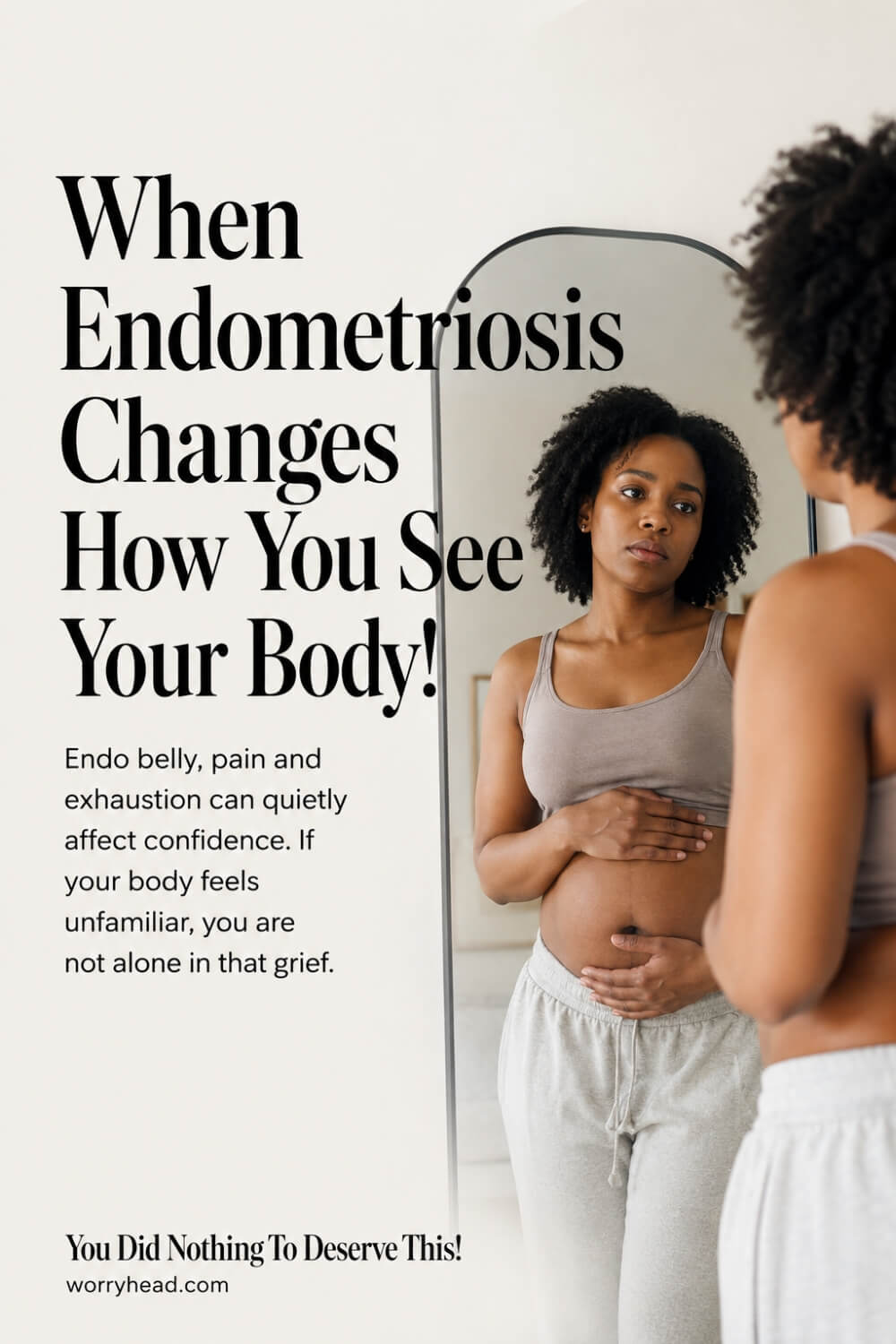
Do You Have Struggles with Endometriosis Body Image?
Struggles with endometriosis body image can come from pain, endo belly, scars, fatigue, bleeding, painful intimacy, fertility grief, hormonal changes and the way illness can make your body feel unpredictable. If you have hidden under loose clothes, avoided photographs, pulled away from touch, or blamed yourself for a body that is already fighting so hard, I want you to feel seen here.
Have you ever looked at your body during an endometriosis flare and wondered why the mirror suddenly feels like another place where you have to fight to be understood?
Endometriosis body image struggles are emotional and physical changes caused by pain, bloating, scars, fatigue, painful sex, fertility worries and years of dismissal. They can make your body feel unfamiliar, unreliable or unsafe, but they are not vanity, weakness, drama or lack of self-love at all.
I am not a clinician, and I do not write as one; I write as a husband, blogger and researcher who has spent years learning beside my wife, and I have attached at the bottom of this article the sources I used for medical context, including WHO, NHS, NICE, ESHRE and relevant studies.
Endometriosis is not only about period pain. It is a chronic condition that can involve severe pelvic pain, heavy bleeding, fatigue, painful sex, bowel and bladder symptoms, infertility worries, bloating, nausea, anxiety, low mood and a deep loss of trust in your own body.
Recent body image research goes even deeper. Women describe their body as a barrier, something they hide, something they grieve, and sometimes something they slowly learn to trust again.
In one 2025 study of women with endometriosis, body image profiles were strongly linked with quality of life and symptom burden, which tells me this is not a small side issue, but a quiet wound many carry every day.
I have seen my wife dress around pain, not around confidence, and I have seen the silence in her face when her body changed without asking her permission. As her husband, those moments taught me that body image with endo is not about vanity; it is about grief, safety, identity and wanting to feel like yourself again.
If you ever feel betrayed by your body, I wrote an article on this topic. But I have also written a book that is filled with 20 chapters of gentle validation for women with endo. You can grab it for FREE: a 130+ page eBook called: “You Did Nothing To Deserve This!”
When you grab it, you also join our Worry Head community, where I send more freebies, gentle discounts on our books and value-filled emails to help you and your relationship adjust to the new normal chronic illness brings.
Here’s what you will find inside:
- This Was Never Your Fault
- The Girl You Used To Be
- When Your Own Body Feels Like an Enemy
- The Invisible Battles Nobody Sees
- Am I Just Lazy? – The Lie You Have Been Taught
- Gaslighting, Dismissal and the Trauma of Not Being Believed
- Guilt: The Weight You Were Never Meant to Carry
- Love in the Middle of Pain
- Intimacy When Your Body Hurts
- The Loneliness of Being the Strong One
- You Are Allowed To Take Up Space
- Tiny, Gentle Hopes (Not Toxic Positivity)
- If You Could Hear My Voice Every Flare Day
- You Deserve Partners, Not Witnesses
- When You Wish He Understood
- Motherhood, Fertility and the Grief Nobody Sees
- When Anger Is the Only Honest Feeling
- Learning to Trust Your Body Again
- Building a Life That Fits Your Reality
- You Did Nothing To Deserve This
You Did NOTHING To Deserve This!
Endometriosis Validation for Women with Endo
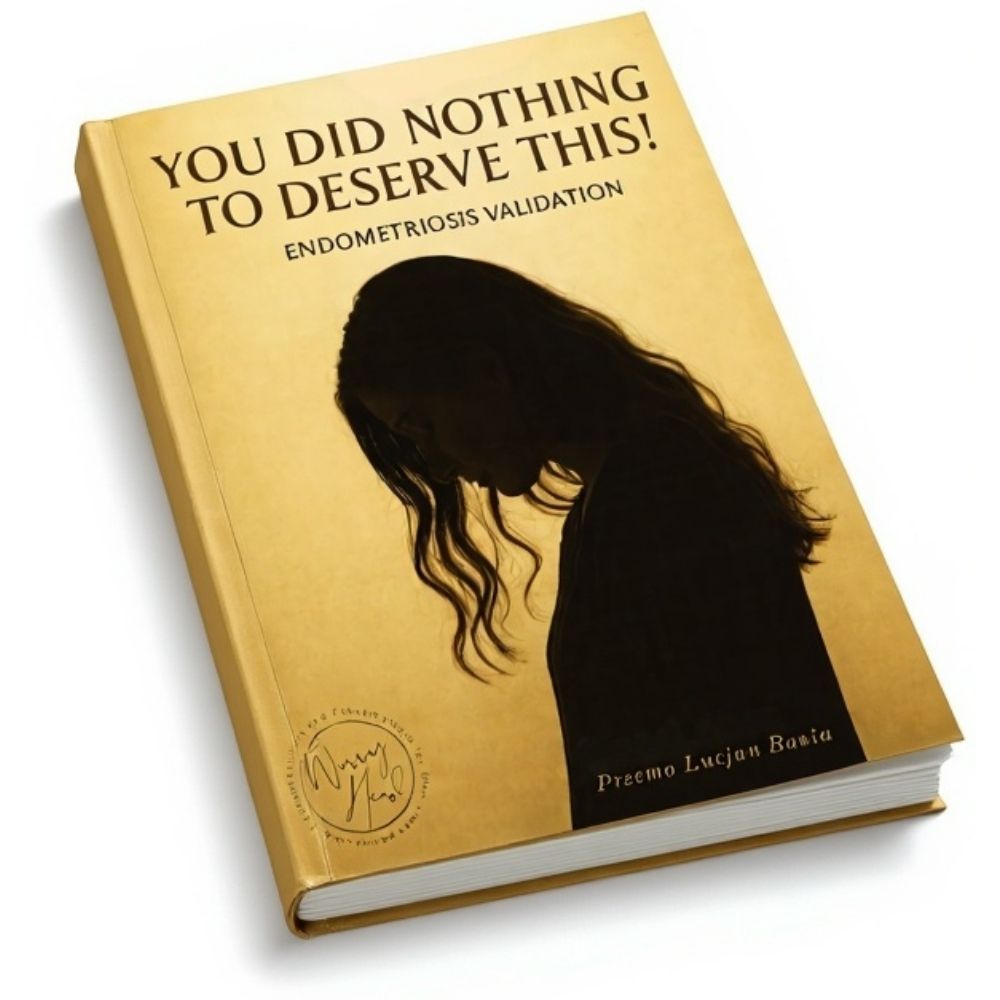
- You Did NOTHING To Deserve This!
- Why Struggles with Endometriosis Body Image Deserve to Be Taken Seriously?
- How Struggles with Endometriosis Body Image Can Change the Way You Feel Loved?
- How Struggles with Endometriosis Body Image Affect You and the Person Who Loves You?
- When to Seek Medical Help?
- Questions to Ask Your Doctor
- Final Word On Struggles with Endometriosis Body Image
- FREE eBook
Why Struggles with Endometriosis Body Image Deserve to Be Taken Seriously?
When I talk about struggles with endometriosis body image, I am not talking about a woman simply having a bad day in front of the mirror. I mean the quiet daily moments when your body feels swollen, painful, scarred, exhausted, touched by medical trauma, and no longer easy to recognise as your own.
Endometriosis can change how your abdomen feels, how your clothes sit, how safe intimacy feels, how much energy you have, and how much control you feel over your own life. Endo belly can arrive quickly and make you look different within hours, even when you have not eaten much, gained weight, or done anything wrong.
Scars from surgery can be small to someone else, yet huge to you, because they may carry memories of fear, waiting rooms, pain, recovery, and hopes that may or may not have been met.
Painful sex can make you pull away from touch, not because you do not love your partner, but because your body has learned that closeness can sometimes hurt.
Fatigue can change the way you stand, dress, move, exercise, work, clean, socialise, and show up in photographs.
Some treatments may also affect weight, skin, mood, bleeding patterns, bloating, or how connected you feel to the woman you used to be.
Fertility worries can add another emotional wound, because the body becomes linked not only with pain, but with fear, grief, pressure, and questions you may not even feel ready to answer.
Years of being dismissed can make it worse, because when doctors, partners, relatives, employers, or even friends minimise your symptoms, you may start to look at your own body with suspicion instead of compassion.
You may know in your mind that you are more than your illness, but still feel betrayed when your body cancels plans, changes shape, or makes normal things feel impossible. This is why simple phrases like “just love your body” can feel almost insulting when your body is the place where the pain lives.
What helps is not forced positivity, but body respect. Body respect means you can say, “I do not like how this feels today,” without turning that pain into hatred towards yourself.
It means choosing clothes for comfort without calling yourself lazy, unattractive, or a failure. It means understanding that hiding your stomach, avoiding mirrors, crying after sex, or feeling scared of another flare does not make you shallow; it makes you human.
It also means letting safe people see the truth, because shame grows in silence and softens when someone trustworthy says, “I believe you, and I am still here.”
The body affected by endometriosis is not broken in the way cruel thoughts may tell you it is; it is a body trying to survive a condition that asks too much from you.
I wish I had understood this sooner with my wife, because there were moments when I saw pain but did not yet understand the grief sitting underneath it.
I remember learning that reassurance is not only saying, “You are beautiful,” but also showing, day after day, “I am not going anywhere when your body is hard to live in.” So before we go deeper, I want to give you simple, human, life-useful ways to begin softening the shame around your body, because you deserve more than survival in a body that has already carried so much.
- Name Endo Belly Without Shame
- Separate Pain From Self-Blame
- Choose Comfort Without Guilt
- Rebuild Safety Around Touch
- Honour Scars And Surgery
- Talk To Your Partner Honestly
- Protect Your Mirror Moments
- Create Gentle Body Rituals
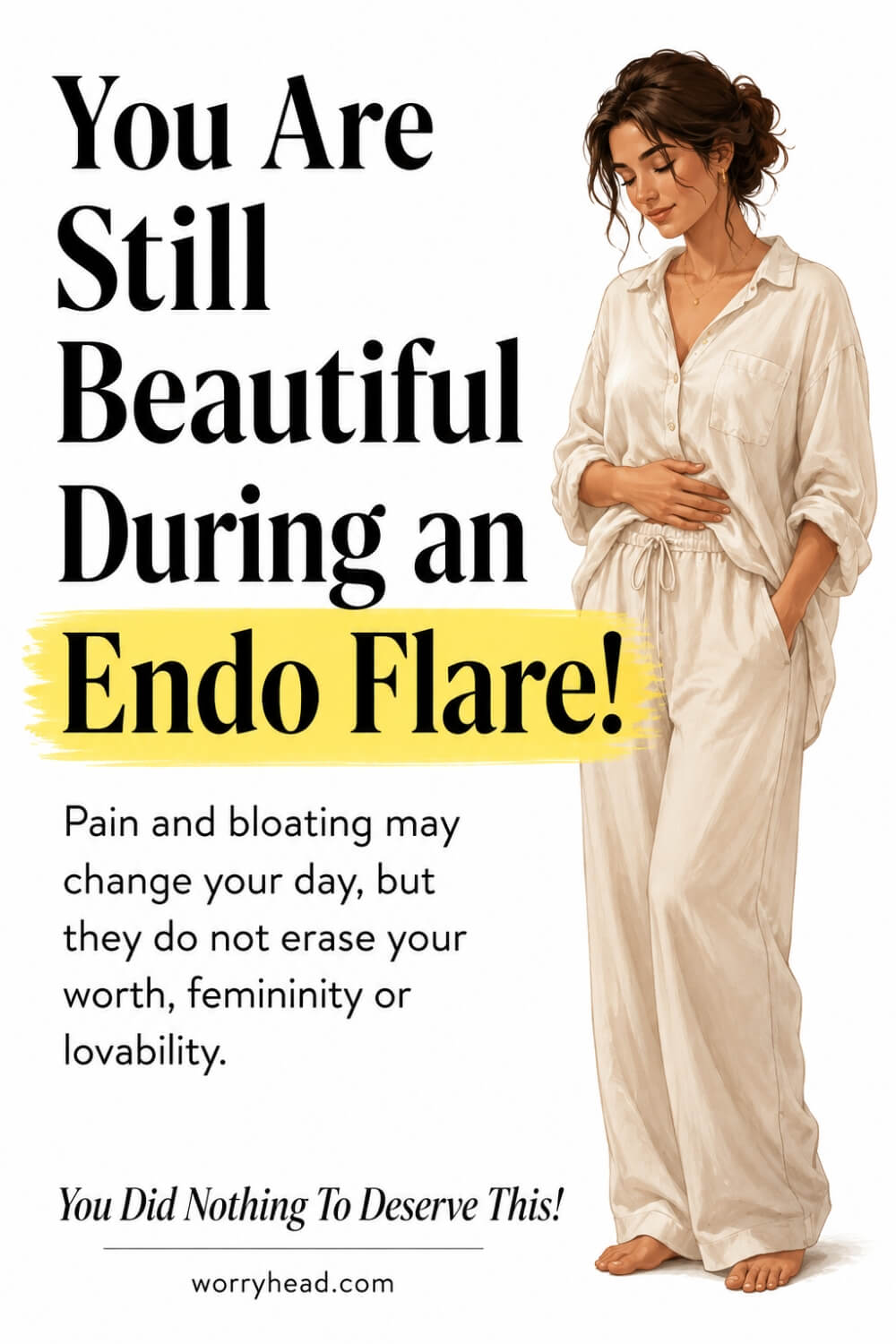
Name Endo Belly Without Shame
Endo belly can feel cruel because it can change your body within hours and make you feel exposed before you even understand what happened. One moment your clothes fit, the next your abdomen feels tight, swollen, tender, heavy, and impossible to hide.
Please do not turn that swelling into a character flaw, because bloating with endometriosis can be linked with inflammation, bowel irritation, pelvic tension, hormones, pain sensitivity, and the way your nervous system reacts during a flare. You did not cause it by being weak, lazy, greedy, or not disciplined enough.
One of the kindest things you can do is give it a name instead of giving yourself a punishment.
You can say, “This is my endo belly today,” not “This is my fault.” I have seen how one swollen stomach can steal confidence from my wife in seconds, and I wish every partner understood that reassurance has to be gentle, steady, and never dismissive.
Separate Pain From Self-Blame
Pain has a dangerous way of making you think you have done something wrong, especially when it keeps returning after you tried everything you were told to try.
You may wonder whether you ate the wrong food, moved the wrong way, rested too much, rested too little, complained too often, or failed your body somehow. But endometriosis pain is not a moral report card. It can come from inflammatory activity, adhesions, irritated nerves, muscle guarding, pelvic floor tension, bowel symptoms, bladder symptoms, and a brain and body that have been forced to stay on high alert.
Self-blame adds another layer of suffering to pain that is already heavy enough. When my wife is hurting, I have learned not to rush her into fixing mode, because sometimes the first healing sentence is simply, “This is not your fault.” You deserve to hear that from yourself too, especially on the days when your body feels hardest to forgive.
Choose Comfort Without Guilt
Choosing loose clothes, soft waistbands, heat pads, supportive underwear, flat shoes, or a different outfit than the one you hoped to wear is not giving up on yourself. It is listening to a body that is asking for less pressure, less restriction, and more mercy.
I know society often teaches you that confidence means pushing through discomfort to look a certain way, but chronic pelvic pain changes the rules.
Comfort becomes a form of protection, not a lack of effort. If jeans press into your abdomen, if a bra strap irritates you during a flare, if tight clothing makes bowel or bladder pressure worse, you are allowed to adapt without explaining yourself to anyone.
I have watched my wife choose clothes based on what pain would allow, and it taught me that beauty is not lost when comfort comes first. It becomes quieter, wiser, and far more real than any outfit chosen to please someone else.
Rebuild Safety Around Touch
When endometriosis makes intimacy painful, touch can become complicated. A hug, a hand on your stomach, a kiss that used to feel simple, or sexual closeness that once felt natural may start to carry fear because your body remembers pain before your heart has time to relax.
That does not mean you are broken, cold, difficult, or rejecting love. It may mean your body needs safety rebuilt slowly, with consent, patience, words, and no pressure to perform.
A caring partner should want your honesty more than your silence. In my marriage, I had to learn that reassurance is not only romantic words; it is stopping without sulking, listening without taking it personally, and letting my wife know that closeness can still exist without demanding more from her body than it can give.
You deserve touch that helps you feel safe inside your skin again, not touch that makes you disappear from yourself.
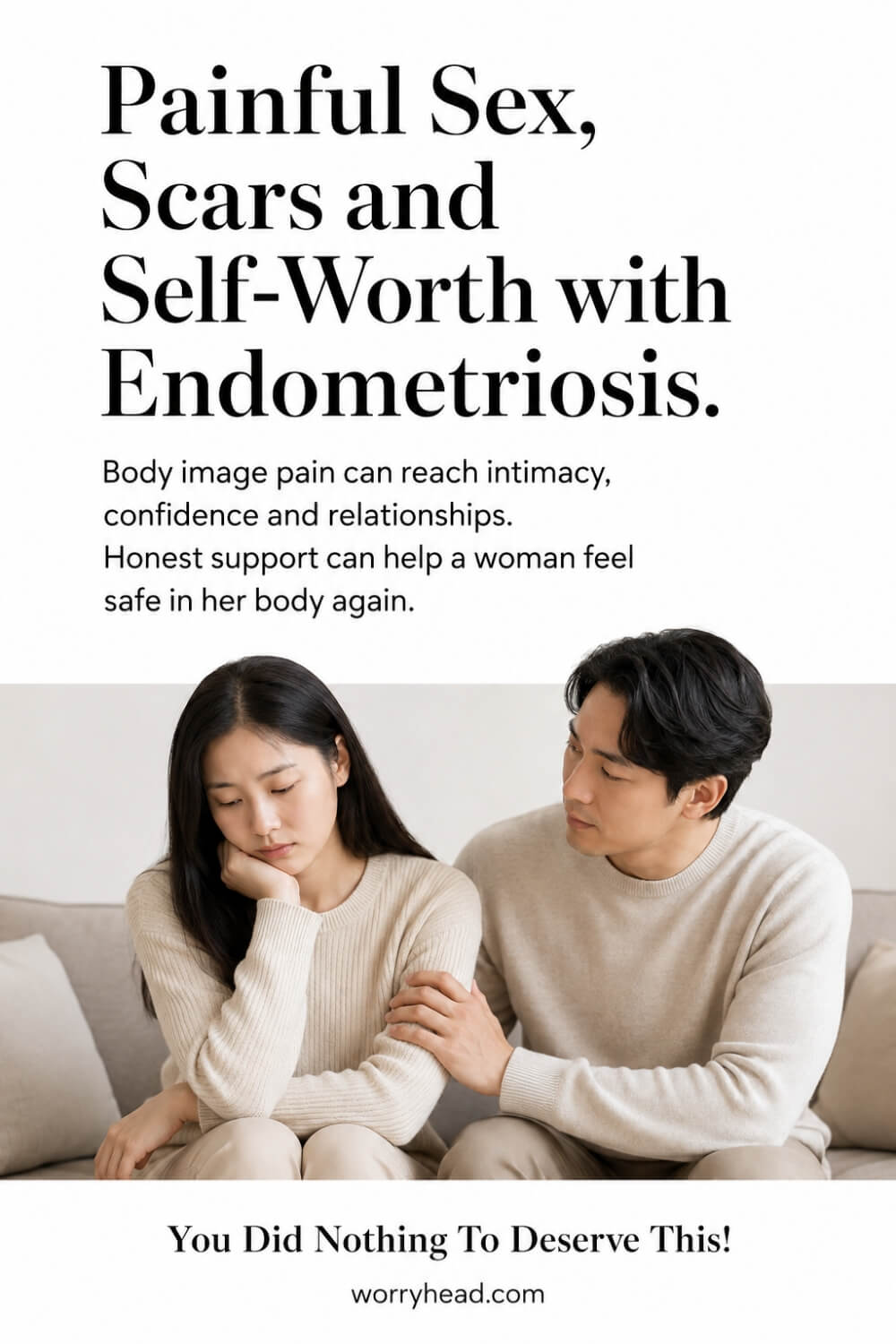
Honour Scars and Surgery
Surgery scars can look small to someone who did not live through the fear, the waiting, the hospital lights, the recovery, and the hope placed inside that procedure. But to you, those marks may hold a whole story.
They may remind you of pain that was finally believed, disease that was found, organs that were affected, or answers that arrived far too late. You do not have to love your scars before you are ready, and you do not have to turn them into a brave speech every time they catch your eye.
Honouring them can simply mean not speaking to them with cruelty. It can mean saying, “This body went through something real.” I have seen how surgery can bring relief and grief at the same time, and both deserve room.
Your scars are not proof that you are less feminine, less desirable, or less whole. They are evidence that you survived something nobody had the right to minimise.
Talk to Your Partner Honestly
If you have a partner, one of the hardest things may be explaining how deeply body image pain reaches. It is not always easy to say, “I feel unattractive,” “I am scared you will stop wanting me,” or “I hate how my body looks during a flare,” because those words can feel too naked.
But silence can make the distance grow, especially when your partner only sees the outside and does not understand the private war happening inside you.
A good conversation does not need to be perfect. It can begin with one honest sentence, spoken at a calm time, not during the peak of pain.
I wish more men understood that reassurance has to be specific, not lazy. “You are still beautiful to me,” matters, but “I love you in this body, on this day, even when you feel swollen, tired, scarred, or scared,” can reach places generic compliments cannot. You deserve that level of tenderness.
Protect Your Mirror Moments
The mirror can become a harsh place when endometriosis has already made you feel watched, judged, swollen, scarred, or changed. Some days you may look for proof that you are still yourself, and other days you may only see what illness has taken. On those days, try not to use the mirror as a courtroom.
You do not need to stand there and build a case against your own body. Protecting your mirror moments might mean looking only as long as needed, dressing in softer lighting, covering the mirror during a flare, or placing one grounding sentence nearby that reminds you your worth has not changed.
My wife has had days when confidence left the room before she did, and I learned that my job was not to argue with her feelings, but to make the room feel safer. You deserve spaces where your body is not constantly examined, compared, or blamed.
Create Gentle Body Rituals
Gentle body rituals are not about pretending endometriosis is beautiful or easy. They are small ways to tell your nervous system, “I am not abandoning myself today.”
That may be a warm shower, body oil after a flare, comfortable pyjamas, slow breathing with a heat pad, a soft blanket, a short walk, a careful stretch, or simply placing your hand on your abdomen without anger. These rituals matter because chronic pain can make your body feel like an enemy, and repetition can slowly rebuild a little trust.
You do not need a perfect routine or expensive products. You need moments where your body receives care without having to earn it first. I have learned from loving my wife that healing is often found in ordinary acts done with tenderness. A cup of tea placed beside her, a quiet room, a hand held without words, a reminder that she is not difficult to love. Your body deserves that gentleness from you too.
How Struggles with Endometriosis Body Image Can Change the Way You Feel Loved?
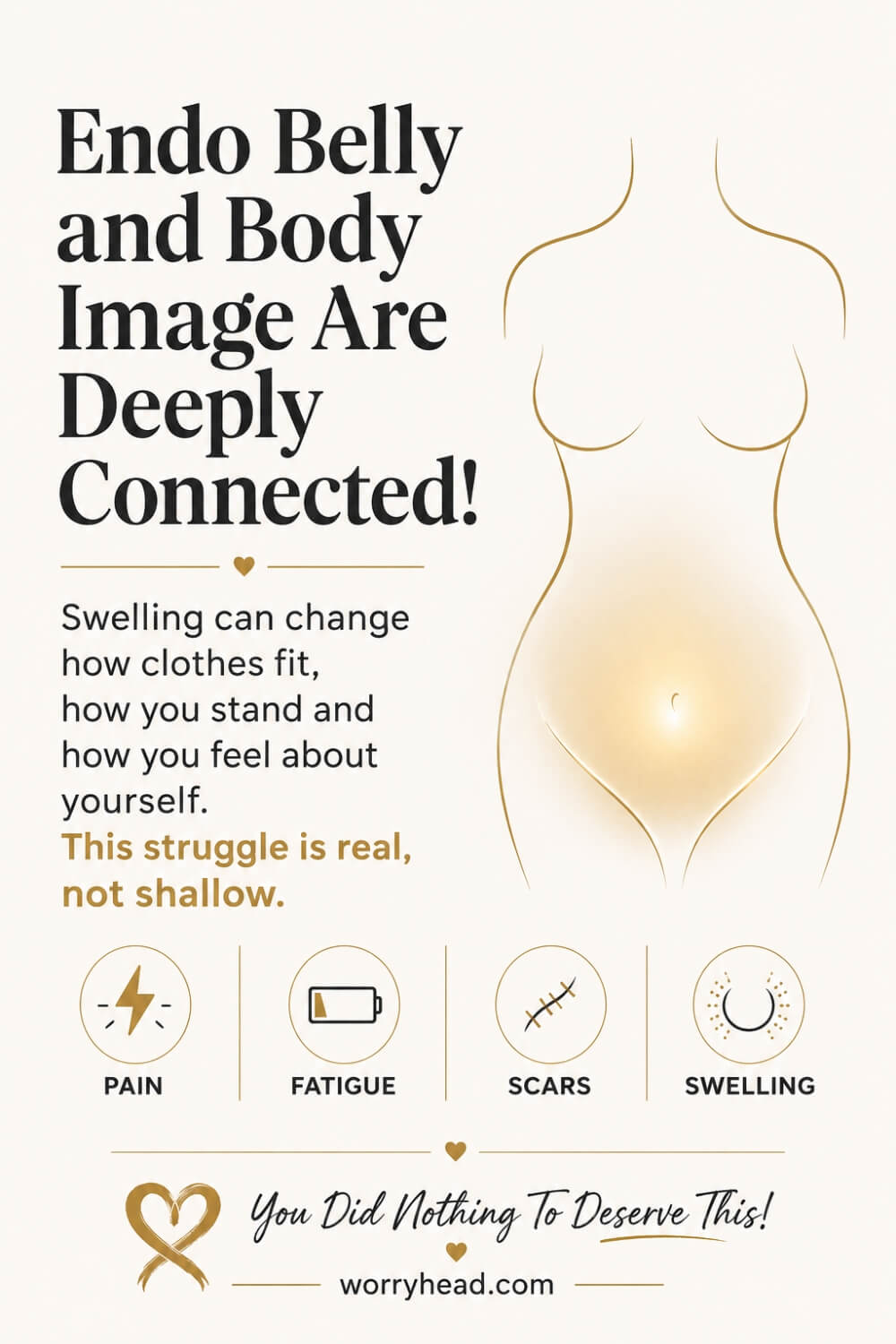
The hardest thing about struggles with endometriosis body image is that they do not stay in the mirror. They can follow you into the bedroom, the bathroom, the wardrobe, the hospital room, the workplace, the dinner table, and even the quiet moment when someone says you look fine, but you feel anything but fine.
You may smile in public while privately calculating whether your stomach looks swollen, whether your scars show, whether sex will hurt later, or whether your partner still sees the same woman you used to feel like.
That level of self-monitoring is exhausting, and it can slowly train you to live as if your body is something to manage, hide, apologise for, or explain.
This is why body image with endometriosis needs more compassion than the world usually gives it.
A flare can make you cancel plans, and then the guilt can make you feel unreliable. Endo belly can make clothes feel unsafe, and then the shame can make you avoid mirrors. Painful intimacy can make you pull away, and then fear can whisper that love might pull away from you too.
But a body that reacts to pain is not a body failing at womanhood. It is a body asking for care, pacing, answers, adjustments and tenderness, even when it cannot explain itself neatly.
With my wife, I learned that saying “you are beautiful” matters, but it is not enough when she feels trapped inside a body that keeps changing the rules.
What matters even more is making her feel chosen when she is bloated, when she is tired, when she does not want to be touched, when she is grieving a version of herself nobody else even knew she had lost.
I have sat beside her and wished I could hand her back the ease she used to have, not because I wanted her different, but because I wanted her free from the cruelty of feeling like her own body had taken something from her.
And if you are reading this with that heavy feeling in your chest, please hear me: the right kind of love does not need your body to be easy before you are worthy of tenderness.
How Struggles with Endometriosis Body Image Affect You and the Person Who Loves You?
For my wife, struggles with endometriosis body image have never been just about how she looks; they have been about how safe she feels living inside a body that can change the day without warning.
When pain, swelling, bleeding, fatigue or tenderness appear, the whole atmosphere around her can change, not because she wants attention, but because her body has taken control of the room before she has had a chance to breathe.
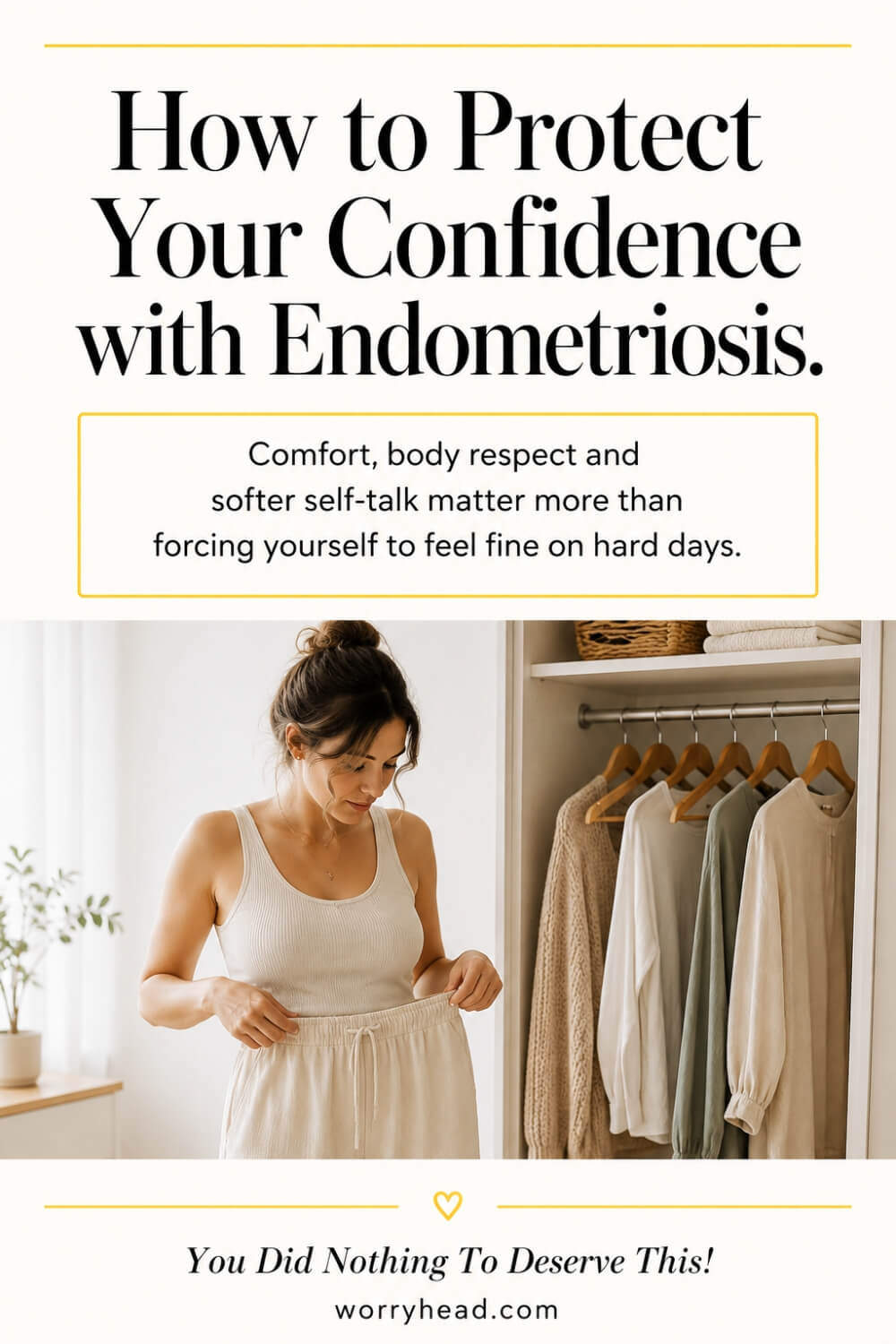
I have seen how quickly confidence can disappear when clothes become uncomfortable, when the abdomen feels painfully full, or when a normal plan suddenly becomes too much. And I have also seen how easy it is for a partner to misunderstand that moment if he only looks at the outside and does not ask what is happening underneath.
For the woman living with it, body image can become tied to fear of being less desirable, less feminine, less spontaneous, less easy to love, or less like the woman she remembers being before illness became louder.
For the partner, it can be heartbreaking to watch the woman you love shrink herself emotionally while you are standing there still loving her completely.
But love has to become more practical when endometriosis enters the relationship. It has to show up in softer words, slower expectations, patience around intimacy, kindness around cancelled plans, and reassurance that does not disappear when symptoms return.
In our marriage, I had to learn that I cannot rescue my wife from every painful thought about her body, but I can make sure I never become another voice that makes her feel ashamed.
I can notice when she is hiding, ask gently instead of pushing, and remind her that she is not a burden simply because her body needs more care.
For both of us, this changed what closeness means. It taught me that real intimacy is not only desire, but safety, respect, patience, humour, grief, tenderness, and choosing each other again on the days when endometriosis tries to make a woman feel hard to love.

When to Seek Medical Help?
Please seek medical help if your endometriosis symptoms are changing the way you live, dress, move, sleep, work, have sex, use the toilet, or feel about your body.
You do not need to wait until pain becomes unbearable before you deserve support.
If your periods stop you from functioning, if pelvic pain appears outside your period, if sex hurts, if bowel movements or urination become painful around your cycle, or if fatigue is stealing normal life from you, those are valid reasons to speak to your GP or specialist.
I know how easy it is to minimise things because you have been told for years that pain is just part of being a woman. But pain that makes you plan your life around the bathroom, the bed, the heat pad, loose clothes, or fear of swelling is not something you should quietly carry alone.
Endometriosis can affect your pelvis, bowel, bladder, nerves, energy, intimacy and mental wellbeing, and sometimes symptoms overlap with other conditions, so proper assessment matters.
You should also speak to a doctor if endo belly becomes severe, persistent, very painful, or comes with new symptoms such as vomiting, unexplained weight loss, fever, heavy bleeding, rectal bleeding, blood in urine, fainting, chest pain, shortness of breath, or pain that feels very different from your usual pattern. I say this calmly, not to frighten you, but because new or severe symptoms deserve medical eyes on them. You are not being dramatic by checking.
If body image distress becomes intense, please do not treat it as “just insecurity”. If you are avoiding leaving the house, avoiding intimacy completely, feeling disgusted by your body, restricting food harshly, crying often about your appearance, or feeling that you cannot cope, that deserves support too.
A GP, endometriosis specialist, pelvic health physiotherapist, pain team, counsellor or psychologist may all have a place in your care depending on what you are facing.
And if thoughts of self-harm or suicide appear, please treat that as urgent, not shameful. You deserve immediate help, and you do not have to explain your pain perfectly before you are allowed to be protected. I have seen how illness can push the mind into dark places when the body has been suffering for too long, and I will always say this clearly: your life matters more than the fear of bothering someone.
Questions to Ask Your Doctor
When you sit in front of a doctor, it is easy to forget half of what you wanted to say, especially if you have spent years being dismissed. So I would gently suggest writing things down before the appointment. Not because you are weak, but because you deserve to walk into that room with your truth organised, visible and harder to brush aside.
You can bring notes about your pain, bloating, bowel symptoms, bladder symptoms, bleeding, fatigue, sex pain, mood changes, body image distress, flare patterns, previous scans, surgery history, treatments tried and what makes symptoms worse or better.
If you feel embarrassed, please remember this: your doctor has heard intimate symptoms before, and your body deserves accuracy more than silence. The symptom you feel most ashamed to say may be the one that helps them understand what is really happening.
Helpful questions may include:
- Could my bloating, pelvic pain, bowel symptoms, bladder symptoms or painful sex be linked to endometriosis?
- Do my symptoms suggest deep endometriosis, bowel involvement, bladder involvement, adhesions, pelvic floor tension or nerve irritation?
- Should I be referred to a gynaecologist with endometriosis experience or a specialist endometriosis centre?
- Would a transvaginal ultrasound or pelvic MRI be useful in my case, and who should perform or interpret it?
- If my scan is normal, does that fully rule out endometriosis, or could symptoms still need further investigation?
- What are my treatment options for pain, bleeding, endo belly, fatigue, painful sex and quality of life?
- Could pelvic health physiotherapy help with pain, muscle guarding, painful intimacy or feeling unsafe in my body?
- How can we manage symptoms while protecting fertility choices, if that matters to me?
- What should I do if my pain becomes severe, changes suddenly, or new bowel, bladder or chest symptoms appear?
- Can you help me access support for anxiety, low mood, body image distress, medical trauma or relationship strain linked to endometriosis?
If you have a partner, you may want to bring them with you, but only if they make you feel safer and not smaller. A good partner should not speak over you. He should help you remember details, validate what happens at home, and make sure you do not leave the room feeling alone with the same unanswered pain.
From my side as a husband, I have learned that the best support is not acting like a hero in the appointment. It is sitting beside the woman you love and making sure she does not have to fight for her reality alone. A man who loves you well should help carry the emotional weight of being believed, not add to it.
Final Word On Struggles with Endometriosis Body Image
If you take only one thing from this article, let it be this: struggles with endometriosis body image are not vanity, weakness, attention-seeking, or a lack of gratitude for the body you have. They are a deeply human response to living with pain, swelling, scars, fatigue, bleeding, painful intimacy, fear, medical appointments, and the grief of feeling changed by a condition you never asked for.
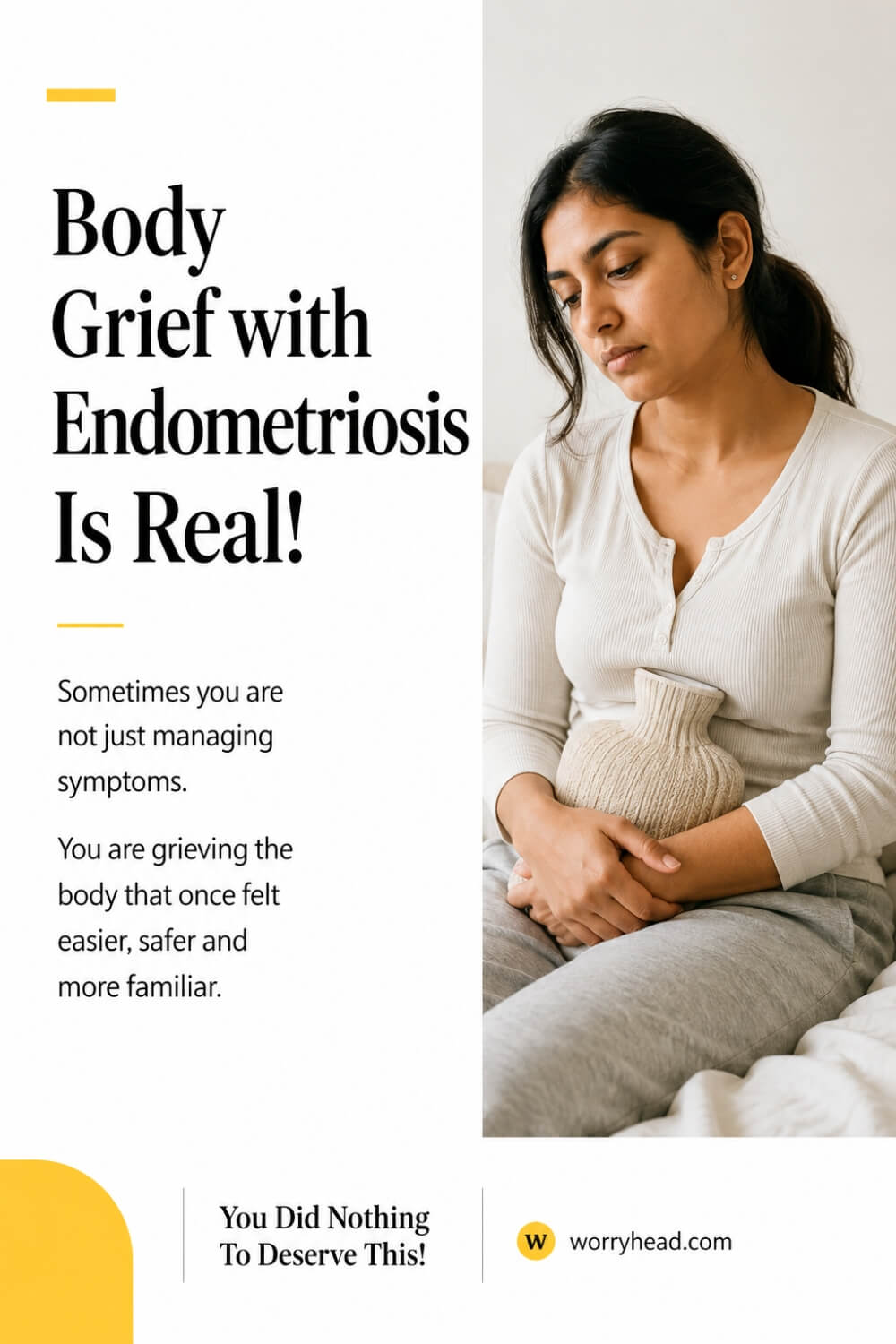
You may miss the body that felt easier to dress, easier to trust, easier to move, easier to share, easier to recognise. You may miss the version of yourself who did not have to think about bloating before leaving the house, pain before intimacy, bleeding before plans, fatigue before work, or whether another flare would make you feel like a stranger in your own skin.
That grief is real. It deserves compassion, not judgement.
Endometriosis can make the body feel unpredictable. It can make you feel as though you are constantly negotiating with your stomach, pelvis, energy, clothes, sleep, mood and confidence. But none of that means you have failed your body. If anything, it means your body has been trying to carry more than most people ever see.
I have seen this through my wife. I have seen the way chronic illness can enter the smallest corners of a woman’s life. Not only the hospital rooms, but the wardrobe. Not only the scans, but the mirror. Not only the pain flares, but the quiet look on her face when she wants to feel like herself and her body will not let the day be simple.
As her husband, I had to learn that love cannot only show up when she looks confident, rested, dressed up, smiling, or able to push through. Love has to show up when she is swollen, tired, hurting, frustrated, silent, scared, or grieving. Love has to say, “I still see you,” especially when she struggles to see herself kindly.
And if you are the woman living this, I want you to know that your body image pain does not make you shallow. It means your body has carried pain, and your heart has carried the meaning of that pain. There is a difference.
You do not have to love every scar today. You do not have to feel confident in every outfit. You do not have to smile through endo belly, pretend intimacy is easy, or force yourself into body positivity when what you really need first is safety, rest, belief and tenderness.
Maybe the first step is not loving your body loudly.
Maybe the first step is no longer speaking to it with cruelty.
Maybe it is choosing softer clothes without shame. Maybe it is letting someone safe know how hard this feels. Maybe it is touching your abdomen with less anger. Maybe it is telling yourself, “This body is not my enemy. This body is suffering, and I can still care for it.”
You are not less feminine because endometriosis changed your relationship with your body. You are not less desirable because pain changed intimacy. You are not less worthy because fatigue changed your pace. You are not less whole because scars, swelling, treatment, grief or fear became part of your story.
You are still here. You are still you. And you deserve to be loved in a way that does not ask your body to be easy before your heart is treated with care.
Your body may feel unfamiliar, swollen, scarred, exhausted or difficult to trust, but it is still the body that has carried you through every day you thought you could not face. Please do not punish yourself for surviving. You deserve softness, support, answers, validation and love that stays.
If this spoke to your heart, I would love you to leave a comment below and share what endometriosis has done to your body image, because your story may help another woman feel less alone. You can also check out the FREE chapter of my eBook at the bottom of this post.

About Me
Hi, I’m Lucjan! The reason why I decided to create this blog was my beautiful wife, who experienced a lot of pain in life, but also the lack of information about endometriosis and fibromyalgia for men…
READ MORE
Grab a FREE eBook!
“You Did NOTHING To Deserve This!”
Finally hear the words nobody ever said to you, that your pain is real, your tears make sense, and you did nothing to deserve endometriosis, the dismissal, or the way it has rewritten your life.
Related Questions You May Be Asking About Struggles with Endometriosis Body Image
1. Can endometriosis make me hate my body?
Yes, it can, especially when pain, swelling, bleeding, fatigue, scars or painful intimacy make your body feel unsafe or unfamiliar. That does not mean you truly hate yourself. Often, it means you are exhausted from living inside symptoms that keep taking control. The goal is not forced body love, but slowly rebuilding body respect.
2. Why does endo belly affect confidence so deeply?
Endo belly can affect confidence because it often appears suddenly, feels painful, and changes how clothes fit, how you stand, and how visible you feel. It can make you feel judged for something you did not choose. Please remember, swelling linked with endometriosis symptoms is not proof you failed your body. It is a sign your body needs care.
3. Can surgery scars change body image?
Yes, surgery scars can change body image because they carry more than appearance. They may remind you of fear, diagnosis, recovery, medical dismissal, hope, pain or grief. Even small scars can feel emotionally large. You do not have to love them immediately. It is enough to stop speaking to them with cruelty while you heal.
4. Why does painful sex change how I feel about myself?
Painful sex can make you feel disconnected from your body, your partner and your confidence. You may worry about disappointing someone, being less desirable, or losing a part of closeness that once felt simple. But pain during intimacy is not rejection, weakness or failure. It is your body asking for safety, patience, communication and proper support.
5. How can my partner help without making it worse?
Your partner can help by believing you, listening without rushing to fix, and giving reassurance without pressure. He should never make you feel guilty for swelling, pain, scars, fatigue, cancelled plans or needing intimacy to slow down. The best support sounds like, “I still choose you, I believe you, and we will adapt together.”
6. When should body image distress be taken seriously?
Body image distress should be taken seriously when it affects your daily life, eating, relationships, intimacy, mood, self-worth or willingness to leave the house. It is also important to seek help if you feel hopeless, trapped, ashamed, or unsafe with your thoughts. Emotional pain around endometriosis is still real pain, and you deserve support for it.
Struggles with Endometriosis Body Image References
- https://www.who.int/news-room/fact-sheets/detail/endometriosis
- https://www.nhs.uk/conditions/endometriosis/
- https://www.nice.org.uk/guidance/ng73
- https://www.nice.org.uk/news/articles/nice-updated-guideline-to-improve-the-diagnosis-of-endometriosis
- https://www.ncbi.nlm.nih.gov/books/NBK604070/
- https://www.eshre.eu/guideline/endometriosis
- https://pubmed.ncbi.nlm.nih.gov/35350465/
- https://www.bsge.org.uk/wp-content/uploads/2022/02/ESHRE-GUIDELINE-ENDOMETRIOSIS-2022.pdf
- https://www.rcog.org.uk/for-the-public/browse-our-patient-information/endometriosis/
- https://www.endometriosis-uk.org/sites/default/files/2022-10/Understanding-endometriosis-%20pack_0.pdf
- https://pubmed.ncbi.nlm.nih.gov/40591873/
- https://academic.oup.com/humrep/article/40/9/1699/8180620
- https://pmc.ncbi.nlm.nih.gov/articles/PMC12050103/
- https://pmc.ncbi.nlm.nih.gov/articles/PMC9454389/
- https://pubmed.ncbi.nlm.nih.gov/35926345/
- https://pubmed.ncbi.nlm.nih.gov/36345084/
- https://pmc.ncbi.nlm.nih.gov/articles/PMC10299570/
- https://pmc.ncbi.nlm.nih.gov/articles/PMC8037734/
- https://pubmed.ncbi.nlm.nih.gov/38138873/
- https://pubmed.ncbi.nlm.nih.gov/37675797/
