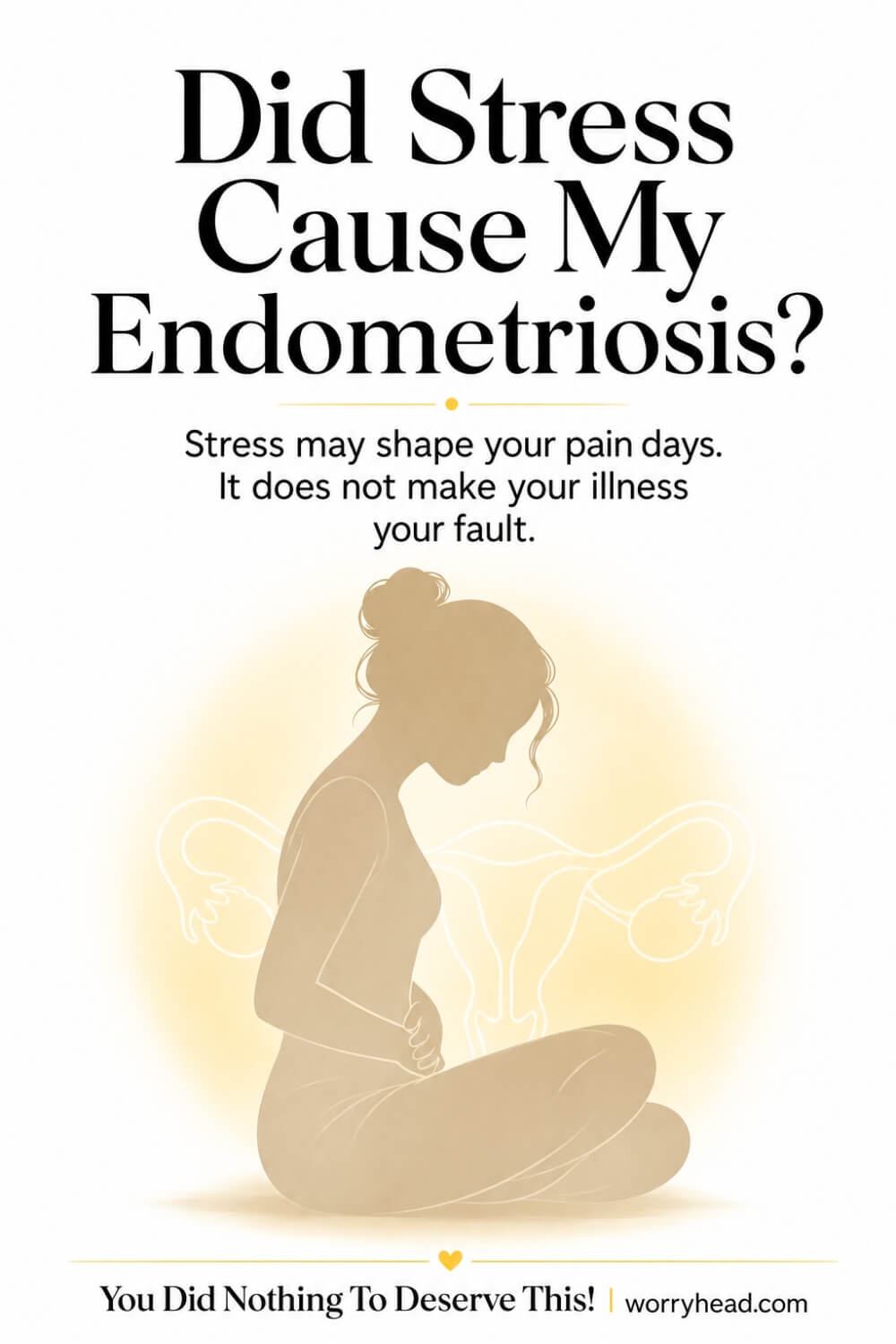
Did Stress Cause My Endometriosis?
Have you ever looked back at years of pressure, grief, worry, trauma, overworking, or survival mode and quietly wondered: “Did stress cause my endometriosis?”
If that question has been sitting in your chest, please hear me gently before anything else: you are not to blame! Endometriosis is NOT your fault.
Stress is not proven to cause endometriosis. Current evidence says the exact cause is still unknown, with genetics, immune function, hormones, inflammation, and menstrual factors likely involved; stress may worsen pain, flares, fatigue, and coping, but it did not make this disease your fault.
I am not a clinician, but I write as a husband, blogger and researcher who has spent years learning beside my wife, and I have attached at the bottom of this article the sources I used for medical context and health facts, including WHO, NICE, NHS, ESHRE and published studies.
What surprises many people is that endometriosis affects about 10% of reproductive-age women worldwide, yet the cause is still officially described as unknown. It can involve pain, heavy bleeding, fatigue, infertility, bowel or bladder symptoms, low mood, anxiety and a huge quality-of-life burden, which means stress is often part of the lived reality, even when it is not the original cause.
Research also suggests a two-way relationship: endometriosis can create chronic stress, and stress may interact with inflammation, pain sensitivity, immune responses and the nervous system. That does not mean your thoughts created lesions. It means your body has been carrying a disease that can make ordinary life feel like a battle, and then stress can pour petrol on an already burning situation.
I have watched my wife live with endometriosis, and I have seen how quickly stress can make pain feel louder, sleep feel harder, and the whole day feel heavier. But I have never looked at her and thought, “You caused this.” I have only thought, “You deserved to be believed much earlier.”
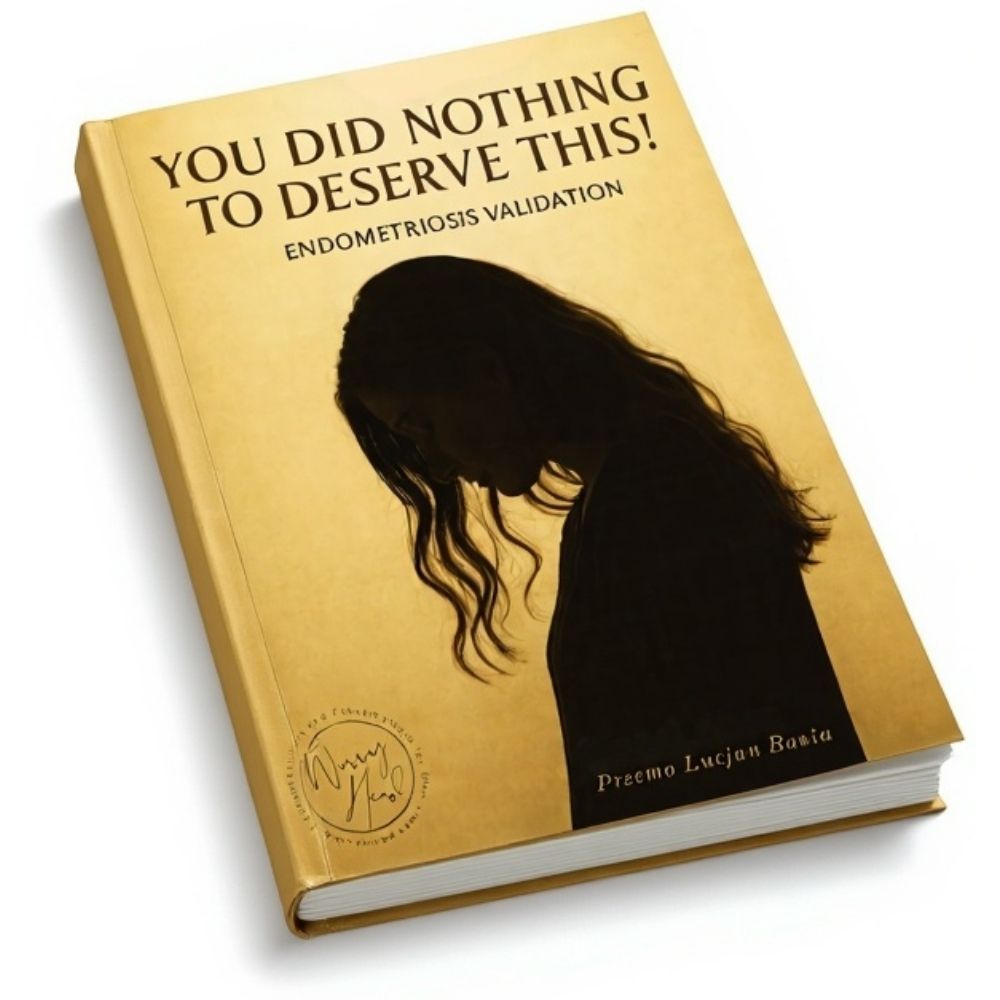
If this is the kind of validation your heart has needed for a long time, you can grab my free 130+ page eBook, “You Did Nothing To Deserve This!”, written to validate the feelings of women with endometriosis.
By grabbing it, you also join our Worry Head community, where I share more freebies, big discounts on our books, and gentle, useful emails to help you and the person who loves you adjust to the new normal chronic illness brings into your relationship and life.
The book is filled with 20 chapters of gentle validation for women with endo, written by yours truly, as I have seen it up close...
- This Was Never Your Fault
- The Girl You Used To Be
- When Your Own Body Feels Like an Enemy
- The Invisible Battles Nobody Sees
- Am I Just Lazy? – The Lie You Have Been Taught
- Gaslighting, Dismissal and the Trauma of Not Being Believed
- Guilt: The Weight You Were Never Meant to Carry
- Love in the Middle of Pain
- Intimacy When Your Body Hurts
- The Loneliness of Being the Strong One
- You Are Allowed To Take Up Space
- Tiny, Gentle Hopes (Not Toxic Positivity)
- If You Could Hear My Voice Every Flare Day
- You Deserve Partners, Not Witnesses
- When You Wish He Understood
- Motherhood, Fertility and the Grief Nobody Sees
- When Anger Is the Only Honest Feeling
- Learning to Trust Your Body Again
- Building a Life That Fits Your Reality
- You Did Nothing To Deserve This
You Did NOTHING To Deserve This!
Endometriosis Validation for Women with Endo
- You Did NOTHING To Deserve This!
- Did Stress Cause Your Endometriosis?
- Why the Question “Did Stress Cause My Endometriosis?” Feels So Believable?
- How to Stop Fearing: Did Stress Cause My Endometriosis?
- When to Seek Medical Help?
- Questions to Ask Your Doctor
- Final Word on Did Stress Cause My Endometriosis
- FREE eBook
Did Stress Cause Your Endometriosis?
When a thought like “Did stress cause my endometriosis” keeps coming back, it often comes from a very human place, not from ignorance or weakness. You are trying to make sense of something that may have taken your comfort, your normal periods, your energy, your intimacy, your confidence, your fertility hopes, or your old rhythm of life.
The mind naturally looks for a beginning, because a beginning feels like control. If you can find the moment it started, part of you may hope you can find the moment you could have stopped it.
But endometriosis does not work that simply. It is not a punishment for being anxious, grieving, working too hard, staying in a stressful relationship, pushing through pain, or not resting enough.
The medical world still does not have one clean answer for why endometriosis begins. Researchers talk about several possible pieces, including genetics, immune system changes, inflammation, hormones, cells travelling or behaving in unusual ways, and the way the body responds to menstrual tissue outside the womb.
That matters because when the cause is complex and still not fully known, it is deeply unfair for anyone to reduce it to your stress levels. Stress may turn up the volume on pain, affect sleep, tighten muscles, drain your coping ability, and make flares feel more frightening, but that is not the same as saying stress created the disease.
I want you to imagine a house with faulty wiring during a storm. The storm may make the lights flicker, but it did not build the wiring badly in the first place.
That is how I want you to hold this question with more compassion. Your nervous system may react strongly because your body has been living with pain, uncertainty, inflammation, medical delays, and maybe years of not being believed.
This is why many women notice worse symptoms during emotionally heavy seasons. It does not mean your emotions are the cause; it means your body is already under strain, and stress can make an already sensitive system feel even more unsafe.
Pain itself is stressful too, and this part is often forgotten. When you wake up not knowing whether your pelvis, bowels, bladder, back, legs, energy or mood will let you function, your body is not living in ordinary stress; it is living in threat.
That threat can make you scan every sensation, tense before movement, dread your period, avoid plans, and feel guilty before you even ask for help. None of that is weakness; it is what happens when your body has taught you that pain can interrupt anything.
I wish more partners understood this, because support is not only about saying, “go to the doctor.” Support is also about not making you feel responsible for the illness that already took enough from you.
With my wife, I have seen how one stressful morning can make a painful day feel almost impossible, but I have also learned that the right response is not blame. The right response is softness, practical help, warmth, and reminding her that she is not failing just because her body needs more care.
I have held that question with her more times than I can count, and I know how small a woman can feel when she starts wondering whether she caused her own suffering. If this section gives you only one thing, let it be this: the next part will help you separate guilt from truth, and help you handle stress without turning stress management into another stick to beat yourself with.
- Separate Cause from Trigger
- Stop Blaming Your Body
- Track Patterns Without Fear
- Calm Your Nervous System
- Protect Sleep and Rest
- Ask for Practical Support
- Prepare for Flare Days
- Speak Kindly to Yourself
Separate Cause from Trigger
One of the kindest things you can do for yourself is separate what may trigger symptoms from what caused the disease. Stress can make pain feel sharper, fatigue heavier, sleep poorer, and your pelvic floor more tense, but that is not the same as stress creating endometriosis inside your body.
This distinction matters because many women are told, directly or indirectly, that if they were calmer, happier, thinner, less anxious, or more “positive”, their pain would not be so bad.
I have seen how damaging that can be.
My wife never needed another person turning her illness into a personality flaw; she needed someone to sit beside her and say, “This is real, and we will work with it gently.” So when stress seems to worsen your endometriosis symptoms, do not use that as proof against yourself. Use it as information. Your body may be saying, “I am overloaded,” not “I am guilty.”
Stop Blaming Your Body
Blame can become a second illness, quietly sitting on top of the first one. You may blame your body for the pain, the bloating, the exhaustion, the cancelled plans, the intimacy changes, the fertility grief, or the way life no longer feels simple. But your body is not attacking you because you failed; your body is trying to survive something complex, inflammatory, hormonal, painful and still not fully understood.
I have had to learn this beside my wife, because when she felt broken, my job was not to fix her with empty words. My job was to remind her that she was still the woman I loved, even on days when her body made everything harder.
Please do not speak to yourself as if your body betrayed you on purpose. Speak to yourself as if you are caring for someone exhausted, frightened and deserving of tenderness, because you are.
Track Patterns Without Fear
Tracking symptoms can be helpful, but only when it gives you clarity without turning your life into constant surveillance. You may notice that pain worsens after poor sleep, emotional stress, long-standing, certain foods, ovulation, your period, bowel movements, sex, travel, overexertion, or a day where you had to pretend you were fine.
These patterns can help you talk to your doctor, plan your week, and understand your flare triggers with more confidence.
But tracking should never become another way to blame yourself. If you write down “stressful day” and then pain arrives, that does not mean you caused it. It means your body may be more sensitive under pressure. When I helped my wife notice patterns, I had to learn not to interrogate her body like a case file. We used tracking as a lamp, not a weapon. That is the difference.
Calm Your Nervous System
Calming your nervous system does not mean you are treating endometriosis as “just stress”. It means you are giving your pain system less fuel, your muscles less tension, and your mind a little more safety in a body that often feels unpredictable. Slow breathing, warmth, gentle stretching, pacing, quiet rooms, music, reassurance, prayer, journalling, or simply being held can help the body come down from threat mode.
I know this sounds small when pain is big, but small comforts can matter when you are living through a chronic illness. I have sat with my wife when there was nothing dramatic I could do, and I learned that calm is not useless.
Sometimes calm is the environment pain needs so it does not become even more frightening. You are not weak for needing soothing. You are human for needing safety.
Protect Sleep and Rest
Sleep is not a luxury when you live with endometriosis; it is part of survival. Pain can disturb sleep, poor sleep can lower pain tolerance, fatigue can make emotions harder to regulate, and the whole cycle can leave you feeling as if you are waking up already defeated.
This is why rest has to be protected with seriousness, not treated as laziness or weakness.
If your body needs slower mornings, earlier nights, naps, lighter chores, or a partner who understands that exhaustion is not an attitude problem, that is not you being difficult. That is you respecting the cost of chronic pain.
With my wife, I learned that love sometimes looks like making life quieter around her, not demanding she rise to meet everyone else’s pace. Rest will not cure endometriosis, but it can give your body a little more room to cope.
Ask for Practical Support
Support needs to become practical, not just emotional. It is lovely when someone says they care, but care becomes real when they help with meals, appointments, housework, driving, childcare, paperwork, symptom notes, heating pads, medication reminders, or protecting your rest without making you feel guilty.
Endometriosis already takes enough energy; you should not have to spend the last of it proving you deserve help.
This is especially important for partners. I have learned that saying “tell me what you need” is not always enough, because pain can make even asking feel exhausting.
Sometimes a man has to look around, notice what is heavy, and quietly carry some of it. That does not make you helpless. It means you are loved properly. You deserve support that does not arrive with resentment attached.
Prepare for Flare Days
Flare days are easier to face when you are not forced to invent a plan while already in pain. A simple flare routine can include heat, loose clothes, easy food, hydration, pain relief agreed with your clinician, rest, a charged phone, a symptom note, a quiet space, and one trusted person who knows what helps.
The goal is not to make the flare disappear by magic. The goal is to reduce panic and make the day less cruel.
I wish every woman with endometriosis had someone who understood that a flare is not “just a bad period”. It can feel like your whole body has been pulled into a storm. With my wife, preparation became an act of love, because it told her, “You do not have to explain everything from the beginning every single time.” You deserve that kind of care too, even if you have to build it slowly.
Speak Kindly to Yourself
The way you speak to yourself during pain matters more than many people realise. If your inner voice says, “I am weak, dramatic, lazy, broken, too much,” your body has to carry both pain and punishment. But if your inner voice says, “This is hard, I am doing my best, my pain is real, I did not cause this,” you create a softer place inside yourself to survive the day.
I have told my wife many times, “You did nothing to deserve this,” because I saw how deeply she needed those words. Maybe you need them too. Not because kind words cure lesions, but because validation can stop shame from becoming another wound.
Endometriosis may change your energy, your body, your plans, and your sense of normal, but it does not make you less worthy of love, patience, desire, respect, or tenderness.
Why the Question “Did Stress Cause My Endometriosis?” Feels So Believable?
The reason this question feels so convincing is that endometriosis often does not arrive in your life with one clear beginning. It may creep in through painful periods you were told were normal, bowel symptoms you explained away, exhaustion you blamed on being busy, and emotional heaviness that no one connected to your body.
So when you finally get a diagnosis, your mind may start searching backwards through every stressful chapter, trying to find the missing clue. You may think, did stress cause my endometriosis, because stress is the one thing you can remember clearly when everything else was dismissed for years.
But delayed diagnosis can make the past look suspicious. When pain is ignored for a long time, you are left with gaps, and guilt often tries to fill those gaps before truth gets the chance.
I have seen this with my wife, and it hurts me in a way I cannot fully explain. She can remember the years of pushing through, worrying, masking, working, coping, apologising, and still trying to be kind while her body was already carrying too much.
From the outside, I saw a woman doing everything she could to keep life together. From the inside, she sometimes saw a woman who should have known sooner, rested sooner, fought harder, complained louder, or somehow protected herself better.
That is the cruelty of this disease. It does not only attack the pelvis, the energy, the bleeding, the intimacy, or the plans you once had; it can also attack your memory of yourself.
You start reviewing your life like evidence in a trial where you are both the accused and the witness. But you were not supposed to diagnose a complex condition before trained professionals took your pain seriously.
If stress made your symptoms worse, that still does not make you responsible for the illness. It simply means your body deserves more support, not more shame.
I wish I could sit beside every woman who has blamed herself and say what I have said to my wife so many times: you were surviving with the information, care, energy, and support you had at the time. You did not fail because you kept going.
And if you are a partner reading this, please understand how tender this question is. Do not answer it with impatience, logic alone, or “stop overthinking.”
Answer it with steadiness. Tell her she is believed, tell her this was not her fault, and then show her through your actions that she does not have to carry the emotional weight of endometriosis alone.
How to Stop Fearing: Did Stress Cause My Endometriosis?
The question did stress cause my endometriosis can become more painful when you start treating every hard season of your life as possible evidence against yourself. You may look back at grief, work pressure, relationship strain, family problems, trauma, sleepless nights, or years of pushing through pain and think, “Was my body punishing me for not coping better?”
Please do not do that to yourself. Stress may deserve attention because it can affect pain, sleep, muscle tension, inflammation and emotional resilience, but it does not deserve the power to rewrite your whole story as if you caused your own disease.
With my wife, I have seen how this fear can make her softer moments turn heavy. She may already be hurting, tired, bloated, anxious or disappointed by another cancelled plan, and then guilt tries to walk in and tell her she should have lived differently.
For me, as her husband, that is where I have had to learn to be very careful with my words. If I talk about stress management in the wrong way, it can sound like I am saying, “Calm down, and you will be better,” when what I really mean is, “Let me help make life gentler around you.”
This affects both of us because endometriosis does not stay neatly inside one body. It changes plans, intimacy, sleep, money, mood, holidays, work, conversations, and the small ordinary freedoms many couples take for granted.
But it has also taught me something I wish more partners understood: reducing stress is not about blaming the woman in pain. It is about building a safer life around her body, so she does not have to fight the illness and the environment at the same time.
That may mean fewer rushed mornings, more honest pacing, more help before she crashes, calmer conversations, softer expectations, and a partner who notices when she is pretending to be fine. It may also mean giving yourself permission to rest without needing to earn it first.
You did not cause this by being stressed. You deserve care that lowers the load without making you carry the blame.
When to Seek Medical Help?
Please do not wait until you are completely broken before asking for medical help. Endometriosis already teaches many women to minimise pain, smile through symptoms, and say “I’m fine” when they are anything but fine.
If your period pain stops you from doing normal daily things, if your bleeding is very heavy, if pain during sex, bowel movements or urination keeps happening, or if your pelvic pain is showing up outside your period too, that is enough reason to speak to a GP or gynaecologist.
You do not need to prove that your pain is “bad enough” to deserve care. If symptoms are affecting your work, relationship, sleep, energy, mental health, fertility worries, or ability to live normally, they matter.
Please also seek help if your symptoms are getting worse despite treatment, if painkillers are no longer touching the pain, or if you feel dismissed and still know deep down that something is not right. Sometimes the next step may be better imaging, a referral, a different treatment plan, or seeing someone with more experience in endometriosis.
There are also times when you should seek urgent help rather than waiting for a routine appointment. Sudden severe pelvic pain, fainting, fever, vomiting, heavy bleeding with dizziness, possible pregnancy with one-sided pain, chest pain, shortness of breath, or coughing blood around your period should be taken seriously.
I say this calmly, not to frighten you. Most symptoms do not mean something catastrophic is happening, but your body still deserves proper attention.
With my wife, I learned that waiting too long often came from years of being made to feel dramatic. So if you have been taught to downplay your pain, let me say this gently: asking for help is not overreacting. It is self-respect.
Questions to Ask Your Doctor
When you sit in front of a doctor, it can be hard to remember everything, especially if pain, anxiety or past dismissal makes you freeze. I always think it helps to go in with written questions, because endometriosis appointments can feel too short for a life that has become very complicated.
You could ask: “Could my symptoms be endometriosis, and what else should be ruled out?” This matters because pelvic pain, heavy bleeding, bowel symptoms, bladder symptoms and fatigue can overlap with other conditions too.
You could ask: “Do I need an ultrasound, MRI, referral to a gynaecologist, or referral to an endometriosis specialist?” If deep endometriosis is suspected, it is fair to ask whether imaging should be done by someone experienced in recognising it.
You could ask: “What are my treatment options if I want pain relief, and what changes if I am trying to conceive?” That one question can open a better conversation about pain medicines, hormonal options, surgery, fertility plans, and what fits your life.
You could also ask: “Could pelvic floor tension, nerve pain, bowel involvement, bladder symptoms, or central pain sensitisation be contributing to what I feel?” This does not mean your pain is “in your head”. It means chronic pain can involve several body systems at once.
And please ask: “What should I do if my symptoms suddenly get worse?” A clear flare plan can make you feel less alone when pain spikes.
If you can, take someone with you who believes you. Not someone who speaks over you, but someone who can help you remember details, hold the emotional weight, and gently say, “She is not exaggerating. This is affecting her life.”
Final Word on Did Stress Cause My Endometriosis
If you have carried this question quietly, I hope this article gives you a little room to put it down. The answer to did stress cause my endometriosis is not a simple emotional answer; it is a medical and human one.
Current evidence does not prove that stress causes endometriosis, and the recognised picture is far more complex, involving things like hormones, inflammation, immune function, genetics, menstrual biology and the way endometriosis behaves in the body.
But I also do not want to pretend stress is irrelevant, because that would not be honest either. Stress can make pain feel louder. It can disturb sleep, tighten the pelvic floor, worsen fatigue, drain patience, increase fear and make flares feel harder to survive. When you live with endometriosis, your body can already feel like it is carrying too much, so emotional strain may make everything feel heavier.
The part I want you to hold close is this: a trigger is not the same as a cause. If stress worsens your symptoms, that does not mean you created the disease. If your pain flares after a hard week, that does not mean your mind failed your body. It means your body may need more support, more rest, more medical attention, more gentleness, and perhaps a life that is built with your limits in mind.
I have watched my wife ask questions that broke my heart because underneath them was not curiosity alone, but guilt. She wanted to know whether she had done something wrong, whether she should have noticed sooner, whether she could have prevented some of it, whether her body was punishing her for years of stress and survival. And when the woman you love is already in pain, the last thing you want her to carry is blame.
So I say to her, and I say to you: you did not deserve this. You did not cause this by being anxious, overwhelmed, traumatised, sensitive, hardworking, tired, or emotionally exhausted. You were trying to live. You were trying to function. You were trying to keep going in a body that may have been asking for help long before anyone properly listened.
The real work now is not to blame yourself better. The real work is to care for yourself better. That may mean asking better questions, tracking symptoms with kindness, seeking specialist help, preparing for flare days, protecting rest, and allowing people who love you to support you without making you feel like a burden.
If you are a partner reading this, please do not turn stress management into pressure. Do not tell her to calm down as if calmness is a cure. Help create calm around her. Help reduce the load. Help her feel believed before you try to help her feel better.
Endometriosis is hard enough without shame sitting beside it. You deserve answers, care, tenderness and validation. Most of all, you deserve to know that your pain is real, your story matters, and none of this makes you less worthy of love.
You did not cause your endometriosis by being stressed, overwhelmed or exhausted. Your body deserves medical care, practical support, rest, understanding and tenderness. Let this be the moment you stop blaming yourself and start giving yourself the compassion you should have received from the beginning.
Please leave a comment below if this question has ever sat heavily on your heart, and check out the FREE chapter of my eBook at the bottom of this post.


About Me
Hi, I’m Lucjan! The reason why I decided to create this blog was my beautiful wife, who experienced a lot of pain in life, but also the lack of information about endometriosis and fibromyalgia for men…
READ MORE
Grab a FREE eBook!
“You Did NOTHING To Deserve This!”
Finally hear the words nobody ever said to you, that your pain is real, your tears make sense, and you did nothing to deserve endometriosis, the dismissal, or the way it has rewritten your life.
Related Questions You May Be Asking About: Did Stress Cause My Endometriosis?
1. Can Stress Make Endometriosis Pain Worse?
Yes, stress can make endometriosis pain feel worse for some women, especially when it affects sleep, muscle tension, pain sensitivity, fatigue and emotional resilience. That does not mean stress caused the disease. It means your body may already be inflamed, sensitive and exhausted, and stress can make an already heavy symptom load harder to carry.
2. Is Endometriosis Caused by Anxiety?
No, endometriosis is not caused by anxiety. Anxiety can happen because living with chronic pelvic pain, unpredictable flares, fertility worries, medical dismissal and exhaustion is genuinely stressful. I always want you to separate emotional impact from blame. Feeling anxious does not mean you created endometriosis; it means your body and mind have been under pressure for too long.
3. Why Do My Symptoms Flare After Stressful Days?
A stressful day can affect your nervous system, sleep, digestion, muscle tension and pain threshold, which may make endometriosis symptoms feel more intense. Some women notice more pelvic pain, bowel symptoms, fatigue or cramping after emotional strain. This is not your fault. It is a sign your body may need support, pacing and gentler recovery time.
4. Can Reducing Stress Help Endometriosis?
Reducing stress may help you cope better with symptoms, sleep more deeply, feel safer in your body and reduce some pain amplification, but it is not a cure for endometriosis. Stress management should sit beside medical care, not replace it. I see it as lowering the load around the illness, not pretending the illness is only emotional.
5. Should I Feel Guilty if Stress Triggers a Flare?
No, you should not feel guilty. A flare after stress does not mean you failed, overreacted or caused your own suffering. It means your body may be more vulnerable during pressure, pain, poor sleep or emotional overload. You deserve compassion in those moments, not self-punishment. Guilt only adds another weight to a body already carrying enough.
6. How Can My Partner Help with Stress and Endometriosis?
A partner can help by making life feel safer, calmer and more practical. That may mean helping with meals, appointments, chores, flare plans, emotional reassurance and protecting rest without resentment. What helped me most was learning that support is not just saying “I understand”. It is showing her, again and again, that she does not have to carry this alone.
Did Stress Cause My Endometriosis References
- https://www.nhs.uk/conditions/endometriosis/
- https://www.who.int/news-room/fact-sheets/detail/endometriosis
- https://www.nice.org.uk/guidance/ng73
- https://www.eshre.eu/Guidelines-and-Legal/Guidelines/Endometriosis-guideline
- https://en.wikipedia.org/wiki/Endometriosis
- https://pubmed.ncbi.nlm.nih.gov/32046437/
- https://pmc.ncbi.nlm.nih.gov/articles/PMC9262098/
- https://pubmed.ncbi.nlm.nih.gov/31755674/
- https://pubmed.ncbi.nlm.nih.gov/38928175/
- https://pubmed.ncbi.nlm.nih.gov/38512699/
- https://pubmed.ncbi.nlm.nih.gov/39529727/
- https://www.medicalnewstoday.com/articles/endometriosis-and-stress
- https://www.verywellhealth.com/endometriosis-causes-7111697
- https://www.yalemedicine.org/conditions/endometriosis
