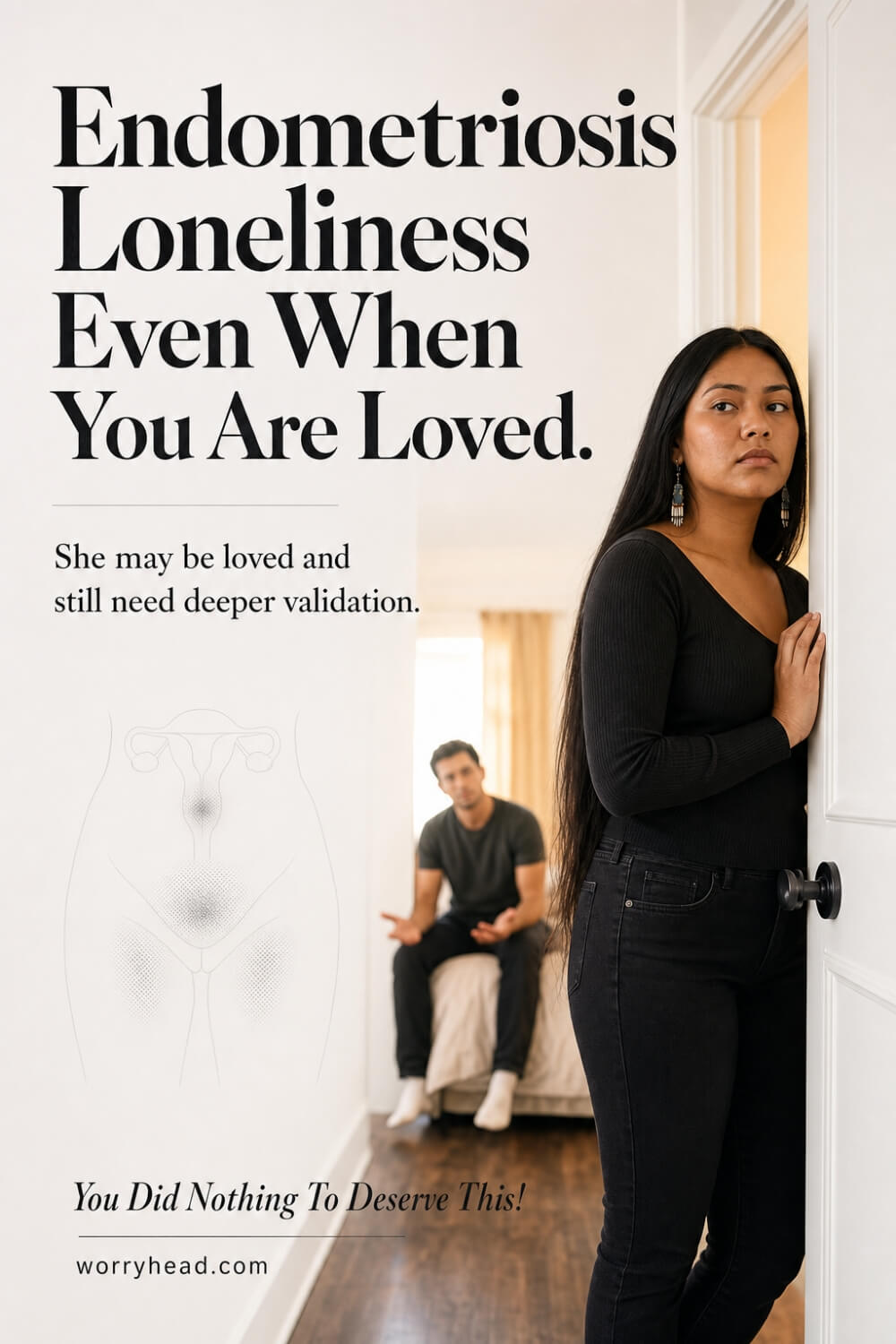
Endometriosis Loneliness Even When You Are Loved
Have you ever been surrounded by love, messages, warm hands, and good intentions, yet still felt quietly alone inside your endometriosis? Endometriosis loneliness even when you are loved is one of the hardest emotional wounds to explain. If that is you, I want you to know before we go any further that your loneliness is not proof that love has failed you.
Endometriosis loneliness even when you are loved happens when chronic pain, fatigue, body changes, sexual pain, fertility grief, diagnosis delays, and feeling dismissed create an inner distance that care cannot fully reach. It is not ingratitude; it is a real psychosocial burden of the disease.
I am not a clinician, and I do not write to diagnose or replace medical care; I write as a husband, blogger, and researcher, and at the bottom of this article I have attached the sources I used to understand the medical context and health facts, including WHO, NICE, NHS, ESHRE, and peer-reviewed studies.
What surprised me most as I kept learning about endometriosis is that loneliness is not always about being physically alone. Research now talks about reduced social support, body image distress, anticipated stigma, mental health strain, and the way chronic pelvic pain can affect relationships, work, sex, identity, and the simple ability to keep plans.
That means the woman who smiles at the dinner table may still be grieving the body she cannot trust. The partner sitting beside her may love her deeply, yet still not know how to enter the private room where pain, fatigue, fear, and dismissal have been living for years.
I have seen this in my wife’s eyes on days when I was right there, loving her, helping her, trying my best, and still realising that some parts of endometriosis cannot be hugged away. That does not make love useless, but it means love has to become more patient, more educated, and more willing to listen without rushing to fix.
This is just one of the invisible battles nobody sees, and if this feels close to your heart, you can grab my free 130+ page eBook, “You Did Nothing To Deserve This!”, written to validate the feelings of women with endometriosis. By joining our community, you will also receive more freebies, big discounts on all our books, and honest emails that help you and your relationship adjust to the new normal chronic illness can bring.
The book is filled with 20 chapters of gentle validation for women with endo; they include...
- This Was Never Your Fault
- The Girl You Used To Be
- When Your Own Body Feels Like an Enemy
- The Invisible Battles Nobody Sees
- Am I Just Lazy? – The Lie You Have Been Taught
- Gaslighting, Dismissal and the Trauma of Not Being Believed
- Guilt: The Weight You Were Never Meant to Carry
- Love in the Middle of Pain
- Intimacy When Your Body Hurts
- The Loneliness of Being the Strong One
- You Are Allowed To Take Up Space
- Tiny, Gentle Hopes (Not Toxic Positivity)
- If You Could Hear My Voice Every Flare Day
- You Deserve Partners, Not Witnesses
- When You Wish He Understood
- Motherhood, Fertility and the Grief Nobody Sees
- When Anger Is the Only Honest Feeling
- Learning to Trust Your Body Again
- Building a Life That Fits Your Reality
- You Did Nothing To Deserve This
You Did NOTHING To Deserve This!
Endometriosis Validation for Women with Endo
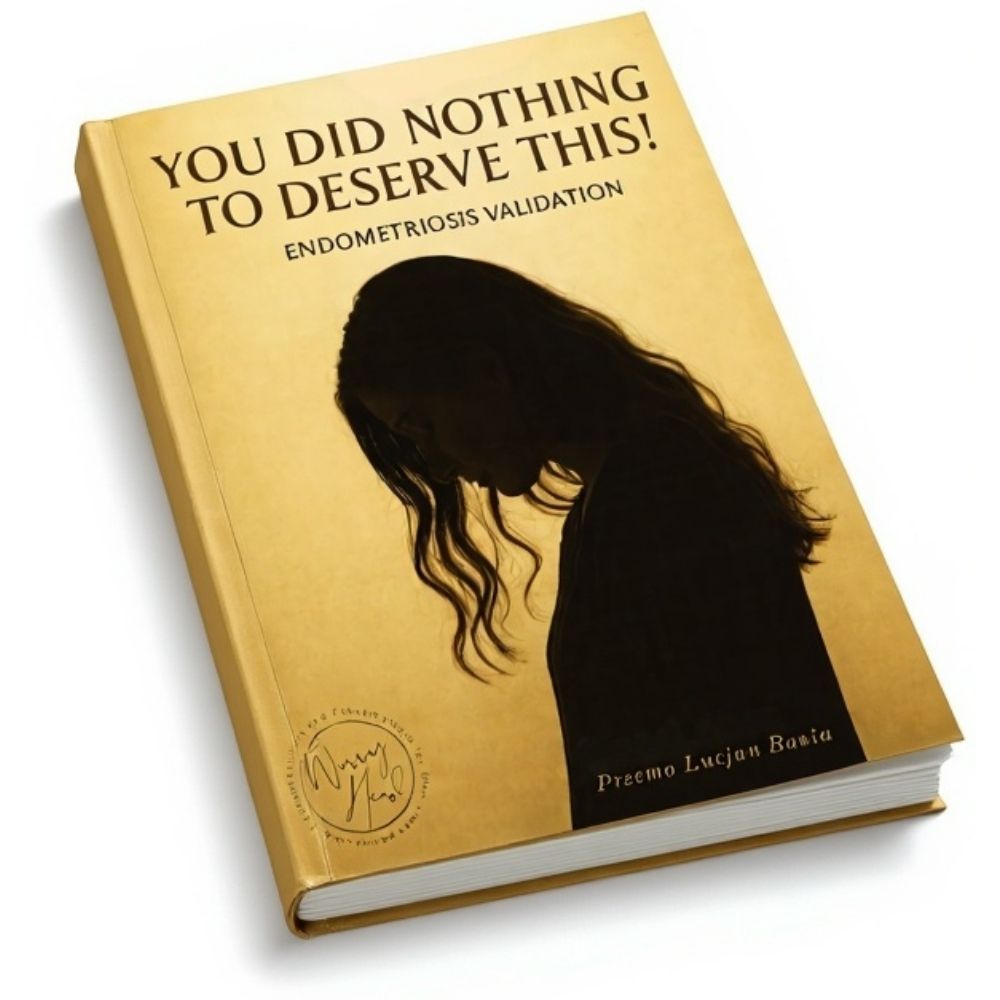
- You Did NOTHING To Deserve This!
- Why Endometriosis Loneliness Even When You Are Loved Cuts So Deep?
- How Endometriosis Loneliness Even When You Are Loved Changes the Way Love Feels?
- How Endometriosis Loneliness Even When You Are Loved Affects the Whole Relationship?
- When to Seek Medical Help?
- Questions to Ask Your Doctor
- Final Word On Endometriosis Loneliness Even When You Are Loved
- FREE eBook
Why Endometriosis Loneliness Even When You Are Loved Cuts So Deep?
The strange thing about this kind of loneliness is that it often appears in the safest rooms. You may have a partner who cares, a family who checks in, friends who say they are there, and still feel as if nobody can truly stand inside your body with you.
That is why endometriosis loneliness even when you are loved can feel so confusing, because the problem is not always the absence of people, but the absence of being fully understood. Pain can make your world smaller without asking permission.
You cancel plans, avoid intimacy, hide fatigue, explain the same symptoms again, and slowly learn which parts of your life feel too heavy to keep defending. After a while, you may stop saying how bad it is because repeating yourself becomes another kind of exhaustion.
This is where many people misunderstand chronic illness. Love can bring comfort, safety, meals, lifts to appointments, warm blankets, and patience, but love cannot automatically translate pain into language someone else can feel.
Endometriosis can touch the private parts of life that are hard to speak about, such as bleeding, bowel pain, bladder symptoms, sex, fertility, body image, and fear of being too much. When those topics sit quietly between two people, even a strong relationship can feel tender, fragile, and strangely lonely.
I have learned that support is not only asking, “Are you okay?” It is learning how to stay when the answer is complicated, repeated, emotional, or inconvenient.
Sometimes my wife did not need me to solve the whole day. She needed me to notice the small silence, the change in her face, the way she held her body, the sadness behind the sentence, “I’m fine.”
That is the part many men miss at first. We want to fix it because fixing feels useful, but women with endometriosis often need something deeper than quick solutions. They need belief before advice. They need patience before plans. They need someone who does not make them perform strength just to keep the room comfortable.
And if you are the woman reading this, I hope you hear me clearly: needing that kind of tenderness does not make you needy. It makes you human after carrying pain that has asked too much of you.
I have watched my wife be loved and still feel alone, not because my love was absent, but because her pain had its own locked room I had to learn to approach gently. That taught me that the next most loving thing is not always a grand gesture, but the daily discipline of believing, listening, adjusting, and staying kind when illness changes the plan again.
So before we go deeper, I want to give you practical things that can actually soften this loneliness, not in a shallow way, but in the small daily ways that protect your heart, your relationship, and your sense of self.
- Name the loneliness honestly
- Stop explaining to everyone
- Create safer illness language
- Let love become practical
- Protect intimacy without pressure
- Build a flare-day connection plan
- Find people who understand
- Teach your partner gently
Name the Loneliness Honestly
The first step is not pretending you are fine just because someone loves you. You can be loved and lonely at the same time, because endometriosis can make you feel trapped inside symptoms that nobody else can fully measure, touch, or carry for you.
I have learned this with my wife. When she says she feels alone, it does not mean I have failed her or that my love means nothing. It means her pain has taken her somewhere I cannot physically go, and my job is not to argue with that loneliness but to sit closer to it with respect.
If you are the woman reading this, try saying it plainly to someone safe: “I know you love me, but I still feel alone in this.” That sentence can open a door. It does not blame your partner. It helps them understand that you are not asking for perfection; you are asking for presence.
Stop Explaining to Everyone
One of the loneliest parts of endometriosis is having to prove your pain over and over again. You should not have to turn every conversation into a courtroom just to make someone believe that your pelvic pain, fatigue, nausea, bowel pain, bladder symptoms, or painful sex are real.
I have seen how exhausting it is when my wife feels she must explain why she cannot do something, why she needs to rest, why plans changed, or why her body suddenly said no. Sometimes the kindest thing you can do for yourself is stop giving full explanations to people who only listen to reply.
You are allowed to use short sentences. “I am not well enough today.” “My symptoms have flared.” “I need to rest.” That is enough. The people who love you well will not need a full medical lecture every time. The people who keep dismissing you may not be convinced by one anyway.
Create Safer Illness Language
A relationship becomes less lonely when you both have words that feel safe. Many couples talk about endometriosis only when everything is already tense, painful, or emotional, and by then the conversation can feel too heavy to hold gently.
I learned that with my wife. If I asked too many questions at the wrong time, it could feel like pressure. If I asked too little, it could feel like I did not care. So the language had to become softer, simpler, and more predictable.
You might create phrases such as “yellow day” for a warning day, “red day” for a flare, or “quiet support” for moments when you do not want questions but still want care. You might say, “I need comfort, not solutions,” or “Please stay close, but don’t ask me to explain yet.” These small phrases can protect both of you. They make pain less lonely because nobody has to guess in the dark.
Let Love Become Practical
Love is beautiful, but when endometriosis is flaring, love also has to become practical. It is not only flowers, compliments, or saying “I’m here.” Sometimes love is heating a pad, driving to an appointment, handling dinner, lowering the noise, changing the bedding, or cancelling a plan without making her feel guilty.
This is something I had to learn as a husband. I could love my wife deeply and still miss what she actually needed in that moment. Good intentions are not always enough if they do not become useful.
For the woman reading this, you are not asking too much when you need practical help. For the partner reading this, do not wait until she is breaking before you step in. Notice patterns. Learn what helps. Ask once, remember often, and make her feel that support is not a favour. It is part of loving her through a condition that already asks too much.
Protect Intimacy Without Pressure
Endometriosis can make intimacy complicated in a way many people do not understand. Pain during or after sex, fear of triggering symptoms, body changes, fatigue, bleeding, bloating, and emotional shutdown can all make closeness feel unsafe, even when love is still there.
This can create a very private loneliness. A woman may miss being touched, wanted, relaxed, and spontaneous, while also fearing the pain that may come with it. Her partner may feel rejected, confused, or helpless, and if neither person talks gently, silence can grow between them.
I believe intimacy has to become wider than sex. Holding hands, lying together, stroking hair, kissing without expectation, warm words, shared rest, and emotional safety can keep the bond alive. No woman should feel punished for pain. No partner should use sadness as pressure. The goal is not performance. The goal is trust.
Build A Flare-Day Connection Plan
A flare day can make loneliness louder because the body becomes the whole room. Pain takes over your attention, fatigue steals your words, and even simple decisions can feel too much. That is why couples need a plan before the worst moments arrive.
With my wife, I learned that waiting until she was already overwhelmed was not fair. A flare-day plan can include what food is easiest, what medication routine has been agreed with clinicians, what comfort items help, what symptoms need medical attention, and what kind of emotional support feels good rather than irritating.
It can also include what not to do. Maybe do not ask too many questions. Maybe do not hover. Maybe do not say “again?” or “but you were fine yesterday.” A plan makes love calmer. It tells her, “You do not have to manage my confusion while managing your pain.” That alone can make a lonely day feel less abandoned.
Find People Who Understand
There is a type of loneliness that only softens when you hear someone say, “Me too.” Not because your partner’s love is not enough, but because lived experience has its own language. Another woman with endometriosis may understand the fear of a flare, the grief of cancelled plans, the embarrassment of bowel symptoms, or the sadness of feeling like your body keeps changing the rules.
I have seen how powerful validation can be in a community. Medical facts matter, but so does being believed without having to perform pain convincingly. Sometimes you need a space where nobody looks shocked, bored, or uncomfortable when you tell the truth.
A good support space should not make you feel more hopeless. It should help you feel less strange, less ashamed, and less alone. Choose communities carefully. Look for kindness, balance, evidence, and people who understand that you are more than your diagnosis. If a group leaves you feeling overwhelmed, my guide to when an endometriosis support group feels overwhelming explores boundaries and taking a break. Connection with friends can need a different conversation from finding a support group. If invitations have faded after repeated cancellations, explore ways to discuss endometriosis and cancelled plans while leaving yourself free to say no.
Teach Your Partner Gently
Your partner may love you deeply and still not understand endometriosis well. That can hurt, especially when you are tired of educating everyone. But in a relationship, gentle teaching can become part of building safety, as long as it does not all fall on you.
I say this as a man who has had to learn. I did not always know the right words. I did not always understand the difference between tired and endometriosis fatigue, between cramps and pelvic pain, between wanting comfort and wanting solutions. My wife’s reality taught me slowly.
You can share one article, one symptom, one sentence, or one request at a time. “When I go quiet, I may be in pain.” “When I cancel, I feel guilty already.” “When you believe me quickly, I feel safer.” A willing partner will not learn everything overnight, but consistent learning is love in motion.
How Endometriosis Loneliness Even When You Are Loved Changes the Way Love Feels?
Endometriosis loneliness even when you are loved can quietly change the way love feels, because pain can make even tender moments feel distant, delayed, or interrupted. A partner may be sitting next to you, but your body may still be pulling you inward, asking you to survive something nobody else can feel from the inside.
I have seen this in my wife, and it is one of the most humbling things I have ever had to learn as a husband. Sometimes love is not enough if it is not patient enough, informed enough, and gentle enough to let her be honest without worrying that her honesty will hurt me.
There are moments when a woman with endometriosis may feel guilty for needing rest, guilty for cancelling, guilty for not being touched, guilty for crying, guilty for being quieter than she used to be. That guilt can become another illness beside the illness, because she starts managing other people’s emotions while her own body is already asking too much of her.
This is why I believe partners need to stop taking every symptom personally. If she withdraws, it may not mean she does not love you; it may mean she is trying not to fall apart in front of you.
If she says little, she may be tired of translating pain into words that never feel big enough. If she cries, she may not need a speech, a solution, or a brave face from you; she may just need you to stay soft and steady.
My wife taught me that love sometimes means being close without demanding access. It means accepting that some days she may want comfort, and other days even comfort can feel like too much because pain has already touched every nerve, every thought, every corner of her patience.
And if you are the woman reading this, I want you to know that the right kind of love will not punish you for needing a slower life. It will not measure your worth by your productivity, your sexuality, your fertility, your mood, or how well you can pretend to be okay.
You are still lovable when you are exhausted. You are still wanted when your body hurts. You are still a whole woman on the days you feel like endometriosis has taken pieces of you that nobody noticed were missing.
How Endometriosis Loneliness Even When You Are Loved Affects the Whole Relationship?
One of the most painful things about endometriosis loneliness even when you are loved is that it does not stay neatly inside one person. It can sit between two people who adore each other and still make both of them feel as if they are reaching through glass.
For my wife, it can mean feeling alone in a body that changes plans without warning, steals energy before the day begins, and makes her wonder whether I truly understand the size of what she is carrying. For me, it can mean standing beside her with all my love and still feeling the quiet ache of knowing I cannot take the pain out of her body.
At first, I used to think support meant doing more, saying more, fixing more, proving more. But I slowly realised that sometimes the deepest support is learning how to stay emotionally available without making her pain about my helplessness.
When she withdraws, I have to remember that she may be protecting what little strength she has left. When I get tired, I have to remember that my tiredness needs care too, but it should never become a weight she has to carry on top of her symptoms.
The illness can make both people grieve different versions of the same life. She may grieve the woman she used to feel like before pain interrupted her body, and I may grieve the easy version of our relationship where plans, intimacy, work, rest, and hope did not need so much negotiation.
That is why couples need tenderness that is honest, not perfect. She needs to know she is still loved when she cannot give much, and I need to keep learning how to love her in ways that make her feel safer rather than more observed.
Endometriosis can make a woman feel lonely, but the right kind of love can remind her that she does not have to be lonely and ashamed at the same time. That, to me, is where healing inside the relationship begins.
When to Seek Medical Help?
Please do not wait until you are completely broken before asking for help. If endometriosis loneliness even when you are loved is becoming part of your daily life, that matters medically and emotionally, because endometriosis is not only about lesions, periods, scans, or surgery. It can affect your sleep, work, relationships, sex life, confidence, mood, and the way you feel inside your own body.
I would seek medical help if your pain is affecting everyday life, work, intimacy, bowel movements, bladder symptoms, sleep, or your ability to keep normal plans. I would also speak to a GP or specialist if your symptoms are getting worse, changing, returning after treatment, or making you feel frightened of your own cycle.
Please also talk to someone if the emotional side is becoming heavy. If you are crying often, withdrawing, feeling numb, feeling like a burden, or thinking that your loved ones would be better without you, that is not something to carry quietly.
As a husband, I say this gently because I know how dark chronic illness can make the room feel. My wife’s pain taught me that mental health support is not a sign that you are weak. It is a sign that you have carried too much without enough help.
If you ever feel at risk of harming yourself, or you do not feel safe, please seek urgent help straight away. In the UK, that may mean calling 999, going to A&E, contacting NHS 111, or reaching out to a crisis line or someone you trust who can stay with you.
For less urgent but still important moments, ask your GP about endometriosis care, pain management, mental health support, pelvic health physiotherapy, counselling, or referral to a gynaecologist or specialist endometriosis service. You deserve care for the pain you can point to and for the loneliness you have been trying to hide.
Questions to Ask Your Doctor
When you finally get into the room with a doctor, it can be easy to freeze, minimise, or forget what you wanted to say. I have seen how much pressure those appointments can carry, especially when you have waited so long to be taken seriously.
It may help to write your questions down beforehand and bring a symptom diary if you have one. You do not need perfect medical language. You only need to describe what is happening honestly, clearly, and without apologising for taking up space.
You may want to ask:
- Could my pain, fatigue, bowel symptoms, bladder symptoms, painful sex, or emotional distress be linked to endometriosis?
- What signs suggest deep endometriosis, bowel involvement, bladder involvement, adhesions, or nerve irritation?
- Should I have an ultrasound, MRI, referral to gynaecology, or referral to a specialist endometriosis centre?
- If my scan is normal, does that fully rule out endometriosis, or could symptoms still need further investigation?
- What are my options for pain management, hormonal treatment, surgery, pelvic health physiotherapy, or multidisciplinary support?
- Can endometriosis affect mood, anxiety, depression, relationships, intimacy, work, and social life?
- What support is available if I feel lonely, dismissed, overwhelmed, or emotionally exhausted by this condition?
- What symptoms should make me seek urgent help rather than waiting for a routine appointment?
And if you are a partner attending the appointment, please do not take over her voice. Sit beside her, help her remember details if she wants that, back her up when she is being dismissed, and let her remain the centre of the conversation.
Sometimes the most loving sentence a partner can say in that room is simple: “This is affecting her life more than she admits.”
Final Word On Endometriosis Loneliness Even When You Are Loved
If there is one thing I want you to take from this article, it is this: loneliness does not always mean you are unloved. Sometimes loneliness means you are living with something so private, so physical, so repetitive, and so misunderstood that even the kindest people around you cannot fully enter it.
That is what makes endometriosis so emotionally cruel. It can place a woman inside pain, fatigue, fear, guilt, body changes, intimacy worries, fertility grief, and years of explaining herself, while everyone else still sees only the outside of her life. People may see the smile, the tidy clothes, the answer “I’m okay,” and the moments when she pushes through. They may not see the cost.
I have learned through my wife that love has to become more than affection. It has to become attention. It has to become patience when the same symptom returns again. It has to become belief when there is no visible proof. It has to become humility when I realise I do not understand everything, but I can still choose to stay close, listen properly, and not make her pain smaller just because I cannot feel it myself.
For the woman reading this, I want you to hear this from a husband who has watched chronic illness change ordinary life: you are not difficult because your body needs care. You are not ungrateful because love does not erase your loneliness. You are not broken because pain has changed your confidence, your intimacy, your energy, or the way you see yourself.
You are still you.
Maybe a more tired you. Maybe a more guarded you. Maybe a you who has learned to cancel plans before anyone can be disappointed, apologise before anyone complains, and hide symptoms before anyone asks too many questions. But beneath all of that, you are still worthy of tenderness, desire, patience, and a love that does not make you perform wellness to deserve it.
For partners, especially men like me, this is where we must grow up emotionally. We cannot love a woman with endometriosis only when she is easy to understand. We cannot support her only when symptoms fit neatly into our plans. We must learn the illness, learn her patterns, learn our own reactions, and learn how to be steady without becoming cold, tired, or resentful.
Endometriosis loneliness even when you are loved is not solved by one conversation, one appointment, one apology, or one perfect day. It softens slowly when love becomes consistent, when symptoms are believed early, when shame is removed from intimacy, when practical help arrives without drama, and when the woman living with this disease no longer has to prove that her pain is real before she receives compassion.
That is the kind of love I keep trying to build in my own marriage. Not flawless love. Faithful love. Learning love. Love that says, “I may not feel what you feel, but I will not leave you alone inside it.”
You deserve that kind of care.
You deserve to be believed before you are exhausted from explaining. You deserve a relationship where your illness is not treated as an inconvenience, but as a reality you both learn to carry with honesty, dignity, and gentleness.
You did nothing to deserve this.
And you should not have to feel alone just because your pain is hard for others to understand.
You are allowed to need more softness. You are allowed to ask for clearer support. You are allowed to be loved in a way that reaches deeper than words and actually helps you feel safer in your own life again.
Your loneliness is real, but it is not your identity. With the right support, kinder conversations, better care, and people who believe you without making you beg for it, you can feel less isolated, more understood, and more held. You are not too much. You have carried too much for too long.
If this spoke to you, please leave a comment below and share what part of endometriosis loneliness feels hardest to explain. You can also check out the free chapter of my eBook at the bottom of this post, written to help you feel validated, believed, and gently supported.


About Me
Hi, I’m Lucjan! The reason why I decided to create this blog was my beautiful wife, who experienced a lot of pain in life, but also the lack of information about endometriosis and fibromyalgia for men…
READ MORE
Grab a FREE eBook!
“You Did NOTHING To Deserve This!”
Finally hear the words nobody ever said to you, that your pain is real, your tears make sense, and you did nothing to deserve endometriosis, the dismissal, or the way it has rewritten your life.
Related Questions You May Be Asking About Endometriosis Loneliness Even When You Are Loved
1. Can I feel lonely with endometriosis even if my partner loves me?
Yes, absolutely. Love can comfort you, but it cannot fully enter your body, feel your pelvic pain, carry your fatigue, or understand every fear without communication. This does not mean your partner has failed. It means endometriosis creates a private emotional weight that needs belief, patience, and repeated reassurance.
2. Why does endometriosis make me pull away from people?
You may pull away because explaining pain becomes exhausting, plans feel unsafe, and you may fear being judged, pitied, or seen as unreliable. Sometimes withdrawal is not rejection. It is self-protection. When your body keeps changing the rules, social life can start to feel like another demand.
3. How can I explain this loneliness without hurting my partner?
Try using honest but gentle language. You might say, “I know you love me, and I am grateful, but I still feel alone inside this pain sometimes.” That helps your partner understand that you are not blaming them. You are inviting them closer to a part of your life they may not see clearly.
4. Is feeling like a burden common with endometriosis?
Yes, many women with endometriosis feel like a burden, especially when symptoms affect intimacy, work, money, fertility, plans, mood, or daily routines. But needing care does not make you a burden. It means you are living with a real condition that requires support, adjustment, and compassion.
5. Can support groups help if I already have a loving relationship?
Yes, because a loving relationship and a support community meet different needs. Your partner may love you deeply, but another woman with endometriosis may understand the fear of flares, medical dismissal, painful sex, bloating, fatigue, and grief in a way that needs fewer words. Both forms of support can matter.
6. What can my partner do when I feel alone?
Your partner can believe you quickly, ask what kind of support you need, help practically, and stop trying to fix every feeling. Sometimes the most healing thing is simple presence. A calm sentence like, “I do not fully understand, but I am here and I believe you,” can soften loneliness more than advice.
Endometriosis Loneliness Even When You Are Loved References
- https://www.who.int/news-room/fact-sheets/detail/endometriosis
- https://www.nhs.uk/conditions/endometriosis/
- https://www.nice.org.uk/guidance/ng73
- https://www.nice.org.uk/guidance/ng73/chapter/Rationale-and-impact
- https://www.eshre.eu/guideline/endometriosis
- https://pubmed.ncbi.nlm.nih.gov/37884852/
- https://repository.mmu.ac.uk/articles/journal_contribution/_The_most_lonely_condition_I_can_imagine_psychosocial_impacts_of_endometriosis_on_women_s_identity/32544177
- https://www.endometriosis-uk.org/sites/default/files/2026-02/Endometriosis%20-%20The%20State%20of%20Endometriosis%20Care%20Report.pdf
- https://www.endometriosis-uk.org/impact-endometriosis-mental-health
- https://en.wikipedia.org/wiki/Endometriosis
