Do You Experience Medical Misogyny in Endo Care?
Do you experience medical misogyny in endo care, or have repeated dismissals made you question what your own body is telling you? Perhaps you have left appointments feeling smaller, ashamed, or frightened that nobody will take the next flare seriously.
If your pain has been normalised while your life keeps shrinking around it, I want you to know that your hurt makes sense. You are most likely being gaslighted.
You may be experiencing medical misogyny when endometriosis symptoms are repeatedly minimised, normalised, blamed on anxiety or left unexplored without clear reasoning. One poor appointment is not proof, but a pattern of gendered dismissal, unequal listening or blocked care deserves attention.
I am not a clinician, but a husband, blogger and careful researcher, and the authoritative medical sources I used are linked at the bottom.
The World Health Organization estimates that endometriosis affects about 10% of women of reproductive age worldwide, yet diagnosis and access to suitable care remain difficult. NICE tells clinicians to recognise that pain is expressed differently, discuss symptom diaries, offer ultrasound even after a normal examination, and avoid excluding endometriosis solely because a scan appears normal.
UK parliamentary inquiries have reported that women with reproductive health conditions still have severe symptoms normalised and pain dismissed. England’s renewed Women’s Health Strategy, published in April 2026, also directly acknowledges everyday sexism and medical misogyny within healthcare.
I started WorryHead in 2019 after watching years of endometriosis symptoms and dismissal affect my wife’s physical and emotional health. By early 2026, our Facebook community had passed 65,000, and the same hunger for validation led me to write “You Did Nothing To Deserve This!” after saying those words to my wife again and again.
What follows will help you separate honest medical uncertainty from harmful dismissal and prepare for your next conversation without losing trust in yourself.
How Do You Experience Medical Misogyny in Endo Care?
Medical misogyny is not a clinical diagnosis, and it cannot be proved from one disappointing exchange. It is a useful name for patterns in which gendered assumptions, unequal credibility, or the low priority given to female health shape the care you receive.
When you ask, “Do you experience medical misogyny?”, look beyond whether a clinician was warm or abrupt and examine what happened to your symptoms, questions, and access to care. A rushed appointment can happen to anyone, while a repeated pattern of normalising disabling periods, treating pain as emotional before assessing it, or refusing to explain decisions deserves closer attention.
Endometriosis makes these patterns harder to recognise because symptoms vary, overlap with other conditions and may not be visible on routine tests. Clinical uncertainty is real, but uncertainty should lead to careful explanation, safety-netting and review rather than ridicule or abandonment.
A respectful clinician can disagree with your suspected cause while still believing that your symptoms and their impact are real. They should be able to tell you what possibilities they are considering, what a test can show, and what the plan will be if treatment does not help.
Dismissal often appears in small phrases: “periods are painful”, “you are too young”, “the scan is normal” or “try not to worry”. Those words become harmful when they close investigation without considering severity, pattern, daily impairment or current guidance.
Another sign is a credibility gap, where your account is repeatedly reduced in the record or treated as less reliable than a brief observation made during a calm appointment. Gatekeeping may also appear when referral criteria are applied without explanation, failed treatments are repeated indefinitely, or specialist review is delayed despite persistent symptoms.
Bias can overlap with age, race, disability, body size, poverty, sexuality and difficulties communicating, so not every woman meets the same barriers. That intersection matters because a practical advocacy plan must fit your circumstances rather than assume confidence, money, time or easy access to another doctor.
You do not need to prove that a clinician consciously dislikes women before you ask for better care. You need a clear account of what was missed, what remains unresolved, and what safe next step you are requesting.
Years of dismissal affected my wife’s confidence and emotional health, and I learned that practical preparation could not replace simple belief. I also learned that belief becomes more useful when it is paired with clear records, calm questions, and realistic requests. The following steps can help you protect your voice without making you responsible for fixing the entire healthcare system.
- Record Your Symptom Patterns
- Name the Functional Impact
- Ask for Clinical Reasoning
- Request Clear Next Steps
- Bring a Trusted Supporter
- Correct the Medical Record
- Seek a Second Opinion
- Use Formal Feedback Routes
- Protect Your Emotional Safety
Record Your Symptom Patterns
A symptom record turns scattered memories into a clear timeline. Note the date, where the pain is, how long it lasts, what it stops you doing, bleeding changes, bowel or bladder symptoms, pain during or after sex, medicines tried, and any side effects. A simple phone note is enough; it does not need to look perfect.
Look for patterns across cycles, but also record symptoms that happen outside your period. Add practical details such as missed work, broken sleep, cancelled plans or needing help with ordinary tasks, because function often explains severity better than a number alone. Bring a short summary to the appointment rather than handing over months of raw notes.
Your record cannot diagnose endometriosis, but it can help a clinician see persistence, change and impact more clearly, and it gives you something solid to return to if the conversation drifts away from what you came to discuss.
Name the Functional Impact
Pain scores are useful, but they do not tell the whole story. Explain what the symptom makes impossible or unsafe: standing through a shift, travelling, sleeping, eating, concentrating, exercising, using the toilet or having sex without pain. Saying “the pain is seven out of ten” can be strengthened by adding, “I cannot walk upright for two hours, and I miss work twice most months.”
Keep the focus on your real life rather than proving toughness. You do not need to cry, look unwell or use dramatic language to deserve careful assessment. If the symptom varies, describe your best, usual and worst days so the clinician does not mistake one calmer appointment for your normal level of health.
Functional impact also helps you discuss treatment goals that matter to you, such as sleeping through the night, working reliably or reducing pain during bowel movements, instead of accepting a vague promise to “see how it goes.”
Ask for Clinical Reasoning
When a clinician says a symptom is normal, stress-related, or unlikely to be endometriosis, ask how that conclusion was reached. A calm question such as, “What findings support that view, and what other causes are you considering?” invites an explanation without turning the appointment into a fight. You are asking for reasoning, not demanding a particular diagnosis.
Also ask what information would change the plan. If an examination or scan is normal, ask what that result can and cannot rule out, because normal tests do not always end an endometriosis assessment. Write down the answer, including any safety-netting advice.
A thoughtful clinician should be able to explain uncertainty, alternatives and next steps in plain language. If the response is vague, mocking or repeatedly redirects everything towards anxiety without examining your physical concerns, that is useful information when deciding whether to request review by another professional.
Request Clear Next Steps
Leave the appointment knowing what happens next. Ask whether the plan is a treatment trial, blood tests, ultrasound, referral, watchful waiting, or review after a set period, then ask when and how the result will be discussed. If you are offered treatment before a confirmed diagnosis, ask what it is intended to test or relieve and what will happen if it does not help.
Request a time frame rather than an open-ended “come back if it gets worse.” You can say, “If I am no better after six weeks, may I book a review and discuss referral?”
Clarify whom to contact if symptoms change and which warning signs require faster help. Write the plan in your notes before you leave, or ask for it in the consultation record. Clear next steps reduce the exhausting burden of guessing whether you are waiting appropriately or quietly falling through a gap.
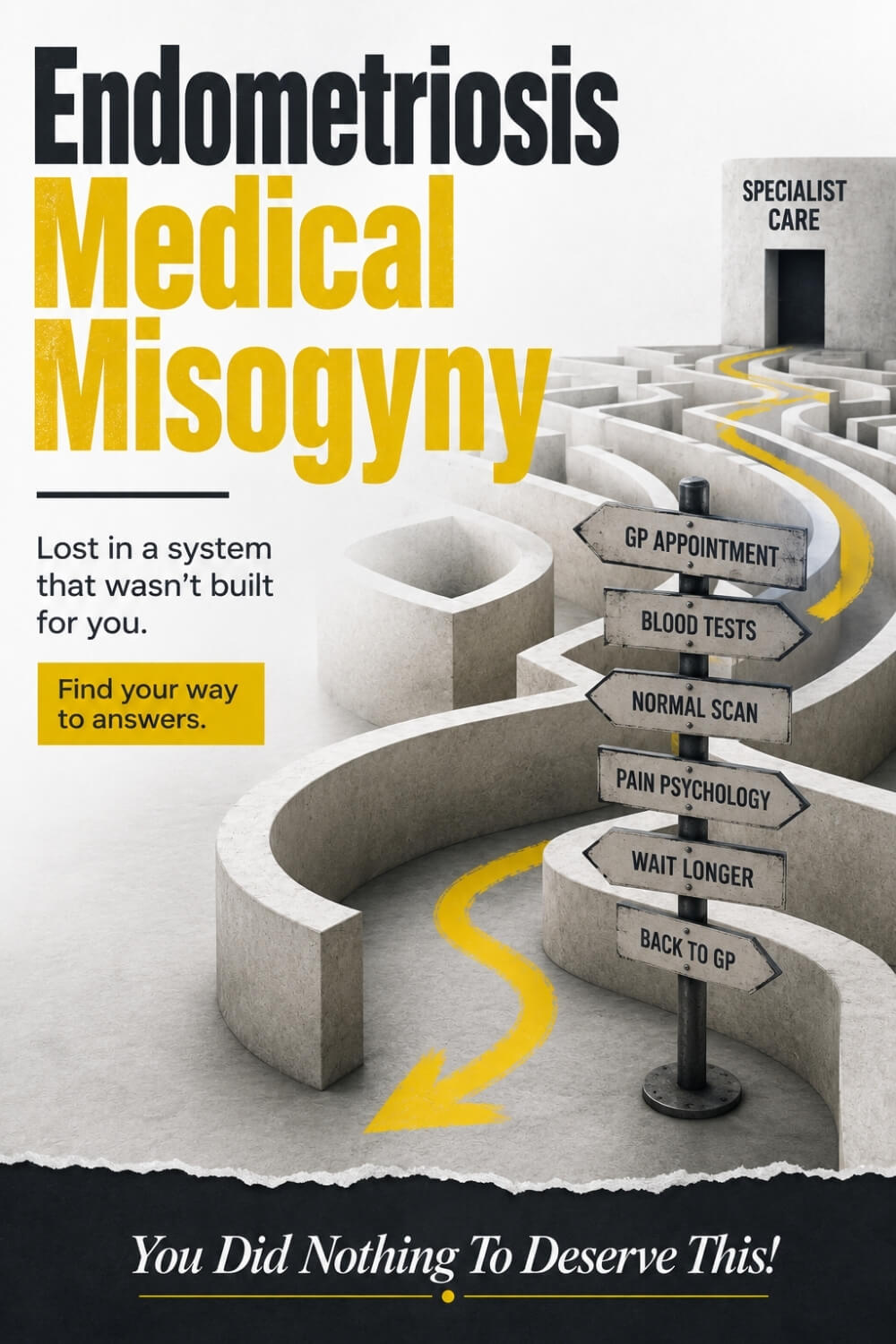
Bring a Trusted Supporter
A trusted person can help when pain, fear, or previous dismissal makes it hard to think. Before the appointment, agree on their role: listening, taking notes, reminding you of one missed point, or calmly confirming how symptoms affect daily life. Their presence should strengthen your voice, not replace it.
Give them a short list of your priorities and a phrase they can use if the conversation moves too quickly, such as, “Could we return to the question about the next step?”
They can also record the plan immediately afterwards while it is fresh. Choose someone who respects your privacy and will not argue with the clinician, exaggerate your symptoms or speak over you. I have learned that useful support often looks quiet: helping my wife prepare, witnessing what was said and making sure she does not have to carry every detail home alone.
Correct the Medical Record
Read appointment letters, test summaries and your NHS record when they are available. If a factual detail is wrong, such as the duration of symptoms, a medicine you did not take or a statement that you denied pain, contact the service and ask how to request a correction or add your account. Keep your message brief, specific and neutral.
Do not try to rewrite a clinician’s professional opinion as though it were a factual error. Instead, ask for your disagreement and the relevant facts to be recorded, for example: “I reported pain that regularly prevents work, and I would like that impact noted.” Save copies of messages, letters and results in one place.
Accurate records matter because later clinicians often rely on earlier summaries, and one careless phrase can shape the next conversation. Correcting the record is not being difficult; it is protecting continuity and helping the next decision start from better information.
Seek a Second Opinion
A second opinion can be reasonable when symptoms remain severe, the explanation does not fit, treatment repeatedly fails or you do not understand why referral has been refused. Start by asking the current clinician to explain the decision and whether another GP, gynaecologist or specialist endometriosis service could review your case. Keep the request focused on unresolved clinical questions rather than accusing anyone of bad intent.
A different opinion may confirm the same plan, suggest another possibility or offer a clearer explanation. It is not a guarantee of tests, surgery or diagnosis, and waiting times may still apply. Bring your symptom summary, medication history, imaging and key letters so you do not have to rebuild the story from nothing.
Most importantly, seeking another view does not mean you are betraying a good doctor. Respectful care can include acknowledging uncertainty and helping you find the expertise your situation needs.
Use Formal Feedback Routes
Sometimes a concern can be resolved by speaking to the clinician, practice manager or hospital team. Explain what happened, what effect it had and what outcome you want, such as an accurate record, a clearer plan, a review or an explanation. Keep dates, names and copies of correspondence, but remove speculation about motives unless you have direct evidence.
For hospital care in England, the Patient Advice and Liaison Service can offer confidential help and may resolve problems informally. You also have the right to complain about NHS care, and independent complaints advocacy may be available locally.
A complaint is not a substitute for urgent medical help, so pursue clinical review separately if symptoms still need attention. Feedback is most useful when it identifies a specific failure and a practical remedy. You are allowed to ask for respectful care without apologising for the inconvenience.
Protect Your Emotional Safety
Repeated dismissal can train you to rehearse every sentence, minimise pain or avoid appointments altogether. Before a visit, decide what support you need afterwards, whether that is a quiet hour, a call with someone safe, food already prepared or permission not to solve everything that day. This is not weakness; difficult healthcare encounters can be genuinely draining.
Notice when research is helping you prepare and when it is keeping you awake or making every possibility feel urgent. Use reliable sources, write down a limited number of questions, and step away when you have what you need.
If an appointment leaves you distressed, talk to someone you trust and seek professional mental health support when the impact persists or feels unmanageable. Protecting yourself does not mean abandoning medical care. It means building enough steadiness to return, ask for what you need, and make decisions without the last dismissive voice becoming your own.
Why Do You Experience Medical Misogyny in Endo Care?
Medical misogyny in endometriosis care rarely comes from one simple cause. It grows where historical stereotypes about women’s pain meet limited training, short appointments, fragmented services and a condition that still has no single simple test.
Menstrual pain has long been treated as something to endure privately, so disabling symptoms can be mistaken for an ordinary part of being female. That cultural normalisation can influence families, schools and clinicians before anyone consciously intends harm.
Endometriosis also presents in different ways, and the intensity of pain does not reliably reveal the amount or location of disease. When a clinician expects one textbook picture, symptoms outside that picture may be discounted instead of explored.
Research has identified lack of awareness, symptom normalisation, clinician knowledge gaps and poor coordination between primary and specialist care as barriers to timely diagnosis. UK parliamentary inquiries have also described women with reproductive health conditions having pain dismissed and symptoms normalised.
So why do you experience medical misogyny even when an individual professional believes they are fair? Because bias can operate through routines, thresholds and inherited assumptions, not only through openly sexist comments.
Time pressure may explain a rushed consultation, but it does not make a dismissive conclusion clinically sound or emotionally harmless. With my wife, I saw how repeated minimising responses made her less confident about seeking help.
I could not repair the system for her, but I could listen without interrogation, help organise the facts, and remind her that uncertainty in medicine did not make her suffering imaginary. Recognising the structure behind the experience helped us direct anger towards practical next steps instead of turning it against her or against each other.

How Do You Experience Medical Misogyny Beyond the Appointment?
For the woman living with endometriosis, repeated disbelief can change more than one appointment. It can make her edit symptoms, delay asking for help, distrust good clinicians and wonder whether she is somehow failing at being ill correctly.
The burden grows when she must research, document, chase referrals and stay calm enough to be considered credible while already managing pain. I am healthy, and her suffering is not mine to centre; my challenge is to stay useful when I feel angry at what she has endured.
I have to resist taking over, speaking as though I know her body better than she does or making my frustration another emotion she must carry. When I ask how do you experience medical misogyny, I am also asking what support would restore your control rather than quietly replace it.
Inside a relationship, dismissal can create arguments about whether to seek care again, spend money privately, cancel plans or trust a new treatment. Intimacy may become harder when pain, exhaustion and fear of being doubted follow you home from the clinic.
A partner can help by believing the account, sharing practical tasks, attending by invitation and accepting that encouragement is not pressure. He also needs sleep, honest conversation and support of his own, because steadiness is difficult to offer from complete exhaustion.
Her health remains the centre, yet caring well means protecting the relationship as a place where she is not cross-examined, and neither partner disappears.
When to Seek Medical Help?
Medical dismissal can make you hesitate before asking for help again, but a previous poor experience should not decide how you respond to new or worsening symptoms. Endometriosis symptoms can overlap with other conditions, so do not assume that every pain, bleed or bowel change is caused by endometriosis.
Arrange a Routine Review
Book a routine GP or specialist review when symptoms are persistent or recurrent, interfere with work, sleep, movement, relationships or daily tasks, or are no longer controlled by your current plan. Review is also reasonable when treatment is ineffective, causes unacceptable side effects or has been continued without a clear reassessment date.
NICE recommends gynaecology referral when initial treatment does not work or cannot be used, symptoms harm daily living, symptoms persist or recur, or examination findings suggest endometriosis. Suspected endometrioma, deep disease or endometriosis outside the pelvis may require a specialist endometriosis service.
Seek Prompt Assessment
Contact your GP, out-of-hours service or NHS 111 promptly if your usual symptoms change significantly, pain becomes much worse, you develop fever or feel generally unwell, you cannot keep fluids down, or bleeding becomes unusually heavy. New blood in your urine or from your back passage also needs assessment rather than being automatically attributed to endometriosis.
If pregnancy is possible and you have one-sided lower abdominal pain, vaginal bleeding, shoulder-tip pain, dizziness or pain when using the toilet, seek prompt medical advice even without a positive pregnancy test. These symptoms have several possible causes, but ectopic pregnancy must be considered quickly.
Get Urgent or Emergency Help
Call 999 or attend A&E for sudden, severe abdominal or pelvic pain accompanied by fainting, severe dizziness, collapse, marked paleness or difficulty staying awake. Emergency assessment is also needed when pregnancy is possible, and severe pain occurs with shoulder pain, heavy bleeding, faintness or loss of consciousness.
Call 999 for severe breathing difficulty or chest pain that feels like an emergency. Do not drive yourself when you may faint, have collapsed or are seriously unwell.
Questions to Ask Your Doctor
You do not need to ask every question in one appointment. Choose the three or four that address your greatest uncertainty, write them down and begin by explaining what outcome you need from the conversation.
NICE guidance supports shared decisions, attention to individual priorities and clear information about diagnosis, referral and treatment.
- What conditions could explain this pattern of symptoms?
- What makes endometriosis more or less likely in my case?
- What other causes need to be considered or ruled out?
- How does the effect on my daily life influence your decision?
- What can this examination, blood test or scan actually show?
- What cannot a normal result rule out?
- Would a transvaginal ultrasound be appropriate, and who will interpret it?
- What treatment are you suggesting, and what is its purpose?
- How long should I try this treatment before we review it?
- What should happen if it does not help or causes side effects?
- Do my symptoms meet the criteria for gynaecology referral?
- Would specialist endometriosis imaging or a specialist service be relevant?
- Could you explain why referral is not recommended at this stage?
- What change would make you reconsider that decision?
- Can we record the next step and review date in my notes?
- Which symptoms mean I should seek faster or emergency help?
A calm question does not guarantee the answer you hope for, but it should give you useful reasoning. If the clinician cannot answer immediately, ask how and when the question will be followed up.
Final Word on Whether You Experience Medical Misogyny
Medical misogyny in endometriosis care is not simply a rude comment or a difficult personality. It is the pattern that appears when women’s accounts carry less weight, disabling menstrual symptoms are treated as ordinary, uncertainty becomes an excuse for inaction, or access to review is repeatedly blocked without clear reasoning.
That does not mean every delayed diagnosis proves bias. Endometriosis is complex. Symptoms can overlap with other conditions, tests have limits, treatments affect people differently, and clinicians often work under pressure.
Good care can involve uncertainty, watchful waiting, or a different opinion from your own. The difference is whether uncertainty is handled with respect, explanation, safety-netting and a plan.
When you wonder, do you experience medical misogyny, look for patterns rather than trying to read someone’s mind.
- Were your symptoms accurately recorded?
- Was their effect on work, sleep, movement, sex, bowel or bladder function considered?
- Were alternatives discussed?
- Did you understand what the tests could and could not show?
- Were you told what would happen if the first plan failed?
These questions reveal more than whether the appointment felt friendly.
You also have practical choices. Keep a concise symptom record, describe function as well as pain, ask for clinical reasoning and request a review point. Bring support when you want it.
Check letters and records for factual errors. Seek another opinion when important questions remain unresolved. Use PALS, the practice manager or a complaints route when communication or care has seriously failed, while pursuing medical review separately if symptoms need attention.
None of these steps guarantees a diagnosis, a referral or the treatment you prefer. They do, however, help you move from pleading to a clearer clinical conversation. They also protect you from carrying the impossible task of proving that your pain is real through perfect behaviour.
As a husband, I have seen how dismissal can follow a woman home. It can sit beside her while she questions her memory, apologises for needing help or decides that another appointment is not worth the humiliation. My role is not to become her doctor or spokesman.
It is to believe her account, help with the practical load, respect her choices and keep our home from becoming another place where she must defend herself. I started WorryHead because cold information alone did not meet that need. Facts matter, but facts should not remove tenderness from care. You deserve clinicians who explain, listen, and act within the evidence.
You also deserve relationships that hold you steady when the system does not.
Your symptoms may require investigation, treatment, monitoring or a different explanation. This article cannot tell you which. It can remind you that being uncertain is not the same as being imaginary, and being persistent is not the same as being difficult.
Keep asking questions. Keep records that protect your story. Seek urgent help when warning signs appear, and routine review when symptoms continue to limit your life.
Above all, do not let another person’s doubt become the final authority on what you feel.
You are not asking for perfection. You are asking for your symptoms to be heard, your questions to be answered, and your care to have a clear next step. Keep your records, take support when you need it, and remember this clearly: uncertainty in medicine never gives anyone permission to make you feel small.
Share your experience in the comments, and see my free 130+ page eBook, “You Did Nothing To Deserve This!”, at the bottom of this post.


About Me
Hi, I’m Lucjan! The reason why I decided to create this blog was my beautiful wife, who experienced a lot of pain in life, but also the lack of information about endometriosis and fibromyalgia for men…
READ MORE
Grab a FREE eBook!
“You Did NOTHING To Deserve This!”
Finally hear the words nobody ever said to you, that your pain is real, your tears make sense, and you did nothing to deserve endometriosis, the dismissal, or the way it has rewritten your life.
Related Questions You May Be Asking About Medical Misogyny in Endo Care
Can a normal ultrasound rule out endometriosis?
No. NICE states that endometriosis should not be excluded solely because an examination or ultrasound is normal. Ultrasound can help identify endometriomas, deep endometriosis and other causes of symptoms, but it may not show every form of disease. Ask what the scan assessed, who reported it, and what the next step is if symptoms persist.
Is disagreement always medical misogyny?
No. A clinician can reasonably disagree with your suspected diagnosis or recommend a different plan. The concern is how that disagreement is reached and handled. Respectful care includes listening, explaining the evidence and uncertainty, considering alternatives, recording impact, offering safety-netting, and reviewing failed treatment. A repeated pattern of gendered dismissal is more meaningful than one decision you dislike.
What if anxiety is blamed?
Anxiety can affect health and may deserve support, but it should not automatically replace assessment of physical symptoms. Ask which findings suggest anxiety is the main explanation, what physical causes have been considered and what follow-up is planned. You can accept mental health care while also requesting that persistent pelvic, menstrual, bowel, bladder or sexual symptoms are properly reviewed.
Can I request specialist referral?
Yes, you can ask whether referral is appropriate and request an explanation if it is declined. NICE recommends referral for persistent or recurrent symptoms, harmful effects on daily living, failed initial treatment, or suspected endometrioma or deep endometriosis, with the destination depending on findings. Referral decisions remain clinical, so ask what criteria you meet and what would trigger review.
How can my partner help?
Your partner can help you prepare a short symptom summary, attend with your permission, take notes and calmly return the conversation to unresolved questions. They should not speak over you or treat the appointment as a battle. Afterwards, practical care such as food, transport, rest and writing down the plan may be more useful than trying to fix every emotion.
Do You Experience Medical Misogyny References
- https://www.nhs.uk/conditions/endometriosis/
- https://www.nice.org.uk/guidance/ng73/chapter/Recommendations
- https://www.eshre.eu/-/media/sitecore-files/Guidelines/Endometriosis/ESHRE-GUIDELINE-ENDOMETRIOSIS-2022_2.pdf
- https://www.who.int/news-room/fact-sheets/detail/endometriosis
- https://committees.parliament.uk/committee/328/women-and-equalities-committee/news/204316/medical-misogyny-is-leaving-women-in-unnecessary-pain-and-undiagnosed-for-years/
- https://committees.parliament.uk/publications/51887/documents/287889/default/
- https://assets.publishing.service.gov.uk/media/69df5d7261d2e8e9b9e42d2e/renewed-womens-health-strategy-for-england-web-accessible.pdf
- https://www.bmj.com/content/387/bmj.q2780
- https://pubmed.ncbi.nlm.nih.gov/37441792/
- https://pmc.ncbi.nlm.nih.gov/articles/PMC10267318/
- https://pmc.ncbi.nlm.nih.gov/articles/PMC11523507/
- https://pmc.ncbi.nlm.nih.gov/articles/PMC13091612/
- https://www.nhs.uk/conditions/ectopic-pregnancy/
- https://www.nhs.uk/conditions/ectopic-pregnancy/symptoms/
- https://www.nhs.uk/conditions/miscarriage/
- https://www.nhs.uk/nhs-services/hospitals/what-is-pals-patient-advice-and-liaison-service/
- https://www.england.nhs.uk/contact-us/feedback-and-complaints/complaint/
