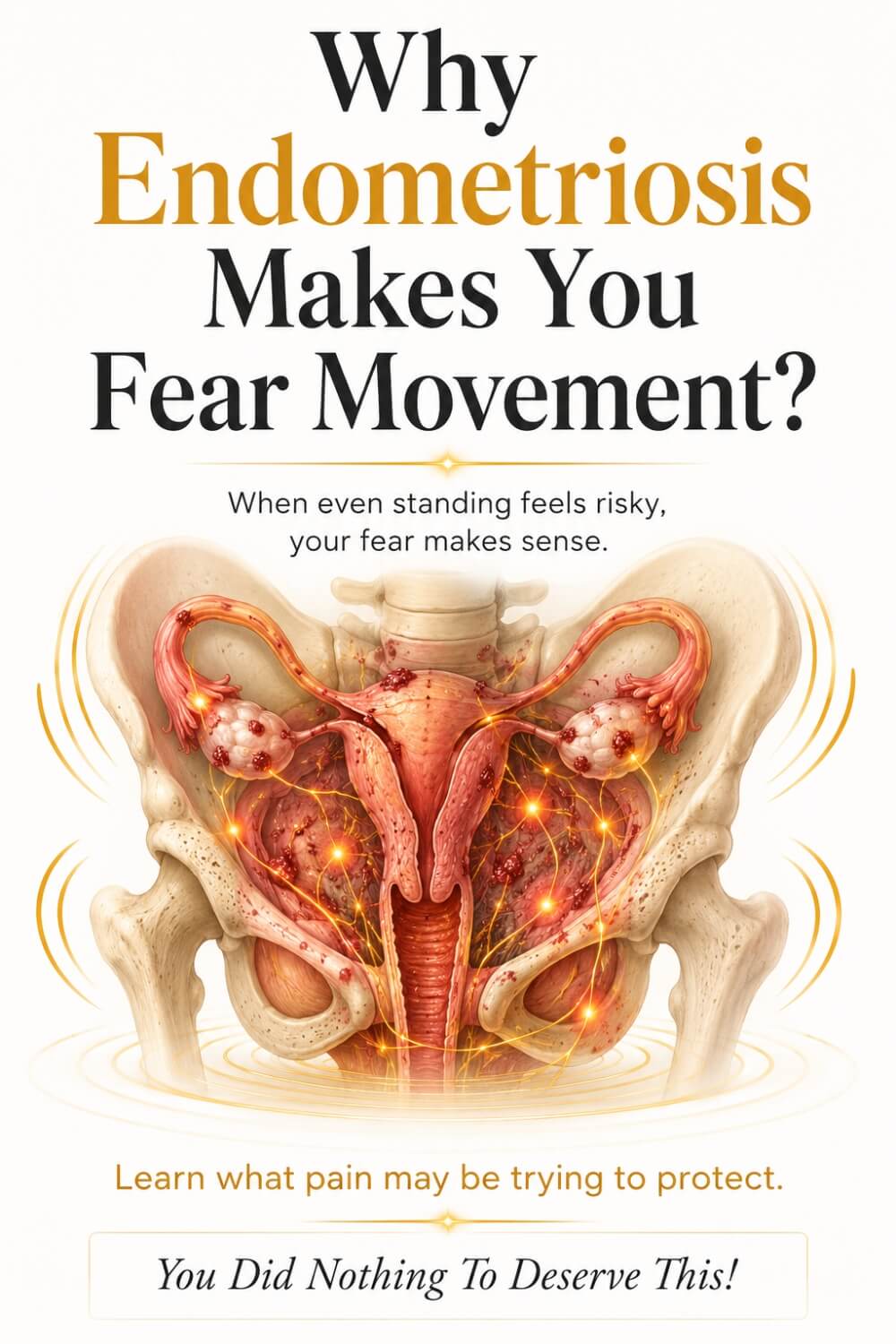
Why Endometriosis Makes You Fear Movement?
Have you ever wondered why endometriosis makes you fear movement, even when part of you longs to walk, stretch, or simply turn in bed without bracing?
When a step, bend, cough, or car journey has ended in stabbing pelvic pain before, your hesitation is not laziness or a lack of willpower. You may miss the freedom you once had while quietly planning every movement around the possibility of another flare. You begin to feel that endo betrayed your body.
Endometriosis can make movement feel threatening when walking, bending, exercise, sex, or even turning in bed has repeatedly triggered pelvic pain. Your brain and body may learn to brace, guard, and avoid those actions, creating pain-related fear without meaning the pain is imagined or exaggerated.
I am not a clinician; I write as a husband, blogger and careful researcher sharing what I have learned beside my wife, and you will find every medical source I consulted, including WHO, NHS, NICE, ESHRE and peer-reviewed studies, linked at the bottom of this article.
The medical term often used for pain-related fear of movement is kinesiophobia, but that cold word does not capture what it feels like to hesitate before standing, walking, stretching, exercising or rolling over. Studies have found higher levels of movement fear, disability and reduced mobility in groups living with endometriosis and chronic pelvic pain, although newer research cautions that this pattern does not explain every person’s experience.
Painful pelvic-floor tension, stiff back joints and irritated pelvic joints can make walking, sitting, standing or turning over genuinely hurt, so your fear may begin with evidence your body has already given you. Yet reduced activity can add another layer of muscle and joint pain, which is why the answer is not to force yourself through a flare, but to understand the difference between protection, careful pacing and fear that is quietly making your life smaller.
I have watched my wife pause before getting out of bed, not because she had stopped wanting to move, but because her body had taught her that one ordinary turn could become hours of pain. Standing beside the woman you love while she silently calculates whether a step is worth the consequence changes the way you understand courage.
So let us look at what is really happening when movement starts to feel unsafe, why this fear is not a personal failure, and how you can begin separating a sensible boundary from a life restricted by pain. You deserve an explanation that believes your body before it asks anything more from it.
When movement has become associated with pain, fear can begin to shape even ordinary decisions. My free eBook does not replace medical or rehabilitation advice, but it offers compassion for the emotional cost of living cautiously in your own body.
You Did NOTHING To Deserve This!
Endometriosis Validation for Women with Endo
- How Endometriosis Makes You Fear Movement?
- How Endometriosis Makes You Fear Movement Beyond Exercise?
- How Endometriosis Makes You Fear Movement in a Relationship?
- When to Seek Medical Help?
- Questions to Ask Your Doctor
- Final Word on Why Endometriosis Makes You Fear Movement
- FREE eBook
- You Did NOTHING To Deserve This!
How Endometriosis Makes You Fear Movement?
The reason endometriosis makes you fear movement is rarely one single painful moment; it is usually the result of your body collecting evidence over time. A sharp pull when you stand, deep pressure after walking, pain during exercise, or a flare after an ordinary household task can teach you to expect danger before you even move. That expectation can arrive as a thought, but it can also appear as held breath, tightened abdominal muscles, a clenched pelvic floor, or an instinctive hand placed over your pelvis.
This is sometimes explained through the fear-avoidance model of chronic pain, where expected pain leads to less movement, reduced confidence, and greater disability. Yet that model must be used carefully in endometriosis because avoiding a movement is not always irrational fear. Sometimes you are responding sensibly to real pelvic tenderness, inflammation, muscle spasm, fatigue, or symptoms that have repeatedly worsened with certain activities.
Chronic pelvic pain can also change how sensitive the nervous system becomes to signals from the pelvis and nearby areas. Researchers have found lower pain thresholds, reduced lumbopelvic movement, more musculoskeletal problems, and higher movement-fear scores in some women with endometriosis-associated pelvic pain than in healthy comparison groups. This does not mean your pain is psychological; it means painful tissues, muscles, nerves, and the brain’s protection systems can begin influencing one another.
Your pelvic floor may remain partly contracted because it has spent months or years trying to guard a painful area. That guarding can contribute to pain with walking, sitting, bladder or bowel function, penetration, and even rolling over in bed. When the next movement hurts, your brain receives another warning and becomes quicker to protect you the following time.
The difficult part is that doing less can gradually reduce strength, mobility, and trust in what your body can manage, while doing too much too quickly can trigger another setback. This can leave you trapped between two unhelpful messages: push through everything or stop everything. Neither respects the complexity of living in a body whose capacity can change from one day, hour, or phase of your cycle to the next.
A kinder approach begins by noticing which movements are truly unsafe, which are painful but can be adapted, and which have become frightening mainly because of what happened before. That distinction is best explored gently, sometimes with support from a pelvic health physiotherapist or a clinician who understands persistent pelvic pain, rather than through forced exercise or shame. The goal is not to prove how much pain you can tolerate; it is to help your body experience movement with more choice, preparation, and safety.
I learned this by watching my wife judge the short distance from our bed to the bathroom before placing her feet on the floor, while I stayed close enough to steady her without taking away the little control pain had left her. She never needed me to tell her to be brave; she needed me to understand that she already was, even when bravery meant stopping halfway, leaning into me, and trying again later.
These are the lessons I wish every woman and every loving partner had been taught earlier, because they can help you respect your limits without surrendering your whole life to them:
- Name the movement that scares you
- Separate pain from actual danger
- Track patterns without blaming yourself
- Begin below your flare threshold
- Prepare your body before moving
- Use pacing instead of pushing
- Build safety through small repetitions
- Ask for pelvic health support
- Let your partner support your choice

Name the Movement That Scares You
Fear becomes harder to understand when it feels like one large warning attached to your whole body. Try naming the exact action instead: getting out of bed, climbing stairs, stretching your hips, walking through a shop, having sex, or standing long enough to cook. This does not minimise your pain; it turns a frightening cloud into something you can observe.
Then notice what you expect will happen, where you feel the first tension, how long symptoms usually last, and whether the response changes across your cycle. You may discover that one movement is consistently aggravating, while another is feared because it once caused a terrible flare.
That difference matters.
You are not interrogating yourself or searching for proof that the pain is your fault. You are giving yourself clearer information so future choices can be based on your body’s present response rather than one frightening memory controlling every similar movement.
Separate Pain from Actual Danger
Pain is always real, but its intensity does not always tell you exactly what is happening inside your body at that moment. Endometriosis, irritated pelvic structures, sensitised nerves, scar tissue, and guarded muscles may all contribute to symptoms, so you should never be told that pain is harmless without a proper assessment. New, severe, or changing pain deserves medical attention.
For familiar movements, ask a gentler question: is this action medically unsafe, or is my protection system expecting the pain it has learned before? Sometimes the answer is uncertain, and that is where a knowledgeable clinician or pelvic health physiotherapist can help. You do not have to push through to prove safety.
The aim is to recognise that caution can protect you, while fear can sometimes spread beyond the movement that first hurt and begin taking ordinary choices away from you.
Track Patterns without Blaming Yourself
A short symptom and activity record can help you see links that memory misses when every difficult day begins blending into the next. Note the movement, how long you did it, the pain before and afterwards, bleeding, bowel or bladder symptoms, sleep, cycle timing, and how quickly you recovered. Keep it simple enough that recording your life does not become another exhausting job.
The purpose is not to award yourself a good day or punish yourself for a flare. A setback after movement does not prove that you exercised wrongly, lacked discipline, or failed to understand your body. Endometriosis symptoms can vary for reasons you cannot fully control.
Your notes may still reveal useful clues, such as tolerating five gentle minutes but struggling after fifteen, or coping better when activity is broken into smaller pieces. That information gives you language to use with your doctor and permission to plan from reality rather than expectation.
Begin Below Your Flare Threshold
When movement has repeatedly cost you the rest of the day, starting small is not weakness; it is intelligent protection. Choose an amount that feels almost too easy, such as a brief walk indoors, one gentle stretch, or a few slow changes of position, and see how your body responds later as well as during the activity. Symptoms can be delayed, so the test is not only whether you can complete it.
Your starting point may look nothing like somebody else’s, and it may change during menstruation, after poor sleep, following surgery, or when bowel and bladder symptoms are worse. Stay below the level that predictably causes a major flare, then adjust gradually rather than making large jumps on a better day.
Evidence suggests carefully supervised activity can support pain, mobility, and quality of life for some people with endometriosis, but no programme should be treated as a test of character. Your safest beginning is the one your body can recover from.
Prepare Your Body Before Moving
A few minutes of preparation can make movement feel less abrupt to a body that is already bracing. You might use slow breathing, warmth, comfortable clothing, a supported starting position, or gentle movement of the ribs, hips, and spine before asking more of yourself. Emptying your bladder, taking prescribed pain relief at the agreed time, or planning where you can sit may also reduce avoidable strain.
Preparation is not a magic ritual that guarantees a pain-free result. It is a way of telling your nervous system and muscles that the movement will be approached with care rather than surprise. I have watched my wife pause, breathe, place her feet securely, and wait for the first wave to settle before standing. That small pause was not hesitation I needed to hurry. It was skill. Give yourself the same respect, and stop if your symptoms become sharp, unfamiliar, fainting-related, or otherwise concerning.
Use Pacing Instead of Pushing
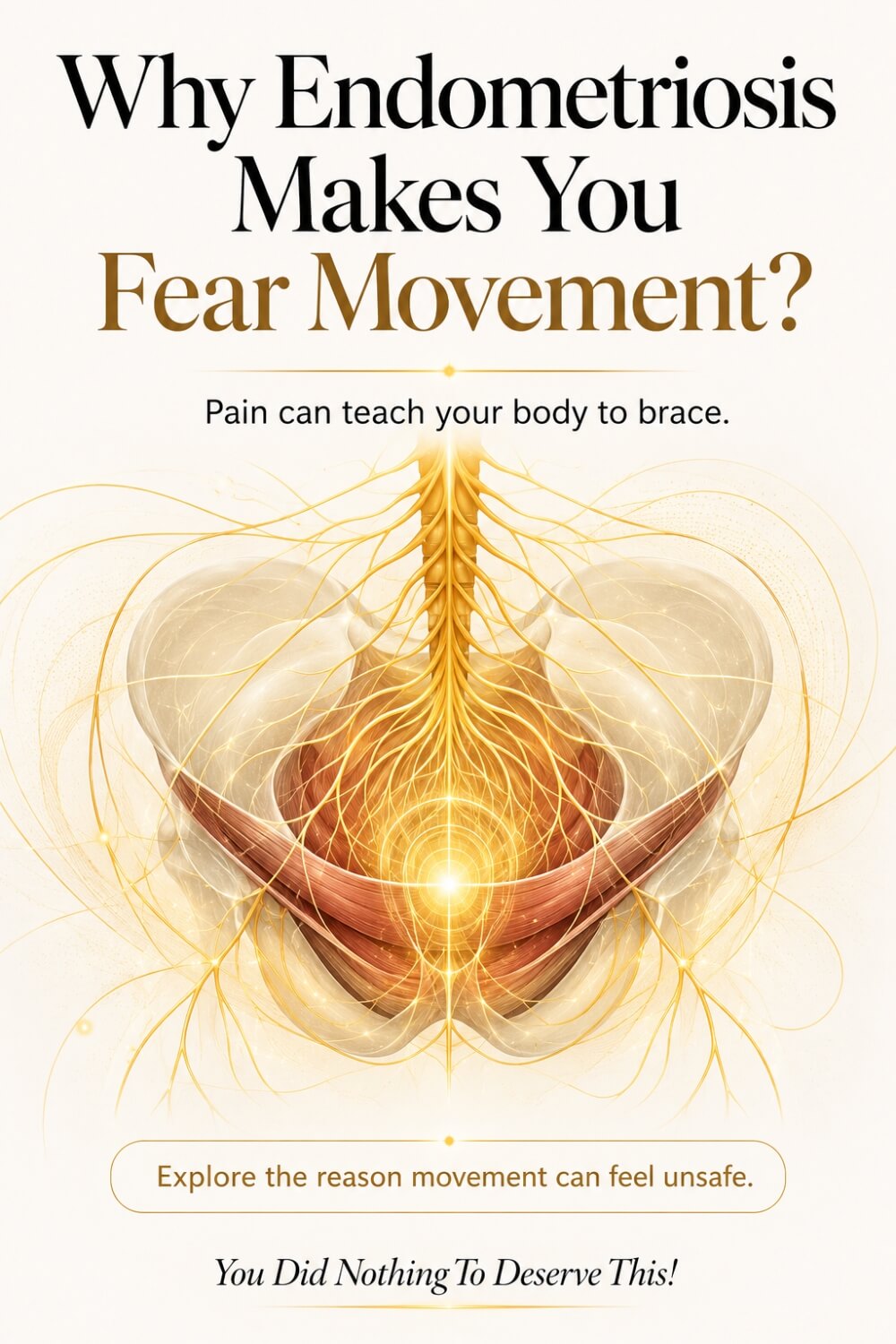
Pacing means arranging activity so you do not have to choose between doing everything and doing nothing. Break a task into smaller stages, rest before you are completely depleted, change positions, and alternate demanding activities with gentler ones. The difficult part is stopping while you still feel capable, especially on a rare day when you want to catch up with the life pain has delayed.
Pushing until symptoms force you to stop can create a cycle of overactivity, flare, recovery, and frustration. Pacing aims to make your days more predictable, although it cannot prevent every flare or remove the disease behind your pain. I had to learn that helping my wife did not mean encouraging one more job because she seemed better.
Sometimes love meant taking the basket from her hands before her body had to scream. Your worth is not measured by how much you finish, and leaving energy for tomorrow is still a meaningful achievement today.
Build Safety Through Small Repetitions
Confidence rarely returns because somebody tells you that movement is safe. It grows when your body experiences a manageable action several times without the feared consequence overwhelming you. Repeating a short, adapted movement can help you learn what support, range, pace, and recovery time make it more tolerable. This should feel collaborative, not like exposure forced upon you.
Progress may mean walking to the end of the room more comfortably, turning in bed with less bracing, or sitting upright for a little longer. It does not have to mean adding distance every day. Pain can fluctuate, so a difficult attempt does not erase the safer experiences that came before it.
Reduce the task, review what changed, and begin again only when you feel ready. The goal is not to become fearless. It is to make fear less powerful than the information your body is giving you now, while keeping the right to stop whenever something feels wrong.
Ask for Pelvic Health Support
Pelvic health physiotherapy can assess breathing, posture, hip and spinal movement, abdominal tension, pelvic-floor function, scars, bladder and bowel habits, and the way you brace during ordinary tasks. This matters because a painful pelvic floor may be overactive and struggle to relax, so simply being told to strengthen it may not address what your body needs. Care should follow an individual assessment.
A specialist may use education, relaxation or down-training, graded movement, manual techniques, and a personalised home plan. Research is encouraging, but evidence is still developing, and no single approach helps everyone. You control consent, including whether an internal assessment is offered or accepted.
Ask how the physiotherapist works with endometriosis and persistent pelvic pain, and leave any appointment where you feel pressured, dismissed, or blamed for symptoms you did not choose.
Let Your Partner Support Your Choice
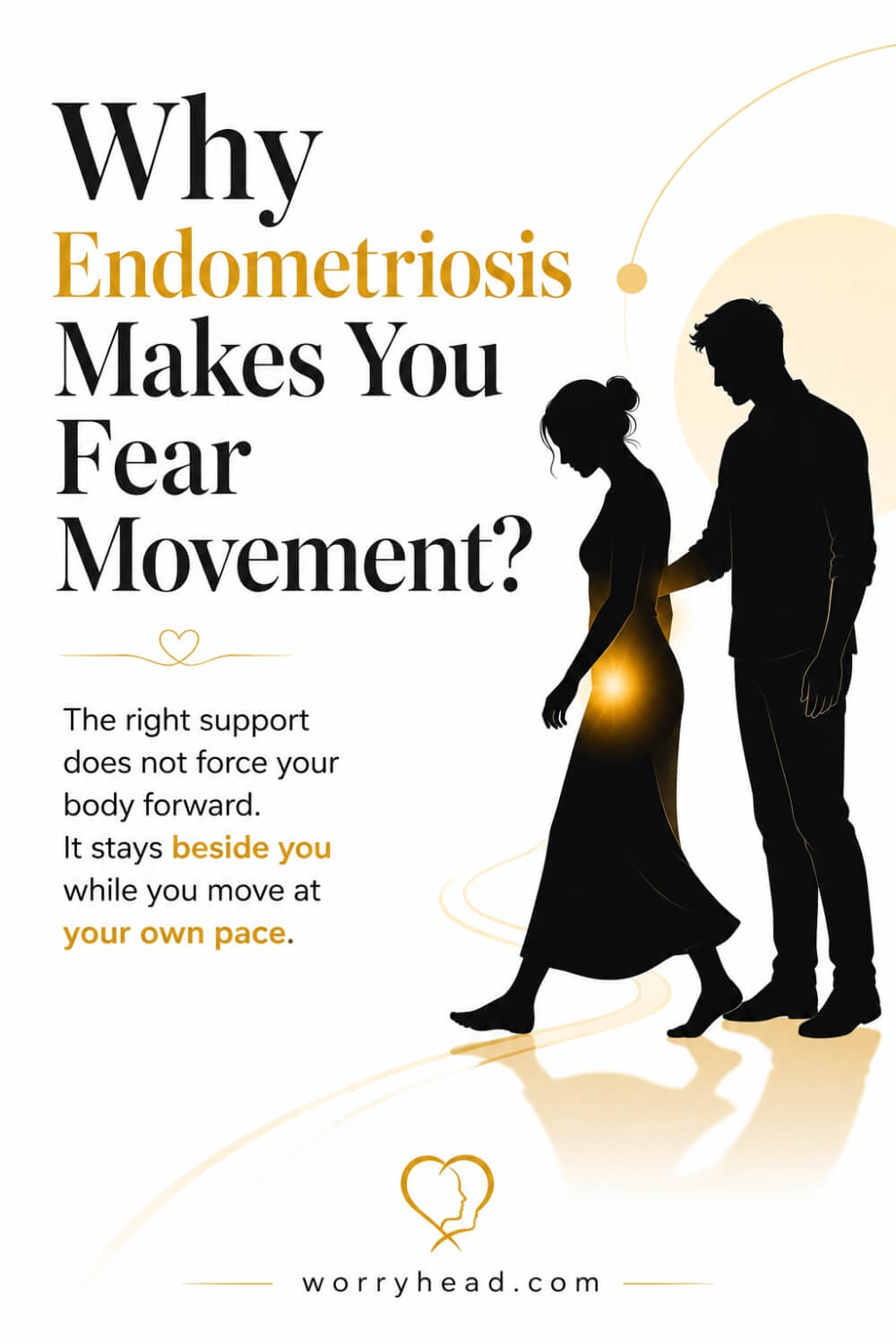
A supportive partner should make movement feel more possible without becoming another person who controls your body. They can ask whether you want a hand, bring what you need closer, walk at your pace, notice obstacles, or take over a task before it becomes costly. They should not pull you up without warning, insist that exercise will fix you, or treat every rest as avoidance.
I learned that the most loving question was often not, “Can you manage?” but, “How would you like me to help?”
That gives you back choice at a time when pain has already taken so much of it. Your partner can encourage the plan you made, celebrate changes that nobody else sees, and stay calm when today’s capacity is lower than yesterday’s. Support is not rescuing you from your own body. It is standing beside you, believing what you feel, and helping you move only as far as you have chosen to go.
How Endometriosis Makes You Fear Movement Beyond Exercise?
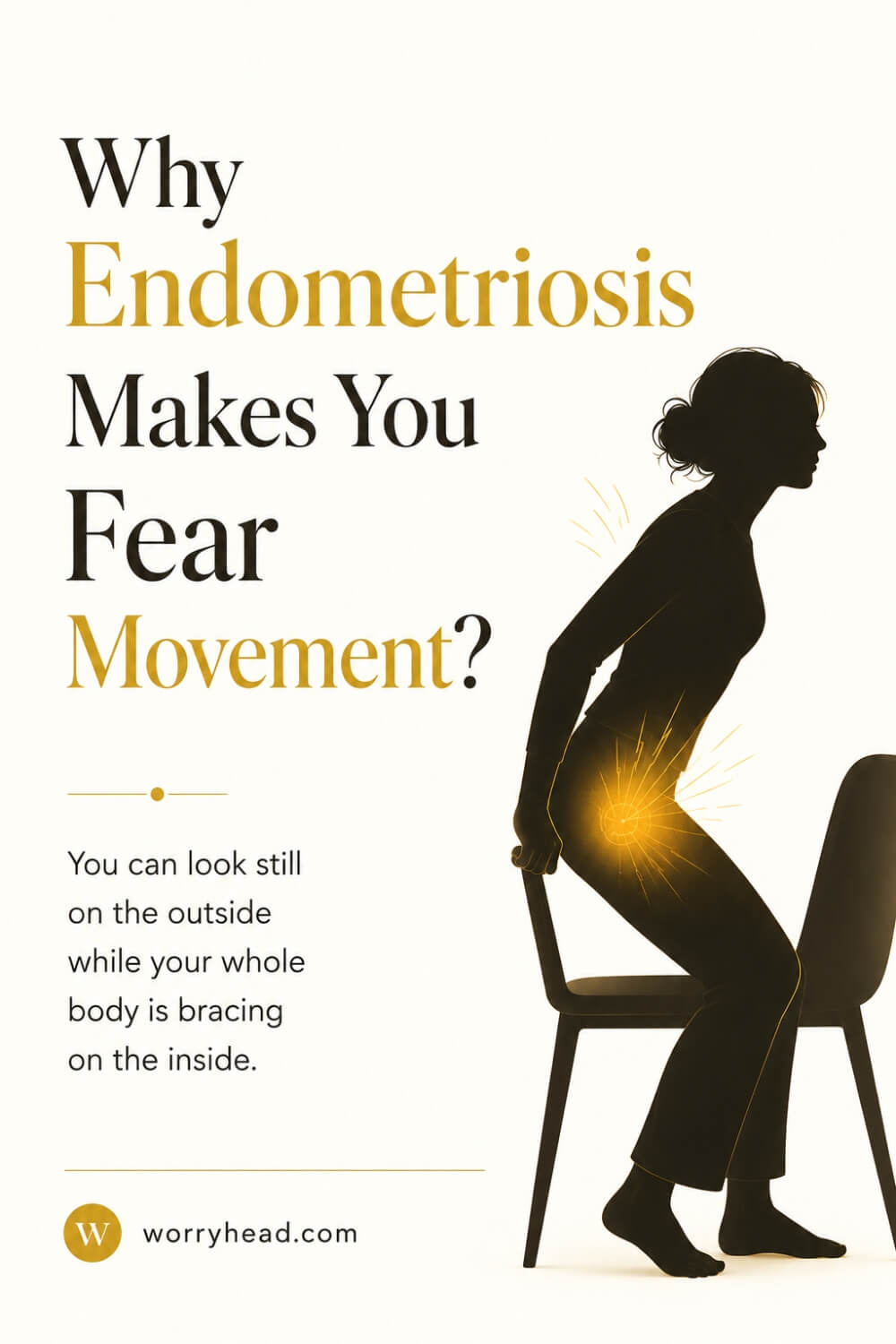
When endometriosis makes you fear movement, the loss can spread far beyond formal exercise and into the smallest parts of an ordinary day. You may stop sitting on the floor, rushing for a bus, lifting shopping, dancing at a wedding, or accepting a walk with someone you love because each invitation now carries a hidden calculation. The question is no longer only, “Would I enjoy this?” but, “What will this cost my body afterwards?”
That calculation can shrink your world without anyone else noticing because, from the outside, it may simply look as though you are cancelling plans or becoming less active. Endometriosis-related pain can affect work, education, relationships, sexual wellbeing, social participation, and overall quality of life, so reluctance to move cannot be separated from the wider burden of the disease.
Even a good day may feel unsafe because you have learned that pain can rise later, after everyone else has gone home and the help has disappeared.
This is where confidence in your body may begin to fracture, because you cannot relax into an activity when part of your mind is already preparing for the consequences. You can understand that suitable physical activity may be helpful while still distrusting the body being asked to perform it, especially when symptoms have continued despite medication, hormonal treatment, or surgery.
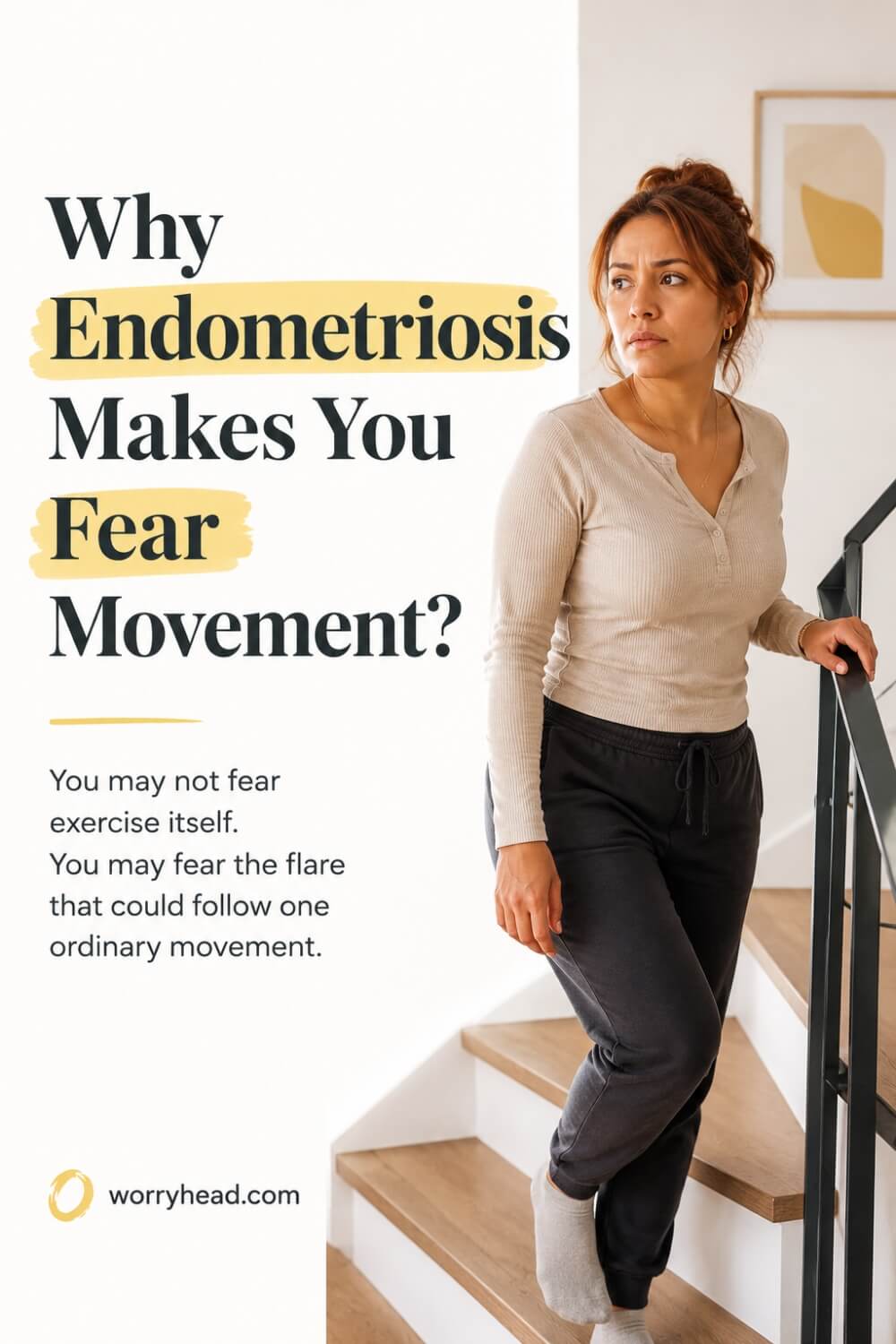
I saw this happen when my wife began watching ordinary movements before attempting them, as though she had to negotiate with her pelvis before she could join the rest of the day.
There were moments when I reached out to help her stand and felt her whole body tense, not because she did not trust me, but because pain had taught her that even loving help could move her too quickly. What hurt me was not carrying more of the physical load; it was seeing the woman I loved apologise because her body could no longer move according to everybody else’s timetable.
Movement fear can also enter intimacy, where spontaneity once made you feel close but unpredictability now makes you brace. A hand around your waist, a playful pull, a change of position in bed, or even a sudden hug can make your muscles prepare before your heart has time to respond. That does not mean you are rejecting love; it may mean your body has become careful with anything it cannot predict.
The answer is not to demand the old version of you back, but to build a life in which movement, rest, affection, and support are discussed without shame, and where the person beside you understands that protecting your limits is not the same as giving up.
How Endometriosis Makes You Fear Movement in a Relationship?
When endometriosis makes you fear movement, it can quietly change not only what you do, but also how you and your partner relate to one another. You may begin asking for help with getting dressed, carrying shopping, stepping into the bath, changing the bedding, or reaching something from the floor, while part of you aches for the independence you once took for granted.
Needing support with these ordinary movements can bring embarrassment or guilt, even though needing help during pain says nothing about your strength, maturity, or value.
My wife has sometimes apologised when I have helped her stand, steadied her on an unsteady day, or taken over something her body could not safely finish, but I have never seen those moments as a burden she placed on me. The burden was the disease forcing her to bargain with simple movement, while making her feel she had to protect me from the truth of how much it hurt.
Research shows that endometriosis can affect both partners’ emotional wellbeing, intimacy, daily responsibilities, and quality of life, yet support must never become control disguised as concern. I have had to learn not to watch my wife so closely that she feels observed, not to take over before asking, and not to assume that a difficult morning means she can do nothing for the rest of the day.
Real support means offering your hand without deciding for her whether she needs it, because pain may reduce her physical freedom without removing her right to make choices about her own body.
This fear can also create misunderstanding when one partner sees an activity as gentle while the person in pain remembers the flare that followed it last time. A walk, short journey, household task, or intimate moment may look manageable from the outside, but she may already be calculating the distance to the nearest seat, whether she can leave early, and how many hours of recovery the activity could demand.
Although recent research suggests suitably adapted physical activity may improve pain, pelvic-floor function, mental wellbeing, and quality of life for some women, the evidence remains limited and does not justify pressuring anyone into exercise that feels unsuitable or unsafe.
What has helped us most is replacing assumptions with quiet questions: “Would you like support?”, “Should we slow down?”, or “Do you want me beside you or to give you space?”
I do not need my wife to move like the woman she was before pain changed the rules, because I did not marry her ability to walk quickly, dance freely, complete every task, or keep pace with everybody else. I married her, and when movement frightens her body, my place is not to drag her towards my idea of progress but to help create enough safety, patience, and love for her to choose her own next step.
When to Seek Medical Help?
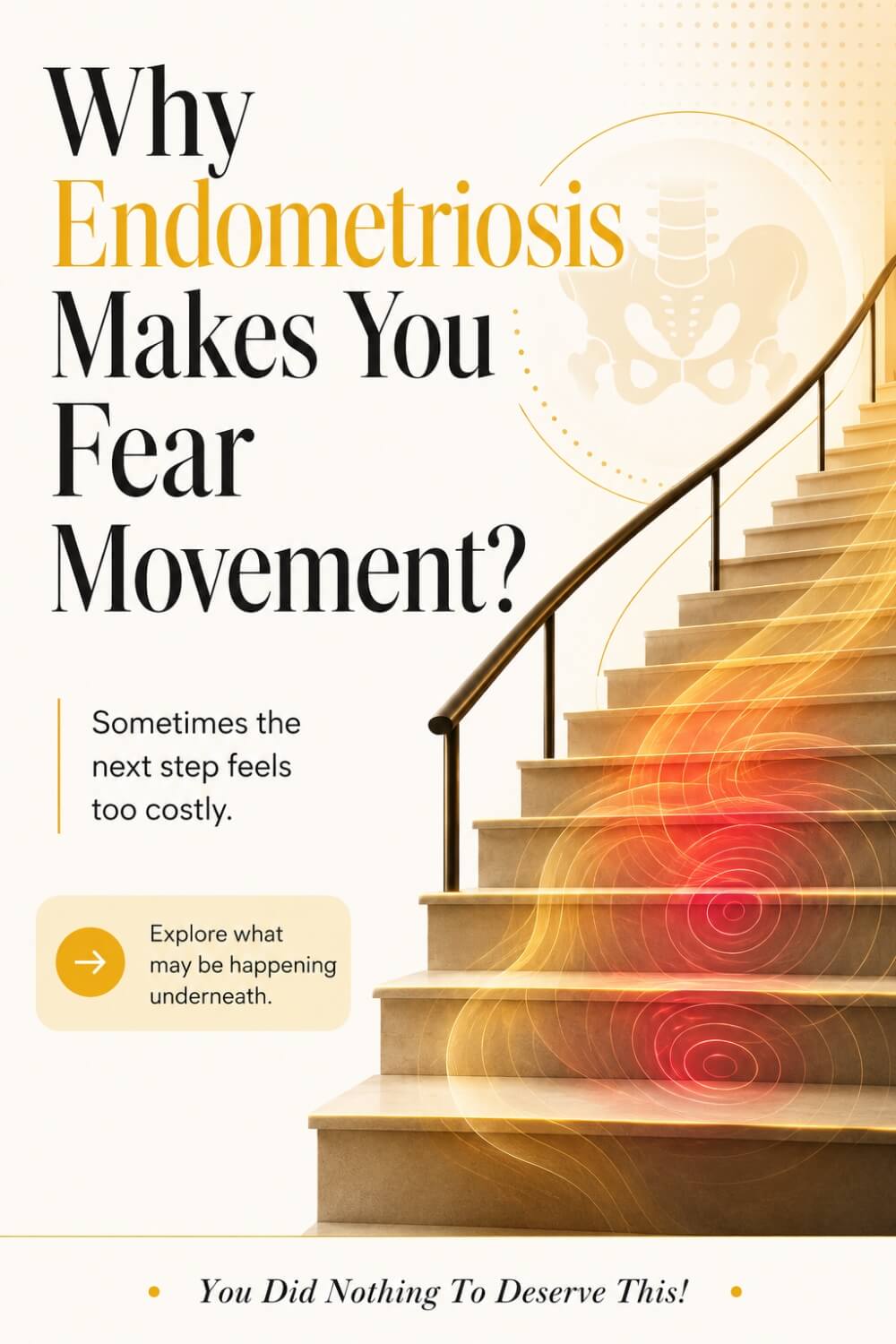
You do not need to wait until movement becomes almost impossible before asking for help. Arrange an appointment with your GP, gynaecologist, or endometriosis team when pain is repeatedly stopping you from walking, exercising, working, sleeping, having sex, completing household tasks, or taking part in the life you want. The NHS advises seeking medical review when endometriosis symptoms affect everyday life, work, or relationships, or when treatment has not helped, and symptoms are continuing or worsening.
It is also worth asking for a review when you are avoiding more and more movements because you expect pain, even if nobody around you can see how restricted you have become. You may need your pain management reconsidered, but you may also benefit from an assessment of your pelvic floor, hips, back, abdominal muscles, balance, and the way your body braces before movement.
A pelvic health physiotherapist with experience in endometriosis and persistent pelvic pain may help identify whether certain actions can be adapted rather than simply abandoned.
Please speak to a healthcare professional if:
- pain with walking, bending, standing, sitting, exercise, or changing position is becoming more frequent
- your usual pain has changed location, character, or intensity
- you are falling, nearly falling, or feeling too weak or dizzy to move safely
- movement causes bleeding, bladder pain, bowel pain, or symptoms that are new for you
- heavy periods, tiredness, breathlessness, or dizziness may suggest iron-deficiency anaemia
- pain is disturbing your sleep or regularly keeping you in bed
- your current medication is not controlling symptoms or is causing side effects
- fear of triggering pain is making your world steadily smaller
Heavy bleeding that affects daily life, severe period pain, bleeding between periods or after sex, and bleeding accompanied by pain when urinating, opening your bowels, or having sex should be discussed with a GP. These symptoms may occur with endometriosis, but they can also have other causes that deserve proper assessment rather than being automatically placed under the same diagnosis.
Contact NHS 111 for urgent advice if pelvic pain occurs with difficulty passing urine or opening your bowels, blood in your urine or stool, unusual vaginal bleeding or discharge, a high temperature, shivering, vomiting, or feeling significantly unwell. You should also seek urgent advice if you are pregnant, may be pregnant, or have missed a period and are experiencing pelvic pain or unusual bleeding.
Call 999 or go to A&E if pelvic or abdominal pain is sudden and severe, is rapidly worsening, or becomes very painful when you move or when the area is touched. Emergency help is also appropriate when pelvic pain occurs with fainting, severe dizziness, heavy vaginal bleeding, shoulder-tip pain, breathing difficulty, confusion, or collapse. These signs do not automatically mean something life-threatening is happening, but they should not be watched at home and blamed on a familiar endometriosis flare.
If there is any possibility of pregnancy, sudden one-sided abdominal pain, unusual bleeding, shoulder-tip pain, dizziness, or fainting needs prompt assessment because an ectopic pregnancy can initially resemble period pain or an endometriosis flare. A sharp, intense pain combined with faintness or dizziness is an emergency.
When you attend an appointment, explain what movement you were attempting, where the pain began, how it felt, how long it lasted, and what happened afterwards. Tell the clinician whether the symptom follows your menstrual cycle and whether it affects your bladder, bowels, legs, back, breathing, bleeding, or balance.
A brief record of your activities and symptoms can make the impact easier to communicate, especially when you are used to minimising what you endure.
I have watched my wife live with so much pain that a frightening level of discomfort could begin to feel normal to her. Loving her taught me that knowing your usual pain does not mean every new pain should be endured quietly, and asking for medical help does not mean you have failed to cope. It means your body has given you information, and you deserve someone qualified to listen carefully before asking you to keep moving.
Questions to Ask Your Doctor
A medical appointment can feel painfully short when movement has begun affecting almost every part of your day. You may arrive with months of experiences in your head, then leave realising you forgot the one question that mattered most. Writing your questions down beforehand can help you explain that this is not simply discomfort during exercise; it is pain that is changing how safely you can walk, bend, sit, stand, turn in bed, work, travel, care for yourself, and trust your body.
You do not need to ask every question below in one appointment. Choose the ones that fit what is happening now, take notes if you can, and bring someone supportive when you feel too exhausted or overwhelmed to remember everything alone.
What could be causing pain during this particular movement?
Tell your doctor exactly which action causes pain rather than saying only that movement hurts. Explain whether it happens when standing from a chair, walking, bending, lifting, turning in bed, stretching, coughing, opening your bowels, or during sex. Ask whether the pain may be coming directly from endometriosis, adhesions, pelvic-floor tension, a joint or muscle problem, nerve irritation, an ovarian cyst, or another condition that should not be overlooked.
Endometriosis-associated pain can involve more than lesions alone. Pelvic-floor muscles may become tense, back joints can stiffen, pelvic joints may become irritated, and the nervous system can become increasingly sensitive after repeated pain. Understanding the possible contributors may open more treatment options than simply being told to rest or tolerate it.
Does this new pain need further investigation?
Describe anything that has changed, including where the pain begins, how it feels, how quickly it appears, and whether it travels into your back, hip, groin, leg, rectum, shoulder, or ribs. Mention new weakness, numbness, bleeding, bladder symptoms, bowel changes, dizziness, faintness, or difficulty bearing weight.
You are not being dramatic by asking whether a changing symptom needs investigation. A previous endometriosis diagnosis does not mean every future pain must automatically be blamed on the same condition. Ask what else should be considered and what signs would make your doctor arrange blood tests, imaging, an examination, or a specialist review.
Could a normal scan still miss endometriosis?
Ask this directly if your symptoms are affecting your life but previous imaging was described as normal. Current NICE guidance says endometriosis should not be ruled out simply because an examination or ultrasound is normal. Ultrasound and MRI can identify some ovarian or deep disease, but they cannot show every superficial lesion, adhesion, pain mechanism, or pelvic-floor problem.
You deserve more than, “Your scan looks fine,” when your daily function clearly is not fine. Ask what the result does show, what it cannot exclude, and what the next step will be if your symptoms continue.
Could my pelvic floor be tightening around pain?
A pelvic floor that has spent years guarding a painful pelvis may struggle to relax fully. This can contribute to pain while walking, sitting, urinating, opening your bowels, having sex, or changing position. It may also make you feel as though your lower body is permanently preparing for impact.
Ask whether your symptoms suggest pelvic-floor overactivity, tenderness, poor coordination, or another musculoskeletal problem. Do not automatically begin repeated strengthening exercises without an individual assessment because a painful, overactive pelvic floor may need relaxation, breathing work, movement retraining, or manual treatment rather than more tightening.
Can you refer me to pelvic health physiotherapy?
Ask for someone experienced in persistent pelvic pain and endometriosis, not simply general fitness or postnatal strengthening. Pelvic health physiotherapists may assess pelvic-floor tone, breathing, posture, scars, abdominal tension, hip and spinal movement, bladder and bowel function, and how your body braces during everyday tasks.
Treatment should be adapted to what the assessment finds. It may involve breathing techniques, relaxation, manual release, functional movement, bladder or bowel support, and a gradual return to physical activity. Any internal examination should be explained beforehand, offered only when appropriate, and completed only with your consent; you can decline it or ask for it to stop at any time.
Which movements should I temporarily change or avoid?
Ask for specific guidance rather than a vague instruction to “listen to your body”. You need to know whether a movement risks worsening a medical problem, whether it is painful but adaptable, or whether it can be continued gently while your symptoms are assessed.
Explain what you need movement for in real life. Perhaps you must climb stairs at home, commute to work, lift a child, drive, or stand long enough to shower. A useful plan should consider your actual responsibilities and show you how to modify a task, use support, reduce its duration, or break it into smaller stages without abandoning it completely.
How can I move without causing a major flare?
Ask whether you should use time, distance, repetitions, or symptom response to set your starting point. Find out what level of discomfort may be acceptable for your situation, what increase would mean you should stop, and how long you should monitor symptoms afterwards.
There is no universal amount of walking, stretching, or exercise that every person with endometriosis should tolerate. A plan must account for your current pain, fatigue, cycle pattern, previous surgery, other conditions, and recovery time. Movement should begin below the level that repeatedly causes a severe setback, then change slowly enough for your body to respond.
Is my current pain treatment helping me function?
Pain relief should not be judged only by whether a number on a pain scale becomes lower. Ask whether your treatment is helping you sleep, walk, work, use the toilet, care for yourself, and participate in relationships. Explain what remains impossible even after taking your medication as prescribed.
Ask about the expected benefits, side effects, timing, and limitations of each treatment. If hormones, painkillers, surgery, or previous therapies have not restored function, ask whether your care needs a broader plan involving gynaecology, pain medicine, pelvic health physiotherapy, bladder or bowel specialists, and emotional support. Persistent pain can involve several overlapping systems, so needing more than one form of care does not mean the original pain was misunderstood or imagined.
Could fatigue, dizziness or weakness need separate tests?
Movement may feel frightening because pain is expected, but sometimes the fear also comes from feeling physically unstable. Tell your doctor if standing or walking causes breathlessness, racing heart, dizziness, shaking, blurred vision, weakness, or near-fainting.
Ask whether heavy bleeding could have contributed to iron-deficiency anaemia and whether a full blood count or other tests are appropriate. Also ask whether medication side effects, low blood pressure, poor nutrition, dehydration, sleep disruption, or another condition may be affecting your ability to move safely. You should not be told to exercise more when your body is giving signs that it first needs proper medical assessment.
What will an examination involve?
Past painful examinations can make even booking another appointment feel threatening. Ask which parts of the examination are necessary, what information each part may provide, and whether there are less invasive options that could be considered first.
You have the right to request an explanation before you are touched, ask for a chaperone, bring a supportive person where permitted, change position, take a pause, or withdraw consent. Tensing during an examination does not mean you are being difficult. It may be your body protecting you after pain, and a thoughtful clinician should work with that response rather than shame you for it.
Would a specialist endometriosis referral be appropriate?
Ask this when symptoms repeatedly affect your daily activities, initial treatment has not helped, symptoms are persistent or returning, or there is concern about an endometrioma or deep endometriosis involving areas such as the bowel, bladder, or ureter. NICE recommends referral pathways based on the severity, persistence, and suspected location of disease rather than requiring you to prove how much pain you can endure.
You can ask what type of service you are being referred to, what experience the team has, what the likely waiting time is, and what support will be offered while you wait. A referral is not a promise that you must have surgery. It is an opportunity for a more specialised assessment and discussion of suitable options.
Which symptoms mean I should seek urgent help?
Ask your doctor to help you distinguish your familiar flare pattern from symptoms that should not be managed at home. Write the warning signs down because it can be difficult to judge urgency while you are frightened or in severe pain.
Your personal plan should make clear who to contact, where to go outside normal surgery hours, and what to do if you experience sudden severe pain, collapse, heavy bleeding, possible pregnancy, new neurological symptoms, breathing difficulty, or an inability to pass urine or stool. Knowing this in advance is not pessimistic. It can make you feel safer because you are no longer expected to make every decision alone in the middle of a crisis.
Can we agree on one clear next step?
Before the appointment ends, ask what happens next. It might be a blood test, ultrasound, medication review, physiotherapy referral, specialist referral, symptom diary, or planned follow-up. Ask how long you should try the current approach, what improvement should look like, and what to do if your movement becomes more restricted while you are waiting.
I have learned beside my wife that the most discouraging appointments are often not those without an immediate cure, but those that end without a plan. You deserve to leave knowing that somebody heard how pain is altering your movement and that the responsibility for solving it has not simply been handed back to you.
Take your questions with you, even if your voice shakes when you ask them. Pain may have taught you to make yourself smaller, move more carefully, and avoid appearing demanding, but requesting an explanation is not demanding. It is part of protecting the body you have already worked so hard to carry through each day.
Final Word on Why Endometriosis Makes You Fear Movement
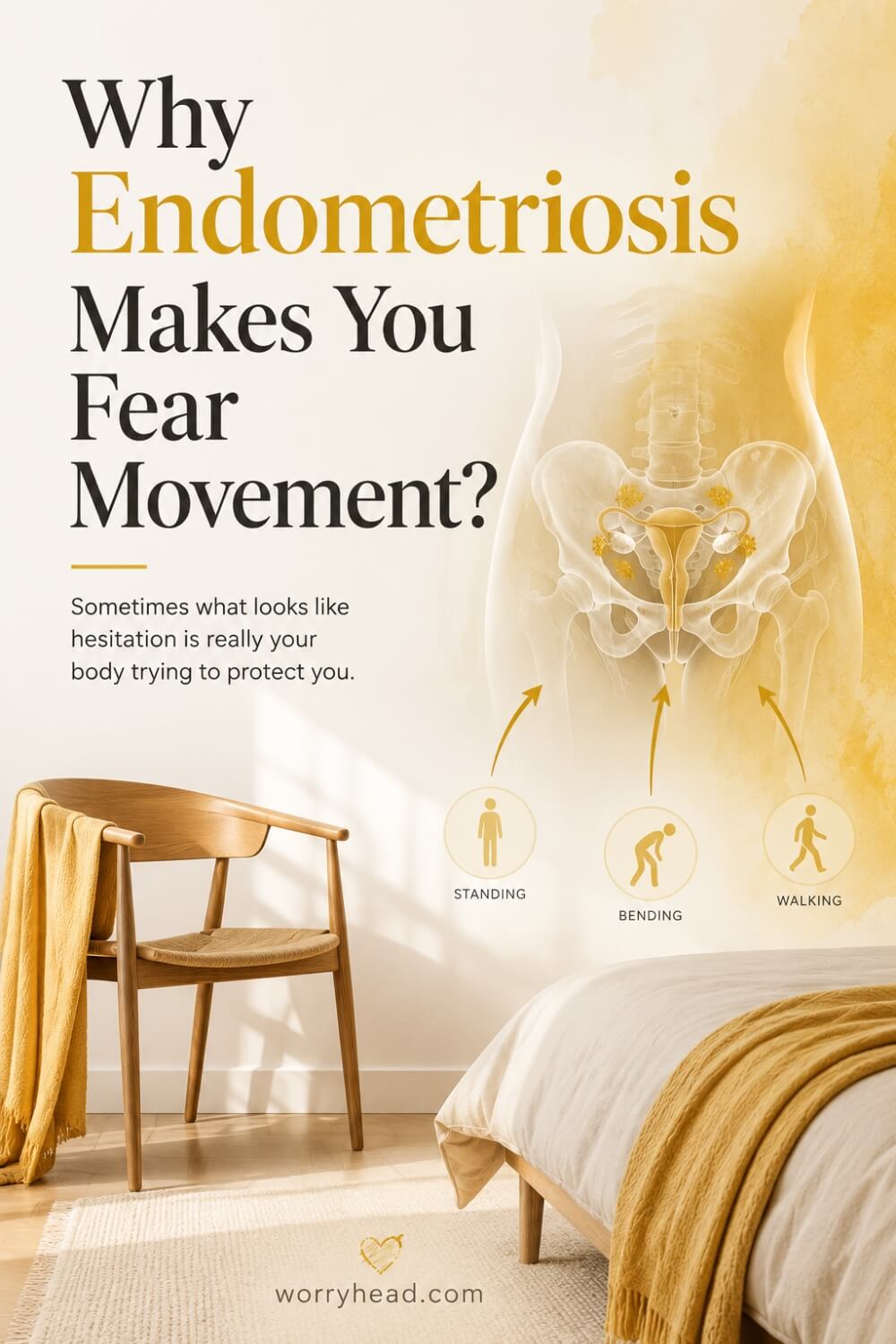
Fear of movement does not mean you have stopped caring about your health, lost your motivation, or become unwilling to help yourself. It often means your body remembers what happened after the last walk, stretch, car journey, intimate moment, shopping trip, or attempt to finish an ordinary task.
Endometriosis is a chronic disease that can cause severe pelvic pain, fatigue, painful periods, bowel or bladder symptoms, and pain during or after sex, so caution can grow from experiences that were painfully real.
The problem begins when protection spreads further than the original trigger. You may start avoiding one movement, then several, until your home, work, relationships, and independence are organised around preventing the next flare. This is why endometriosis makes you fear movement without making that fear foolish or imaginary.
Your nervous system, pelvic muscles, memories, and expectations may all be trying to protect you, even when their protection has become exhausting.
Healing this relationship with movement is not about forcing yourself through pain. It is about learning which symptoms need investigation, which activities need adapting, and which movements might be approached again in smaller, safer steps. Some days progress may mean walking outside. On another day, it may mean turning in bed with less panic, standing long enough to wash, or asking for help before your body reaches breaking point.
Please do not measure your recovery against somebody else’s exercise plan, social media video, surgical outcome, or good week. Endometriosis varies greatly, and treatment does not remove every source of pain for every person. Medical care, suitable pain management, pelvic health physiotherapy, pacing, psychological support, and compassionate movement guidance may each have a place, depending on what is contributing to your symptoms.
You deserve an individual plan, not another instruction to push harder.
As a husband, I have learned that support is often quieter than encouragement. My wife has not needed me to stand over her and count steps. She has needed me to believe the cost of those steps, walk at her pace, notice when the distance back is becoming too much, and never make her apologise for changing the plan. Sometimes I offer my hand. Sometimes I carry what she cannot. Sometimes I simply wait while she listens to the body nobody else can hear.
You are still worthy of love when movement is limited. You are still a whole woman when pain changes how you work, exercise, travel, rest, or receive affection. Your body is not betraying everyone by needing care, and you are not disappointing the person who truly loves you by moving differently.
Rest is not failure, and asking for help is not surrender; both can protect tomorrow.
The aim is not to erase every trace of fear before you begin living again. It is to build enough knowledge, support, choice, and safety that fear no longer makes every decision for you. Your next step can be small, adapted, supported, or postponed. It is still yours, and you deserve to take it without shame.
Your fear of movement is not proof that you are weak, lazy, or giving up. It may be your body remembering pain and trying to keep you safe. With careful medical support, pacing, adapted movement, and people who respect your limits, you can rebuild trust without forcing your body or abandoning yourself.
Please leave a comment and tell me how pain has changed the way you move. You can also find my FREE 130+ page eBook, “You Did Nothing To Deserve This!”, at the bottom of this post.


About Me
Hi, I’m Lucjan! The reason why I decided to create this blog was my beautiful wife, who experienced a lot of pain in life, but also the lack of information about endometriosis and fibromyalgia for men…
READ MORE
Grab a FREE eBook!
“You Did NOTHING To Deserve This!”
Finally hear the words nobody ever said to you, that your pain is real, your tears make sense, and you did nothing to deserve endometriosis, the dismissal, or the way it has rewritten your life.
Related Questions You May Be Asking About Why Endometriosis Makes You Fear Movement
1. Is fear of movement all in your head?
No. The fear is an understandable protective response after real pain has repeatedly followed walking, bending, exercise, sex, or ordinary tasks. Research has found greater movement-related fear in some women with endometriosis-associated pelvic pain. Your brain may anticipate another flare, but that does not make the original pain, or the fear built around it, imaginary.
2. Can movement make endometriosis spread?
Current evidence does not establish ordinary movement as something that spreads endometriosis lesions, although a particular activity can still aggravate pain, fatigue, or pelvic-floor tension. That is why being told to push through is unhelpful. Movement should be adapted to your present capacity, medical history, and recovery pattern rather than treated as a cure or test of determination.
3. Why can pain appear hours after movement?
Pain does not always peak while you are active. Muscles may become tired or guarded, irritated pelvic structures may react gradually, and a sensitised pain system can remain alert after the task ends. Delayed symptoms are worth recording because completing an activity comfortably does not automatically mean its full physical cost has already appeared.
4. Can pelvic health physiotherapy reduce movement fear?
It may help, particularly when painful movement involves pelvic-floor dysfunction, muscular guarding, reduced mobility, or lost confidence. Research into physiotherapy for endometriosis is encouraging but still developing, so treatment should follow an individual assessment. The right approach may include relaxation, pacing, manual techniques, and gradual functional movement, not automatically more strengthening or harder exercise.
5. How can my partner help without pressuring me?
A partner can ask before helping, move at your pace, carry practical burdens, make rest easier, and believe you when an activity feels too costly. What helps least is pressure disguised as motivation. I learned that my wife did not need me to decide her next step; she needed to know my hand was available whether she continued, paused, or turned back.
Endometriosis Makes You Fear Movement References
- https://www.who.int/news-room/fact-sheets/detail/endometriosis
- https://www.nhs.uk/conditions/endometriosis/
- https://www.nhs.uk/conditions/heavy-periods/
- https://www.nhs.uk/symptoms/pelvic-pain/
- https://www.nhs.uk/conditions/ectopic-pregnancy/symptoms/
- https://www.nice.org.uk/guidance/ng73/chapter/recommendations
- https://www.eshre.eu/-/media/sitecore-files/Guidelines/Endometriosis/ESHRE-GUIDELINE-ENDOMETRIOSIS-2022_2.pdf
- https://www.cuh.nhs.uk/patient-information/alternative-ways-of-managing-pain-associated-with-endometriosis/
- https://www.kch.nhs.uk/services/services-a-to-z/pelvic-health-physiotherapy/
- https://pubmed.ncbi.nlm.nih.gov/21835893/
- https://pubmed.ncbi.nlm.nih.gov/33326662/
- https://pubmed.ncbi.nlm.nih.gov/36858044/
- https://pubmed.ncbi.nlm.nih.gov/38959628/
- https://pubmed.ncbi.nlm.nih.gov/39946383/
- https://pubmed.ncbi.nlm.nih.gov/40705433/
- https://pubmed.ncbi.nlm.nih.gov/40705703/
- https://pubmed.ncbi.nlm.nih.gov/41204929/
- https://pmc.ncbi.nlm.nih.gov/articles/PMC5850214/
- https://link.springer.com/article/10.1186/s12905-023-02874-3
- https://link.springer.com/article/10.1007/s00404-025-08276-0
