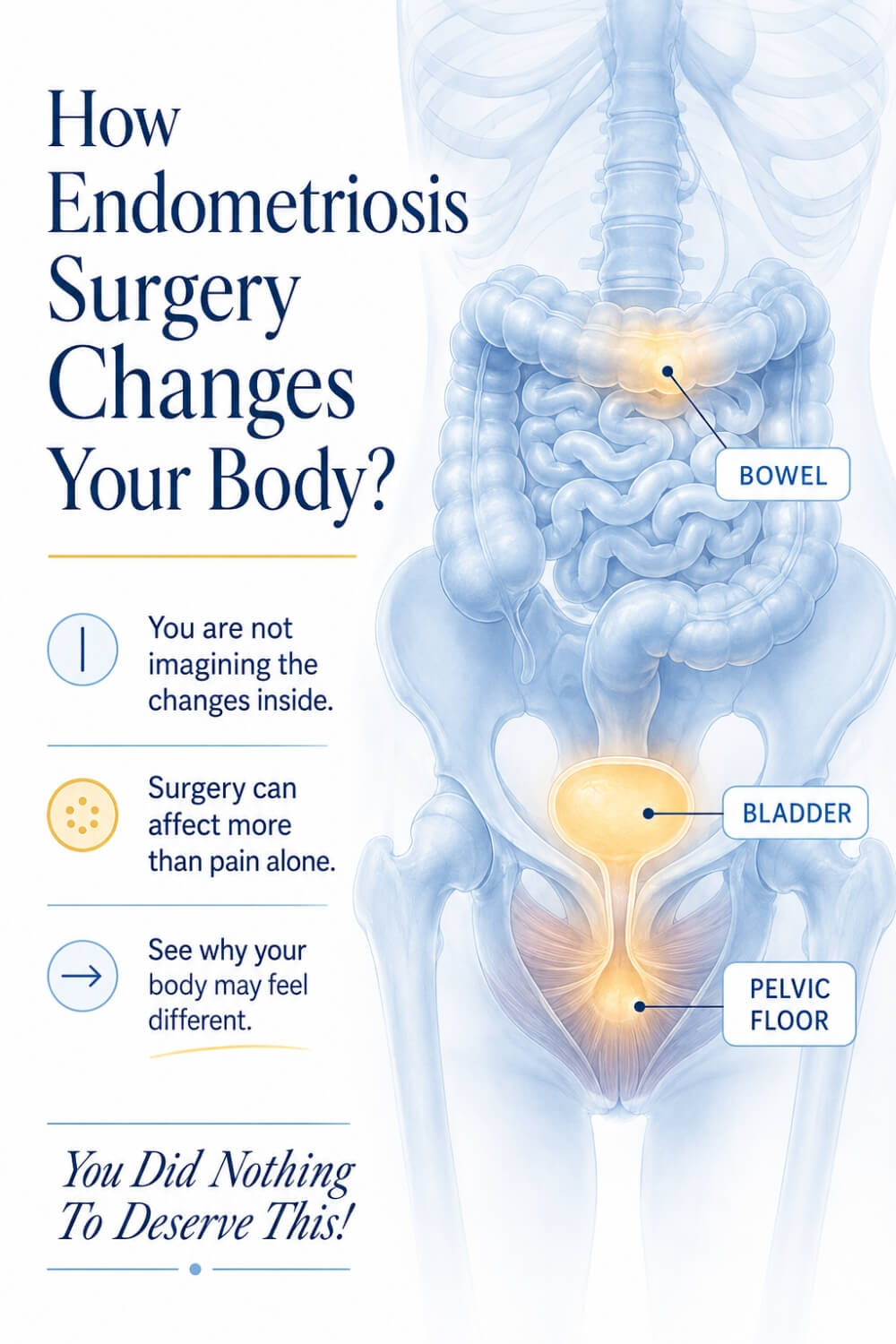
How Endometriosis Surgery Changes Your Body?
Have you ever wondered how endometriosis surgery changes your body, especially when the scars look small but you feel as though something much bigger has happened inside? You may be staring at a swollen abdomen, fresh wounds and a body that feels sore, weak or unfamiliar, wondering whether what you feel is healing, harm or simply something nobody prepared you for.
And after fighting so hard to reach surgery, it can be frightening when you wake up afterwards and do not instantly feel like yourself again.
Endometriosis surgery can change your body by removing lesions, freeing adhesions and altering pelvic anatomy, which may reduce pain and improve function. It also causes healing, scars and temporary swelling; ovarian surgery can reduce ovarian reserve, while removing ovaries changes hormone levels.
I am not a clinician; I write as a husband, blogger and researcher who has spent years trying to understand what endometriosis and its treatment have meant for my wife, and at the bottom I have listed the WHO, NICE, NHS and ESHRE guidance, together with published research, that I used for the medical context throughout this article.
When an operation changes what you see, what you feel and what you can trust from one day to the next, it can feed into that much wider sense of feeling betrayed by your own body, especially when recovery does not follow the neat timeline you were hoping for.
The part I think many women are not prepared for is that removing visible endometriosis and switching pain off are not the same biological event. Even after treatment, pelvic floor muscle problems can continue to contribute to chronic pelvic pain, and long-standing pain may involve a nervous system that has become more sensitive to pain signals.
That means I would never judge the whole operation by how your body feels during those first frightened weeks, because surgical healing and longer-term symptom change do not necessarily run on the same clock. NHS guidance says full recovery after operative laparoscopy can take up to 6 to 8 weeks, while ESHRE makes it equally clear that surgery may improve pain without removing every symptom completely or permanently.
I learnt something important watching my wife live through surgery and everything that came afterwards: an operation may finish in theatre, but her body’s work is only beginning. As her husband, my place was never to hurry her back into the woman she had been before surgery; it was to believe the woman in front of me, protect her recovery and make sure she never felt less wanted because her body needed time.
What matters now is understanding which changes come from normal healing, which may last longer, which depend on exactly what was done during surgery, and which deserve another conversation with your medical team. Once those differences start making sense, the body looking back at you can begin to feel a little less frightening and a little more understandable.
Surgery can change how your body feels and how you think about recovery, even when treatment is medically appropriate. My free eBook does not offer surgical advice, but it recognises the emotional uncertainty and the need to be gentle with yourself.
You Did NOTHING To Deserve This!
Endometriosis Validation for Women with Endo

- Understanding How Endometriosis Surgery Changes Your Body
- Give Healing More Time Than Scars
- Track New Pain Without Panicking
- Rebuild Movement Gently and Gradually
- Protect Bowel and Bladder Recovery
- Ask What Was Actually Removed
- Understand Changes to Ovarian Reserve
- Make Space for Pelvic Floor Recovery
- Relearn Intimacy Without Pressure
- Judge Progress Over Weeks, Not Days
- How Endometriosis Surgery Changes Your Body Beyond Recovery
- How Endometriosis Surgery Changes Your Body and the Way You See It?
- When to Seek Medical Help?
- Questions to Ask Your Doctor
- Final Word on How Endometriosis Surgery Changes Your Body
- FREE eBook
- You Did NOTHING To Deserve This!
Understanding How Endometriosis Surgery Changes Your Body
To understand how endometriosis surgery changes your body, it helps to know that “endometriosis surgery” can mean very different operations, from removing superficial lesions to freeing dense adhesions, treating ovarian endometriomas or dissecting deep disease away from the bowel, bladder or ureters.
The amount of internal healing therefore cannot be judged by the number or size of the cuts you can see on your abdomen. A few small laparoscopic scars can hide much more extensive work inside the pelvis.
In the early days, swelling, abdominal tenderness, fatigue, shoulder-tip discomfort from the gas used during laparoscopy, temporary bowel changes and some vaginal bleeding can all happen as your body responds to surgery. Anaesthetic medicines, pain relief, reduced movement and manipulation of pelvic tissues can also leave your digestion and energy feeling different for a while.
NHS guidance notes that full recovery after operative laparoscopy can take around 6 to 8 weeks, although the real timetable depends on what was done and how your individual body heals.
The longer-term changes surgeons hope to create are much more specific: removing visible disease, releasing organs from adhesions and restoring more normal pelvic anatomy where this can be done safely. For deep endometriosis, ESHRE says surgery can reduce endometriosis-associated pain and improve quality of life, but it also stresses that the risks, benefits and likely longer-term effects should be discussed with you.
That matters because a technically successful operation is not a promise that every symptom will disappear.
Some pain can persist even when lesions have been removed because chronic pelvic pain may involve pelvic floor problems, other pain conditions or changes in the nervous system that have developed over years.
Recent evidence on central sensitisation supports what many patients have been trying to explain for a long time: removing an important source of pain may help enormously, yet the nervous system can remain unusually responsive to pain in some people. Persistent pain therefore deserves proper assessment, not the cruel assumption that you are exaggerating or that surgery “must not have worked”.
Ovarian endometrioma surgery deserves its own conversation because removing a cyst can reduce recurrence and pain compared with simply draining it, yet surgery involving ovarian tissue can also reduce ovarian reserve, particularly after bilateral or repeat procedures. Ovarian reserve describes the remaining pool of follicles and matters when fertility is being considered, but a reduction in reserve is not the same thing as saying you are suddenly infertile or menopausal.
If both ovaries are actually removed, however, menopause begins abruptly because ovarian hormone production falls, which is very different from endometriosis excision that leaves functioning ovaries in place.
Your body may also feel different in ways that are harder to put on a scan: your abdomen can feel tight while tissues heal, bowel or bladder habits may need time to settle, sex can feel physically or emotionally different, and confidence in movement may return more slowly than your wounds close. Improvement is often uneven, so a better week followed by a painful day does not automatically mean you have damaged something or that endometriosis has suddenly returned. The fairest way to judge recovery is to look at the direction of change over time while paying attention to symptoms that are new, worsening or concerning, rather than asking your body to prove the operation was worthwhile on a particular morning.
I remember how easy it would have been for anyone outside our home to look at my wife’s small healing incisions and think the hardest part was behind her. I was the man beside her, so I saw what those little scars could not show: the tiredness, uncertainty, the careful way she moved and the fear of wondering whether a new sensation was normal when her body had already asked so much of her. That taught me not to push a woman back towards “normal”, but to help her understand and protect the body she has now, which is exactly why these practical steps matter.
- Give Healing More Time Than Scars
- Track New Pain Without Panicking
- Rebuild Movement Gently and Gradually
- Protect Bowel and Bladder Recovery
- Ask What Was Actually Removed
- Understand Changes to Ovarian Reserve
- Make Space for Pelvic Floor Recovery
- Relearn Intimacy Without Pressure
- Judge Progress Over Weeks, Not Days
Give Healing More Time Than Scars
One of the easiest mistakes after laparoscopic surgery is judging recovery by the wounds you can see. Those small cuts may close quickly, but deeper tissues can still be swollen, tender and repairing themselves, especially after extensive excision, adhesiolysis or surgery around the bowel, bladder or ovaries. NHS guidance says full recovery after an operative laparoscopy can take up to 6 to 8 weeks, although your own timetable depends on what was actually done.
I would rather see you give your body more patience than force it to prove that surgery “worked”. A scar looking tidy does not mean your energy, digestion, pelvic comfort or confidence in movement should already be back to normal. Recovery is not laziness, and resting when your body asks for it is not going backwards. The outside may heal first; that does not make what you still feel inside imaginary.
Track New Pain Without Panicking
Pain after surgery can be confusing because not every ache means the same thing. Some discomfort can come from healing tissues, abdominal incisions or the gas used during laparoscopy, while pain that becomes severe or keeps worsening deserves medical attention. Instead of trying to diagnose every sensation yourself, write down where it is, when it appears, what triggers it and whether the pattern is changing over several days.
That simple record can give you something more useful than fear alone when you speak to your surgeon or GP. I have learnt that panic grows fastest when you have no pattern to hold onto, especially after years of unpredictable endometriosis pain. You do not need to dismiss your body, but you do not need to assume the worst either. Notice it, document it and ask for help when something feels wrong or is clearly getting worse.
Rebuild Movement Gently and Gradually
After surgery, movement matters, but so does timing. Gentle activity is usually encouraged during laparoscopic recovery, yet trying to jump immediately into heavy lifting, intense exercise or long days on your feet can ask too much from a body still healing. The sensible approach is gradual, shaped by the operation you had and the instructions your surgical team gave you.
I would treat movement as a conversation with your body, not a test of character. Walk a little, notice how you feel later that day and the following morning, then build from there instead of chasing your old routine straight away. Some days you may manage more and another day less, and that does not cancel your progress. Strength does not have to return dramatically to count. Sometimes recovery begins with doing one ordinary thing more comfortably than you could the week before.
Protect Bowel and Bladder Recovery
Your bowel and bladder can behave differently after pelvic surgery, particularly when endometriosis has been close to these organs or surgery has involved deeper pelvic dissection. Anaesthetic medicines, pain relief, reduced movement and surgery can contribute to constipation or temporary urinary problems, while NICE recommends specialist endometriosis services when deep disease involves the bowel, bladder or ureter.
Please do not feel embarrassed mentioning difficulty passing urine, painful bowel movements, constipation or a major change from what is normal for you. These functions are part of your recovery, not an awkward side issue. Follow the eating, drinking, movement and bowel advice your own team has given you. If something is not settling, you cannot pass urine, or symptoms are getting worse, tell your medical team rather than quietly enduring it because you think you are supposed to be grateful that surgery is over.
Ask What Was Actually Removed
One of the most useful things you can do after surgery is find out exactly what the surgeon found and treated. “I had endometriosis removed” can hide a much more complicated picture involving peritoneal lesions, deep disease, adhesions, endometriomas or tissue close to the bowel, bladder and ureters. NICE recommends documenting laparoscopic findings with intra-operative imaging, which can help make your surgical record far more meaningful later.
Ask where disease was found, what was excised or otherwise treated, whether adhesions were divided, whether your ovaries were involved and whether anything was deliberately left because removing it carried greater risk. This is not about interrogating your surgeon. It is about understanding your own body instead of leaving hospital with several tiny scars and twenty unanswered questions. Knowing what happened can make later symptoms and treatment decisions much less frightening.
Understand Changes to Ovarian Reserve
If surgery involves an ovarian endometrioma, fertility deserves a careful conversation. Evidence indicates that ovarian cystectomy can reduce anti-Müllerian hormone, or AMH, a marker used when assessing ovarian reserve, with particular concern around bilateral or repeat surgery. Importantly, ovarian endometriomas themselves can also be associated with reduced reserve, so it is too simplistic to blame every change on surgery alone.
I would never want you to look at a lower AMH result and hear a judgement about your femininity, worth or future. Ovarian reserve testing provides useful information about the remaining follicle pool, but one result cannot tell your whole fertility story. If having children now or later matters to you, ask what happened to each ovary, whether testing would be useful and whether a fertility specialist should be involved. You deserve an explanation, not a frightening number handed to you without context.
Make Space for Pelvic Floor Recovery
Your pelvic floor is easy to forget because you cannot watch it heal in a mirror. Chronic pelvic pain can involve muscles, nerves and changes in pain processing as well as endometriosis lesions themselves, which helps explain why removing disease does not automatically make every pain pathway disappear immediately. Endometriosis is a chronic condition, and persistent pain can have several overlapping contributors.
If pelvic pain, painful sex, bowel discomfort or muscle tension continues, it may be worth asking whether assessment by a pelvic health physiotherapist is appropriate for you. The answer is not simply doing endless strengthening exercises from the internet, because some people need help relaxing and coordinating an overactive pelvic floor instead. Your body may have spent years learning to brace against pain. It deserves the chance to relearn movement and safety without being blamed for protecting you for so long.
Relearn Intimacy Without Pressure
Surgery can change intimacy even when nobody prepares you for that conversation. You may fear pain, protect your abdomen, feel exhausted or simply not recognise your body yet, and your surgical team may give you specific instructions about when intercourse or vaginal penetration is safe after your particular procedure. Your recovery should follow those instructions, not somebody else’s timetable.
This is where I believe a loving partner needs to understand that intimacy is much bigger than sex. If my wife needed distance from pain, my role was never to make her demonstrate that her body was “back”; it was to make sure she still felt wanted, safe and loved without owing me physical access to her. You can rebuild closeness through conversation, touch, affection and consent at the pace your body allows. Surgery should never turn recovery into another situation where you feel pressured to perform for somebody else.
Judge Progress Over Weeks, Not Days
One difficult day can convince you that the whole operation has failed, especially when you carried so much hope into surgery. Recovery after operative laparoscopy can take several weeks, so yesterday versus today is often a poor way to judge what your body is doing. Sleep, activity, bowel function, menstrual symptoms, medication and the extent of surgery can all influence how an individual day feels.
Look for quieter changes instead. Are you walking a little farther, having shorter pain flares, sleeping better, relying on less pain relief or returning to something that matters to you? Those changes do not have to happen together. Watching my wife taught me that progress can be so gradual that the person healing is sometimes the last one to notice it. Count the small gains without pretending the difficult days are not real. Both can exist in the same recovery.

How Endometriosis Surgery Changes Your Body Beyond Recovery
What matters most when you are trying to understand how endometriosis surgery changes your body is recognising that not every change belongs in the same box. Some changes, such as swelling, tenderness, tiredness and altered bowel habits, may settle as recovery progresses, while others depend on which organs or tissues were actually treated. The operation can therefore change more than pain; in complex disease it may also change pelvic anatomy and the way particular organs function afterwards.
With deep endometriosis, surgery can involve disease around the rectum, bowel, bladder, ureters, pelvic sidewall, nerves or other structures, and ESHRE recommends that women having this type of surgery are counselled about its risks, benefits and possible long-term effect on quality of life. That is why I think your operation report matters far more than simply being told that your surgery was “successful”.
wo women can both say they had endometriosis surgery while having undergone completely different procedures with completely different consequences for recovery and future symptoms.
There is another distinction I wish more women were told clearly before major surgery: excision, hysterectomy and removal of the ovaries are not interchangeable treatments. ESHRE says hysterectomy may be considered for some women who no longer wish to conceive and have not responded to more conservative treatment, but it specifically warns that removing the womb does not necessarily cure endometriosis or its symptoms. If both ovaries are removed, the hormonal change is much greater because surgical menopause begins immediately, whereas keeping one or both ovaries does not create that same immediate loss of ovarian hormones.
Even when the anatomy has been treated well, the body’s experience of pain may not simply reset on the day of surgery. A prospective study of 239 people with endometriosis found that higher pre-operative central sensitisation scores were associated with worse pain outcomes after surgery, supporting the idea that longstanding pain can involve nervous-system changes as well as the lesions themselves. This does not mean persistent pain is permanent or that surgery has failed; it means some bodies may need treatment beyond removing disease, because pain can have more than one driver.
Watching my wife live with endometriosis taught me how cruel it can feel when everyone expects surgery to return your body neatly to the person you were before illness changed so much. I never wanted her to believe she had to come back to me with the same abdomen, the same energy, the same relationship with pain or the same confidence in her body for me to still see the woman I loved.
If you are grieving something surgery has changed, I hope the person beside you understands this too: loving you properly means meeting the body you have now with patience, tenderness and respect, not standing at the finish line waiting for an older version of you to return.
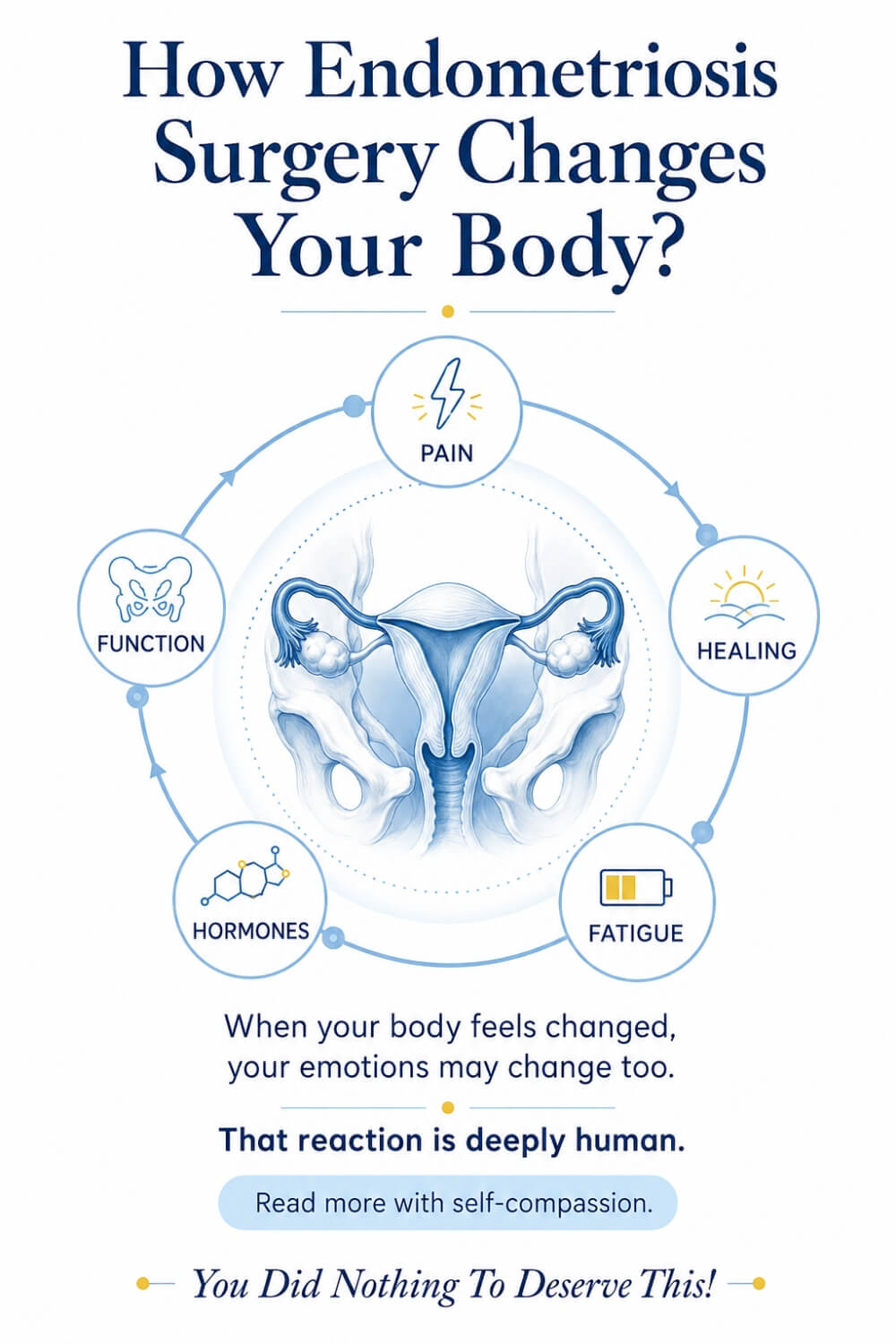
How Endometriosis Surgery Changes Your Body and the Way You See It?
There is another change after surgery that cannot be measured with a scan or blood test: the relationship you have with your own body. For some women, reducing pain and other symptoms brings back freedom, confidence and parts of daily life that endometriosis had slowly taken away, while for others the emotional adjustment takes considerably longer. Research following surgery for deep endometriosis has found improvements across areas including pain, wellbeing, self-image, work life and sexual intercourse, but individual outcomes still vary.
That is why I would never tell you that you should automatically love your body because an operation is finished. You might appreciate what surgery has given you while still struggling with scars, changes around your abdomen, fertility worries or the simple fear of trusting a pelvis that has hurt you for years. Endometriosis itself has been associated with poorer body image and emotional quality of life, so those feelings do not necessarily disappear when the surgeon closes the final incision.
When I think about how endometriosis surgery changes your body, I also think about how easily it can change the way you look at that body afterwards. I watched my wife go through a major operation, and I never wanted her measuring her worth by scars, pain levels, what her body could suddenly do or what it still could not do. I wanted her to know that none of those things made her less feminine, less desirable or somehow less herself to me.
For a partner, this is where support becomes something you do rather than something you say: you give her room to recover, notice when she is frightened without treating her as fragile, and remind her through ordinary affection that her changing body has not changed why you love her.
Sometimes the most healing thing a woman can hear after years of fighting her own body is that she does not have to earn back the version of herself everybody remembers, because the woman standing in front of you now is still completely worthy of being wanted, held and loved.
When to Seek Medical Help?
After endometriosis surgery, your body is supposed to feel different for a while. Tiredness, abdominal soreness, bloating, cramping, bruising around the wounds and shoulder-tip pain can occur after laparoscopy, and recovery from an operation can take several weeks. So if you wake up on day four feeling more exhausted than you expected, that alone does not mean something has gone wrong.
What I would not want you to do, though, is dismiss a symptom simply because somebody told you that recovery hurts. You know when something feels different from ordinary soreness, and there is a sensible middle ground between panicking over every sensation and suffering quietly because you think you are being difficult.
Contact your surgical team, GP or NHS 111 promptly if your abdominal pain is getting worse rather than gradually settling, particularly if it comes with a high temperature, feeling hot and shivery, persistent vomiting or increasing abdominal swelling. Worsening pain together with vomiting or fever can sometimes signal a post-operative complication that needs assessment rather than another day of waiting at home.
Your wounds deserve attention too. Increasing pain, swelling, bleeding, pus or spreading redness around an incision can suggest a wound problem or infection, so do not assume you have to wait until your follow-up appointment to mention it. On darker skin, redness can also be harder to recognise, so increasing warmth, tenderness, swelling or discharge may be particularly useful changes to notice.
Please also speak to somebody if you develop unusual vaginal or rectal bleeding or discharge, severe or continuous vomiting, or difficulty passing urine. This becomes especially important after surgery for deep endometriosis involving the bowel, bladder or ureters, because those operations can be more complex and ESHRE specifically recommends discussing their potential risks and longer-term effects with patients. Your own discharge instructions should take priority because the surgeon knows exactly which structures were operated on.
There are a few symptoms I would treat more urgently. Pain and swelling in one leg can be a sign of a blood clot, while coughing up blood or developing new difficulty breathing needs urgent medical assessment. Chest pain, a very fast heartbeat or severe difficulty breathing after recent laparoscopy are reasons to call 999 or go to A&E rather than waiting to see whether things improve overnight.
And then there is the situation that is less dramatic but still important: weeks or months have passed, yet pain, bowel symptoms, bladder problems, painful sex or other pelvic symptoms remain troublesome. That does not automatically mean the operation failed or that endometriosis has returned. Surgery is one recognised option for reducing endometriosis-associated pain, but even specialist guidance does not promise that every symptom will disappear, particularly after complex deep disease.
That is the point where I would want you to go back and ask a better question than, “Was my surgery successful?” Ask whether what you are experiencing fits the procedure you had, whether another cause of pain needs investigating, whether pelvic floor rehabilitation might be appropriate, and whether you need review by the specialist endometriosis team. NICE recommends specialist services for deep disease involving areas such as the bowel, bladder or ureter, precisely because these cases can require multidisciplinary expertise.
As a husband, I would much rather support a woman through an appointment that eventually proves reassuring than watch her stay frightened at home because she worries somebody will think she is overreacting. You have already had enough experience of having to endure pain; recovering from surgery should never require you to prove how much discomfort you can tolerate before asking for help.
The simple rule I would hold onto is this: ordinary recovery should gradually move in the right direction, even if it has difficult days. Something that is suddenly severe, clearly worsening, accompanied by fever, repeated vomiting, breathing problems, significant bleeding, leg swelling or a major change in bladder or bowel function deserves medical advice rather than guesswork.
Questions to Ask Your Doctor
One thing I learnt from going through endometriosis surgery with my wife is how quickly a follow-up appointment can disappear. You may have waited months for answers, yet when somebody finally asks, “Do you have any questions?”, your mind can suddenly go blank. I would take the questions that matter most to you on paper or on your phone, because understanding what happened inside your body can make recovery feel far less frightening.
What exactly did you find during my surgery?
Ask where endometriosis was seen, how extensive it appeared and which organs or tissues were involved. Endometriosis can affect very different parts of the pelvis, and deep disease involving areas such as the bowel, bladder or ureter may require specialist care.
Do not be embarrassed to ask your surgeon to explain the findings in ordinary language. “Stage IV”, “deep disease” or “adhesions” may sound impressive in a letter, but you deserve to understand what those words actually mean for your own body.
What did you remove or treat?
Ask what was excised, removed, drained, separated or otherwise treated rather than settling for “we dealt with the endometriosis”. If you had adhesions, ask which organs were stuck together and whether normal anatomy could be restored.
I think this question matters because two operations called “endometriosis surgery” can involve completely different amounts of work. Knowing what your surgeon actually did helps you understand why your recovery may look very different from another woman’s.
Was Anything Deliberately Left Behind?
This is a question I would definitely ask, because sometimes disease cannot safely be removed completely without creating unacceptable risk to an organ, blood vessel, nerve or other structure. Deep endometriosis surgery can be complex and may require bowel or bladder specialists, particularly when disease involves those areas.
If something was left, ask where it is, why it was left and whether it needs monitoring or further treatment. Hearing that not everything was removed can be upsetting, but knowing the reason is much better than discovering it months later while trying to understand persistent symptoms.
Did the Laboratory Confirm Endometriosis?
If tissue was taken during surgery, ask whether it was sent for histology and what the pathology report showed. ESHRE notes that biopsy can be used to confirm endometriosis histologically, although a negative biopsy does not completely exclude the disease.
You can also ask for a copy of your operative and pathology reports. I like the idea of having the actual information in your hands rather than trying to remember everything somebody said while you were tired, sore and overwhelmed.
Were My Ovaries or Endometriomas Treated?
If an ovarian endometrioma was operated on, ask exactly what technique was used and whether both ovaries were affected. ESHRE advises surgeons to minimise ovarian damage because ovarian endometrioma surgery can affect ovarian reserve, with particular concern around bilateral and repeat surgery.
If fertility matters to you now or might matter later, ask whether ovarian reserve testing or fertility advice would be useful in your circumstances. Please remember that asking about fertility does not mean you are committing yourself to having children; it simply means you are making sure decisions about your body are made with the future you want in mind.
Was My Bowel, Bladder or Ureter Involved?
Do not leave with vague wording such as “there was a bit near the bowel”. Ask whether endometriosis was actually on, inside or close to the bowel, bladder or ureter, whether those structures required surgery and whether another specialist was involved. Extensive or deep endometriosis in these areas can require multidisciplinary surgical care.
Then ask what changes you should watch for during recovery. Knowing whether an organ was merely inspected, freed from adhesions or actually operated on can completely change the meaning of the bowel or bladder symptoms you notice afterwards.
Which Symptoms Should Surgery Realistically Improve?
I think this is one of the most important questions because hope can become cruel when nobody defines what success actually means. Ask which of your symptoms the surgeon expected the operation to help and which symptoms may have other contributors.
Surgery can reduce endometriosis-associated pain, but it cannot guarantee that every form of pelvic pain will disappear or that symptoms will never return. If pain continues, that deserves investigation rather than somebody automatically deciding that either the surgery failed or your pain cannot be real.
How Long Should My Recovery Take?
Ask for advice based on your operation rather than somebody else’s laparoscopy. NHS guidance says recovery can take up to 6 to 8 weeks after operative laparoscopy, but the extent of surgery can make an enormous difference to when you are ready for work, exercise, lifting, driving and normal daily activity.
Ask what your surgeon wants you to avoid and for how long. I would rather see my wife take an extra week to heal properly than push herself because somebody else recovered faster and made her feel as though her body was falling behind.
Could My Pelvic Floor Need Help?
If painful sex, pelvic tightness, bowel discomfort or persistent pelvic pain continues after the surgical wounds have healed, ask whether pelvic health physiotherapy could be appropriate. Persistent pelvic pain is not always explained by visible endometriosis alone, and long-standing pain can involve several overlapping mechanisms.
That is important because the answer is not always another operation. Sometimes the next useful piece of care is helping muscles, movement and the nervous system recover from years of guarding against pain.
Should I Take Hormonal Treatment Afterwards?
If you are not currently trying to conceive, ask whether postoperative hormonal treatment makes sense for you personally. ESHRE says postoperative hormone treatment may be offered after surgery for pain, and longer-term hormonal treatment can be considered to reduce recurrence of endometrioma, deep endometriosis or associated symptoms in appropriate patients.
That does not mean every woman should automatically take hormones after surgery. Ask what benefit your doctor expects in your particular case, what the alternatives are, what side effects matter and what happens if you decide not to use them.
What Does Recurrence Mean for Me?
I would ask this because the word “recurrence” is often thrown around as though it has one simple meaning. Research and guidelines may define recurrence through returning symptoms, imaging findings or surgically confirmed disease, which is one reason recurrence figures can vary so widely between studies.
Ask what signs would make your doctor suspect disease has returned and whether you need routine follow-up or only review if symptoms change. Most importantly, do not assume one painful period months after surgery automatically means everything has grown back.
What Happens if My Pain Does Not Improve?
Ask this before you desperately need the answer. Find out who you should contact, how long your surgeon expects improvement to take and what the next step would be if pelvic pain, painful sex, bowel symptoms or bladder symptoms continue.
There may be several possibilities, including residual disease, recurrent symptoms, adhesions, pelvic floor dysfunction or other causes of pelvic pain, so persistent symptoms deserve a fresh assessment rather than another version of “your surgery was successful, so you should be fine”. Endometriosis remains a chronic condition even when surgery provides substantial relief.
When Should I See You Again?
Before you leave, ask whether another appointment is planned and what should bring you back sooner. If fertility is important, significant disease was left behind, an endometrioma was treated, deep disease involved other organs or symptoms remain troublesome, your follow-up needs may be different from somebody who had a much smaller procedure.
And take somebody with you if you can. I have sat beside my wife knowing that she was listening to information about the body that had caused her years of pain while simultaneously trying to remember medical terminology, future plans and what she wanted to ask next.
A good partner does not need to speak over you or become your doctor. Sometimes our job is much simpler: sit beside you, listen, write things down, remember the question you forgot and make sure you leave that room understanding what happened to your body.
You are not being demanding by asking questions about an operation performed inside you. You deserve to know what was found, what changed, what might improve, what may still need treatment and what the plan is if recovery does not unfold the way everybody hoped.
Final Word on How Endometriosis Surgery Changes Your Body
By the time you reach the end of this conversation, I hope one thing feels clearer: surgery does not create one single “after” body. What happens next depends on where your endometriosis was, how extensive it was, which tissues or organs were treated, whether adhesions were released, whether an endometrioma was removed, and how your own nervous system and pelvic floor respond afterwards.
For some women, surgery brings a level of relief they have been waiting years to feel. Pain may ease, movement may become easier, sex may become less painful, bowel or bladder symptoms may improve, and organs that were pulled together by adhesions may have been freed. Current guidance recognises surgery as an important treatment option for endometriosis-associated pain, while also making clear that benefits, risks and the possibility of further treatment need to be discussed individually.
For others, recovery is slower and much less tidy. A few small laparoscopic wounds can heal while deeper tissues are still recovering, and the NHS notes that full recovery after operative laparoscopy can take up to six to eight weeks. Persistent pain does not automatically prove that surgery failed, because endometriosis is a chronic disease and pain can also involve pelvic floor dysfunction, sensitised pain pathways, adhesions or another overlapping cause.
There are changes that deserve particular attention too. Surgery for ovarian endometriomas can affect ovarian reserve, especially when both ovaries are involved or surgery is repeated, so fertility goals should be part of the discussion before and after treatment. Removing both ovaries is a completely different situation because it causes surgical menopause, while hysterectomy without removing all endometriosis does not guarantee that endometriosis symptoms will disappear.
When I think about how endometriosis surgery changes your body, however, I cannot reduce it to anatomy. I think about the moment a woman looks at her scars, feels something unfamiliar inside and quietly wonders whether she will ever trust her body again. That question deserves as much compassion as any operative report.
I saw something similar beside my wife. Surgery was not a magic line separating illness from wellness; it became another chapter in learning what her body could tolerate, what still hurt and what she needed from the people around her. I could not heal tissue for her, but I could make sure recovery never became another place where she felt judged.
So please do not measure yourself against somebody else’s operation, somebody else’s six-week update or the version of yourself you hoped would appear immediately afterwards. Ask what was actually done, understand the recovery you were given, report changes that worry you and allow improvement to arrive in pieces.
Your body does not owe anyone a dramatic comeback. It deserves informed medical care, time, rehabilitation where needed and people who believe what you feel. Surgery may change your anatomy, symptoms and relationship with your body, but none of those changes reduce your femininity, your desirability or your worth. You are still you, including on the days when your body feels unfamiliar.
Your body may heal differently from the body you imagined after surgery, and that does not make your recovery wrong. Give yourself time, ask questions, notice the changes that matter, and seek help when something worries you. You are not less of a woman because surgery left scars, uncertainty or a different relationship with your body.
If any part of this feels familiar, I would genuinely love you to leave a comment and share what surgery changed for you. You can also find my FREE 130+ page eBook at the bottom of this post if you need a little more understanding, validation and support.


About Me
Hi, I’m Lucjan! The reason why I decided to create this blog was my beautiful wife, who experienced a lot of pain in life, but also the lack of information about endometriosis and fibromyalgia for men…
READ MORE
Grab a FREE eBook!
“You Did NOTHING To Deserve This!”
Finally hear the words nobody ever said to you, that your pain is real, your tears make sense, and you did nothing to deserve endometriosis, the dismissal, or the way it has rewritten your life.
Related Questions You May Be Asking About How Endometriosis Surgery Changes Your Body
1. Will My Periods Change After Endometriosis Surgery?
Your periods may feel different if surgery reduces pain-causing lesions or adhesions, but surgery that leaves your uterus and ovaries in place does not normally stop menstruation. If the uterus is removed, periods stop; if both ovaries are removed, the hormonal consequences are much greater. The exact change depends on which operation you had, so your operative report matters.
2. Can Surgery Change My Abdominal Shape or Weight?
A swollen or fuller-looking abdomen is common for a short time after laparoscopy because of surgical gas, tissue swelling, constipation and reduced movement. That is not the same as permanent weight gain. Your shape can fluctuate while you heal, and endometriosis-related bloating may change later, but surgery itself is not designed as a weight-loss procedure.
3. Can Endometriosis Come Back After Surgery?
Yes. Surgery can remove or treat visible disease and improve symptoms, but endometriosis remains a chronic condition and further treatment or operations may sometimes be needed. One painful cycle does not prove that disease has returned, though. If symptoms begin returning or steadily worsening, tell your specialist so they can assess what is actually causing them rather than assuming recurrence yourself.
4. Can Endometriosis Surgery Affect My Fertility?
It can. Surgery may help fertility in some circumstances by treating disease or improving pelvic anatomy, but operating on ovarian endometriomas can also reduce ovarian reserve. Fertility afterwards depends on more than surgery, including your age, ovarian reserve, fallopian tubes and other fertility factors. If pregnancy matters to you, ask how your specific operation affects your individual fertility plan.
5. Can New Adhesions Form After Endometriosis Surgery?
Yes. Adhesions are bands of scar tissue that can result from endometriosis itself, infection or previous surgery, so pelvic surgery can sometimes be followed by new adhesions. They do not always cause symptoms, and pain afterwards should not automatically be blamed on them. Persistent pelvic pain deserves a wider assessment because several different causes can exist at the same time.
How Endometriosis Surgery Changes Your Body References
- https://www.who.int/news-room/fact-sheets/detail/endometriosis
- https://www.nice.org.uk/guidance/ng73
- https://www.nice.org.uk/guidance/ng73/chapter/recommendations
- https://www.nhs.uk/tests-and-treatments/laparoscopy/
- https://www.nhs.uk/tests-and-treatments/hysterectomy/considerations/
- https://www.eshre.eu/-/media/sitecore-files/Guidelines/Endometriosis/ESHRE-ENDOMETRIOSIS-patient-Guideline_21032022.pdf
- https://www.eshre.eu/-/media/sitecore-files/Guidelines/Endometriosis/ESHRE-GUIDELINE-ENDOMETRIOSIS-2022_2.pdf
- https://pubmed.ncbi.nlm.nih.gov/36848090/
- https://pubmed.ncbi.nlm.nih.gov/37148956/
- https://pubmed.ncbi.nlm.nih.gov/38994463/
- https://pubmed.ncbi.nlm.nih.gov/35926345/
- https://www.rcog.org.uk/for-the-public/browse-our-patient-information/endometriosis/
- https://www.rcog.org.uk/for-the-public/browse-our-patient-information/laparoscopy-recovering-well/
- https://www.rcog.org.uk/guidance/browse-all-guidance/scientific-impact-papers/the-effect-of-surgery-for-endometriomas-on-fertility-scientific-impact-paper-no-55/
- https://www.rcog.org.uk/for-the-public/browse-our-patient-information/long-term-pelvic-pain/
