Why Endometriosis Makes You Feel Older Inside?
Have you ever wondered why endometriosis makes you feel older inside, even when the age on your birth certificate has not changed?
Maybe your body now needs recovery after things you once did without thinking, and that can leave you wondering whether anyone understands how much effort an ordinary day costs, or perhaps the hardest part is looking like yourself on the outside while feeling tired, limited and years older somewhere nobody else can see.
Endometriosis can make you feel older inside without meaning your body has literally aged faster. Chronic pelvic pain, fatigue, poor sleep, heavy bleeding, reduced fitness and the strain of limiting daily life can leave you feeling less energetic, capable and like yourself than your age suggests.
I am not a clinician; I write as a husband, blogger and researcher who has spent years trying to understand what endometriosis has done to the woman I love, and I have placed the medical and health sources behind this piece at the bottom, including WHO, NICE, NHS, ESHRE and published research where relevant.
That feeling often sits beside the grief of losing your old self, because when pain changes what you can do, it can also change the version of yourself you recognise.
What surprised me most in the research is that there is a useful distinction between chronological age and subjective age, which is simply how old you feel. A 2024 longitudinal study in adults, although not specifically about endometriosis, found a small but consistent relationship in both directions between pain and feeling older over time, so persistent pain can influence perceived age without proving that a disease has biologically aged the whole body.
Newer population research has also found that accelerated biological-ageing measures were associated with a higher future incidence of endometriosis, but we cannot turn that finding backwards and claim that having endometriosis makes your body age faster.
Endometriosis-specific research gives us a much clearer explanation for the lived experience: fatigue, disturbed sleep, reduced physical fitness, limits on ordinary activities and a disrupted sense of identity can pile up until the age you feel no longer seems to match the age you actually are.
I started Worry Head after watching my wife’s life change under years of symptoms, and only later did I understand how much endometriosis had been part of that burden. As her husband, I have learned that one of the cruellest losses is not always the pain itself, but seeing the woman you love begin to feel as though ordinary life belongs to a younger version of herself.
If you have been carrying that same private feeling, there is a reason it can become so powerful, and once you separate pain, exhaustion, lost function and changes in identity from the number of candles on your birthday, what you have been feeling begins to make much more sense.
Chronic pain and fatigue can make you feel older inside than your years, especially when life no longer looks as it once did. My free eBook speaks to that sense of loss and reminds you that you are more than what your body can manage today.
You Did NOTHING To Deserve This!
Endometriosis Validation for Women with Endo
- Why Endometriosis Makes You Feel Older Inside?
- Why Endometriosis Makes You Feel Older Inside Emotionally?
- How Endometriosis Makes You Feel Older Inside in a Relationship?
- When to Seek Medical Help?
- Questions to Ask Your Doctor
- Final Word on Why Endometriosis Makes You Feel Older Inside?
- FREE eBook
- You Did NOTHING To Deserve This!
Why Endometriosis Makes You Feel Older Inside?
One reason endometriosis makes you feel older inside is that your body can start charging you recovery time for things that once cost almost nothing.
Chronic pelvic pain does not only hurt in the moment; it can demand attention, interrupt movement, disturb concentration and make your nervous system deal with repeated signals that something is wrong. When that happens month after month or day after day, getting through an ordinary routine can require an amount of effort other people never see.
Fatigue is another major part of this picture, and it deserves to be treated as more than simply being tired. Research has found fatigue to be an important symptom in endometriosis, associated with disruption to daily activities and poorer quality of life, whilst studies of physical health have also identified lower fitness and physical deconditioning in affected women.
That can make a full day at work, a shopping trip, housework, travelling or even standing for too long feel strangely disproportionate to your actual age.
Sleep can deepen the problem because going to bed exhausted does not guarantee that your body gets restorative rest. Studies have found poorer sleep, greater daytime sleepiness and more severe insomnia, particularly among women with painful endometriosis, while a systematic review found a significant association between endometriosis and sleep disturbance across most of the included studies. You can therefore wake after eight hours in bed and still feel as though your body has not properly reset overnight.
Then movement itself can begin to change because pain teaches you to protect painful areas, avoid certain positions or reduce activities that repeatedly trigger symptoms. Some women gradually walk less, exercise less, take stairs less often or spend more time recovering, and reduced conditioning can eventually make physical effort harder than it used to be. This is not laziness, weakness or proof that you have failed to look after yourself; sometimes your activity has changed because your body has repeatedly given you very good reasons to be careful.
Heavy or prolonged menstrual bleeding can add another layer because significant blood loss can contribute to iron deficiency and anaemia, both of which can cause weakness and exhaustion if they develop.
If you are constantly depleted, even small tasks may start requiring pauses, planning and recovery that you never needed before. And because symptoms can fluctuate, you may be able to do something easily one week and struggle with exactly the same thing the next, which makes trusting your own capacity incredibly difficult.
There is also the mental workload of living in a body that needs constant negotiation: wondering how long you can stand, whether you can sit comfortably, where the nearest toilet is, what pain relief you have with you, whether you will manage the journey home and what tomorrow will cost if you push too hard today.
When friends your age can make spontaneous plans whilst you are calculating energy, pain and recovery, it can create the painful impression that everybody else is moving through life normally while you are ageing ahead of them. The result is not simply physical tiredness; it can become a loss of confidence in what your own body will allow you to promise.
I have watched this happen to my wife in ways that statistics cannot properly describe, because I remember the woman who could simply decide to do something without first calculating what her body might demand afterwards.
There have been times when I have looked at her and still seen exactly the same woman I fell in love with, whilst knowing that inside she feels far older, more tired and more limited than she ever expected to feel at this point in her life. As her husband, I cannot give those stolen pieces back to her, but I can make sure she never has to prove to me that the exhaustion is real, and I think every woman living this way deserves somebody who understands that difference.
There are practical ways to protect more of yourself without pretending that pacing, rest or good habits can somehow cure endometriosis, and these are the ones I wish we had understood much earlier:
- Respect Your Recovery Time
- Track What Drains You
- Protect Sleep Without Guilt
- Pace Before You Crash
- Rebuild Movement Gently
- Check Fatigue Beyond Endometriosis
- Make Hard Days Easier
- Keep Pieces of Yourself
- Let People Help Properly
Respect Your Recovery Time
Recovery is not a reward you earn after pushing yourself past the point of coping. If a shower, commute, supermarket trip or family visit leaves your pelvis aching and your whole body drained, that recovery time is part of the activity, not evidence that you failed at it. I wish I had understood this sooner with my wife, because I used to see the task itself while she was already calculating what it might cost her afterwards.
Try planning the rest before you need it: leave breathing room after appointments, avoid stacking demanding jobs together and give yourself permission to stop while you still have something left. You may not always be able to control work, caring or family responsibilities, but even small buffers can protect you from repeatedly borrowing energy from tomorrow. Rest does not make you older; sometimes it is exactly what allows you to keep more of your life.
Track What Drains You
You do not need to turn your life into a spreadsheet, but noticing patterns can give you back some control. For a few weeks, write down pain, bleeding, sleep, bowel or bladder symptoms, activity and how long recovery takes afterwards; NICE specifically notes that a pain and symptom diary can help discussions with healthcare professionals. What matters is not creating a perfect record but discovering which combinations consistently empty your tank.
You may find that standing is harder than walking, mornings are worse after broken sleep, or two moderate days in a row cause more trouble than one demanding day. Those patterns can help you plan work, appointments and social life around your actual body instead of the body you think you should have. I have learned with my wife that good planning is not surrender; it is a way of wasting less of her precious energy on preventable crashes.
Protect Sleep Without Guilt
When pain has already taken hours from your day, it feels particularly unfair when it follows you into bed. Protecting sleep will not remove endometriosis, and I would never tell you that better sleep hygiene can fix a disease, but pain and poor sleep can feed into each other and make the next day much harder. NHS endometriosis services recognise sleep problems as part of the wider burden of persistent pain.
Make the bedroom work for the body you actually have: experiment with pillows, warmth if it helps you, comfortable clothing, a calmer wind-down and a regular sleep window when life allows it. If pain repeatedly wakes you, do not blame yourself for being exhausted the next morning. My wife has taught me that sometimes the most loving thing a partner can do is protect her chance to rest rather than expecting her to keep performing normality because everyone else is awake.
Pace Before You Crash
Pacing is hardest when you are having a better day, because that is exactly when you want to catch up on everything pain has stolen. You clean more, walk farther, answer every message, see people and suddenly try to live three missed days inside one good afternoon. Then the following day arrives and your body presents the bill.
A gentler approach is to stop judging success by how much you can squeeze out of one day and start judging it by what leaves enough capacity for the next one. Break larger jobs into stages, alternate heavier and lighter tasks, sit where standing adds nothing, and pause before pain becomes overwhelming rather than after. This is not about becoming afraid of activity or assuming every flare can be prevented. It is about learning your present limits well enough that one burst of determination does not repeatedly take tomorrow away from you.
Rebuild Movement Gently
Pain can shrink movement quietly. You stop taking a certain route, avoid stairs, sit more often or give up an activity because your body has taught you that it may hurt, and after enough time even ordinary movement can feel harder. That does not mean you should force yourself through pain, and current NICE guidance still notes that high-quality evidence for exercise as a specific endometriosis treatment is limited.
If you want to become more active, think small and individual rather than heroic: a short walk, gentle mobility, a few minutes more than usual, or professional guidance when pain or pelvic-floor problems complicate movement. Your goal is not to prove that you can exercise like someone without your symptoms. It is to help your body keep whatever strength and confidence it can safely hold, without turning movement into another test you feel you have failed.
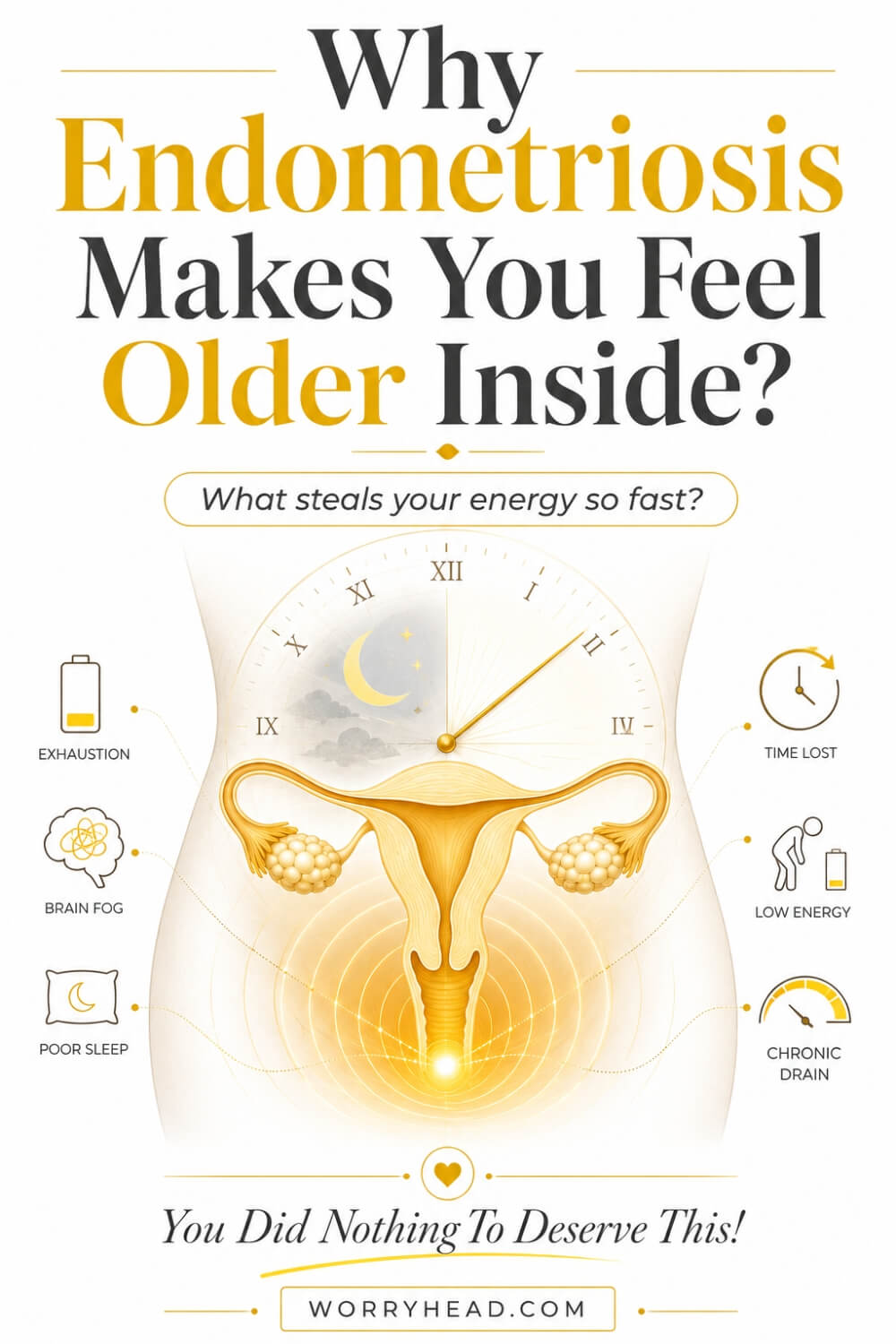
Check Fatigue Beyond Endometriosis
Please do not assume every ounce of exhaustion must be explained by endometriosis just because you already have the diagnosis. Fatigue is recognised as part of endometriosis, but tiredness can also have other causes, including iron deficiency anaemia, and NHS guidance lists low energy, shortness of breath, palpitations and pale skin among possible clues.
This matters especially if you have heavy bleeding, your tiredness has become noticeably worse, or you feel physically different from your usual pattern. Tell your GP or specialist rather than simply trying to become better at coping, because some contributors can be investigated and treated. My wife’s history taught me never to admire endurance so much that we stop asking whether something medical has changed. You deserve support for what is treatable as well as compassion for what is chronic.
Make Hard Days Easier
A difficult day does not need to become a test of how independent you can remain. Put frequently used things where you can reach them, keep simple food available, sit for tasks that do not require standing, prepare a heat pack if warmth helps you, and make the route between bed, bathroom and the rest of your home easier when symptoms are severe. None of this is dramatic; it is simply reducing unnecessary effort.
Partners can help here without taking over. I have learned that useful support often means noticing the small friction points before my wife has to ask: carrying something, taking over a chore, changing a plan or making sure she does not spend her limited energy proving she can do what I already know she can do. Your value is not measured by how many ordinary tasks you can complete while hurting. On the hardest days, saving energy for eating, washing, medication, rest or something that still feels like you can be a very sensible choice.
Keep Pieces of Yourself
Endometriosis can slowly turn your calendar into appointments, recovery days, symptom calculations and things you had to cancel. That is why protecting small pieces of your identity matters so much, even when the activity has to change. Ask yourself what still makes you feel recognisably you: music, reading, humour, clothes you love, learning, friendship, creativity, work you value or simply sitting somewhere that makes you feel part of the world.
You may not be able to do these things in the same way or for the same length of time, and grieving that difference is allowed. What I never want my wife to believe is that the woman she was disappeared because her body demanded a different life. I still see her personality, intelligence, stubbornness, warmth and everything I loved before illness changed the practical details. Please do not hand your whole identity over to a diagnosis simply because it has become loud.
Let People Help Properly
Help feels very different when it protects your dignity instead of making you feel incapable. The people around you may genuinely want to support you, but vague offers such as “let me know if you need anything” still leave you with the work of noticing, deciding, asking and sometimes feeling guilty. Give trusted people something concrete: drive me to this appointment, make dinner tonight, carry the shopping, stay with the children for an hour, or believe me when I say I need to cancel.
For partners, I think this matters enormously. Support should not make the woman you love feel managed, watched or reduced to a patient; it should remove weight while leaving her choices intact. I cannot feel my wife’s pain for her, but I can make sure she does not carry every practical consequence of that pain alone. Needing help does not make you less capable or somehow older than everyone around you. Sometimes it simply means somebody finally understands what the day is costing you.
Why Endometriosis Makes You Feel Older Inside Emotionally?
There is another kind of ageing that has nothing to do with wrinkles, birthdays or what your body looks like from the outside. It happens when life starts asking you to think about limitations, recovery and consequences at an age when you imagined you would still be saying yes without calculating the cost.
I have come to understand why endometriosis makes you feel older inside when I watch my wife hesitate before things she once would have done without a second thought. It is not that she suddenly became less adventurous or less interested in living; experience taught her that one enjoyable afternoon can sometimes be followed by hours or days of pain, exhaustion or cancelled plans.
That changes the way you approach your own future. Instead of asking, “What would I love to do?”, you may start asking, “Will my body let me do it?”, and those are two very different ways of moving through life.
There can also be a strange disconnect when people around you still see the same face, while you feel as though you have lived an extra decade inside your own body. Someone might tell you that you are “too young to be this tired” or assume that because you look well you should be able to keep up, without realising how painful those innocent words can become.
I have seen my wife get dressed, look completely like herself and still know that what nobody else can see is how much negotiation took place before we even left the house. I know the pauses, the calculations, the change of plans and the quiet question behind some days: “Will I manage this without paying for it later?”
What touches me most is that illness can make you mourn stages of life before you were ready to leave them. You can miss spontaneity, confidence, sexuality, work, travel, socialising or simply the feeling of waking up and assuming your body will cooperate, and none of that means you are ungrateful for the life you still have.
As her husband, I do not want my wife measuring herself against the woman she was before pain changed the rules. When I look at her, I do not see somebody who has become less of a woman because she needs more rest, more planning or more help; I see the same woman whose body has asked far more from her than most people will ever understand.
Sometimes love means reminding the person beside you that their slower pace has not made them boring, old, difficult or burdensome. It means helping them believe that the parts of themselves they fear they have lost are still there, even if those parts now need a different kind of life in which to breathe.
And if you recognise yourself in that, I want you to know that feeling older than your years does not mean you have stopped living or that the best part of you belongs to the past. Your life may need different boundaries now, but there is still room inside those boundaries for desire, humour, intimacy, ambition, curiosity and moments that make you feel unmistakably like yourself again.
How Endometriosis Makes You Feel Older Inside in a Relationship?
One part of why endometriosis makes you feel older inside is the way a relationship can quietly become organised around pain, energy, appointments, recovery and what your body might tolerate that day. NICE recognises that endometriosis can significantly affect relationships and sexuality, while research involving partners shows that its impact can reach far beyond the person experiencing the physical symptoms.
Intimacy can change too, particularly when pelvic pain or pain during sex turns something that once felt spontaneous into something requiring caution, communication or sometimes avoidance. Systematic reviews have found that endometriosis can negatively affect sexual functioning and couple relationships, but that does not mean affection, attraction or closeness have disappeared simply because sex has become complicated.
That distinction became incredibly important in my marriage because I never wanted my wife to mistake what her body could not comfortably do for what I felt about her. When the woman you love already feels that illness has taken pieces of her younger self, the last thing she needs is to wonder whether her partner now sees a patient where he once saw his woman.
I have learned that love sometimes means protecting that difference very deliberately. I can help when she is struggling, change plans, carry more of the practical load or recognise when she needs rest, while still making sure she knows that needing my help has not made her fragile, undesirable or somehow less equal beside me.
For me, supporting her is not about becoming a martyr or keeping score of what illness asks from our marriage; I am healthy, I can carry more when more needs carrying, and I would rather use that strength than watch the woman I love exhaust herself trying to prove she does not need anybody. What matters is that help never becomes control, because she still deserves choices, independence, affection, laughter and the feeling that our relationship contains far more than symptoms.
And for both of us, perhaps the most important lesson has been that a changed life is not automatically an old life. We may have to plan things other couples do spontaneously, change what intimacy looks like on painful days and sometimes build our world around what her body can manage, but I still want her to feel wanted inside that world, because illness can change the shape of a relationship without taking away the love that made two people choose each other in the first place.
When to Seek Medical Help?
Feeling exhausted, slower or less physically capable can become so familiar with endometriosis that you start accepting almost everything as part of the condition. I would be careful with that. Having endometriosis does not mean every new symptom, worsening pain or deeper level of fatigue should automatically be filed under “this is just my endo”.
If pain, exhaustion, bleeding or other symptoms are affecting your everyday life, work or relationship, or treatment that previously helped is no longer controlling things, make an appointment with your GP or endometriosis team. The NHS specifically advises seeking medical review when endometriosis symptoms interfere with normal life or become worse despite treatment.
The same applies if your periods become noticeably heavier, more painful or irregular, you develop bleeding between periods, or bowel and bladder symptoms change. You do not need to wait until you are completely unable to function before asking somebody to reassess what is happening.
I would pay particular attention to fatigue that feels different from your usual exhaustion. Heavy menstrual bleeding can be associated with tiredness and shortness of breath, and the NHS notes that blood tests may be used to look for problems such as iron deficiency anaemia. If you suddenly feel as though your body has aged ten years in a few months, tell your doctor what has changed rather than assuming you simply need to become better at coping.
There are also occasions when pain deserves more urgent attention. If pelvic or period pain becomes severe or clearly worse than usual and your usual pain relief is not helping, NHS guidance recommends an urgent GP appointment or NHS 111. Sudden severe pelvic pain, particularly when accompanied by nausea or vomiting, also needs urgent assessment because ovarian cyst complications are among the possible causes.
If there is any possibility you could be pregnant and you develop pelvic or abdominal pain with bleeding or other concerning symptoms, contact a GP or NHS 111 promptly because pregnancy-related causes such as ectopic pregnancy need to be ruled out. A sudden intense abdominal pain together with severe dizziness, fainting, sickness or looking very pale is an emergency for which NHS guidance advises calling 999 or attending A&E.
None of this is meant to make you frightened of every flare. If you have lived with endometriosis for years, you probably know your ordinary pattern better than anybody, and that knowledge matters. What I want you to notice is the moment your body stops following that familiar pattern: pain that is suddenly different, bleeding that has changed, exhaustion that has become much deeper, or something that simply does not feel right.
One lesson I have learned beside my wife is that being accustomed to suffering can sometimes raise your threshold for asking for help far too high. You become so good at functioning while unwell that you can forget that worsening symptoms still deserve investigation.
Please never think you have to arrive at an appointment looking completely broken before you have earned the right to be taken seriously. If your body is changing what you can do, how you sleep, how you work, how you move or how much of your life you can participate in, that information is medically relevant, and you deserve the chance to explain it properly.
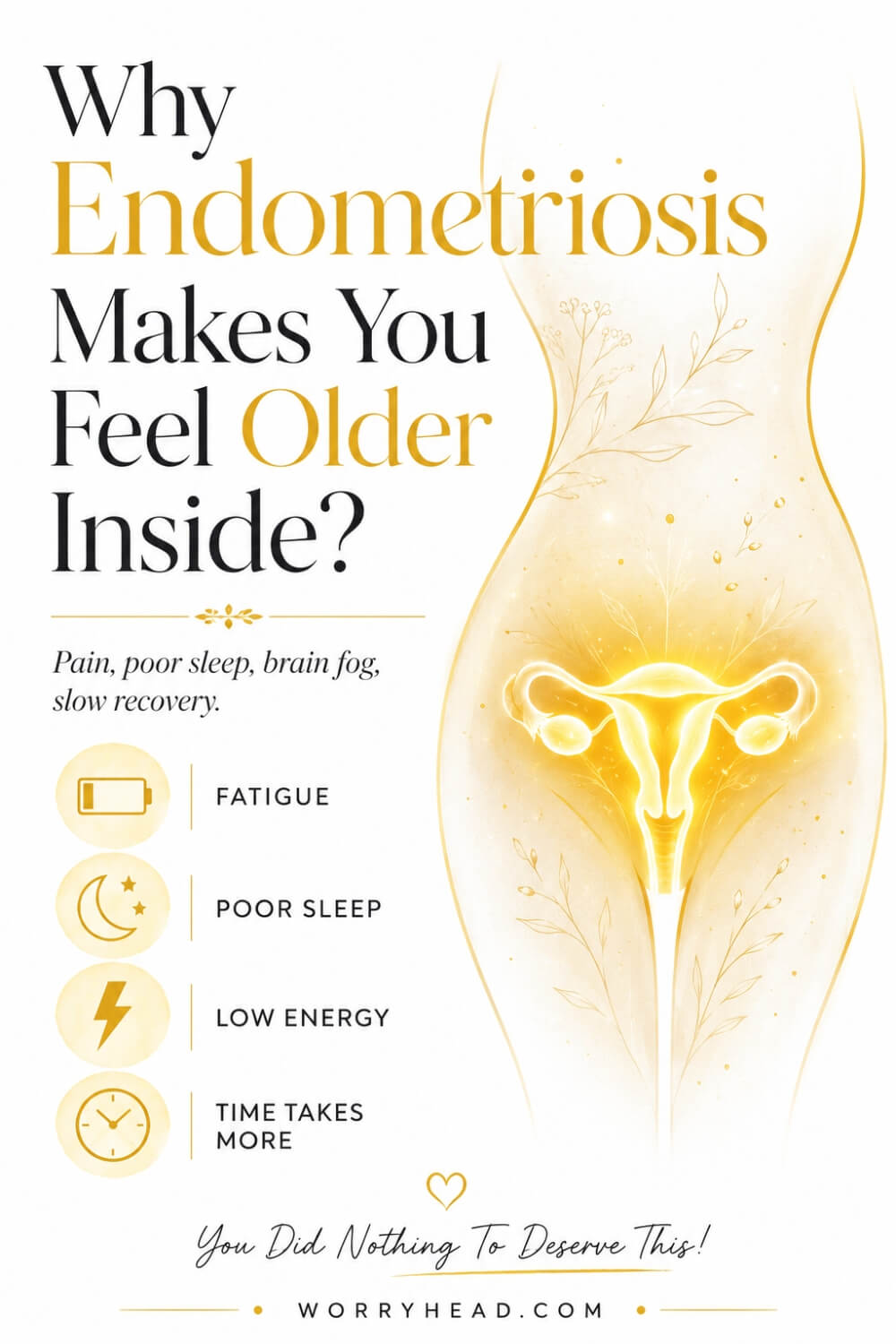
Questions to Ask Your Doctor
When you tell a doctor that you feel older, exhausted or less capable than you used to, the phrase alone may not explain what is actually happening to your life. I would describe the change in practical terms: how far you can walk, how long you can stand, how well you sleep, what happens after work, what you have stopped doing and how long it now takes you to recover. NICE recognises that endometriosis can affect daily living, relationships, work, fitness and mental health, so these details are not side issues; they are part of understanding the burden of the condition.
You do not need to ask every question below in one appointment. Choose the ones that match what has changed in your body and take them with you, especially if pain or nerves make it difficult to remember everything once you are sitting in front of the doctor.
“Could something besides endometriosis be contributing to how exhausted I feel?”
I think this is one of the most important questions because having one diagnosis should not make every future symptom automatically belong to it. Ask whether your fatigue, weakness, breathlessness, dizziness, sleepiness or reduced stamina suggest that something else should also be investigated.
“Should we check me for iron deficiency or anaemia?”
If your periods are heavy or prolonged, this is worth discussing rather than simply accepting exhaustion as part of your normal life. NHS guidance notes that heavy periods can lead to investigations for conditions such as iron deficiency anaemia, which matters because a treatable problem can sometimes be sitting on top of an already exhausting chronic condition.
“Why has my pain or recovery time changed?”
Tell your doctor what your previous baseline looked like and what is different now. Perhaps you once recovered from an outing that evening but now lose the following day, or perhaps pelvic pain has become more frequent rather than staying around your period. A change in your usual pattern deserves a conversation instead of being dismissed simply because endometriosis is already written in your notes.
“Could my sleep problems be making everything harder?”
Explain whether pain wakes you, prevents you falling asleep or leaves you unrefreshed despite spending enough time in bed. You can also mention snoring, restless sleep, daytime sleepiness or anything else that seems separate from pelvic pain, because the aim should be to understand the whole picture rather than deciding in advance that every tired day has one cause.
“Are my current treatments still right for me?”
If medication once helped but no longer controls your symptoms, or side effects are affecting your quality of life, say so clearly. ESHRE recommends shared decision-making when choosing treatments for endometriosis-associated pain, taking individual preferences, effectiveness and side effects into account, which means you are allowed to discuss what treatment is costing you as well as what it is helping.
“What are the realistic goals of my treatment now?”
This is a question I wish more people felt comfortable asking. Are you trying to reduce pain, control bleeding, improve daily function, protect fertility, manage a particular lesion, improve sexual comfort, or achieve several of these things at once? Knowing the goal makes it much easier to judge whether a treatment is actually helping your life rather than simply continuing it because it was prescribed months or years ago.
“Do my symptoms suggest I need specialist endometriosis care?”
If symptoms are persistent, treatment is not working, or there is suspected or confirmed deep endometriosis, endometrioma, or disease involving areas such as the bowel, bladder or ureter, ask whether specialist assessment is appropriate. NICE recommends coordinated care and specialist services with access to expertise including advanced gynaecological surgery, colorectal surgery, urology and pelvic-pain management where needed.
“Could pain management support help me function better?”
Pain management should not mean somebody has decided the disease is “in your head”. Persistent pain can become complicated, and NICE includes access to multidisciplinary pain management within appropriate endometriosis services. Sometimes the goal is not pretending pain has disappeared but helping you sleep, move, work and live better while the underlying condition is also being addressed.
“What can I safely do about the loss of strength and fitness?”
If pain has gradually made you move less, tell your doctor rather than jumping into an aggressive exercise plan because you feel guilty about becoming deconditioned. Ask whether your particular symptoms warrant input from physiotherapy, pelvic-health physiotherapy or another professional, whilst remembering that ESHRE says evidence is not strong enough to recommend one specific non-medical intervention as a proven treatment for endometriosis pain itself.
“Could my bowel, bladder or sexual symptoms be connected?”
Mention painful bowel movements, cyclical bowel symptoms, urinary pain, difficulty emptying your bladder, pain during or after sex, or symptoms that seem to follow your cycle. Do not leave them out because you feel embarrassed or because the appointment was booked for “pelvic pain”; the location and pattern of symptoms may change what your clinician needs to consider.
“How should we measure whether I am actually improving?”
Pain scores matter, but I would also ask whether you can judge progress by things that matter to your life. Can you work a little more comfortably, sleep longer, walk farther, recover faster, have sex with less pain, make plans more confidently or spend fewer days completely depleted? Quality of life is a recognised part of endometriosis care, and ESHRE specifically recommends considering it alongside psychological well-being rather than treating pain as the only outcome worth discussing.
“What changes should make me come back sooner?”
Before you leave, ask what your doctor wants you to watch for and when they would want to review you again. Having a clear plan can stop you spending months wondering whether worsening symptoms are “bad enough” to mention.
I would also take a short symptom record if you can, but not twenty pages that you feel pressured to defend. Write down what hurts, when it happens, bleeding changes, sleep, fatigue, bowel or bladder symptoms, what you can no longer do and what happens after you push yourself. That gives the doctor something much more useful than simply saying, “I feel exhausted all the time.”
Most importantly, do not minimise yourself in the consultation. I have watched my wife become so accustomed to coping that she can describe something incredibly difficult in a calm voice, and calmness can sometimes be mistaken for mildness.
You should not have to exaggerate your suffering to be believed, but you also do not need to protect the doctor from understanding how much your life has changed. Tell them what your body is costing you now, because the goal is not merely to prove that you can survive another year like this; it is to find out whether anything can be treated, adjusted, investigated or supported so that living inside your body becomes a little easier again.
Final Word on Why Endometriosis Makes You Feel Older Inside?
If there is one thing I want you to take from this, it is that feeling older than your years does not mean you have become weak, negative or somehow less alive. Endometriosis can change the way your body spends energy, how quickly you recover, how well you sleep, how confidently you make plans and how much thought goes into things other people do without thinking.
That is why endometriosis makes you feel older inside for some people. It is not proof that the disease has literally aged every cell in your body faster, and I would never make that claim. It is the lived weight of persistent pain, fatigue, disrupted sleep, heavy bleeding, reduced activity, repeated recovery and the emotional strain of having to negotiate with your own body every day.
I have watched that weight settle onto my wife slowly. It was not one dramatic moment when she suddenly became a different person. It was hundreds of smaller moments: choosing whether an outing was worth tomorrow’s pain, needing longer to recover, changing plans, resting when she wanted to participate, and sometimes looking at the life she once lived as though it belonged to somebody she used to know.
Yet I have never looked at her and thought she became less interesting, less attractive, less capable or less worthy because illness changed what her body could comfortably do. I still see the woman underneath all those calculations. I see the humour, stubbornness, intelligence, tenderness and strength that pain has never managed to take from her.
That is something I want you to remember about yourself too. Your pace may have changed without your value changing with it. You may need rest without being lazy, support without being helpless, boundaries without becoming difficult, and a quieter life at times without having given up on living.
Please also remember that not every worsening symptom should automatically be blamed on endometriosis. If your exhaustion, bleeding, pain, breathlessness, weakness, sleep or ability to function has changed, tell your doctor. There may be additional problems worth investigating, and chronic illness should never become a reason for somebody to stop looking when something feels different.
For partners, this is where love becomes practical. Do not make her prove that she is struggling before you step in. Learn what drains her, take some weight without taking away her independence, believe her when she says she cannot do something today, and remind her through your behaviour that needing help has not changed how you see her.
And if you are the woman reading this, I hope you stop measuring yourself against the version of you who had a different body, different symptoms and different limits. She is not your competition. You are still here, still worthy of love, still allowed to want things, still allowed to make plans, and still allowed to build a life that feels like yours, even if it now has to be built differently. That different life can still contain joy and meaning.
You have not failed because your body now asks for more rest, planning or recovery than it once did. Endometriosis may have changed your pace, but it has not reduced your worth, femininity, intelligence, loveability or right to a meaningful life. You are still you, even when illness makes that harder to feel.
If any part of this felt like your own story, I would genuinely love you to leave a comment below. You can also find my FREE 130+ page eBook at the bottom of this post, written for the moments when you need to feel understood, supported and reminded that what you are carrying matters.

About Me
Hi, I’m Lucjan! The reason why I decided to create this blog was my beautiful wife, who experienced a lot of pain in life, but also the lack of information about endometriosis and fibromyalgia for men…
READ MORE
Grab a FREE eBook!
“You Did NOTHING To Deserve This!”
Finally hear the words nobody ever said to you, that your pain is real, your tears make sense, and you did nothing to deserve endometriosis, the dismissal, or the way it has rewritten your life.
Related Questions You May Be Asking About Endometriosis Makes You Feel Older Inside
1. Does Feeling Older Inside Mean Endometriosis Is Actually Ageing My Body Faster?
Not necessarily. Feeling older is a subjective experience, and current evidence does not show that endometriosis simply makes your whole body biologically age faster. Chronic pain, fatigue, disrupted sleep, heavy bleeding, reduced activity and repeated recovery can make everyday life feel physically heavier. That difference between your chronological age and how old you feel can be very real without meaning your body has suddenly aged by years.
2. Can Endometriosis Fatigue Make Me Feel Much Older Than I Am?
Yes. Fatigue is recognised as an important part of endometriosis and can affect work, relationships, physical activity and quality of life. When you wake already depleted, need longer to recover after ordinary tasks and cannot rely on tomorrow’s energy, you can begin to feel far older than your age. It is also worth discussing persistent or worsening fatigue with a doctor because other treatable causes can coexist.
3. Why Can a Good Day Leave Me Exhausted Afterwards?
A better day can tempt you to catch up on everything pain forced you to postpone, so you may suddenly walk farther, clean more, socialise longer or work harder. If your body is already dealing with pain, poor sleep or reduced conditioning, that extra load may require more recovery afterwards. This does not mean you caused the flare; it means your available capacity can vary from day to day.
4. Does Feeling Older Mean My Endometriosis Has Become More Severe?
No. Feeling older, more tired or less physically capable does not tell you how extensive your endometriosis is. Symptom severity and disease extent do not always match closely, and people with relatively limited disease can experience significant pain while others with extensive disease may have fewer symptoms. A clear change from your usual pattern, however, is still worth discussing with your healthcare professional rather than assuming it is normal.
5. Can I Ever Feel Like Myself Again with Endometriosis?
Yes, although it may not mean returning to exactly the life you had before symptoms became difficult. Feeling like yourself again can come from protecting activities, relationships, interests and choices that still remind you who you are, while adapting the parts of life your body now handles differently. I have learned beside my wife that needing a different pace does not erase personality, femininity, ambition or ability to feel alive.
Endometriosis Makes You Feel Older Inside References
- https://www.who.int/news-room/fact-sheets/detail/endometriosis
- https://www.nhs.uk/conditions/endometriosis/
- https://www.nice.org.uk/guidance/ng73
- https://www.nice.org.uk/guidance/ng73/chapter/Recommendations
- https://www.nice.org.uk/guidance/ng73/chapter/Recommendations-for-research
- https://www.eshre.eu/guideline/endometriosis
- https://www.eshre.eu/-/media/sitecore-files/Guidelines/Endometriosis/ESHRE-GUIDELINE-ENDOMETRIOSIS-2022_2.pdf
- https://pubmed.ncbi.nlm.nih.gov/38842866/
- https://www.ukbiobank.ac.uk/publications/associations-between-biological-aging-and-the-risk-of-endometriosis-evidence-from-a-large-population-based-prospective-cohort-study/
- https://pubmed.ncbi.nlm.nih.gov/27522645/
- https://pubmed.ncbi.nlm.nih.gov/29947766/
- https://pubmed.ncbi.nlm.nih.gov/34756643/
- https://pubmed.ncbi.nlm.nih.gov/42056713/
- https://pubmed.ncbi.nlm.nih.gov/32455618/
- https://pubmed.ncbi.nlm.nih.gov/33123695/
- https://pubmed.ncbi.nlm.nih.gov/32781264/
- https://pubmed.ncbi.nlm.nih.gov/37182389/
- https://pubmed.ncbi.nlm.nih.gov/35477879/
- https://pubmed.ncbi.nlm.nih.gov/38238741/
- https://www.nhs.uk/symptoms/tiredness-and-fatigue/
- https://www.nhs.uk/conditions/heavy-periods/
- https://www.nhs.uk/symptoms/period-pain/
- https://www.nhs.uk/conditions/ovarian-cyst/
- https://www.nhs.uk/conditions/ectopic-pregnancy/
- https://www.chelwest.nhs.uk/services/womens-health-services/gynaecology-services/endometriosis
- https://www.epsom-sthelier.nhs.uk/endometriosis/
- https://www.leedsth.nhs.uk/patients/resources/endometriosis-2/
- https://en.wikipedia.org/wiki/Endometriosis
