Periods and Endometriosis: Pain, Bleeding, Clots, and Cycle Changes
Have you ever wondered why periods and endometriosis can bring pain, bleeding, clots, or cycle changes that feel far beyond a “normal” monthly period?
If you find yourself planning work, sleep, clothes, journeys, or even where you sit around bleeding and pain, you are not overthinking what your body is doing. And if your cycle has changed enough to make you question what is normal for you anymore, that uncertainty deserves attention too.
Endometriosis can make periods intensely painful and may cause heavier bleeding or bleeding between periods. Clots can occur with heavy flow, but they are not specific to endometriosis, and changes in timing or flow can have other causes that deserve proper medical assessment if symptoms are severe.
I am not a clinician, and what I share comes from being a husband, blogger and researcher who has spent years learning because of my wife’s experience; for the medical context behind my writing, I use sources such as the NHS, NICE, WHO, ESHRE, and published research where it is relevant.
If you want to place these period changes beside the rest of what your body may be telling you, my guide to the broader symptoms endometriosis can cause gives that wider picture without treating every symptom as though it has only one possible explanation.
One detail that is easy to miss is that clots are not an endometriosis test. The NHS lists clots larger than about 2.5 cm as one feature of heavy periods, and endometriosis is only one of several possible reasons your bleeding may become unusually heavy.
That means two things can be true at once: endometriosis may be part of why your periods are so difficult, while a new change in bleeding, menstrual flow, cycle timing or clotting may still deserve attention in its own right. NICE specifically identifies period-related pain that affects daily activities and quality of life as a reason to suspect endometriosis, which is very different from dismissing disabling pain as simply something you are supposed to tolerate every month.
I have watched my wife live with endometriosis long enough to know how inadequate the phrase “bad period” can sound when pain begins dictating plans, rest and the shape of an entire day. As her husband, one of the hardest lessons was learning not to reduce what she was living through to a number on a pain scale, but to notice what those days were actually taking away from her.
If your periods have become something you fear, plan around or no longer recognise as your old normal, the next part will help you put those patterns into clearer words and understand what may be worth discussing with your doctor.
Changes in periods, pain, bleeding or clots can be frightening and exhausting, particularly when you are unsure what they mean. My free eBook cannot interpret symptoms, but it offers understanding for the emotional side of endometriosis while this guide explains the medical questions worth discussing.
You Did NOTHING To Deserve This!
Endometriosis Validation for Women with Endo
- What Periods and Endometriosis Can Tell You About Pain, Bleeding, Clots, and Cycle Changes?
- Track When the Pain Begins
- Record How Heavy Bleeding Becomes
- Notice Changes in Blood Clots
- Watch How Long Bleeding Lasts
- Record Spotting Between Your Periods
- Track Bowel and Bladder Changes
- Notice Pain Beyond Your Pelvis
- Record Fatigue After Heavy Bleeding
- Compare Patterns Across Several Cycles
- Explain the Impact on Daily Life
- Why Periods and Endometriosis Do Not Always Follow One Pattern?
- How Periods and Endometriosis Affect Life Beyond Bleeding?
- When to Seek Medical Help?
- Questions to Ask Your Doctor
- Conclusion on Periods and Endometriosis
- FREE eBook
- You Did NOTHING To Deserve This!
What Periods and Endometriosis Can Tell You About Pain, Bleeding, Clots, and Cycle Changes?
A painful period linked to endometriosis is not simply an ordinary period with the pain turned up a little higher. The pain can begin before bleeding starts, build as your period approaches and continue for days, sometimes alongside pelvic, back, bowel or bladder pain that makes the whole experience feel much bigger than menstruation alone.
One reason this can happen involves inflammatory chemicals such as prostaglandins, which are involved in pain and uterine contractions and have been found at altered levels in endometriosis-related tissues. These chemicals are only part of a much more complicated pain picture, because lesions, inflammation, adhesions, deep disease and changes in how nerves process persistent pain may all contribute to what you actually feel.
That is why two periods that look almost identical on a calendar can feel completely different inside your body. You may have cramping that spreads into your back or legs, pain when opening your bowels, pressure around your pelvis or a deep aching sensation that starts before the first visible sign of blood.
Bleeding tells another part of the story because endometriosis does not automatically explain every unusually heavy period. Heavy menstrual bleeding can occur alongside the condition, but fibroids, adenomyosis, hormonal or ovulatory changes, bleeding disorders, certain medicines and the changes that happen around perimenopause can also alter how much you bleed.
A period lasting longer than seven days, needing two types of period protection together, repeatedly bleeding through clothing or bedding, or having to organise your day around access to a toilet are all practical signs that the amount of bleeding deserves to be taken seriously. You do not need to measure every millilitre of blood before you are allowed to say, “This is too much for me.”
Clots also need context rather than panic, because having them does not tell you where endometriosis is located, how extensive it is or how severe your disease may be. What matters more is whether clotting is becoming different from your usual pattern and whether it sits beside heavier flow, worsening pain, longer periods, exhaustion or other changes.
A 2024 international survey of 983 participants with endometriosis illustrates just how varied these menstrual experiences can be: 75% reported period pain, 49% heavy menstrual periods, 45% irregular bleeding or spotting, 44% irregular menstrual cycles and 52% reported blood clots during a period. Those figures do not prove that endometriosis directly caused every one of those symptoms, but they do show why your menstrual pattern deserves to be looked at as a whole rather than reducing everything to one symptom.
Irregular cycles or spotting can also be influenced by hormonal treatment, changing ovulation, age and other gynaecological conditions, which is why a new pattern may sometimes matter more than whether your cycle fits somebody else’s definition of normal. What makes periods and endometriosis especially worth tracking is the relationship between when something happens and what else your body is doing at exactly the same time.
Writing down when pain begins, when bleeding starts, how long it lasts, whether you flood or leak, when clots appear, whether you spot between periods and whether bowel or bladder symptoms worsen around menstruation can turn a vague memory into something much more useful at an appointment. NICE specifically recommends a pain and symptom diary because patterns can help you explain what is happening and how much it is interfering with your daily life.
For years, I watched a period take far more from my wife than blood. I saw days when getting through the bleeding and pain had already taken so much energy that by the time the worst of it eased, there was very little of her day left to reclaim, and that taught me that the useful question was never simply, “How bad is your period?”
It was, “What is this period actually doing to your life?” These are the practical things I wish more of us knew to notice, record and talk about:
- Track when the pain actually begins
- Record how heavy bleeding becomes
- Notice changes in your blood clots
- Watch how long bleeding lasts
- Record spotting between your periods
- Track bowel and bladder changes
- Notice pain beyond your pelvis
- Record fatigue after heavy bleeding
- Compare patterns across several cycles
- Explain the impact on daily life

Track When the Pain Begins
Do not wait until the bleeding starts to begin paying attention to pain. Note whether the first warning is a dull ache, sharp pelvic pain, back pain, pressure, bowel discomfort or something else, and write down whether it appears hours or days before your period. That timing can matter because endometriosis symptoms are often cyclical, yet they do not always stay neatly inside the days when you are bleeding.
I would also record what the pain stops you from doing, because “8 out of 10” tells only part of the story. If you cannot sleep, drive, work, cook, walk normally or concentrate, write that down too. Over several cycles, you may start seeing a pattern that is difficult to explain from memory alone, and that gives you something concrete to take into an appointment rather than trying to reconstruct one of your worst days while sitting in a clinic room.
Record How Heavy Bleeding Becomes
“Heavy” can mean very different things from one person to another, so give yourself details instead of one vague word. Record how often you change pads or tampons, how often you empty a menstrual cup, whether you need two forms of protection together, and whether you bleed through clothes or bedding. The NHS uses these kinds of practical signs when describing heavy periods, which is useful because you do not need to measure your blood loss in millilitres to show that bleeding is affecting your life.
Also note whether the heaviest flow is concentrated into a few hours or continues for days. Write down whether you cancel plans, avoid leaving home, wake repeatedly at night or choose clothes around the fear of leaking. Those details show the real cost of bleeding, and sometimes that functional impact says more than simply writing “heavy period” in a symptom diary.
Notice Changes in Blood Clots
Seeing clots can be frightening, especially when nobody has ever explained what they may mean. Small clots can occur during menstruation, particularly when flow is heavier, so the useful thing to track is change: whether they are becoming larger, more frequent or appearing alongside much heavier bleeding, worsening pain or longer periods. A clot on its own cannot tell you where endometriosis is or how extensive it may be.
If clots are part of your pattern, note their approximate size and how often you see them rather than trying to inspect every period obsessively. The NHS includes clots larger than about 2.5 cm among signs that can accompany heavy periods. What matters is giving your doctor a clear picture of what has changed for you, because a new bleeding pattern may need assessment rather than being automatically blamed on endometriosis.
Watch How Long Bleeding Lasts
Length matters as much as heaviness. Mark the first day of proper bleeding and the final day, and distinguish full flow from light spotting if you can, because saying “my period lasted nine days” is much clearer than trying to remember it several weeks later. The NHS lists periods lasting longer than seven days as one feature of heavy menstrual bleeding, but your own change from your usual pattern is important too.
Pay attention to whether bleeding now starts earlier, drags on after the pain has eased or leaves only a short break before spotting begins again. A calendar can make this surprisingly obvious. If a large part of every month is being spent bleeding, spotting, recovering from bleeding or worrying about the next cycle, write that down because the impact on your life is part of the medical story, not an irrelevant side note.
Record Spotting Between Your Periods
Spotting between periods is worth recording separately instead of folding it into your normal period. Note the date, colour and approximate amount, whether it happens once or repeatedly, and whether it appears after sex, exercise or around another point in your cycle. Endometriosis can be associated with irregular bleeding, but bleeding between periods can have many causes, so it should not automatically be explained away by an existing diagnosis.
This is one of those symptoms where a simple calendar can prevent important details disappearing into a blur. If the spotting is new, persistent or becoming more frequent, mention it to your GP rather than assuming it is simply another thing you have to tolerate. The NHS specifically advises seeking medical advice for bleeding between periods, particularly when it accompanies heavy periods or other pelvic symptoms.
Track Bowel and Bladder Changes
Your period diary does not have to be only about blood. Write down whether you develop pain opening your bowels, diarrhoea, constipation, rectal pressure, painful urination, urinary urgency or other bowel and bladder changes around the same point in each cycle. NICE highlights cyclical gastrointestinal and urinary symptoms as patterns that can raise suspicion of endometriosis, particularly when they occur alongside other typical symptoms.
The timing is what can make these notes especially useful. A symptom that seems random when remembered months later may look very different when you can see that it repeatedly appears before or during menstruation. You do not need to diagnose where disease is located yourself; your job is simply to describe what your body is doing accurately enough that a clinician can understand the pattern and decide what needs investigating.
Notice Pain Beyond Your Pelvis
Do not erase a symptom from your notes simply because it does not feel like “period pain”. Record pain in your lower back, hips, groin or legs when it follows a menstrual pattern, and note unusual cyclical symptoms elsewhere in the body if they repeatedly appear with your period. Endometriosis most commonly affects the pelvis, but symptoms can vary considerably, and the condition can sometimes occur beyond the pelvic cavity.
What I want you to avoid is deciding in advance that a symptom is either definitely endometriosis or definitely unrelated. Write down what happens, where you feel it, when it begins, how long it lasts and what makes it better or worse. That neutral description gives your doctor better information and protects you from having to rely on memory when several different kinds of pain are happening at once.
Record Fatigue After Heavy Bleeding
Fatigue after a difficult period deserves more than the word “tired”. Note whether you feel unusually weak, dizzy, breathless, foggy or unable to recover after heavier bleeding, particularly if the pattern is getting worse. Heavy periods can contribute to iron deficiency anaemia, and the NHS notes tiredness and shortness of breath among symptoms that can accompany heavy bleeding, with blood tests sometimes used to check for iron deficiency.
Track how long the exhaustion lasts and what it prevents you from doing. If you sleep for a full night but still feel as though your body has nothing left, that is useful information to bring to your GP. My wife’s experience taught me that recovery can become almost invisible to everyone else, because the bleeding may have stopped while the body is still paying for what it has been through.
Compare Patterns Across Several Cycles
One difficult month can tell you something, but several months can reveal a pattern. Use whatever method you will genuinely keep up with, whether that is a paper calendar, notes on your phone or a symptom tracker, and record the same basic details each cycle so you can compare like with like. NICE recommends a pain and symptom diary because it can support discussions with healthcare professionals.
Look for changes rather than perfection. Is the pain beginning earlier, is the heaviest bleeding lasting longer, are clots becoming more frequent, or are bowel and bladder symptoms appearing at the same stage of each cycle? You are not collecting data to prove that you are ill enough. You are creating a clearer history so that when you are asked, “How long has this been happening?”, you can answer from evidence instead of trying to remember months of painful days all at once.
Explain the Impact on Daily Life
This may be the most important part of your notes because symptoms are not experienced in isolation from the rest of your life. Write down when pain or bleeding makes you miss work, cancel plans, avoid sex, wake repeatedly, stay close to a toilet, change clothes after leaking or depend on someone else for ordinary tasks. NICE specifically treats period-related pain affecting daily activities and quality of life as clinically relevant when considering endometriosis.
Please do not minimise those details because somebody else may have it worse. If your period takes away your ability to function normally, that matters. I learned this beside my wife: the most revealing question was rarely “How much does it hurt?” but “What could you not do because of it today?” That question turns an invisible symptom into a human consequence, and sometimes that is what finally helps another person understand the scale of what you are carrying.
Why Periods and Endometriosis Do Not Always Follow One Pattern?
One of the most confusing things about periods and endometriosis is that what you feel does not always neatly reflect how much disease a doctor can see. Someone with extensive endometriosis may experience a very different menstrual pattern from someone with apparently limited disease, and research continues to show that overall pain intensity does not consistently correspond with conventional disease stage.
That matters because a scan report, stage number or previous operation should never become a reason for somebody to dismiss what your period is doing to you now. NICE specifically recommends treating endometriosis according to your symptoms, preferences and priorities rather than basing treatment simply on the stage assigned to the disease.
Even imaging has limits, particularly when disease is superficial, so a normal ultrasound does not automatically mean that endometriosis has been ruled out. NICE now explicitly advises clinicians not to exclude the condition after a normal examination or ultrasound when symptoms continue to suggest it, and further assessment may still be appropriate.
This is important when your monthly reality feels far more severe than the reassurance you have been given by a test result. You might be dealing with disabling cramps, pain before your period begins, bowel or bladder symptoms around menstruation and days of recovery while still being told that an investigation looked reassuring.
Your bleeding pattern can be equally complicated because the amount of blood you lose does not provide a simple measurement of how much endometriosis you have. Heavy or changing periods can also occur for other reasons, which means a clinician may need to look beyond an existing endometriosis diagnosis rather than assuming every new menstrual change has the same explanation.
What deserves attention is the whole picture: how your symptoms have changed, what happens around your cycle, how much function you lose and whether treatments that once helped are no longer controlling what you feel. NICE recognises persistent or recurrent symptoms and symptoms that have a detrimental effect on daily living as reasons for referral for further investigation and management.
Living beside my wife taught me why this distinction matters so much, because there were years when what she was living through could never have been understood properly from the word “period” written in a medical record. I could see what those days actually meant: plans disappearing, energy vanishing and ordinary things becoming harder while the outside world carried on as though menstruation were merely an inconvenience.
There is something heartbreaking about watching the person you love learn to prepare for suffering because experience has taught her that the calendar may bring it back again. As her husband, I could not remove the disease from her body, but I could believe what she was telling me, notice when her pattern changed and stand beside her when she needed those changes taken seriously.
That is what I want for you too: not fear of every different period, but permission to recognise when your own normal has changed. Your symptoms do not need to match another woman’s, a textbook diagram or a disease stage before they deserve a proper conversation with someone who is prepared to listen.
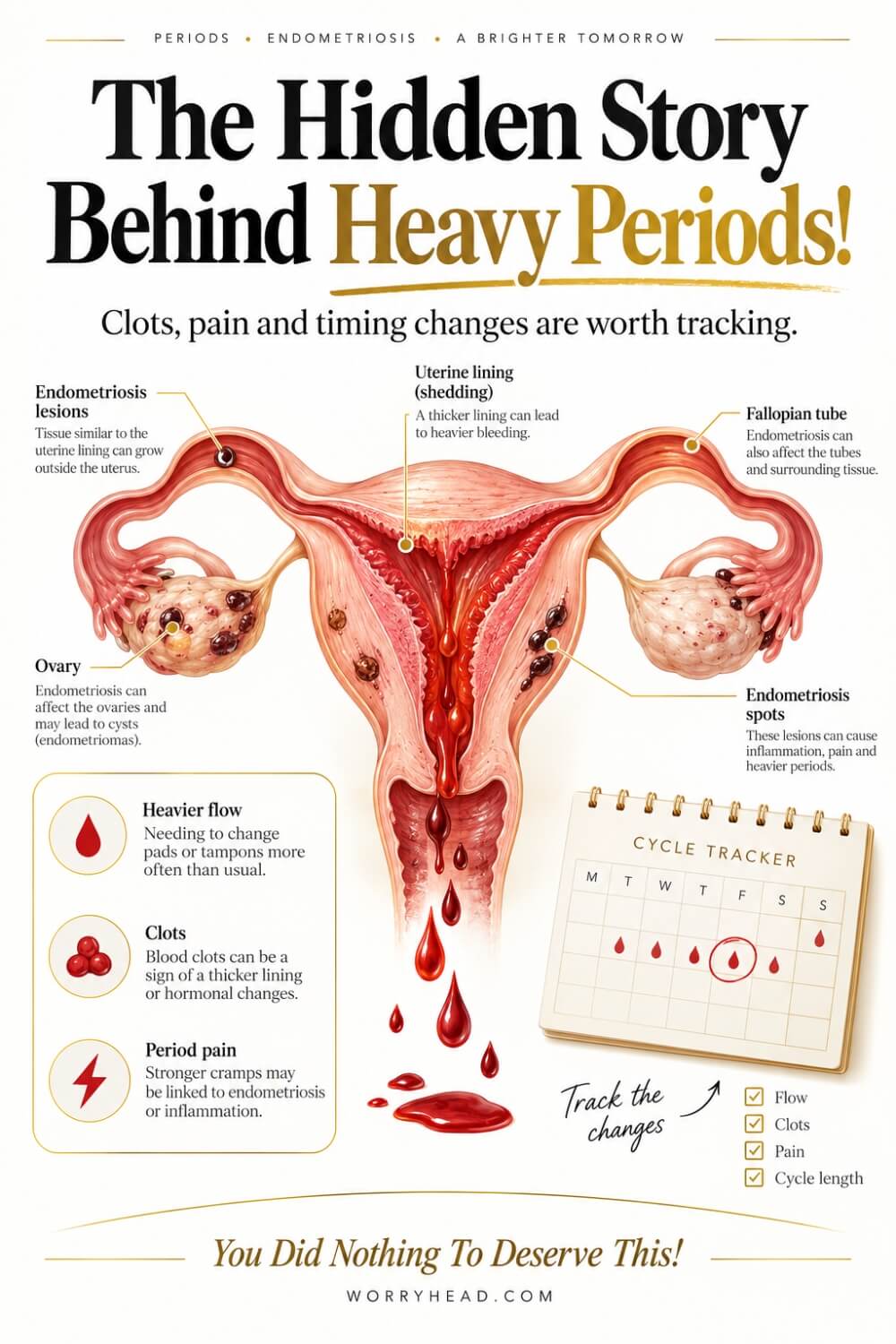
How Periods and Endometriosis Affect Life Beyond Bleeding?
When periods and endometriosis begin to shape your month, the damage is not confined to the hours when you are bleeding. Pain can affect sleep, concentration, work, exercise, sex and ordinary plans, while heavy bleeding can leave you feeling drained long after the visible part of the period has ended. If blood loss is substantial or prolonged, iron deficiency anaemia is one reason tiredness, lack of energy, breathlessness or palpitations may develop, which is why persistent heavy bleeding deserves assessment rather than simply being endured.
There is also a practical burden that rarely appears on a symptom checklist: carrying spare clothes, checking where the nearest toilet is, cancelling plans, waking during the night to change protection, or quietly calculating whether you can safely leave home for a few hours.
NICE recognises that endometriosis can have physical, sexual, psychological and social effects, and specifically asks clinicians to consider daily living, work, study, psychosexual needs and emotional wellbeing. That matters because a treatment has not really solved the problem for you if the only measure of success is that the bleeding looks slightly better while your life is still being organised around pain.
I have seen that difference beside my wife, because there were days when the period itself was only one part of what she had to get through; there was the exhaustion beforehand, the pain during it and the recovery afterwards.
From my side of the relationship, support sometimes meant changing plans without making her feel guilty, taking over ordinary things when her body had reached its limit, and understanding that intimacy could not be separated from pain simply because we loved each other.
What hurt me most was never having to help; it was seeing her apologise for needing help, as though a disease had somehow made her responsible for inconveniencing the person who had promised to stand beside her.
If you recognise yourself in that, please measure your cycle by more than dates and blood loss: notice what it costs you in sleep, work, confidence, movement, closeness and recovery, because those losses belong in the conversation with your doctor too. For us, learning to name those consequences changed the way we talked about her symptoms, because instead of asking only whether this month was “better” or “worse”, we could talk about what she had actually been able to do, what she had lost, and what support she needed from me.
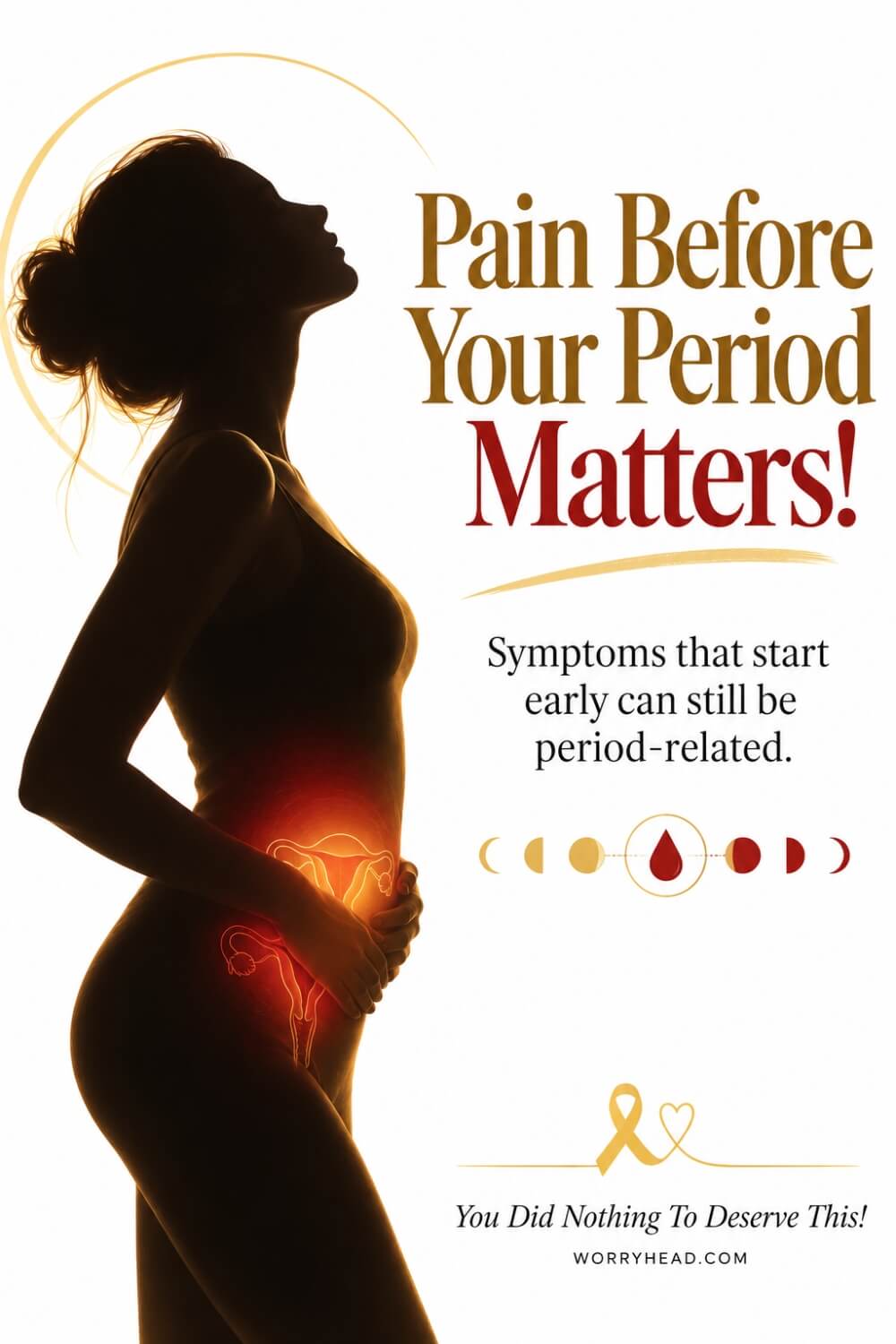
When to Seek Medical Help?
You do not need to wait until your period becomes unbearable before asking for medical help. If your bleeding, pain or cycle has changed enough that you are beginning to organise your life around it, that alone is worth discussing with your GP.
Book an appointment if your periods are becoming heavier, more painful or increasingly irregular, particularly when the change is different from what has always been normal for you. The NHS also advises seeing a GP when heavy periods affect everyday life, when period pain stops you doing your usual activities, or when you repeatedly need to change period products every one to two hours, use two types of protection together, bleed through clothing or bedding, pass clots larger than about 2.5 cm, or bleed for more than seven days.
I would also tell your doctor if the pain is no longer staying within what you think of as your period. Pain when opening your bowels, urinating or having sex, cyclical bowel or bladder symptoms, persistent pelvic pain, or symptoms that keep returning despite treatment are all relevant when endometriosis is being considered or monitored. NICE recommends referral for further investigation and management when symptoms persist or recur, when initial treatment is ineffective or cannot be tolerated, or when symptoms are having a detrimental effect on everyday activities.
Bleeding between periods deserves its own conversation rather than being automatically labelled “just endometriosis”. There are several possible causes, many of them treatable, and the NHS advises having bleeding between periods or after sex checked by a doctor or sexual health clinic.
Please also mention how you feel after the bleeding stops. If heavier periods are being followed by unusual exhaustion, weakness, breathlessness or a sense that your body never fully recovers before the next cycle begins, ask whether blood tests are appropriate. Heavy menstrual bleeding can contribute to iron deficiency anaemia, and the NHS notes that blood testing may be used to look for iron deficiency when investigating heavy periods.
There are times when you should seek help more quickly. If your pelvic or period pain becomes severe or noticeably worse than usual and pain relief is not helping, the NHS advises seeking an urgent GP appointment or contacting NHS 111.
If you have recently missed a period and then develop unusual vaginal bleeding together with abdominal or pelvic pain, seek urgent medical advice because an ectopic pregnancy is one possible cause that needs to be excluded promptly.
And if pelvic pain becomes severe or rapidly worsens and is accompanied by heavy vaginal bleeding, fainting, marked dizziness, difficulty breathing or feeling extremely unwell, that is no longer a situation to sit at home trying to decide whether you are “overreacting”. NHS guidance advises emergency assessment in circumstances such as severe worsening pelvic pain with heavy bleeding, faintness or breathing difficulty.
Most changes in your period will not mean that something dangerous is happening, and I do not want you reading this section frightened of your next cycle. What I want is the opposite: for you to know the difference between something worth recording for your next appointment and something that deserves quicker medical attention.
Living beside my wife has taught me that waiting for symptoms to become intolerable is a terrible standard for deciding whether somebody deserves help. You are allowed to say, “This has changed,” “This is stopping me living normally,” or simply, “I need somebody to look at this properly.”
Those are not dramatic statements. They are useful medical information, and you deserve to have them heard.
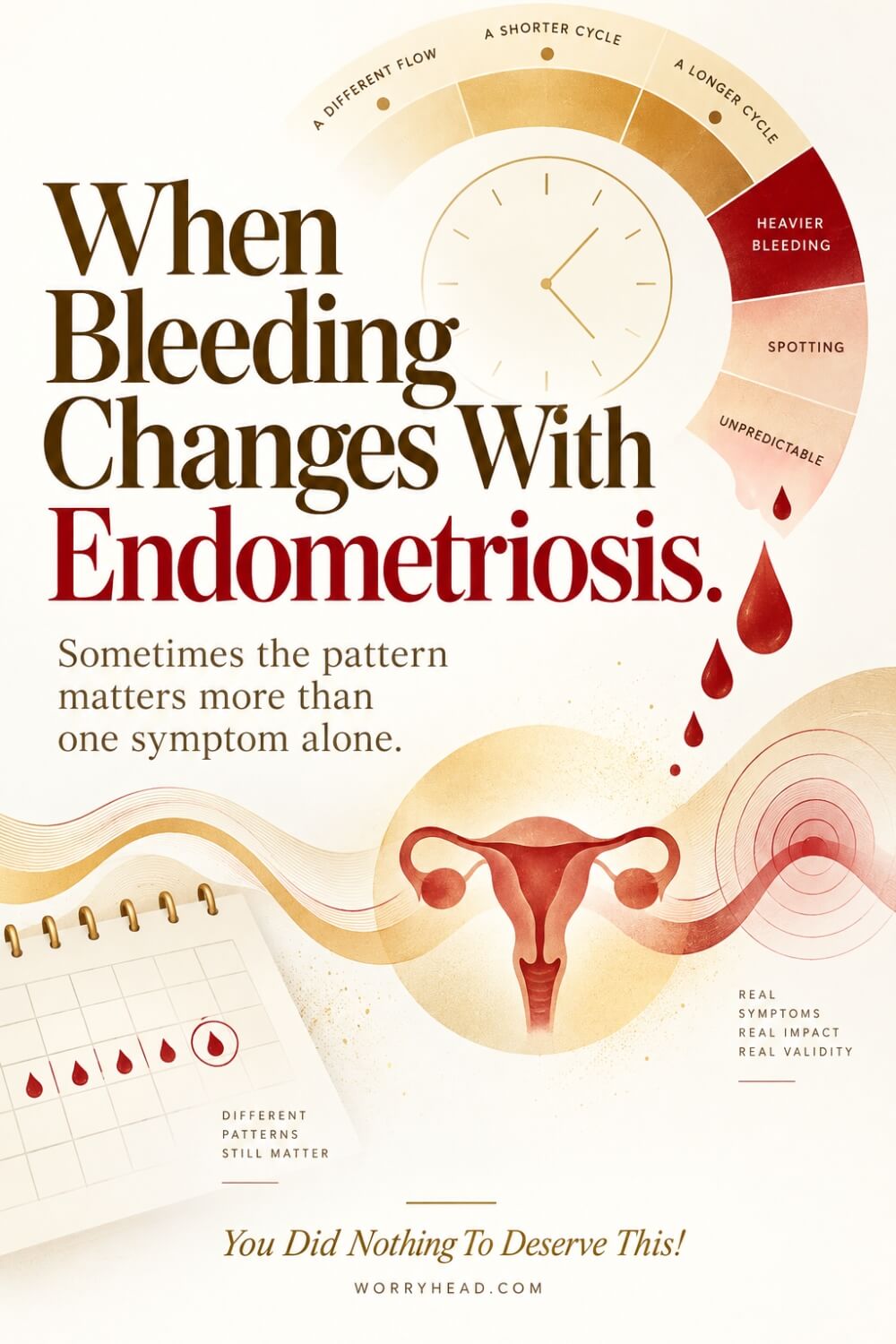
Questions to Ask Your Doctor
Appointments can feel surprisingly short when you have months or years of symptoms to explain. You may walk in knowing exactly how much your periods are affecting you, then find yourself struggling to put everything into words once somebody asks, “So, what seems to be the problem?”
You do not need to arrive knowing what diagnosis you have or which treatment you need. Your job is to describe what is happening to your body and your life; your doctor’s job is to help investigate why.
These are the questions I would want written down before the appointment.
- Could Endometriosis Explain This Pattern of Pain?
Tell your doctor when your pain begins rather than simply saying that your periods hurt. Explain whether it starts several days before bleeding, continues afterwards, affects your back or legs, or appears alongside pain during sex, bowel movements or urination. NICE advises clinicians to suspect endometriosis when characteristic symptoms include chronic pelvic pain, period-related pain affecting normal activities, deep pain during or after sex, and cyclical bowel or urinary symptoms.
The useful question is not only, “Could this be endometriosis?” Ask which parts of your symptom pattern make endometriosis more or less likely and what should happen next if the suspicion remains.
- Could Something Else Be Affecting My Bleeding?
An existing endometriosis diagnosis should not automatically become the explanation for every future period change. Ask whether adenomyosis, fibroids, hormonal changes, medication, a bleeding disorder or another gynaecological problem could contribute to unusually heavy or changing periods.
This matters particularly when what you are experiencing is new. You might say, “My periods have always been difficult, but this bleeding pattern has changed. Should we investigate why?” That one sentence makes it clear that you are not asking your doctor simply to confirm something you already know.
- Should My Iron Levels Be Checked?
If heavy bleeding is leaving you unusually exhausted, weak, breathless, dizzy or struggling to recover, ask whether blood tests are appropriate. The NHS notes that investigation of heavy periods can include blood testing for conditions such as iron deficiency anaemia.
Do not assume exhaustion is simply the price of having difficult periods. Tell your doctor how you actually feel after bleeding and how long recovery takes. If you are finding work, stairs, exercise, concentration or ordinary daily tasks noticeably harder, say that plainly.
- Would an Ultrasound Be Appropriate for Me?
Current NICE guidance recommends offering a transvaginal ultrasound to someone with suspected endometriosis even when an abdominal or pelvic examination appears normal. The scan may identify ovarian endometriomas, deep endometriosis involving areas such as the bowel, bladder or ureter, or another condition that could be causing symptoms.
If an internal ultrasound is not suitable for you or you do not want one, you can ask about alternatives such as a transabdominal pelvic ultrasound. You are allowed to ask what the investigation is looking for, how it will be performed and what information it may or may not provide.
- What If My Ultrasound Is Normal?
This is one I particularly want you to remember. A normal ultrasound does not automatically rule out endometriosis.
NICE specifically states that endometriosis should not be excluded simply because an examination or ultrasound is normal, and referral may still be necessary when symptoms continue to suggest the condition.
So if you hear, “Your scan looks normal,” you can calmly ask, “Does this scan exclude endometriosis, and if it doesn’t, what is our next step?” You are not challenging your doctor by asking that. You are asking them to explain what the test result actually means.
- Do I Need a Gynaecology Referral?
Ask what would justify referral in your particular situation. NICE recommends referral when symptoms persist or recur, when initial treatment does not work or is not tolerated, or when symptoms are having a detrimental effect on everyday activities.
That final point is important. You do not have to wait until every treatment has failed and your life has completely unravelled before explaining that the condition is affecting your ability to work, sleep, exercise, maintain relationships or manage ordinary responsibilities.
If your symptoms are taking pieces of your life away each month, tell your doctor exactly which pieces.
- Could I Need Specialist Endometriosis Care?
Not every case needs the same level of specialist care. Ask whether anything in your symptoms or imaging suggests ovarian endometrioma, deep endometriosis, bowel or bladder involvement, or another feature that would make specialist assessment appropriate.
This becomes particularly important when symptoms point beyond uncomplicated period pain. NICE guidance includes different referral pathways according to symptoms and findings, while the NHS notes that very severe symptoms or treatment that is not working can lead to referral to a specialist endometriosis service.
You can simply ask, “Is my situation something that should be assessed by an endometriosis specialist rather than managed only here?”
- What Can We Do About the Bleeding?
Do not make the entire appointment about diagnosis if the bleeding itself is already making everyday life difficult. Ask what can be done now to reduce it and what options fit your health circumstances, symptoms and priorities.
The NHS lists treatments for heavy periods that may include hormonal contraception, medicines that reduce bleeding such as tranexamic acid, and certain prescription anti-inflammatory medicines, although the right choice depends on your individual medical history.
Ask what each option is intended to improve, how long you should try it, what side effects matter and what happens if it does not work. Treatment should feel like a plan with a next step, not an indefinite instruction to tolerate symptoms and hope they improve.
- How Will Treatment Affect My Other Priorities?
Tell your doctor what matters to you before choosing treatment. That may include trying to conceive now or in the future, avoiding particular side effects, controlling bleeding, reducing pain, protecting your ability to work or simply wanting enough symptom relief to function more normally.
The NHS notes, for example, that hormonal treatments used for endometriosis are not given when someone is trying to become pregnant, making fertility intentions an important part of treatment discussions.
There is no prize for accepting a treatment plan that solves somebody else’s priority while ignoring yours. Ask, “Given what matters most to me, what are the realistic advantages and disadvantages of these options?”
- When Should We Review This Plan?
Before you leave, ask what happens next. If you are starting medication, changing treatment, tracking symptoms or waiting for an investigation, find out when the situation should be reviewed and what would justify coming back sooner.
Ask something as straightforward as, “If this hasn’t improved after the agreed period, what is the next step?”
That question can prevent months of uncertainty because you leave knowing that lack of improvement is information, not failure. The NHS advises returning for medical assessment when symptoms do not improve with treatment or become worse.
I learned from supporting my wife that appointments become very different when you stop trying to squeeze an entire life with endometriosis into the words “painful periods”. Bring the bleeding, the clots, the sleepless nights, the toilet symptoms, the days missed from work, the sex that hurts, the exhaustion afterwards and the plans you keep cancelling into the room with you.
If you have a partner who sees what happens when the clinic door closes and you go home, you may also want them beside you if that feels supportive. I have often been able to remember details my wife was too exhausted or overwhelmed to recall in the moment, but my role was never to speak over her; it was to help make sure the reality she lived at home did not disappear during a short appointment.
You deserve to leave understanding what your doctor thinks may be happening, what is being investigated, what you can do about the symptoms now and what happens if the first plan does not work. That is not asking for special treatment. It is asking for a clear plan for a problem that is already affecting your life.

Conclusion on Periods and Endometriosis
By the time you reach this point, I hope one thing feels clearer: a difficult period is not something you have to reduce to one word such as painful or heavy. Your cycle can carry a bigger story, involving pain before bleeding, clots, spotting, bowel or bladder symptoms, exhaustion, disrupted sleep and days when ordinary life becomes harder to manage.
What matters is not whether your experience looks like somebody else’s. What matters is whether your body has changed, whether your symptoms are affecting how you live, and whether you are being given support to understand why. Endometriosis can affect menstruation in different ways, but no single bleeding pattern proves where disease is located or how extensive it may be. That is why your own pattern, especially when it changes, deserves attention rather than assumption.
If periods and endometriosis have become so intertwined that you dread certain dates on the calendar, tracking can give you something to hold onto. Write down when pain begins, how bleeding changes, whether clots become larger or more frequent, how long your period lasts and what happens to your energy afterwards. Include things that can feel unrelated at first, such as bowel pain, urinary symptoms, disturbed sleep or pain during sex, because timing can help build a clearer picture.
Please also remember that you are allowed to talk about impact. A period is not just a biological event when it causes you to miss work, cancel plans, stay near a toilet, change clothes after leaking, avoid intimacy or spend days recovering. Those losses matter. They tell your doctor something important about what you are living through, even when a scan has not provided the answers.
Supporting my wife has taught me that one of the cruelest parts of chronic illness is how quickly somebody can start adapting to suffering. You become organised around it. You plan ahead. You carry what you need. You apologise when plans change. Eventually, something that would have shocked you years earlier can begin to feel normal because you have survived it so many times.
I never wanted my wife to believe that enduring more made her stronger. I wanted her to know that she did not need to earn care by reaching some threshold of suffering first. Sometimes loving somebody through illness means noticing the things they have become too used to mentioning and gently reminding them that those things still count.
I want you to offer yourself that same fairness. If your periods are changing, if the pain is escalating, if bleeding is taking more from you, or if you are unsure whether what is happening deserves medical attention, write it down and bring it into the conversation. You do not have to diagnose yourself, prove your pain or explain everything.
Your body is giving you information. You deserve the time, care and medical support needed to understand it, and you deserve a life that is measured by far more than how you manage to survive your next period.
Your periods should not have to become unbearable before they are taken seriously. Track what changes, notice what your symptoms take away from daily life, and ask for help when you need it. You deserve explanations, options and support that treat your pain and bleeding as part of your health, not something you simply have to endure.
If something in this article sounded painfully familiar, leave me a comment below and tell me what your periods have been like. You can also download my FREE 130+ page eBook, “You Did Nothing To Deserve This!”, at the bottom of this post if you need a little more understanding, validation and support beside you.


About Me
Hi, I’m Lucjan! The reason why I decided to create this blog was my beautiful wife, who experienced a lot of pain in life, but also the lack of information about endometriosis and fibromyalgia for men…
READ MORE
Grab a FREE eBook!
“You Did NOTHING To Deserve This!”
Finally hear the words nobody ever said to you, that your pain is real, your tears make sense, and you did nothing to deserve endometriosis, the dismissal, or the way it has rewritten your life.
Related Questions You May Be Asking About Periods and Endometriosis
1. Can Endometriosis Make Your Periods Heavier?
Yes, endometriosis can be associated with heavy periods, but heavy bleeding is not specific to the condition. Adenomyosis, fibroids, hormonal changes, bleeding disorders and some medicines can also increase menstrual blood loss. If your flow has become noticeably heavier, lasts longer than seven days or is disrupting daily life, it is worth asking your GP to assess the change rather than assuming endometriosis explains everything.
2. Are Large Blood Clots Always Caused by Endometriosis?
No. Menstrual clots can appear when bleeding is heavy and do not prove that you have endometriosis or reveal how extensive it is. The NHS uses clots larger than about 2.5 cm as one sign that periods may be unusually heavy. What deserves attention is a new pattern of larger or more frequent clots, especially alongside heavier bleeding, worsening pain or increasing fatigue.
3. Can Endometriosis Cause Irregular Periods or Spotting?
They can occur together, but irregular bleeding or spotting should not automatically be attributed to endometriosis. Cycle changes may also relate to hormonal treatment, ovulation changes, perimenopause or other gynaecological conditions. Recording when unexpected bleeding occurs can help your doctor see the pattern. NHS guidance recommends seeking medical advice for bleeding between periods, particularly when it is new, persistent or accompanied by other symptoms.
4. Can Endometriosis Hurt Between Your Periods?
Yes. Although severe period pain is a well-recognised symptom, endometriosis can also cause pelvic or lower-back pain at other times in the menstrual cycle. Some symptoms may follow a cyclical pattern, including painful bowel movements or urinary symptoms, while others can become persistent. That is why recording symptoms throughout the month can be more useful than tracking only the days when you bleed.
5. Can You Have Endometriosis With a Normal Ultrasound?
Yes. A normal examination or ultrasound does not automatically exclude endometriosis. NICE specifically advises clinicians not to rule out the condition when symptoms remain suggestive despite normal findings. Ultrasound can identify some forms of disease and other possible causes of symptoms, but it has limitations. If pain and menstrual symptoms continue to affect your life, ask what the appropriate next step should be.
Periods and Endometriosis References
- https://www.who.int/news-room/fact-sheets/detail/endometriosis
- https://www.nice.org.uk/guidance/ng73/chapter/Recommendations
- https://www.nice.org.uk/guidance/ng73/resources/endometriosis-diagnosis-and-management-pdf-1837632548293
- https://www.nice.org.uk/guidance/ng73/evidence/b-diagnosing-endometriosis-pdf-13559823758
- https://www.nhs.uk/conditions/endometriosis/
- https://www.nhs.uk/conditions/heavy-periods/
- https://www.nhs.uk/conditions/adenomyosis/
- https://www.nhs.uk/conditions/periods/period-problems/
- https://www.nhs.uk/symptoms/period-pain/
- https://www.nhs.uk/symptoms/pelvic-pain/
- https://www.nhs.uk/symptoms/vaginal-bleeding-between-periods-or-after-sex/
- https://www.rcog.org.uk/for-the-public/browse-our-patient-information/endometriosis/
- https://www.eshre.eu/-/media/sitecore-files/Guidelines/Endometriosis/ESHRE-GUIDELINE-ENDOMETRIOSIS-2022_2.pdf
- https://www.mayoclinic.org/diseases-conditions/endometriosis/symptoms-causes/syc-20354656
- https://pmc.ncbi.nlm.nih.gov/articles/PMC6693056/
- https://pmc.ncbi.nlm.nih.gov/articles/PMC11324914/
- https://pubmed.ncbi.nlm.nih.gov/41977023/
