Mental Toll of Endometriosis
The mental toll of endometriosis is not weakness, overthinking, or being “too emotional”, but have you ever wondered why endometriosis can make your mind feel as exhausted as your body, even when you are trying so hard to stay strong?
You deserve to know that if this illness has changed your mood, confidence, relationships, sleep, body image, or sense of safety inside your own body, there is a real reason for that.
The mental toll of endometriosis is the emotional and psychological burden caused by chronic pain, delayed diagnosis, infertility fears, fatigue, painful sex, medical dismissal, and loss of normal daily life. It can include anxiety, low mood, grief, shame, isolation, and feeling unsafe in your body.
The mental toll is only one of the invisible battles that nobody sees, and it can hurt very much! My wife tried to commit suicide on two occasions. She also asked me to divorce her on many more. She loves me but at the time felt like a burden to me, family, and thought that I would be better off without her.
I have never given up on her, nor on our marriage.
I am not a clinician, and I never write to replace medical care, but I do write as a husband, blogger, and researcher who has spent years learning beside my wife, and I have attached at the bottom of this article the medical sources I used to understand the health facts and context behind this topic.
What hurts me most is that this emotional side is often treated as separate from the disease, when in real life, it lives right inside it. Global health sources now recognise that endometriosis can affect mental health, including anxiety and depression, and UK data keeps showing how long many women wait before anyone names what is happening.
That wait is not just time on a calendar.
It is years of pain being questioned, years of cancelling plans, years of trying to act normal, years of wondering whether your body is broken, whether you are dramatic, whether anyone will ever believe you without making you prove it first.
I have watched my wife carry that invisible weight, and I know how much damage can happen when symptoms pile up for years before proper answers come. I also know how much softer life becomes when someone finally stops arguing with your pain and starts standing beside you in it.
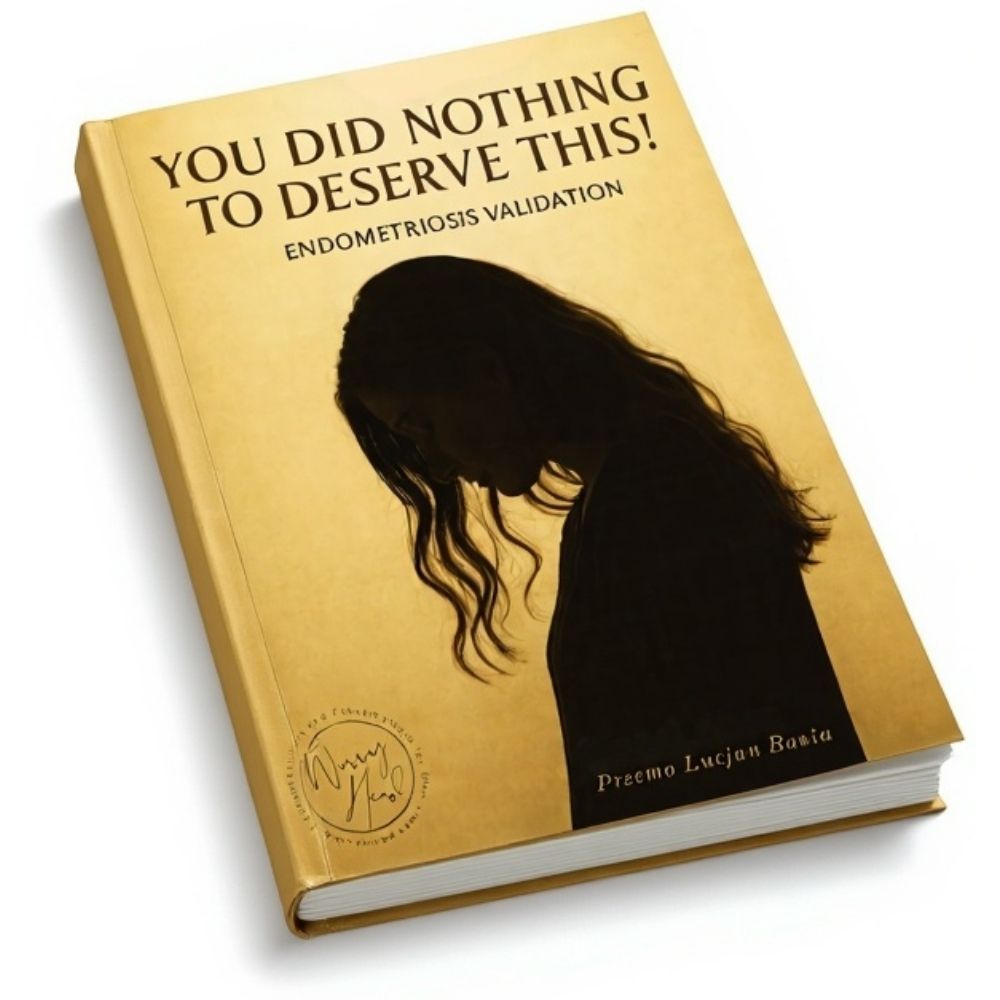
This is why I created my FREE 130+ page eBook, “You Did Nothing To Deserve This!”, for women with endometriosis who need validation more than another cold explanation.
When you grab it, you also join our Worry Head community, where I send more freebies, big discounts on all our books, and honest, practical emails to help you and your relationship adjust to the new normal chronic illness can bring.
The book is filled with 20 chapters of gentle validation for women with endo, written by yours truly, as I have seen it up close...
It’s my way of telling you, in much more detail, that your pain, your complex response to treatment, and your emotions around all of it are real, understandable, and never your fault.
It’s not a medical guide but a human one. Here’s what you will find inside:
- This Was Never Your Fault
- The Girl You Used To Be
- When Your Own Body Feels Like an Enemy
- The Invisible Battles Nobody Sees
- Am I Just Lazy? – The Lie You Have Been Taught
- Gaslighting, Dismissal and the Trauma of Not Being Believed
- Guilt: The Weight You Were Never Meant to Carry
- Love in the Middle of Pain
- Intimacy When Your Body Hurts
- The Loneliness of Being the Strong One
- You Are Allowed To Take Up Space
- Tiny, Gentle Hopes (Not Toxic Positivity)
- If You Could Hear My Voice Every Flare Day
- You Deserve Partners, Not Witnesses
- When You Wish He Understood
- Motherhood, Fertility and the Grief Nobody Sees
- When Anger Is the Only Honest Feeling
- Learning to Trust Your Body Again
- Building a Life That Fits Your Reality
- You Did Nothing To Deserve This
You Did NOTHING To Deserve This!
Endometriosis Validation for Women with Endo
- You Did NOTHING To Deserve This!
- How the Mental Toll of Endometriosis Changes Your Daily Life?
- Why the Mental Toll of Endometriosis Can Feel Invisible?
- How the Mental Toll of Endometriosis Affects Love and Identity?
- When to Seek Medical Help?
- Questions to Ask Your Doctor
- Final Word on Mental Toll of Endometriosis
- FREE eBook
How the Mental Toll of Endometriosis Changes Your Daily Life?
The hardest part is that endometriosis does not only hurt when pain is loud. It can start changing how you live before anyone else notices that anything has changed.
You may begin planning your life around symptoms, bathrooms, bleeding, bloating, fatigue, appointments, flare days, and the quiet fear of being caught unprepared. You may say no to invitations before your friends even ask, because part of you already knows your body might not let you go.
This is where the mental toll of endometriosis becomes more than sadness or stress. It becomes the constant mental work of calculating what your body might do next.
You might wake up and scan yourself before the day has even begun. Is the pain there, is the pressure starting, will the bleeding be heavy, can you manage work, can you get through the school run, can you sit through a meeting, can you be intimate, can you simply be yourself today?
That kind of constant checking can make your nervous system feel as if it is always on duty.
Even peaceful moments may not feel fully peaceful, because your mind has learnt to stay ready for the next wave.
And then there is the emotional damage of not being believed.
When you are told for years that pain is normal, that tests are fine, that you are anxious, sensitive, unlucky, or simply bad at coping, you can slowly begin to question your own reality.
I believe this is one of the cruellest parts of endometriosis, because the body hurts, but the disbelief cuts somewhere even deeper. It can make you apologise for needing rest, minimise symptoms to avoid sounding dramatic, and hide pain because explaining it again feels more exhausting than carrying it alone.
Painful sex can also carry a heavy emotional weight, especially when you love your partner but your body reacts with fear, burning, pressure, or pain.
It can bring guilt that does not belong to you, distance you never wanted, and a grief that is rarely spoken about kindly enough.
Fertility worries can add another layer, even if you are not trying to conceive right now.
The thought that a disease may interfere with choices, timing, motherhood, identity, or future hope can sit quietly in the background and still hurt.
Body image can change too, especially when endo belly, scars, swelling, fatigue, or hormonal treatments make you feel unfamiliar to yourself. You may look in the mirror and not hate your body, but no longer feel fully safe inside it, and that is a deeply human response to living with something unpredictable.
I saw parts of this through my wife before I had the words for it, and I wish I had understood sooner that support is not only about helping during the obvious pain. Sometimes support is noticing the silence after the pain, the tiny flinch before intimacy, the way she says “I’m fine” when her eyes are already tired.
So before we go deeper, I want the next section to feel practical, not clinical, because you deserve tools that help you feel steadier in real life, not just facts that sound good on paper.
These are the life-useful places where support, validation, and self-protection can begin:
- Believe Your Pain First
- Name the Hidden Grief
- Protect Your Emotional Energy
- Talk Before You Break
- Rebuild Safety With Intimacy
- Prepare for Medical Appointments
- Let Support Become Practical
- Stop Apologising for Limits
- Keep Hope Gentle and Real
Believe Your Pain First
Before anyone else believes you, I want you to practise believing yourself. I know that sounds simple, but when you have spent years being questioned, dismissed, rushed, or told that pain is “normal”, self-trust can become one of the first things endometriosis steals.
You may start editing your own pain before you speak. You may say “it is not that bad” when it is that bad, or “I can manage” when you are barely holding yourself together. This is why believing your pain first is not about becoming negative, dramatic, or afraid of your body. It is about refusing to gaslight yourself just because other people did it first.
From my side as a husband, I had to learn that validation should come before solutions. Sometimes the most healing sentence is not “Have you tried this?” but “I believe you, and I am here.” When your pain is believed, your mind does not have to fight two battles at once.
Name the Hidden Grief
Endometriosis grief is not always obvious from the outside. It can be the grief of cancelling plans, losing confidence, feeling older than your age, fearing intimacy, watching others live freely, or missing the version of yourself who did not have to calculate every choice around pain.
This grief can be confusing because you may still feel grateful for parts of your life. You may love your partner, your home, your friends, your family, and still grieve the ease that illness took from you. Both can be true. You do not have to choose between being thankful and being heartbroken.
I have seen how grief can sit quietly behind my wife’s eyes, not as self-pity, but as the exhaustion of adapting again and again. Naming it does not make you weak. It makes the invisible visible. And sometimes, the moment you finally say “I am grieving what this has taken from me”, your heart can stop pretending it is fine.
Protect Your Emotional Energy
Living with endometriosis can make your emotional energy feel limited, and that does not mean you are becoming cold or selfish. It means your body and mind are already spending so much effort on pain, fatigue, bleeding, bloating, appointments, uncertainty, and trying to function when you do not feel well.
You do not owe everyone a detailed explanation. You do not have to educate every person who doubts you. You do not have to answer messages immediately, attend every event, smile through every flare, or prove that your illness is real enough to deserve care.
One thing I learned besides my wife is that support should reduce emotional weight, not add to it. A good partner should not make you perform wellness to keep the peace. A good friend should not punish you for needing rest. Protecting your emotional energy may look like shorter replies, quieter weekends, firmer boundaries, and choosing people who do not make you feel guilty for surviving.
Talk Before You Break
Many couples wait until the pressure becomes too heavy before they talk. I understand why. Pain is exhausting, fear is exhausting, and sometimes you do not want one more serious conversation when all you really want is one normal evening without explaining your body.
But silence can slowly turn into distance. You may think you are protecting your partner by hiding how much you hurt, while your partner may think they are protecting you by not asking too many questions. Then both people feel alone in the same room, loving each other, but guessing instead of speaking.
I had to learn that support is not mind-reading. It is asking gently, listening without defending myself, and letting my wife tell the truth without turning her pain into my panic. Talking before you break can be as simple as saying, “I need comfort, not advice today” or “I am scared, but I do not want to carry this alone.”
Rebuild Safety with Intimacy
Painful intimacy can leave emotional bruises that are hard to explain. You may love your partner deeply and still feel fear, tension, guilt, or sadness when closeness becomes linked with pain. That does not mean you do not love them. It means your body has learnt to protect you from something that has hurt before.
This is where tenderness matters more than performance. Intimacy should never feel like an obligation you must survive to keep someone else happy. It should feel safe, wanted, respectful, and adjustable. Sometimes rebuilding safety means slowing everything down, talking before touch, agreeing that stopping is always allowed, and remembering that closeness can also be cuddling, hand-holding, lying together, laughing, or simply being emotionally near.
As a husband, I believe a man who truly loves you should care more about your safety than his expectation. Your body is not failing intimacy. Intimacy must learn how to honour your body.
Prepare for Medical Appointments
Medical appointments can feel emotionally loaded when you have already been dismissed before. You may walk in carrying years of pain, fear, hope, anger, and exhaustion, then still feel pressured to explain everything clearly in ten rushed minutes. That is a lot for one person to hold.
Preparing can protect your mind as much as it helps your care. Write symptoms down before the appointment, including pain patterns, bowel or bladder changes, bleeding changes, fatigue, painful sex, flare triggers, medication effects, and how symptoms affect your work, sleep, relationships, and daily life. Bring someone with you if that feels safe, because another person can help you remember, advocate, and steady you.
I have learnt that medical validation should not depend on how perfectly you speak when you are overwhelmed. You deserve to be heard even if you cry, freeze, forget words, or feel embarrassed. Preparation is not about proving yourself. It is about giving your pain a clearer voice.
Let Support Become Practical
Support is beautiful when it sounds kind, but it becomes life-changing when it turns practical. It is not enough for a partner to say “I am here” if they disappear when the washing needs doing, the dinner needs making, the heating pad needs finding, or you are too tired to explain what help looks like.
Practical support can be simple. It can mean tracking appointments, helping prepare questions, learning about endometriosis without being forced, taking over chores during flares, checking medication times, making the bed softer, planning around rest, or protecting you from people who minimise your pain.
In my own marriage, I learnt that love is not only the big emotional speech. Love is the cup of tea, the quiet room, the cancelled plan without resentment, the hand on the back during a bad moment, and the willingness to adapt without making her feel like a burden. Practical support says, “Your pain changed the plan, not my love for you.”
Stop Apologising for Limits
One of the saddest things I see is how often women with endometriosis apologise for things they did not choose. You may apologise for needing rest, cancelling plans, not being able to work the same way, not feeling intimate, being tired, being emotional, or needing more support than you used to need.
But limits are not character flaws. They are signals from a body carrying something heavy. You are not rude for needing quiet, lazy for needing sleep, difficult for needing pain relief, or selfish for asking people to respect what your body can and cannot do.
I wish more partners understood this deeply. Your limit is not an attack on anyone else. It is information. When my wife reaches a limit, my job is not to make her feel guilty for having one. My job is to listen, adjust, and remember that love should make illness feel less lonely, not more shameful. You do not need to apologise for surviving honestly.
Keep Hope Gentle and Real
Hope with endometriosis has to be handled gently. You may have been promised answers before, tried treatments that did not help enough, waited too long for care, or felt crushed when another plan did not bring the relief you prayed for. So when people say “stay positive”, it can feel almost insulting.
Real hope is not pretending everything is fine. It is not forcing a smile over pain, ignoring grief, or acting as if one good day cancels every hard one. Real hope is quieter than that. It says, “Today is hard, but I still deserve care. This body is struggling, but it is still mine. I may not have every answer yet, but I am not unworthy of help.”
That is the kind of hope I try to hold for my wife. Not loud, fake hope. Steady hope. The kind that sits beside her on the worst days and does not run away. You deserve that too, from your partner, from your care team, from your community, and from yourself.
Why the Mental Toll of Endometriosis Can Feel Invisible?
The invisible part begins when your body hurts, but the world still expects you to perform normal life.
You may get dressed, answer messages, go to work, smile at people, and still be carrying chronic pelvic pain, fatigue, nausea, bleeding worries, bowel symptoms, and a private panic that nobody can see.
When this happens again and again, your mind learns to stay alert, not because you are weak, but because your body has taught you that peace can be interrupted at any moment.
This is why the mental toll of endometriosis can feel so confusing, because you may look calm on the outside while inside you are planning exits, bathrooms, pain relief, loose clothing, rest time, medical excuses, and how much truth you can safely tell.
You might not even notice how much life has shrunk until you realise you are no longer asking, “What do I want to do today?” but “What can my body survive today?”
That question alone can break a heart quietly.
I have seen my wife lose more than pain-free days, because illness can take small pieces of confidence in ways other people do not recognise.
It can make you second-guess your body, your mood, your attractiveness, your relationships, your future, and even your right to need help without feeling like a burden.
And when pain affects intimacy, fertility hopes, work, sleep, and social life, it does not stay in one corner of your life.
It spreads into decisions, conversations, arguments, silences, guilt, disappointment, fear, and all those moments where you want to be understood without having to explain every detail again.
As her husband, one of the hardest lessons I learnt was that love cannot remove the disease, but it can change how lonely the disease feels.
I cannot take the pain from her body, and that truth still hurts me, but I can refuse to add disbelief, pressure, impatience, or emotional distance on top of what she already carries.
Sometimes the most powerful thing a partner can do is sit beside you, believe you without needing proof, and let you be tired without making you feel less loved.
If you are reading this and your heart feels heavy, please know this: the part of you that feels worn down is not broken; it is the part of you that has been trying to survive too much for too long.
How the Mental Toll of Endometriosis Affects Love and Identity?
There is a kind of pain that does not only ask for rest; it asks you to keep rebuilding your identity around what your body can no longer promise. It can change how you see yourself in the mirror, how you speak to your partner, how you plan your future, and how safe you feel inside ordinary moments.
The mental toll of endometriosis can make you feel as if you are constantly negotiating with your own life, asking what you can give and what illness will take back.
My wife has had days where the physical symptoms were hard enough, but the look in her eyes told me the deeper wound was the feeling that life had become smaller without her permission.
As her husband, I have had to learn that my role is not to rescue her from every emotion, because I cannot do that, but to make sure she never feels unwanted because of what illness has changed.
That matters in a relationship, because chronic pain can quietly alter the rhythm of love. It can make one person afraid of being a burden and the other afraid of saying the wrong thing. It can turn intimacy into hesitation, plans into calculations, and simple conversations into moments where both people are trying not to hurt each other more.
For her, this can mean grieving the woman she was before pain became so central to daily life.
For me, it means remembering that love is not proved by demanding normality, but by adapting with tenderness when normality is no longer simple.
For both of us, it means choosing honesty over silence, patience over frustration, and closeness over the slow distance that illness can create when nobody talks about what hurts.
And if you are reading this with tears in your eyes, I want you to know that you are still lovable, still desirable, still worthy of gentleness, and still fully you, even on the days endometriosis makes you feel like you have lost pieces of yourself.
When to Seek Medical Help?
Please do not wait until you completely fall apart before asking for help.
I know you may have been taught to push through pain, minimise symptoms, apologise for needing rest, or tell yourself that other people have it worse, but endometriosis is not something you need to carry in silence until your life becomes unrecognisable.
If your pain, bleeding, fatigue, bowel symptoms, bladder symptoms, painful sex, low mood, anxiety, panic, sleep problems, or emotional exhaustion are affecting your everyday life, work, relationships, studies, intimacy, or ability to care for yourself, that is enough reason to speak to a GP or specialist.
You do not need to prove that you are “bad enough” to deserve help.
You should also seek medical help if your symptoms are getting worse, if treatment is not helping, if side effects from hormones or pain medication are affecting your mood, or if you feel trapped in a cycle of pain and fear that you cannot manage alone anymore.
From a partner’s side, I would say this gently to any man reading too: do not wait for the woman you love to beg for support before you take her seriously.
If she is quieter than usual, withdrawing, crying more, sleeping badly, losing interest in things she used to enjoy, feeling hopeless, feeling ashamed of her body, or saying she cannot cope, please do not brush it off as “just stress”.
The mental side of endometriosis deserves the same seriousness as the physical side.
There are also moments where help should be urgent, not delayed.
If you feel at risk of harming yourself, if you feel unable to stay safe, if you have harmed yourself, if suicidal thoughts feel close or frightening, or if your mind feels like it is no longer a safe place to be alone, please seek urgent support straight away through emergency care, urgent mental health services, or your local crisis route.
That is not attention-seeking.
That is your life asking to be protected.
You should also seek urgent medical advice for sudden severe pelvic or abdominal pain, pain with fainting or collapse, very heavy bleeding, fever with pelvic pain, symptoms during pregnancy, chest pain, shortness of breath, or coughing blood, especially if symptoms seem linked to your cycle.
I say this calmly, not to frighten you, but because you deserve care before things become dangerous or unbearable.
My wife’s story taught me that suffering can become so normal that you stop recognising how much you are carrying.
Sometimes the bravest sentence is not “I am fine.” Sometimes it is, “I need help, and I need someone to take me seriously.”
Questions to Ask Your Doctor
Going into an appointment can feel overwhelming, especially when you have only a short time to explain something that has affected your whole life.
So I would not rely on memory alone.
Write your questions down, take notes on your symptoms, and if it feels right, bring your partner, friend, or someone calm who can help you stay steady and make sure your concerns are not rushed past.
You might ask:
- Could endometriosis be contributing to my low mood, anxiety, panic, sleep problems, or emotional exhaustion?
- Can we review my pain management so I am not just surviving flare after flare?
- Are my symptoms enough to justify a referral to a gynaecologist or endometriosis specialist?
- Could I be referred for mental health support, counselling, NHS Talking Therapies, pain support, or a chronic illness pathway?
- Could any of my current treatments, hormones, painkillers, or side effects be affecting my mood?
- What symptoms should make me seek urgent help rather than waiting for another routine appointment?
- Can we create a written plan for flares, pain, bleeding, fatigue, and emotional distress?
- Should I keep a symptom diary that includes pain, mood, sleep, bowel symptoms, bladder symptoms, intimacy pain, and how much daily life is affected?
- Can my partner attend appointments so they understand what support looks like at home?
- If I feel dismissed, what are my options for a second opinion or specialist referral?
You can also ask your doctor to document how endometriosis affects your work, relationship, sex life, energy, sleep, mental health, and daily functioning.
That part matters, because too often the medical conversation becomes only about lesions, scans, surgery, and medication, while the emotional cost is treated like background noise.
But it is not background noise when you are the one living with it…
If you freeze during appointments, that does not mean your pain is not real. If you cry, that does not mean you are unstable. If you forget words, that does not mean you are exaggerating. It means you are trying to compress months or years of symptoms into a few minutes with someone who may not yet understand the full weight of your life.
As a husband, I believe one of the most loving things a partner can do is help you prepare for that room.
Not speak over you. Not control the conversation. Just help you feel less alone when you are trying to explain a body that has already made you feel misunderstood too many times.
Final Word on Mental Toll of Endometriosis
If there is one thing I want you to take from this article, it is this: your emotional pain deserves to be taken seriously, not treated like an extra detail after the “real” medical symptoms have been discussed.
Endometriosis can affect your pelvis, periods, bowels, bladder, fertility, sex life, sleep, work, energy, and daily plans, but it can also affect the private place inside you where confidence, hope, safety, and identity live.
That part matters.
- It matters when you cry after an appointment because you were not heard.
- It matters when you cancel another plan and feel guilty even though you are in pain.
- It matters when intimacy becomes complicated, and you miss the ease you once had with your body.
- It matters when you feel jealous of ordinary lives, then feel ashamed for feeling jealous.
- It matters when you smile for others but break down when the door closes.
The mental toll of endometriosis is not a sign that you are failing to cope properly. It is a human response to living with pain, uncertainty, dismissal, fear, exhaustion, and repeated loss of normality.
I have learnt this through loving my wife, not from a textbook alone. I have seen how chronic illness can take a simple day and fill it with decisions most people never see. I have seen how pain can change the mood in a room before a word is spoken.
I have seen how a woman can be strong and still need softness, brave and still need reassurance, independent and still need someone to stand beside her without making her feel needy.
And I have made mistakes too.
I have tried to fix when I should have listened. I have looked for answers when she needed comfort. I have underestimated the silence after pain, the grief after another flare, and the courage it takes to keep going when your own body feels unpredictable.
That is why I write the way I do now.
Not to speak over women with endometriosis, but to stand beside you, and to remind partners that love has to become practical, patient, educated, and emotionally safe.
If you live with endometriosis, you do not need to become smaller so others feel comfortable.
You do not need to apologise for needing rest, support, treatment, boundaries, or time to grieve. You do not need to prove your pain by destroying yourself trying to function. And if you love someone with endometriosis, please understand this clearly: she does not need pressure to be positive.
She needs belief. She needs consistency. She needs a safe place to be honest. She needs a partner who learns, adapts, and stays emotionally present when illness makes life complicated.
Endometriosis may change the rhythm of life, but it should never make you feel unworthy of love. You are not too much. You are not broken. You did nothing to deserve this.
And even on the days when your mind feels tired from carrying what your body already carries, you still deserve tenderness, answers, proper care, and a life where your pain is met with compassion instead of doubt.
Your pain is real, your grief is valid, and your need for support is not weakness. Endometriosis may have changed your life, but it has not taken your worth, your beauty, your voice, or your right to be loved gently through the hardest parts of it.
If this spoke to your heart, please leave a comment below and tell me what part of the emotional side of endometriosis you wish more people understood. You can also check out the FREE chapter of my eBook at the bottom of this post.


About Me
Hi, I’m Lucjan! The reason why I decided to create this blog was my beautiful wife, who experienced a lot of pain in life, but also the lack of information about endometriosis and fibromyalgia for men…
READ MORE
Grab a FREE eBook!
“You Did NOTHING To Deserve This!”
Finally hear the words nobody ever said to you, that your pain is real, your tears make sense, and you did nothing to deserve endometriosis, the dismissal, or the way it has rewritten your life.
Related Questions You May Be Asking About the Mental Toll of Endometriosis
1. Can endometriosis really affect mental health?
Yes, it can. Endometriosis can affect your mental health because pain, fatigue, medical dismissal, painful sex, infertility worries, and uncertainty can build emotional pressure over time. If you feel anxious, low, angry, numb, or exhausted, it does not mean you are weak. It means your mind has been carrying what your body already carries.
2. Why do I feel anxious even when pain is not severe?
Your body may have learnt to stay on alert because symptoms can return without warning. Even on quieter days, you may still fear the next flare, heavy bleeding, bowel pain, intimacy pain, or another cancelled plan. That anxiety is not imaginary. It can be your nervous system remembering how unpredictable endometriosis has been.
3. Can delayed diagnosis make the emotional burden worse?
Yes, delayed diagnosis can make the emotional burden heavier because years of being dismissed can damage self-trust. You may start doubting your own pain, apologising for symptoms, or feeling guilty for needing help. The pain itself is hard enough, but not being believed can leave a deeper wound that takes time to heal.
4. How can my partner support me emotionally?
Your partner can support you by believing you without making you prove every symptom. They can listen before giving advice, help practically during flares, learn about endometriosis themselves, and stop treating your limits like rejection. The most loving support often sounds simple: “I believe you, I am here, and you are not a burden.”
5. Why does painful sex affect confidence so much?
Painful sex can affect confidence because intimacy is not just physical. It carries emotion, trust, body image, desire, fear, and vulnerability. If your body reacts with pain, you may feel guilty or distant even when you love your partner. You deserve closeness that feels safe, patient, respectful, and never pressured.
6. When should I ask for mental health support?
You should ask for mental health support if anxiety, low mood, panic, hopelessness, isolation, sleep problems, relationship strain, or emotional exhaustion are affecting daily life. You do not need to wait until a crisis point. Support can sit beside medical care, because treating endometriosis should include the body, the mind, and the life around both.
Mental Toll of Endometriosis References
- https://www.who.int/news-room/fact-sheets/detail/endometriosis
- https://www.nhs.uk/conditions/endometriosis/
- https://www.nice.org.uk/guidance/ng73
- https://www.nice.org.uk/news/articles/nice-updated-guideline-to-improve-the-diagnosis-of-endometriosis
- https://www.eshre.eu/Guidelines-and-Legal/Guidelines/Endometriosis-Guideline
- https://www.eshre.eu/-/media/sitecore-files/Guidelines/Endometriosis/ESHRE-GUIDELINE-ENDOMETRIOSIS-2022_1.pdf
- https://www.endometriosis-uk.org/sites/default/files/2026-02/Endometriosis%20-%20The%20State%20of%20Endometriosis%20Care%20Report.pdf
- https://www.endometriosis-uk.org/emotional-support-endometriosis
- https://www.endometriosis-uk.org/endometriosis-uk-release-new-report-highlighting-alarming-increase-endometriosis-diagnosis-times
- https://www.rcog.org.uk/for-the-public/browse-our-patient-information/endometriosis/
- https://www.rcog.org.uk/news/rcog-responds-to-endometriosis-uk-report-showing-rise-in-endometriosis-diagnosis-times/
- https://en.wikipedia.org/wiki/Endometriosis
- https://pmc.ncbi.nlm.nih.gov/articles/PMC8951218/
- https://pmc.ncbi.nlm.nih.gov/articles/PMC5440042/
- https://pmc.ncbi.nlm.nih.gov/articles/PMC10512020/
- https://pmc.ncbi.nlm.nih.gov/articles/PMC11972425/
- https://pmc.ncbi.nlm.nih.gov/articles/PMC12703484/
- https://pubmed.ncbi.nlm.nih.gov/34352799/
- https://pubmed.ncbi.nlm.nih.gov/41403592/
- https://www.nhs.uk/mental-health/feelings-symptoms-behaviours/behaviours/help-for-suicidal-thoughts/
- https://www.nhs.uk/mental-health/feelings-symptoms-behaviours/behaviours/self-harm/getting-help/
