Why Endometriosis Makes You Look Fine When You Are Not?
Have you ever wondered why your body can feel like it is fighting a private war while the outside world still thinks you look perfectly fine? The phrase endometriosis makes you look fine can feel cruel because it explains how invisible this disease often is. If you have ever smiled through pain, answered “I’m okay” when you were not, or felt tired of proving yourself, I want you to feel seen here.
Endometriosis can make you look fine because the disease usually hides inside the pelvis, bowel, bladder, nerves, or even chest, while symptoms like severe pain, fatigue, bloating, bleeding, bowel pain, painful sex, anxiety, and exhaustion are not visible on your face, clothes, or a quick glance.
I am not a clinician, but I write as a husband, blogger, and researcher who has spent years learning beside my wife, and I have attached at the bottom of this article the sources I used to understand the medical context, including NHS, NICE, WHO, ESHRE, studies, and patient evidence.
What makes this even harder is that endometriosis is not only “bad period pain.” It has many hidden layers in a form of invisible battles that nobody sees, such as chronic pelvic pain, fatigue, bowel or bladder symptoms, pain during or after sex, fertility struggles, low mood, anxiety, and symptoms that come and go in ways outsiders rarely understand.
The world often waits for illness to look obvious before it believes it, but endometriosis does not always give people that proof. In the UK, people with endometriosis still report long delays before diagnosis, and many describe being dismissed before anyone takes the full picture seriously.
I have watched my wife look “normal” from across the room while I knew the truth: she was measuring every movement, hiding pain in her face, and trying not to let another day be stolen from her. That is why this topic matters to me so deeply, because looking fine should never be used as evidence that you are fine.
If this already feels close to home, you can grab my free 130+ page eBook, “You Did Nothing To Deserve This!”, written to validate the feelings of women with endometriosis. By grabbing it, you also join our community, where I send more freebies, big discounts on all our books, and honest, useful emails to help you adjust to the new normal chronic illness brings to your relationship and life.
The book is filled with 20 chapters of validation for women with endo, including:
- This Was Never Your Fault
- The Girl You Used To Be
- When Your Own Body Feels Like an Enemy
- The Invisible Battles Nobody Sees
- Am I Just Lazy? – The Lie You Have Been Taught
- Gaslighting, Dismissal and the Trauma of Not Being Believed
- Guilt: The Weight You Were Never Meant to Carry
- Love in the Middle of Pain
- Intimacy When Your Body Hurts
- The Loneliness of Being the Strong One
- You Are Allowed To Take Up Space
- Tiny, Gentle Hopes (Not Toxic Positivity)
- If You Could Hear My Voice Every Flare Day
- You Deserve Partners, Not Witnesses
- When You Wish He Understood
- Motherhood, Fertility and the Grief Nobody Sees
- When Anger Is the Only Honest Feeling
- Learning to Trust Your Body Again
- Building a Life That Fits Your Reality
- You Did Nothing To Deserve This
You Did NOTHING To Deserve This!
Endometriosis Validation for Women with Endo
- You Did NOTHING To Deserve This!
- Why Endometriosis Makes You Look Fine to Others?
- Why Endometriosis Makes You Look Fine During Daily Life?
- How Endometriosis Makes You Look Fine Inside Relationships?
- When to Seek Medical Help?
- Questions to Ask Your Doctor
- Final Word on Why Endometriosis Makes You Look Fine
- FREE eBook
Why Endometriosis Makes You Look Fine to Others?
The cruel thing about invisible illness is that it asks you to survive something real while other people wait for visible proof.
With endometriosis, so much can happen deep inside the body, around the pelvis, bowel, bladder, ovaries, ligaments, nerves, and scarred tissue, while your face still looks calm enough for someone to say, “But you seem fine.” That sentence can hurt because it quietly turns your appearance into evidence against your pain.
That is why endometriosis makes you look fine to people who only read your smile, not your pelvic pain, fatigue, bleeding, bloating, bowel symptoms, bladder pressure, sleep loss, or fear. You may put make-up on, go to work, answer messages, care for others, and still be fighting pain that would make another person stop everything. You may laugh for ten minutes and then spend the rest of the evening paying for it.
I have learned that many women become experts at masking before anyone teaches them they are allowed to rest. You adjust your posture, soften your voice, cancel quietly, plan around toilets, carry pain relief, wear clothes that hide swelling, and rehearse explanations in your head because being doubted becomes exhausting. That does not mean your symptoms are mild; it often means you have had no choice but to become very good at functioning through them.
Endometriosis can also be confusing because symptoms can move, flare, settle, return, or change with your cycle. One day it may feel like deep pelvic pressure, another day like bowel pain, back pain, nerve-like pulling, nausea, crushing tiredness, or that swollen endo belly that makes your body feel unfamiliar.
To someone outside your body, those changes may look inconsistent, but to you they are part of the same exhausting pattern.
This is why “you look well” is not always comforting. Sometimes it feels like the world is complimenting the mask while ignoring the woman underneath it. Sometimes you do not want praise for coping; you want someone to notice how much it costs you to cope.
I have seen this with my wife in ways I will never forget. She could sit beside me looking beautiful and composed, while I could tell from the way she breathed, paused, or protected her abdomen that something inside her was not right. Those moments taught me to stop asking only what pain looks like, and start asking what pain is stealing.
And that is where this article needs to become practical, because validation matters a lot, but so does giving you language, boundaries, and small tools you can use in real life. These are the things I wish more partners, families, friends, and even tired patients understood sooner:
- Believe Your Pain First
- Stop Performing Wellness
- Name the Hidden Symptoms
- Track What Others Miss
- Explain Without Overexplaining
- Plan Around Flares
- Protect Your Emotional Energy
- Let Support Be Specific
Believe Your Pain First
Before anyone else believes you, I want you to practise believing yourself. That sounds simple, but when you have been told “it is normal,” “you look fine,” or “maybe you are just stressed,” doubt can start living inside your own mind. You may begin asking whether you are exaggerating, whether you are weak, whether your pain is somehow your fault.
It is not.
Pain that stops you from working, sleeping, eating normally, having intimacy, moving freely, or feeling safe in your own body deserves attention. You do not need to collapse in public to be taken seriously.
I learned this with my wife slowly, and I regret the early moments when I did not fully understand the weight she was carrying. Now I know that believing her pain first gives her something medicine alone cannot always give: safety. Your body is communicating, not performing, and you deserve to listen before the world talks you out of your own truth.
Stop Performing Wellness
Looking fine can become a performance you never auditioned for. You smile because explaining takes too much energy, you dress nicely because you still want dignity, you say “I’m okay” because the real answer feels too heavy for casual conversation.
But pretending wellness can quietly drain the little strength you have left. I am not saying you must tell everyone everything, because your story belongs to you, and not everyone has earned access to it.
What I am saying is that you are allowed to stop proving that you are coping beautifully. You are allowed to be quiet, tired, slower, sensitive, swollen, emotional, and still worthy of respect.
My wife often looked composed even when I knew she was counting the minutes until she could lie down. That taught me that strength is not always loud. Sometimes strength is simply surviving the day without letting pain take your whole identity.
Name the Hidden Symptoms
One reason endometriosis gets misunderstood is that people often reduce it to period pain. But you may be living with pelvic heaviness, stabbing cramps, deep pain during or after sex, bowel pain, bladder pressure, nausea, fatigue, endo belly, lower back pain, leg pain, sleep disruption, anxiety, and grief about what your body has taken from your plans.
Naming these symptoms matters because vague pain is easier for others to dismiss. When you can say, “I have bowel pain during my cycle,” or “my fatigue feels like my body has no battery,” you give shape to something invisible. You should not have to become a medical translator to be believed, but clear words can help you protect yourself.
I have watched my wife struggle to explain symptoms that changed from day to day, and I realised how lonely it is when your body speaks in a language other people do not understand.
Track What Others Miss
A symptom diary is not about obsessing over every bad day. It is about collecting evidence for the moments when pain, fatigue, bloating, bleeding, bowel symptoms, bladder symptoms, mood changes, or flare patterns become blurred by exhaustion. When you are living through it, everything can feel like one long storm.
Tracking helps you see whether pain worsens before bleeding, whether bowel symptoms appear at certain points in your cycle, whether fatigue follows poor sleep, or whether certain activities trigger a flare. This can help you speak more clearly to doctors, but it can also help you understand yourself with more compassion.
My wife’s symptoms were not random, even when they felt chaotic. Patterns gave us language. They helped me stop saying, “What happened?” and start asking, “Is this the pattern again, and what do you need from me today?”
Explain Without Overexplaining
You do not owe everyone a full medical history. This is something I wish more women were told, because constantly explaining invisible pain can become another form of labour.
You can use short, firm sentences that protect your energy, such as, “I have a chronic condition that causes pain and fatigue,” or “I cannot do that today because my symptoms are flaring.” You do not need to convince someone who is committed to misunderstanding you.
Save your deeper explanations for people who listen with care, ask better questions, and adjust their behaviour afterwards.
As a partner, I had to learn that my wife should not have to defend her pain to me before receiving support. The home should not become another courtroom. If someone loves you, they should not demand a perfect explanation before offering gentleness. Sometimes “I am struggling today” should be enough.
Plan Around Flares
Planning around flares is not giving up on life. It is respecting the reality of a body that can be unpredictable.
This can mean keeping flexible plans, choosing clothes that do not press on your abdomen, knowing where toilets are, having heat support ready, pacing chores, preparing simple food, or building recovery time after appointments, social events, or workdays. It can also mean giving yourself permission to change plans without guilt.
I know this part hurts, because endometriosis not only steals comfort, it can steal spontaneity. I have seen my wife want to be present, want to enjoy the day, want to be the woman she remembers being before pain became so loud. Planning does not make that grief disappear, but it can make life feel less like a constant ambush. A flare plan says, “Your pain is real, and we will not pretend otherwise.”
Protect Your Emotional Energy
Invisible illness does not only affect your body. It can wear down your confidence, your patience, your relationships, your intimacy, and the quiet way you see yourself. When people doubt you, minimise you, compare you, or tell you that you look too well to be unwell, it can make you feel painfully alone.
Protecting your emotional energy means choosing where your explanations go, who gets your vulnerability, and when you need silence instead of another conversation. It also means letting yourself feel upset without judging yourself for it.
My wife has had days where the emotional pain of not being understood seemed almost as heavy as the physical pain itself. That taught me that validation is not a luxury. It is part of care. You are not being dramatic for needing tenderness. You are human, and you have been carrying more than people can see.
Let Support Be Specific
Support becomes much more powerful when it stops being vague. “Let me know if you need anything” sounds kind, but it often leaves you with the job of asking, deciding, and explaining. Specific support sounds more like, “Do you need heat, quiet, food, medication timing, a lift, help with the house, or someone to sit beside you without talking?”
This matters because endometriosis can make even small decisions feel heavy when pain and fatigue are already taking up space in your mind.
I learned to ask better questions because my wife did not always have the strength to guide me.
Sometimes she needed practical help, sometimes emotional steadiness, sometimes simply not being made to feel guilty for needing rest. The right support does not make you feel like a burden. It reminds you that love can become practical, gentle, and reliable when someone truly wants to understand.
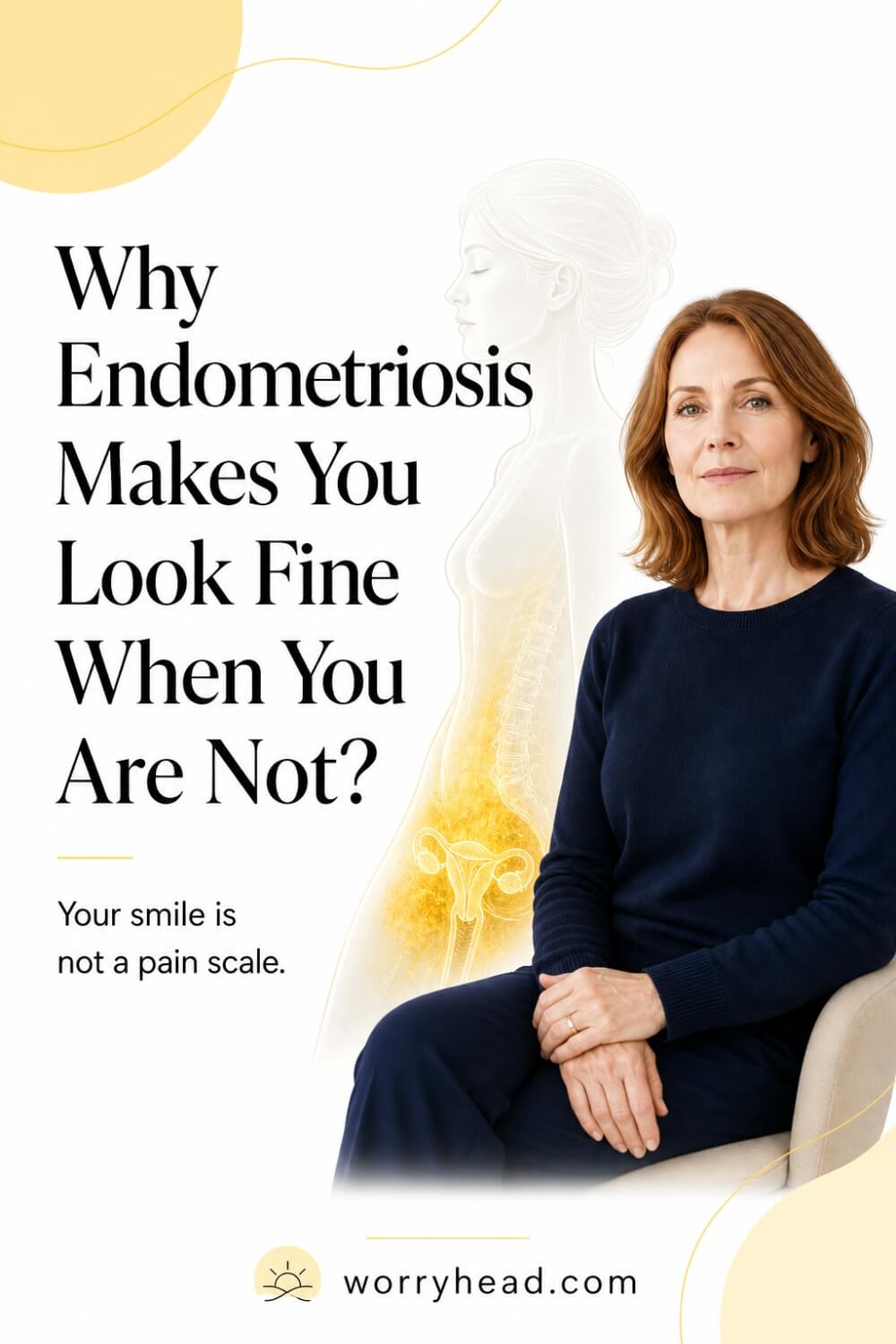
Why Endometriosis Makes You Look Fine During Daily Life?
The part outsiders rarely understand is that daily life with endometriosis is often managed in tiny negotiations before anyone else even sees you. You may wake up already choosing between showering, eating, replying to messages, going to work, or saving enough energy to survive the evening.
That is one reason endometriosis makes you look fine in public, because people see the small window where you gathered yourself, not the hours where your body made you pay for it. They see the version of you that made it out, not the version of you that cried before leaving, cancelled everything after, or lay still because moving hurt too much.
Some days, the body uses adrenaline like a temporary loan. You get through the appointment, the school run, the shift, the meal, the family visit, and then the debt arrives later in pain, swelling, exhaustion, or that awful emotional crash where you wonder why doing normal things costs you so much.
I have seen this with my wife, and those moments stay with me. She could sit with people, speak politely, even smile, while I noticed the tiny things others missed: the hand resting on her abdomen, the slower walk, the silence after we got home, the way her face changed the second she no longer had to hold herself together.
That is what broke my heart, not because she was weak, but because she had become so skilled at hiding what should never have needed hiding. I remember thinking that if people could see only five minutes of what came after the “you look well” comments, they would speak to her with far more tenderness.
This is also why good days can be misunderstood. A good day does not always mean no pain; it can mean less pain, managed pain, quieter symptoms, or enough strength to do one precious thing before the body asks for rest.
So if you have ever felt guilty because you looked okay in a photo, laughed at dinner, wore nice clothes, or managed to show up, please hear me gently. None of that cancels your illness, and none of that makes your suffering less real.
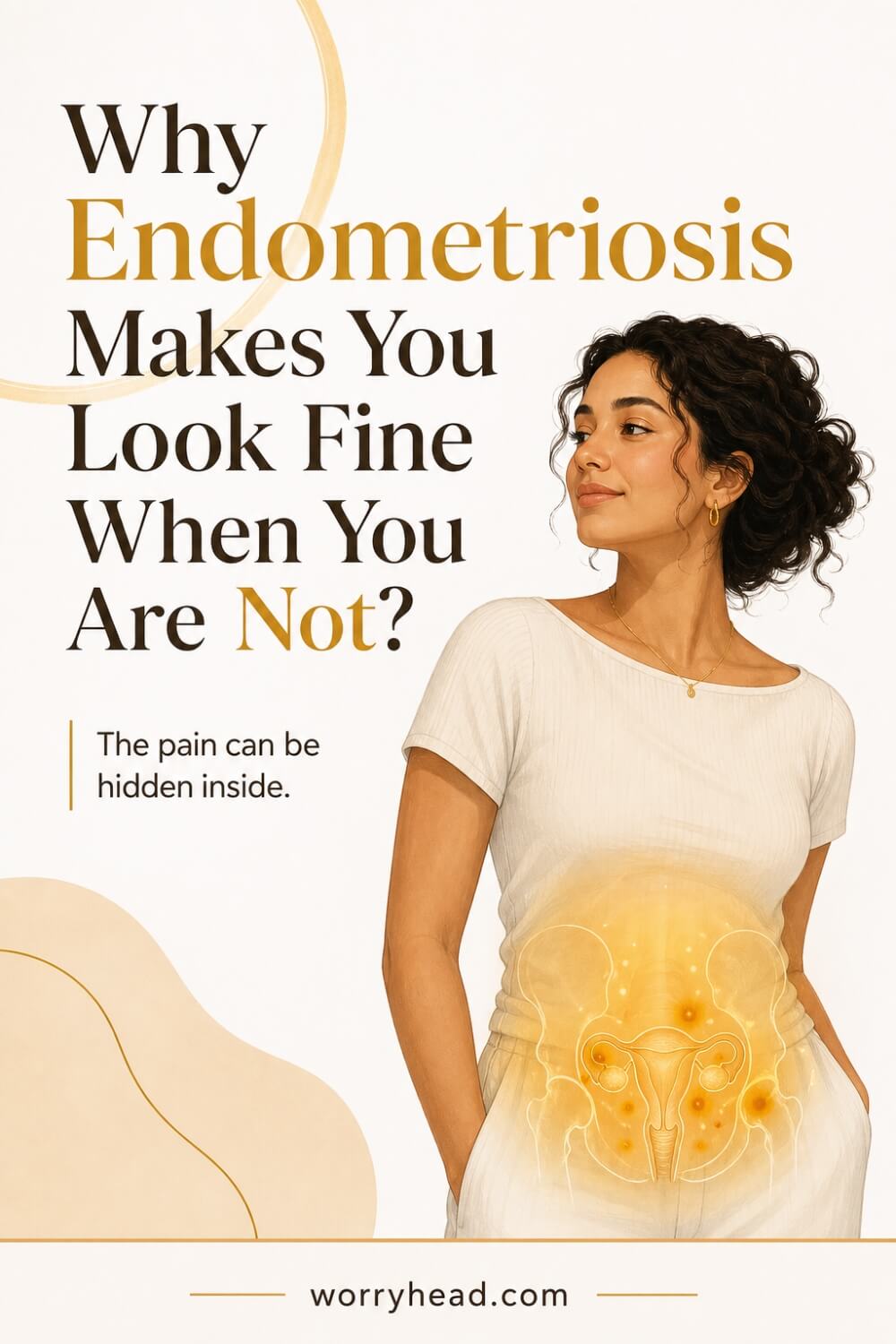
How Endometriosis Makes You Look Fine Inside Relationships?
Inside a relationship, invisible pain can become one of the quietest tests of love. It affects the woman first because she is the one carrying the cramps, fatigue, bloating, bowel pain, bladder pressure, intimacy pain, and the fear that another plan will collapse at the last moment. But it also touches the partner, because love makes you notice what others miss, and once you see her suffering, you cannot simply unsee it.
For my wife, the hardest part has never been only the physical pain; it has been the emotional weight of looking normal while her body felt unsafe, unpredictable, and sometimes frightening.
For me, the hard part has been learning how to support her without rushing her, fixing her, questioning her, or making her carry my fear on top of her own. That is where endometriosis makes you look fine become more than a phrase, because it can create a painful gap between what the world assumes and what your home quietly knows.
It can affect intimacy too, not only physically, but emotionally, because pain can make closeness feel complicated even when love is still very much there. It can affect conversations, because sometimes one person needs reassurance while the other needs rest, and both are trying not to hurt each other. It can affect confidence, because a woman may feel guilty for needing help, while her partner may feel helpless for not being able to take the pain away.
What helped me was understanding that support is not one heroic moment. It is the daily choice to believe her, adjust with her, protect her dignity, and remind her that she is still wanted, still beautiful, still loved, and still fully herself, even on the days her body makes life smaller than she deserves.

When to Seek Medical Help?
Please do not wait until your pain looks dramatic from the outside before you ask for help. One of the biggest traps with endometriosis is thinking, “I can still stand, I can still speak, I can still smile, so maybe it is not serious enough.” But your face is not a pain scale, and your ability to push through does not mean your body is coping well.
You should speak to a GP, gynaecologist, or endometriosis specialist if your period pain stops you from doing normal things, if pelvic pain happens outside your period, if sex hurts during or after, if bowel movements or urination become painful around your cycle, or if fatigue is so heavy that ordinary life starts to feel impossible.
You should also ask for help if bloating, bleeding, nausea, back pain, leg pain, or flare patterns are affecting your work, sleep, relationship, confidence, or mental health.
Please seek urgent medical help if you have sudden severe pelvic or abdominal pain, fainting, fever, heavy bleeding that feels unsafe, vomiting that will not settle, chest pain, shortness of breath, coughing blood, new weakness or numbness in your legs, or pain with a possible pregnancy. These symptoms do not mean you should panic, but they do mean you deserve to be checked properly and promptly.
I say this gently because I have seen my wife minimise pain for too long. Not because she was careless, but because she had lived through so many moments of being dismissed that she started measuring her symptoms against other people’s reactions instead of her own reality. That is what medical dismissal can do to you. It can make you wait for permission to suffer.
If this is you, start documenting what happens. Write down when the pain appears, where it is, what it feels like, what makes it worse, what helps, whether it links to your cycle, and whether it affects your bowel, bladder, intimacy, energy, sleep, or mood. You are not being dramatic by bringing notes. You are making invisible symptoms harder to overlook.
And if a doctor says everything looks normal, remember this: normal-looking does not always mean nothing is happening. Endometriosis can be difficult to diagnose, symptoms can overlap with other conditions, and scans do not always explain the whole story. You are allowed to ask what the next step is, whether referral is appropriate, and whether your symptoms fit suspected endometriosis even if you do not “look ill.”
Questions to Ask Your Doctor
When you sit in front of a doctor, it is easy to forget half of what you wanted to say, especially when you are tired, nervous, in pain, or afraid of being dismissed again. I have learned with my wife that appointments go better when you walk in with clear questions, not because you need to fight, but because you deserve to be heard properly.
You may want to ask:
- Based on my symptoms, could this be suspected endometriosis?
- Could my bowel, bladder, back, hip, leg, or nerve-like pain be connected to pelvic disease?
- What else could cause similar symptoms, and how will you rule those things out?
- Would an ultrasound or MRI be useful in my case?
- If my scan is normal, what would the next step be?
- Should I be referred to a gynaecologist or an endometriosis specialist?
- Could this affect fertility, and should we discuss that now rather than later?
- What pain management options are safe for me?
- What hormonal options are available, and what are the pros and cons?
- At what point should surgery be discussed?
- What symptoms should make me seek urgent help?
- Can we create a written plan for flares, work, pain, and follow-up?
Try to describe impact, not just pain. Instead of only saying, “My periods hurt,” say, “My pain stops me working, sleeping, walking normally, having sex, eating properly, or leaving the house.” That helps shift the conversation from “period discomfort” to “this is damaging my life.”
If you feel brushed aside, you can calmly say, “I understand this may not be clear yet, but these symptoms are affecting my daily life, and I would like a plan for investigation or referral.” You are not being rude. You are being precise.
And if you are a partner reading this, please go with her if she wants you there. Not to speak over her, not to take control, but to help her remember details, back up what you see at home, and remind her afterwards that she was not asking for too much. Sometimes the most loving thing a man can do is sit beside her in that room and make sure she does not have to carry the invisible alone.
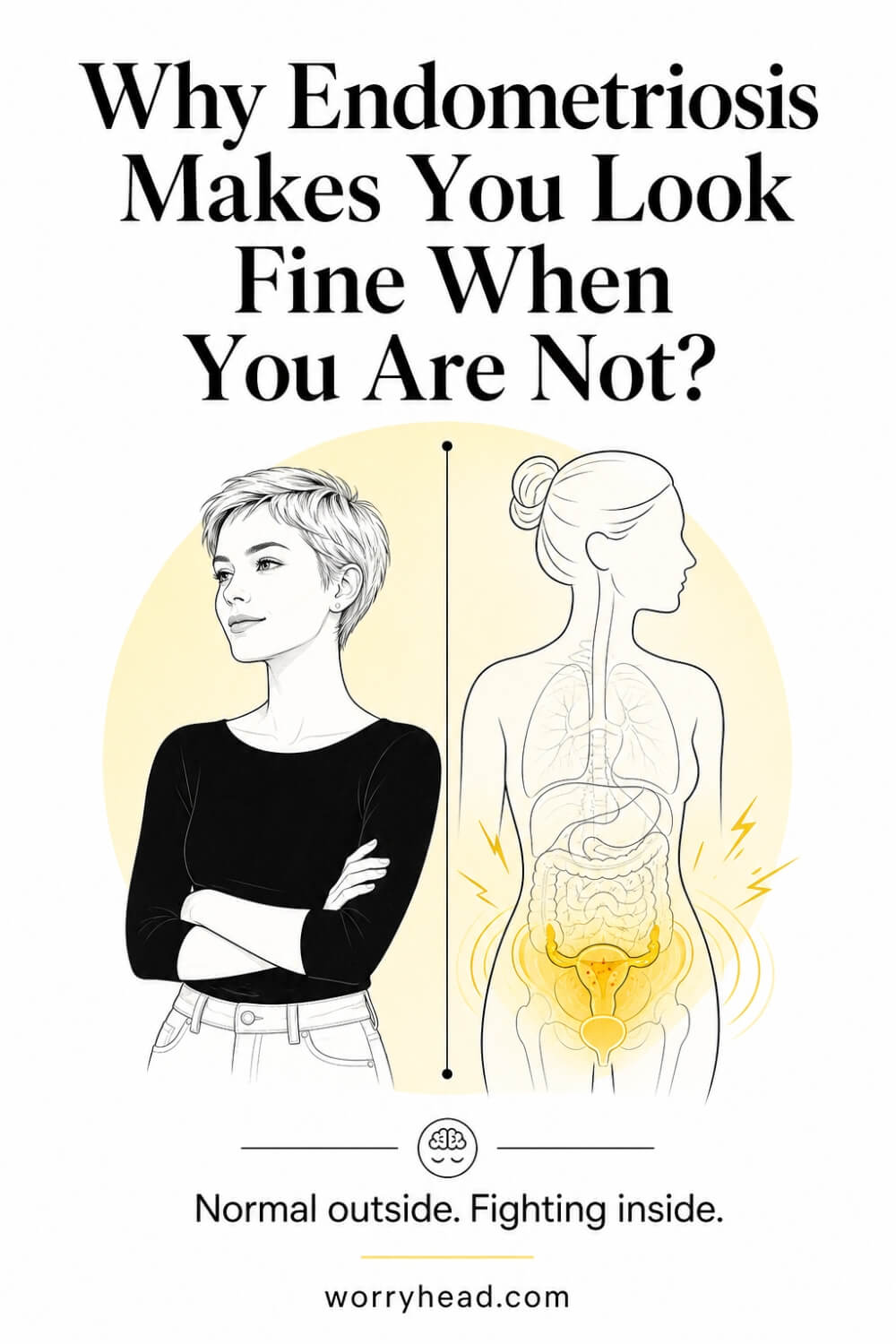
Final Word on Why Endometriosis Makes You Look Fine
If there is one thing I want you to take from this article, it is this: your appearance is not the measure of your suffering. You can look calm and still be in deep pain. You can smile and still be exhausted. You can answer messages, go to work, cook dinner, care for others, and still feel like your body is quietly asking for more than you have left to give.
This is the difficult truth about invisible illness. It does not always announce itself in a way that makes people stop and soften. Sometimes it hides behind your manners, your make-up, your clothes, your sense of duty, your fear of being judged, and your habit of saying “I’m fine” because explaining everything feels too heavy.
But you are not fine just because you look fine.
You may be managing pain that shifts through your pelvis, back, bowel, bladder, hips, legs, or whole body. You may be dealing with fatigue that sleep does not fix. You may be carrying the emotional weight of being dismissed, questioned, corrected, rushed, or told that your symptoms are normal when your life clearly says otherwise.
And I want to say this as a husband who has watched the woman he loves go through more than most people ever saw: I believe you.
I believe the quiet signs. The slower walk. The hand on the abdomen. The cancelled plans. The sudden silence. The careful breathing. The clothes chosen around bloating. The smile that stays in public and disappears at home. The tears that come not only from pain, but from being tired of needing to prove pain exists.
My wife taught me that support is not about waiting until suffering becomes visible. It is about trusting what she says before her body has to collapse to convince me. It is about learning her patterns, respecting her limits, and never making her feel guilty for needing rest, gentleness, or a different pace.
If you are the woman living with this, please do not let other people’s lack of understanding become your inner voice. You are not lazy. You are not weak. You are not dramatic. You are not failing because your body needs care.
If you are the partner reading this, please understand that love must become practical. Believe her pain. Learn her symptoms. Ask better questions. Notice the small changes. Do not wait for proof that satisfies everyone else before you offer tenderness.
Looking fine can be one of the loneliest parts of endometriosis, because it makes the world less likely to pause for you. But here, I want you to pause. I want you to breathe. I want you to remember that your pain does not need to be visible to be valid, and your worth does not shrink on the days your body cannot keep up with the life you wanted.
You deserved belief the first time.
You still do.
You are not asking for too much when you ask to be believed, supported, and treated with tenderness. Your body may be fighting something others cannot see, but your pain is real, your story matters, and your life is still worthy of softness, dignity, love, and hope.
Please leave a comment below if this spoke to your heart, because your story may help another woman feel less alone. You can also check out the FREE chapter of my eBook at the bottom of this post.

About Me
Hi, I’m Lucjan! The reason why I decided to create this blog was my beautiful wife, who experienced a lot of pain in life, but also the lack of information about endometriosis and fibromyalgia for men…
READ MORE
Grab a FREE eBook!
“You Did NOTHING To Deserve This!”
Finally hear the words nobody ever said to you, that your pain is real, your tears make sense, and you did nothing to deserve endometriosis, the dismissal, or the way it has rewritten your life.
Related Questions You May Be Asking About Why Endometriosis Makes You Look Fine
1. Can endometriosis be severe if I still look well?
Yes. Endometriosis can be severe even when you look well because many symptoms happen inside the body, not on the skin. Pelvic pain, bowel pain, bladder pressure, fatigue, painful sex, bloating, and inflammation can be intense while your face still looks calm. Looking well is not medical proof that you are well.
2. Why do people think I am fine?
People often believe what they can see first. If you are dressed, smiling, working, parenting, or holding a conversation, they may assume your pain cannot be that bad. But many women with endometriosis learn to mask symptoms because life still demands things from them. That does not make the pain less real.
3. Does a normal scan rule out endometriosis?
Not always. Scans can be useful, especially when done by someone experienced, but endometriosis does not always show clearly on imaging. Some types are easier to miss, and symptoms still matter. If your scan is normal but your pain, bowel, bladder, fertility, or fatigue symptoms continue, you deserve proper follow-up.
4. Why do symptoms change so much?
Endometriosis symptoms can change because inflammation, hormones, adhesions, bowel irritation, bladder sensitivity, nerve involvement, stress, sleep, and activity can all affect how your body feels. One day may be manageable, while another feels impossible. That does not mean you are inconsistent. It means your illness is complex.
5. How can I explain this to my partner?
Try saying, “I may look okay, but my body is using most of its energy to cope.” Then explain what support helps most, such as heat, quiet, food, help with chores, patience, or going with you to appointments. A loving partner should not need perfect words before offering care.
6. Am I dramatic for needing rest?
No. Rest is not drama, laziness, or weakness. Rest is a reasonable response to pain, fatigue, bleeding, bloating, poor sleep, and the emotional strain of being doubted. I have seen my wife push past her limits, and I know this deeply: needing rest does not make you less strong. It makes you human.
Endometriosis Makes You Look Fine References
- https://www.nhs.uk/conditions/endometriosis/
- https://www.nice.org.uk/guidance/ng73
- https://www.nice.org.uk/news/articles/nice-updated-guideline-to-improve-the-diagnosis-of-endometriosis
- https://www.who.int/news-room/fact-sheets/detail/endometriosis
- https://www.eshre.eu/guideline/endometriosis
- https://pmc.ncbi.nlm.nih.gov/articles/PMC8951218/
- https://en.wikipedia.org/wiki/Endometriosis
- https://www.endometriosis-uk.org/sites/default/files/2024-03/Endometriosis%20UK%20diagnosis%20survey%202023%20report%20March.pdf
