What to Say When a Doctor Says Period Pain Is Normal?
Have you ever sat in a doctor’s room, heard that period pain is normal, and felt your whole body go quiet because you knew something was wrong? This is why knowing what to say when a doctor says period pain is normal can help you turn a dismissed symptom into a clearer, documented medical conversation.
You are not difficult for wanting answers, and you are tired of leaving appointments with pain in your body and doubt planted in your mind.
When a doctor says period pain is normal, say: “I understand mild cramps can happen, but this is not my normal. It stops daily life, affects sleep, work, sex, bowel or bladder symptoms, and pain relief is not enough. Please record this, consider causes such as endometriosis, and tell me the clear plan for tests, treatment, or referral.”
I am not a clinician, and I do not diagnose or replace your doctor, but I know what medical gaslighting of endometriosis is when I see one. I write as a husband, blogger and researcher, and I have listed at the bottom of this article the sources I used for medical context, including WHO, NICE, NHS, ESHRE and peer-reviewed studies.
Here is the part that still makes me angry in a quiet, controlled way: mild cramps can be common, but pain that changes your life deserves investigation, not a shrug. The NHS says you should see a GP when period pain stops usual daily activities, becomes heavier, irregular or more painful, or comes with pain during sex, peeing or pooing, bleeding between periods, a swollen tummy, or bowel and bladder changes.
Endometriosis is not rare either!
WHO estimates it affects about 10% of reproductive-age women worldwide, around 190 million people, and symptoms can include severe pain during menstruation, heavy bleeding, chronic pelvic pain, infertility, bloating, nausea, pain with sex, bowel or bladder symptoms, anxiety and depression. NICE also says a pain and symptom diary can help appointments, while ESHRE warns that imaging is useful but a negative scan does not rule out endometriosis, especially superficial disease.
I have watched my wife prepare for appointments as if she had to defend her own body in court. And sometimes what broke my heart was not only her pain, but the way she had to make herself sound calm enough to be believed while suffering enough to be taken seriously.
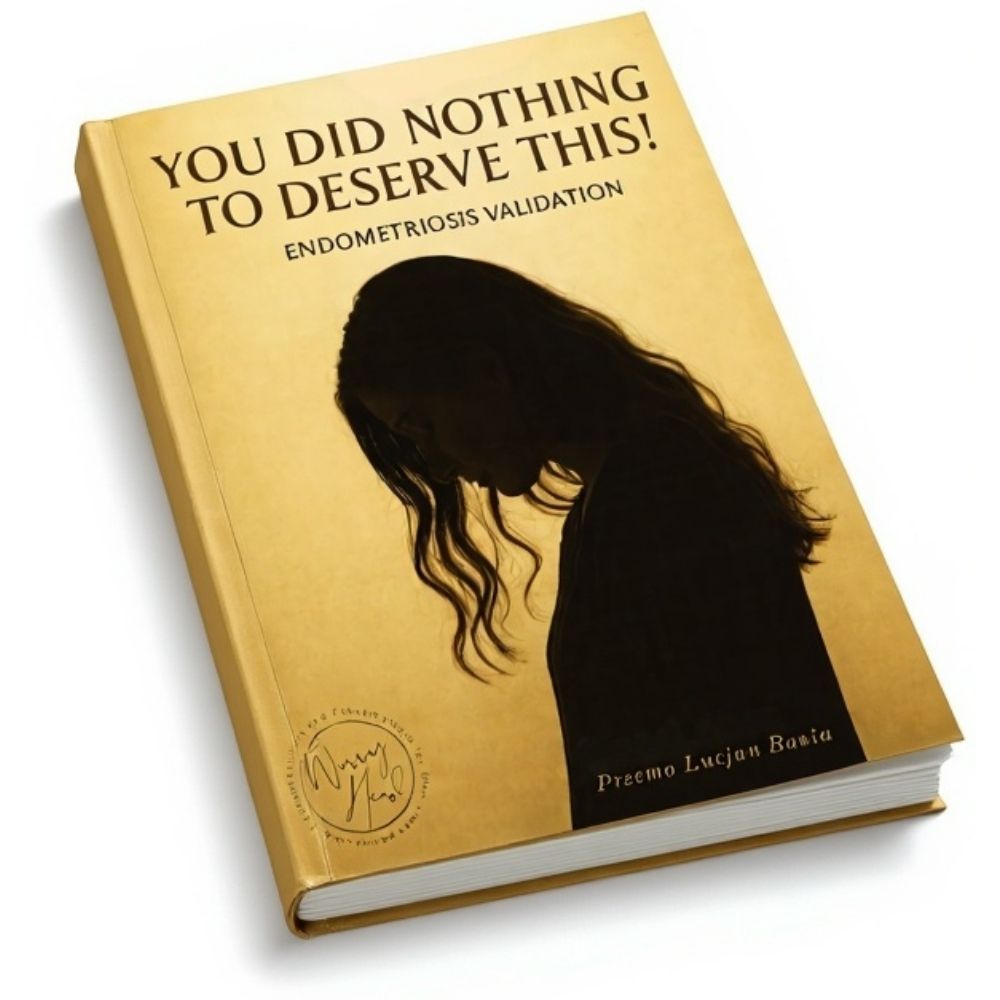
If that feels familiar, I wrote “You Did Nothing To Deserve This!”, a FREE 130+ page eBook for women with endometriosis who need validation, not another cold lecture. When you grab it, you also join our community, where I send more freebies, big discounts on our books, and practical, honest emails to help you adjust to the new normal chronic illness can bring to your body, relationship, and life.
It’s not a medical guide but a human one. Here’s what you will find inside:
- This Was Never Your Fault
- The Girl You Used To Be
- When Your Own Body Feels Like an Enemy
- The Invisible Battles Nobody Sees
- Am I Just Lazy? – The Lie You Have Been Taught
- Gaslighting, Dismissal and the Trauma of Not Being Believed
- Guilt: The Weight You Were Never Meant to Carry
- Love in the Middle of Pain
- Intimacy When Your Body Hurts
- The Loneliness of Being the Strong One
- You Are Allowed To Take Up Space
- Tiny, Gentle Hopes (Not Toxic Positivity)
- If You Could Hear My Voice Every Flare Day
- You Deserve Partners, Not Witnesses
- When You Wish He Understood
- Motherhood, Fertility and the Grief Nobody Sees
- When Anger Is the Only Honest Feeling
- Learning to Trust Your Body Again
- Building a Life That Fits Your Reality
- You Did Nothing To Deserve This
You Did NOTHING To Deserve This!
Endometriosis Validation for Women with Endo
- You Did NOTHING To Deserve This!
- What to Say When a Doctor Says Period Pain Is Normal and You Feel Dismissed?
- What to Say When a Doctor Says Period Pain Is Normal Without Losing Your Confidence?
- What to Say When a Doctor Says Period Pain Is Normal in Your Relationship?
- When to Seek Medical Help?
- Questions to Ask Your Doctor
- Final Word on What to Say When a Doctor Says Period Pain Is Normal
- FREE eBook
What to Say When a Doctor Says Period Pain Is Normal and You Feel Dismissed?
The most important thing about what to say when a doctor says period pain is normal is not finding the perfect speech, but calmly moving the conversation from opinion to evidence.
A doctor may be right that some cramping can happen, but the word normal becomes unsafe when it closes the door on pain that is changing your life. The NHS says period pain can be common, yet it also advises seeing a GP when pain stops usual daily activities, becomes heavier or irregular, or comes with pain during sex, peeing or pooing, bleeding between periods, bowel or bladder changes, a swollen tummy, appetite loss or unexplained weight loss.
So the line I would gently encourage you to hold is this: “I am not asking whether cramps exist; I am asking whether this level of pain needs proper assessment.”
That sentence matters because dismissal often makes you shrink your symptoms until they sound acceptable to someone else. But your clinician needs the real picture: how many days you lose, whether painkillers fail, whether you vomit, faint, bleed through protection, miss work, cancel plans, or start fearing the next cycle.
NICE specifically says endometriosis should be suspected when period-related pain affects daily activities and quality of life, or when there is chronic pelvic pain, deep pain during or after sex, cyclical bowel or urinary symptoms, or infertility alongside those symptoms.
That does not mean every painful period is endometriosis, and I would never want you to leave this article frightened. It means your pain deserves a thoughtful differential, because endometriosis, adenomyosis, fibroids, pelvic inflammatory disease, IUD-related pain and other pelvic conditions can all sit behind painful periods.
A useful phrase is: “Can we talk through what else could cause this, what we are ruling out today, and what would make you refer me to gynaecology?”
The aim is not to attack your doctor or make yourself sound dramatic. The aim is to leave with a plan, a record, and a next step, because walking out with another “come back if it gets worse” can feel like being abandoned with your own body.
If the doctor says your examination, ultrasound, or MRI is normal, it is fair to ask what that result rules out and what it cannot rule out. NICE says not to exclude endometriosis when examination and ultrasound are normal, and ESHRE says negative imaging does not exclude the condition, particularly superficial peritoneal disease.
That one fact can protect your confidence when a clear scan is used as if it erases years of pain.
You can also ask for your words to be written in your medical notes, because records turn repeated suffering into a visible timeline. NICE says a pain and symptom diary can help discussions, and ESHRE says a diary or app may help objectify pain and empower you to show your symptoms rather than simply describe them.
Bring dates, patterns, bleeding changes, bowel and bladder symptoms, sex pain, medication tried, side effects, missed work or study, and what your worst day looks like when nobody else sees it.
I remember watching my wife get ready for appointments with that quiet fear in her face, the kind that says, “Please believe me before I have to prove myself again.” I could not take the pain out of her pelvis, but I could sit beside her, remember the details she was too exhausted to repeat, and make sure her voice did not disappear in the room.
So before we go deeper, here are the practical phrases and small steps I wish more women and partners had in their hands before the next appointment…
- Say how pain changes your life
- Ask for symptoms to be recorded
- Bring a pain and symptom diary
- Mention bowel and bladder patterns
- Ask what else could cause it
- Ask when referral is needed
- Clarify normal scan limitations
- Take someone who believes you
Say How Pain Changes Your Life
When you sit in front of a doctor, try not to describe the pain only as “bad cramps”, because that phrase can sound too small for what you are carrying. Say what the pain takes away from you. Tell them if you miss work, crawl to the bathroom, cancel plans, cannot stand upright, vomit, faint, bleed through protection, cannot sleep, or spend days recovering from one period. The NHS lists period pain stopping usual daily activities as a reason to see a GP, and endometriosis can cause severe period pain that stops normal activities.
I wish I had understood this earlier with my wife. Pain is not only a number from one to ten. Pain is the meal she cannot finish, the walk she cannot take, the intimacy she fears, the quiet look on her face when another day disappears. So you can say, “This pain is affecting my daily life, and I need help finding out why.” That is not dramatic. That is clear.
Ask for Symptoms to Be Recorded
One of the calmest but strongest things you can say is, “Please can you record in my notes that this pain is affecting my life and that I am asking for further assessment?” This matters because many women are dismissed not once, but repeatedly, and repeated dismissal becomes harder to challenge when every appointment looks clean and simple on paper. Your medical record should show the pattern, not just the few minutes you spent trying to sound brave in a chair.
You can ask for the exact symptoms to be documented: severe period pain, pelvic pain outside the period, pain during or after sex, bowel pain, bladder pain, heavy bleeding, bleeding between periods, fatigue, nausea, bloating, and anything cyclical. NICE says endometriosis should be suspected when symptoms include period-related pain affecting quality of life, chronic pelvic pain, deep pain during sex, cyclical bowel or urinary symptoms, or infertility. If it matters in your body, it deserves to exist in your notes.
Bring a Pain and Symptom Diary
A pain and symptom diary is not about proving you are telling the truth. You should not have to prove that. It is about helping a busy doctor see the shape of your symptoms when memory feels foggy, the appointment is rushed, and your body has been hurting for so long that everything starts to blur. NICE says a pain and symptom diary can help discussions, and this can be especially useful when pain changes across the month.
Write down the date, pain level, bleeding, clots, bowel changes, bladder symptoms, nausea, fatigue, pain with sex, medication used, side effects, and what the pain stopped you doing. Keep it plain and honest. “Could not stand long enough to cook.” “Missed work.” “Woke at 3 am with pelvic pain.” “Pain opening bowels during period.” These details can speak when you feel too exhausted to explain everything again. My wife should never have had to become her own case file, but sometimes that file helps protect your voice.
Mention Bowel and Bladder Patterns
If your pain comes with bowel or bladder symptoms, say it clearly, even if it feels embarrassing. Pain when pooing, pain when peeing, urinary urgency, bowel cramps, diarrhoea, constipation, rectal pressure, or symptoms that flare around your period can be important clues. The NHS says to see a GP if period pain comes with pain during sex, peeing or pooing, bleeding between periods, changes in peeing or pooing, a swollen tummy, appetite loss, or unexplained weight loss.
I know these symptoms can make you feel exposed. I have watched my wife carry the kind of pain that is hard to say out loud because it sits in places society teaches you to hide. But doctors cannot assess what they do not hear, and you deserve care for your whole body, not just the parts that are easy to talk about. A simple phrase can help: “My symptoms are not only cramps. I also get bowel or bladder changes around my cycle, and I want that considered.”
Ask What Else Could Cause It
When a doctor says period pain is normal, you can gently answer, “I understand mild cramps can be common, but what else could cause pain this severe?” That question keeps the door open. It invites proper thinking without sounding confrontational. Severe period pain can have different causes, including endometriosis, adenomyosis, fibroids, pelvic inflammatory disease, ovarian cysts, and other gynaecological or pelvic problems, so the conversation should not end at “normal” when your life is being interrupted.
You are not asking the doctor to jump to one diagnosis. You are asking them not to jump to dismissal. That is a very different thing. I often think of how many years my wife spent trying to explain symptoms that were treated like separate little complaints, instead of a pattern. So ask, “What are we ruling out today, what cannot be ruled out today, and what is the next step if this continues?” That one question can change the appointment from a dead end into a plan.
Ask When Referral Is Needed
A referral is not a failure of your GP. It is sometimes the appropriate next step when symptoms are complex, persistent, or not improving with initial care. NICE recommends referral to a gynaecology service for symptoms or confirmed endometriosis when initial treatment is ineffective, not tolerated, contraindicated, or when symptoms have a significant, persistent, or recurrent impact on daily activities. You can ask, “At what point would you refer me to gynaecology, and do I meet any of those criteria now?”
That question is powerful because it asks for a threshold. It stops the conversation from floating in vague reassurance. I have learned that women in pain are often told to wait, but not always told what they are waiting for. More pain? More missed work? More months of fear before every bleed? You deserve a timeline, a review plan, and a reason. If the answer is no referral today, ask what needs to happen next and when you should come back.
Clarify Normal Scan Limitations
A normal ultrasound can be reassuring in some ways, but it should not automatically be used to erase your symptoms. NICE says not to exclude endometriosis if abdominal or pelvic examination and ultrasound are normal, and that referral may still be needed even with a normal scan. ESHRE also states that imaging can be useful in the diagnostic work-up, but a negative result does not exclude endometriosis, especially superficial peritoneal disease.
So if you hear, “Your scan is normal,” you can say, “That is good to know, but what does this scan rule out, and what does it not rule out?” This is not being awkward. This is being informed. My wife’s pain was never made less real by the limits of a test. A scan is a tool, not a judge. Your lived symptoms still matter, especially when pain keeps repeating itself, affecting your body, your sleep, your confidence, your relationships, and your ability to feel safe in your own skin.
Take Someone Who Believes You
If you can, take someone with you who believes you. Not someone who talks over you, not someone who makes the appointment about themselves, but someone who can help you stay grounded when the room feels intimidating. Pain can make it hard to remember details, and dismissal can make you doubt yourself in real time. A supportive partner, friend, sister, mum, or trusted person can quietly help you return to the truth of what you live with.
This is where I think men like me need to step up. Not to rescue, not to control, not to act like heroes, but to witness properly. I have sat beside my wife knowing that my role was not to be louder than her, but to make sure she did not feel alone while explaining pain that had already taken too much from her. You can say before the appointment, “I need you to help me remember what I wanted to say.” Sometimes being believed by one person beside you gives you enough strength to ask for the care you should have received already.

What to Say When a Doctor Says Period Pain Is Normal Without Losing Your Confidence?
After the practical phrases, the next battle is quieter: protecting the part of you that begins to wonder whether you are overreacting. Dismissal does not only delay care; it can teach you to minimise pain, apologise for symptoms, and leave out details because you are afraid of sounding too much.
But severe period pain that interrupts normal daily activities is a reason to see a GP, and endometriosis can involve pelvic pain, pain during or after sex, bowel or bladder pain, fatigue, heavy bleeding, fertility struggles, low mood and anxiety. That is why what to say when a doctor says period pain is normal should include one sentence for your body and one sentence for your confidence: “I hear you, but this pain is affecting my life, and I need a clear plan.”
I have seen my wife do that small mental calculation before appointments, wondering how honest she could be without being judged. She wanted help, but she also wanted to protect herself from the ache of not being believed again. As her husband, I learned that sitting beside her meant more than holding her hand; it meant remembering that medical words can either open a door or close one.
If a doctor reassures you too quickly, you can slow the room down without raising your voice. You can say, “Before we finish, can we agree what we are monitoring, what treatment we are trying, when I should return, and when a referral would be considered?” NICE says endometriosis should not be excluded just because an examination and ultrasound are normal, and referral may still be necessary even with a normal scan.
ESHRE also explains that negative imaging does not exclude endometriosis, especially superficial peritoneal disease. That matters because a clear scan can feel like relief for one minute and rejection the next if your pain is still there. Your scan can be normal, and your suffering can still be real.
This does not mean you need to fight every doctor, because many clinicians genuinely want to help and are working inside very short appointments. It means you deserve a conversation where your pain is treated as information, not drama. And if nobody has told you this gently before, I will: your body is not embarrassing, your symptoms are not a burden, and asking for proper care is not disrespectful.
I wish every person who had to rehearse sentences in the bathroom mirror had one safe person saying, “I believe you, and I am coming with you.” Because sometimes the most healing part of an appointment begins before the doctor enters the room, when someone you love reminds you that you are not alone.

What to Say When a Doctor Says Period Pain Is Normal in Your Relationship?
When dismissal follows you home, it does not stay in the doctor’s room. It sits on the sofa with you, comes into the bedroom with you, and makes you wonder whether your pain is too much for the person who loves you.
This is where what to say when a doctor says period pain is normal becomes more than an appointment phrase; it becomes a way of protecting your dignity, your relationship, and your trust in your own body. Severe period pain that stops normal activities, heavy bleeding, pelvic pain, pain during or after sex, and pain when peeing or pooing can be linked with endometriosis, so these symptoms deserve to be named clearly, not hidden behind a nervous smile.
I have watched my wife carry pain into ordinary moments that should have belonged to us, like a quiet evening, a walk, a cuddle, a laugh, a plan for tomorrow. And I have felt the helplessness of loving her deeply while knowing that love alone could not remove the pain from her body.
But love can still do something important. It can believe her before the paperwork does, remember the symptoms when exhaustion steals her words, and remind her that needing help does not make her hard to love.
For me, this changed how I saw support. I stopped thinking only about appointments and started noticing the emotional bruises left by years of being told, directly or indirectly, that her suffering was ordinary.
When your pain is minimised, both of you can begin living smaller. You may stop asking for intimacy because pain has made it frightening, and your partner may stop asking because they are terrified of hurting you.
That silence can become heavy if nobody names it. So the words after dismissal matter at home too: “I need you to believe me, help me write this down, and stand beside me while I ask again.”
If you are the partner reading this, please understand that support is not only driving to appointments or picking up prescriptions. Sometimes support is looking at the woman you love and saying, “I know this is not normal for you, and I am not going to let you face it alone.”
When to Seek Medical Help?
You should seek medical help when period pain stops being something you can manage and starts becoming something that manages you. Mild cramps can happen, but pain that keeps you from work, school, sleep, walking normally, eating properly, caring for your family, or living your ordinary life deserves to be taken seriously. The NHS advises seeing a GP if your periods become more painful, heavier or irregular, if period pain stops your usual daily activities, if you have pain during sex, peeing or pooing, bleeding between periods, changes in bowel or bladder habits, a swollen tummy, loss of appetite, or unexplained weight loss.
Please do not wait until you can no longer cope before you ask for help. I know many of you have been trained by dismissal to “push through”, but pushing through is not the same as being okay. If you are planning your month around your bleed, lying on the bathroom floor, cancelling life, fearing intimacy, dreading bowel movements, or needing more pain relief than feels safe, that is enough reason to book an appointment.
Endometriosis can cause severe period pain, pelvic pain, pain when pooing or peeing, pain during or after sex, extreme tiredness, difficulty getting pregnant, low mood and anxiety. NICE also says endometriosis should be suspected when period-related pain affects daily activities and quality of life, or when symptoms include chronic pelvic pain, deep pain during or after sex, cyclical bowel symptoms, urinary symptoms, or infertility. That does not mean you should panic or self-diagnose, but it does mean your pain has medical context and deserves a proper conversation.
Heavy bleeding also matters. The NHS describes heavy periods as needing to change a pad or tampon every 1 to 2 hours, needing to use two period products together, periods lasting more than 7 days, clots larger than about 2.5cm, bleeding through clothes or bedding, avoiding daily activities, or feeling tired or short of breath a lot. If that sounds like your normal, please understand something: just because you have lived with it for years does not mean your body should have to keep carrying it silently.
There are also moments when you should not wait for a routine appointment. The NHS says to call 999 or go to A&E for pelvic pain if it is severe, getting worse, painful when you move or touch the area, or if you feel faint, dizzy, lightheaded, pass out, have shoulder tip pain, difficulty breathing, heavy vaginal bleeding, or suddenly feel confused. That is not me trying to frighten you. That is me saying calmly and clearly that some symptoms need urgent care, and you are allowed to treat your safety as important.
With my wife, I learned that “I can cope” can sometimes mean “I have no choice but to cope.” That sentence still hurts me because I saw how easily pain becomes normalised when it has been there for years. So if you are unsure whether to seek help, ask yourself this: would I want someone I love to live like this without being checked?
If the answer is no, then please give yourself the same kindness. You are not wasting anyone’s time. You are not being weak. You are a person whose body is asking for attention, and that deserves care, not shame.
Questions to Ask Your Doctor
When you are sitting in front of a doctor, it can be hard to remember what you wanted to ask, especially if you already feel nervous or dismissed. I always think of my wife here, because pain can steal your words before the appointment even begins. That is why writing your questions down is not silly; it is a way of protecting your voice.
You can start with the most important question: “If you feel this is normal period pain, can you explain what makes it normal and what signs would make you concerned?” This keeps the conversation respectful, but it also asks the doctor to define their reassurance. You are not arguing. You are asking for clarity.
Then ask, “What conditions could cause this level of pain, and how will we rule them out?” This opens the door to a proper differential diagnosis instead of leaving you with a vague answer. Painful periods can be linked with several causes, and if your symptoms affect your life, it is reasonable to ask what is being considered.
Ask, “Does my pattern of pain fit anything you would expect with endometriosis, adenomyosis, fibroids, pelvic inflammatory disease, ovarian cysts, bowel issues, bladder issues, or pelvic floor problems?” You are not demanding a diagnosis in one appointment. You are asking the doctor to think widely enough so you do not leave feeling that one word, “normal”, swallowed the whole conversation.
Ask, “What should I track before my next appointment?” This is especially helpful if you are not being referred yet. You can track pain days, bleeding, clots, bowel symptoms, bladder symptoms, pain during or after sex, nausea, fatigue, medication, side effects, missed work, missed social plans, and how long recovery takes after your period.
Ask, “Can we agree on a review date and what we will do if this does not improve?” Please do not leave with an open-ended “come back if it gets worse” unless you know what worse means. Ask whether you should return in 4 weeks, 8 weeks, or after a set number of cycles. A plan gives you something solid to hold.
Ask, “At what point would you refer me to gynaecology?” This question matters because referral thresholds can become vague when appointments are rushed. If your symptoms are persistent, recurrent, affecting your daily life, or not improving with initial treatment, it is fair to ask when specialist input becomes appropriate.
Ask, “If my ultrasound is normal, what does that rule out and what can it miss?” This is one of the questions I wish more people had in their pocket. A normal scan may be useful, but it should not automatically cancel out your lived symptoms, especially when pain keeps returning in a clear pattern.
Ask, “Can you record in my notes that this pain is affecting my daily life and that I am asking for further assessment?” This is calm, reasonable, and important. Your medical notes should not make years of pain look like one small complaint.
And if you are too tired to say all of this alone, take someone with you if you can. A partner, friend, sister, mum, or trusted person can help you remember, breathe, and stay steady. I have sat beside my wife and learned that support is sometimes very simple: believe her before anyone else does, help her speak when pain makes her small, and remind her after the appointment that her body was not lying.

Final Word on What to Say When a Doctor Says Period Pain Is Normal
If you remember only one thing from this article, let it be this: you do not have to accept dismissal just because it is delivered in a calm voice. A doctor can be kind and still miss the full picture. A scan can be clear and your pain can still be real. A period can be common and still become medically concerning when it begins to steal your life.
I know how easily you can start doubting yourself when you hear the word “normal” too many times. You walk in with pain, fatigue, fear, bleeding, bowel symptoms, bladder symptoms, or a body that feels unpredictable, and you walk out wondering whether you should have explained it better. That is a lonely place to be. I have seen that loneliness in my wife’s eyes, and it is something no woman should have to carry just to be taken seriously.
So when you ask what to say when a doctor says period pain is normal, you are not asking for a clever comeback. You are asking how to protect your voice. You are asking how to stay respectful without disappearing. You are asking how to make sure the person in front of you understands that this is not about mild cramps, but about a pattern of pain that affects your sleep, work, relationships, intimacy, dignity, and ability to feel safe in your own body.
The words do not need to be perfect. You can say, “This pain is affecting my daily life.” You can say, “I need this documented.” You can say, “What else could be causing this?” You can say, “What is the next step if treatment does not help?” You can say, “Please explain what a normal scan rules out and what it cannot rule out.” Those are not aggressive words. They are steady words. They are the kind of words that keep the door open when dismissal tries to close it.
And if you are the partner reading this, please do not underestimate your place in that room. You are not there to speak over her. You are there to stand beside her. You are there to remember what pain makes hard to say. You are there to help her feel believed before she has to fight to be believed by anyone else.
For years, I watched my wife live through pain that was not just physical. It touched her confidence, her mental health, her sense of womanhood, our relationship, our plans, and the quiet ordinary moments most people never think about. That is why validation matters so much to me. Not as a soft extra, but as part of care itself.
You deserve answers. You deserve a plan. You deserve a clinician who listens, a partner who believes you, and a life where your pain is not brushed aside as normal when it is anything but normal for you.
You are not being difficult. You are not being dramatic. You are trying to be heard in a body that has already shouted long enough.
You deserve to be believed, supported, and properly assessed. If your period pain is changing your life, please do not shrink your story to make it easier for someone else to hear. Your pain matters, your questions matter, and the right next step could begin with one calm sentence you finally feel brave enough to say.
Leave a comment below if a doctor has ever told you your period pain was normal, because your story may help another woman feel less alone. You can also check out the FREE chapter of my eBook at the bottom of this post.


About Me
Hi, I’m Lucjan! The reason why I decided to create this blog was my beautiful wife, who experienced a lot of pain in life, but also the lack of information about endometriosis and fibromyalgia for men…
READ MORE
Grab a FREE eBook!
“You Did NOTHING To Deserve This!”
Finally hear the words nobody ever said to you, that your pain is real, your tears make sense, and you did nothing to deserve endometriosis, the dismissal, or the way it has rewritten your life.
Related Questions You May Be Asking About What to Say When a Doctor Says Period Pain Is Normal
1. Is any period pain actually normal?
Some cramping can be common, but pain that stops your usual daily activities should not be brushed aside. If you cannot work, study, sleep, walk properly, eat normally, or function through your period, that deserves medical attention. You can say, “I understand mild cramps can happen, but this level of pain is affecting my life.”
2. What if my doctor only suggests painkillers?
You can say, “I am willing to try treatment, but can we agree when we review this and what happens if it does not help?” Pain relief may be part of care, but it should not become a dead end. Ask for a clear plan, a review date, and what symptoms would trigger further investigation or referral.
3. Can endometriosis be missed on ultrasound?
Yes, it can. A normal ultrasound may be useful, but it does not fully rule out endometriosis. NICE says endometriosis should not be excluded when examination and ultrasound are normal, and ESHRE says negative imaging does not exclude it, especially superficial peritoneal disease.
4. What symptoms should I mention besides cramps?
Mention anything that comes with your cycle, especially pelvic pain, heavy bleeding, pain during or after sex, pain when peeing or pooing, bowel changes, bladder changes, bleeding between periods, bloating, fatigue, nausea, or fertility concerns. These details can help your doctor see a pattern instead of treating your pain as an isolated complaint.
5. How do I ask for a gynaecology referral?
Say, “At what point would you refer me to gynaecology, and do I meet any of those criteria now?” This is calm and reasonable. NICE recommends referral when symptoms or confirmed endometriosis need further investigation or management, especially when initial treatment is ineffective, not tolerated, contraindicated, or symptoms keep affecting daily life.
6. What can my partner say or do?
Your partner does not need to speak over you. They can help you write symptoms down, remember dates, sit beside you, and say, “I have seen how this pain affects her daily life.” As a husband, I believe the most powerful support begins before the appointment, when you know someone beside you already believes you.
What to Say When a Doctor Says Period Pain Is Normal References
- https://www.nhs.uk/symptoms/period-pain/
- https://www.nhs.uk/conditions/endometriosis/
- https://www.nhs.uk/conditions/heavy-periods/
- https://www.nhs.uk/symptoms/pelvic-pain/
- https://www.nice.org.uk/guidance/ng73/chapter/recommendations
- https://www.nice.org.uk/news/articles/nice-updated-guideline-to-improve-the-diagnosis-of-endometriosis
- https://www.ncbi.nlm.nih.gov/books/NBK604070/
- https://www.who.int/news-room/fact-sheets/detail/endometriosis
- https://www.eshre.eu/-/media/sitecore-files/Guidelines/Endometriosis/ESHRE-GUIDELINE-ENDOMETRIOSIS-2022_1.pdf
- https://pmc.ncbi.nlm.nih.gov/articles/PMC8951218/
- https://www.nhsinform.scot/healthy-living/womens-health/girls-and-young-women-puberty-to-around-25/periods-and-menstrual-health/period-pain-dysmenorrhoea/
- https://en.wikipedia.org/wiki/Dysmenorrhea
- https://en.wikipedia.org/wiki/Endometriosis
