
How to Ask for an Endometriosis Referral Without Feeling Difficult?
Have you ever sat before a GP appointment, pain diary in your bag, wondering how to say enough without sounding like you are making a fuss? Learning how to ask for an endometriosis referral without feeling difficult starts with understanding that your symptoms are evidence, not an attitude problem.
If you have ever experienced endometriosis medical gaslighting and felt embarrassed for needing help, I want you to know this first: you are not the problem.
To ask for an endometriosis referral, clearly describe how pelvic pain, heavy bleeding, bowel, bladder, sex, fatigue, or fertility symptoms affect daily life, mention patterns, failed treatments, and ask your GP to refer you to gynaecology or a specialist endometriosis service without apologising.
I am not a clinician; I write as a husband, blogger, researcher and carer who has watched my wife fight to be believed, and I have attached at the bottom of this post the sources I used to learn the medical context, including WHO, NICE, NHS, ESHRE, studies and trusted endometriosis organisations.
What may surprise you is that asking for a referral is not “being difficult” when symptoms affect daily life, because NICE tells clinicians to suspect endometriosis when pelvic pain, painful periods, pain during or after sex, cyclical bowel or bladder symptoms, or infertility are present. NICE also updated its guidance to improve earlier detection, because delays are still a real problem.
And this is where my heart always tightens, because Endometriosis UK reported the average UK diagnosis time has risen to 9 years and 4 months, while 83% of respondents said they had been dismissed or told something similar to “making a fuss about nothing.” That is not just data to me. That is years of women walking out of appointments quieter than they walked in, carrying pain in their bodies and shame that was never theirs to carry.
I have seen my wife shrink after appointments where she hoped for answers and came back with more doubt. I have also seen what changes when you stop asking like you are asking for a favour, and start speaking like your life, body, work, sleep, intimacy, and future matter.
And if you need something gentle to hold while you find your voice, you can grab my FREE 130+ page eBook, “You Did Nothing To Deserve This!”, written to validate the feelings of women with endometriosis.
By grabbing it, you also join our community, where I share more freebies, big discounts on our books, and honest, practical emails to help you and your relationship adjust to the new normal chronic illness can bring.
The book is filled with 20 chapters of gentle validation for women with endo, written by yours truly, as I have seen it up close...
It’s my way of telling you, in much more detail, that your pain, your complex response to treatment, and your emotions around all of it are real, understandable, and never your fault.
It’s not a medical guide but a human one. Here’s what you will find inside:
- This Was Never Your Fault
- The Girl You Used To Be
- When Your Own Body Feels Like an Enemy
- The Invisible Battles Nobody Sees
- Am I Just Lazy? – The Lie You Have Been Taught
- Gaslighting, Dismissal and the Trauma of Not Being Believed
- Guilt: The Weight You Were Never Meant to Carry
- Love in the Middle of Pain
- Intimacy When Your Body Hurts
- The Loneliness of Being the Strong One
- You Are Allowed To Take Up Space
- Tiny, Gentle Hopes (Not Toxic Positivity)
- If You Could Hear My Voice Every Flare Day
- You Deserve Partners, Not Witnesses
- When You Wish He Understood
- Motherhood, Fertility and the Grief Nobody Sees
- When Anger Is the Only Honest Feeling
- Learning to Trust Your Body Again
- Building a Life That Fits Your Reality
- You Did Nothing To Deserve This
You Did NOTHING To Deserve This!
Endometriosis Validation for Women with Endo
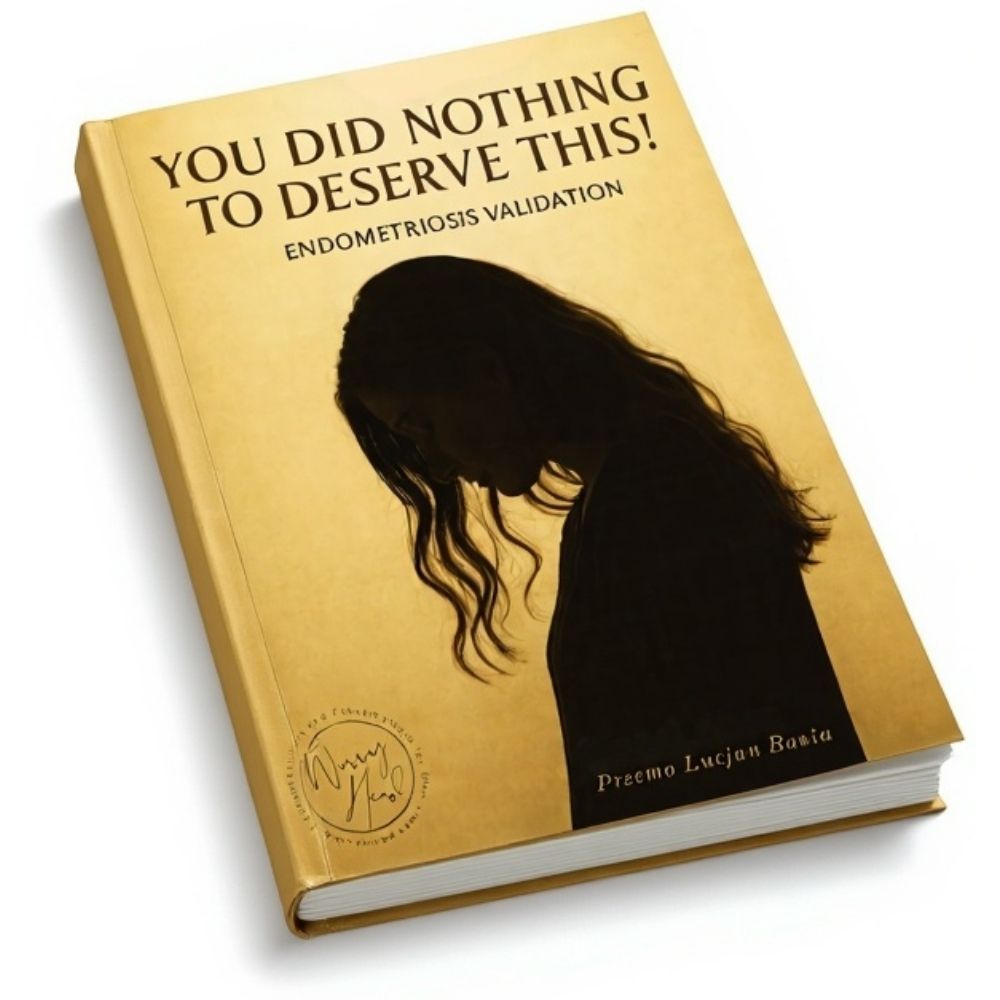
- You Did NOTHING To Deserve This!
- How to Ask for an Endometriosis Referral Without Feeling Difficult?
- What Changes When You Ask for an Endometriosis Referral Without Feeling Difficult?
- Why It Matters When You Ask for an Endometriosis Referral Without Feeling Difficult?
- When to Seek Medical Help?
- Questions to Ask Your Doctor
- Final Word on How to Ask for an Endometriosis Referral Without Feeling Difficult
- FREE eBook
How to Ask for an Endometriosis Referral Without Feeling Difficult?
The first thing I would want you to remember is that a referral is not a reward for being dramatic; it is a normal part of healthcare when symptoms need specialist eyes. You are allowed to use clear words, even if your voice shakes, because clarity is not rudeness.
Before the appointment, write down what happens during your period, ovulation, sex, bowel movements, urination, exercise, work, sleep, and normal family life. A GP may only see ten minutes of you, so your notes need to show the pattern they cannot see with their eyes.
Try not to soften the truth with phrases like “it is probably nothing” or “I know you are busy,” because those words often come from years of being dismissed, not from the reality of your pain. Instead, say what changes because of your symptoms, such as missing work, cancelling plans, needing painkillers, bleeding through clothes, struggling with intimacy, or being afraid to leave the house.
To ask for an endometriosis referral without feeling difficult, you can use one calm sentence: “These symptoms are affecting my daily life, and I would like a referral to gynaecology or an endometriosis specialist to investigate this properly.” That sentence is not aggressive, demanding, or rude; it is simply clear.
If you have already tried pain relief, hormonal treatment, lifestyle changes, scans, or repeated GP visits, say that too, because repeated symptoms with limited improvement matter. If your ultrasound was normal, do not let that close the door in your mind, because endometriosis can still be present even when imaging does not show it.
You can also bring someone with you, not because you cannot speak for yourself, but because pain, nerves, and years of medical dismissal can make it hard to remember everything. A partner, friend, sister, or parent can quietly help you stay steady and remind the doctor of details you may forget in the moment.
The most powerful thing you can do is speak in impact, not just symptoms. “My period hurts” may be heard one way, but “I lose two days a month to pain, I cannot stand upright, and I am scared this is being missed” paints a picture that is harder to brush aside.
If the doctor says to wait, ask what the plan is, how long you should wait, what red flags to watch for, and when they will refer you if things do not improve. This keeps the appointment from ending with vague reassurance and no next step.
You do not need to know every medical term to deserve help. You only need to be honest about what your body is doing, how often it happens, how long it has been going on, and how much of your life it has taken from you.
I think of my wife in moments like this, because I know what it feels like to watch the woman you love prepare herself for another appointment, not only for the pain, but for the possibility of not being believed again. That kind of silence after a dismissed appointment can break your heart, because you realise she is not just tired from symptoms; she is tired from having to prove them.
And this is why the next part matters so much, because you deserve more than “be confident” advice. You deserve practical words, small steps, and real ways to walk into that appointment feeling prepared, grounded, and less alone.
- Write your symptom pattern clearly
- Explain your daily life impact
- Use calm referral language
- Mention failed treatment attempts
- Ask about specialist pathways
- Bring support if needed
- Prepare for dismissal gently
- Request next steps clearly

Write Your Symptom Pattern Clearly
When you write your symptom pattern, you are not trying to impress the doctor with perfect medical language. You are simply giving them the story your body has been trying to tell for months or years.
Write down when the pain appears, how long it lasts, where it sits, where it travels, and whether it changes around your period, ovulation, sex, bowel movements, or urination. If your pain goes into your back, hip, rectum, bladder, thigh, or down your leg, include that too, because endometriosis pain is not always neat and polite.
I have learned through my wife that the little details often matter the most. The day she cannot stand straight, the night she curls up quietly, the morning she pretends she is okay because she is tired of explaining herself, all of that is part of the pattern. Your notes are not complaining. They are evidence.
Explain Your Daily Life Impact
Doctors hear pain described every day, but what often makes them understand is how much life your symptoms steal from you. So instead of only saying, “My periods are painful,” explain what pain stops you from doing.
Say things like, “I miss work,” “I cannot sleep,” “I avoid intimacy,” “I cancel plans,” “I bleed through clothes,” “I cannot exercise,” or “I plan my whole month around my cycle.” This shows that your symptoms are not just uncomfortable; they are interfering with your life in a real and measurable way.
I wish more doctors understood what it does to your spirit when you keep rearranging your life around pain. I have watched my wife try to appear normal while her body was screaming at her, and I know many of you do the same. You should not have to collapse before someone takes you seriously. Daily life impact is valid medical information.
Use Calm Referral Language
You do not need to walk into the appointment angry to be taken seriously, and you do not need to make yourself tiny to be liked. There is a middle place where you can be calm, respectful, and firm at the same time.
A useful sentence could be, “These symptoms are affecting my daily life, and I would like a referral to gynaecology or an endometriosis specialist for further investigation.” You can practise it before the appointment, write it on paper, or keep it on your phone so you do not lose the words when nerves take over.
Please do not apologise after saying it. I know why you might want to, because years of being dismissed can make you feel guilty for needing help. But asking for a referral is not being difficult. It is you trying to protect your health, your future, your relationship, your work, and your peace.
Mention Failed Treatment Attempts
If you have already tried painkillers, heat, rest, hormonal contraception, diet changes, pelvic floor exercises, repeated GP visits, or “let’s wait and see,” say that clearly. A doctor needs to know that this is not a one-off bad period or a small inconvenience that improved with basic steps.
You can say, “I have tried these things, but my symptoms are still affecting my daily life.” That sentence helps move the conversation from repeating the same advice to asking what the next sensible step should be.
This matters because many women get stuck in the loop of trying the same things while the years pass quietly. I have seen how painful that waiting can be when the woman you love keeps doing everything she was told to do, yet still ends up on the sofa, in bed, or in tears. Failed treatment attempts are not personal failures. They are information that something needs a closer look.
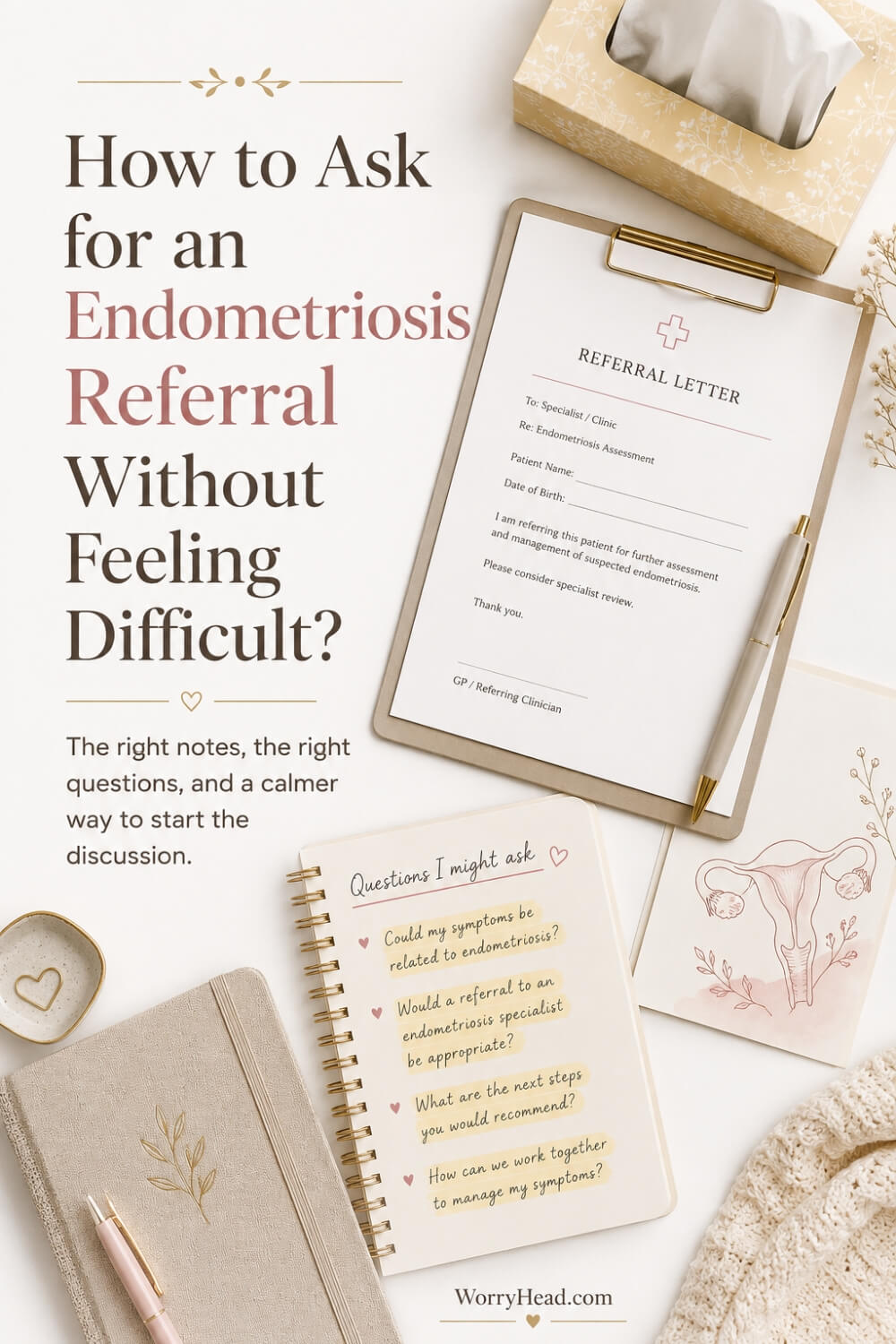
Ask About Specialist Pathways
Not every gynaecology referral is the same, and not every clinic has the same endometriosis experience. This is why it is okay to ask what pathway is available where you live, especially if your symptoms suggest deep endometriosis, bowel symptoms, bladder symptoms, severe pain, or fertility concerns.
You could ask, “Is there a specialist endometriosis service or centre I can be referred to?” You could also ask whether imaging should be done by someone experienced in endometriosis, because a normal scan does not always mean there is nothing wrong.
This is not you trying to jump the queue. It is you trying to reach the right door. My wife’s journey taught me that the right specialist can change everything, not because they wave a magic wand, but because they finally know what they are looking for. You deserve someone who can connect the dots instead of handing them back to you.
Bring Support If Needed
Taking someone with you does not mean you are weak. It means you are human, and sometimes your body and your emotions have already carried too much before you even sit in the chair.
A partner, friend, sister, mum, or trusted person can help you remember details, keep you grounded, and gently bring the conversation back if it drifts away from what matters. They can also witness what was said, which can help if you leave feeling confused, dismissed, or unsure about the next step.
As a husband, I know there were moments when my wife did not need me to speak over her. She needed me beside her, believing her, remembering what pain made hard to say, and quietly showing her she was not alone in that room. The right support should never take away your voice. It should help you keep it.
Prepare for Dismissal Gently
I hate that this even needs to be said, but many women have already learned to prepare for dismissal because it has happened before. Preparing does not mean expecting the worst from every doctor. It means protecting yourself emotionally so one poor appointment does not make you doubt your own body again.
If you are told it is “normal,” ask what makes it normal when it affects your daily life. If you are told to wait, ask how long, what should happen next, and what criteria would lead to referral. If you are refused a referral, you can calmly ask for the reason to be recorded in your notes.
That is not being rude. That is creating accountability. I have seen the look in my wife’s eyes after being made to feel small, and I never want you to leave an appointment believing your pain is less real because someone rushed, minimised, or misunderstood it. Your body still matters after a bad appointment.
Request Next Steps Clearly
The end of the appointment matters as much as the beginning, because vague reassurance can leave you stuck with no plan. Before you leave, ask what happens next, who is doing what, and when you should come back if symptoms continue or worsen.
You can say, “Can we agree on a clear next step today?” or “If this treatment does not help, when will we review and refer?” This keeps the conversation practical and stops you from being sent home with uncertainty dressed up as reassurance.
I know it can feel awkward to ask, especially when you are tired and just want the appointment to be over. But you deserve to leave with more than a leaflet, a prescription, or another “see how you go.” You deserve a plan, because pain without a plan can feel frightening, lonely, and endless. A clear next step gives you something solid to hold onto.
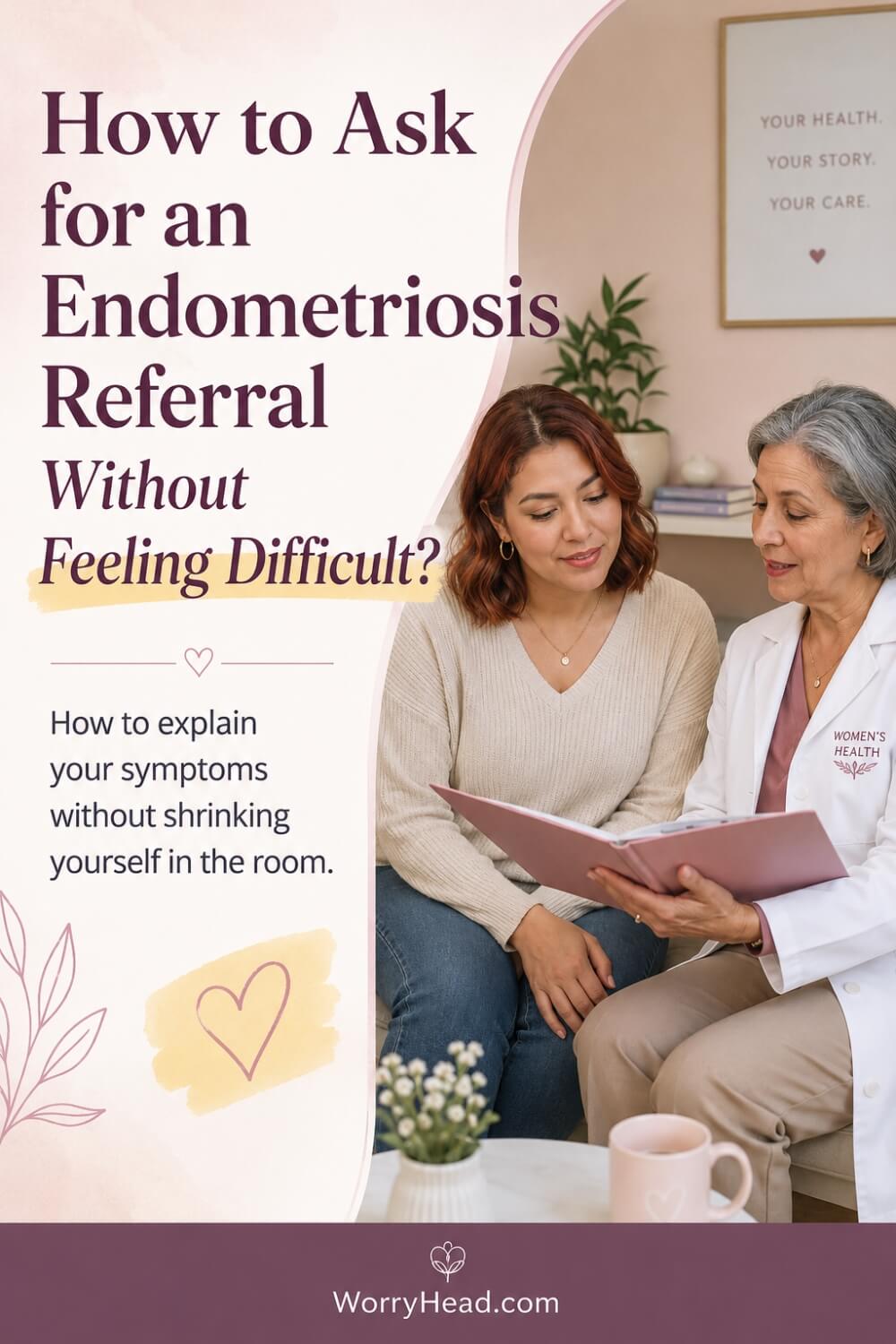
What Changes When You Ask for an Endometriosis Referral Without Feeling Difficult?
When you finally ask for an endometriosis referral without feeling difficult, something shifts inside you, even if the system around you does not change overnight. The appointment stops being a test of whether you are “good enough” to be believed, and becomes a conversation about symptoms that deserve proper investigation.
I know that sounds small, but for someone who has been dismissed, questioned, rushed, or told to cope, it is not small at all. It is the moment you stop carrying shame that should never have been placed on your shoulders.
You may still feel nervous, and that is okay, because courage does not always arrive as confidence. Sometimes courage sounds like a quiet voice saying, “I cannot keep living like this, and I need help.”
What I have learned from supporting my wife is that the words matter, but the meaning behind them matters even more. You are not trying to win an argument with your doctor; you are trying to open the right door before more months or years disappear into pain.
There is a grief that comes with asking again after you were not heard the first time. I have seen it in my wife’s face, that tired look of someone who is not only in pain, but also exhausted from having to make pain sound believable.
No woman should have to perform suffering to be taken seriously. You should not need to cry, collapse, overexplain, or make your symptoms sound worse than they are just so someone pays attention.
But you also should not minimise them to stay polite. If pain affects your work, your sleep, your relationship, your sex life, your bowel habits, your bladder, your mood, or your ability to plan your day, then it belongs in that appointment.
The right tone is not aggressive, and it is not apologetic. It is honest, steady, and specific, because your life is not a vague inconvenience; it is a life being interrupted.
As a husband, I can tell you that watching the woman you love prepare for an appointment like she is preparing for a battle is something that stays with you. You see the hope she tries not to show, the fear she hides, and the way she rehearses her symptoms because she has learned that being believed is never guaranteed.
That is why I want you to go in with your notes, your truth, and your head held a little higher than fear wants to allow. Not because every appointment will be perfect, but because you deserve to stop asking for help like you are asking for permission to matter.

Why It Matters When You Ask for an Endometriosis Referral Without Feeling Difficult?
There is something very painful about watching someone you love question whether her pain is “bad enough” to deserve help. My wife did not only carry symptoms in her body; she carried the emotional weight of being unsure whether asking again would make her look dramatic, needy, or hard work.
That hesitation can slowly enter a relationship too, because one person is suffering and the other is watching helplessly, trying to say the right thing without making the fear bigger. For me, the hardest part was not only seeing her in pain, but seeing her rehearse how to explain pain to someone who might still not understand.
This is why learning to ask for an endometriosis referral without feeling difficult is not just about getting an appointment. It is about protecting your confidence before years of dismissal teach you to speak about your body in whispers.
When my wife felt unseen, I felt angry for her, but I also had to learn that my anger was not the centre of the story. My job was to help her feel steady, help her remember details, remind her that she was not making it up, and stand beside her without taking over her voice.
Endometriosis does not only affect the person with the symptoms, but it also touches the whole home. It changes plans, intimacy, sleep, finances, mood, hope, and even the quiet little routines you once took for granted.
But a clear referral conversation can become one small moment where you take some control back. It does not cure the pain, and it does not undo the years, but it can stop you from feeling like you are begging for basic care.
So if you are reading this with a knot in your stomach before another appointment, please hear me as someone who has sat beside the woman he loves through more fear than I can put into words. You are not difficult for wanting answers, and you are not difficult for needing someone to look deeper.
When to Seek Medical Help?
Seek medical help when your pain, bleeding, bowel symptoms, bladder symptoms, fatigue, sex pain, or cycle changes are no longer just “something you manage,” but something that is changing how you live. If your period pain stops you from doing normal activities, if your bleeding is heavy enough to affect your life, or if pain comes with bowel, bladder, sex, or fertility concerns, that is a valid reason to speak to your GP and ask for proper investigation.
NHS guidance lists severe period pain that stops normal activities, heavy periods, pain during or after sex, bowel or bladder symptoms, and difficulty getting pregnant among common endometriosis symptoms.
Please do not wait until you are completely broken before you ask for help. I know many women do this because they have been trained by life, family, work, or previous appointments to “just get on with it,” but your body should not have to scream before it is heard.
If you have already tried painkillers, heat pads, rest, hormonal treatment, diet changes, or repeated GP visits and you are still losing days to pain, that matters. NICE guidance says referral should be considered when symptoms are severe, persistent, recurrent, when pelvic signs are present, or when initial management has not worked, is not tolerated, or is not suitable.
You should also ask for help if your symptoms feel cyclical but are not only “period symptoms.” Pain when opening your bowels, pain when passing urine, rectal pressure, pain during sex, deep pelvic pain, back or leg pain, bloating, or symptoms that flare around your cycle can still be part of the picture.
There are also moments when you should not wait for a routine appointment. NHS advice says to call 999 or go to A&E if pelvic pain is severe, getting worse, painful when you move or touch the area, or comes with faintness, dizziness, shoulder tip pain, breathing difficulty, heavy vaginal bleeding, or sudden confusion.
That does not mean you need to panic every time pain flares. It means you are allowed to treat new, severe, unusual, or frightening symptoms differently from the pain you already know.
If you are pregnant, might be pregnant, have a fever, feel very unwell, cannot pee or poo, notice blood in your pee or poo, or have bleeding after sex or between periods, please seek medical advice promptly. NHS guidance for pelvic pain and heavy periods also points to GP or urgent support when symptoms are severe, persistent, unusual, or interfering with daily life.
And if your symptoms suggest possible deep endometriosis involving the bowel, bladder, or ureter, it is reasonable to ask whether a specialist endometriosis service is appropriate. NICE quality standards say suspected or confirmed deep endometriosis involving the bowel, bladder, or ureter should be referred to a specialist endometriosis service.
I say this gently because I have seen what happens when a woman keeps waiting. I have watched my wife push through pain because she did not want to be “too much,” and the sad truth is that the pain was already too much long before she admitted it out loud.
So please, do not measure your need for help by how politely you can survive. Measure it by what your symptoms are taking from your life, your sleep, your work, your intimacy, your confidence, your peace, and your ability to feel safe in your own body.
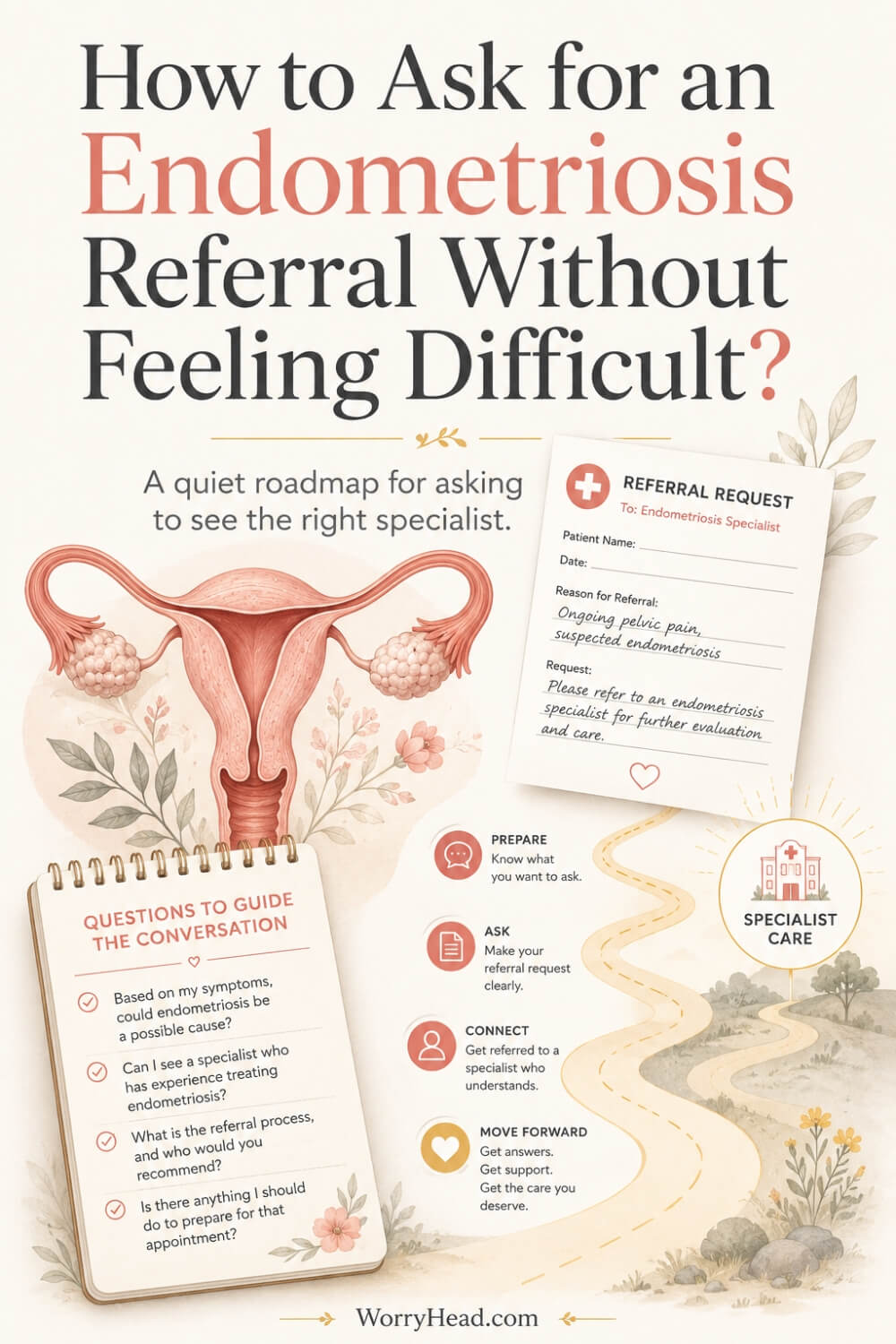
Questions to Ask Your Doctor
When you sit in front of your doctor, it can be hard to think clearly. Pain has a way of stealing words, and years of being dismissed can make even a simple question feel like confrontation.
So bring the questions with you. Write them on paper, save them on your phone, or ask someone you trust to hold them for you if you get overwhelmed.
You might ask:
“Based on my symptoms, could endometriosis be a possible cause?”
This is a calm way to open the door without sounding like you are trying to diagnose yourself. You are not telling the doctor what they must think; you are asking them to explain whether your symptoms fit a known pattern.
“Can you explain what else could be causing these symptoms, and how we will rule those things out?”
This question matters because pelvic pain can have more than one possible cause. You deserve proper thinking, not a quick label, and you deserve to understand what is being checked.
“Because these symptoms are affecting my daily life, can I be referred to gynaecology?”
This is one of the most important questions because it connects your symptoms to your function. You are not just saying, “I have pain,” you are saying, “This pain is changing my life, and I need the next step.”
“If my ultrasound is normal, does that rule out endometriosis?”
This is worth asking because many women are sent away after a normal scan feeling as if the conversation is over. A normal ultrasound can be helpful, but it does not always exclude endometriosis, especially when symptoms strongly suggest it.
“Would I benefit from referral to an endometriosis specialist service?”
This is especially important if you have bowel symptoms, bladder symptoms, severe pelvic pain, deep pain during sex, suspected deep disease, fertility concerns, or symptoms that keep returning despite treatment. You are not being pushy by asking where the right care pathway is.
“What treatment options can we try while I am waiting for referral?”
Waiting can be emotionally brutal, and you should not be left with nothing. Ask about pain relief, hormonal options if suitable for you, bleeding support, pelvic health physiotherapy if relevant, bowel support, bladder symptoms, and mental health support if the stress is becoming heavy.
“What should make me seek urgent help?”
This question gives you a safety plan. It helps you leave knowing which symptoms can be watched, which should be reviewed, and which should not wait.
“Can we agree a follow-up date today?”
This one is simple but powerful. It stops you being sent home with “see how you go” and no clear plan, because if the first step does not help, you need to know when the next step begins.
“If a referral is not made today, can you explain why and record that in my notes?”
This is not rude. It is a calm way to create accountability, especially if you feel your symptoms are being minimised.
I wish my wife never had to learn this kind of language. I wish love, pain, and honesty were always enough in a medical room.
But until every woman is believed the first time, preparation is not overreacting. It is protection.
You are allowed to ask questions. You are allowed to pause and say, “I need a moment.” You are allowed to bring notes, bring support, and ask for the plan to be repeated.
And most of all, you are allowed to leave that appointment knowing you did not beg, perform, exaggerate, or apologise for existing in pain. You simply told the truth about your body and asked for the care your life deserves.
Final Word on How to Ask for an Endometriosis Referral Without Feeling Difficult
If there is one thing I want you to take from this article, it is this: asking for a referral does not make you difficult. It makes you someone who is listening to her body after maybe spending far too long trying to be patient, polite, brave, easy to deal with, and quiet.
Endometriosis already takes enough from you. It can take your mornings, your sleep, your intimacy, your confidence, your work, your social life, your plans, and sometimes even the way you see yourself. It should not also take your right to speak clearly in a medical appointment.
You do not need to walk into the GP surgery with a perfect script. You do not need to know every medical word. You do not need to prove you have suffered enough to deserve help. What you need is a calm, honest description of your symptoms, how long they have been happening, how they affect your daily life, what you have already tried, and what you are asking for next.
That is why learning how to ask for an endometriosis referral without feeling difficult matters so deeply. It is not only about getting past one appointment. It is about slowly unlearning the shame that can build when pain has been dismissed, explained away, or made to sound normal when it is clearly changing your life.
I have seen that shame in my wife. I have seen the way pain can make someone question herself before anyone else even says a word. I have seen her wonder whether she should push through, wait longer, explain less, or not mention certain symptoms because they feel too personal or too embarrassing.
And as her husband, I want to say something to you as clearly as I would say it to her: your symptoms are allowed to be spoken out loud. Your pelvic pain is allowed to be discussed. Your bleeding is allowed to be taken seriously. Your bowel symptoms, bladder symptoms, sex pain, fatigue, fertility worries, and emotional exhaustion are allowed to be part of the conversation.
You are not being dramatic because you want answers. You are not being rude because you ask what the next step is. You are not wasting anyone’s time because you say, “This is affecting my life, and I would like a referral.”
A good appointment is not one where you stay small enough to make everyone comfortable. A good appointment is one where you leave with clarity, a plan, and the feeling that your body has been listened to.
And if the first appointment does not go the way you hoped, please do not let that become the final word on your pain. Ask again. Book another appointment. Bring notes. Bring someone with you. Ask for the reason to be recorded if a referral is refused. Keep your symptom diary. Keep your voice.
Not because you should have to fight this hard, but because your life is worth protecting while the system catches up with what your body has been saying for years.
You are not difficult for wanting answers. You are not weak for needing support. You are not too much because pain has changed your life. You are a person who deserves care, clarity, and compassion, and every calm sentence you speak for yourself is a step back toward being believed.
Leave a comment below and share what part of asking for help feels hardest for you. And if you need gentle validation before your next appointment, check out the FREE chapter of my eBook at the bottom of this post.


About Me
Hi, I’m Lucjan! The reason why I decided to create this blog was my beautiful wife, who experienced a lot of pain in life, but also the lack of information about endometriosis and fibromyalgia for men…
READ MORE
Grab a FREE eBook!
“You Did NOTHING To Deserve This!”
Finally hear the words nobody ever said to you, that your pain is real, your tears make sense, and you did nothing to deserve endometriosis, the dismissal, or the way it has rewritten your life.
Related Questions You May Have When Asking for an Endometriosis Referral Without Feeling Difficult
1. What should I say if my GP says period pain is normal?
You can stay calm and bring the conversation back to impact. Say, “I understand some discomfort can happen, but this pain stops me from living normally.” Then explain what it affects, such as work, sleep, sex, bowel habits, bladder symptoms, bleeding, or daily plans. You are not arguing. You are showing why this is beyond ordinary discomfort.
2. Can I ask for a referral if my scan was normal?
Yes, you can still ask, because a normal ultrasound does not always rule out endometriosis. Some endometriosis, especially smaller lesions or certain deep areas, may not be clearly seen on routine imaging. Your symptoms, pattern, history, and daily life impact still matter. Please do not let one normal scan make you feel your pain has been disproved.
3. How do I explain symptoms without feeling embarrassed?
Start with simple, factual words and write them down before the appointment. You can say, “I get pain when opening my bowels,” “sex is painful,” “I pass urine more often around my period,” or “I bleed heavily enough to change my plans.” These symptoms may feel personal, but your doctor needs the honest picture to understand what your body is doing.
4. What if I cry during the appointment?
If you cry, it does not mean you failed. It means this has been heavy, and your body has carried more than a ten-minute appointment can easily hold. You can pause, breathe, look at your notes, or ask the doctor to give you a moment. Tears do not make your request less valid. They show how much this has affected you.
5. Should I bring my partner or someone I trust?
Yes, if it helps you feel safer and more grounded. The right person should not speak over you, minimise you, or turn the appointment into their emotions. They should help you remember details, support your voice, and gently remind you of anything that pain or nerves make hard to say. Sometimes being believed starts with not sitting there alone.
6. What if my referral request is refused?
Ask calmly why it is being refused and what the plan is instead. You can say, “Can you record in my notes that I asked for a referral and it was not made today?” Then ask when you should return, what symptoms would change the decision, and whether you can see another GP. A refusal does not mean your symptoms stop mattering.
Ask for an Endometriosis Referral Without Feeling Difficult References
- https://www.nhs.uk/conditions/endometriosis/
- https://www.nice.org.uk/guidance/ng73
- https://www.nice.org.uk/guidance/ng73/chapter/recommendations
- https://www.nice.org.uk/news/articles/nice-updated-guideline-to-improve-the-diagnosis-of-endometriosis
- https://www.nice.org.uk/guidance/qs172/chapter/quality-statement-3-referral-for-deep-endometriosis
- https://www.who.int/news-room/fact-sheets/detail/endometriosis
- https://www.who.int/news-room/fact-sheets/detail/menstrual-health
- https://www.eshre.eu/guideline/endometriosis
- https://www.eshre.eu/-/media/sitecore-files/Guidelines/Endometriosis/ESHRE-GUIDELINE-ENDOMETRIOSIS-2022_2.pdf
- https://www.eshre.eu/-/media/sitecore-files/Guidelines/Endometriosis/ESHRE-ENDOMETRIOSIS-patient-Guideline_21032022.pdf
- https://www.endometriosis-uk.org/sites/default/files/2026-02/Endometriosis%20-%20The%20State%20of%20Endometriosis%20Care%20Report.pdf
- https://www.endometriosis-uk.org/endometriosis-facts-and-figures
- https://www.endometriosis-uk.org/diagnosis-report
- https://www.nhs.uk/symptoms/pelvic-pain/
- https://www.nhs.uk/conditions/heavy-periods/
