
Why Women with Endometriosis Stop Trusting Doctors?
Have you ever wondered why women with endometriosis stop trusting doctors when all you needed was someone to believe your pain before questioning it?
Maybe you have walked into appointments carrying years of cramps, pelvic pain, bowel pain, bladder symptoms, pain with sex, fatigue, heavy bleeding, fear, and hope, only to leave feeling smaller than when you arrived. Maybe the hardest part was not only the pain itself, but the quiet damage of being made to explain it again and again as if your own body was a courtroom.
Women with endometriosis often stop trusting doctors after years of severe pain being normalised, scans being treated as final proof, referrals delayed, and symptoms blamed on stress. Trust breaks when care feels dismissive, slow, fragmented, or focused on minimising pain instead of investigating it.
I am not a clinician, and I never write to replace your doctor, but I do write as a husband, blogger, researcher, and medically trained carer who has stood beside my wife through years of endometriosis appointments, and at the bottom of this article I have included the medical sources I used, including WHO, NICE, NHS, ESHRE, research papers, and trusted endometriosis organisations.
What makes this topic so painful is not endometriosis medical gaslighting per sé, but that the mistrust does not usually happen after one bad appointment. It builds slowly, appointment after appointment, when your pain is treated as ordinary period pain, your normal scan is treated like a full stop, or your tears are mistaken for anxiety instead of distress.
The World Health Organization says endometriosis affects around 10% of reproductive-age women worldwide, about 190 million, and diagnosis can still take between 4 and 12 years in many settings. In the UK, Endometriosis UK reported an average diagnosis time of 8 years and 10 months, with 78% of respondents saying they had experienced comments such as being told they were making a fuss about nothing.
I saw this kind of erosion in my wife, not as a theory, but across real days, real pain, and real moments when she had to gather strength just to be heard. As her husband, I learned that medical trust is not only built by knowledge, tests, scans, and prescriptions, but by whether the person in pain feels safe enough to speak the whole truth.
So stay with me here, because this is not about attacking every doctor. It is about understanding why trust breaks, how it can be rebuilt, and why your pain deserves care that listens before it labels.
- Why Women with Endometriosis Stop Trusting Doctors After Years of Dismissal?
- Why Women with Endometriosis Stop Trusting Doctors When Being Dismissed Changes How You Feel About Care?
- Why Women with Endometriosis Stop Trusting Doctors When Pain Starts Changing Everything?
- When to Seek Medical Help?
- Questions to Ask Your Doctor
- Final Word on Why Women with Endometriosis Stop Trusting Doctors
- FREE eBook
Why Women with Endometriosis Stop Trusting Doctors After Years of Dismissal?
Trust does not usually disappear because one clinician used the wrong word. It fades when your pain is repeatedly squeezed into neat explanations that do not match what is happening inside your body. Endometriosis can cause period pain, chronic pelvic pain, pain with sex, bowel symptoms, urinary symptoms, bloating, fatigue, infertility worries, and emotional strain, so when a short appointment only hears “bad periods”, something precious is already being lost.
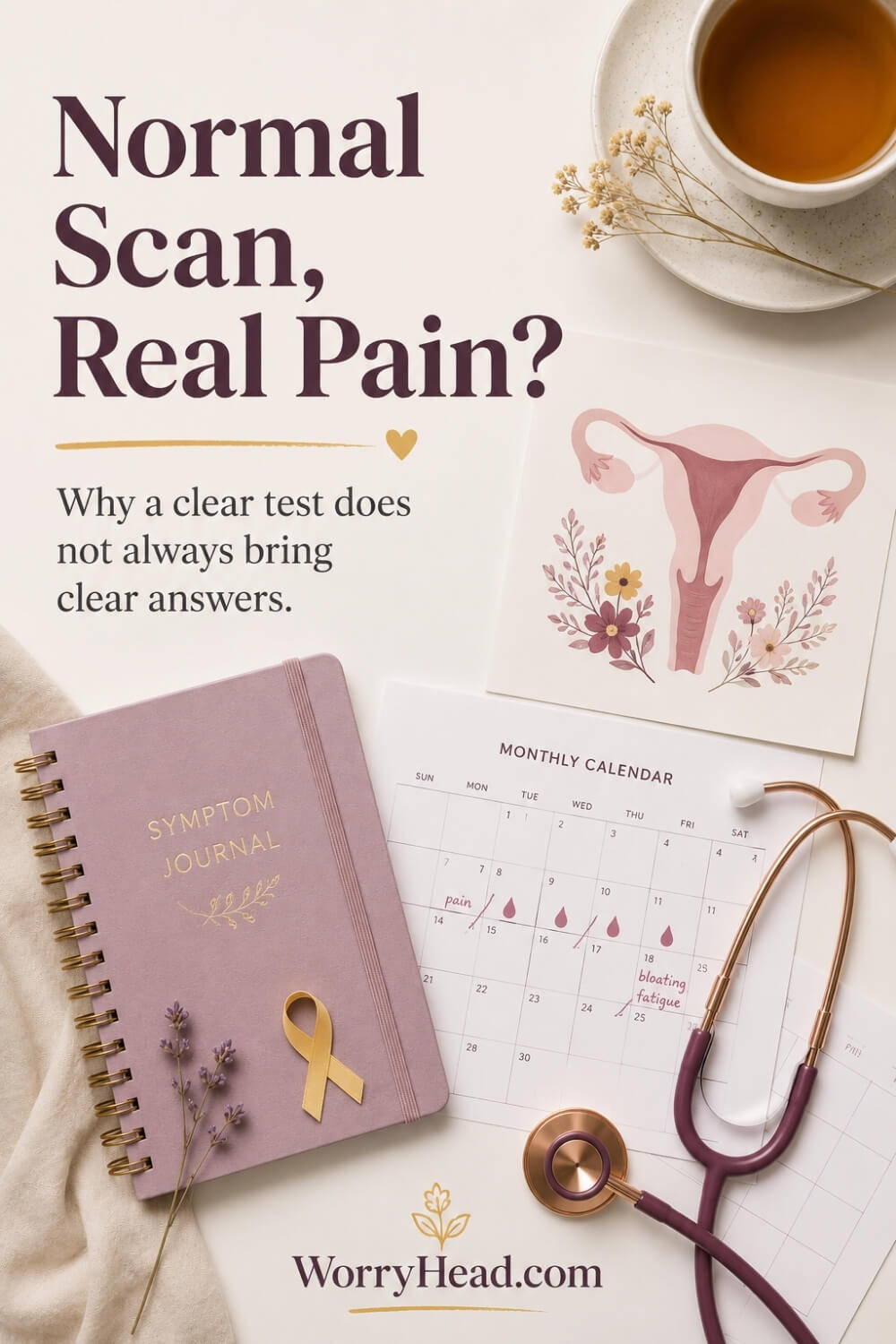
This is one reason why women with endometriosis stop trusting doctors: the conversation often starts too small for a disease that can touch so many parts of life. If your scan is normal, you may be told everything looks fine, yet NICE guidance is clear that a normal pelvic examination and ultrasound should not rule out the possibility of endometriosis.
That one sentence matters, because many women are left believing their body must be exaggerating when the test simply was not able to see the whole picture. A transvaginal ultrasound can help find ovarian endometriomas and some deep disease, especially in expert hands, but it can miss some forms of disease, and it cannot measure how much pain your nervous system is carrying. When results are used to close the door instead of guide the next step, trust takes a hit.
The delay itself becomes another wound. The World Health Organization describes long diagnostic waits as common, with the average time to diagnosis sitting between 4 and 12 years in many settings.
In the UK, Endometriosis UK’s 2024 survey reported an average wait of 8 years and 10 months, with 74% attending five or more GP appointments before diagnosis and 78% experiencing dismissive comments such as being told they were making a fuss about nothing. You do not come out of that untouched.
You may become careful with your words, scared of sounding dramatic, or tempted to understate symptoms because you have learned that honesty can be punished with disbelief. I have seen women apologise before they even finish describing their pain, and that breaks my heart because pain should not have to arrive politely to be taken seriously.
Doctors are human, services are stretched, appointments are short, and some clinicians truly do want to help, so this is not about blaming every person in a white coat. It is about naming the pattern that breaks the bond between you and healthcare, so you can walk back into the room with clearer words, firmer boundaries, and a plan that protects your dignity.
With my wife, the moments that hurt most were not always the loud ones; sometimes it was the quiet walk back to the car after another appointment, when I could see her trying not to cry because she had been brave and still felt unheard. I wanted to fix the whole system for her, but I learned the first thing I could do was stand beside her, remember details when pain made her tired, and help her go into the next appointment with steadier ground under her feet.
That is why the next part is not theory; it is the kind of practical, human preparation I wish more women had been given before they were made to feel difficult for asking to be believed.
- Trust your pain record
- Bring symptom evidence
- Ask about normal scans
- Request referral clearly
- Name daily life impact
- Take someone with you
- Prepare for dismissal
- Seek specialist review
- Protect your mental energy
- Remember trust can rebuild
Trust Your Pain Record
One of the kindest things you can do for yourself is stop relying on memory alone, because pain has a cruel way of making you forget details when you are sitting under bright clinical lights.
A pain record does not need to be perfect or complicated. It can simply include when the pain happens, where it sits, what it feels like, what makes it worse, what helps, how long it lasts, and whether it affects your bleeding, bowel, bladder, sex, sleep, work, or mood.
I learned this with my wife because appointments can move so quickly. One minute you are trying to explain months of symptoms, and the next minute you are back outside wondering why you forgot the most important part. A written record gives your pain a timeline.
It helps you show patterns that may otherwise be brushed aside as random, and it reminds you that you are not imagining what has been happening to your body.
Bring Symptom Evidence
Evidence does not mean you have to prove you are suffering like you are on trial. It simply means you bring enough clear information to make it harder for your symptoms to be reduced to “bad periods” or stress.
You can take photos of swelling if endo belly changes your shape, note days missed from work, list medication that failed, track bowel or bladder flares, and write down how pain affects sex, walking, eating, sleeping, or standing upright.
This matters because endometriosis often lives in the gaps between appointments. A doctor may see you for ten minutes on a day when you look calm, but they do not see you curled up at 2 a.m. or trying to smile through pain because you have already learned to hide it.
Evidence brings part of that hidden life into the room. It gives your words weight without making you cold, difficult, or dramatic.
Ask About Normal Scans
A normal scan can feel like a punch in the stomach when you know your pain is real. You may walk in hoping for answers and walk out feeling as if the blank image has spoken louder than your body. But a normal ultrasound or pelvic scan does not always mean there is no endometriosis, especially when symptoms strongly suggest something deeper is going on.
Some diseases can be hard to see, and pain severity does not always match what appears on imaging. This is why I would gently encourage you to ask, “What does this scan rule out, and what does it not rule out?” That question can change the conversation. It keeps the door open without sounding confrontational.
My wife needed that kind of language, because after years of being tired, it becomes easy to accept a closed door just to avoid being made to feel like a nuisance again.
Request Referral Clearly
There is nothing rude about asking for a referral when your symptoms are ongoing, life-limiting, or not improving with basic treatment. You are not asking for special treatment. You are asking for the right level of care. Endometriosis can be complex, and if your pain involves bowel symptoms, bladder symptoms, pain with sex, fertility worries, deep pelvic pain, or symptoms that keep returning, a more specialist review may be appropriate.
The words matter because vague requests can be easily softened or delayed. Instead of saying, “Do you think there is anything else?” you might say, “My symptoms are affecting my daily life, and I would like to be referred to a gynaecologist or endometriosis specialist for further assessment.”
I wish more women were told that being clear is not being difficult. It is self-protection after too many appointments where politeness cost you progress.
Name Daily Life Impact
Pain numbers can help, but they do not always tell the whole truth. Saying your pain is eight out of ten may not explain that you cannot stand long enough to cook, that sex has become frightening, that you plan your life around toilets, or that your period makes you feel as if your body disappears from the world for days.
Doctors need to hear function, not only pain level, because daily impact shows how much your life is being narrowed.
I saw this with my wife when she tried to minimise things because she did not want to sound dramatic. But the truth was in the cancelled plans, the careful walking, the exhaustion, the fear before appointments, and the silence after being dismissed. Tell the doctor what you have stopped doing. Tell them what you are pushing through. Your life is medical evidence too, even when it does not fit neatly into a scan report.

Take Someone with You
Taking someone with you does not mean you are weak. It means you deserve support when you are discussing symptoms that may be painful, intimate, embarrassing, or emotionally loaded. A partner, friend, sister, mother, or trusted person can help you remember details, ask follow-up questions, notice when you are being rushed, and simply sit beside you so you do not feel alone in the room.
As a husband, I learned that my role was not to speak over my wife, rescue her, or make the appointment about me. My role was to witness, support, remember, and gently back up what she had already said. Sometimes the most powerful thing a man can do is sit there calmly and make it clear that he believes her.
If you have someone safe enough to bring, let them help carry the emotional weight for once.
Prepare for Dismissal
Preparing for dismissal does not mean expecting every doctor to fail you. It means protecting yourself in case the conversation starts to turn cold, rushed, or minimising.
You can prepare a few calm sentences before you go in, such as, “I understand stress can affect pain, but these symptoms are cyclical and affecting my daily life,” or, “I would like this documented in my notes if no further investigation is being offered today.”
That kind of preparation can steady you when your nervous system wants to shut down. I have seen how quickly years of dismissal can make a woman doubt herself mid-sentence. You enter the room knowing your body, then one careless comment makes you feel small again.
Having words ready is not aggression. It is a handrail. It helps you stay present, respectful, and firm when your pain deserves more than a rushed reassurance.
Seek Specialist Review
Sometimes general care is not enough, especially when symptoms suggest deep disease, bowel involvement, bladder involvement, severe pelvic pain, painful sex, fertility concerns, or pain that keeps returning despite treatment.
A specialist review can offer a more detailed conversation about your history, imaging, treatment options, pain management, surgery, hormones, pelvic floor issues, and the way endometriosis may be affecting your whole life, not just your periods.
This does not mean every woman needs the same pathway or the same treatment. It means you deserve someone who understands the condition well enough to take your symptoms seriously. When my wife finally felt that someone was listening properly, I could see something soften in her face. Not because the pain vanished, but because being believed can give a tired woman just enough strength to keep going.
Protect Your Mental Energy
Medical appointments can drain you in ways that are hard to explain to anyone who has not lived through repeated dismissal. You may spend days preparing, feel anxious the night before, push through pain to attend, then come home emotionally flattened because you had to defend your reality again.
That is not weakness. That is what happens when your body is already struggling, and your mind has to stay on guard too.
Please build recovery around appointments if you can. Eat something gentle, wear comfortable clothes, take notes, plan rest afterwards, and give yourself permission not to answer every message straight away. I learned with my wife that the appointment did not end when we left the clinic.
Sometimes the emotional aftershock followed us home. Protecting your energy is part of your care, not something extra you have to earn.
Remember, Trust Can Rebuild
Trust can rebuild, but it should not be forced. You do not have to instantly trust a new doctor just because they seem kind, and you do not have to pretend that past dismissal did not affect you. Trust grows when a clinician listens without rushing, explains what they know and what they do not know, respects your symptoms, involves you in decisions, and treats your pain as real even before every answer is found.
I want you to hear this gently: your mistrust may be a scar, not a flaw. It may be the part of you that learned to survive after being ignored for too long. But the right care can slowly teach your body that not every appointment has to be a battle.
I have seen how much it means when a woman is finally met with patience, and I promise you, you are not asking for too much when you ask to be heard.
Why Women with Endometriosis Stop Trusting Doctors When Being Dismissed Changes How You Feel About Care?
There is a point where dismissal stops feeling like a bad appointment and starts becoming something your body remembers before you even walk through the clinic door.
You may notice your heart beating faster in the waiting room, your hands tightening around your notes, or your mind preparing for the same old phrases before anyone has even spoken. That is what repeated invalidation can do, because pain is not only physical when you have had to defend it for years.
It can teach you to expect disbelief, to shrink your story, to laugh nervously when you are not finding anything funny, or to say “it is probably nothing” when deep down you know it has been stealing pieces of your life. This is why women with endometriosis stop trusting doctors; it becomes more than a medical question, because trust is not only about diagnosis, treatment, scans, referrals, or prescriptions.
Trust is about whether you feel safe enough to tell the truth without being punished for it.
And when you have been told too many times that your pelvic pain is normal, your bowel symptoms are unrelated, your pain with sex is anxiety, or your exhaustion is just life, the next appointment can feel less like care and more like survival.
I have watched my wife prepare herself for appointments in a way no woman should have to.
Not just by writing symptoms down, but by gathering emotional armour, because she knew she might have to stay calm while explaining pain that had already taken too much from her.
As her husband, I sometimes felt helpless sitting beside her, because I could see the strength it took for her to speak, and I could also see how quickly one dismissive sentence could undo weeks of courage.
There were moments when I wanted to say, “Please, look at her properly. Please, hear what she is not able to say without breaking.” But I also learned that support is not about taking over her voice; it is about helping her keep hold of it when the room makes her doubt herself.
That is why medical trust matters so deeply, because when a woman feels heard, she may still be in pain, but she does not have to carry the extra wound of feeling alone with it. And if you have lost that trust, I do not see you as difficult, bitter, dramatic, or anti-doctor; I see someone who has been hurt by the very places where she went hoping to be helped.
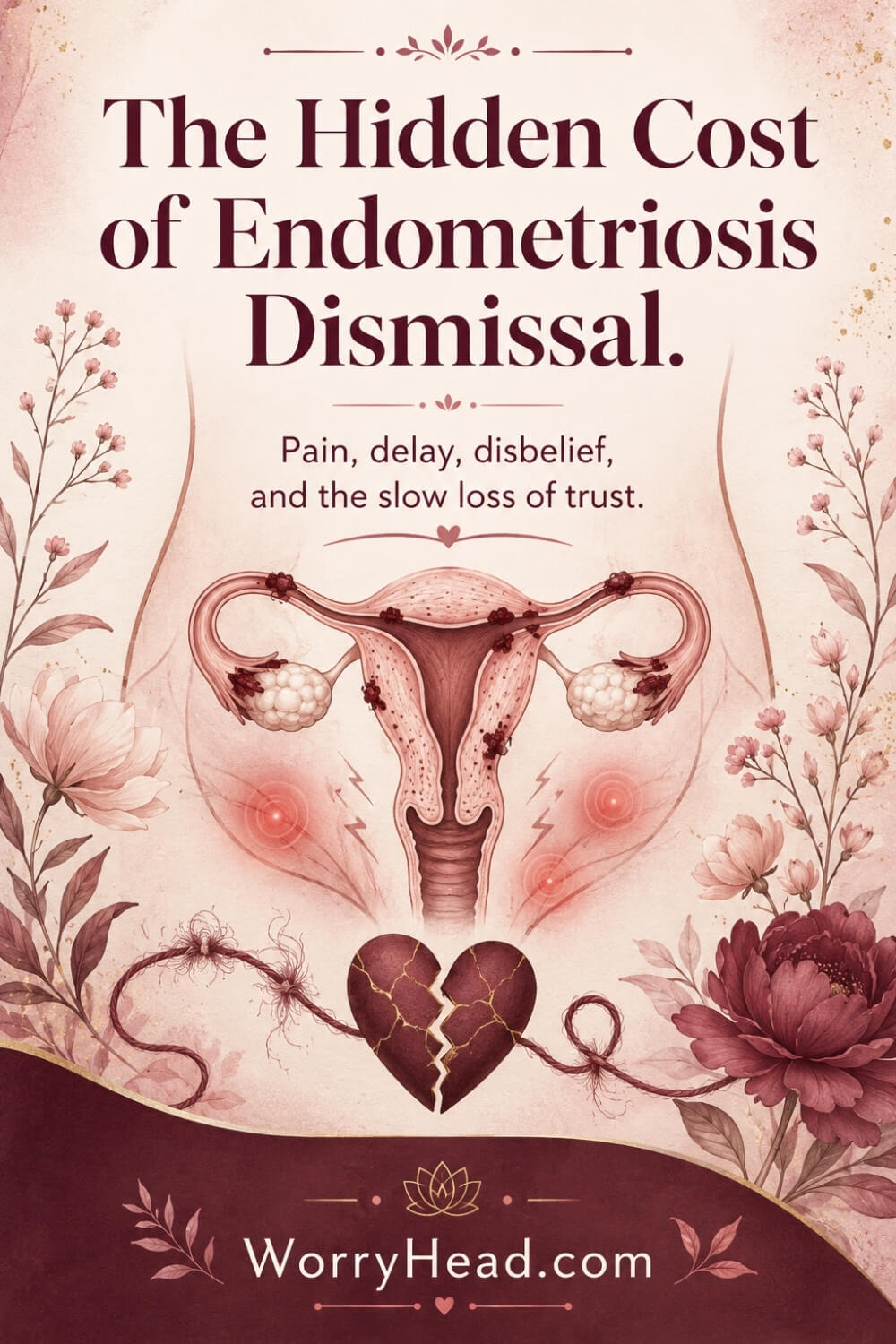
Why Women with Endometriosis Stop Trusting Doctors When Pain Starts Changing Everything?
Pain does not stay neatly inside the body when it has been ignored for years. It starts reaching into your confidence, your relationships, your intimacy, your work, your sleep, your plans, and even the way you speak about yourself.
This is one of the quiet reasons why women with endometriosis stop trusting doctors, because when medical dismissal keeps happening, you may start feeling unsafe not only in clinics, but inside your own story.
With my wife, I saw how pain could change the atmosphere of an entire day before the day had even begun. I saw how she could wake up already tired, already bracing, already wondering whether this would be a day she could push through or a day her body would decide for her.
As her husband, it affected me too, but not in the same way, because I was not the one bleeding, cramping, flaring, losing pieces of normal life, or having intimate pain spoken about as if it was only emotional. My pain was watching the woman I love slowly lose trust in places that were supposed to help her, then trying to be steady enough so she did not feel she had to carry that disappointment alone.
It affected us as a couple because endometriosis does not only cancel plans; it can cancel closeness, confidence, spontaneity, laughter, sex, rest, and those small ordinary moments healthy people rarely notice. There were times when I had to learn that support was not about saying, “It will be fine,” because sometimes it was not fine, and those words only made her feel more alone.
Support became listening without rushing her, believing her before proof arrived, remembering what she had already explained ten times, and not taking her silence personally when pain had drained every gentle word out of her. It became understanding that mistrust after repeated dismissal is not stubbornness; it is protection.
When a woman has had to fight to be heard medically, she may come home too tired to explain herself emotionally. That is when the partner has to stop asking for the easy version of her and start loving the honest one.
For us, trust began rebuilding in small places, not all at once. It rebuilt when I stopped trying to fix every feeling, when I sat beside her without making her educate me through tears, and when I finally understood that being believed at home can sometimes be the first safe bridge back to seeking better care.
When to Seek Medical Help?
Please seek medical help when your pain is affecting the way you live, not only when you feel you have “earned” help by reaching breaking point. You do not need to collapse before your symptoms matter, and you do not need to wait until you can no longer cope before asking someone to take endometriosis seriously.
A good, calm starting point is this: book a GP appointment if you think you may have endometriosis, if pelvic pain, painful periods, pain during or after sex, bowel symptoms, bladder symptoms, heavy bleeding, fatigue, or bloating are affecting your everyday life, work, relationships, intimacy, sleep, or mental wellbeing.
NHS advice is to see a GP if you think you might have endometriosis, your symptoms affect daily life, or treatment from a GP has not helped, or symptoms get worse.
You should also ask for help if your periods are so heavy that they are disrupting your life, if you have severe period pain, if you bleed between periods or after sex, or if heavy bleeding comes with pain when peeing, pooing, or having sex. NHS guidance on heavy periods says these are reasons to see a GP, and I want you to hear that clearly because too many women are taught to treat heavy bleeding as something they should silently manage.
If your symptoms are cyclical, write that down. If bowel pain arrives around your period, write that down. If bladder pain, rectal pain, ovulation pain, back pain, leg pain, nausea, swelling, or pain with sex keeps returning in a pattern, write that down too. Patterns matter, especially when you have spent years being told things are “probably normal”.
There are also times when you should not wait for a routine appointment. Call 999 or go to A&E if pelvic pain is severe, getting worse, painful when you move or touch the area, or comes with fainting, dizziness, shoulder-tip pain, difficulty breathing, heavy vaginal bleeding, or sudden confusion. This is not said to frighten you; it is said because urgent symptoms deserve urgent care, even if you already have endometriosis and are used to pain.
If you might be pregnant and you have lower tummy pain, vaginal bleeding, shoulder-tip pain, dizziness, fainting, or a sudden sharp pain, please seek medical advice urgently, because some pregnancy-related causes of pain need quick assessment. The NHS explains that ectopic pregnancy symptoms can include tummy pain, vaginal bleeding, shoulder-tip pain, dizziness, fainting, and feeling sick, and these symptoms should not be brushed aside as “just another flare”.
You should also go back for medical help if you were given painkillers, hormonal treatment, or “wait and see” advice, but your life is still being narrowed by symptoms. Treatment not working is not a personal failure. It is information. It tells the clinician that the plan needs reviewing, the diagnosis may need exploring further, or referral may be needed.
This is where I would gently encourage you to be clear, not apologetic. You can say, “These symptoms are affecting my daily life, and I would like further assessment for possible endometriosis.” You can also say, “My scan was normal, but my symptoms are continuing, so what is the next step?”
NICE has updated its endometriosis guidance to improve earlier diagnosis, and its visual summary says transvaginal ultrasound can be offered even when pelvic or abdominal examination is normal.
With my wife, I learned that seeking help is not only about pain level. It is about what pain is taking from you. If it is taking your sleep, your confidence, your intimacy, your ability to work, your trust in your own body, or your hope that someone will listen, that is already enough reason to ask for care.
And please remember this: wanting a second opinion does not make you rude. Asking for referral does not make you dramatic. Returning because symptoms continue does not make you difficult.
It makes you someone who is trying to protect her body after too many moments of being told to be quiet with pain that was never quiet inside you.

Questions to Ask Your Doctor
When you have been dismissed before, asking questions can feel frightening because part of you may already expect to be brushed off. I want you to know this gently: you are allowed to ask clear questions without feeling rude, difficult, dramatic, or “too much”. A good doctor should not be offended by you wanting to understand your own body.
Before your appointment, write your questions down. Pain can make your mind go blank, and anxiety can make you forget the words you practised at home. If you can, take someone with you, because a second pair of ears can help you remember what was said and whether your concerns were properly answered.
You might begin with: “Based on my symptoms, do you think endometriosis is possible?” That question matters because it moves the appointment away from only treating pain and towards understanding the reason behind it. NHS guidance says you should see a GP if you think you may have endometriosis, if symptoms affect daily life, or if GP treatment has not helped or symptoms worsen.
Ask: “If my scan or examination is normal, does that fully rule out endometriosis?” This is one of the most important questions, because a normal scan can leave you feeling as if your pain has been erased. NICE guidance says transvaginal ultrasound should be offered even if pelvic or abdominal examination is normal, and ESHRE also notes that negative imaging does not exclude the condition, particularly superficial peritoneal disease.
Ask: “What symptoms would make you refer me to gynaecology or an endometriosis specialist?” You deserve to know where the line is, because vague reassurance can keep you trapped for years. If pain, bleeding, bowel symptoms, bladder symptoms, pain with sex, fatigue, or fertility worries are changing your daily life, work, relationships, or mental wellbeing, that impact should be taken seriously.
Ask: “Can we make a plan if this treatment does not help?” This is such a practical question, and I wish more women were encouraged to ask it early. It means you are not leaving the appointment with only hope and no next step. You can ask how long to try pain relief, hormonal treatment, pelvic floor support, or any other option, and when to come back if symptoms continue.
Ask: “What are the benefits, risks, and side effects of each treatment option?” You are not being negative by asking this. You are being informed. ESHRE describes best practice around diagnosis and treatment options for pain and infertility, and shared decision-making is important because the right choice depends on your symptoms, priorities, age, fertility hopes, medical history, and how much your life is being affected.
Ask: “Could my bowel, bladder, pelvic floor, back, hip, or nerve-like symptoms be connected?” Endometriosis can cause symptoms beyond painful periods, including chronic pelvic pain, pain during or after sex, fatigue, and bowel or bladder symptoms. WHO describes it as a chronic disease that can seriously affect quality of life, which is why the full pattern matters, not just the period pain.
Ask: “Should I keep a symptom diary, and what exactly would help you?” This question is helpful because it turns your lived experience into something easier to review. You can track bleeding, pain location, pain timing, bowel changes, bladder flares, pain with sex, ovulation pain, medication use, missed work, sleep disruption, nausea, bloating, mood changes, and anything cyclical. You are not gathering evidence because you are not believed. You are gathering it so the truth has somewhere to stand.
Ask: “Can you document my symptoms and today’s plan in my notes?” This is calm, fair, and reasonable. It helps create a medical timeline, especially if you have had years of appointments where nothing seemed to move forward. If referral is not offered, you can also ask, “Can you please document why referral is not being made today, and what would change that decision?”
Ask: “Would MRI, specialist ultrasound, or referral be appropriate in my case?” Not everyone needs every test, and not every test gives every answer, but you are allowed to ask what the next reasonable step is. NICE’s updated guidance aims to improve earlier diagnosis and clearer referral pathways, especially because long delays have been such a serious issue in endometriosis care.
Ask: “How might this affect fertility, and when should I ask for help?” This question can be emotionally heavy, so please be gentle with yourself if it brings fear to the surface. You do not need to be trying for a baby right now to deserve a conversation about fertility, future choices, or how treatment might affect your options.
Ask: “What should I do during a flare, and when is pain urgent?” This gives you a safety plan instead of leaving you to guess at home. You can ask what symptoms should lead to urgent medical help, what pain relief is safe for you, what warning signs matter, and whether any symptoms should not be assumed to be “just endometriosis”.
Ask: “Can we talk about how this is affecting my mental health?” I know that one may feel risky if you have ever had pain blamed on anxiety, but mental health support should never be used to dismiss physical symptoms. It should sit beside medical care, not replace it. Being in pain for years, being disbelieved, losing sleep, fearing intimacy, worrying about fertility, and planning life around symptoms can wear down even the strongest woman.
And if you are a partner reading this, please do not walk into the room as if you are there to take over. Walk in as a witness. Let her speak first, write down what she wants covered, gently remind her if pain makes her forget, and back her up without making her feel spoken for.
I learned that with my wife. Some of the most loving support I could give was not a grand speech, but a quiet sentence when she was too tired to keep explaining: “Yes, this has been affecting her life for a long time.” Sometimes that one sentence can help a woman feel less alone in a room where she has had to be brave too many times.
If a doctor answers your questions with patience, writes things down, explains uncertainty honestly, and gives you a clear next step, trust may begin to rebuild slowly. If you feel rushed, mocked, minimised, or left without a plan, you are allowed to ask for another appointment, another clinician, or another opinion. Respectful care should not feel like a reward for being quiet.
Final Word on Why Women with Endometriosis Stop Trusting Doctors
If there is one thing I want you to take from this article, it is this: losing trust in doctors does not mean you are difficult, bitter, dramatic, or unwilling to be helped. Sometimes it means you have been hurt too many times in places where you hoped to be safe. Sometimes it means your body remembers the appointments where you were rushed, doubted, reduced, or sent home with answers that felt too small for the pain you were living with.
That is why women with endometriosis stop trusting doctors is not only about medicine. It is about dignity. It is about being told that severe period pain is normal when you know normal life is disappearing. It is about being told a scan is clear when your body is not clear at all. It is about being offered painkillers when what you really need is investigation, explanation, referral, and someone who can sit with uncertainty without turning it into disbelief.
But I also want to say this carefully: not every doctor will dismiss you. Some clinicians are kind, skilled, honest, and deeply committed to helping women with endometriosis. Some will listen. Some will apologise for what you went through before. Some will say, “I believe you,” and those words may land in a part of you that has been holding its breath for years.
Trust can come back, but it should never be demanded from you. It has to be earned gently, through listening, clear plans, careful explanations, proper referrals, respectful examinations, and follow-up that does not make you feel abandoned. You are allowed to protect yourself while still seeking help. You are allowed to ask questions. You are allowed to say, “This is affecting my life.” You are allowed to bring notes, bring someone with you, ask for things to be documented, request a second opinion, and keep going until your pain is treated as real.
As a husband, I have learned that support starts long before the appointment. It starts at home, when a woman is believed before she has to prove anything. It starts when her partner stops saying, “Maybe it is not that bad,” and starts saying, “Tell me what you need me to remember when we speak to the doctor.” It starts when love becomes practical, patient, and steady enough to hold the moments medicine has made painful.
I cannot undo what my wife went through. I cannot give her back the years when her body was asking for help and answers came slowly. But I can stand beside her now. I can listen better. I can learn more. I can use my voice to remind you that your pain deserves more than doubt, and your story deserves more than a rushed appointment.
You deserve medical care that sees the whole of you, not only the part that fits neatly into a form. You deserve a doctor who understands that endometriosis is not just painful periods, but a condition that can affect your body, intimacy, energy, fertility fears, mental health, relationships, and trust. And until you find that care, please do not mistake the system’s slowness for your lack of worth.
You were never too sensitive. You were asking to be heard.
Your pain is real, your fear makes sense, and your mistrust may be a scar from being dismissed, not a flaw in you. Keep seeking care that listens, bring your evidence, protect your energy, and remember this gently: being believed should never feel like something you have to beg for.
If this touched something in you, leave a comment below and share what helped you feel heard, even once. You can also check out my FREE eBook at the bottom of this post if you need more words that remind you: you did nothing to deserve this.


About Me
Hi, I’m Lucjan! The reason why I decided to create this blog was my beautiful wife, who experienced a lot of pain in life, but also the lack of information about endometriosis and fibromyalgia for men…
READ MORE
Grab a FREE eBook!
“You Did NOTHING To Deserve This!”
Finally hear the words nobody ever said to you, that your pain is real, your tears make sense, and you did nothing to deserve endometriosis, the dismissal, or the way it has rewritten your life.
Related Questions You May Be Asking About Why Women with Endometriosis Stop Trusting Doctors
1. Why does medical dismissal feel so painful with endometriosis?
Medical dismissal hurts because it not only questions your symptoms, it can make you question yourself. When you have severe pelvic pain, fatigue, bleeding, bowel symptoms, bladder symptoms, or pain with sex, being told it is normal can feel like your reality has been taken away. Over time, that can make every appointment feel emotionally unsafe.
2. Can a normal scan still miss endometriosis?
Yes, a normal scan does not always mean endometriosis is not there. Some types of disease are easier to see than others, and some symptoms may need specialist assessment, careful history-taking, or further investigation. This is why your lived symptoms still matter. Your pain does not become imaginary just because one test did not explain it.
3. How can I talk to my doctor without sounding dramatic?
You do not need to make your pain sound smaller to be taken seriously. Focus on how symptoms affect your daily life, such as work, sleep, sex, walking, bowel habits, bladder urgency, relationships, or mental health. Saying, “This is affecting my life, and I need a clear plan,” is not dramatic. It is honest, calm, and reasonable.
4. What can my partner do during appointments?
A good partner should support your voice, not replace it. They can help you prepare notes, remember symptoms, sit beside you, ask follow-up questions, and gently confirm how long this has been affecting your life. As a husband, I learned that sometimes the most loving thing is not speaking louder than her, but helping her feel less alone.
5. Can trust in doctors come back after years of being ignored?
Trust can come back, but it should come slowly and safely. It rebuilds when a clinician listens, explains clearly, respects your symptoms, documents your concerns, gives you a next step, and does not make you feel ashamed for asking questions. If you have lost trust, that does not mean you are broken. It means you were hurt and you need better care.
Why Women with Endometriosis Stop Trusting Doctors References
- https://www.who.int/news-room/fact-sheets/detail/endometriosis
- https://www.nhs.uk/conditions/endometriosis/
- https://www.nhs.uk/conditions/heavy-periods/
- https://www.nhs.uk/symptoms/pelvic-pain/
- https://www.nhs.uk/conditions/ectopic-pregnancy/symptoms/
- https://www.nice.org.uk/guidance/ng73
- https://www.nice.org.uk/news/articles/nice-updated-guideline-to-improve-the-diagnosis-of-endometriosis
- https://www.nice.org.uk/guidance/ng73/resources/visual-summary-on-first-presentation-initial-management-diagnosis-referral-and-ongoing-care-of-pdf-13559822461
- https://www.ncbi.nlm.nih.gov/books/NBK604070/
- https://www.eshre.eu/guideline/endometriosis
- https://www.endometriosis-uk.org/diagnosis-report
- https://www.endometriosis-uk.org/sites/default/files/2024-03/Endometriosis%20UK%20diagnosis%20survey%202023%20report%20March.pdf
- https://en.wikipedia.org/wiki/Endometriosis