
Why Endometriosis Fatigue Is Not Your Flaw?
Have you ever woken up after a full night’s sleep and still wondered why your body feels like it has already lived a whole painful day? Endometriosis fatigue is not your flaw, and it is not your fault! But sadly, too many women are made to feel lazy, dramatic, unmotivated, or weak when their body is actually fighting something real.
Endometriosis fatigue is not some personal flaw because it can come from chronic inflammation, pain, poor sleep, heavy bleeding, iron deficiency, hormonal shifts, and the emotional load of being dismissed. It is not laziness or weakness. It is a body under strain, not a woman failing at life.
I am not a clinician, and I do not write to diagnose or replace medical care, but I know that endo is not a weakness. It is not your fault, not a character flaw. I write as a husband, blogger, and researcher who has spent years learning beside my wife, and at the bottom of this article I’ve attached the sources I used to understand the medical context, including WHO, NICE, NHS, ESHRE, studies, and other trusted references.
Prefer to listen?
I’ve turned this article into a brief, gentle podcast-style conversation, so you can absorb it without having to read everything on a hard day. The discussion is AI-assisted and based on this article, but the care, research, and intention behind it are mine.
Research and clinical guidance actually increasingly recognise that endo is not only about period pain, but about quality of life, work, relationships, sleep, mental wellbeing, and daily function.
What surprises many people is that fatigue in endometriosis is not always proportional to how someone looks from the outside. A woman can smile, answer messages, go to work, care for others, and still feel as if her body is carrying wet concrete through every room.
That is why the word “tired” often feels too small. Tired sounds like a nap might fix it, but endometriosis fatigue can feel like the body has no spare battery left, even when the mind is begging to live, love, work, create, dance, travel, and simply be normal for one day.
I have watched my wife feel guilty for resting when she had already given more strength to one morning than many healthy people give to a whole week. I have seen how fatigue can steal not only energy, but confidence, identity, intimacy, patience, and the small joys that make a woman feel like herself.
If you have ever blamed yourself for needing rest, cancelling plans, moving slowly, or not being the version of yourself other people expect, I want you to feel seen before you read another line…
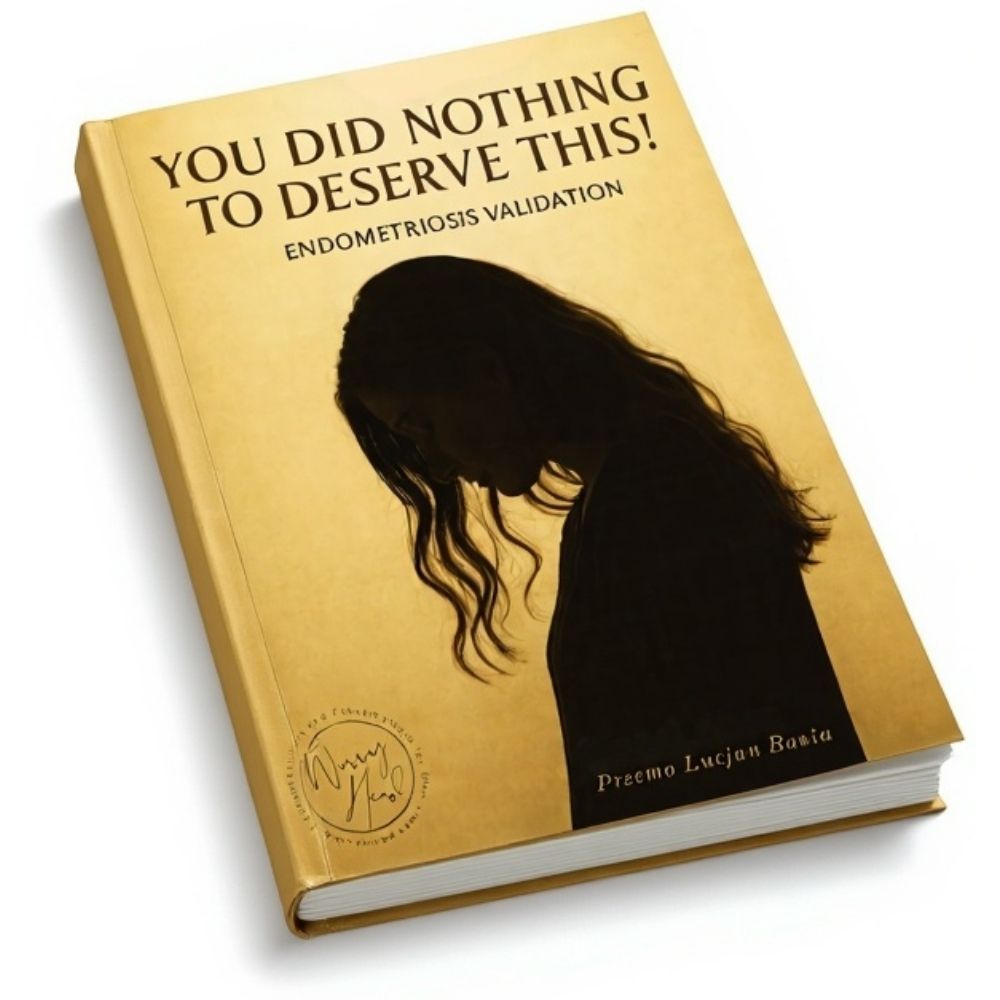
If this already feels close to home, I wrote “You Did Nothing To Deserve This!” for women with endo who need more than facts. It is a free 130+ page eBook created to validate what so many women quietly carry, and when you grab it, you also join our Worry Head community, where I share more freebies, gentle support, big discounts on our books, and honest emails that help you adjust to the new normal chronic illness brings to your body, relationship, and life.
The book is filled with 20 chapters of gentle validation for women with endo, written by yours truly, as I have seen it up close...
It’s not a medical guide but a human one, and here’s what you will find inside:
- This Was Never Your Fault
- The Girl You Used To Be
- When Your Own Body Feels Like an Enemy
- The Invisible Battles Nobody Sees
- Am I Just Lazy? – The Lie You Have Been Taught
- Gaslighting, Dismissal and the Trauma of Not Being Believed
- Guilt: The Weight You Were Never Meant to Carry
- Love in the Middle of Pain
- Intimacy When Your Body Hurts
- The Loneliness of Being the Strong One
- You Are Allowed To Take Up Space
- Tiny, Gentle Hopes (Not Toxic Positivity)
- If You Could Hear My Voice Every Flare Day
- You Deserve Partners, Not Witnesses
- When You Wish He Understood
- Motherhood, Fertility and the Grief Nobody Sees
- When Anger Is the Only Honest Feeling
- Learning to Trust Your Body Again
- Building a Life That Fits Your Reality
- You Did Nothing To Deserve This
You Did NOTHING To Deserve This!
Endometriosis Validation for Women with Endo
- You Did NOTHING To Deserve This!
- Endometriosis Fatigue Is Not Your Flaw When Your Body Feels Empty
- Endometriosis Fatigue Is Not Your Flaw Even When Others Doubt You
- Why Endometriosis Fatigue Is Not Your Flaw Inside a Relationship?
- Final Word On Why Endometriosis Fatigue Is Not Your Flaw
- FAQ on Why Endometriosis Fatigue Is Not Your Flaw
- Why Endometriosis Fatigue Is Not Your Flaw References
- FREE eBook
Endometriosis Fatigue Is Not Your Flaw When Your Body Feels Empty
When I first began to understand my wife’s fatigue, I realised something that changed the way I looked at rest forever. She was not choosing the bed over life; she was being pulled into it by a body that had been fighting quietly for years.
That is why endometriosis fatigue is not your flaw, because fatigue in this disease is not a character problem, a motivation problem, or a lack of discipline. It can be tied to pain, inflammation, broken sleep, heavy bleeding, bowel symptoms, bladder symptoms, hormonal changes, iron deficiency, stress, and the emotional exhaustion of repeatedly having to explain yourself.
And when all of those things pile up, the body does not simply ask for rest politely. It shuts the door, dims the lights, and says, “You cannot keep pretending I am fine.”
I have seen women describe it as feeling drugged, heavy, hollow, foggy, bruised, weak, or like their limbs have been filled with sand.
I have also seen how quickly the world misunderstands it because fatigue is invisible until it starts costing you something.
People understand a cast on a broken leg, but they do not always understand a woman sitting silently on the sofa because showering, cooking, answering messages, or standing in a queue has already taken everything she had.
That misunderstanding can hurt almost as much as the fatigue itself.
You begin to question whether you are doing enough, whether you are trying hard enough, whether other people are judging you, and whether the woman you used to be is slowly disappearing.
But I want you to know this clearly – a body that needs rest is not a failed body.
A woman who slows down because her nervous system, pelvis, hormones, immune response, sleep, and pain signals are overloaded is not weak. She is surviving something that often demands strength in private while society only praises strength when it looks productive.
And this is why I believe fatigue deserves the same seriousness as pain, bleeding, fertility struggles, and surgical decisions, because it can quietly change how a woman lives every single day.
With my wife, I had to learn that love is not only helping during the dramatic moments, the hospital moments, or the flare moments. Love is also noticing the quieter moments when she says “I’m fine”, but her face tells me she is already gone from exhaustion.
Chronic fatigue can make a woman feel guilty for needing care, and it can make a partner feel helpless if he does not understand what he’s looking at. So before we go deeper, here are life-useful truths I wish more women and partners were taught sooner:
- Stop Calling It Laziness
- Respect The Energy Crash
- Track Fatigue With Symptoms
- Protect Sleep Without Guilt
- Check Bleeding And Iron
- Plan Around The Flare
- Ask For Practical Help
- Speak To Yourself Kindly
Stop Calling It Laziness
One of the most damaging things a woman with endometriosis can hear is that she is lazy, because laziness suggests choice, and fatigue often removes choice before the day has even begun. You may want to clean, work, cook, walk, answer messages, be intimate, be cheerful, or feel like the woman you used to be, but your body may still feel as if someone unplugged you from the wall.
I have seen this with my wife, and I had to learn not to measure her effort by what was visible. Sometimes her effort was not getting through a long list. Sometimes her effort was simply getting through the morning without crying, apologising, or feeling like a burden. That is why the language matters.
When you call it laziness, you shame the woman. When you call it fatigue, you recognise the body. And when you recognise the body, you give her room to stop fighting herself on top of fighting the disease.
Respect the Energy Crash
An endometriosis energy crash can feel frightening because it does not always arrive slowly or politely. One moment you may be pushing through the day, and the next your body feels heavy, shaky, foggy, cold, sore, or strangely distant, as if your mind is still willing but your body has walked away from the conversation.
That sudden drop can make you feel unreliable, but it does not mean you are careless.
This is where I believe partners need to listen better. If my wife says she is crashing, I should not ask her to prove it, explain it beautifully, or justify why she was able to do something yesterday but cannot do it today.
Energy with chronic illness is not a fixed amount. It changes with pain, sleep, stress, bleeding, digestion, hormones, weather, inflammation, and how much masking she has already done. Respecting the crash means accepting the body’s warning before it becomes a full flare that takes days to recover from.
Track Fatigue with Symptoms
Fatigue can feel random until you begin to notice what walks beside it. Some women feel worse before their period, during ovulation, after painful bowel movements, after poor sleep, after heavy bleeding, after stress, after certain foods, after social events, or after trying to function normally for too many days in a row.
Tracking does not mean obsessing over every sensation. It means giving your body a voice when doctors, workplaces, and even loved ones may ask for details you are too tired to remember.
I wish I had understood this earlier with my wife. There were times when I saw exhaustion as one big cloud, but the truth was more layered…
- Pain had a pattern.
- Bleeding had a pattern.
- Sleep had a pattern.
- Emotional stress had a pattern.
When you track fatigue next to symptoms, you may begin to see clues that help you plan better, ask better questions, and explain yourself with more confidence. It can also remind you that this is not “all in your head.” It is in your body, your cycle, your nervous system, and your lived reality.
Protect Sleep Without Guilt
Sleep is not a luxury when your body is fighting pain. It is repair time, nervous system time, hormone time, immune system time, and emotional survival time. But many women with endometriosis struggle to sleep well because pain wakes them, bowel or bladder symptoms interrupt them, anxiety keeps them alert, or exhaustion itself becomes so intense that rest stops feeling refreshing.
That kind of tiredness can make you feel trapped inside a body that never fully switches off. So please, do not feel guilty for protecting sleep.
I know life is not always simple, especially when there are jobs, children, partners, bills, appointments, and expectations. But your sleep deserves respect, not eye rolls. If a partner loves you, he should not treat rest as you checking out of the relationship. He should see it as part of how you stay in it. I had to learn that helping my wife rest was not doing something extra. It was part of loving her properly in a body that often asks too much from her.

Check Bleeding and Iron
When fatigue becomes deep, heavy, breathless, dizzy, or strangely weak, it is worth speaking with a clinician about bleeding and possible iron deficiency or anaemia, especially if your periods are heavy or prolonged.
Endometriosis itself can drain you, but heavy bleeding can add another layer that makes normal life feel impossible. You may not just feel tired. You may feel hollow, shaky, light-headed, cold, short of breath, or unable to climb stairs without feeling like your body has betrayed you.
I say this gently because too many women are told that heavy periods are normal simply because they are common. Common does not mean harmless. If you are soaking through protection quickly, passing large clots, feeling faint, or planning your life around bleeding, you deserve proper medical attention.
I have watched my wife push through symptoms because women are trained to minimise their suffering. But sometimes the bravest thing is not pushing through. Sometimes it is saying, “This level of exhaustion needs checking.”
Plan Around the Flare
Planning around a flare is not admitting defeat. It is choosing wisdom over punishment. Endometriosis can be unpredictable, but many women still notice certain danger zones, such as the days before bleeding, the first days of the period, ovulation, after overexertion, after stressful events, or after a poor night’s sleep. When you know those windows, you can stop treating every day as if your body owes you the same performance.
In our home, I had to learn that planning is not controlling my wife’s illness. It is respecting the reality of it. If we know a flare may come, we can soften the schedule, prepare food, reduce unnecessary pressure, avoid emotional arguments, keep heat pads or medication routines ready if prescribed, and protect the quiet.
This does not make life perfect, but it can make life kinder. And kindness matters when a woman already feels like her own body is taking too much from her.
Ask for Practical Help
Many women do not ask for help because they are tired of feeling like a burden. They would rather suffer quietly than watch someone sigh, act inconvenienced, or make them feel guilty for needing support. But practical help is not pity…
It is love with sleeves rolled up. It is dishes, laundry, shopping, lifts to appointments, handling phone calls, preparing simple food, changing plans without resentment, and noticing what needs doing before she has to ask.
As a husband, I had to understand that emotional support matters, but practical support often speaks louder during fatigue. Saying “I love you” is beautiful, but taking pressure off her body can feel like love she can actually breathe inside.
If you are the woman reading this, you are not asking too much by needing help. And if you are the partner reading this, do not wait until she is completely broken before you step in. Sometimes the most romantic thing you can do is protect the little energy she has left.
Speak to Yourself Kindly
The way you speak to yourself during fatigue can either become another wound or a small place of safety. If you tell yourself you are useless, lazy, broken, dramatic, or behind everyone else, your nervous system hears that cruelty on top of the pain.
I know that self-kindness can sound too soft when life feels brutal, but it is not weakness. It is how you stop becoming your own second attacker.
Try speaking to yourself the way you would speak to a woman you love. You would not call her lazy for resting through endometriosis pain. You would not tell her she is failing because her body has limits. You would not shame her for cancelling plans when her symptoms are screaming louder than her calendar.
So why should you speak to yourself that way?
My wife has apologised for things she never chose, and every time, it breaks something in me. You are not an apology. You are a woman trying to live inside a body that asks for more compassion, not more punishment.
Endometriosis Fatigue Is Not Your Flaw Even When Others Doubt You
One of the cruellest parts of endometriosis fatigue is that you can be suffering deeply while still looking “normal” to the people around you. You may not have a plaster cast, a visible wound, or a machine beside your bed proving how much your body is carrying.
So people see your face, not your fight.
They see you answer a message and assume you are fine. They see you laugh for five minutes and assume the fatigue cannot be that bad. They see you go to work one day and question why you cannot manage the next.
But chronic illness does not work like a fair, predictable timetable.
Endometriosis can drain you through pain, poor sleep, inflammation, heavy bleeding, bowel symptoms, bladder symptoms, stress, medical trauma, and the mental effort of pretending you are coping when you are barely holding the pieces together.
That is why endometriosis fatigue is not your flaw has to be said with force, because doubt from others can slowly become doubt inside you. And once that happens, you may begin to apologise for resting, minimise your symptoms, push through warning signs, or smile when your body is begging for mercy.
I have watched my wife do that, and it broke me in ways I did not always know how to explain. Not because she was weak, but because she had been strong for so long that even her exhaustion tried to be polite. There were days when I could see the life leave her eyes before she said a word, and I knew she was already calculating how much pain she could hide so nobody else felt uncomfortable.
No woman should have to perform wellness to be believed. No woman should have to collapse before people accept that she was tired all along, and no woman should have to earn compassion by reaching the point where her body finally refuses to keep going.
Why Endometriosis Fatigue Is Not Your Flaw Inside a Relationship?
Fatigue does not only affect the woman who feels it. It also enters the relationship quietly and changes the rhythm of ordinary life. It can change mornings, evenings, intimacy, conversations, plans, work, simple house tasks, social life, and the tiny moments couples once took for granted.
When my wife is exhausted, I do not see a woman who has stopped trying.
I see a woman whose body has been asked to carry pain, symptoms, fear, appointments, disappointment, and daily uncertainty for far too long. And that is why endometriosis fatigue is not your flaw matters inside love too, because a tired woman should not have to prove her worth to the person who promised to stand beside her.
For her, fatigue can bring guilt, shame, irritability, sadness, brain fog, and the heartbreaking feeling that she is letting me down when she is already doing everything she can. For me, it has meant learning that support is not only about big heroic moments, but about becoming steady in the small ones.
- It is making tea without making her feel useless.
- It is changing plans without making her feel punished.
- It is giving her space to rest without making her feel abandoned.
- It is remembering that even when fatigue changes what we can do together, it does not change her value, her beauty, or the love she deserves.
And for both of us, it means learning again and again that chronic illness may limit the day, but it should never be allowed to define the worth of the woman living through it.
Final Word On Why Endometriosis Fatigue Is Not Your Flaw
If there is one thing I want you to take from this article, it is that your fatigue deserves respect before it reaches a crisis point. You should not have to collapse, cry, faint, bleed through your clothes, miss work, cancel a family event, or disappear from your own life before someone finally believes that your body is struggling.
Endometriosis fatigue is not the same as ordinary tiredness after a busy day. It can sit inside the body like a weight that does not move, even when you rest, even when you sleep, even when you try to be positive, even when you do all the “right” things people suggest. That is why it can feel so confusing. Your mind may still want life, but your body may keep asking for stillness.
And I know that can hurt your confidence. It can make you feel unreliable, guilty, less attractive, less useful, less patient, less fun, less like yourself. But none of those feelings is proof that you are failing. They are proof that chronic illness can reach into places people do not see.
Why endometriosis fatigue is not your flaw matters because the shame around fatigue often becomes heavier than the fatigue itself. You may start apologising for resting. You may start hiding how bad you feel. You may push through symptoms until your body punishes you for days. You may say “I am fine” because you are tired of explaining what cannot be seen.
I have watched my wife carry that kind of invisible exhaustion, and I have learned that love must become gentler when the body becomes unpredictable. A partner cannot always remove the pain, but he can remove some of the pressure. He can believe her before she breaks. He can help without making her feel small. He can protect rest without treating it as laziness. He can remind her that being tired does not make her less loved.
For the woman reading this, please hear me as someone who has seen what this disease can do from the closest seat in the house. You are not weak because you need to lie down. You are not broken because your energy changes. You are not selfish because you cancel plans. You are not difficult because your body needs more care than other people understand.
You are still the woman you were before the fatigue became louder. You may have to live differently, pace differently, ask for help differently, and grieve parts of life that other people take for granted, but your worth has not reduced. Not by one inch. Not by one flare. Not by one day spent in bed.
And to the partners, especially the men, I will say this plainly:
- Do not make her beg for compassion.
- Do not wait for the perfect medical explanation before you soften your voice.
- Do not treat her exhaustion as rejection, moodiness, or drama.
- Learn the pattern. Learn the signs. Learn what helps.
- Learn when silence, tea, warmth, patience, practical help, and belief are more powerful than another opinion.
Endometriosis may steal energy, but it should never steal dignity. Fatigue may change the day, but it should never change how loved a woman feels inside her own home. If she is already fighting her body, she should not have to fight your doubt too.
Your fatigue is not a flaw, not a moral failure, and not a sign that you are less of a woman. It is a real part of living with endometriosis, and you deserve care that sees the whole of you, not just the symptoms that are easiest to measure.
You are not lazy for needing rest, and you are not weak for slowing down. You are a woman living through a disease that can drain the body, heart, mind, and relationship at once, and you deserve patience, belief, tenderness, and support before you reach breaking point.
If this touched something in you, leave a comment and tell me what endometriosis fatigue feels like in your life. And if you need more validation, please check out the FREE chapter of my eBook, because you deserve to be reminded again and again that you did nothing to deserve this.


About Me
Hi, I’m Lucjan! The reason why I decided to create this blog was my beautiful wife, who experienced a lot of pain in life, but also the lack of information about endometriosis and fibromyalgia for men…
READ MORE
Grab a FREE eBook!
“You Did NOTHING To Deserve This!”
Finally hear the words nobody ever said to you, that your pain is real, your tears make sense, and you did nothing to deserve endometriosis, the dismissal, or the way it has rewritten your life.
FAQ on Why Endometriosis Fatigue Is Not Your Flaw
1. Is Endometriosis Fatigue The Same As Being Tired?
No, endometriosis fatigue is not the same as ordinary tiredness. Being tired after a busy day usually improves with rest, but fatigue linked with endometriosis can feel deeper, heavier, and harder to recover from. It may be connected to pain, inflammation, poor sleep, heavy bleeding, stress, bowel symptoms, hormonal changes, and the emotional strain of living with a condition that is often misunderstood. You are not being dramatic if you say, “I slept, but I still feel exhausted.” That sentence alone describes what many women with endometriosis quietly live through.
2. Why Does Endometriosis Make Me Feel So Drained?
Endometriosis can drain the body in several ways at once. Chronic pain can keep your nervous system on high alert, inflammation can affect how your body feels, heavy bleeding may contribute to low iron or anaemia, and poor sleep can stop your body from properly restoring itself. On top of that, there is the emotional exhaustion of appointments, dismissal, fear, guilt, cancelled plans, and trying to look normal when you feel anything but normal. It is not just one thing. It is often many small and large burdens sitting on the same tired body.
3. Can Endometriosis Fatigue Affect My Relationship?
Yes, it can affect a relationship deeply, but that does not mean you are the problem. Fatigue can change intimacy, communication, household routines, social plans, and the way you feel about yourself as a partner. You may feel guilty for resting, while your partner may feel helpless if he does not understand what is happening. This is why belief matters so much. A loving partner should not treat fatigue as rejection, laziness, or moodiness. He should learn your patterns, respect your limits, and help protect your energy without making you feel like a burden.
4. Should I Speak To A Doctor About Severe Fatigue?
Yes, especially if the fatigue is severe, new, worsening, or affecting your daily life. It is also worth asking about things that can make fatigue worse, such as heavy bleeding, iron deficiency, anaemia, thyroid problems, vitamin deficiencies, poor sleep, medication side effects, chronic pain, and other health conditions. You deserve proper care, not a quick dismissal. Fatigue may be common in endometriosis, but that does not mean it should be ignored. Common does not mean normal for you, and normalising your suffering is not the same as helping you.
5. How Can I Stop Feeling Guilty For Needing Rest?
Start by reminding yourself that rest is not a reward you earn after pushing your body past breaking point. Rest is care. Rest is prevention. Rest is how your body tries to recover from something real. If you would not call another woman lazy for lying down during pain, bleeding, nausea, brain fog, or exhaustion, please do not speak to yourself that way either. I have seen my wife apologise for needing rest, and I wish every woman with endometriosis could understand this: needing care does not make you less lovable, less valuable, or less worthy of being chosen.
Why Endometriosis Fatigue Is Not Your Flaw References
- https://www.nhsinform.scot/healthy-living/womens-health/girls-and-young-women-puberty-to-around-25/periods-and-menstrual-health/endometriosis/
- https://www.nhs.uk/conditions/endometriosis/
- https://www.who.int/news-room/fact-sheets/detail/endometriosis
- https://www.nice.org.uk/guidance/ng73
- https://www.nice.org.uk/guidance/ng88/chapter/recommendations
- https://www.eshre.eu/guideline/endometriosis
- https://www.eshre.eu/-/media/sitecore-files/Guidelines/Endometriosis/ESHRE-GUIDELINE-ENDOMETRIOSIS-2022_1.pdf
- https://pubmed.ncbi.nlm.nih.gov/29947766/
- https://academic.oup.com/humrep/article/33/8/1459/5040620
- https://pmc.ncbi.nlm.nih.gov/articles/PMC7277332/
- https://pmc.ncbi.nlm.nih.gov/articles/PMC10512020/
- https://journals.plos.org/plosone/article?id=10.1371/journal.pone.0208464
