Why You Start Doubting Your Endometriosis?
Have you ever sat with pain, bleeding, bloating, exhaustion, or fear and quietly wondered, “What if I am making this bigger than it is?” This is why you start doubting your endometriosis, not because your pain is small, but because too many moments have taught you to question what your body keeps trying to tell you.
If you have ever felt embarrassed for bringing it up again, tired of explaining yourself, or scared that another appointment will make you feel invisible, I want you to know this straight away: I believe you.
You start doubting endometriosis because repeated dismissal, confusing symptoms, normal test results, delayed diagnosis, and medical gaslighting can slowly train you to question your own pain, even when your body is giving real warning signs that deserve careful, compassionate investigation today.
By the way, I’m not a clinician, and I do not write to diagnose or replace your doctor. I write as a husband, blogger, researcher, and medically trained man who has spent years learning beside my wife, and at the bottom of this article I have attached the sources I used to understand the medical context and health facts, including guidance and studies from organisations such as NICE, NHS, ESHRE, WHO, and medical journals.
What makes endometriosis so cruel is that it can be real even when the outside world cannot see it. Pain can come and go, scans can miss certain disease patterns, symptoms can overlap with bowel, bladder, pelvic floor, hormonal, nerve, and inflammatory problems, and none of that means you are imagining it.
In the UK, where I live, many women still wait years before receiving a diagnosis, and during that time the repeated message often becomes, “Maybe this is normal.” But when pain has to be survived, planned around, hidden, defended, and explained again and again, normal is the wrong word.
I saw this happen to my wife. I saw how endometriosis did not only attack her body, it attacked her trust in herself, because every dismissive appointment left a mark that no scan could show.
Since I began stepping into appointments with her, listening, taking notes, asking calmer questions, and making sure her pain was not brushed aside so easily, the gaslighting became much harder for others to get away with.
Remember that endometriosis is NOT your fault! And if this already feels close to your heart, I gently invite you to grab my free 130+ page eBook, “You Did Nothing To Deserve This!” It was written to validate the feelings of women with endometriosis, and when you join our community, you will also receive more freebies, big discounts on our books, and honest, practical emails that help you adjust to the new normal chronic illness can bring into your body, relationship, and life.
This book is filled with 20 chapters of gentle validation for women with endo, written by yours truly, as I have seen it up close. It includes the following:
- This Was Never Your Fault
- The Girl You Used To Be
- When Your Own Body Feels Like an Enemy
- The Invisible Battles Nobody Sees
- Am I Just Lazy? – The Lie You Have Been Taught
- Gaslighting, Dismissal and the Trauma of Not Being Believed
- Guilt: The Weight You Were Never Meant to Carry
- Love in the Middle of Pain
- Intimacy When Your Body Hurts
- The Loneliness of Being the Strong One
- You Are Allowed To Take Up Space
- Tiny, Gentle Hopes (Not Toxic Positivity)
- If You Could Hear My Voice Every Flare Day
- You Deserve Partners, Not Witnesses
- When You Wish He Understood
- Motherhood, Fertility and the Grief Nobody Sees
- When Anger Is the Only Honest Feeling
- Learning to Trust Your Body Again
- Building a Life That Fits Your Reality
- You Did Nothing To Deserve This
You Did NOTHING To Deserve This!
Endometriosis Validation for Women with Endo
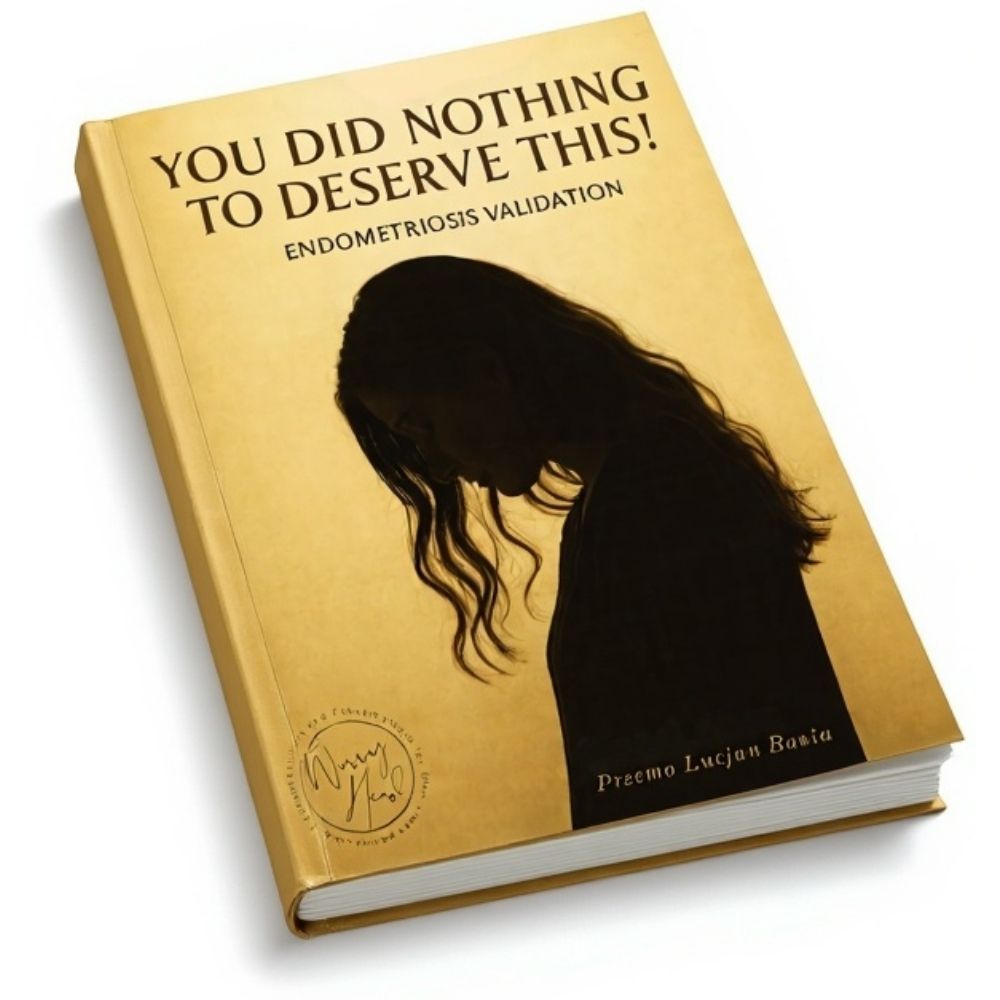
- You Did NOTHING To Deserve This!
- Why You Start Doubting Your Endometriosis After Being Dismissed?
- Why You Start Doubting Your Endometriosis When Tests Look Normal?
- Why You Start Doubting Your Endometriosis When Others Do Not Understand?
- Final Word on Why You Start Doubting Your Endometriosis
- Why You Start Doubting Your Endometriosis FAQ
- Why You Start Doubting Your Endometriosis References
- FREE eBook
Why You Start Doubting Your Endometriosis After Being Dismissed?
One of the hardest things about endometriosis is not only the pain itself, but the way the world can make you feel unsure about the pain you already know is real.
You may walk into an appointment with symptoms that have stolen your sleep, changed your relationships, affected your work, made intimacy painful, made periods frightening, or made your body feel unpredictable, and still leave with the quiet message that maybe you are too sensitive.
That kind of dismissal does not always sound cruel at first.
Sometimes it sounds like, “Your scan looks fine,” or “Many women have painful periods,” or “Try to relax,” or “It is probably stress.” But when words like that are repeated over months or years, they can begin to sink under your skin.
You may start editing yourself before you even speak. You may minimise symptoms because you do not want to sound dramatic, or you may wait until pain becomes unbearable before asking for help because you fear being treated like a problem rather than a patient.
This is how medical gaslighting damages trust.
It does not only delay answers, but it also teaches you to doubt your own memory, your own pain scale, your own instinct, and sometimes even your own worth.
And when endometriosis symptoms fluctuate, that doubt can become even louder, because a “better” day can make you question whether the bad days were really as severe as you remember.
But pain that comes in waves is still pain.
Fatigue that cannot be seen is still fatigue.
Bowel pain, bladder pressure, pelvic pain, ovulation pain, painful sex, nausea, heavy bleeding, shoulder pain, leg pain, and flare-ups that crash your whole body are not less real because they are difficult to explain in a ten-minute appointment.
I have seen my wife go from strong, capable, and determined to completely drained by symptoms that others could not see, and what hurt me most was watching how easily the system could make her feel like she had to prove she was suffering enough.
There were times when I could see she was almost apologising for being ill, as if her body’s pain had become an inconvenience she had to justify.
That broke something in me, because no woman should have to defend her pain like she is standing trial. And this is exactly why I want this next section to feel practical, not just emotional, because validation matters, but you also deserve tools that help you protect your voice, your evidence, and your confidence when doubt starts creeping in.
The things below are not magic fixes, but they are the kinds of small, steady habits I wish we had used earlier.
They can help you walk into appointments with more clarity, explain your symptoms without shrinking yourself, and remind you that your pain does not need permission to be real.
- Track patterns without obsessing
- Name symptoms clearly
- Bring written evidence
- Stop minimising your pain
- Ask better appointment questions
- Take someone with you
- Protect yourself after dismissal
- Separate doubt from facts
- Remember your pain is real
Track Patterns Without Obsessing
Tracking your symptoms can help you trust yourself again, but I want to say this gently: it should not become another way to punish yourself. You do not need to record every breath, every twinge, every bowel movement, every fear, and every bad thought until your whole life starts looking like a medical file instead of a life.
What matters most is the pattern.
Write down when pain appears, where it sits, what it feels like, how long it lasts, what else comes with it, and whether it links to your period, ovulation, bowel symptoms, bladder pressure, intimacy, fatigue, stress, movement, food, or flare-ups. This is not because your pain needs proof to be real. It is because patterns help you speak clearly when your brain goes blank in a doctor’s room.
My wife went through times when symptoms were so mixed together that even explaining them felt exhausting. I bought her a simple symptom diary that has protected her from that terrible feeling of, “I know something is wrong, but I cannot explain it well enough.” You deserve that protection too.
Name Symptoms Clearly
One reason you may start doubting yourself is that endometriosis symptoms can feel messy, layered, and difficult to put into words. You may say “my stomach hurts” when what you really mean is pelvic burning, bowel stabbing, bladder pressure, period cramps that feel abnormal, deep pain during sex, or a dragging sensation that makes walking uncomfortable.
The clearer your words become, the harder it is for someone to reduce your experience to “just period pain.”
Try naming the location, the timing, the sensation, and the impact. For example, “I get deep pelvic pain during my period and around ovulation, it spreads into my bowel, and it stops me from working normally.” That kind of sentence gives shape to what you live with.
I learned this by watching my wife struggle to explain pain that kept changing its mask. It was not that she did not know her body. It was that nobody had taught her how to translate suffering into medical language without losing the human truth inside it.
Bring Written Evidence
When you’re already nervous, dismissed, tired, or traumatised by previous appointments, your mind can go empty the moment you sit in front of a clinician. You may forget the worst symptoms, soften the language, laugh awkwardly, or say “it is okay” when it is absolutely not okay.
This is why written evidence matters!
Bring a short page with your main symptoms, how long they have been happening, what makes them worse, what helps, how they affect work, sleep, movement, intimacy, fertility fears, mental health, and daily life. Keep it simple. You are not writing a novel. You are giving your appointment structure so your pain is not lost in the rush.
When I started going to appointments with my wife, I saw how much changed when symptoms were not floating in the air anymore. Notes made it harder for important details to disappear. They also helped me remember what she was too exhausted to repeat. Written evidence is not overreacting. It is self-protection.
Stop Minimising Your Pain
Many women with endometriosis learn to make their pain sound smaller so other people feel more comfortable. My wife is guilty of that!
I am bold about things, and happily say it as it is. It helps her.
You may say “it is not that bad” because you have been through worse. You may say “I can manage” because you are afraid of being seen as difficult. You may say “sorry” before describing symptoms that already cost you so much.
But minimising pain can slowly teach your own mind to distrust your body.
If you keep presenting severe pain as mild, missed work as inconvenience, exhaustion as laziness, and emotional trauma as overthinking, then even kind people may not understand the true size of what you are carrying.
I saw my wife do this, and it hurt me deeply. She would sometimes speak about unbearable symptoms with this quiet politeness, as if she was trying not to disturb the room with her suffering. You do not have to exaggerate, but you must stop shrinking the truth. Your pain deserves accurate words.
Ask Better Appointment Questions
When you have been dismissed before, it is easy to walk into an appointment hoping the doctor will lead everything perfectly. Sometimes they do. Sometimes they do not. That is why having a few calm, direct questions can help you feel less powerless and more anchored.
You can ask:
- “What could explain these symptoms if the scan is normal?”
- “Does a normal scan rule out all types of endometriosis?”
- “Should I be referred to a specialist endometriosis service?”
You can ask what red flags should make you seek urgent help, what treatment options exist, what the risks and benefits are, and what the next step is if symptoms continue.
These questions are not rude. They are not dramatic. They are how you stay involved in your own care.
I wish I had known earlier how powerful gentle but firm questions could be. Sometimes advocacy is not shouting. Sometimes it is simply refusing to let the appointment end with vague reassurance when your body is still suffering.
Take Someone with You
As I said it earlier, I do that a lot. I never failed to accompany my wife at any appointment, no matter how small. If I have to, I take a day off work. My wife’s health is more important.
There is something very painful about sitting alone in a room where you feel you must convince someone that your pain is real. You may feel small before you even begin. You may leave questioning yourself because the person across from you sounded so certain, even when they barely listened.
Taking someone with you can change the emotional weight of the appointment. A partner, friend, sister, mother, or trusted person can help you remember details, take notes, ask questions, and gently step in when you are being spoken over. They can also witness what happened, which matters more than people realise when medical trauma has made you doubt your own perception.
With my wife, I saw a real difference when I began attending appointments. Not because I wanted to take over her voice, but because I wanted to stand beside it. Gaslighting became harder when there was another calm adult in the room saying, “No, this has been happening for years, and it is affecting her life.”
Protect Yourself After Dismissal
Dismissal does not always end when the appointment ends.
Sometimes you carry it home. You replay every sentence. You wonder whether you explained it badly. You ask yourself whether maybe they were right. You may even feel ashamed for crying, shaking, freezing, or leaving without saying what you wanted to say.
This is why you need an aftercare plan for emotionally difficult appointments.
Give yourself permission to rest afterwards. Write down what was said while it is still fresh. Note what felt helpful, what felt dismissive, and what questions remain unanswered. If needed, seek a second opinion, request a referral, or bring someone with you next time.
Please do not let one dismissive appointment become the judge of your whole body. I have seen how long those words can stay with my wife. A careless sentence can echo for years. But the echo is not the truth. It is only evidence that you were not cared for properly in that moment.
Separate Doubt from Facts
Doubt often sounds very convincing when you are exhausted. It says, “Maybe I am too sensitive.” It says, “Maybe I should cope better.” It says, “Maybe everyone has pain like this.” It says, “Maybe I am wasting their time.” But doubt is not always wisdom. Sometimes doubt is just old dismissal wearing a familiar voice.
- Facts are different.
- Facts say your pain affects your life.
- Facts say you have symptoms that deserve attention.
- Facts say endometriosis can be difficult to diagnose.
- Facts say many people experience delays before getting answers.
- Facts say normal tests do not always explain everything. Facts say your lived experience matters.
When my wife doubted herself, I learned not to argue with her emotions, but to gently bring her back to what was true. Not in a cold way. In a loving way. “Bunny, you were in pain for hours. You could not stand properly. This is real.” Sometimes love means becoming a mirror when illness has made someone forget what they are allowed to know.
Remember Your Pain Is Real
You do not need to be curled up on the floor every day for your pain to matter. You do not need to bleed heavily every cycle, faint in public, lose your job, lose your relationship, or reach breaking point before you are allowed to be taken seriously. Endo can be severe, but suffering should not have to become catastrophic before it earns compassion.
Your pain is real when it changes your plans. It is real when it makes you afraid of your own period. It is real when intimacy becomes complicated, when clothes feel tight, when fatigue steals your personality, when appointments leave you shaking, or when you smile in public and fall apart in private.
I want you to hear this as if I were saying it across the table, gently but firmly. You are not weak for needing answers. You are not dramatic for wanting care. You are not difficult for asking to be believed. And you do not have to doubt your endometriosis just because other people failed to recognise the full weight of it.
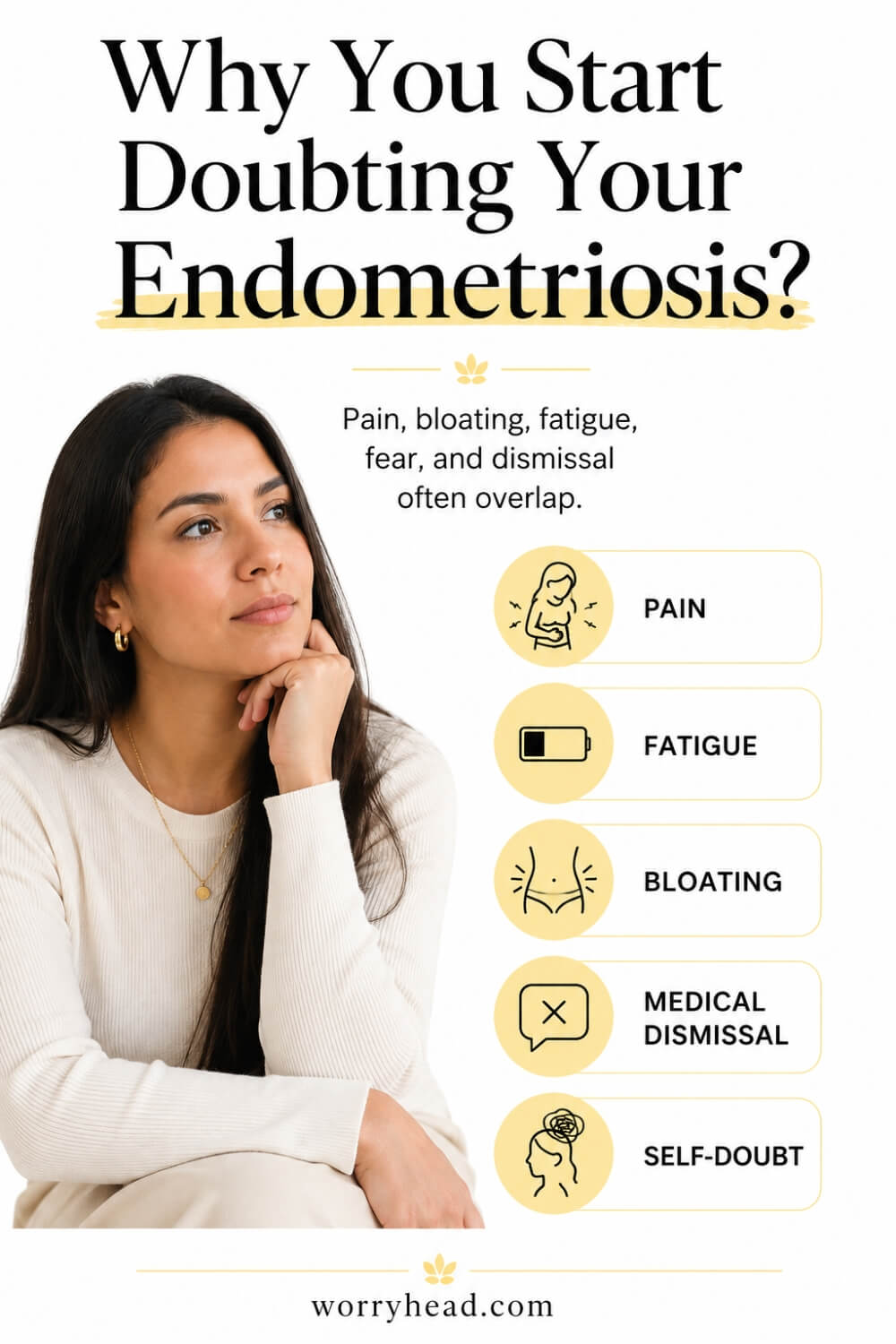
Why You Start Doubting Your Endometriosis When Tests Look Normal?
One of the most confusing parts of endometriosis is when your body is screaming, but the test result looks calm.
You may have pain that ruins your day, bowel symptoms that frighten you, bladder pressure that makes you plan every trip around toilets, or fatigue that makes standing in the kitchen feel like climbing a hill, and then someone says, “Everything looks normal.”
That sentence can feel like a door closing. Not because you wanted something to be wrong, but because you needed the truth of your suffering to finally have a name, shape, and explanation.
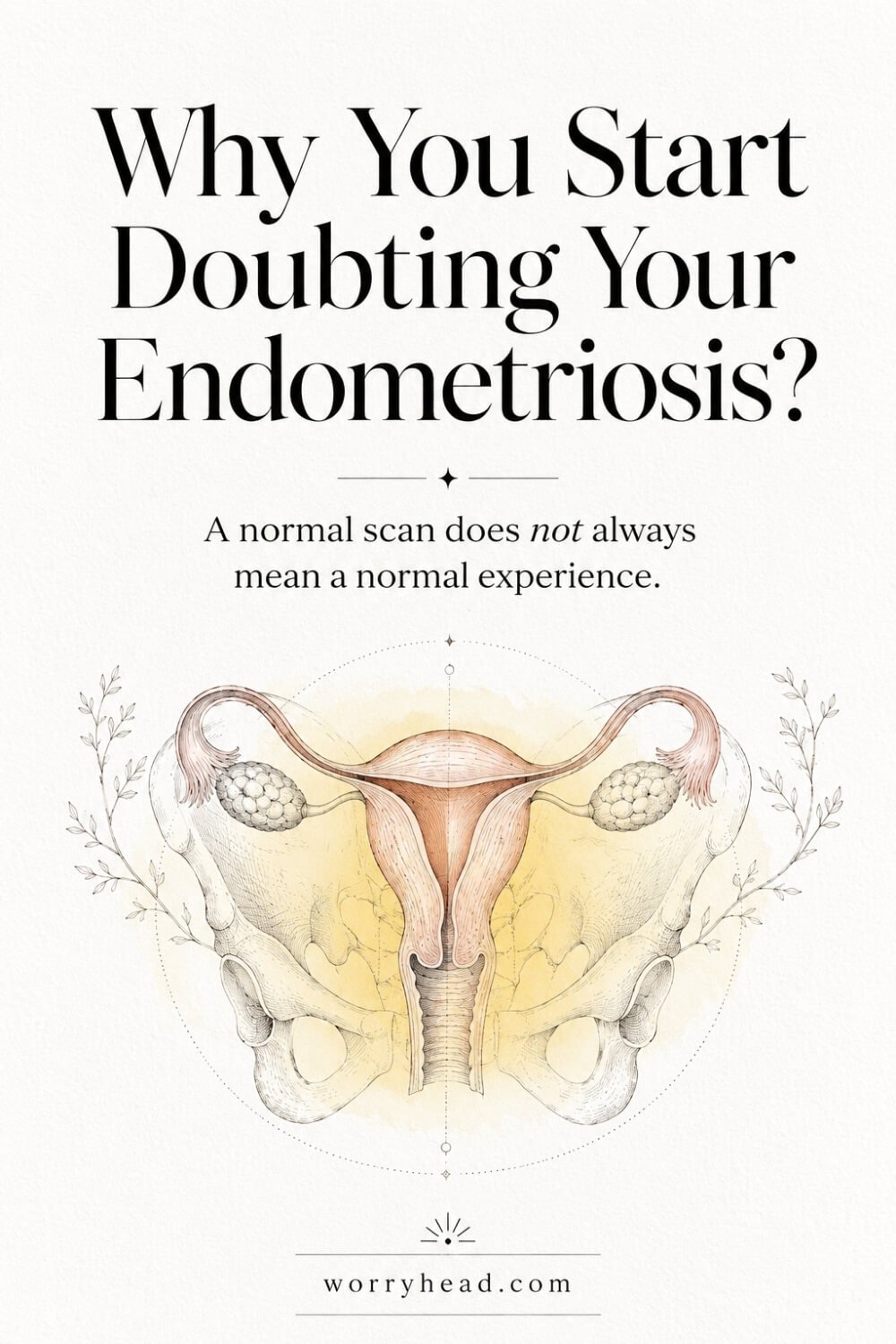
This is why you start doubting your endometriosis becomes so emotionally painful, as a normal scan can be misunderstood as “nothing is happening,” when it may only mean nothing obvious was seen on that particular test, by that particular person, on that particular day.
Endometriosis can be difficult because symptoms do not always match what appears on imaging, and some types of disease need specialist eyes, specialist scans, or careful clinical judgement to be understood properly.
A scan may show an endometrioma or deep disease in some cases, but it may not explain every kind of pelvic pain, nerve irritation, inflammation, adhesions, pelvic floor guarding, bowel sensitivity, or cyclical flare that you live through. That is why you should never be made to feel foolish for saying, “But I still know something is wrong.”
My wife went through moments like this, where the result seemed cleaner than the reality she carried home in her body.
And I remember the look on her face when reassurance did not feel reassuring, because nobody had explained the difference between “we did not see it” and “you are fine.”
That difference matters so much!
When a woman has already been dismissed, every normal result can feel like another reason to silence herself, even though it should be a reason to investigate thoughtfully, review symptoms properly, and ask what else could be contributing to the pain.
This is where I believe partners need to step up, not to speak over you, but to stand beside you and help protect the truth when exhaustion makes you question it.
Because when I looked at my wife after those appointments, I did not see a woman exaggerating. I saw a woman trying to survive a body that kept asking for help while the room kept asking for more proof.
And if that has ever been you, please hear me gently: a normal result may be part of the story, but it is not allowed to erase the story your body has been telling for years.
Why You Start Doubting Your Endometriosis When Others Do Not Understand?
There is a special kind of loneliness that happens when your body is suffering, but the people around you keep treating it like a misunderstanding.
You may try to explain the pain, the bleeding, the fear before a period, the way fatigue changes your mood, the way bloating makes you avoid clothes you once loved, or the way intimacy can become tangled with discomfort, guilt, and grief.
Then someone says, “At least it is not serious,” or “You look fine,” or “Maybe you are focusing on it too much,” and suddenly you feel yourself becoming smaller.
This is why you start doubting your endometriosis, because doubt does not always begin inside you; sometimes it is planted by people who never had to live one day inside your body.
I have seen how this kind of misunderstanding can slowly bruise a woman’s confidence.
My wife could be in real pain, yet still try to keep functioning, still smile, still push through, still apologise for needing rest, because years of being misunderstood can make you feel like you must be pleasant to be believed.
And as her husband, I had to learn that support was not only about helping with practical things. It was about protecting her from the emotional damage of constantly having to prove herself. It changed me when I realised that every dismissive comment did not simply pass over her. It stayed somewhere inside her, waiting to come back the next time she wondered whether she was asking for too much.
It affected me too, because loving someone with endometriosis means watching the person you adore question herself when you can clearly see she is not weak, not dramatic, not lazy, and not broken.
It affected both of us because chronic illness does not sit neatly inside one body. It enters the room, the relationship, the plans, the finances, the sleep, the conversations, the silence, and the future you thought would be easier. But it also taught me this…
When a woman is believed at home, held emotionally, and reminded that her pain is not an inconvenience, the outside world does not get the same power to destroy her self-trust.
And if the people around you still do not understand, please let this article be one steady voice telling you that you are allowed to know your own body, even when others are still learning how to listen.
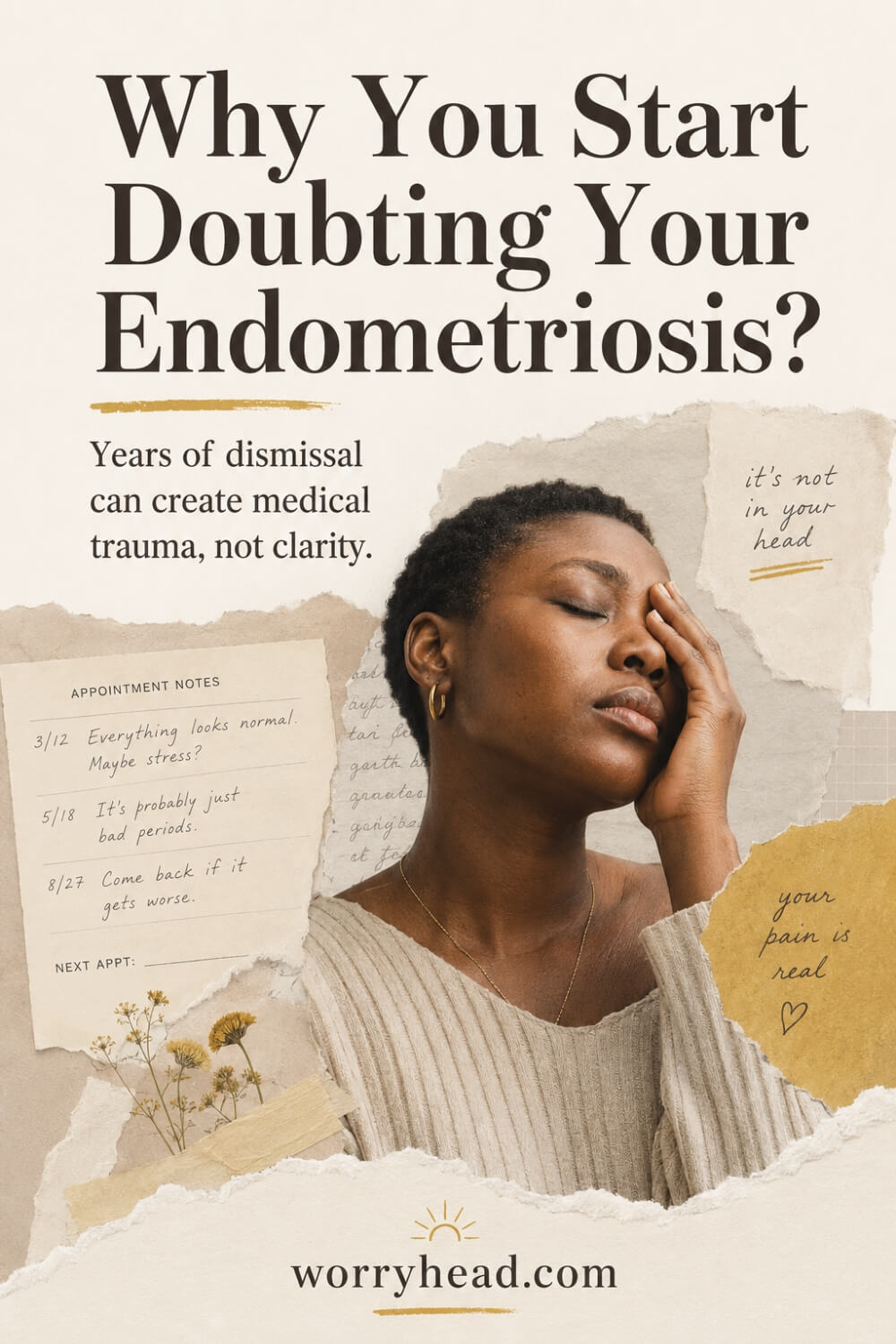
Final Word on Why You Start Doubting Your Endometriosis
When you begin to doubt your own endometriosis, it does not mean you are weak, confused, attention-seeking, dramatic, or unable to cope. It usually means you have been forced to carry too much uncertainty for too long without enough compassion around you. Pain is hard enough when it is believed. Pain becomes heavier when you have to keep explaining it, defending it, measuring it, proving it, and still wondering whether someone will take it seriously.
That is what makes this topic so personal to me.
I have watched my wife live with symptoms that changed her body, her confidence, her mental health, her relationship with daily life, and sometimes even her trust in herself. I have seen how easily a woman can become quiet after being dismissed too many times. Not because she has nothing to say, but because every appointment, every careless comment, every “your tests look normal,” and every “maybe it is stress” can slowly teach her that speaking up will only hurt more.
But I want you to separate two things in your heart.
Doubt is real, but doubt is not always truth. Sometimes doubt is the emotional scar left behind by medical gaslighting. Other times it is the voice of every person who made you feel difficult. And sometimes, it is the fear of being dismissed again before you have even opened your mouth. Other times it is your nervous system trying to protect you from more disappointment.
Your body, however, still deserves to be listened to.
Endometriosis can be complex. It can affect pain, periods, bowel symptoms, bladder symptoms, sex, energy, fertility fears, inflammation, pelvic nerves, scar tissue, mood, relationships, and your sense of safety inside your own skin. It can also be missed, misunderstood, under-explained, or reduced to “bad periods” when the reality is much bigger than that. So if your symptoms keep returning, worsening, spreading, or affecting your life, you are not silly for wanting answers. You are sensible for paying attention.
I also want partners, especially men, to understand something important. Your presence can change the room, not because your woman needs you to rescue her, but because she deserves not to stand alone after years of being unheard. When I began attending appointments with my wife, I noticed how differently things could feel when her pain had a witness.
A supportive partner can take notes, ask questions, remember lots of details, calm the emotional storm afterwards, and most importantly, remind her that her pain is not an inconvenience at home.
If you are the woman reading this, I want you to breathe for a moment and let this land softly. You do not need to earn belief by collapsing. You do not need to apologise for being unwell. You do not need to make your pain sound prettier so others feel more comfortable.
You are allowed to ask questions. You are allowed to seek another opinion. You are allowed to say, “This is affecting my life, and I need help.”
And if why you start doubting your endometriosis has been sitting in your heart for years, please hear me as a husband who has seen what this disease can do from the closest seat beside the bed: your doubt may be understandable, but your pain still matters.
You deserve care that looks beyond one rushed appointment. You deserve answers that do not make you feel ashamed. You deserve people who listen before they judge. And above all, you deserve to come back to yourself, slowly, gently, without blaming yourself for the years you had to survive while waiting to be believed.
- Your body has not betrayed you.
- Your body has been trying to speak through pain, fatigue, fear, inflammation, and exhaustion.
- You were never wrong for listening.
- You were never wrong for wanting someone else to listen too.
- You were never wrong for needing to be believed.
Endometriosis can make you doubt your pain, your body, your memory, and even your right to ask for help, but doubt does not make your symptoms imaginary. You deserve answers, support, gentleness, and a life where your suffering is taken seriously before it breaks you.
If this touched something in you, leave a comment and tell me what part made you feel seen. And if you need more validation, you can also check out the FREE chapter of my eBook, “You Did Nothing To Deserve This!”, written for women with endo who have been made to question themselves for far too long.


About Me
Hi, I’m Lucjan! The reason why I decided to create this blog was my beautiful wife, who experienced a lot of pain in life, but also the lack of information about endometriosis and fibromyalgia for men…
READ MORE
Grab a FREE eBook!
“You Did NOTHING To Deserve This!”
Finally hear the words nobody ever said to you, that your pain is real, your tears make sense, and you did nothing to deserve endometriosis, the dismissal, or the way it has rewritten your life.
Why You Start Doubting Your Endometriosis FAQ
1. Why Do I Start Doubting My Endometriosis Even When I Know My Pain Is Real?
You may start doubting your endometriosis because repeated dismissal can slowly damage your self-trust. When doctors, family members, partners, employers, or even friends minimise your pain, your mind can begin to ask whether you are overreacting, even when your body knows something is wrong. This doubt is not a sign that your pain is imaginary. It is often a sign that you have had to defend real symptoms for too long without enough validation, understanding, or careful medical support.
2. Can Normal Test Results Make Me Doubt My Endometriosis?
Yes, normal test results can make you doubt yourself, especially if nobody explains what those results do and do not mean. A normal scan may be reassuring in some ways, but it does not automatically explain every symptom or erase your lived experience. Endometriosis can be complex, and pain can also involve inflammation, adhesions, pelvic floor tension, bowel symptoms, bladder symptoms, nerve sensitivity, and other overlapping factors. You are not foolish for wanting answers when your symptoms continue.
3. Is Medical Gaslighting Common With Endometriosis?
Many women with endometriosis describe feeling dismissed, minimised, or not believed before receiving proper help. Medical gaslighting can happen when symptoms are blamed too quickly on stress, anxiety, normal periods, low pain tolerance, or emotional sensitivity without proper listening and investigation. Even if the person does not intend to harm you, the result can still be damaging. It can make you question your pain, delay care, and leave you feeling ashamed for asking for help.
4. How Can I Stop Minimising My Endometriosis Symptoms?
Start by using accurate words instead of softened ones. Instead of saying, “It is just painful,” describe where the pain is, when it happens, how long it lasts, what it stops you from doing, and what other symptoms come with it. You do not need to exaggerate. You only need to stop shrinking the truth to make other people more comfortable. A short written symptom summary can help you speak clearly when appointments feel rushed or emotionally difficult.
5. Can Having Someone With Me At Appointments Help?
Yes, having someone with you can help if that person is calm, supportive, and respects your voice. A partner, friend, or family member can take notes, remind you of symptoms you forgot, ask useful questions, and help you feel less alone. I saw this with my wife. When I began attending appointments with her, it became harder for her pain to be brushed aside, because she was no longer carrying the whole emotional weight of explaining, remembering, and defending everything by herself.
Why You Start Doubting Your Endometriosis References
- https://www.nice.org.uk/guidance/ng73
- https://www.nice.org.uk/news/articles/nice-updated-guideline-to-improve-the-diagnosis-of-endometriosis
- https://www.nhs.uk/conditions/endometriosis/
- https://www.eshre.eu/Guidelines-and-Legal/Guidelines/Endometriosis-Guideline
- https://www.eshre.eu/-/media/sitecore-files/Guidelines/Endometriosis/ESHRE-GUIDELINE-ENDOMETRIOSIS-2022_2.pdf
- https://www.eshre.eu/-/media/sitecore-files/Guidelines/Endometriosis/ESHRE-ENDOMETRIOSIS-patient-Guideline_21032022.pdf
- https://www.ncbi.nlm.nih.gov/books/NBK604070/
- https://pubmed.ncbi.nlm.nih.gov/35350465/
- https://www.endometriosis-uk.org/diagnosis-report
- https://www.endometriosis-uk.org/getting-diagnosed-0
- https://www.mmu.ac.uk/news-and-events/news/story/endometriosis-patients-being-failed-and-feel-dismissed-new-study-shows
- https://pmc.ncbi.nlm.nih.gov/articles/PMC12629012/
- https://pmc.ncbi.nlm.nih.gov/articles/PMC12226911/
- https://www.rcog.org.uk/guidance/browse-all-guidance/green-top-guidelines/endometriosis-investigation-and-management-green-top-guideline-no-24/
- https://www.who.int/news-room/fact-sheets/detail/endometriosis
