Why Do You Feel Like a Burden with Endometriosis?
Have you ever sat quietly and wondered why endometriosis makes you feel guilty for needing help? Many women tell me they feel like a burden with endometriosis even when they are doing everything they can just to get through the day. If that sounds familiar, I want you to know that I see you.
Feeling like a burden with endometriosis is usually not caused by weakness or neediness. It often grows from years of pain, fatigue, cancelled plans, relationship strain, work difficulties, delayed diagnosis, and feeling dismissed. When a condition affects daily life so deeply, many women begin carrying guilt that never belonged to them.
I am not a clinician. I write as a husband, blogger, researcher, and caregiver who has spent years learning about endometriosis while supporting my wife. At the bottom of this article, I have included the sources I used to learn the medical facts and health information discussed here, including guidance and research from organisations such as WHO, NICE, NHS, ESHRE, and peer-reviewed studies.
What surprises many people is that the feeling of being a burden is often not created by the disease alone. It can be created by how the world reacts to the disease. Research actually shows that endometriosis affects physical health, emotional wellbeing, work, relationships, confidence, and quality of life, even after treatment.
Many women report feeling dismissed, doubted, or misunderstood for years before receiving answers.
When those experiences pile up month after month, year after year, it becomes easier to blame yourself than to blame the situation. And even though endometriosis is not your fault, that is one of the cruellest things endometriosis can do to you.
I have watched this happen to my own wife. There were days when she apologised for being exhausted, apologised for being in pain, apologised for cancelling plans, and even apologised for needing support when she was the one suffering the most.
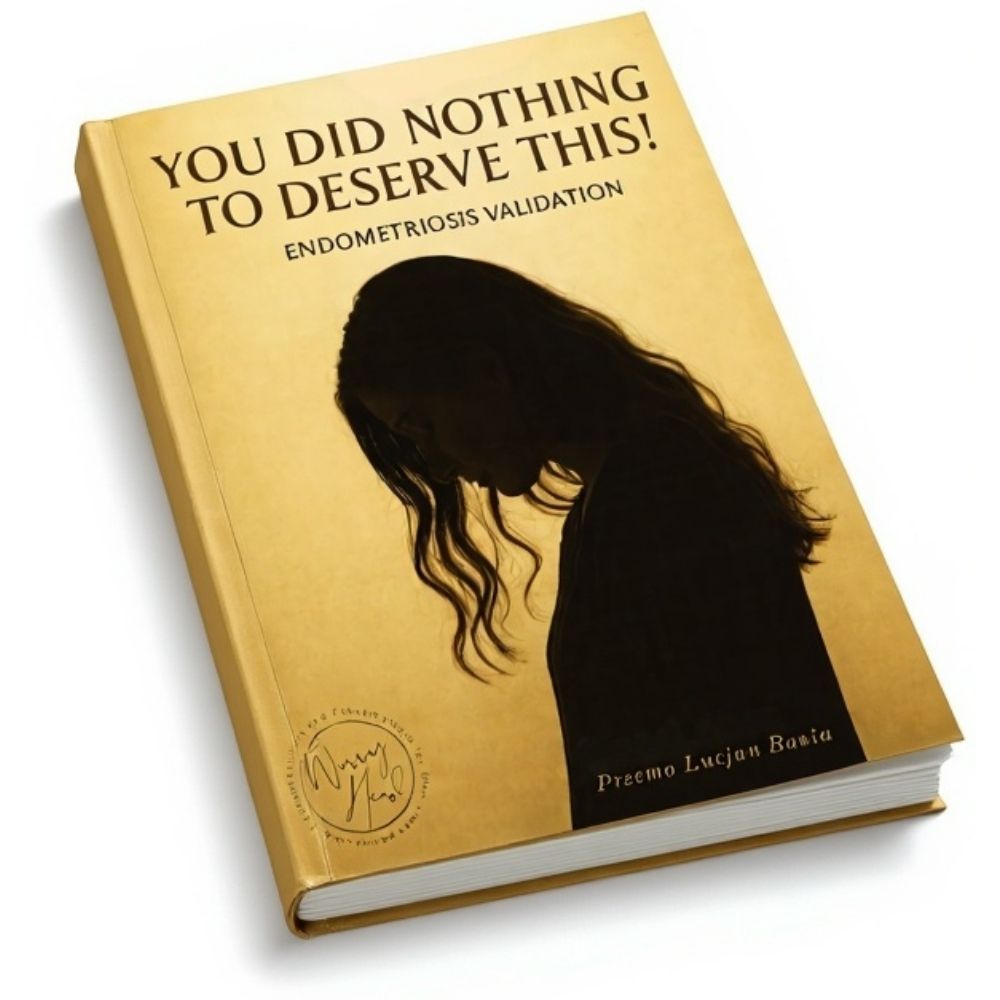
If you have ever felt that way too, I would love to give you a free copy of my 130+ page book, “You Did Nothing To Deserve This!”. It was written to help women with endometriosis feel validated, understood, and less alone. By joining our community, you will also receive future freebies, valuable relationship support, practical guidance for adjusting to chronic illness, and exclusive discounts on all of our books. Most importantly, you will join a group of people who genuinely understand what you are carrying.
The book is filled with 20 chapters of gentle validation for women with endo. This book is not a medical guide but a human one. Here’s what you will find inside:
- This Was Never Your Fault
- The Girl You Used To Be
- When Your Own Body Feels Like an Enemy
- The Invisible Battles Nobody Sees
- Am I Just Lazy? – The Lie You Have Been Taught
- Gaslighting, Dismissal and the Trauma of Not Being Believed
- Guilt: The Weight You Were Never Meant to Carry
- Love in the Middle of Pain
- Intimacy When Your Body Hurts
- The Loneliness of Being the Strong One
- You Are Allowed To Take Up Space
- Tiny, Gentle Hopes (Not Toxic Positivity)
- If You Could Hear My Voice Every Flare Day
- You Deserve Partners, Not Witnesses
- When You Wish He Understood
- Motherhood, Fertility and the Grief Nobody Sees
- When Anger Is the Only Honest Feeling
- Learning to Trust Your Body Again
- Building a Life That Fits Your Reality
- You Did Nothing To Deserve This
You Did NOTHING To Deserve This!
Endometriosis Validation for Women with Endo
- You Did NOTHING To Deserve This!
- Why You Feel Like a Burden with Endometriosis When You Need Support?
- Why Feeling Like a Burden with Endometriosis Can Hurt Your Relationship So Deeply?
- How Feeling Like a Burden with Endometriosis Changes the Way You See Yourself?
- Final Word On Feeling Like a Burden with Endometriosis
- Why Do You Feel Like a Burden with Endometriosis FAQ
- Feel Like a Burden with Endometriosis References
- FREE eBook
Why You Feel Like a Burden with Endometriosis When You Need Support?
You can start to feel like a burden with endometriosis because the condition not only hurts your body, but it interrupts the life you were trying to live.
It can interrupt your work, your relationship, your social life, your sleep, your intimacy, your confidence, your plans, and often even the way you see yourself. And when one illness keeps touching so many parts of your life, you may slowly begin to believe that you are the problem, when the truth is that the illness is the problem.
I have seen how painful that belief can become.
You may cancel dinner because your pelvis feels like it is being pulled from the inside. You may say no to sex because deep pain, fatigue, bleeding, fear, or past experiences have made intimacy feel complicated instead of safe. You may need to rest when your partner wants to go out, or you may need help with things you used to do without even thinking.
Over time, those small moments can collect in your mind like evidence against you, even though none of them proves that you are difficult to love. They only prove that you are living with something heavy.
Endometriosis can also make you feel guilty because it is often invisible.
If someone cannot see your pain, your swelling, your exhaustion, your bowel symptoms, your bladder pain, or the way your whole body braces before a flare, you may feel pressure to explain yourself again and again.
That pressure can be exhausting.
You may begin to soften your words, hide how bad it really is, laugh when you want to cry, or say “I’m fine” because you do not want another conversation where you feel judged.
But needing care does not make you needy.
Needing patience does not make you weak. Needing someone to understand your limits does not make you less of a woman, less of a partner, less attractive, less useful, or less worthy of love.
What broke my heart with my wife was not only seeing her in pain, but seeing her apologise for pain she never chose. There were moments when I realised that my job was not to make her feel grateful for my help, but to make sure she never felt ashamed for needing it.
And if you have been carrying that shame quietly, I want the next part to give you something practical to hold onto when guilt starts whispering lies in your ear…
- Name the illness, not yourself
- Stop apologising for symptoms
- Explain your limits early
- Let love include care
- Protect intimacy with honesty
- Build a flare plan together
- Challenge medical dismissal gently
- Remember your worth daily
Name the Illness, Not Yourself
One of the most important shifts I have learned through my wife’s journey is this: you are not the burden, endometriosis is the burden. That difference may sound small, but emotionally it can change everything.
When pain cancels plans, when fatigue steals your energy, when bloating changes how clothes feel on your body, or when intimacy becomes frightening because you remember how much it hurt last time, it is easy to turn the blame inward.
But you did not choose lesions, inflammation, adhesions, flare-ups, bowel symptoms, bladder pain, heavy bleeding, or years of being dismissed. You did not wake up one morning and decide to make life harder for yourself or the people you love.
When my wife struggled, I had to learn not to speak as if her body was causing inconvenience. I had to learn to say, even silently, “This illness is hard on us, but she is not hard to love.”
That is the language every woman with endometriosis deserves to hear. You are not the problem in the room. You are the person in pain who still deserves tenderness in the room.
Stop Apologising for Symptoms
I know this one is hard, because apologising can become automatic when you live with chronic illness. You may say sorry for needing to lie down, sorry for crying, sorry for not being able to cook, sorry for not replying, sorry for being quiet, sorry for needing help, and sorry for a body that is already punishing you enough.
But symptoms are not bad manners. Pain is not disrespect. Exhaustion is not laziness. A flare is not a personal failure.
There is a gentler way to speak. Instead of saying, “I’m sorry I’m useless today,” you can say, “I’m having a difficult symptom day, and I need support.” Instead of saying, “I’m sorry I ruined everything,” you can say, “I’m sad this changed our plan, but I still want closeness.” That one change protects your dignity.
I wish I had understood this earlier with my wife. Not because she needed better words, but because I needed to make it safer for her not to apologise. A loving partner should not make you feel guilty for being unwell. They should help you feel human when illness makes you feel like less than yourself.
Explain Your Limits Early
Explaining your limits early does not mean you are being negative. It means you are being honest before your body is pushed too far. Many women with endometriosis try to keep going until the pain becomes unbearable because they do not want to disappoint anyone.
You may force yourself through visits, work, family events, intimacy, travel, or housework while quietly counting the minutes until you can collapse.
But when limits are spoken early, they can become part of the plan instead of a crisis at the end of the plan.
- You might say, “I can come, but I may need to leave early.”
- You might say, “I want to help, but I cannot stand for long today.”
- You might say, “I want closeness, but my body is not safe for sex tonight.”
These words do not make you difficult. They make the invisible visible.
I had to learn that support is not only reacting when my wife breaks down. Real support is noticing the pressure before she reaches that point. Your limits are not walls to keep love out. They are signs that help love come closer in the right way.
Let Love Include Care
Many women feel like a burden because they believe love should only be fun, easy, romantic, attractive, and light. But real love, the kind that survives illness, also includes care.
It includes patience when plans change. It includes gentleness when your body is sore. It includes sitting beside you when there is nothing clever to say. It includes making tea, bringing a blanket, driving to appointments, learning the words you are tired of explaining, and not making you feel guilty for needing any of it.
Care should not be treated like a debt you must repay with perfection. You do not need to earn kindness by being cheerful. You do not need to make your pain convenient before you deserve compassion. You do not need to prove you are “worth it” by hiding the hardest parts of your life.
My wife’s illness taught me that loving someone is not only about enjoying the good days. It is about protecting their heart on the days their body already feels like a battlefield. If someone truly loves you, your need for care does not erase your worth. It gives love a place to show up.
Protect Intimacy with Honesty
Endometriosis can affect intimacy in ways many people do not understand unless they live close to it. Pain with sex, fear of pain, pelvic tenderness, fatigue, bleeding, bloating, bowel symptoms, bladder discomfort, trauma from past painful attempts, and feeling disconnected from your own body can all make closeness emotionally complicated.
Because intimacy is often tied to feeling wanted, you may start worrying that you are disappointing your partner. But honesty protects intimacy better than silence ever can.
- You can say, “I still love you, but my body is scared tonight.”
- You can say, “I want affection, but I need it without pressure.”
- You can say, “Please do not take my pain as rejection.”
These conversations may feel vulnerable, but they can save both people from quietly misunderstanding each other.
As a husband, I had to learn that intimacy is not something a woman owes. It is something that must feel safe for both people. Your body is not failing your relationship because it reacts to pain. A loving relationship should be able to hold tenderness, touch, closeness, cuddling, honesty, and patience without making you feel guilty for protecting yourself.
Build a Flare Plan Together
A flare plan can sound simple, but emotionally it can be powerful because it says, “We know this may happen, and we are not going to blame you when it does.” Endometriosis flares can be unpredictable.
Pain may rise quickly, fatigue can become crushing, your belly may swell, your bowels or bladder may become sensitive, and your whole nervous system may feel overwhelmed. When there is no plan, every flare can feel like panic.
A useful flare plan might include heat pads, pain relief agreed with your clinician, easy meals, comfortable clothes, lower lighting, rest time, emergency contacts, symptom notes, transport plans, and a simple sentence your partner knows to take seriously. It can also include what not to say. Sometimes “Are you sure it’s that bad?” hurts more than silence.
I learned that support is not only love in my heart. It is preparation in real life. If you have someone beside you, ask them to build the plan with you, not for you. And if you are the partner reading this, do not wait for her to beg.
- Learn her flare signs.
- Help early.
- Make her feel believed before she has to prove her pain.
Challenge Medical Dismissal Gently
Many women with endometriosis have been told their pain is normal, stress-related, exaggerated, anxiety, IBS, “just periods,” or something they should learn to live with. After enough dismissal, you may start dismissing yourself before anyone else gets the chance. You may understate symptoms at appointments, avoid asking questions, or feel guilty for seeking another opinion.
But advocating for yourself is not being dramatic. It is part of surviving a condition that can affect the pelvis, bowel, bladder, fertility, sex life, energy, mental health, and daily function.
- You are allowed to ask what else could be going on.
- You are allowed to ask whether imaging, specialist referral, pain management, pelvic floor support, bowel symptoms, bladder symptoms, or deep endometriosis have been properly considered.
- You are allowed to bring notes because pain makes it hard to remember everything.
When my wife struggled, I saw how much strength it takes to keep explaining pain after years of being unheard. So please hear this from me: you are not a burden for wanting answers. You are not difficult for wanting better care. You are allowed to be respectful and firm at the same time.
Remember Your Worth Daily
Endometriosis can shrink your world until you start measuring your worth by what you managed to do today…
- Did you clean enough?
- Work enough?
- Smile enough?
- Reply enough?
- Love enough?
- Cope enough?
…but your worth was never meant to be measured by productivity, pain tolerance, sexual availability, fertility, energy, appearance, or how well you hide your suffering from other people.
You are worthy on the day you do everything, and you are worthy on the day you can barely get out of bed. You are worthy when your belly is swollen, when your mood is low, when you cancel plans, when you need help, when you cry, when you are angry, and when you are tired of being strong. None of those things remove your value.
I wish every woman with endo could see herself through the eyes of someone who truly loves her, not as a problem to manage, but as a person to cherish.
My wife never became less precious because she needed support. If anything, her vulnerability taught me what love is really supposed to look like when life becomes difficult. Please remind yourself daily: you are not a burden. You are a woman carrying too much without enough support.
Why Feeling Like a Burden with Endometriosis Can Hurt Your Relationship So Deeply?
You may feel like a burden with endometriosis not because your relationship is weak, but because the illness keeps asking for things you wish you did not need.
You may need more patience than before, more rest than before, more understanding than before, and sometimes more reassurance than you feel comfortable asking for.
That can be painful when you remember who you were before the pain became so loud. You may miss the version of yourself who could say yes without checking your symptoms first. You may miss being spontaneous, playful, intimate, social, productive, or relaxed without your body interrupting the moment. And when you miss that version of yourself, it is easy to assume your partner must miss her too.
But here is something I want you to hear from a husband who has lived beside this: a loving partner does not only love the easy version of you. A loving partner learns the hurting version too.
I have had to learn this with my wife in real life, not as a nice phrase on a page, but through cancelled plans, quiet rooms, tears, fatigue, pain, and moments when I could see she felt guilty for simply existing in a body that was hurting her.
Those moments can break your heart because you want to take the pain away, but you also have to be careful not to make your own sadness become another weight she has to carry.
There were times when my wife looked at me as if she was asking without words, “Are you tired of me?”
And I had to make sure my answer was not only spoken, but shown through patience, softness, consistency, and the way I stayed close without making her feel watched, judged, or pitied.
Endometriosis can put pressure on love, but it can also reveal what kind of love is standing in the room.
If your partner makes you feel ashamed for symptoms you cannot control, that is not proof that you are too much. It is proof that your pain needs more understanding, your relationship needs more honest conversations, and your heart needs to stop accepting guilt as the price of being loved.
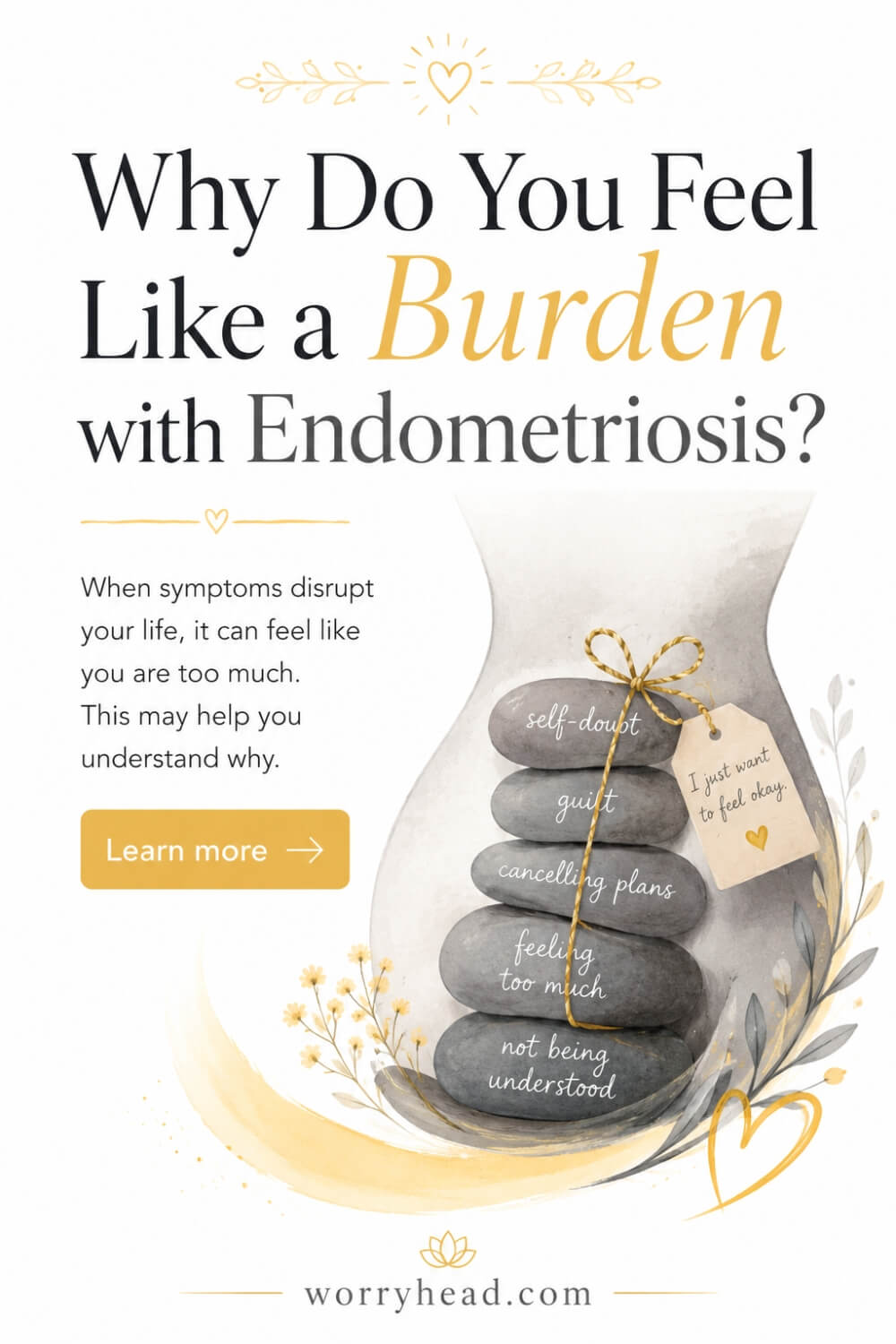
How Feeling Like a Burden with Endometriosis Changes the Way You See Yourself?
You may feel like a burden with endometriosis because the illness can slowly change the way you measure your own value. You may begin to notice what you cannot do more than what you still bring into the world. You may count the cancelled plans, the unfinished tasks, the unread messages, the meals you could not cook, the shifts you barely survived, the intimacy you avoided, and the days your body forced you to stop.
And if nobody gently reminds you of the truth, your mind may start turning those limits into identity.
But you are not the missed event.
You are not the messy bedroom, the heating pad, the swollen belly, the prescription box, the tired face in the mirror, or the woman who had to say, “I can’t today.” You are still the woman who loves, feels, thinks, hopes, cares, notices, remembers, dreams, and keeps going in ways many people would never understand.
I saw this with my wife when her symptoms affected not only her body, but the way she looked at herself.
There were moments when I could feel her shrinking inside, as if needing help made her less of the woman I married, when in my eyes she was still the same woman I met, only carrying far more pain than anyone should have to carry.
As her husband, I had to learn that reassurance cannot be lazy. It is not enough to say, “Don’t worry about it,” and then act irritated, distant, impatient, or emotionally unavailable.
If I wanted her to believe she was not a burden, I had to show her with my tone, my patience, my actions, my consistency, and the way I still reached for her heart on the days her body could not give much back.
And if you are reading this with tears in your eyes, I want you to borrow that truth for yourself…
You are not less lovable because endometriosis changed your energy, your body, your confidence, your sex life, your plans, or your daily rhythm. You are not a burden because you need care. You are a woman living with a painful, complex condition, and the people who truly love you should not make you feel guilty for surviving it.
Final Word On Feeling Like a Burden with Endometriosis
If there is one thing I want you to take from this article, it is this: you are not a burden because your body needs care. You are not a burden because pain changes plans. You are not a burden because fatigue makes you slower, quieter, more sensitive, or more dependent on rest than you wish you were.
Endometriosis can make you feel as if you are always asking for too much, but often you are actually asking for very basic things: patience, belief, softness, flexibility, understanding, and love that does not disappear when your symptoms become inconvenient.
That should not be too much.
The problem is that many women spend years being told, directly or indirectly, that their pain is too emotional, too complicated, too frequent, too dramatic, too hard to explain, or too hard for others to live around. After hearing that enough times, you may stop waiting for someone else to blame you and begin blaming yourself first. That is how guilt becomes a habit. That is how shame gets into places where tenderness should have been.
But I have watched my wife live through days when her body gave her no easy choices, and I can tell you something from the husband’s side of this story. The woman in pain is not the burden. The silence around her pain is the burden. The dismissal is the burden. The pressure to act normal is the burden. The lack of support is the burden. The loneliness is the burden. The illness is the burden.
Not you.
When my wife apologised for needing help, I did not see a difficult woman. I saw a woman who had been forced to carry too much for too long. I saw someone trying to protect me from the weight of something she never chose. And I had to learn, sometimes through my own mistakes, that love is not only about being present when things are easy. Love is also about making the hard days feel less humiliating.
If you are the woman reading this, I want you to stop measuring your worth by how little support you need. You were never meant to earn love by suffering quietly. You were never meant to prove your value by pushing through pain until your body breaks. You were never meant to apologise for symptoms that already take enough from you.
And if you are the partner reading this, especially a man like me, please understand this deeply. She does not need you to fix everything. She needs you to believe her, stay gentle, learn with her, listen without rushing her, and make your love feel safe enough that she does not have to hide the truth of her pain.
To feel like a burden with endometriosis is not proof that you are too much. It is often proof that you have been carrying pain, guilt, and misunderstanding without enough validation. You deserve care that does not make you feel guilty. You deserve love that does not punish your limits. You deserve to be reminded, again and again, that you did nothing to deserve this.
You are still worthy when you need rest. You are still lovable when plans change. You are still valuable when your body cannot keep up. Endometriosis may affect your life, relationship, confidence, and energy, but it does not make you less deserving of patience, tenderness, respect, or love.
If this touched something in you, please leave a comment and tell me your experience. And if you need more validation, you can also check out the free chapter of my eBook, “You Did Nothing To Deserve This!”, written for women with endometriosis who have carried guilt that never belonged to them.
About Me
Hi, I’m Lucjan! The reason why I decided to create this blog was my beautiful wife, who experienced a lot of pain in life, but also the lack of information about endometriosis and fibromyalgia for men…
READ MORE
Grab a FREE eBook!
“You Did NOTHING To Deserve This!”
Finally hear the words nobody ever said to you, that your pain is real, your tears make sense, and you did nothing to deserve endometriosis, the dismissal, or the way it has rewritten your life.
Why Do You Feel Like a Burden with Endometriosis FAQ
1. Why Do I Feel Like A Burden With Endometriosis?
You may feel this way because endometriosis can affect so many parts of your life at once. It can change your energy, pain levels, work, sleep, social plans, sex life, fertility worries, confidence, and relationship rhythm.
When you keep needing rest, help, understanding, or changes to plans, your mind may start telling you that you are “too much.” But needing support for a painful chronic condition does not make you a burden. It means your body is dealing with something real, and your heart needs care instead of shame.
2. Can Endometriosis Affect My Relationship?
Yes, endometriosis can affect relationships because it can change daily routines, emotional closeness, intimacy, communication, and future plans. Painful sex, fatigue, flare-ups, low mood, cancelled plans, financial pressure, and medical stress can all create tension if both partners do not understand what is happening.
But this does not mean your relationship is doomed. It means your relationship needs honesty, patience, practical support, and a safe space where you do not have to pretend you are fine just to be loved.
3. How Can I Stop Feeling Guilty For Needing Help?
Start by separating yourself from the illness. You are not causing the pain on purpose. You are not choosing fatigue, flare-ups, bleeding, bloating, bowel symptoms, bladder pain, or emotional overwhelm.
Instead of saying, “I’m sorry I’m a problem,” try saying, “I’m having a difficult symptom day and I need support.” That one sentence protects your dignity. It reminds both you and your partner that the problem is the illness, not you.
4. What Should My Partner Understand About Endometriosis?
Your partner should understand that endometriosis is not just a bad period. It can be a whole-body, life-changing condition that affects pain, energy, digestion, bladder symptoms, intimacy, mental health, confidence, and daily function.
They do not need to have all the answers, but they should believe you, listen without minimising, learn about the condition, respect your limits, and help you feel safe enough to be honest. Sometimes the most loving thing a partner can say is, “I believe you, and we will adjust this together.”
5. Am I Still Lovable If Endometriosis Has Changed Me?
Yes, you are still lovable. You are not less worthy because your body needs rest, because intimacy has changed, because your belly swells, because you cancel plans, or because some days you cannot do what you used to do.
Endometriosis may change parts of your life, but it does not remove your value. You are still a woman with feelings, dreams, tenderness, humour, love, memory, depth, and beauty. The right kind of love should not make you feel guilty for surviving something you never asked for.
Feel Like a Burden with Endometriosis References
- World Health Organization: Endometriosis
- NHS: Endometriosis
- NICE Guideline NG73: Endometriosis Diagnosis And Management
- ESHRE Guideline: Endometriosis
- European Society of Human Reproduction and Embryology Guideline Paper: ESHRE Guideline Endometriosis
- The Significant Effect Of Endometriosis On Physical, Mental And Social Wellbeing
- Endometriosis And Quality Of Life: A Systematic Review
- Impact Of Endometriosis On Women’s Lives: A Qualitative Study
- Endometriosis: Pathophysiology, Diagnosis, And Management
- The Burden Of Endometriosis: Costs And Quality Of Life
- Endometriosis And Mental Health: Psychological Burden And Quality Of Life
- Mayo Clinic: Endometriosis Symptoms And Causes
- Cleveland Clinic: Endometriosis
- Endometriosis UK: What Is Endometriosis?
- Wikipedia: Endometriosis
