Why Endometriosis Pain Is Not In Your Head?
Have you ever been in so much pain that you started wondering whether people secretly thought you were exaggerating? This is the question why endometriosis pain is not in your head matters because your pain has real biological roots, even when scans, appointments, or other people fail to explain it.
If you have ever cried alone, doubted yourself, or felt broken by pain no one else could see, I want you to feel seen from the very first line. Endometriosis is not your fault, and your symptoms are not in your head.
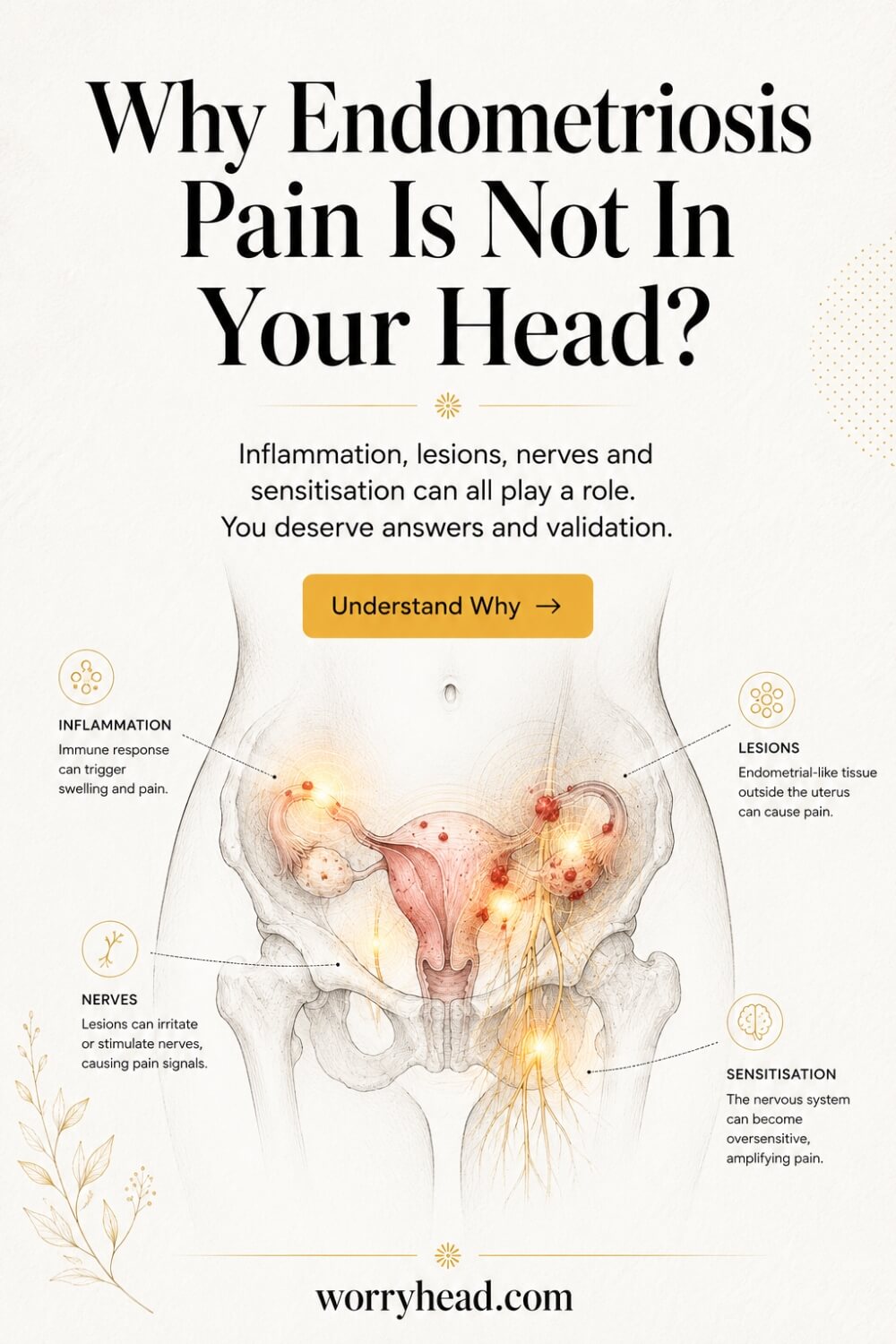
Endometriosis pain is not imaginary or “in your head”. Research links it to inflamed lesions, nerves, immune changes, adhesions, scar tissue, pelvic floor guarding and central sensitisation, where the nervous system becomes too alert after long-term pain signals and keeps sounding alarms.
I am not a clinician, but I write as a husband, blogger and researcher who has spent years learning beside my wife, and at the bottom of this article I have attached the medical sources I used to understand the health facts, including WHO, NICE, NHS, ESHRE and published studies.
One of the most painful parts of endometriosis is that the disease can be present even when basic tests look normal, and the severity of pain does not always match what someone sees on a scan or during a quick appointment. That gap between what a woman feels and what the world can measure is where so much emotional damage happens.
Endometriosis pain may come from several places at once, including inflammation, irritated pelvic nerves, deep lesions, bowel or bladder involvement, painful sex, painful periods, painful bowel movements, fatigue, and a sensitised nervous system that has been pushed for too long.
This is why a woman can feel pain in her pelvis, back, hips, legs, rectum, bladder, abdomen, or even feel pain that seems to move, flare, burn, stab, pull, or crush her without warning.
I have seen this with my wife. I have watched pain change her body, her energy, her confidence, her mood, and the way she moved through the day, yet I also saw how often the world expected her to keep functioning as if nothing serious was happening.
And that is one of the reasons I write, because behind every medical word there is a woman trying to survive a body that keeps asking more from her than anyone can see.
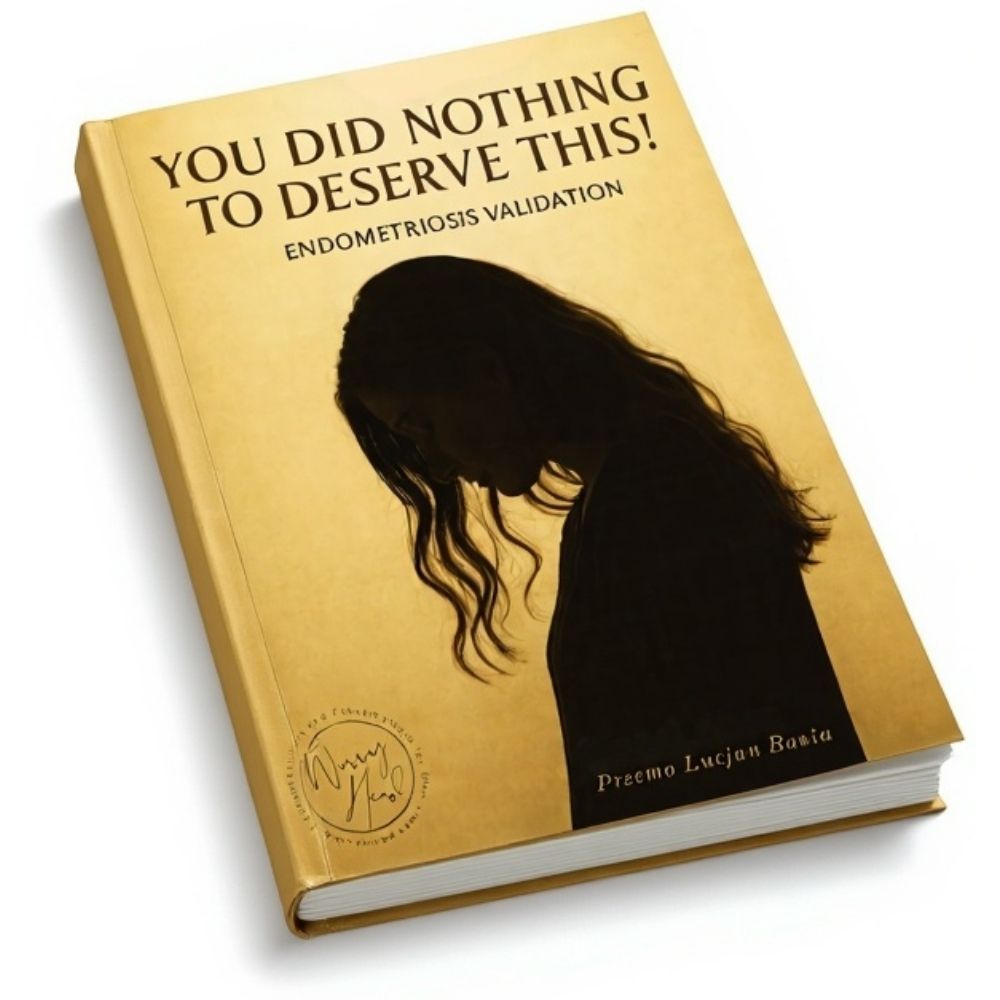
If this already feels close to home, you can also grab my free 130+ page eBook, “You Did Nothing To Deserve This!”, written to validate the feelings of women with endometriosis. By joining our community, you will also receive more freebies, big discounts on all our books, and gentle, honest emails that help you and the people who love you adjust to the new normal chronic illness can bring into your relationship and life.
The book is filled with 20 chapters of gentle validation for women with endo, written by yours truly, as I have seen it up close...
- This Was Never Your Fault
- The Girl You Used To Be
- When Your Own Body Feels Like an Enemy
- The Invisible Battles Nobody Sees
- Am I Just Lazy? – The Lie You Have Been Taught
- Gaslighting, Dismissal and the Trauma of Not Being Believed
- Guilt: The Weight You Were Never Meant to Carry
- Love in the Middle of Pain
- Intimacy When Your Body Hurts
- The Loneliness of Being the Strong One
- You Are Allowed To Take Up Space
- Tiny, Gentle Hopes (Not Toxic Positivity)
- If You Could Hear My Voice Every Flare Day
- You Deserve Partners, Not Witnesses
- When You Wish He Understood
- Motherhood, Fertility and the Grief Nobody Sees
- When Anger Is the Only Honest Feeling
- Learning to Trust Your Body Again
- Building a Life That Fits Your Reality
- You Did Nothing To Deserve This
You Did NOTHING To Deserve This!
Endometriosis Validation for Women with Endo
- You Did NOTHING To Deserve This!
- Why Endometriosis Pain Is Not In Your Head When Nobody Can See It?
- Why Endometriosis Pain Is Not In Your Head Even When You Start Doubting Yourself?
- Why Endometriosis Pain Is Not In Your Head Inside A Relationship?
- Final Word On Why Endometriosis Pain Is Not In Your Head
- Why Endometriosis Pain Is Not In Your Head FAQ
- Why Endometriosis Pain Is Not In Your Head References
- FREE eBook
Why Endometriosis Pain Is Not In Your Head When Nobody Can See It?
Pain becomes even harder to carry when the people around you only believe what they can see. A broken bone shows on an X-ray, a bleeding cut can be cleaned and bandaged, but endometriosis often hides inside the pelvis, behind organs, around tissues, or within areas that are not easy to examine during a rushed appointment.
That is why so many women are left trying to explain pain that feels enormous while being handed results that sound small, vague, or “normal”.
But normal-looking tests do not automatically mean a normal body experience, and this is where many women are emotionally wounded before they are properly helped.
Endometriosis can cause pain through inflammation, tissue irritation, hormonal activity, scar tissue, adhesions, pelvic floor tightening, nerve involvement, and the way the nervous system learns from repeated pain.
Some lesions can create their own local inflammatory environment, almost like a small fire that keeps sending chemical messages to nearby nerves.
Those nerves can become more sensitive over time, meaning the same movement, pressure, bowel activity, period change, or intimate touch can feel far more painful than it should.
This is not weakness, drama, or a low pain threshold.
It is biology, and the phrase why endometriosis pain is not in your head exists because too many women have been made to defend pain that medicine itself now recognises as complex. One of the most important things to understand is that endo pain does not always match the stage of disease.
A woman with a few visible lesions can be in agony, while another woman with severe-looking disease may feel less pain, because pain depends on much more than the number of implants.
It depends on location, depth, nerves, inflammation, previous surgery, muscle guarding, immune activity, bowel or bladder involvement, and whether the brain and spinal cord have become trained to expect danger.
This is called sensitisation, and it does not mean pain is fake. It means the alarm system has been forced to ring for so long that it can become louder, faster, and harder to calm.
I wish more partners understood this before asking, “But didn’t the doctor say it was fine?” Because those words can break a woman in a place no scan will ever show.
I have seen my wife try to explain pain while already exhausted from surviving it, and I have watched how disbelief can hurt almost as much as the flare itself.
There were times when I did not have the right words, but I learned that love sometimes begins with sitting beside her and saying, “I believe you,” before trying to fix anything.
That is why the next part matters, because validation is not just a kind sentence.
It becomes practical support when you learn what to notice, what to ask, and how to respond in a way that helps her feel less alone inside a body that keeps fighting her.
- Believe Her Before Asking For Proof
- Learn The Pain Patterns
- Track Symptoms Without Blaming
- Understand Nerve-Like Pain
- Respect Fatigue After Flares
- Support Medical Self-Advocacy
- Reduce Pressure Around Intimacy
- Help Her Feel Safe Again

Believe Her Before Asking for Proof
One of the most healing things you can give a woman with endometriosis is belief before interrogation. I say this because pain already puts her on trial inside her own body, and when the people closest to her ask for proof before compassion, it can make her feel even more alone.
You do not need to understand every medical pathway before you say, “I believe you.” You do not need to see the lesion, scan the pelvis, or feel the stabbing pain yourself before you accept that what she is describing is real.
I learned this with my wife, not perfectly at first, but painfully and honestly over time. Sometimes the most loving response was not another question, another suggestion, or another attempt to compare her pain with something I understood. Sometimes it was simply sitting beside her, lowering my voice, and letting her know she did not have to defend her suffering to be worthy of tenderness.
Learn the Pain Patterns
Endometriosis pain can have patterns, but those patterns are not always tidy. It may worsen before a period, during bleeding, around ovulation, after sex, after bowel movements, during urination, after stress, after physical strain, or after a day that looked “normal” from the outside but cost her everything inside.
Learning her pattern does not mean trying to control her body. It means becoming less surprised, less dismissive, and more prepared when pain arrives.
With my wife, I began to understand that some days were not just “bad days”. They were part of a rhythm her body had been forced into, and when I noticed that rhythm, I could support her better. I could help reduce pressure, plan gentler evenings, avoid adding guilt, and stop expecting the same version of her every day.
That matters because a woman with endometriosis is often already blaming herself for being unpredictable. She does not need the people she loves to join that blame.
Track Symptoms Without Blaming
Symptom tracking can be useful, but it must never feel like surveillance. A diary, notes app, calendar, or pain scale can help spot links between pain, bleeding, bowel symptoms, bladder symptoms, fatigue, mood, sleep, sex, food, stress, and appointments, but the purpose should be support, not judgement.
The difference is in the tone. “Let’s see what might help you” feels different from “What did you do wrong this time?”
I think many partners make mistakes here because they want answers quickly. I understand that. When you love someone, you want to find the pattern, remove the trigger, and rescue her from the next flare. But endometriosis is not always that simple.
Tracking should help her feel believed when she speaks to doctors. It should help her remember details when brain fog, fatigue, and pain make everything blur together. It should never become another reason for her to feel that her pain is her fault.
Understand Nerve-Like Pain
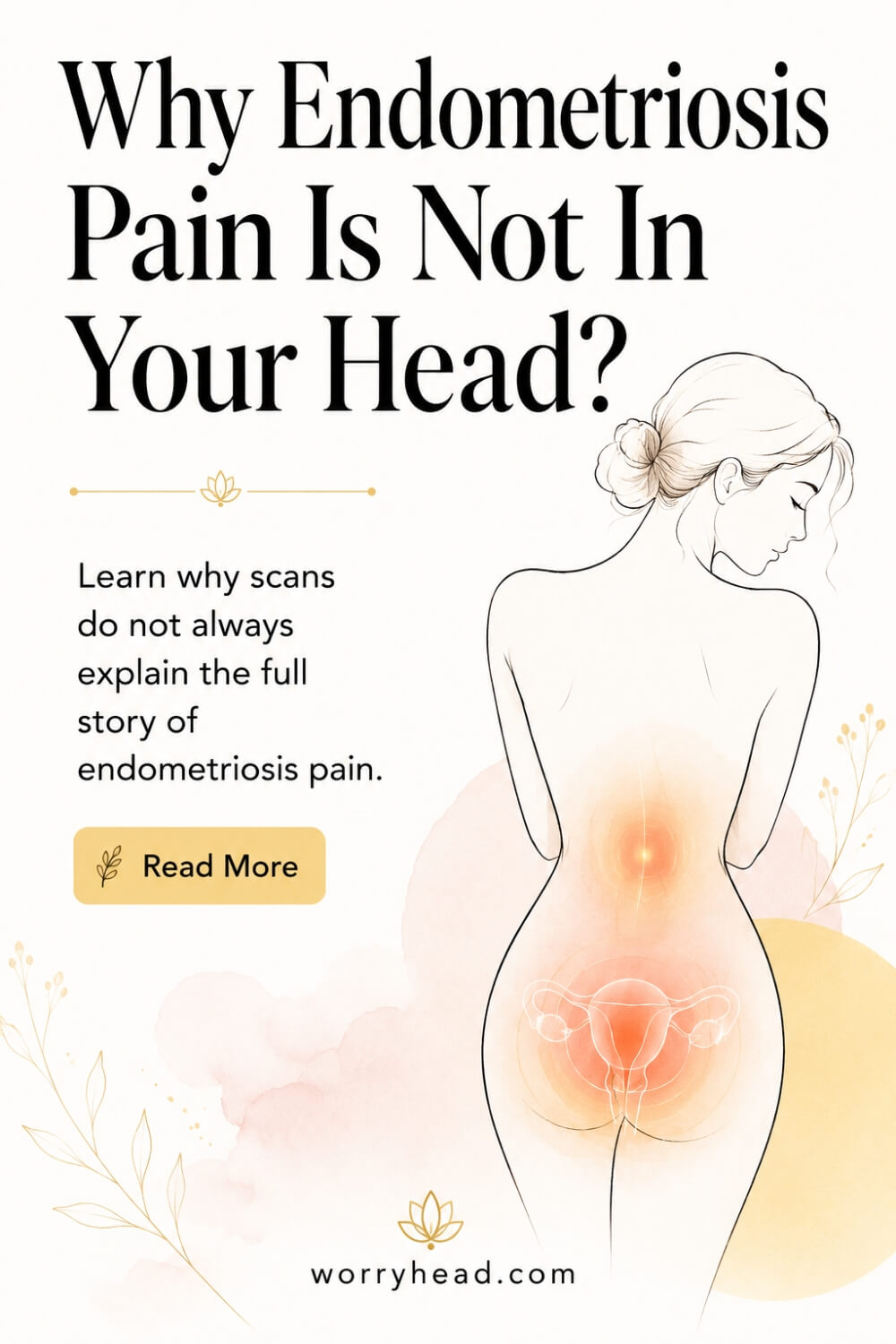
Some endometriosis pain feels deep, heavy, cramping, or dragging, but some can feel sharp, burning, electric, stabbing, tingling, numb, pulling, or shooting. When pain has that nerve-like quality, it can frighten a woman because it may travel into the back, hips, groin, legs, rectum, bladder area, or abdominal wall in ways that do not feel easy to explain.
This is one reason why pain can be dismissed. People expect pelvic disease to cause only pelvic pain, but the body is connected through nerves, muscles, fascia, organs, and the spinal cord.
When my wife described pains that did not fit a neat textbook sentence, I had to learn not to reduce her experience just because I could not immediately map it. Pain that travels is not automatically imagined. Burning pain is not automatically anxiety. Sensitivity to touch, clothing, pressure, or movement can be part of a sensitised pain system that has been pushed too hard for too long.
Respect Fatigue After Flares
Endometriosis pain does not always end when the worst cramp passes. A flare can leave a woman drained, shaky, tearful, foggy, nauseous, heavy, and emotionally raw, almost as if her body has spent the whole day fighting a battle no one else witnessed.
This is why saying, “but the pain is better now”, can hurt. Better does not always mean recovered.
I have seen my wife survive pain and then still have to survive the aftermath. The room may look calm again, but inside her body there can still be exhaustion, inflammation, poor sleep, tension, and fear of the next wave. That kind of fatigue is not laziness.
A supportive partner learns to respect the recovery period, not just the crisis. That may mean lowering expectations, helping with practical tasks, protecting quiet time, or simply not making her explain why she still cannot be “normal” after the worst part has passed.
Support Medical Self-Advocacy
Many women with endometriosis have spent years trying to be taken seriously, and by the time they reach another appointment, they may already feel tired, nervous, or afraid of being dismissed again. Supporting medical self-advocacy does not mean speaking over her or taking control. It means helping her feel less alone while she speaks for herself.
That may mean helping her write down symptoms, dates, questions, medication effects, pain locations, bowel or bladder changes, bleeding patterns, fertility concerns, and how the condition affects daily life.
It may also mean gently reminding her that she deserves answers, not because she is difficult, but because she is living with something that affects her body, relationships, work, sleep, and mental health.
I learned that my wife did not always need me to be loud. Sometimes she needed me to be steady. A calm witness can matter when pain has made someone feel invisible for years.
Reduce Pressure Around Intimacy
Endometriosis can affect intimacy in a way that reaches far beyond the bedroom. Pain during or after sex, fear of flares, pelvic floor tension, bleeding, bloating, fatigue, low mood, body shame, infertility fears, or past dismissal can make closeness feel emotionally complicated.
For a woman, this can be heartbreaking because she may still love her partner deeply while her body says no. That never should be treated as rejection.
As a husband, I believe men need to hear this clearly. Your need for closeness matters, but her safety matters too. If intimacy becomes a place where she feels pressure, guilt, or fear, the relationship can become another source of pain instead of comfort.
Gentleness means finding ways to stay connected without demanding proof of love through physical availability. Holding her, reassuring her, laughing with her, making tea, touching without expectation, and letting her feel wanted without being pushed can help her body feel safer again.
Help Her Feel Safe Again
Endometriosis does not only attack comfort. It can attack safety. A woman may stop trusting her body because pain can arrive at work, in the car, during intimacy, during sleep, at family events, on holidays, or on days she desperately wanted to enjoy.
That unpredictability can make her world smaller. She may cancel plans, avoid certain clothes, fear eating out, worry about toilets, carry medication, hide heating pads, or smile through pain because she is tired of explaining.
Helping her feel safe again does not always require a grand gesture. It can be as simple as believing her when she says she needs to leave. It can be planning rest before and after events, checking whether she needs anything without making her feel like a burden, or protecting her from comments that minimise her pain.
When a woman feels safe with you, she does not have to perform wellness to be loved. She can just be human.
Why Endometriosis Pain Is Not In Your Head Even When You Start Doubting Yourself?
There is a kind of doubt that creeps in after years of being dismissed, and I think many women with endometriosis know it too well.
It does not always begin because you truly believe the pain is imaginary, but because too many people have treated your pain as if it needs a better performance before it deserves help.
When you are told your tests are normal, your periods are just bad, your stress is the problem, or your pain is something you should learn to live with, you may slowly start questioning your own reality.
That is not because you are weak; it is because repeated dismissal can make even a strong woman feel unsure of the truth she feels in her own body.
This is why the words why endometriosis pain is not in your head are not only medical words, but emotional ones too.
They speak to the woman who has lain in bed with pelvic pain, bowel pain, bladder pressure, backache, hip pain, stabbing rectal pain, painful sex, nausea, fatigue, or flare-ups so intense that she could barely think, while still wondering whether she was being “too much”.
I want you to know that pain can become complicated without becoming fake.
When endometriosis irritates tissues, inflames the pelvis, affects nerves, creates adhesions, or keeps sending danger signals for years, the body can begin to respond faster and louder than before.
That means pain may remain even when one lesion is removed, even when hormones calm some symptoms, or even when someone else thinks the worst part should be over.
A body that has been hurt for years may need more than one answer, and that does not make your suffering less real.
I have watched my wife carry this invisible war while still trying to be kind, functional, present, and loving. There were days when I could see the effort in her face before she even said a word, and those were the moments that taught me pain does not need to scream to be serious.
As her husband, I learned that disbelief can make a woman feel abandoned inside her own skin.
But belief, steady love, and proper support can give her back a small piece of safety, especially when the world has made her feel like she has to prove the pain that already stole so much from her.
Why Endometriosis Pain Is Not In Your Head Inside A Relationship?
Endometriosis does not stay neatly inside the body of the woman who has it.
It walks into the relationship too, often quietly at first, then more loudly when pain starts changing plans, intimacy, sleep, work, patience, confidence, and the emotional temperature of the home.
This is one reason why endometriosis pain is not in your head and has to be understood by partners, not only by the woman living with it.
When pain is treated as imaginary, exaggerated, or purely emotional, the woman is not only medically dismissed; she can begin to feel emotionally unsafe with the person who should be closest to her.
I have felt this in my own marriage, not as the one suffering inside the disease, but as the man standing beside the woman I love while watching pain take pieces of her day that no one else saw. There were times when my wife needed rest, and I had to learn that rest was not rejection, silence was not coldness, and tears were not weakness.
Endometriosis can make a woman feel guilty for needing help, guilty for cancelling plans, guilty for not being intimate, guilty for being tired, and guilty for not being the version of herself she remembers. A partner who does not understand this can accidentally add more weight by asking for normality when her body is already begging for mercy.
But when a partner does understand, something softens.
She does not have to spend her little energy proving pain before receiving kindness, and he does not have to feel useless, because support becomes something real, practical, and deeply human.
For me, love became less about dramatic gestures and more about learning her body’s limits without making her feel limited as a woman. It became listening before advising, holding before fixing, and reminding her that pain may change the day, but it does not make her less lovable, less wanted, or less worthy of being chosen again.
Final Word On Why Endometriosis Pain Is Not In Your Head
If there is one thing I want you to take from this article, it is this: your pain does not need to be visible to be valid. You do not need to collapse in front of someone, cry loudly enough, bleed heavily enough, explain perfectly enough, or have the “right” scan result before you deserve belief.
Endometriosis pain can be confusing because it does not always follow simple rules. It can flare with your period, but it can also hurt outside your period. It can feel deep in the pelvis, but it can also travel into your back, hips, legs, bladder, bowel, rectum, abdomen, or whole nervous system. It can be sharp one day, heavy the next, burning another day, and exhausting every day after.
That does not make you dramatic. That makes you someone living with a disease that can affect tissues, nerves, inflammation, hormones, muscles, sleep, energy, mood, intimacy, confidence, work, and relationships.
This is why I feel so strongly about the words why endometriosis pain is not in your head. They are not just an SEO phrase to me. They are something I wish more women had heard before years of dismissal damaged the way they saw themselves.
Because when a woman is dismissed often enough, she may begin to apologise for pain she never chose. She may start hiding symptoms, pushing through work, smiling through family events, avoiding intimacy with guilt, and pretending she is coping because explaining it again feels too painful.
I have seen that kind of quiet survival in my wife. I have seen the difference between a woman having a painful day and a woman who has spent years being forced to function through pain. Those are not the same thing. One is a symptom. The other becomes a way of living that slowly steals softness from the body and safety from the mind.
As a husband, I cannot take her endometriosis away. I cannot step inside her body and carry the flare for her. But I can believe her. I can learn. I can listen without making her defend herself. I can protect her from pressure when she is already carrying too much. I can remind her that she is still loved, still wanted, still beautiful, and still fully herself, even on the days pain makes her feel like a shadow of who she used to be.
And if you are the woman reading this, I hope these words reach the part of you that has been tired of explaining. Your pain is real. Your exhaustion is real. Your fear is real. Your grief is real. Your need for support is real.
You are not weak because your body hurts. You are not difficult because your life needs adjusting. You are not less of a woman because endometriosis changed parts of your story.
- You deserved belief before you ever had to fight for it.
- You deserved tenderness before you ever had to prove pain.
- You deserved support before you were pushed to breaking point.
Endometriosis may live in the body, but the disbelief around it can wound the heart. That is why validation matters. Not as pity, not as empty comfort, but as a beginning of safety, dignity, and healing.
You did nothing to deserve this, and you should never have been made to feel that this real pain was something you imagined.
Your pain is not proof that you are broken. It is proof that your body has been fighting something real, often for far too long, while you kept going with more strength than people ever noticed. You deserve answers, compassion, proper care, and love that believes you before the world demands proof.
If this spoke to you, I would love you to leave a comment and share what part of endometriosis pain has been hardest for others to understand. You can also check out the free chapter of my eBook, “You Did Nothing To Deserve This!”, written to help you feel seen, believed, and less alone.


About Me
Hi, I’m Lucjan! The reason why I decided to create this blog was my beautiful wife, who experienced a lot of pain in life, but also the lack of information about endometriosis and fibromyalgia for men…
READ MORE
Grab a FREE eBook!
“You Did NOTHING To Deserve This!”
Finally hear the words nobody ever said to you, that your pain is real, your tears make sense, and you did nothing to deserve endometriosis, the dismissal, or the way it has rewritten your life.
Why Endometriosis Pain Is Not In Your Head FAQ
1. Is Endometriosis Pain Really Physical?
Yes, endometriosis pain is real physical pain, not something imagined, exaggerated, or created by weakness. It can come from inflamed endometriosis lesions, irritated pelvic tissue, scar tissue, adhesions, painful muscle guarding, nerve sensitivity, bowel or bladder involvement, and changes in how the nervous system processes repeated pain signals.
What makes it so confusing is that the pain does not always match what someone sees on a scan or during a basic examination. A woman can have severe pain even when tests look “normal”, and that does not mean her body is lying. It often means the pain is more complex than one simple test can explain.
2. Why Do Doctors Sometimes Miss Endometriosis Pain?
Doctors may miss endometriosis pain because the disease can be difficult to see, symptoms can overlap with other conditions, and not every scan or examination shows every type of endometriosis. Some lesions may be small, deep, hidden behind organs, or located in areas that need specialist imaging or expert assessment.
Another reason is that many women are still told that painful periods are normal, stress-related, or part of being a woman. That delay in being believed can make the emotional side of endometriosis even heavier. Being missed does not mean your pain is not real. It means the system has not looked deeply enough yet.
3. Can Endometriosis Cause Pain Outside The Pelvis?
Yes, endometriosis can be linked with pain beyond the pelvis, especially when nerves, muscles, inflammation, bowel symptoms, bladder symptoms, scar tissue, or central sensitisation are involved. Some women feel pain in the lower back, hips, legs, rectum, abdomen, bladder area, or during bowel movements, urination, or intimacy.
This is why endometriosis can feel so frightening. The pain may move, change shape, or appear in places that make you wonder whether something else is happening. You should always seek proper medical advice for new, severe, or unusual symptoms, but pain outside the pelvis does not automatically mean you are imagining it.
4. Why Does Endometriosis Pain Continue After Treatment?
Endometriosis pain can sometimes continue after treatment because pain may come from more than visible lesions alone. Surgery, hormones, or medication may help many women, but ongoing pain can also involve adhesions, pelvic floor tension, nerve irritation, inflammation, bowel or bladder issues, scar sensitivity, or a nervous system that has become overprotective after years of pain.
This does not mean treatment failed completely or that the pain is “all in your head”. It means the body may need a wider support plan. Some women need specialist endometriosis care, pelvic physiotherapy, pain management, mental health support, nutrition guidance, and relationship support alongside medical treatment.
5. How Can A Partner Support Endometriosis Pain Better?
A partner can support endometriosis pain better by believing her first, listening without rushing to fix, learning her flare patterns, helping with practical tasks, reducing pressure around intimacy, and reminding her that pain does not make her less loved or less wanted. Small steady actions often matter more than dramatic promises.
For men especially, support begins when we stop treating her pain as an inconvenience and start seeing it as something she is forced to survive. She may not need perfect words. She may need calmness, patience, warmth, and the safety of knowing she does not have to prove her pain before receiving love.
Why Endometriosis Pain Is Not In Your Head References
- https://www.nice.org.uk/guidance/ng73
- https://www.nice.org.uk/news/articles/nice-updated-guideline-to-improve-the-diagnosis-of-endometriosis
- https://www.nhs.uk/conditions/endometriosis/
- https://www.eshre.eu/Guideline/Endometriosis
- https://pubmed.ncbi.nlm.nih.gov/35350465/
- https://pmc.ncbi.nlm.nih.gov/articles/PMC6514255/
- https://pubmed.ncbi.nlm.nih.gov/31190954/
- https://pubmed.ncbi.nlm.nih.gov/37751146/
- https://pubmed.ncbi.nlm.nih.gov/14622679/
- https://pubmed.ncbi.nlm.nih.gov/36303969/
- https://pmc.ncbi.nlm.nih.gov/articles/PMC7573391/
- https://www.mayoclinic.org/diseases-conditions/endometriosis/symptoms-causes/syc-20354656
