Why Endometriosis Makes You Miss Your Old Life?
Have you ever looked at an old photo of yourself and wondered where that woman went? The honest answer to why endometriosis makes you miss your old life is not only about pain, but about losing the version of yourself who could plan, move, love, work, dance, rest, and trust her own body without fear.
If you miss her, you are not being dramatic, ungrateful, weak, or stuck in the past.
Endometriosis can make you miss your old life because chronic pain, fatigue, bleeding, bloating, sex pain, fertility fears, medical dismissal, and lost plans can change your body, identity, work, relationships, and freedom until the woman you used to be feels painfully far away, while you go on.
I am not a clinician, and I do not write to replace medical care, but I write as a husband, blogger, and researcher who has lived beside this disease for years, and at the bottom of this article I have added the sources I used to learn the medical context and health facts, including WHO, NICE, NHS, ESHRE, studies, and patient reports.
What many articles still fail to say clearly enough is that endometriosis does not only attack the pelvis. It can attack your sense of time, choice, femininity, confidence, intimacy, work, friendships, and future.
Medical sources describe severe period pain, chronic pelvic pain, heavy bleeding, fatigue, infertility, painful sex, bowel and bladder symptoms, depression, anxiety, and reduced quality of life, but behind every one of those phrases is a woman quietly adjusting her whole life around a body that keeps changing the rules.
And when diagnosis takes years, when symptoms are normalised, when scans are called “fine,” when people tell you to push through, you can begin grieving long before anyone gives that grief a name. You may miss the woman who said yes without calculating pain, wore clothes without worrying about bloating, enjoyed sex without fear, worked without crashing, travelled without panic, and believed tomorrow would feel like hers.
My wife was a dancer, choreographer, and performer, a woman who lived for the beauty of movement, the stage, music, rhythm, expression, and the joy of running dance school and social clubs in central London. Endometriosis slowly stole pieces of that dream from her, and now, even as a medical secretary working from home, she still struggles physically and mentally because her body carries endo alongside adenomyosis and fibro.
My wife began losing herself piece by piece. The guilt, the feeling of a burden, the cancelled plans and disappointed friends… all have torn her apart, to the point she asked me to divorce her, and even wanted to take her own life.
Luckily, she’s safe, and our marriage blossomed since…
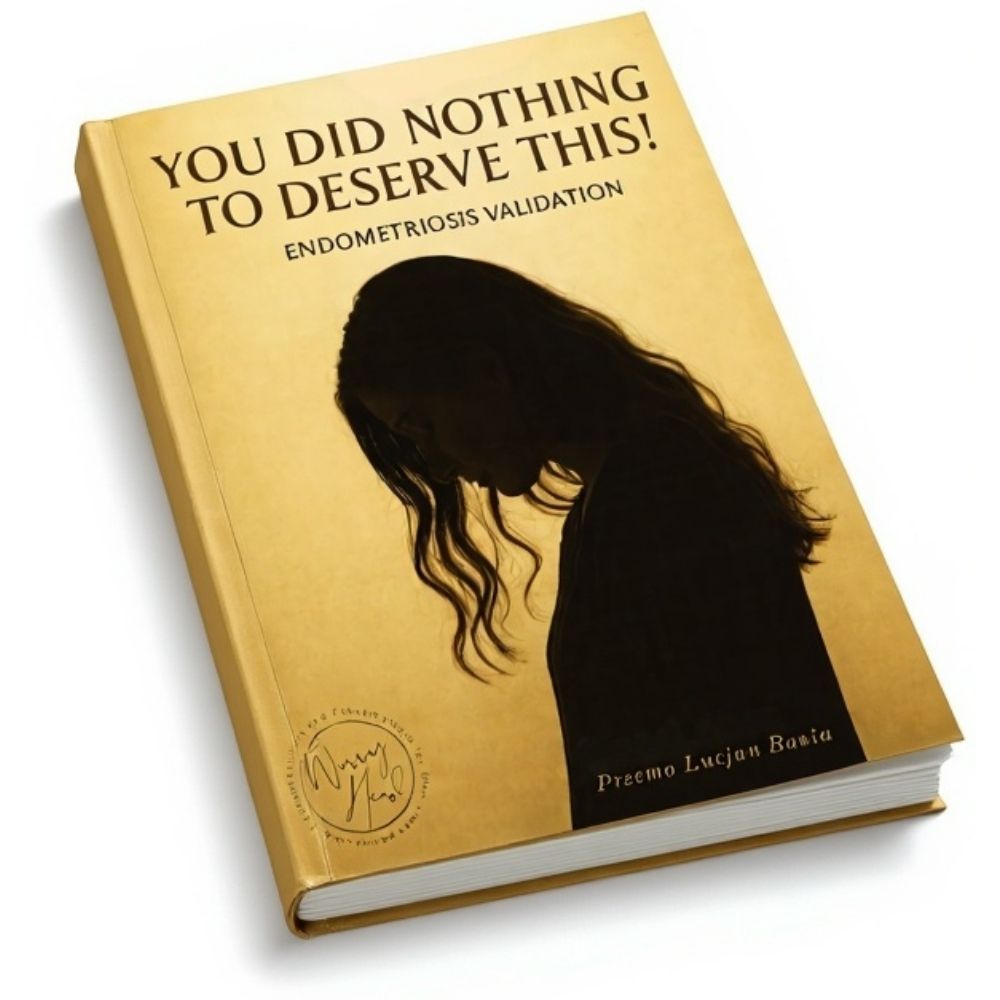
If this already feels close to your heart, you can grab my FREE 130+ page eBook, “You Did Nothing To Deserve This!”, written to validate the feelings of women with endometriosis. By grabbing it, you also join our community, where I share more freebies, big discounts on our books, and gentle, honest emails that help you and your relationship adjust to the new normal chronic illness brings.
The book is filled with 20 chapters of gentle validation for women with endo, including:
- This Was Never Your Fault
- The Girl You Used To Be
- When Your Own Body Feels Like an Enemy
- The Invisible Battles Nobody Sees
- Am I Just Lazy? – The Lie You Have Been Taught
- Gaslighting, Dismissal and the Trauma of Not Being Believed
- Guilt: The Weight You Were Never Meant to Carry
- Love in the Middle of Pain
- Intimacy When Your Body Hurts
- The Loneliness of Being the Strong One
- You Are Allowed To Take Up Space
- Tiny, Gentle Hopes (Not Toxic Positivity)
- If You Could Hear My Voice Every Flare Day
- You Deserve Partners, Not Witnesses
- When You Wish He Understood
- Motherhood, Fertility and the Grief Nobody Sees
- When Anger Is the Only Honest Feeling
- Learning to Trust Your Body Again
- Building a Life That Fits Your Reality
- You Did Nothing To Deserve This
You Did NOTHING To Deserve This!
Endometriosis Validation for Women with Endo
- You Did NOTHING To Deserve This!
- Why Endometriosis Makes You Miss Your Old Life in Everyday Moments?
- Why Endometriosis Makes You Miss Your Old Life After Everyone Else Moves On?
- Why Endometriosis Makes You Miss Your Old Life When Love Has to Change Shape?
- When to Seek Medical Help?
- Questions to Ask Your Doctor
- Final Word on Why Endometriosis Makes You Miss Your Old Life
- FREE eBook
Why Endometriosis Makes You Miss Your Old Life in Everyday Moments?
The reason why endometriosis makes you miss your old life is that it does not only interrupt the painful days; it interrupts the ordinary days you used to take for granted. It can make you miss waking up and trusting your body before your feet even touch the floor. It can make you miss getting dressed without wondering if your belly will swell, if your clothes will hurt, or if the waistband will feel like punishment by lunchtime.
You may miss the version of yourself who could make plans without needing a private escape route. You may miss saying yes to a meal, a walk, a party, a holiday, intimacy, work, or exercise without quietly calculating pain, bleeding, fatigue, toilet access, medication, recovery time, and whether you will pay for it later.
That kind of planning is not laziness, and it is not negativity; it is what happens when your nervous system learns that “normal life” can suddenly become unsafe.
Endometriosis can bring severe period pain, pelvic pain outside the period, pain during or after sex, pain when opening the bowels or passing urine, heavy bleeding, fatigue, low mood, anxiety, and fertility worries. But even that list does not explain what it feels like when your body becomes unpredictable. A symptom list can tell someone what hurts, but it cannot fully explain the grief of losing spontaneity.
You may still look like yourself to the outside world, which is one of the cruellest parts. People may see your smile, your makeup, your job, your relationship, your social media photo, or your polite “I’m okay,” and never realise how much preparation went into appearing normal for one hour. That invisibility can make you feel lonely even in a room full of people.
Missing your old life can also be tied to the way endometriosis changes your identity. You are not only missing activities, but you may be missing the woman who felt sexy without fear, productive without crashing, social without pretending, and hopeful without having to protect herself from disappointment.
That does not mean the old you is gone forever, but it may mean the new you needs tenderness instead of pressure.
I have seen how painful this can be from the side of the man who loves the woman going through it. I have watched my wife mourn movement, dance, freedom, confidence, and the kind of life that once came through her body like music.
When you love a woman with endometriosis, you learn that sometimes the hardest pain is not the pain she can point to, but the life she keeps quietly comparing today against.
That is why the next section matters, because missing your old life needs more than “stay positive” or “accept it.” You deserve practical, gentle ways to grieve, adapt, protect your energy, explain your needs, and rebuild a life that still feels like yours, even if it now has to be built with more care.
- Name The Grief Honestly
- Stop Blaming Your Body
- Protect Your Limited Energy
- Redefine Intimacy Without Shame
- Explain Pain Without Apologising
- Build A Softer Routine
- Let Your Partner Support You
- Keep One Piece Of Yourself
Name the Grief Honestly
The first thing I would say to you is this: missing your old life is grief, not weakness. You are allowed to grieve the body that used to feel more predictable, the plans you used to make without fear, the clothes you used to wear without thinking about swelling, and the version of yourself who did not have to explain pain before being believed.
I have seen my wife grieve pieces of herself that other people never even noticed were gone. Her dancing life, her confidence on stage, her freedom of movement, her social world, her natural spark.
When people only ask about pain scores, they may miss the deeper wound, which is the quiet heartbreak of thinking, “I used to be someone else.” Naming that grief does not trap you in sadness. It gives your heart permission to stop pretending that everything is fine when something precious really has changed.
Stop Blaming Your Body
It is easy to start thinking your body has betrayed you when endometriosis keeps interrupting your life. But your body is not your enemy, even when it feels like the place where the fight happens. Pain, fatigue, bloating, bleeding, bowel symptoms, bladder symptoms, and sex pain can make your own body feel unfamiliar, but it is still the body trying to carry you through something very hard.
I wish more partners understood this, because telling you to “be positive” can feel cruel when you are already doing your best to stay standing.
I have learned not to speak to my wife as if her body is failing her. I try to remind her that she is not broken, dirty, difficult, or less of a woman. She is living inside a body under pressure, and what she needs most is not blame, but softness, patience, and care that does not disappear on the hard days.
Protect Your Limited Energy
Endometriosis can make energy feel like money you never have enough of. You may wake up already tired, push through work, answer messages, look after everyone else, smile when you are aching, and then wonder why your body collapses later. That is not poor discipline. That is the cost of living with pain, inflammation, poor sleep, heavy symptoms, and the emotional effort of acting normal.
Protecting your energy is not selfish. It means learning what deserves your limited strength and what only drains you because you feel guilty. I saw my wife go from a woman who moved through dance, teaching, performance, and social connection to someone who had to think carefully about even ordinary tasks.
That change hurts. But conserving energy is not giving up on life. Sometimes it is the only way to keep enough of yourself left for the moments that matter.
Redefine Intimacy Without Shame
One of the most painful losses with endometriosis can be intimacy, especially if sex becomes painful, frightening, tense, or emotionally loaded. You may miss feeling relaxed in your own skin. You may miss desire without fear, closeness without bracing, and touch that did not come with calculations about pain afterwards. That loss can create guilt, even though none of it is your fault.
This is where a loving partner has to grow up emotionally. Intimacy should never become proof of your love, and your pain should never be treated like rejection. I had to learn that support is not only about being patient, but about making my wife feel safe enough to be honest.
Real intimacy can become gentler, slower, more communicative, and less focused on performance. You are still desirable. You are still worthy of tenderness. Your body deserves respect before expectation.
Explain Pain Without Apologising
You should not have to apologise for describing what is happening inside your body. I know many women learn to soften their words because they fear being judged, dismissed, or seen as dramatic. So they say “I’m uncomfortable” when the truth is they are in deep pelvic pain, rectal pain, stabbing pain, burning pain, or exhaustion so heavy it feels impossible to explain.
When you explain your pain, try to describe how it affects your function, not only how it feels…
- “I cannot sit through dinner.”
- “I need to lie down after work.”
- “Sex hurts afterwards.”
- “My bowel symptoms get worse around my period.”
These sentences matter. They help doctors, partners, family, and even yourself understand the real-life impact. You are not asking for pity. You are giving accurate information about a disease that has already taken enough from you. Your voice is part of your care.
Build a Softer Routine
A softer routine is not a smaller life. It is a life built with more mercy. Endometriosis often punishes the old style of pushing, forcing, overcommitting, and pretending you can do everything the way you used to. You may still want the old pace, but your body may need more pauses, more warmth, more flexible plans, more comfortable clothes, and more recovery built into the week.
In our home, I learned that love often lives in practical adjustments. It is making the day easier before everything breaks. It is planning around symptoms without making my wife feel like a burden. It is understanding that working from home can still be physically and mentally draining when pain follows you from room to room.
A softer routine does not mean endometriosis wins. It means you stop building your life around punishment and start building it around care.
Let Your Partner Support You
Letting someone support you can feel frightening when you have spent years being dismissed or misunderstood.
You may worry that you are too much, that your symptoms will become tiring, or that your partner will secretly resent the life endometriosis has changed. I understand that fear because I have seen how hard it is for my wife to need help when she used to be so fiercely capable.
But love is not only there for the easy version of you. A good partner should learn your symptoms, believe you faster, help with practical things, protect your dignity, and stay emotionally present without making your illness about himself.
I do not say this because I am perfect. I have made mistakes. But I know this now: when a woman is already fighting her body, the man beside her should not become another place where she has to defend herself.
Keep One Piece of Yourself
When endometriosis takes so much, it becomes important to protect one piece of yourself that still feels yours. It may not be the same thing you had before. It may not be dancing on stage, travelling freely, working long hours, training hard, or being social every weekend. It may be music, writing, gentle movement, beauty, faith, learning, a quiet hobby, or simply the way you speak kindly to yourself.
For my wife, losing dance was not only losing exercise. It was losing expression, identity, community, and the world where her body once felt powerful. That taught me something I will never forget.
Chronic illness can shrink life if everything becomes only appointments, symptoms, fear, and survival.
So keep one piece of yourself close. Not to prove you are fine, but to remind yourself that you are still here, still a woman, still more than endometriosis.
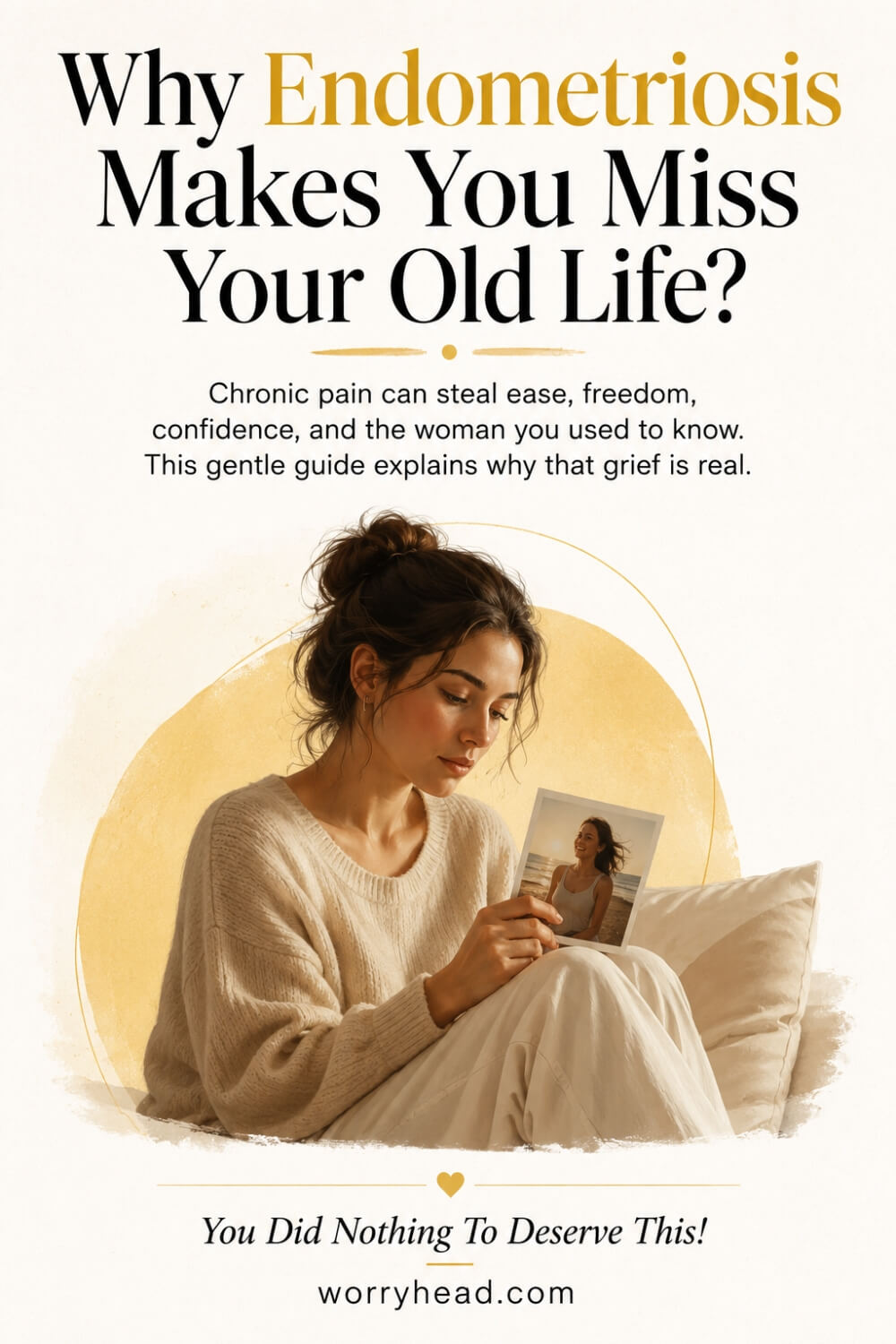
Why Endometriosis Makes You Miss Your Old Life After Everyone Else Moves On?
One of the hardest things about why endometriosis makes you miss your old life is that the world does not stop long enough to understand what you have lost.
People may care at first, especially around surgery, diagnosis, a flare, or a frightening appointment, but then life carries on, and you are still left living inside the same changed body. That can feel painfully unfair, because you are expected to adapt quietly to something that changed almost everything.
There is a kind of grief that comes when your calendar no longer feels like it belongs to you. You may look at invitations, work plans, family events, holidays, birthdays, date nights, or even simple weekends and feel that sharp little ache of remembering when life felt easier to enter. Not perfect, not painless, not magical, just easier.
Endometriosis can make you feel as if you are watching other people live with a kind of freedom you used to have. They can make plans without checking symptoms, choose clothes without thinking about bloating, enjoy intimacy without bracing, and talk about the future without silently wondering if their body will allow it. That comparison can hurt, even when you love the people around you and do not resent them.
I have seen that kind of quiet pain in my wife’s eyes, and it is a look I will never forget. It is not only physical suffering. It is the sadness of a woman who once trusted movement, music, performance, and her own strength, now having to measure her day around pain, fatigue, and what her body might take from her next.
As her husband, I had to learn that comfort does not always mean fixing something. Sometimes comfort means sitting beside her without rushing her grief, without trying to make her grateful for the life she still has, and without turning her pain into a lesson too quickly. A woman does not need to be told to look on the bright side when she is mourning a version of herself she loved.
She needs someone to say, “I see why this hurts.” She needs someone to understand that missing your old life does not mean you hate your current life. It means you are human, and something precious was interrupted before you were ready to let it go.
There is also a private fear that many women carry: “What if I never feel like myself again?”
That question can sit under the surface of pain, sex, work, friendships, fertility worries, body changes, and medical appointments. It can make you feel guilty for grieving, especially if other people keep reminding you that things could be worse.
But pain does not have to be the worst pain in the world to deserve compassion. Your loss does not have to be visible to be real. Your old life mattered because you mattered inside it.
And if nobody has said this to you gently enough, I will say it here: you are not wrong for missing the woman who could do more, dream more freely, move with less fear, and wake up without immediately negotiating with her body. She is not gone because you failed. She is part of you, and the life you build now should not erase her; it should honour her.
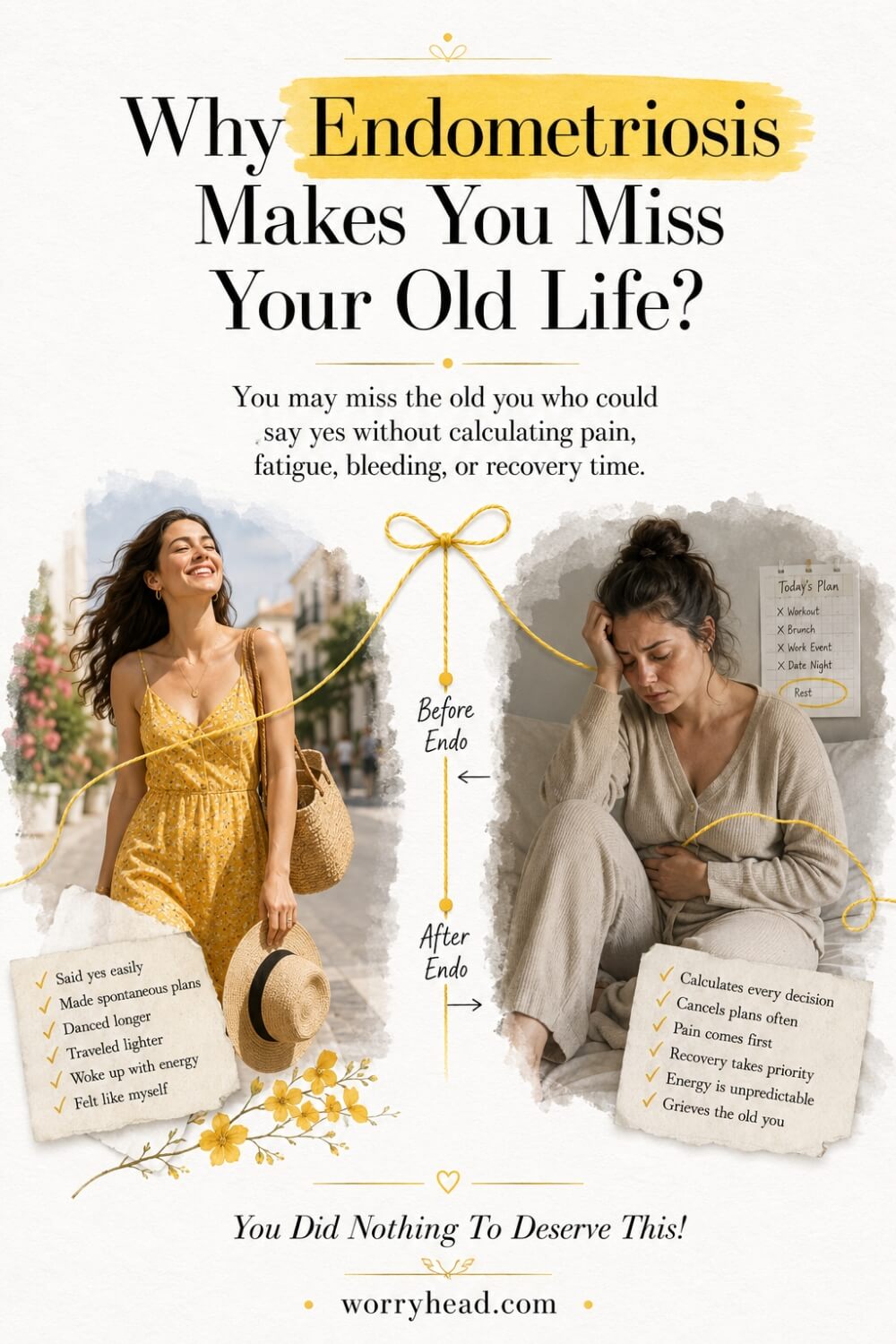
Why Endometriosis Makes You Miss Your Old Life When Love Has to Change Shape?
There is another reason why endometriosis makes you miss your old life, and it is the way love has to change shape when your body becomes unpredictable. You may miss the relationship you had before pain entered the room, before intimacy needed caution, before weekends needed recovery time, and before ordinary plans became small negotiations with your symptoms.
For my wife, endometriosis did not only affect her body, but it also affected the way she could show up in our marriage, her work, her confidence, and the quiet parts of her mind. I saw a woman who once expressed herself through dance slowly begin to fear the body that once gave her freedom, beauty, and purpose.
As her husband, I had to learn that support is not about demanding the old version of her back. It is about loving the woman in front of me so deeply that she does not feel punished for changing in ways she never chose.
This affects me too, but not in a way that makes me the victim of her disease. It affects me because love asks me to become steadier, softer, more observant, and less selfish when pain changes the rhythm of our life together.
It affects both of us when plans are cancelled, when intimacy needs patience, when she works from home but still finishes the day drained, when her body needs rest but her mind still wants a full life. It affects both of us when I can see sadness in her face because she remembers the woman who ran dance classes in central London, performed, taught, moved, laughed, and belonged so naturally to the world of movement.
But this is where love can either become another pressure or become a place of safety. I want the woman reading this to know that you do not have to earn tenderness by being easy to live with, sexually available, endlessly positive, or able to function like you used to.
And I want the partner reading this to understand that she may not only be grieving pain, but she also may be grieving identity, independence, sensuality, career, movement, and the old future she imagined with you. If you can hold that grief without making her defend it, you give her something medicine alone cannot give, which is the feeling that she is still loved while she is still becoming.
When to Seek Medical Help?
I want to say this gently, because I know how easy it is to minimise your own pain when you have been doing it for years. If endometriosis is affecting your everyday life, work, relationship, sleep, sex life, bowel habits, bladder symptoms, mental health, or ability to plan your day, that is already a valid reason to speak to a doctor. You do not have to wait until you cannot cope anymore before you deserve help.
Please do not measure your pain against someone else’s pain. Some women have severe disease and fewer symptoms, while others have symptoms that feel life-altering even when tests do not show the full picture straight away.
What matters is not whether you can “prove” every symptom perfectly in one appointment. What matters is that your symptoms are real, they are affecting your life, and they deserve to be taken seriously.
I would seek medical help if your period pain stops you from living normally, if pelvic pain happens outside your period, if sex is painful during or afterwards, if bowel movements or urination hurt around your cycle, if bleeding is heavy or irregular, if fatigue feels crushing, or if bloating and pelvic pressure keep returning in a pattern.
I would also speak to a doctor if you are struggling to get pregnant, because endometriosis can sometimes be linked with fertility problems, and you deserve answers without being made to wait silently.
If you have already tried treatment from your GP and your symptoms are not improving, or they are getting worse, it is reasonable to ask what the next step should be. That may include a pelvic examination if appropriate, imaging such as ultrasound, discussion of hormonal treatment, pain management, referral to gynaecology, or referral to an endometriosis specialist depending on your symptoms.
You are not being difficult by asking for a plan. You are trying to protect your future.
There are also times when you should not wait for a routine appointment. Sudden severe pelvic or abdominal pain, fainting, fever, vomiting that will not settle, very heavy bleeding, signs of infection after surgery, chest pain, trouble breathing, or pain and bleeding in pregnancy need urgent medical advice. I am saying this calmly, not to frighten you, but because you deserve to know when your body needs faster attention.
And if this disease has pushed your mind into a dark place, please treat that as seriously as physical pain. If you feel at risk of harming yourself, or you feel unable to stay safe, seek urgent crisis support in your country or contact emergency services.
Endometriosis can affect mental health deeply, and needing help does not make you weak. It means you have carried too much for too long without enough support.
When my wife struggled, I learned that the bravest thing was not pretending everything was fine. Sometimes the bravest thing was saying, “I cannot keep living like this without help.” That sentence can feel terrifying, but it can also be the beginning of being heard properly.
Questions to Ask Your Doctor
When you go to a doctor, it can help to bring notes because pain has a cruel way of making your mind go blank in the room. Write down when symptoms happen, how long they last, what makes them worse, what helps, how they affect work, sex, sleep, bowel movements, urination, energy, mood, and daily life. You are not writing a dramatic diary. You are bringing evidence from the life you actually live.
Here are questions I would gently encourage you to ask, or ask your partner to help you remember if you feel overwhelmed:
- Could my symptoms fit endometriosis, adenomyosis, fibroids, pelvic inflammatory disease, IBS, bladder pain syndrome, or another condition?
- What signs in my history make you think endometriosis is possible or less likely?
- What can we do now to manage my pain while we investigate further?
- Should I have a pelvic examination, ultrasound, transvaginal ultrasound, MRI, or referral to gynaecology?
- If my scan is normal, does that fully rule out endometriosis, or could deep or superficial disease still be missed?
- At what point should I be referred to an endometriosis specialist or specialist centre?
- What treatment options fit my symptoms, my age, my cycle, my mental health, my fertility wishes, and my tolerance for side effects?
- If you suggest hormonal treatment, what benefits, risks, side effects, and warning signs should I understand first?
- If pain during sex is part of my life, can we talk about pelvic floor support, pain management, and ways to protect intimacy without shame?
- If bowel, bladder, rectal, hip, back, leg, or nerve-like pain is present, should that change the referral or investigation plan?
- What should I do if symptoms flare badly before my next appointment?
- Can you write down the plan, including what we are trying first, when we review it, and what happens if it does not help?
I know it can feel intimidating to ask these questions, especially if you have been dismissed before. But you are allowed to be prepared. You are allowed to want clarity. You are allowed to ask, “What happens next?” instead of leaving the room with another vague instruction to just cope.
As a husband, I wish I had understood earlier how much emotional strength it takes for a woman to keep repeating her pain story to people who may or may not listen. So if you are a partner reading this, do not take over her voice, but stand beside it. Help her remember details, help her write questions, help her feel believed before she even walks into the appointment.
And if you are the woman reading this, please hear me clearly: your pain does not need to become an emergency before it matters. Your old life mattered, your current life matters, and getting medical help is not you being dramatic. It is you saying, “I still deserve care, answers, and a life that feels safer in my own body.”
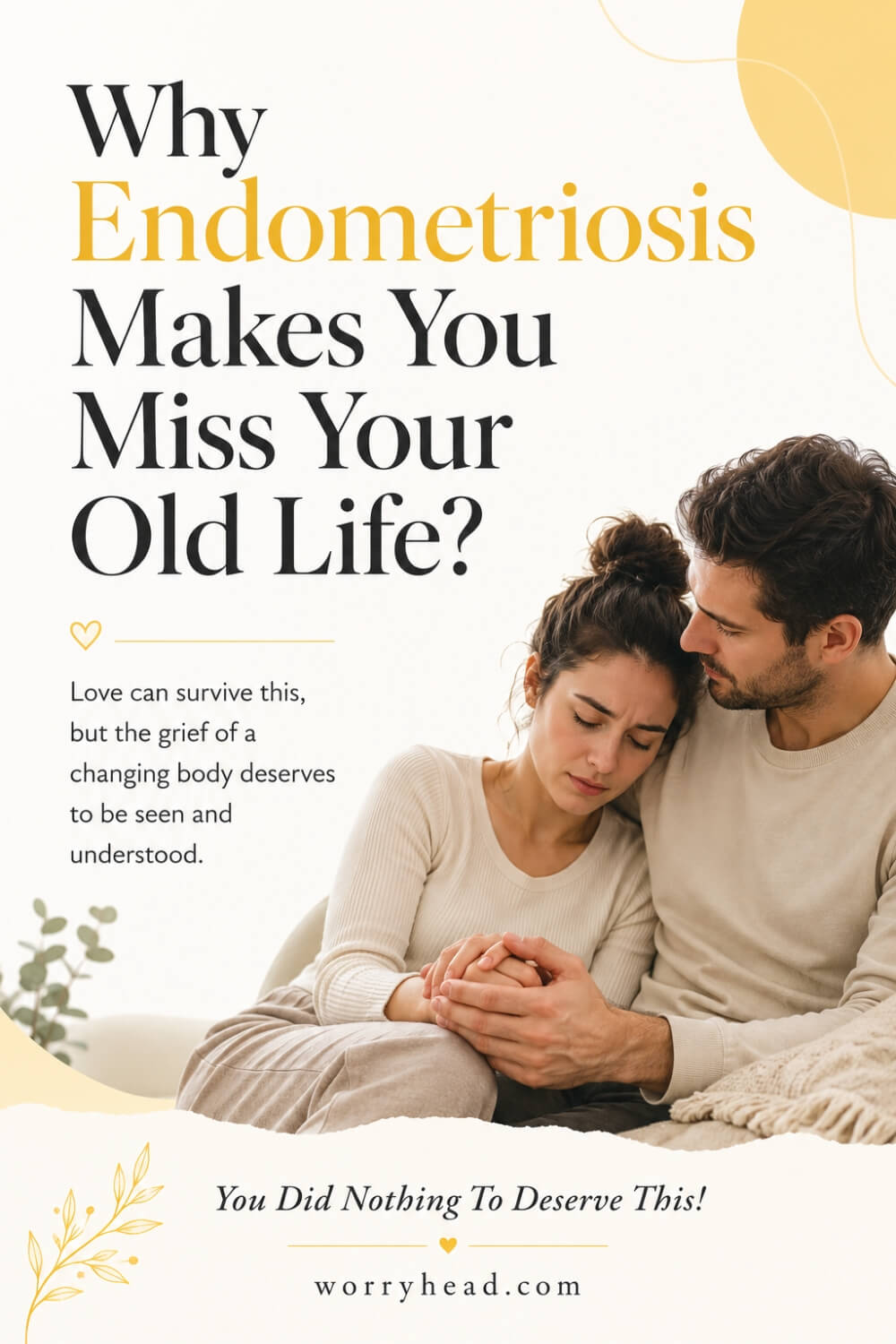
Final Word on Why Endometriosis Makes You Miss Your Old Life
If you have read this far, I want you to take one quiet breath and hear this from me as a man who has watched this disease change the woman he loves: why endometriosis makes you miss your old life is not a silly question, and it is not a dramatic feeling. It is a deeply human response to loss.
You are not only missing pain-free days. You may be missing ease, freedom, confidence, movement, intimacy, identity, work, dreams, trust in your body, and the version of yourself who did not have to think ten steps ahead just to survive one ordinary day.
That kind of loss is hard to explain to people who only see you on the outside. They may see you working, smiling, answering messages, showing up for others, or posting a nice photo, and they may assume you are coping better than you are. But I know there can be a whole world behind that smile.
A world of heating pads, cancelled plans, swollen belly, painful sex, bowel symptoms, exhaustion, fear, tears in the bathroom, and the quiet ache of remembering who you used to be.
I have seen my wife miss the woman who danced. Not just danced as a hobby, but lived through movement, music, performance, teaching, choreography, and the beauty of giving other people confidence on a dance floor. Endometriosis did not simply take an activity from her. It touched a part of her identity that once made her feel alive. And even now, working from home in a quieter life, she still has to fight symptoms that most people never see.
But I also need you to know this: missing your old life does not mean your current life has no value. Grief and hope can sit in the same body. You can mourn what changed and still build something gentle, meaningful, and yours. You can miss the old version of yourself and still learn to protect the woman you are now with more tenderness than pressure.
You do not need to perform strength every day. You do not need to prove your pain by breaking completely. You do not need to apologise for needing rest, care, support, medical help, emotional space, or a slower life than the one you imagined. The right people will not make you feel guilty for changing. They will learn you again.
And if you are a partner reading this, please understand something important. She may not always need solutions first. Sometimes she needs witness. She needs you to see the grief behind the symptoms. She needs you to love her without making her feel like an inconvenience. She needs to know that even if endometriosis changed the rhythm of her life, it did not make her less worthy of patience, desire, respect, and protection.
You are still here. That matters. Your old life mattered too. And now, slowly, gently, without blaming yourself, you deserve to build a life that does not erase what you lost, but gives the woman you are today somewhere safe to breathe.
You are not weak for missing who you were. You are brave for still trying to live, love, work, rest, explain, heal, and hope inside a body that changed the rules. Your life may look different now, but you are still worthy of beauty, support, tenderness, and a future that feels gentler.
If this touched something in you, please leave a comment below and tell me what part of your old life you miss most. And if you need more validation, you can also check out the FREE chapter of my eBook at the bottom of this post.

About Me
Hi, I’m Lucjan! The reason why I decided to create this blog was my beautiful wife, who experienced a lot of pain in life, but also the lack of information about endometriosis and fibromyalgia for men…
READ MORE
Grab a FREE eBook!
“You Did NOTHING To Deserve This!”
Finally hear the words nobody ever said to you, that your pain is real, your tears make sense, and you did nothing to deserve endometriosis, the dismissal, or the way it has rewritten your life.
Related Questions You May Be Asking About Why Endometriosis Makes You Miss Your Old Life
1. Is it normal to grieve your old life with endometriosis?
Yes, it is normal to grieve your old life with endometriosis because chronic pain can change more than your body. It can change your routines, confidence, work, intimacy, friendships, plans, and sense of freedom. Missing who you used to be does not mean you are ungrateful. It means something meaningful changed without your permission.
2. Why does endometriosis make me feel unlike myself?
Endometriosis can make you feel unlike yourself because the body you once trusted may now feel unpredictable. Pain, fatigue, bloating, bleeding, painful sex, bowel symptoms, bladder symptoms, and medical uncertainty can make ordinary life feel harder to enter. You may still be you, but you are carrying more fear, planning, grief, and emotional weight than before.
3. Can endometriosis affect my mental health?
Yes, endometriosis can affect mental health, especially when symptoms are severe, long-lasting, dismissed, or poorly understood by people around you. Living with pain can increase sadness, anxiety, frustration, fear, isolation, and exhaustion. This does not mean your pain is “in your head.” It means your whole life is being affected by a real condition.
4. Why do I feel guilty for missing my old body?
You may feel guilty because women are often expected to cope quietly, stay positive, and be grateful for whatever function they still have. But missing your old body is not betrayal. You are allowed to miss easier movement, easier intimacy, easier work, easier clothing, easier mornings, and easier plans while still learning to care for the body you have now.
5. How can my partner understand what I have lost?
Your partner may understand better when you explain not only your symptoms, but what those symptoms take from your life. Tell them what you miss, what you fear, what hurts physically, and what hurts emotionally. A loving partner should not need you to perform suffering perfectly before offering patience, practical help, reassurance, and tenderness.
6. Can I build a good life after endometriosis changes everything?
Yes, but it may be a different kind of good life. Not smaller in value, but softer, more honest, more protected, and built around your real needs. You may need better medical support, kinder routines, stronger boundaries, and people who believe you. Your old life mattered, but the woman you are now still deserves beauty, love, and hope.
Why Endometriosis Makes You Miss Your Old Life References
- https://www.who.int/news-room/fact-sheets/detail/endometriosis
- https://www.nhs.uk/conditions/endometriosis/
- https://www.nice.org.uk/guidance/ng73/chapter/recommendations
- https://www.nice.org.uk/news/articles/nice-updated-guideline-to-improve-the-diagnosis-of-endometriosis
- https://www.eshre.eu/Guidelines-and-Legal/Guidelines/Endometriosis-Guideline
- https://www.eshre.eu/-/media/sitecore-files/Guidelines/Endometriosis/ESHRE-GUIDELINE-ENDOMETRIOSIS-2022_2.pdf
- https://en.wikipedia.org/wiki/Endometriosis
- https://medlineplus.gov/endometriosis.html
- https://womenshealth.gov/a-z-topics/endometriosis
- https://my.clevelandclinic.org/health/diseases/10857-endometriosis
- https://www.mayoclinic.org/diseases-conditions/endometriosis/symptoms-causes/syc-20354656
- https://www.endometriosis-uk.org/getting-diagnosed-0
- https://endometriosisnetwork.com/endo-hub/mental-health-a-guide-for-people-with-endometriosis/
- https://pmc.ncbi.nlm.nih.gov/articles/PMC10512020/
- https://link.springer.com/article/10.1186/s12905-024-03369-5
- https://pmc.ncbi.nlm.nih.gov/articles/PMC7277433/
- https://pmc.ncbi.nlm.nih.gov/articles/PMC7800443/
- https://bmjopen.bmj.com/content/9/1/e019570
- https://bmjopen.bmj.com/content/12/4/e052765
- https://pmc.ncbi.nlm.nih.gov/articles/PMC11972425/
- https://pmc.ncbi.nlm.nih.gov/articles/PMC10299570/
- https://www.mdpi.com/2075-4426/14/5/466
- https://www.frontiersin.org/journals/psychology/articles/10.3389/fpsyg.2024.1457842/full
- https://www.mdpi.com/1660-4601/17/11/3831
- https://pubmed.ncbi.nlm.nih.gov/34352799/
- https://pubmed.ncbi.nlm.nih.gov/34077695/
- https://www.pelvicpain.org.uk/wp-content/uploads/2018/07/Endopart-study-summary-report-and-recommendations.pdf
