Why Endometriosis Makes Your Body Feel Unsafe?
Have you ever felt betrayed by your own body and wondered why a body you used to live inside without thinking can suddenly feel frightening, unpredictable, and impossible to trust? This is why endometriosis makes your body feel unsafe: the illness can turn ordinary things like movement, intimacy, toilet trips, sleep, work, and waiting for the next flare into moments your nervous system no longer reads as simple.
If you have ever felt tense inside your own skin, braced for pain before it even arrives, or quietly scared of what your body might do next, I want you to know that this reaction makes sense.
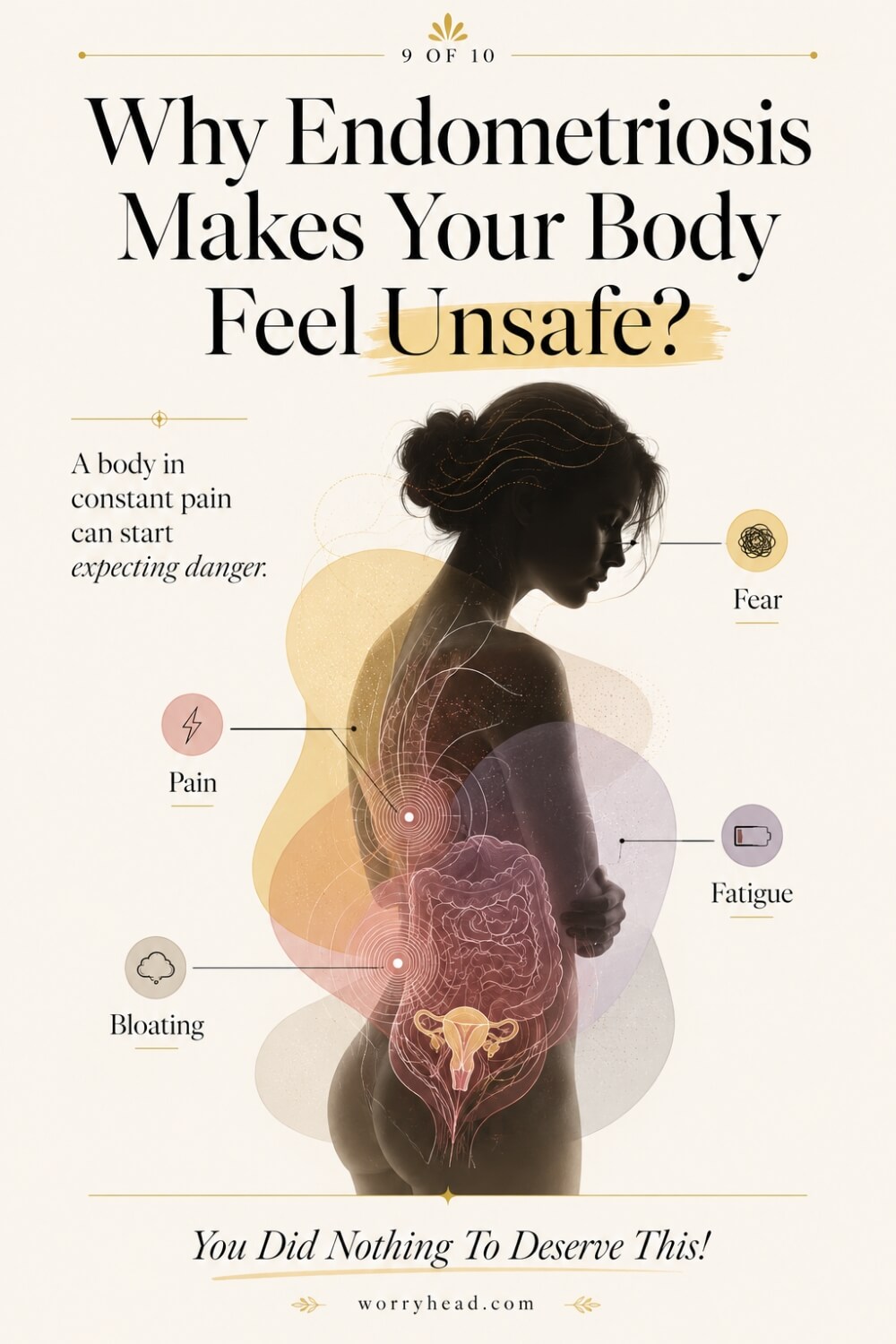
Endometriosis can make your body feel unsafe because repeated pain, inflammation, bleeding, fatigue, bowel or bladder symptoms, painful sex, and dismissal can train your brain and nervous system to expect threat, even during ordinary moments when you only want to rest, work, love, or breathe again.
I am not a clinician, and I do not write to diagnose or replace medical care; I write as a husband, blogger, and researcher who has spent years learning beside my wife, and at the bottom of this article I have attached the medical sources I used, including WHO, NICE, NHS, ESHRE, studies, and other reliable references.
The part that many women are not told gently enough is that endometriosis pain is not always a simple “small disease equals small pain” situation.
Official and medical sources recognise that endometriosis can involve severe period pain, chronic pelvic pain, bowel symptoms, bladder symptoms, painful sex, fatigue, low mood, anxiety, and symptoms beyond the pelvis, while research on endometriosis-associated pain describes sensitisation, where the nervous system can become more reactive over time.
That means your fear of your own body is not “being dramatic.” It can be the result of years of your body warning you, shocking you, exhausting you, bleeding heavily, flaring without permission, and then being expected to carry on as if nothing serious is happening.
I have seen this in my wife, not as a theory, but in the tiny pauses before she moves, the way pain can steal confidence from a room, and the sadness that appears when your own body starts to feel like a place you have to survive rather than a home you can rest inside. I started Worry Head because I saw that women often receive medical facts, but far too little validation, and I wanted to say what I kept saying to my wife: you did nothing to deserve this.
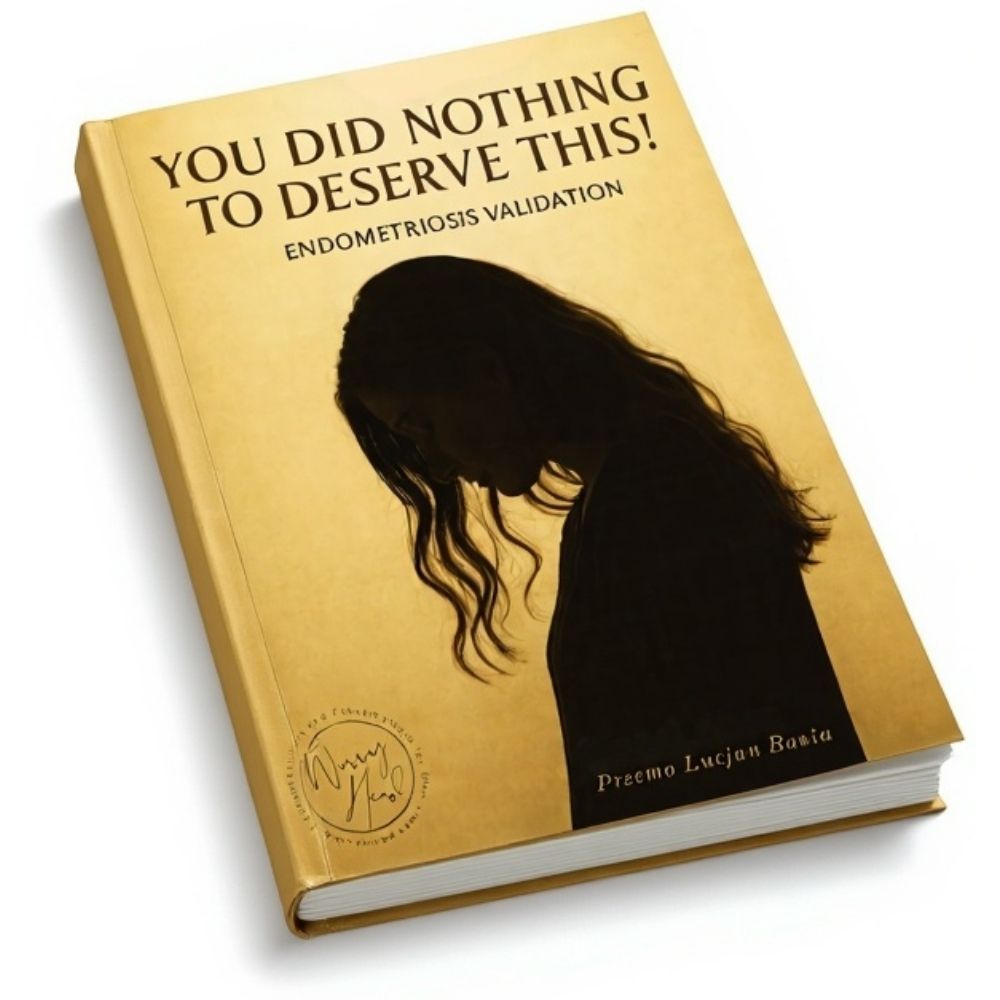
If this already feels close to your heart, you can grab my free 130+ page eBook, “You Did Nothing To Deserve This!”, created to validate the feelings of women with endometriosis who are tired of being dismissed, doubted, and made to feel guilty for pain they never chose.
By grabbing the free book, you also join our community, where I share more freebies, big discounts on all our books, and honest, supportive emails to help you adjust to the new normal chronic illness brings to your body, relationship, identity, and life.
The book is filled with 20 chapters of gentle validation for women with endo, including…
- This Was Never Your Fault
- The Girl You Used To Be
- When Your Own Body Feels Like an Enemy
- The Invisible Battles Nobody Sees
- Am I Just Lazy? – The Lie You Have Been Taught
- Gaslighting, Dismissal and the Trauma of Not Being Believed
- Guilt: The Weight You Were Never Meant to Carry
- Love in the Middle of Pain
- Intimacy When Your Body Hurts
- The Loneliness of Being the Strong One
- You Are Allowed To Take Up Space
- Tiny, Gentle Hopes (Not Toxic Positivity)
- If You Could Hear My Voice Every Flare Day
- You Deserve Partners, Not Witnesses
- When You Wish He Understood
- Motherhood, Fertility and the Grief Nobody Sees
- When Anger Is the Only Honest Feeling
- Learning to Trust Your Body Again
- Building a Life That Fits Your Reality
- You Did Nothing To Deserve This
You Did NOTHING To Deserve This!
Endometriosis Validation for Women with Endo
- You Did NOTHING To Deserve This!
- Why Endometriosis Makes Your Body Feel Unsafe In Everyday Life?
- Why Endometriosis Makes Your Body Feel Unsafe After Years of Dismissal?
- Why Endometriosis Makes Your Body Feel Unsafe In Your Relationship?
- When to Seek Medical Help?
- Questions to Ask Your Doctor
- Final Word On Why Endometriosis Makes Your Body Feel Unsafe
- FREE eBook
Why Endometriosis Makes Your Body Feel Unsafe In Everyday Life?
The simplest way I can explain why endometriosis makes your body feel unsafe is this: your body may stop feeling predictable when pain keeps arriving without your permission. One day you may be able to work, walk, cook, laugh, or be intimate, and the next day the same body may feel swollen, burning, heavy, bruised, or too exhausted to trust.
That unpredictability matters because the brain does not only remember pain as a sensation; it remembers patterns, danger, timing, disappointment, and the fear of being caught unprepared.
Endometriosis is often described through pelvic pain, painful periods, bowel pain, bladder pain, painful sex, fatigue, and fertility worries, but those words can sound too tidy for what living with it actually feels like.
You are not just reading a symptom list; you are living with a body that can interrupt sleep, cancel plans, change intimacy, affect your confidence, and make you scan every cramp as a possible warning. Over time, your nervous system may become more alert, not because you are weak, but because it has been given too many reasons to stay on guard.
This is where medical facts and emotional reality meet.
Pain signals from inflamed tissue, irritated pelvic nerves, scar tissue, deep lesions, tense pelvic floor muscles, and repeated flare-ups can keep the body in a state of threat. When this happens again and again, even normal body sensations can start to feel suspicious, as if your own abdomen, back, bowel, bladder, hips, or pelvis might turn against you at any moment.
I have seen women apologise for needing rest, apologise for crying after sex, apologise for cancelling, apologise for bleeding, apologise for asking for help, and none of that should ever have been placed on your shoulders.
Pain can make you feel embarrassed, but the embarrassment belongs to a world that failed to understand you, not to you. If your body feels unsafe, it may be because your body has been asking for protection for years, while you were told to push through, smile, be productive, and not make a fuss.
There is also a deep emotional wound that comes from being dismissed. When a doctor, partner, employer, relative, or friend minimises your pain, your brain may learn that even asking for safety is risky. That can leave you trapped between two fears: the fear of the next flare, and the fear that nobody will believe you when it comes.
This is why validation is not a soft extra; it is part of feeling human again. A woman with endometriosis needs medical investigation and treatment options, yes, but she also needs someone to say, “I believe you, I am not scared of your pain, and I am not leaving you alone inside it.” Safety begins when your pain is no longer treated like an inconvenience, but like a real signal from a body that deserves care.
I learnt this slowly through my wife, because I used to think reassurance was one sentence, but endometriosis taught me that reassurance is something you live every day. It is holding the silence after a bad appointment, noticing the look in her eyes before she says she is scared, and making sure she never feels like her pain has made her less lovable.
That is why the next section is not just theory; it is a set of practical, human tips to help you feel safer in your body, and to help the person who loves you understand what support should actually look like.
- Learn your early warning signals
- Stop treating rest as failure
- Track pain without obsessing
- Build a flare-up safety plan
- Talk about intimacy without shame
- Ask for emotional reassurance
- Reduce dismissal in appointments
- Make your home feel gentler
- Let support become consistent
Learn Your Early Warning Signals
One of the kindest things you can do for yourself is to stop waiting until your body is screaming before you believe it. With endometriosis, the early signs can be small at first: a strange heaviness in the pelvis, a pulling feeling in the lower back, bowel pressure, bladder irritation, nausea, sudden tiredness, or that quiet inner sense that something is about to flare.
I have watched my wife learn this the hard way, because for years she tried to be “normal” until her body forced her to stop. If you notice your warning signs earlier, it does not mean you are obsessing over pain; it means you are listening before your body has to shout.
That is not weakness. That is wisdom.
The goal is not to fear every sensation, but to recognise the few that usually mean you need gentleness, heat, rest, medication if prescribed, a cancelled plan, or simply permission to slow down before the day becomes unbearable.
Stop Treating Rest As Failure
Rest can feel like failure when you have spent years proving that your pain is real. You may push through work, family, errands, messages, relationships, and housework because a part of you still fears being called lazy, dramatic, or unreliable. But rest is not a moral weakness. Rest is one of the ways your body asks for safety when endometriosis has already taken too much from you.
I had to learn this beside my wife, because loving someone with chronic pain means noticing how much she hides before she finally admits she cannot keep going. You should not have to collapse before you deserve care.
If your body needs stillness, warmth, sleep, quiet, or a day with fewer demands, that does not make you less strong. It means your body is working harder than others can see. Sometimes the bravest thing you can do is not pushing through. Sometimes it is stopping before pain strips everything from you.
Track Pain Without Obsessing
Tracking your symptoms can help you feel less lost, but it should not become another thing that controls your life. You do not need a perfect spreadsheet or a medical diary that makes you feel like a project. Even simple notes can help:
- where the pain is, what it feels like
- what day of your cycle it happens
- whether bowel or bladder symptoms appear
- how tired you feel, and what helped even a little
The reason this matters is not to make you stare at pain all day. It matters because patterns can give you language when you sit in front of a doctor and suddenly forget everything you wanted to say.
I have seen how hard it can be for my wife to explain pain when she is exhausted by it. A few calm notes can protect your voice. They can also remind you that you are not imagining this. When you see the pattern on paper, the shame often begins to loosen, because your pain has evidence, rhythm, and a story.
Build a Flare-Up Safety Plan
A flare-up safety plan is not about expecting the worst every day. It is about giving your body and mind a softer landing when symptoms hit. Your plan might include heat pads, loose clothing, prescribed medication, safe foods, hydration, a quiet room, a message template to cancel plans, gentle stretches if helpful, and one person who understands without making you explain everything from the beginning.
This kind of plan can bring back a little control in a condition that often steals it. I know from my wife that the hardest moments are not only the pain itself, but the panic that comes with not knowing what to do next.
When you have a plan, you do not have to make every decision while hurting. You already know the first few steps. That can make your body feel less like a trap and more like someone you are trying to protect. You deserve that protection before the pain becomes unbearable, not only after.
Talk About Intimacy Without Shame
Painful sex can make your body feel unsafe in a very private, heartbreaking way. It can bring fear before intimacy, guilt afterwards, sadness during closeness, or a feeling that your body is betraying both you and the person you love. But pain during or after sex is not a failure of love, femininity, desire, or effort. It is a symptom that deserves tenderness, honesty, and medical attention when needed.
As a husband, I need to say this clearly: the right partner should care more about your safety than any performance. My wife’s pain taught me that intimacy is not something a woman owes, and it should never become proof of love. Real closeness starts with trust, patience, and listening.
Suppose your body says no; that no deserves respect. If you are scared, that fear deserves comfort. If intimacy has become complicated, you are not broken. You are living in a body that needs to be approached with gentleness, not pressure.
Ask For Emotional Reassurance
Sometimes the body feels unsafe because the heart feels alone inside the pain. You may not always need someone to fix it, explain it, or offer another suggestion. Sometimes you need to hear, “I believe you. I am here. You are not too much. We will face this together.” That kind of reassurance can calm something deep inside, because endometriosis does not only hurt tissue; it can hurt trust.
I learnt this through my wife, often after getting it wrong first. I used to think practical help was enough, but pain also needs emotional shelter. A cup of tea, a lifted chore, a quiet hand on the shoulder, or staying calm when she breaks down can say more than a speech.
If you are reading this as the woman in pain, please do not feel guilty for needing reassurance. If you are reading this as a partner, understand this: consistency matters. One kind moment is beautiful, but repeated safety is what helps someone breathe again.
Reduce Dismissal In Appointments
Medical appointments can make your body feel even more unsafe if you have been dismissed before. You may walk in already braced, trying to sound calm enough to be taken seriously but distressed enough to be believed. That is a painful position to be in, and it is not fair. You deserve to speak about pelvic pain, bowel pain, bladder symptoms, fatigue, painful sex, bleeding, and emotional impact without being made to feel difficult.
A practical way to protect yourself is to prepare three things before you go: your main symptoms, how they affect your daily life, and what you are asking for next. That might be further investigation, referral, imaging, pain support, pelvic physiotherapy, or a second opinion. If possible, take someone with you who can stay calm and help you remember details.
I have done that for my wife because sometimes love means becoming a steady witness when pain has already drained the person you love.
Make Your Home Feel Gentler
Your home cannot cure endometriosis, but it can either make pain harder or make your day a little kinder. A gentler home means fewer unnecessary battles: comfortable clothing within reach, heat pads easy to find, soft blankets, safe meals, water near the bed, a place to rest without guilt, and less visual chaos when your nervous system is already overwhelmed. Small changes matter when your body feels on edge.
I have learnt that support is not always dramatic.
Sometimes it is noticing that my wife should not have to climb stairs ten times during a flare, search for medication while doubled over, or explain why bright noise and clutter feel like too much. When your environment feels softer, your body may not feel quite so hunted.
You deserve a home that does not demand performance from you every minute. You deserve a space where pain is not treated like an inconvenience, but planned around with love.
Let Support Become Consistent
Support feels safest when it does not disappear after one good day. Endometriosis can be confusing because symptoms may change, flare, calm down, return, or appear in a different way. This is why inconsistent support can hurt so deeply. If someone believes you only when you are visibly suffering, you may start feeling like you have to prove your pain to deserve care.
I have tried to build my marriage around a different promise: my wife does not need to earn compassion by reaching breaking point. Consistent support means checking in when she is quiet, believing her when she says something feels wrong, helping before resentment builds, and remembering that a better day does not mean the illness has vanished.
If you are the woman living with this, please hear me: needing steady support does not make you needy. It makes you human. Your body has carried enough uncertainty. Love should not become another place where you feel unsafe.
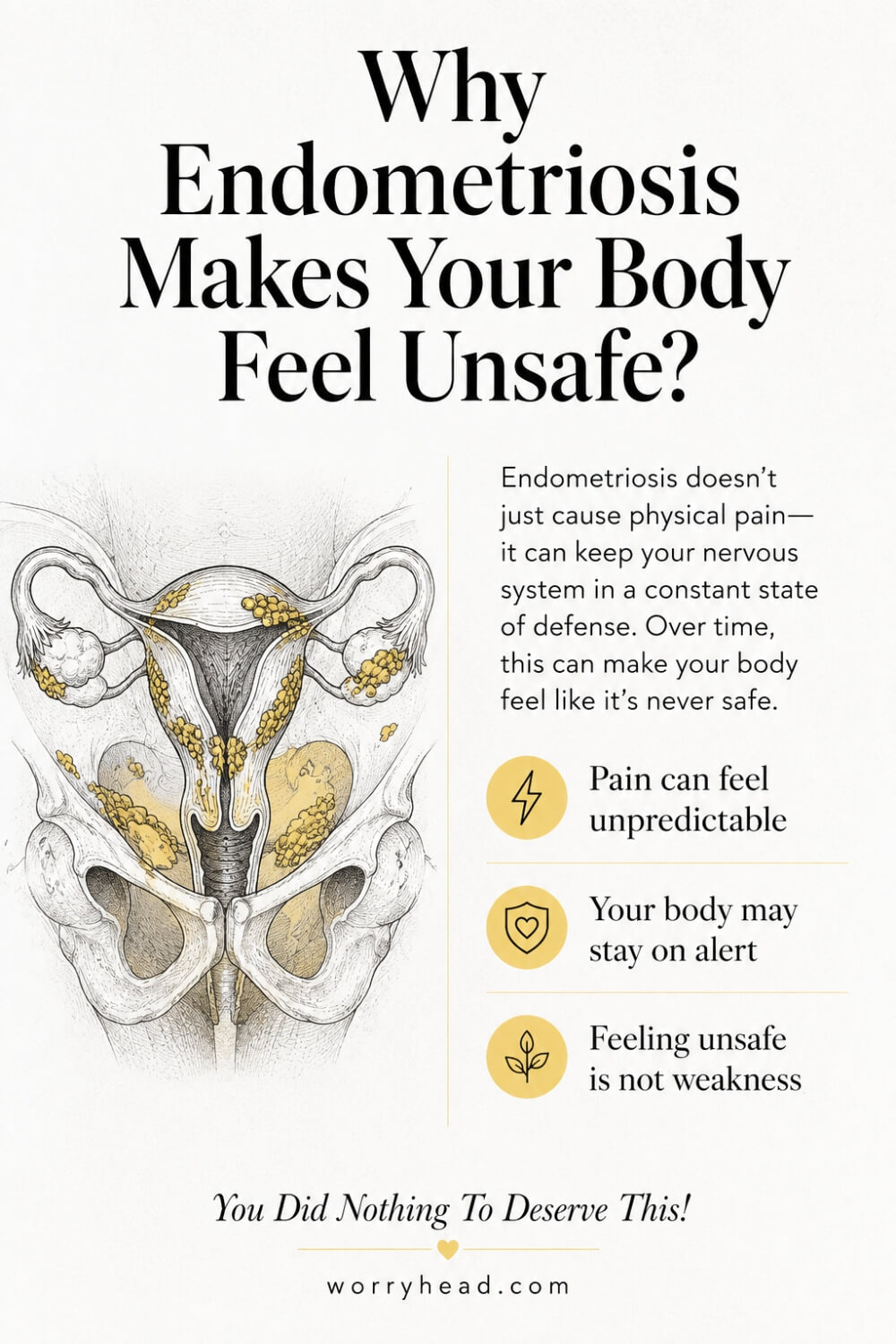
Why Endometriosis Makes Your Body Feel Unsafe After Years of Dismissal?
After you have lived with repeated pain for years, fear can quietly become part of ordinary planning.
You may not always think, “I am afraid of my body,” but you might check where the toilet is, choose clothes that hide bloating, avoid certain seats, carry tablets, cancel intimacy in your mind before it is even mentioned, or scan your calendar around your cycle before saying yes to anything. That is not overthinking; that is a body and mind trying to avoid being ambushed again.
This is why endometriosis makes your body feel unsafe become more than a medical phrase, because it touches your work, relationship, confidence, sleep, identity, and the way you move through the world.
Your brain learns from experience, and if pain has arrived during sex, bowel movements, periods, ovulation, travel, exercise, or normal daily tasks, your nervous system may start warning you before anything has even happened. It is not trying to punish you; it is trying to protect you from another moment that once felt unbearable.
Dismissal adds another wound on top of the physical pain. When you have been told it is normal, stress, anxiety, your age, your period, or something you should just manage, you may begin doubting your own signals even while your body is begging for help. That kind of doubt is cruel, because it makes you feel unsafe inside yourself and unsafe asking others to believe you.
I have seen this in my wife’s face, especially in those moments when she was trying to decide whether to speak up or swallow the pain again. There is a particular sadness in watching the woman you love question her own body because too many people questioned her first. As a husband, I cannot remove every flare, but I can make sure she never has to perform strength just to be worthy of tenderness.
And if you are reading this as the woman living with endometriosis, I want you to pause here and hear this gently: your fear did not come from nowhere. Your body has been through pain, pressure, uncertainty, and maybe years of not being heard. You are not broken because you feel unsafe; you are responding to a story your body has been forced to carry for far too long.
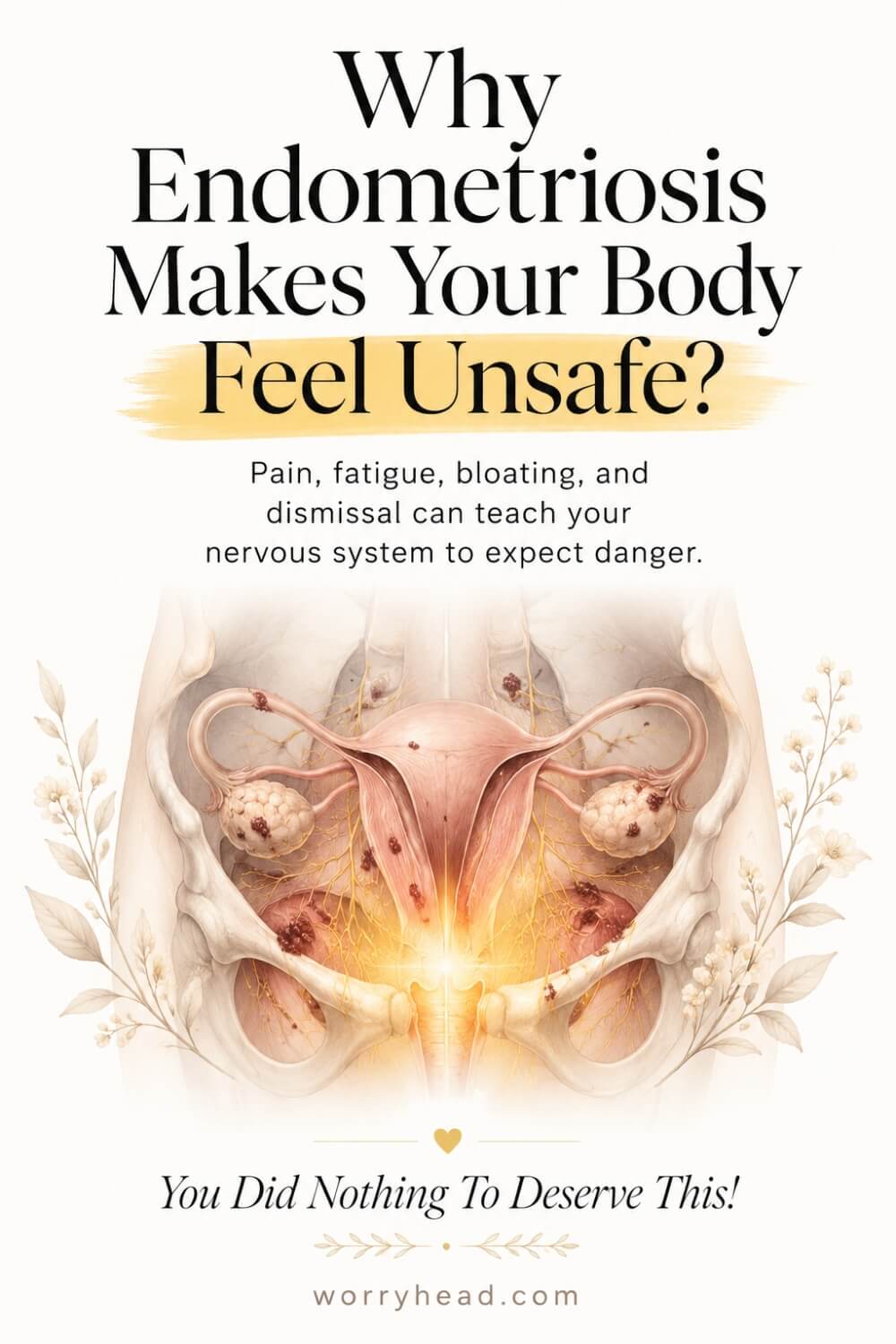
Why Endometriosis Makes Your Body Feel Unsafe In Your Relationship?
There is a part of endometriosis that people rarely see: the way it changes the atmosphere of a home.
Pain does not stay neatly inside the pelvis; it walks into plans, intimacy, sleep, work, conversations, confidence, and the quiet spaces between two people who love each other. Some days the illness is loud, and some days it is only visible in the way you hesitate before standing up, the way you protect your stomach, or the way you say “I’m fine” when your eyes are already tired.
For me, why endometriosis makes your body feel unsafe is not an abstract question, because I have seen my wife lose trust in moments that should have felt simple and safe. I have seen how a flare can make her body feel like something she has to negotiate with before she can enjoy a normal meal, a walk, a cuddle, a trip, or even a quiet evening. And I have learnt that my role is not to make her feel guilty for what endometriosis interrupts, but to help her feel less alone when it does.
This affects her because she carries the pain inside her own body, but it affects me because I love the woman inside that pain and I cannot pretend not to see what it takes from her.
It affects both of us because chronic illness can turn ordinary love into something that needs more patience, more honesty, more planning, and more tenderness than anyone prepared you for. There are moments when support looks like holding her, and there are moments when it looks like not touching her because her body needs space, and both can be love.
If you live with endometriosis, please do not measure your worth by what your body can give on a good day or withhold on a bad one. You are still lovable when you cancel, when you cry, when intimacy feels complicated, when your energy disappears, when your pain returns, and when you need reassurance again.
The right kind of love does not make your body another place where you have to perform; it becomes a place where you are believed, protected, wanted, and gently reminded that you are still you.
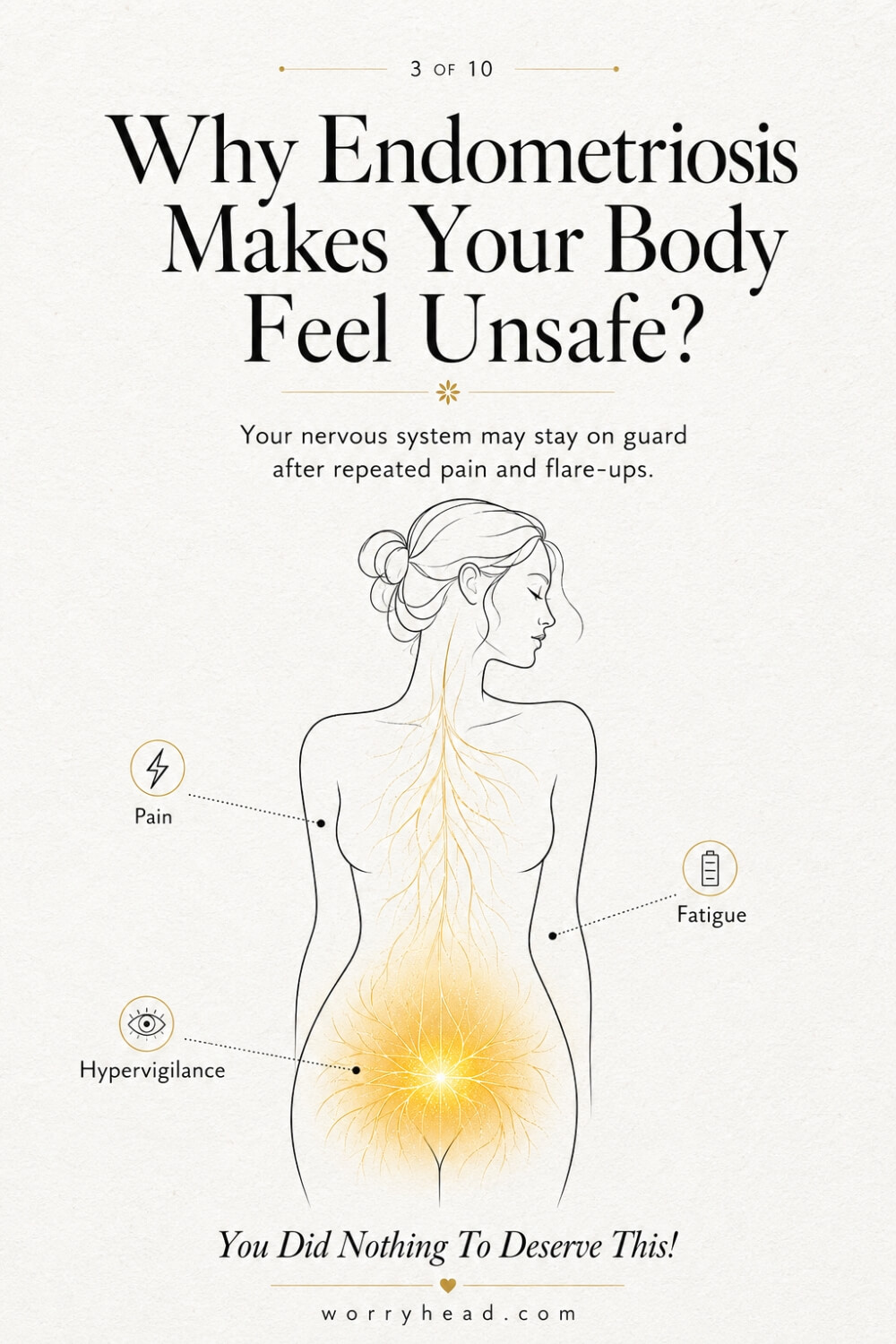
When to Seek Medical Help?
Please do not wait until your body is completely broken before you ask for help. If endometriosis is making your body feel unsafe, that alone is a sign that your symptoms deserve attention, especially if pain is changing the way you work, sleep, move, eat, go to the toilet, have intimacy, or trust yourself day to day.
You should speak to a GP, gynaecologist, or endometriosis specialist if your period pain stops you from doing normal activities, if pelvic pain continues outside your period, if sex is painful, if bowel movements or urination hurt around your cycle, or if fatigue is so heavy that it changes your life.
You should also ask for help if pain is getting worse, becoming more frequent, spreading into your back, hips, legs, rectum, bladder area, or if bloating, bleeding, nausea, or bowel changes are becoming harder to manage.
I say this gently because I know how easy it is to minimise yourself. You may think, “Other women have it worse,” or “I should be able to cope,” or “They will only dismiss me again.” But you do not need to prove that you are at breaking point before your pain matters.
Please seek urgent medical help if you have sudden severe pelvic or abdominal pain that feels different from your usual pattern, heavy bleeding that feels unsafe, fainting, chest pain, shoulder-tip pain with breathlessness, fever, vomiting that will not settle, signs of infection after surgery, or pain with a positive pregnancy test. Those symptoms may not always be endometriosis, and they should not be brushed aside as “just another flare.”
And I want to add something from my heart as a husband: if the fear, pain, exhaustion, or dismissal ever makes you feel emotionally unsafe, please tell someone straight away.
Tell your partner, a trusted person, your GP, a crisis team, or local emergency service if you feel at risk of harming yourself. Your life is worth protecting in the middle of this, not only after everything has become unbearable.
When my wife was at her lowest, I learnt that “being strong” cannot mean staying silent until you disappear inside your own suffering. Sometimes strength is saying, “I need help now.” Sometimes strength is letting someone sit beside you while your body and mind are both exhausted. And sometimes strength is refusing to let another person’s dismissal become the voice you use against yourself.
Questions to Ask Your Doctor
A medical appointment can feel intimidating when your body already feels unsafe, so it helps to arrive with words ready. Pain can steal your memory when you sit in that chair. Fear can make you sound calmer than you really are. And if you have been dismissed before, you may automatically shrink your own story before the doctor has even asked the first question.
You can ask: “Could my symptoms suggest endometriosis, deep endometriosis, adenomyosis, pelvic floor dysfunction, nerve involvement, bowel involvement, bladder involvement, or another condition that needs checking?” This kind of question matters because pelvic pain can have layers, and you deserve someone who looks at the whole picture instead of reducing everything to one painful period.
You can also ask: “What investigations are appropriate for my symptoms?” Depending on your situation, this may lead to discussion about pelvic examination, ultrasound, MRI, referral to gynaecology, referral to an endometriosis centre, or other tests if bowel, bladder, fertility, or non-gynaecological symptoms are involved. You are not being difficult by asking what the next step is.
Another useful question is: “What can we do to help me function while I wait?” Waiting lists can be painful emotionally and physically. You deserve a plan for pain relief, flare management, bleeding, nausea, fatigue, sleep, work adjustments, mental health support, pelvic physiotherapy if suitable, and what to do if symptoms suddenly worsen.
Please also ask: “When should I come back, and what symptoms should make me seek urgent help?” This gives you a safety net. It means you are not left at home guessing whether you are overreacting while your body is frightening you.
If intimacy has become painful, you can ask: “Could my pain during or after sex be linked to endometriosis, pelvic floor tension, deep lesions, scarring, or nerve sensitivity?” I know this can feel embarrassing, but painful sex is not a private failure. It is a medical and emotional issue that deserves care, respect, and gentleness.
If your emotions are suffering, ask: “Can we include my mental health in my care plan?” Endometriosis can affect your confidence, sleep, relationships, anxiety, mood, and the way you feel inside your own body. You are not weak for needing emotional support alongside medical treatment.
And if you feel unheard, you can say, calmly but firmly: “This is affecting my daily life, and I need this documented.” That sentence can matter. It tells the clinician that this is not a small inconvenience. It is affecting your ability to live, love, work, rest, and feel safe inside yourself.
I wish more women were told this before they walk into appointments: you do not have to sound dramatic to be taken seriously. You only have to tell the truth. Your pain is already serious enough.
Final Word On Why Endometriosis Makes Your Body Feel Unsafe
If there is one thing I want you to take from this article, it is that your body feeling unsafe does not mean you are failing at coping. It means your body has been through pain, uncertainty, dismissal, exhaustion, and fear often enough that your nervous system has learnt to protect you before you even ask it to.
Endometriosis is not only about painful periods. It can affect how you sit, sleep, work, eat, use the toilet, love, plan, dress, move, and imagine the future.
- It can make normal sensations feel suspicious.
- It can make intimacy feel frightening.
- It can make a full calendar feel like danger instead of life.
- It can make your own body feel like something you need to monitor, negotiate with, or apologise for.
That is why endometriosis makes your body feel unsafe in such a deep, personal way. The illness does not just interrupt your day; it can interrupt your trust in yourself.
And yet, I need you to hear this clearly. Your body is not your enemy. It may feel like it sometimes, especially when pain hits without warning, when your stomach swells, when fatigue flattens you, when sex hurts, when bowel or bladder symptoms embarrass you, or when another appointment leaves you feeling smaller than before. But your body is not trying to betray you. It is trying to survive something real.
I have watched my wife live through that kind of fear. I have seen the pause before movement, the sadness after a flare, the quiet calculation before saying yes to plans, and the grief that comes when a woman starts missing the body she used to trust. Those moments changed me as a husband. They taught me that support is not only about understanding symptoms; it is about becoming a place where she does not have to defend her pain.
If you are the woman living with this, please stop blaming yourself for needing gentleness.
- You deserve medical help, emotional reassurance, better answers, softer routines, and people around you who do not turn your pain into an inconvenience.
- You deserve to be believed before you break down.
- You deserve to be held without being fixed.
- You deserve love that does not disappear when your body becomes difficult.
And if you are a partner reading this, especially a man, please understand that your calmness can become medicine in the emotional sense. Your consistency can help her body feel less alone. Your belief can undo a little of the harm that dismissal has caused. You do not have to be perfect, but you do have to be present.
Endometriosis may make your body feel unsafe, but with the right care, the right support, and the right validation, you can begin to feel less alone inside it.
You are not too sensitive. You are not dramatic. You are not broken. You are a woman trying to live inside a body that has been asking for help, and you deserve to be met with tenderness, truth, and unwavering compassion.
Your body may feel unsafe right now, but that does not mean you are unsafe forever. With better care, clearer answers, softer support, and people who truly believe you, trust can slowly return. Not all at once, not perfectly, but gently, one safer moment at a time.
If this article spoke to your heart, please leave a comment below and tell me what part made you feel most seen. You can also check out the FREE chapter of my eBook at the bottom of this post, written to remind you that you did nothing to deserve this.


About Me
Hi, I’m Lucjan! The reason why I decided to create this blog was my beautiful wife, who experienced a lot of pain in life, but also the lack of information about endometriosis and fibromyalgia for men…
READ MORE
Grab a FREE eBook!
“You Did NOTHING To Deserve This!”
Finally hear the words nobody ever said to you, that your pain is real, your tears make sense, and you did nothing to deserve endometriosis, the dismissal, or the way it has rewritten your life.
Related Questions You May Be Asking About Why Endometriosis Makes Your Body Feel Unsafe
1. Can endometriosis make me feel unsafe even when I am not in a flare?
Yes. Your body may still feel unsafe between flares because your nervous system remembers what pain has done before. You may brace before your period, worry before intimacy, feel tense before toilet trips, or fear plans falling apart again. That does not mean you are anxious for no reason. It means your body has learnt to prepare.
2. Why do normal sensations feel frightening with endometriosis?
When pain has been repeated, ignored, or severe, ordinary sensations can start to feel like warnings. A small cramp, bowel movement, bladder pressure, lower back ache, or pelvic twinge may make you wonder if another flare is coming. Your brain is not being dramatic. It is trying to protect you from pain it remembers too well.
3. Can being dismissed make endometriosis feel worse emotionally?
Yes, dismissal can make the emotional side of endometriosis heavier. When you are told your pain is normal, exaggerated, stress-related, or “just periods,” you may begin doubting your own body. That doubt can make you feel unsafe asking for help, unsafe trusting your symptoms, and unsafe being honest about how much you are struggling.
4. Why can intimacy feel unsafe with endometriosis?
Intimacy can feel unsafe when sex has caused pain before, during, or afterwards. Your body may begin expecting pain before closeness even starts, especially if you have deep pelvic pain, pelvic floor tension, scarring, or nerve sensitivity. This is not rejection, coldness, or failure. It is a body asking for patience, tenderness, and respect.
5. What can my partner do when my body feels unsafe?
Your partner can help by believing you without interrogation, staying calm during flares, learning your symptoms, helping with practical tasks, respecting your boundaries, and offering reassurance without making you feel guilty. The most powerful support is not one grand gesture. It is consistent love that tells your body, again and again, that you are not alone.
6. Can I ever feel safe in my body again?
You may not return to trust overnight, but safety can slowly rebuild. Better medical care, pain support, emotional validation, pacing, gentler routines, trauma-aware support, and a partner who truly listens can help. Your body may feel like a battlefield now, but it can also become a place you learn to protect, understand, and treat with compassion.
Why Endometriosis Makes Your Body Feel Unsafe References
- https://www.who.int/news-room/fact-sheets/detail/endometriosis
- https://www.nhs.uk/conditions/endometriosis/
- https://www.nice.org.uk/guidance/ng73
- https://www.nice.org.uk/news/articles/nice-updated-guideline-to-improve-the-diagnosis-of-endometriosis
- https://www.eshre.eu/guideline/endometriosis
- https://pubmed.ncbi.nlm.nih.gov/35350465/
- https://www.rcog.org.uk/for-the-public/browse-our-patient-information/endometriosis/
- https://en.wikipedia.org/wiki/Endometriosis
- https://pubmed.ncbi.nlm.nih.gov/33132854/
- https://pmc.ncbi.nlm.nih.gov/articles/PMC9580702/
- https://pmc.ncbi.nlm.nih.gov/articles/PMC6514255/
- https://pmc.ncbi.nlm.nih.gov/articles/PMC11727753/
- https://pmc.ncbi.nlm.nih.gov/articles/PMC11373668/
- https://pmc.ncbi.nlm.nih.gov/articles/PMC10512020/
- https://pmc.ncbi.nlm.nih.gov/articles/PMC9972194/
