Endometriosis and Intimacy
Have you ever wanted to be close to the person you love, only for your own body to make closeness feel frightening instead of safe? Endometriosis and intimacy can become painfully complicated when touch, penetration, orgasm or even the expectation of sex becomes connected with pain. If you have pulled away, cried afterwards, lost confidence, or worried that your partner might eventually stop wanting you, I want you to know that those reactions make sense.
Endometriosis can affect intimacy through pain during or after sex, pelvic tenderness, fatigue, bleeding, reduced desire, body-confidence changes and fear of triggering a flare. It can also affect a partner, but pain does not mean closeness has to disappear; intimacy can be adapted with real care.
This article is educational rather than medical advice. I have checked the medical information against peer-reviewed research, current specialist guidance and evidence examining sexual health, painful sex and relationships in women living with endo.
What happens between two people physically rarely exists in isolation, because it belongs to the wider ways endometriosis can change a relationship, including communication, affection, confidence, guilt, trust and the need to feel safe with the person you love.
One thing I wish more couples were told is that painful sex is not one single experience. In a 2024 study involving 334 women with endometriosis, 75.7% reported pain during sexual intercourse, and 43.4% experienced both deep and superficial pain, showing just how differently the same condition can affect women.
And penetration is not the whole story…
Research describes pain at the vaginal entrance, deep pelvic pain, positional pain, pain around orgasm and pain that continues afterwards, while wider studies show that desire, confidence, sexual satisfaction, emotional wellbeing and the relationship itself can also be affected. That is why advice that begins and ends with changing sexual positions can leave a woman feeling as though nobody has understood what intimacy has actually become for her.
Living beside my wife through years of endometriosis taught me that illness can enter the most private parts of a marriage without ever being invited there. I never wanted her to feel that pain made her less desirable, less feminine or somehow responsible for giving me less; she needed to know that being loved was never conditional on what her body could manage.
Because once you understand what endometriosis can do to intimacy, you can begin separating pain from rejection, desire from obligation and closeness from intercourse itself. And sometimes that understanding is where a couple finally finds each other again.
How Do Endometriosis and Intimacy Affect Each Other?
When I talk about endometriosis and intimacy, I am not talking only about intercourse. Endometriosis can change how safe a woman feels in her own body because pain may happen with deep penetration, at the vaginal entrance, around orgasm, or after sex has ended. Once the brain has learnt that sexual touch can be followed by pain, it is understandable for anticipation itself to become tense rather than exciting.
That does not mean desire has disappeared or love has weakened. Sometimes she still wants closeness very much, but wanting you and wanting to risk pain are two completely different things. A woman can therefore pull back from sex while still wanting affection, tenderness and reassurance from her partner.
This distinction matters because partners can easily misread avoidance as rejection. Research involving couples has found that endometriosis can affect sexual frequency, satisfaction, closeness and relationship dynamics, while male partners can also become hesitant about initiating sex because they are frightened of causing the woman they love more pain. That hesitation can come from love, yet if nobody talks about it, both people can end up protecting each other from a conversation they desperately need.
Pain can also start changing the meaning of ordinary affection. If every kiss, cuddle or evening together seems to carry an expectation that intercourse must follow, she may begin avoiding even the touch she misses because she is frightened that she will have to stop things later. Removing that expectation can give affection back its safety.
There is another burden many women rarely say aloud: guilt. In a survey of 638 women who experienced endometriosis-associated painful intercourse, 54% reported guilt, 65% reported feeling unattractive, and 64% feared their pain might leave their partner unfulfilled or even cause them to leave. Those figures matter because they show why telling a woman to “just communicate” can be far harder than it sounds when part of her is already terrified that honesty could cost her relationship.
At the same time, symptoms do not automatically condemn a couple to becoming distant or unhappy. Recent research looking at women with endometriosis and their partners found that many still reported high relationship quality, even though pain, painful intercourse, fatigue, sexual dissatisfaction and fertility difficulties could create additional conflict.
Living beside my wife through severe endometriosis taught me something I wish more partners understood much earlier: she already had enough to carry inside her body, so she should never also have to carry the fear that protecting that body would make her less loved by me. I never wanted closeness to become something she owed me simply because I was her husband; I wanted her to know that when her body said no, my love was not going anywhere.
And that is where a partner can make an enormous difference, not by trying to fix her body, but by changing what happens around her pain so she feels believed, wanted and safe. These are the things I believe couples can begin practising in real life:
- Believe Pain Without Taking It Personally
- Remove Pressure From Physical Closeness
- Let Her Set the Pace
- Redefine What Intimacy Can Mean
- Talk Before Pain Starts
- Protect Her From Sexual Guilt
- Notice Patterns Without Policing Her
- Ask for Help Together
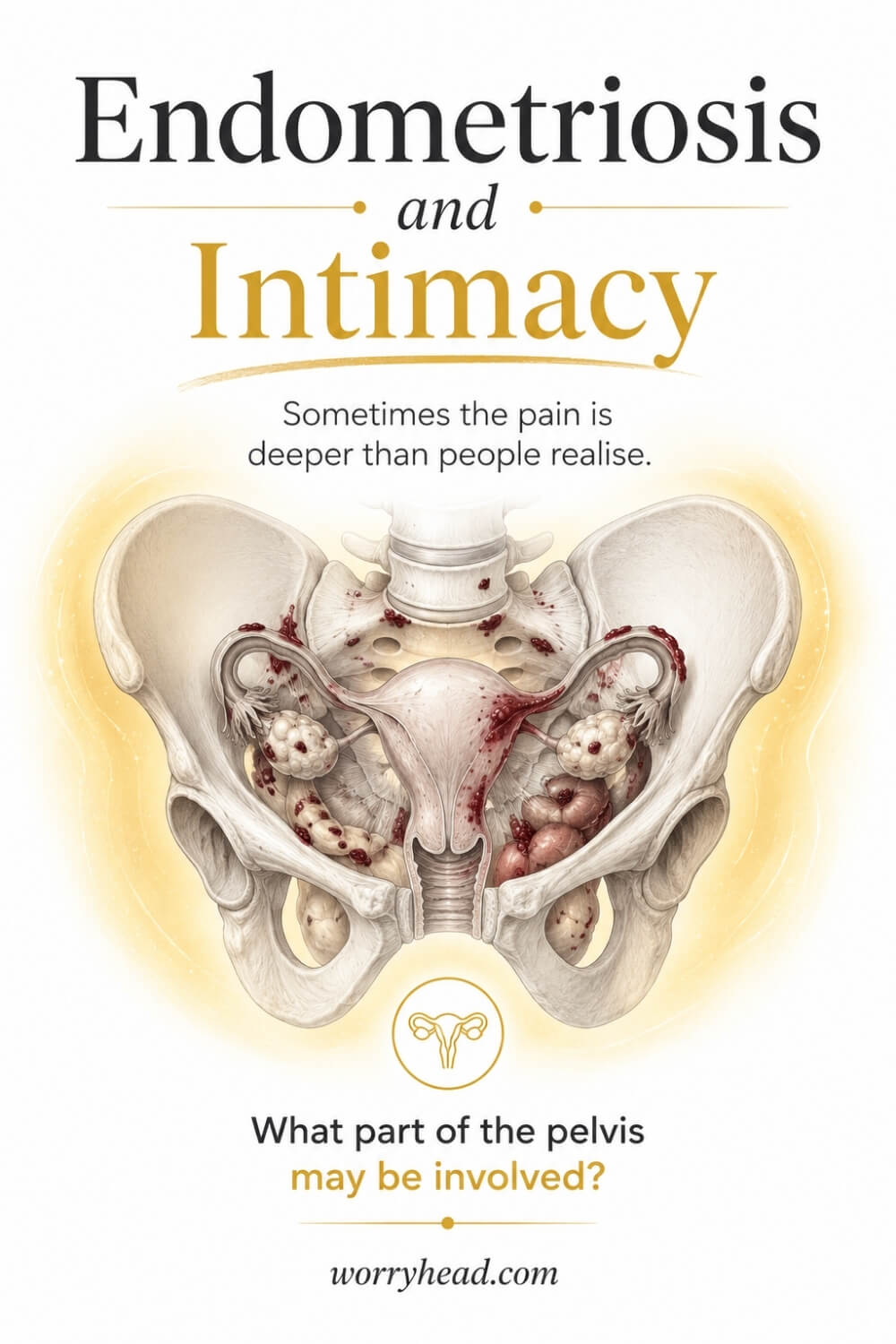
Believe Pain Without Taking It Personally
If she pulls away when you touch her, try not to make her pain mean something about your desirability or the strength of your relationship. Deep pain during or after sex is a recognised symptom of endometriosis, and research shows that painful intercourse can affect sexual activity, self-esteem and relationships. Her body may be protecting itself before her mind has even decided what she wants.
I learnt that the most loving response is not, “Don’t you want me anymore?” but, “Are you hurting, and what feels safe tonight?” That small change removes a burden from her because she no longer has to manage your disappointment while managing her own pelvis. Believe what she tells you the first time, stop when she needs you to stop, and never ask her to prove how much something hurts. When a woman knows that “no”, “not now” or “that hurts” will be respected without sulking, affection can begin to feel safe again.
Remove Pressure From Physical Closeness
One of the easiest ways to damage intimacy without meaning to is to make every cuddle feel like the beginning of sex. If she starts wondering whether a kiss will create an expectation she cannot meet, she may avoid the kiss too, not because she does not want tenderness but because she fears disappointing you later. Endometriosis can already make her body feel unpredictable; affection should not become another test she has to pass.
Give her forms of closeness that are allowed to remain exactly what they are: holding hands, lying together, kissing, stroking her hair, massaging her shoulders or simply falling asleep against each other. Tell her through your behaviour that none of those moments buys you anything afterwards. I have found that when pressure leaves the room, warmth has more space to come back. She can relax into being loved instead of constantly calculating what her body might be expected to do next.
Let Her Set the Pace
Pain can change from one day to another, and what felt comfortable last week may be impossible tonight. That is why I believe the woman living inside that body has to be the person who sets the pace, changes position, pauses, redirects touch or stops completely. This is not about making intimacy clinical; it is about allowing her nervous system to trust that she still has control.
Ask simple questions and listen to the answer without trying to negotiate it. “Is this comfortable?” or “Do you want me to stop?” can be far more intimate than assuming silence means everything is fine. If she freezes, becomes tense or suddenly goes quiet, slow down and check in rather than pushing through the moment. Giving her control does not take intimacy away from a couple. In my experience, it protects the trust that makes genuine closeness possible in the first place.
Redefine What Intimacy Can Mean
For years, couples can absorb the idea that successful intimacy must end with penetration, and that belief becomes cruel when penetration is the thing most likely to cause pain. Intimacy is much larger than one sexual act. It can be kissing, skin-to-skin contact, mutual touch, laughter in bed, a long embrace, sharing fantasies, talking honestly, or simply feeling wanted without needing your body to perform.
This matters because pain should not be allowed to decide whether a woman is still a sexual, desirable person. A couple can experiment with forms of closeness that avoid painful areas and stop before symptoms escalate, always within what feels comfortable and consensual for both people. I would rather have my wife feel safe, wanted and relaxed beside me than chase some narrow definition of what a married couple is “supposed” to do. Sometimes redefining intimacy does not reduce closeness at all; it finally gives closeness room to breathe.
Talk Before Pain Starts
The middle of a painful moment is a terrible time to begin your first honest conversation about sex. Talk when neither of you is trying to initiate anything, when there is no pressure to continue and she can explain what hurts, what she fears, what has changed and what still feels good. Qualitative research with couples affected by endometriosis has found that communication around sexuality can either support adaptation or become another source of conflict.
I would ask questions with curiosity rather than looking for a quick solution: Does deep penetration hurt more? Is pain immediate or delayed? Are some days easier than others? What makes you feel safe enough to say stop? You do not need to interrogate her or turn the bedroom into a symptom meeting. You are simply building a shared language so she does not have to explain everything while hurting, and so you are less likely to mistake pain, tension or hesitation for rejection.
Protect Her From Sexual Guilt
A woman should never have to apologise for protecting herself from pain, yet guilt can creep into a relationship very quietly. She may worry that she is failing you, that you will become frustrated, that you will compare your relationship with other couples, or that one day you will leave because sex has become difficult. Those fears are not trivial; research on endometriosis-associated painful intercourse has documented damage to self-esteem, sexual wellbeing and relationships.
This is where reassurance needs to become more than a sentence you say once. Show her repeatedly that her value to you is not measured by sexual frequency, penetration or how much discomfort she can tolerate for your sake. Never praise her for “pushing through” pain for you. I want my wife to know that I would rather stop a hundred times than have her lie beside me afterwards wondering whether she had to hurt herself to keep me happy.
Notice Patterns Without Policing Her
There can be value in noticing whether pain changes around menstruation, ovulation, certain positions, deeper penetration, orgasm or a flare, because those details may help her explain symptoms to a clinician and make more informed choices about intimacy. NICE specifically lists deep pain during or after sexual intercourse among symptoms that should raise suspicion of endometriosis. But observing patterns must never turn into monitoring her body as though you know it better than she does.
If she wants your help, you might remember what happened, note symptoms together or support her in preparing for an appointment. What you should not do is announce that she “should be fine today” because an app says so, or pressure her because something worked last time. Her body is not a timetable. Be the person beside her gathering useful clues, not the person standing over her demanding consistency from an illness that is often anything but consistent.
Ask for Help Together
Sometimes love, patience and better communication are not enough to deal with persistent pain, and admitting that is not a relationship failure. If painful sex continues, becomes worse, prevents intimacy, or occurs alongside significant pelvic, bowel or bladder symptoms, it deserves a proper medical conversation. Current NICE guidance also supports involving a partner in endometriosis discussions when the woman wants that, which can help both people understand options and ask better questions.
Depending on her symptoms, support might involve a GP, gynaecologist, endometriosis specialist, pelvic health physiotherapist, pain team or psychosexual therapist. The important word is support, not fixing. Go with her if she wants you there, help her remember what she wanted to ask, and back her up if she struggles to explain how much this affects everyday life. She should not have to carry the medical side and the relationship side completely alone.
How Endometriosis and Intimacy Can Change a Relationship Over Time
By the time pain has affected a couple for months or years, the hardest loss is not always intercourse itself; sometimes it is spontaneity. A kiss can become a calculation, an invitation can feel risky, and both people may begin wondering what the other person is thinking instead of simply being together.
The difficult truth about endometriosis and intimacy is that two loving people can experience the same private moment very differently. Research involving 302 couples found differences between women and their male partners in how they perceived sexual satisfaction, desired frequency of sexual contact and whether the woman was having sex despite discomfort, with both partners tending to overestimate the other person’s sexual satisfaction.
That matters because silence can create a false story inside each person’s head: she may think, “I am disappointing him again,” while he may think, “If I mention sex, I will make her feel pressured,” and neither may realise that the other is acting from fear rather than rejection. Pain can also take away the freedom to be impulsive, because when a woman has to consider pelvic pain, fatigue, bleeding, bloating or what her body might feel like afterwards, something that once belonged to desire can start requiring preparation, and there can be real grief in that change.
I learnt from living beside my wife that illness does not stay neatly inside hospital appointments; it follows you home and quietly enters parts of a marriage that nobody outside the relationship sees. There were things I could not take out of her body, and I could not promise her that tomorrow would be a pain-free day.
What I could do was make sure my love never became another demand placed on a body that was already asking so much of her. I could still look at my wife as the woman I chose, not as a collection of symptoms, and make it clear through ordinary affection that being wanted was not conditional on what she could physically manage.
That matters for the partner too, because research suggests couples affected by endometriosis can influence one another’s psychological distress and their experience of the condition, which is one reason the partner should not be treated as irrelevant to care. The answer is not to make the healthy partner the victim, but to recognise that he has a role: to stay emotionally present, communicate honestly and help protect the relationship from becoming organised entirely around pain.
For me, intimacy became less about proving that nothing had changed and more about showing my wife that whatever had changed in her body, she did not have to face it while wondering whether I would still choose her. When a woman feels that kind of safety, the illness may still be there, but she no longer has to carry the extra fear that love will disappear with the parts of intimacy her body sometimes cannot give.
Can Endometriosis and Intimacy Feel Close Again?
After years of pain, it can be tempting for a couple to believe that this part of their relationship has been permanently taken from them, but I do not believe closeness has to be measured against how things were before symptoms became severe. For me, the hardest lesson about endometriosis and intimacy was accepting that loving my wife well sometimes meant letting go of my idea of what should happen and paying much more attention to what her body was telling us now. Research supports why this matters, because endometriosis can affect not only pain during sex but also desire, arousal, lubrication, orgasm and sexual satisfaction, meaning that simply treating penetration as the problem can miss much of what a woman is actually experiencing.
There were times when I could see how much my wife wanted normality, and that hurt me because I knew wanting something badly enough could not make her pelvis cooperate; what she needed from me was not disappointment hidden behind a brave face, but the certainty that she could change her mind, stop, rest or simply be held without having ruined anything. I am healthy, so I cannot pretend I know what pelvic pain feels like from inside her body, but I can control the kind of man standing beside that body, and I never want my frustration to become another symptom she has to manage.
I also learnt not to treat desire as something that either exists or disappears, because a woman may still find her partner attractive, still crave affection and still miss sexual closeness while simultaneously fearing what her body might do if intimacy progresses. Studies examining women’s experiences of painful sex describe avoidance, interrupting intercourse, enduring pain and finding alternative forms of sexuality, which tells me something important as a husband: withdrawal can be an attempt to protect herself rather than evidence that she has stopped wanting the person beside her.
That changes what rebuilding looks like for both people, because instead of chasing a certain number of sexual encounters or trying to recreate the relationship you had years ago, you can begin creating experiences that leave both of you feeling closer afterwards rather than frightened, guilty or physically worse. Medical treatment may be part of that process, and depending on her individual circumstances this can involve discussion of pain management, hormonal treatment, surgery, pelvic health support or psychological and psychosexual care, because sexual wellbeing is influenced by physical, emotional and relationship factors rather than one symptom alone.
Most importantly, I never want my wife to lie beside me believing that endometriosis has made her less of a woman or less worthy of being desired, because the woman I love did not disappear when her body became more difficult to live inside.
We may have had to change what closeness looks like, slow things down and accept limitations neither of us asked for, but if she can look at me and know, without having to question it, that I still see her, want her, respect her boundaries and choose her, then illness has changed something between us without being allowed to take everything.
When to Seek Medical Help?
Pain during intimacy is not something you should have to quietly tolerate just because you already know you have endometriosis. If sex repeatedly causes deep pelvic pain, pain at the vaginal entrance, cramping afterwards, pain around orgasm, or symptoms severe enough that you are avoiding intimacy altogether, tell your GP or gynaecologist what is happening. NICE specifically recognises deep pain during or after sexual intercourse as one of the symptoms associated with endometriosis, and it also acknowledges that the condition can have a significant sexual, psychological and social impact.
I would particularly make an appointment if the pain is becoming more frequent, stronger, lasting longer afterwards, or interfering with your relationship and everyday life. You should also go back if treatment that previously helped is no longer working, you cannot tolerate it, or your symptoms continue or return despite treatment, because those are recognised reasons for further gynaecological assessment.
Please also mention symptoms that might initially feel unrelated to sex. Pain when opening your bowels, bladder pain, pain when passing urine, blood in your urine, significant cyclical bowel symptoms or persistent pelvic pain can give your clinician important information about where disease may be affecting you. Suspected or confirmed deep endometriosis involving the bowel, bladder or ureter is a reason for referral to a specialist endometriosis service rather than simply being left to manage recurring symptoms alone.
And if you bleed after sex, do not automatically decide that endometriosis must be the cause. Bleeding after intercourse has several possible explanations and NHS guidance recommends having unusual post-sex bleeding checked by a GP or sexual health clinic.
There are also situations where you should seek help more quickly. If pelvic pain suddenly becomes severe or is much worse than usual and pain relief is not helping, NHS advice is to seek urgent medical advice through an urgent GP appointment or NHS 111. If you have missed a period and develop unusual vaginal bleeding together with abdominal or pelvic pain, that also needs urgent assessment because pregnancy-related causes such as ectopic pregnancy must be excluded.
What I do not want you to take from any of this is that every painful sexual experience means something dangerous is happening. Usually, this is about getting symptoms properly understood rather than becoming frightened by them. What concerns me more is the woman who has been hurting for years and still begins her appointment with, “I know this probably isn’t important, but…”
It is important.
Sexual wellbeing is part of your health, and you are allowed to tell a doctor that pain is affecting your relationship, confidence, desire or ability to be intimate. NICE specifically recommends that care considers psychosexual and emotional needs, and your partner can be included in discussions if that is what you want.
As a husband, I would much rather my wife tell her medical team exactly what is happening than soften the truth because discussing sex feels embarrassing. A clinician cannot understand the effect of the disease on your life if you only describe the parts that feel easy to say aloud.
Questions to Ask Your Doctor
Talking about painful sex in a consulting room can feel incredibly exposing, especially when you have only a few minutes and somebody is waiting for you to explain something deeply private. I have seen how easy it is for women to leave appointments having discussed bleeding, scans and medication while the thing affecting their relationship most never gets mentioned.
You do not need medical terminology. You simply need to describe what happens, where it hurts, when it hurts and what it is stopping you from doing. Taking a short symptom diary can help too, and current NICE guidance encourages discussing symptom patterns because they can help inform assessment and diagnosis.
These are the questions I would want my wife to feel comfortable taking into an appointment:
“Could my pain during or after sex be related to endometriosis?”
Describe whether the pain feels deep inside the pelvis, closer to the vaginal entrance, one-sided, burning, stabbing, aching or cramping. The location and timing can help your clinician think more carefully about possible causes rather than treating “painful sex” as one vague symptom.
“Does the location of my pain suggest deep endometriosis?”
This is particularly worth discussing if intercourse triggers deep pelvic pain alongside bowel, bladder or rectal symptoms. Deep disease affecting structures such as the bowel, bladder or ureter may require specialist assessment.
“Should I have an ultrasound or further imaging?”
Under current NICE guidance, a transvaginal ultrasound should be offered when endometriosis is suspected, even when a pelvic examination appears normal. A normal scan also does not automatically rule out endometriosis, so ask what happens next if your symptoms remain significant despite normal imaging.
“Could something besides endometriosis be contributing to this pain?”
This is an important question rather than a challenge to your diagnosis. Vaginal dryness, infection, pelvic floor problems and other gynaecological conditions can contribute to painful intercourse, and more than one problem can exist at the same time.
“Could my pelvic floor be contributing to the pain?”
Persistent pelvic pain can make muscles tighten defensively, which may add another layer to discomfort around penetration. Ask whether assessment by an appropriately trained pelvic health physiotherapist might be relevant to your individual symptoms rather than trying exercises you found online without knowing what your muscles are actually doing.
“What treatment options could specifically improve painful sex?”
Do not settle for a conversation that only asks whether your periods are better. Ask how medication, hormonal treatment, pain management, surgery or other appropriate therapies might affect the symptom that is damaging intimacy for you, and discuss the benefits, limitations and possible side effects of each option.
“Do my symptoms justify referral to an endometriosis specialist?”
Persistent or recurrent symptoms, symptoms significantly affecting everyday life, or treatment that has not worked are reasons NICE gives for gynaecology referral. Suspected endometrioma or deep disease involving the bowel, bladder or ureter should prompt referral to a specialist endometriosis service.
“Can I get help with the sexual and emotional impact as well as the pain?”
This question matters enormously. Medical treatment may address disease and pain, but intimacy can remain complicated after months or years of fear, avoidance and difficult experiences, and NICE recognises psychosexual and emotional needs as part of endometriosis care.
“Can my partner come to an appointment with me?”
If you want them there, ask. NICE specifically says partners can be involved in discussions with your agreement, and sometimes having the person who sees what happens at home can help explain what a ten-minute consultation cannot capture.
I have accompanied my wife through enough of this journey to know that appointments can become exhausting, especially when you have spent years repeating the same history. Going in with a few written questions does not make you difficult, and asking how endometriosis affects your sex life does not make you demanding.
You are telling your doctor how the disease is affecting your actual life. That includes the bedroom, the fear before intimacy, the pain afterwards, the relationship beside you and the parts of yourself you are trying to get back.
Final Word on Endometriosis and Intimacy
If there is one thing I want you to take away, it is that pain during closeness is not a personal failure, and it is not proof that your relationship is broken. Endometriosis can interfere with sex far beyond the physical act. It can affect confidence, desire, spontaneity, trust, communication and the way you feel inside your own body.
When pain becomes connected with intimacy, your nervous system can begin protecting you before anything has even happened. You may tense, hesitate, avoid touch or worry about disappointing the person you love. None of that means you have stopped loving them. It can simply mean your body has learnt that something which should feel safe may also hurt.
As a husband, this is where I believe a partner has a choice. He can make the situation heavier by treating sex as something he is owed, or he can become the person beside whom she never has to apologise for protecting herself. I chose the second path because my wife already carries enough. I never want her measuring her worth by what her body can tolerate for me.
That does not mean the healthy partner has no feelings. There can be frustration, sadness, loneliness and grief for the spontaneity a couple once had. But love is not proved by pretending those feelings do not exist. It is proved by handling them without placing them on the shoulders of the woman who is already hurting.
For us, endometriosis and intimacy became less about trying to return to some perfect version of the past and more about protecting what still mattered between us. Affection mattered. Trust mattered. Being able to say stop without fear mattered. Knowing that a difficult night would not change how I looked at my wife the following morning mattered.
You deserve that kind of safety too. You deserve to be touched without wondering what will be expected next, to explain pain without being questioned, and to change your mind without feeling guilty. You deserve medical care that takes painful sex seriously and a relationship in which your body is respected even on the days when it cannot do what you wish it could.
And if you are the partner reading this, remember that you cannot cure her pain through love alone, but you can decide whether love becomes another source of pressure or one of the safest places she has. Sometimes the most intimate thing you can do is believe her, stay close, listen, and make it clear that she is still wanted without asking her body to prove anything.
Endometriosis may change the shape of intimacy, but it does not have to erase tenderness, desire, companionship or love. A couple can adapt, ask for help, communicate differently and discover forms of closeness that do not require one person to suffer so the other feels loved. That is not settling for less. To me, that is what intimacy looks like when love grows strong enough to make room for reality.
You are not difficult to love because intimacy has become complicated. Pain may change what closeness looks like, but it does not reduce your worth, your femininity or your right to feel wanted. With honesty, medical support, patience and a partner who respects your body, intimacy can become safe, meaningful and yours again.
If any part of this felt like your story, I would genuinely love you to leave a comment below. And if you need more of the validation I wish my wife had been given years ago, you can also check out my FREE 130+ page eBook at the bottom of this post.


About Me
Hi, I’m Lucjan! The reason why I decided to create this blog was my beautiful wife, who experienced a lot of pain in life, but also the lack of information about endometriosis and fibromyalgia for men…
READ MORE
Grab a FREE eBook!
“You Did NOTHING To Deserve This!”
Finally hear the words nobody ever said to you, that your pain is real, your tears make sense, and you did nothing to deserve endometriosis, the dismissal, or the way it has rewritten your life.
Related Questions You May Be Asking About Endometriosis and Intimacy
1. Can endometriosis cause pain after sex rather than during it?
Yes. Some women feel relatively comfortable during intimacy but develop pelvic aching, cramping, stabbing pain or a flare afterwards. Deep penetration, orgasm and pelvic muscle contractions can aggravate already sensitive tissues. Pain may begin immediately or appear later that evening. If post-sex pain happens regularly or becomes more severe, it is worth discussing specifically with your doctor.
2. Can endometriosis make you lose interest in sex?
It can reduce sexual desire, but that does not necessarily mean attraction or love has disappeared. Repeated pain, fatigue, bloating, bleeding, medication effects, anxiety about triggering symptoms and previous painful experiences can all make sex feel less appealing. Sometimes desire is still there emotionally, but your body has learnt to associate intimacy with discomfort, making avoidance feel safer.
3. Why can orgasm hurt with endometriosis?
Orgasm involves rhythmic contractions of the pelvic floor, uterus and surrounding muscles, so women with pelvic tenderness or endometriosis-related pain may experience cramping or deeper pelvic discomfort during or afterwards. Not every woman experiences this. If orgasm repeatedly causes significant pain, tell your clinician exactly when the pain begins, where you feel it and how long it lasts.
4. Can intimacy improve after endometriosis treatment?
Yes, it can improve, although no treatment can guarantee that every sexual symptom will disappear. Hormonal treatment, surgery, pain management, pelvic health physiotherapy or psychosexual support may help depending on what is contributing to the problem. Improvement may also involve rebuilding confidence and trust slowly, especially if your body has associated sex with pain for a long time.
5. How can my partner help without making intimacy feel pressured?
A supportive partner can make an enormous difference by believing your pain, respecting hesitation immediately and giving affection without expecting intercourse afterwards. Ask what feels safe rather than assuming. Make room for kissing, cuddling, touch and emotional closeness that are allowed to stop there. Most importantly, never make her feel she must endure pain to protect your feelings.
6. Is painful sex always caused by endometriosis?
No. Endometriosis is one recognised cause of painful intercourse, particularly deep pelvic pain, but other problems can contribute too. Vaginal dryness, infection, pelvic floor dysfunction, vulval pain and other gynaecological conditions may cause or worsen discomfort. Having endometriosis should therefore not mean every new sexual symptom is automatically blamed on it without proper assessment.
Endometriosis and Intimacy References
- https://pubmed.ncbi.nlm.nih.gov/27591248/
- https://www.eshre.eu/-/media/sitecore-files/Guidelines/Endometriosis/ESHRE-GUIDELINE-ENDOMETRIOSIS-2022_1.pdf
- https://pubmed.ncbi.nlm.nih.gov/39052076/
- https://pmc.ncbi.nlm.nih.gov/articles/PMC8623407/
- https://www.nice.org.uk/guidance/ng73/chapter/Recommendations
- https://pmc.ncbi.nlm.nih.gov/articles/PMC5850214/
- https://pmc.ncbi.nlm.nih.gov/articles/PMC7334010/
- https://pmc.ncbi.nlm.nih.gov/articles/PMC11514139/
- https://pubmed.ncbi.nlm.nih.gov/34656789/
- https://pubmed.ncbi.nlm.nih.gov/17609078/
- https://pmc.ncbi.nlm.nih.gov/articles/PMC10226817/
- https://pmc.ncbi.nlm.nih.gov/articles/PMC7580264/
- https://pmc.ncbi.nlm.nih.gov/articles/PMC9148469/
- https://pubmed.ncbi.nlm.nih.gov/37256217/
- https://pubmed.ncbi.nlm.nih.gov/34831868/
- https://www.eshre.eu/Guidelines-and-Legal/Guidelines/Endometriosis-guideline.aspx
- https://www.nhs.uk/symptoms/vaginal-bleeding-between-periods-or-after-sex/
- https://www.nhs.uk/symptoms/period-pain/
- https://www.nice.org.uk/guidance/ng73/resources/visual-summary-on-first-presentation-initial-management-diagnosis-referral-and-ongoing-care-of-pdf-13559822461