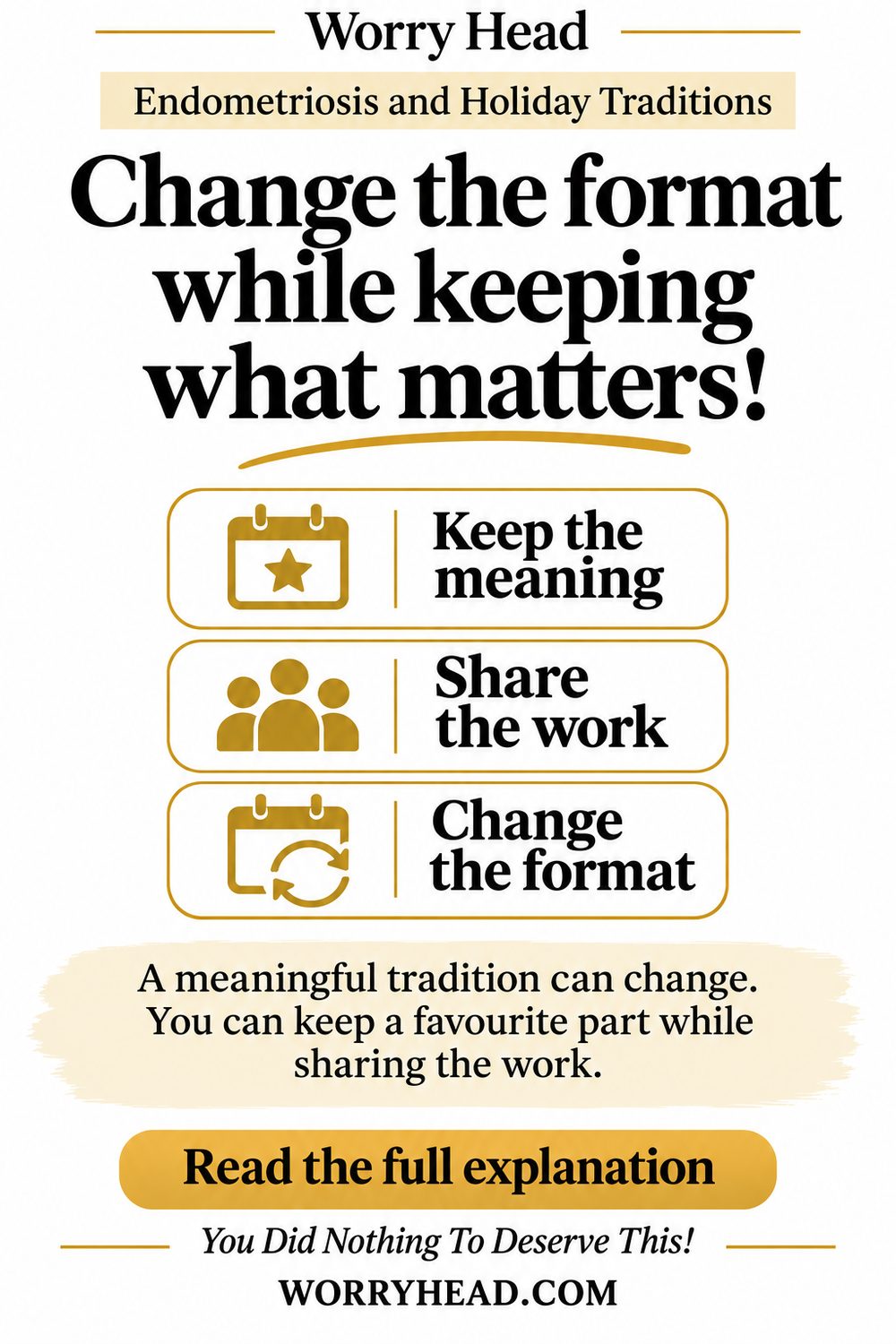
Endometriosis and Holiday Traditions: Keeping the Meaning While Changing the Work
Does the thought of a familiar holiday tradition bring warmth and a quiet fear that you cannot manage it the way you once did? Endometriosis and holiday traditions can become tangled with expectations about hosting, travel, preparation and being the person who holds everything together. You are allowed to care about a tradition without carrying every part of its work.
A tradition can keep its meaning even when its timing, setting or responsibilities change. Decide which part matters to you, name what you cannot promise and invite others to share the work. You can feel grief about the old version without forcing yourself to recreate it or making change permanent.
I am a husband, blogger and researcher, not a clinician. Years of learning alongside my wife shape these reflections, and the research informing the wider discussion of loss is linked below.
This article is one specific part of missing your old life with endometriosis. It concerns recurring holiday customs and family roles, rather than asking you to make every celebration positive or find a perfect replacement for what has changed.
If a season of togetherness also brings a sense of loss, my free eBook, You Did NOTHING To Deserve This!, offers understanding. Your place in a family should not depend on reproducing the same celebration every year.
You Did NOTHING To Deserve This!
Endometriosis Validation for Women with Endo
- What Endometriosis and Holiday Traditions Mean to You
- Your Role in Endometriosis and Holiday Traditions Can Change
- Keep, Adapt or Pause with Endometriosis and Holiday Traditions
- Discuss Endometriosis and Holiday Traditions Before Plans Are Fixed
- When Endometriosis and Holiday Traditions Bring Grief
- Connection Can Survive Changes in Endometriosis and Holiday Traditions
- Review Endometriosis and Holiday Traditions One Year at a Time
- Final Word on Endometriosis and Holiday Traditions
- You Did NOTHING To Deserve This!
- FREE eBook
What Endometriosis and Holiday Traditions Mean to You
A tradition often contains several things at once: a food, a place, a gathering, a role or a memory. When you say you want to keep it, which of those matters most? The answer may reveal more flexibility than the full routine suggests. You might care deeply about a recipe while feeling no attachment to being the person who cooks every dish.
A qualitative study of women with self-reported endometriosis described losses affecting autonomy and connection. That wider context helps explain why changing participation can feel significant. It does not mean every holiday change is a loss, or that everyone will want to preserve the same things. Your own meaning is the starting point.
Try naming the tradition in one sentence without listing its tasks. “We remember someone we love.” “We share a meal.” “We begin the season together.” This is an invitation to reflect, not a trick to make the original version seem unnecessary. You may discover that a detail you thought was minor is actually the part you most want to keep.
As a husband, I would want to ask before proposing an easier version. What looks like an obvious practical solution to me may remove the detail my wife values. Understanding the meaning first gives any suggestion a better chance of respecting the person, not simply reducing the amount of work on paper.
Your Role in Endometriosis and Holiday Traditions Can Change
You may have become the organiser, cook, traveller, gift finder or person who remembers every detail. Over time, a role can start to feel inseparable from belonging. If you cannot perform it as before, you may wonder what you are contributing. That is a painful question, especially when others have grown used to the work happening without much discussion.
List the practical responsibilities that have collected around the tradition. Include the less visible ones: deciding, reminding, shopping, coordinating and clearing up. Sharing only the visible task may leave you managing the whole event from the sofa. If you want someone to take something on, clarify whether they are also taking responsibility for planning and completing it.
You can remain involved without remaining in charge. Perhaps you want to choose a recipe, tell a story or help decide the timing while somebody else handles the arrangements. You may prefer no organising role this year. The amount you contribute should be something you can discuss, not a silent test of how much you care.
If another person does the task differently, consider which details truly matter to you. You can explain those clearly and allow flexibility elsewhere. Taking over every step to preserve the exact old result may recreate the burden you were trying to share. At the same time, you do not need to pretend a meaningful detail is unimportant just to appear easygoing.
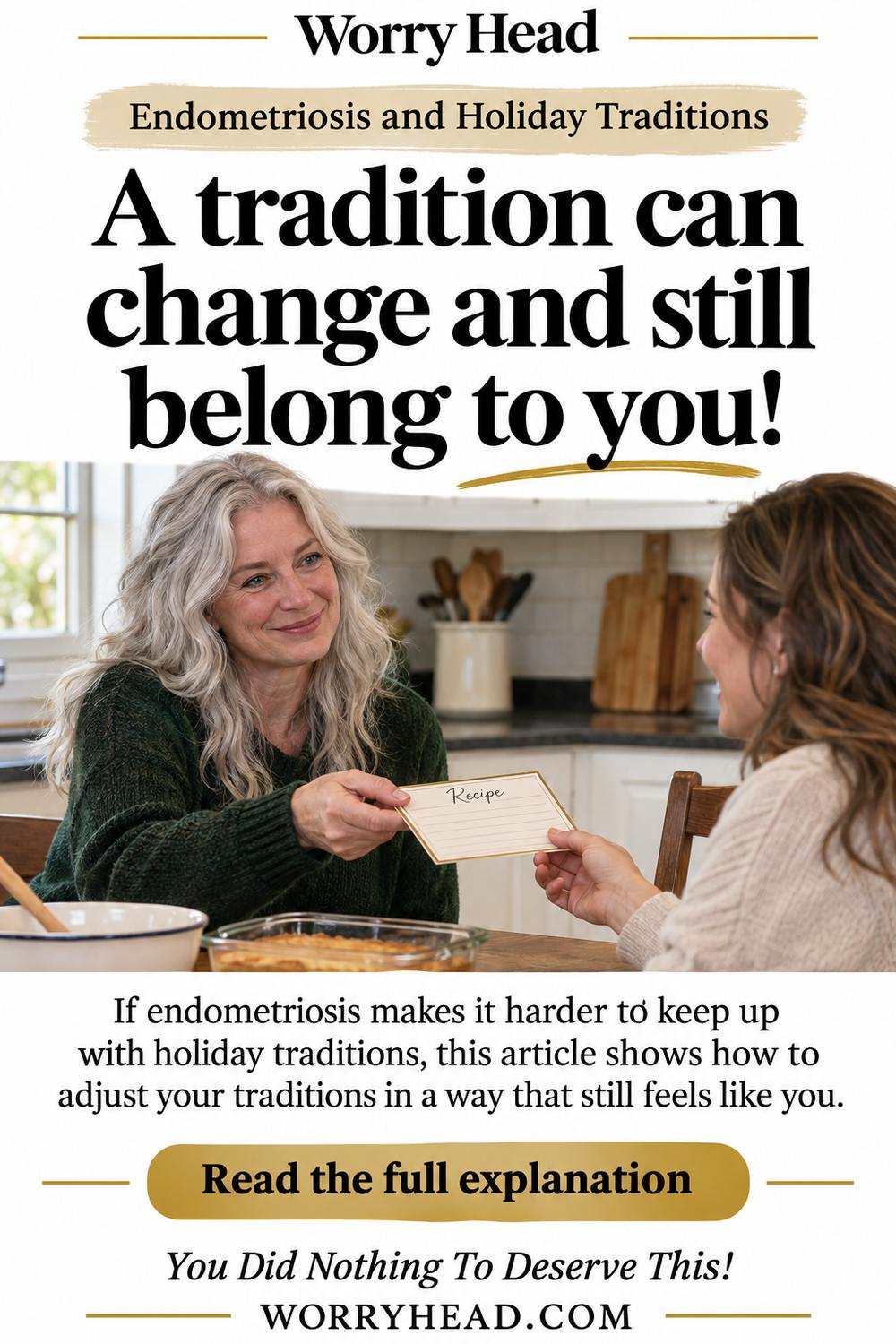
Keep, Adapt or Pause with Endometriosis and Holiday Traditions
You do not have to redesign the whole season at once. Start with one tradition and consider three possibilities: keep it as it is, adapt part of it or leave it this time. You can choose differently for different customs. Keeping one meaningful activity does not oblige you to maintain every other expectation around it.
An adaptation might change the location, the length of the gathering or who does the preparation. It might mean sharing a particular food without hosting the full meal. It could involve joining a small part of an event. These are examples, not a suggestion that an adapted version must feel equally satisfying or solve every practical difficulty.
Be honest about what you want rather than choosing the option that looks most positive. You may prefer to miss a tradition this year instead of attending in a way that feels painful. You may want to try a smaller version despite mixed feelings. Neither decision needs to become a statement about what you will do forever.
Consider cost and access alongside emotion. A different venue, extra transport or bought-in food may not be affordable or available. Adaptation does not have to mean purchasing a solution. Sometimes the most realistic change is a smaller expectation, a different division of work or a clear decision not to do one part.
Discuss Endometriosis and Holiday Traditions Before Plans Are Fixed
Give the people affected the information they need while there is still time to make arrangements. You might say, “I want to keep our meal together, but I cannot host it this year.” That preserves the part you value and states the limit plainly. It does not require a detailed explanation of symptoms to make the change understandable.
If you have a specific offer, name it accurately. “I can send the recipe” is different from “I will help with everything.” A broad offer made to soften disappointment can quietly return the whole responsibility to you. Choose wording that matches what you are actually willing and able to take on.
If someone responds with “but we always do it this way”, you can acknowledge the history without treating it as a binding instruction. “I know, and it matters to me too. This is what I can offer this year.” Repeating the practical boundary may be more useful than searching for a new explanation each time the old expectation returns.
You can ask a partner or relative to help communicate the change, with your agreement about what they may share. They should not disclose private health details to make the case more persuasive. A clear household decision can be communicated respectfully without turning your body into the evidence everyone is invited to discuss.
When Endometriosis and Holiday Traditions Bring Grief
An arrangement can be sensible and still hurt. You might feel relieved that someone else is hosting and sad that your home will not hold the gathering. You might enjoy a shorter visit while missing the freedom to stay. Practical success does not require you to feel uncomplicated gratitude for every adaptation.
Try not to make the new version compete with the old one. It may offer something worthwhile without replacing everything you miss. You can say, “This was good, and I am still sad about what changed.” Both parts deserve room. A family does not need to force a cheerful verdict before the day is over.
Memories may also arrive unexpectedly through music, food or a familiar object. You can choose whether to talk about them, take a quiet moment or continue with the activity. There is no required emotional response to a tradition. You do not owe other people a performance of either happiness or grief.
If you are supporting someone, avoid immediately explaining why the new arrangement is better. Ask what they miss. Listening to that answer does not mean the practical decision was wrong or must be reversed. It means the person is allowed to have an emotional experience that is larger than the plan you successfully organised.
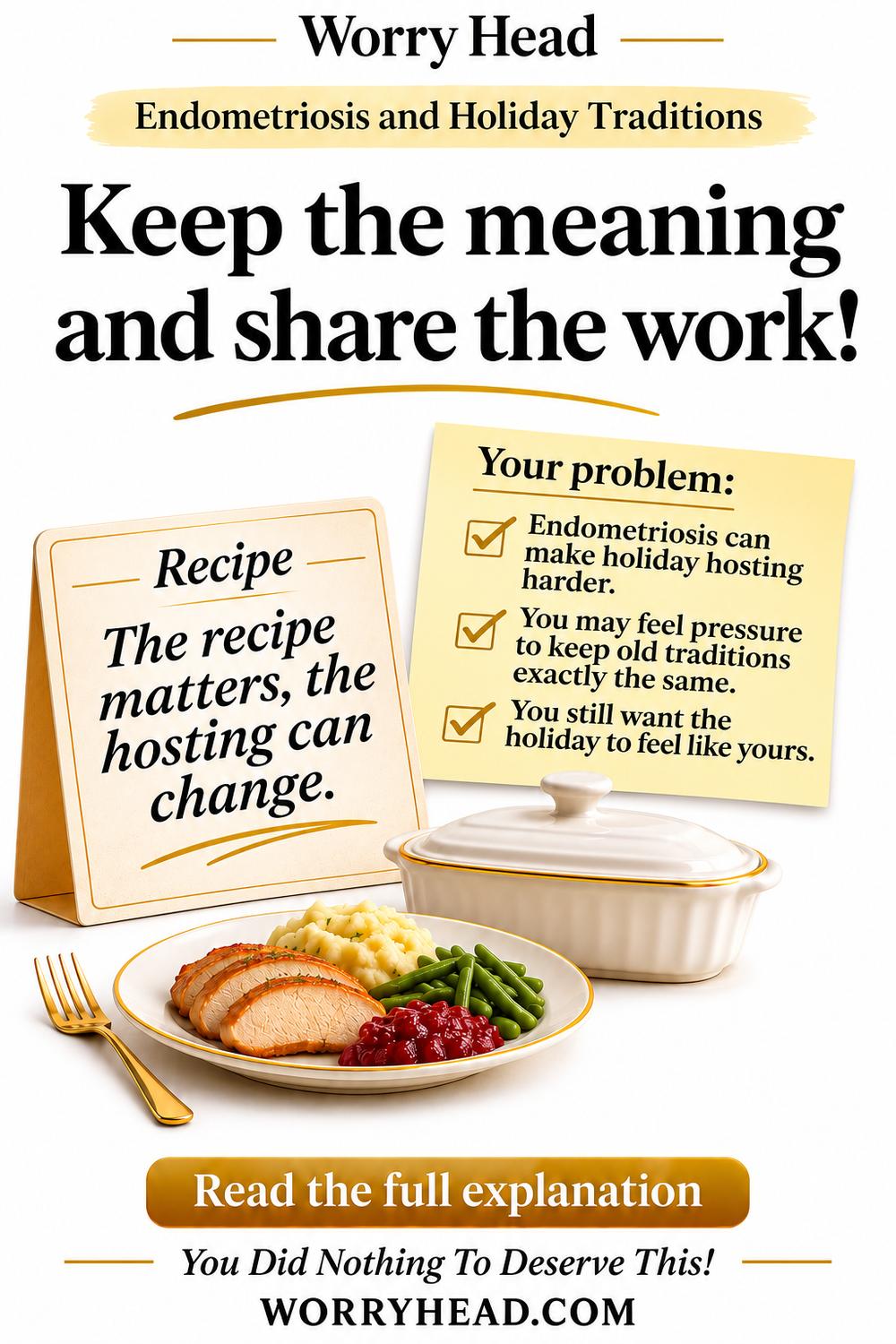
Connection Can Survive Changes in Endometriosis and Holiday Traditions
Connection does not have to depend on completing the same task in the same way. You may want to share the story behind a recipe, choose a piece of music or spend time with one person rather than a whole group. Ask what kind of participation feels meaningful now, instead of assuming that attendance and absence are the only choices.
If you join only part of an event, make the arrangement clear enough that people do not keep renegotiating it during the day. You might explain when you expect to arrive, what you are not taking responsibility for and how you will decide when to leave. Keep uncertainty visible where you cannot promise an exact plan.
Photographs and messages can offer connection if you want them, but they are not automatically helpful. You may enjoy seeing the celebration or find it difficult. Let people know your preference without feeling obliged to justify it as the healthiest or most generous response. You can change your mind later.
I would want my wife to feel included as a person, not remembered only through the jobs she usually does. That means asking for her company, thoughts or choices without attaching a task to the invitation. A place at the table should remain a place, even when the person is no longer preparing the table for everyone else.
Review Endometriosis and Holiday Traditions One Year at a Time
Afterwards, notice what the arrangement actually required. Did sharing the cooking also share the planning? Did the shorter visit remain short? Did you spend the day managing other people’s concern or disappointment? These questions can reveal what needs changing next time without turning the event into a scorecard of success or failure.
Keep any review small. One useful observation may be enough: “Next time, I would like someone else to handle the messages as well.” You do not need to solve every holiday for the coming years while you are still processing this one. A recurring tradition can be adjusted gradually as circumstances and preferences change.
Be cautious about letting one manageable day become a new permanent expectation. If an arrangement worked once, you can appreciate that without promising it will always work. Likewise, a difficult attempt does not prove you must never try again. The next decision can use the information you have at that time.
If other people enjoyed taking on a new role, let that possibility remain open. The work does not have to return automatically because it used to belong to you. Sharing responsibility can become part of the tradition itself, provided the arrangement is discussed rather than quietly assigned to whoever is least likely to object.
Final Word on Endometriosis and Holiday Traditions
A tradition belongs to the people who give it meaning, not only to the person who carries out its tasks. You can keep something important, change the work around it or leave it for a year. None of those choices erases the history you have shared.
Begin with one question: “What matters to me here?” Then make the practical plan around an honest answer. My free eBook, You Did NOTHING To Deserve This!, is there if changing a familiar role brings more feeling than the people around you can see.


About Me
Hi, I’m Lucjan! The reason why I decided to create this blog was my beautiful wife, who experienced a lot of pain in life, but also the lack of information about endometriosis and fibromyalgia for men…
READ MORE
Grab a FREE eBook!
“You Did NOTHING To Deserve This!”
Finally hear the words nobody ever said to you, that your pain is real, your tears make sense, and you did nothing to deserve endometriosis, the dismissal, or the way it has rewritten your life.
Related Questions You May Be Asking About Endometriosis and Holiday Traditions
Does Adapting a Tradition Mean Giving Up on It?
Not necessarily. You may be preserving its meaning while changing the work, timing or setting. You can also decide not to continue a tradition if that is what you want.
What if My Family Is Disappointed?
You can acknowledge disappointment while keeping a practical limit. Their feelings do not automatically make the old arrangement possible. Clear information helps people make another plan.
Can a Change Be Just for This Year?
Yes. You do not have to decide the future permanently. Describe the current arrangement accurately and avoid promises about later years that you do not yet know you can keep.
Endometriosis and Holiday Traditions References
