Why Endometriosis Makes You Feel Left Behind?
Have you ever wondered why endometriosis makes you feel left behind while everyone else seems to keep moving towards the life you once pictured, or that you may feel that you are losing yourself?
You may be watching friends build careers, travel, become parents, or make ordinary plans while your own days are organised around pain, exhaustion, appointments, and recovery. When your body keeps forcing pauses you did not choose, it can feel as though life has moved on without you, even when you are trying harder than anyone can see.
Endometriosis can make you feel left behind because of the unpredictable pain, fatigue, bleeding, treatment, and recovery interrupting work, study, friendships, intimacy, and plans. Watching others reach milestones while your life pauses can create grief, loneliness and the false sense that you are failing.
I am not a clinician; I am a husband, blogger and careful researcher sharing what years beside my wife have taught me, and I have placed every medical and health source I consulted, including WHO, NICE, NHS, ESHRE and peer-reviewed studies, at the end of this article.
This feeling is not simply jealousy, oversensitivity or a negative attitude you need to correct. The World Health Organization recognises that pain, fatigue, infertility, anxiety, depression, poor sexual health and social isolation can dramatically reduce quality of life for someone living with endometriosis.
Researchers have also found that unpredictable symptoms can interfere with social participation and leave you feeling unlike the person you used to be. You may appear to be standing still from the outside, yet inside that pause you are managing pain, uncertainty, disrupted plans and losses that nobody else is counting.
I have watched my wife, who lives with stage IV endometriosis, miss plans she genuinely wanted, rest while the world carried on, and quietly wonder whether she had become less of the woman she once was. Standing beside her taught me that she was not falling behind; she was carrying an illness most people could not see while still finding ways to remain herself.
As you read on, I want to help you understand where this feeling comes from, what it quietly takes from you, and how to stop judging your life by a timeline your illness keeps interrupting. You are not finished, and you are not less worthy because your route has changed.
- How Endometriosis Makes You Feel Left Behind in Everyday Life?
- Stop Measuring Life by Milestones
- Name the Losses You Carry
- Build Plans Around Uncertain Symptoms
- Protect Friendships Without Overexplaining Yourself
- Redefine Progress on Painful Days
- Ask for Practical Workplace Support
- Make Space for Fertility Grief
- Let Your Partner Share the Weight
- Keep One Future Hope Alive
- Why Endometriosis Makes You Feel Left Behind Around Other People?
- Why Endometriosis Makes You Feel Left Behind in Your Relationship?
- When to Seek Medical Help?
- Questions to Ask Your Doctor
- Final Word on Why Endometriosis Makes You Feel Left Behind
- FREE eBook
How Endometriosis Makes You Feel Left Behind in Everyday Life?
The reason endometriosis makes you feel left behind is not that you lack strength; it is that your life keeps being interrupted by symptoms other people never have to organise their days around. Pain rarely checks whether you have an important meeting, a family celebration, a long-awaited holiday or something simple you promised yourself you would enjoy.
Fatigue can remain after the worst pain has eased, taking away the energy you expected to have once the flare finally settled.
You may say no to plans because you cannot predict how your body will feel tomorrow, never mind next month. After enough cancellations, you can start declining invitations before anyone has even asked, partly to avoid disappointing them and partly to protect yourself from another painful reminder of what you cannot reliably do.
That is how isolation can grow quietly, not because you stopped caring about others, but because taking part has become physically, emotionally and practically harder.
Comparison then becomes almost impossible to escape. A friend’s promotion can remind you of the workdays pain has taken, while another pregnancy announcement may touch a fear or grief you have never felt safe enough to explain. Their happiness can be genuine, and your sadness can still be genuine too; one feeling does not cancel the other or make you a bad friend.
Fertility uncertainty may make birthdays, weddings and questions about children feel heavier than they appear to everyone else. Work and study can create another painful divide because you may have the ability, ambition and intelligence to move forward, yet still need absence, flexibility, treatment or recovery time.
Research and international guidance recognise that this condition can restrict ordinary activities and affect employment, education, relationships, psychological wellbeing and overall quality of life.
What hurts most is often the gap between the person you know you are and the amount of her the world currently gets to see. You are expected to celebrate visible achievements, yet nobody gives you a certificate for surviving a flare, attending another appointment, recovering from surgery or rebuilding your confidence after being dismissed.
Adapting your life to pain is demanding work, even when it produces nothing another person can photograph or praise.
Your timeline may have changed, but that does not mean your value, intelligence, beauty, or capacity for a meaningful future has decreased. You do not need to pretend that every delay is a hidden blessing, because some losses deserve to be named honestly before they can be carried more gently.
I have watched my wife look at the lives of others and quietly wonder where the woman she once expected to become had gone. There were times I wished I could place her hand on my heart and somehow make her feel what I could still see so clearly: she had not become less lovable, less capable, or less worthy just because illness had asked more of her than life asked of those around her.
The lessons below grew from helping her through those moments, and from learning that support must become practical when comforting words are no longer enough.
- Stop measuring life by milestones
- Name the losses you carry
- Build plans around uncertain symptoms
- Protect friendships without overexplaining yourself
- Redefine progress on painful days
- Ask for practical workplace support
- Make space for fertility grief
- Let your partner share the weight
- Keep one future hope alive
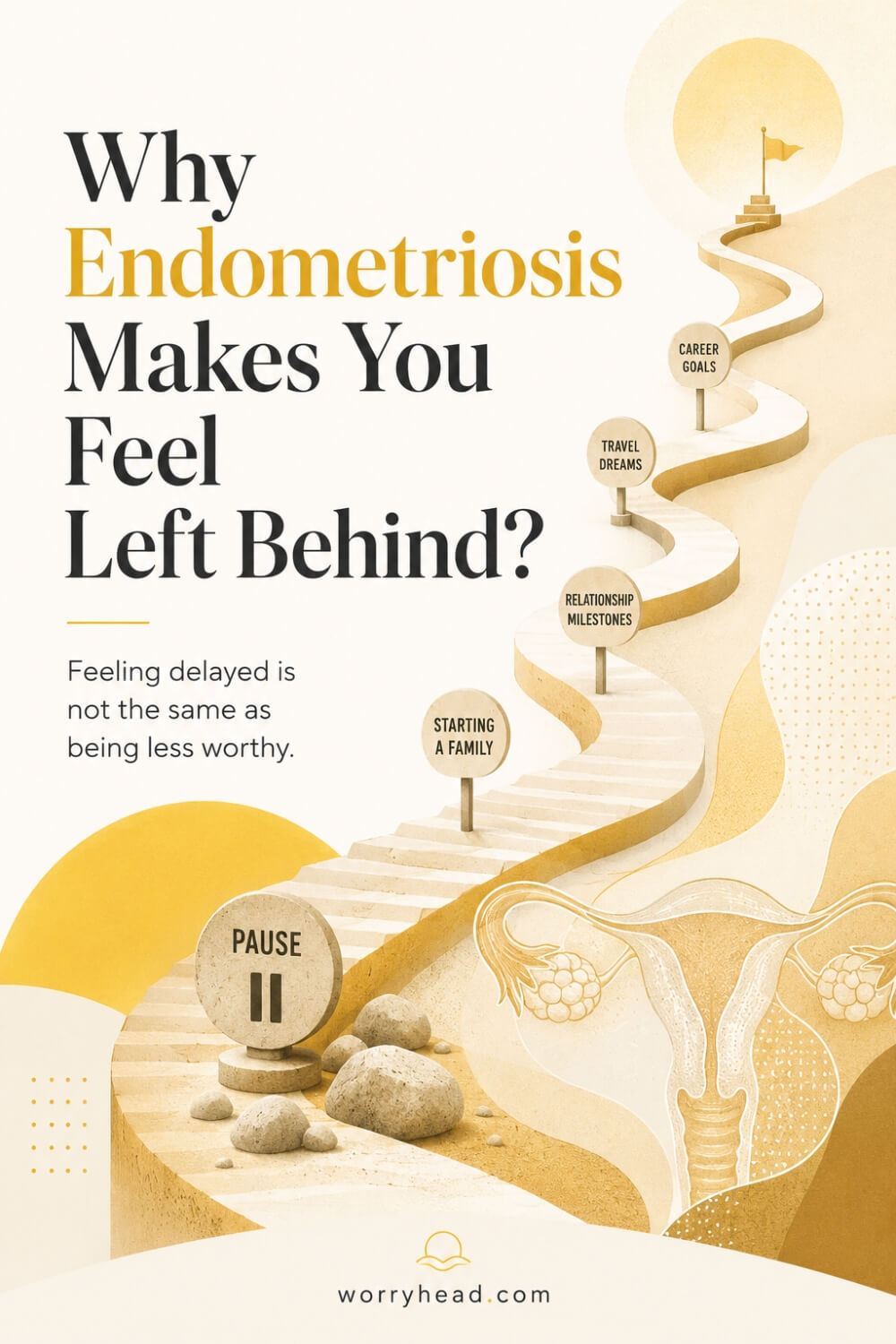
Stop Measuring Life by Milestones
A life measured only by promotions, weddings, pregnancies, mortgages and perfect photographs will always make illness look like failure. Those milestones are visible, but they do not show the private cost of getting through a painful morning, attending a frightening appointment, or choosing rest before your body forces you to stop. Your life is not smaller because its hardest achievements cannot be displayed.
I learned this while watching my wife compare her interrupted years with lives that seemed to move in a straight line. I could see how much courage her ordinary days required, even when she could only see what had not happened. Begin measuring your life by what is true for you: the boundary you kept, the help you accepted, the symptom you reported, and the moment you chose kindness instead of blame.
You are not late to your own life. You are travelling through circumstances that demand a different pace, and your worth was never supposed to depend on arriving before somebody else.
Name the Losses You Carry
You may be grieving more than one thing, even when nobody around you has recognised a loss. Endometriosis can affect plans, confidence, spontaneity, intimacy, work, study, friendships and the picture you once held of your future. Naming those losses does not mean you are giving up; it means you are finally being honest about what has hurt.
I used to think encouragement meant quickly reminding my wife of everything she still had. I learned that love sometimes sounds more like, “I understand why this hurts, and you do not have to make it positive for me.” She did not need me to repair every feeling; she needed room to feel it without being rushed towards gratitude.
Write down what you miss, what changed, and what you never received the chance to choose. Grief becomes heavier when it has no language, but once it is named, you can begin deciding what needs mourning, what needs support and what might still be rebuilt in another form.
Build Plans Around Uncertain Symptoms
Planning with endometriosis can feel like making promises on behalf of a body that never gave you its schedule. Instead of choosing between never planning and repeatedly pushing until you crash, build flexibility into the plan from the beginning. Choose refundable bookings, shorter visits, nearby rest spaces, your own transport and an agreed way to leave without apologising.
My wife and I learned to create a main plan, a gentler version and a home version. That did not remove disappointment, but it stopped every symptom change from turning the whole day into a failure. A cancelled restaurant could become a quiet meal together, and a missed outing could become rest without resentment.
Tell trusted people that your attendance may depend on pain and energy, not affection. You are not unreliable because your symptoms are unpredictable. A flexible plan protects your body while still leaving a door open to joy, connection and the parts of life you do not want illness to own completely.
Protect Friendships Without Overexplaining Yourself
You should not have to submit a medical report every time you cancel a coffee, leave early, or take longer to reply. A simple explanation can be enough: your symptoms have changed, you need to rest, and you still value the friendship. The right person may feel disappointed, but they will not make you prove that your pain deserves consideration.
I have seen my wife use precious energy trying to make other people understand every detail before allowing herself to say no. That effort becomes another burden when the listener has already decided to minimise what they cannot see. Explain what helps the relationship, not everything required to defend your character.
You can offer realistic forms of connection, such as a short call, a flexible visit or a message when your energy returns. Friendship should contain room for changing capacity. Anyone who only accepts you when you can perform wellness is asking for access to a version of you, not caring for the whole person you are.
Redefine Progress on Painful Days
Progress on a painful day may look nothing like progress on a manageable one. It might mean taking medication as prescribed, eating something, changing into clean clothes, answering one message, or stopping before pain becomes unbearable. These are not pathetic substitutes for a productive day; they are ways of caring for a body already doing difficult work.
My wife has had days when getting from the bed to the sofa took more determination than many healthy tasks ever asked of me. I learned not to praise her only when she pushed through, because that can teach someone that suffering matters only when it remains useful. Rest, pacing, and asking for help can also be brave decisions.
Choose a smaller measure for hard days and let it count fully. You do not need to earn rest by collapsing first. Adjusting the goal when your capacity changes is not cheating; it is choosing a finish line your body can reach without paying for it for days afterwards.
Ask for Practical Workplace Support
Work can become one of the sharpest places where you feel left behind because ability and attendance are not the same thing. You may still have the knowledge, commitment and ambition, yet pain, fatigue, bleeding or appointments can make fixed routines harder to sustain. NICE recognises that endometriosis may significantly affect daily activities and the ability to work.
Where possible, ask for specific support rather than saying only that you are struggling. This might include flexible hours, remote work, easier toilet access, adjusted duties, appointment time or a phased return. Keep a record of symptoms and the changes that would help you work safely.
Needing an adjustment does not erase your professionalism. My wife’s limitations never cancelled her skills; they showed how badly rigid systems can waste capable people. Support should help your ability remain visible when your body cannot meet a workplace built around predictable health.
Make Space for Fertility Grief
Fertility grief can exist before any final answer, which can make it lonely. You may grieve delayed plans, difficult decisions, treatment pressure or the ease with which others discuss pregnancy. ESHRE guidance recognises fertility concerns as an important part of endometriosis care, not a side issue you should silently manage.
You may protect yourself around announcements, baby showers, questions about children, and conversations that open a wound. Loving someone does not require exposing yourself to every painful moment to appear supportive. You can be pleased for another person and devastated for yourself at once.
Infertility became part of my marriage, but it never made my wife less of a woman or our life less real. I could not remove that grief, yet I refused to let her carry it as though it belonged only to her. Your future deserves honest information, emotional support, and room to be more than one reproductive outcome.
Let Your Partner Share the Weight
A partner cannot take endometriosis out of your body, but they can stop you from carrying every consequence alone. They can learn your symptoms, attend appointments, manage practical tasks, protect your rest, and notice when you are pretending to cope. Support matters when it reduces your load instead of asking you to supervise somebody else’s concern.
I made mistakes by waiting for instructions because I feared doing the wrong thing. Over time, I learned to look around, listen, and take responsibility for what did not require my wife’s direction. Love was not telling her I was available; it was noticing the meal, laundry, prescription, or phone call before it became another job for her.
You still deserve independence and choice, so sharing the weight should never become control. Tell your partner what comfort feels like, what makes things worse, and which tasks they can own. The goal is not to rescue you, but to stand beside you so illness does not isolate you within your relationship.
Keep One Future Hope Alive
When illness has interrupted enough plans, hope can start to feel dangerous. You may avoid wanting anything because disappointment seems easier when you never admit what matters. Yet hope does not need to be a huge promise about recovery, motherhood, work, or a pain-free life; it can be a small direction that belongs to you.
For my wife, hope has not always meant believing everything will return to how it was. Sometimes it has meant finding a gentler way to enjoy something she loved, imagining a quieter future or trusting that a terrible week is not the whole story. I have learned not to force hope into her hands when she is grieving, but to keep a light on until she is ready to look towards it.
Choose one possibility illness has not taken: a place you want to see, something you want to create, a relationship you want to deepen, or a morning you want to make softer. Your route may change again. Keeping one hope alive reminds you that your life is still unfolding, not merely managed.
Why Endometriosis Makes You Feel Left Behind Around Other People?
One of the cruellest parts of this illness is that loneliness can follow you into a room filled with people you love. You may be smiling, listening, and trying to join in while part of your mind is measuring pain, searching for the nearest toilet, or wondering how long you can remain upright. Everyone else appears present in the moment, while you are being pulled between the conversation and a body demanding your attention.
This is another reason endometriosis makes you feel left behind, because you can be physically included yet emotionally separated by an experience nobody else can feel. When people speak casually about busy weekends, effortless intimacy or plans made months ahead, you may realise how different your private calculations have become. You are not bitter for noticing that difference; you are tired of needing courage for things others can do without thinking.
I have watched my wife become quieter in company when pain started rising, not because she had nothing to say, but because hiding it consumed the energy she needed to speak. I could see the small changes others missed: her posture tightening, her hand resting near her abdomen and the careful smile she used when she did not want the evening to become about her.
There were moments when she told me she felt boring, difficult or absent, even though she had tried harder than anyone in the room simply to be there. Hearing that hurt because I never saw a burden sitting beside me; I saw the woman I loved spending her limited strength to remain connected to the people who mattered.
Repeatedly hiding symptoms can slowly divide your public self from your private reality. You may become known as the dependable colleague, cheerful friend or supportive family member while nobody realises how often you cry, recover or collapse afterwards.
That divide can make compliments feel strangely painful because others are praising how well you appear, while you are wondering whether anyone would stay if they saw the cost. You should not need to look visibly unwell before your experience is believed.
Real connection begins when you are allowed to arrive as you are, not only as the version of yourself who can keep up. The people who truly care about you will not measure your love by how late you stay, how often you attend, or how convincingly you hide your pain.
My wife did not need me to drag her back into the life she once had. She needed me to sit beside her in the life she had now and show her, repeatedly, that she was still wanted there.
Why Endometriosis Makes You Feel Left Behind in Your Relationship?
Chronic pain can change the rhythm of a relationship long before either partner finds the words to explain what has changed. You may need more rest, less physical closeness, or help with tasks you once completed without thinking, and that change can leave you fearing that you are no longer the partner you promised to be.
When endometriosis makes you feel left behind, you may compare your relationship with couples who travel freely, socialise often or seem to share an effortless intimate life. Their lives may look untouched by the appointments, cancelled evenings, medication, painful sex and exhaustion that can quietly enter your own home.
My wife sometimes worried that I was missing out because of her health, as though loving her had become a sacrifice I was too kind to admit. I learned to answer that fear with actions, because telling her she was not a burden meant little unless I also remained patient when plans changed and affectionate when physical intimacy was not possible.
There were nights when pain placed distance between us without weakening the love underneath it. We both lost pieces of the life we had expected, but I never wanted her to mistake shared disappointment for regret about choosing her.
Supporting her meant learning that intimacy could also be a hand held during a flare, a warm meal prepared without being requested, or quiet company when speaking required too much energy. She still needed to feel desired, respected and seen as my wife, not reduced to a patient whose body constantly needed managing.
The most healing thing a partner can offer is not a promise that everything will return to normal, but proof that love can remain steady while both of you build a new normal together.
When to Seek Medical Help?
Feeling left behind can make you minimise your symptoms because you do not want another appointment, another explanation, or another person questioning what you feel. Please do not wait until pain becomes unbearable before asking for help. Seeking medical advice is not admitting that your body has defeated you; it is one way of protecting the life you are still trying to live.
Arrange an appointment with your GP or endometriosis team when pelvic pain repeatedly interrupts work, sleep, education, relationships or ordinary daily activities. You should also speak to them if your periods become more painful, heavier or irregular, or if you experience pain during sex, urination or bowel movements.
Bleeding between periods, lasting changes in your bowel or bladder habits, persistent bloating, loss of appetite or unexplained weight loss should also be assessed rather than automatically blamed on your existing diagnosis.
Having endometriosis does not mean every new symptom is caused by endometriosis. Other gynaecological, bowel, bladder and pelvic conditions can produce similar problems, so a noticeable change deserves a fresh conversation. You know the usual pattern of your body, and it is reasonable to ask why something now feels different.
Ask for a review when your present treatment is not helping enough, causes side effects you cannot manage, or no longer suits your priorities.
NICE guidance supports referral for further gynaecological assessment when initial treatment is ineffective, unsuitable or not tolerated, rather than expecting you to continue struggling indefinitely. Specialist endometriosis services may also be appropriate when deeper disease, an endometrioma or involvement of organs such as the bowel, bladder or ureter is suspected.
Before the appointment, write down when symptoms occur, how long they last and what they stop you from doing. Include pain outside your period, fatigue, bleeding, digestive changes, urinary symptoms, painful sex, medication effects and the emotional impact. A symptom diary cannot prove how much you are suffering, but it can help turn a complicated month into information a clinician can understand and act upon.
Most ongoing symptoms can be discussed through a planned appointment, but some changes need urgent advice. Seek prompt medical assessment if pelvic pain is accompanied by difficulty passing urine or stool, blood in your urine or stool, unusual vaginal bleeding or discharge, fever, shivering, vomiting, or the possibility that you may be pregnant. These symptoms do not automatically mean something dangerous is happening, but they should not be managed by guessing at home.
Seek emergency help if pelvic pain suddenly becomes severe or rapidly worsens, particularly if you feel faint, dizzy or confused, pass out, struggle to breathe, develop shoulder-tip pain or have heavy vaginal bleeding. These signs need urgent assessment because pelvic pain can have causes other than endometriosis, including conditions requiring immediate treatment.
Your emotional health deserves medical attention too. Feeling delayed, isolated or frightened about your future can gradually become depression, hopelessness or the belief that everyone would be better without you. Tell your GP or another trusted healthcare professional when these thoughts are growing, affecting daily life or making it difficult to care for yourself.
If you feel that you might harm yourself, have already harmed yourself or cannot keep yourself safe, seek emergency mental health support immediately and stay with someone you trust while help is arranged. You do not need to wait until you can explain your feelings perfectly, and you are not wasting anyone’s time by saying that you are no longer safe alone.
When my wife struggled, I learned that saying, “Tell me if it gets worse,” placed too much responsibility back onto her. A supportive partner should notice changes, help record symptoms, offer to attend appointments and speak up when the woman they love is too exhausted to keep repeating herself.
You deserve care before you reach breaking point. Asking for help will not instantly return every missed opportunity, but it may give you better symptom control, clearer answers and more room to take part in your own life again.

Questions to Ask Your Doctor
Medical appointments can feel intimidating when you have already spent years trying to explain pain that keeps taking pieces of your life. You may enter the room carrying dozens of worries, then leave remembering only half of what was said. Writing down your questions beforehand can help you move the conversation from “I am struggling” towards what should happen next.
You are not being difficult by asking for explanations, alternatives or a clearer plan. Your symptoms may affect your work, relationships, emotional wellbeing and ability to make future plans, all of which are relevant to your care. Current guidance recognises that endometriosis can require investigation, symptom treatment, specialist referral, fertility support and help with its wider emotional and practical effects.
Could anything else be causing these symptoms?
It is reasonable to ask whether another condition could be present alongside endometriosis or producing similar symptoms. Adenomyosis, fibroids, pelvic inflammatory disease and irritable bowel syndrome can share some features, while bladder, bowel, ovarian and musculoskeletal problems may also need consideration.
You are not questioning your diagnosis by asking this. You are making sure that new or changing symptoms are properly assessed instead of everything being placed beneath one familiar label.
How should I describe the effect on my life?
Tell your doctor what the symptoms stop you from doing, not only where they hurt. Explain missed work, disturbed sleep, cancelled plans, painful sex, difficulty concentrating, exhaustion, isolation and the recovery time required after a flare.
I learned this while helping my wife prepare for appointments. Saying that her pain was severe mattered, but explaining that she could not stand, sleep, work or leave home showed the true size of what the illness was taking from her.
Which tests are appropriate for my symptoms?
Ask whether you need an examination, ultrasound, MRI or another investigation, and what each test is expected to show. You can also ask whether the person performing or interpreting the scan has experience in recognising endometriosis.
A normal scan should not automatically end the conversation. Ultrasound and MRI can support diagnosis and help identify some forms of disease, but they do not always detect every lesion, particularly superficial peritoneal endometriosis.
What does a normal scan actually rule out?
This is one of the most important questions you can ask if your symptoms continue despite reassuring imaging. Ask your doctor whether the result means no deep disease or ovarian endometrioma was seen, rather than assuming it proves that no endometriosis exists anywhere.
You deserve a precise explanation of what was examined, what was visible and what remains uncertain. Being told that a result is “clear” can feel final, but the meaning of that word depends on the test, the equipment and the type or location of disease being considered.
Should I be referred to a specialist service?
Ask whether your symptoms justify referral to a gynaecologist or specialist endometriosis centre, especially when initial treatment has failed, symptoms are worsening, or bowel, bladder, ureteric or deep disease is suspected. NICE guidance supports further referral when symptoms are not relieved by initial treatment and specialist care for suspected or confirmed deep endometriosis.
Do not feel guilty for asking whether you need greater expertise. My wife’s stage IV disease involved areas that required more than a quick conversation about painful periods, and recognising that complexity was not an exaggeration; it was essential to planning safer care.
What are all my treatment options?
Ask the doctor to explain the reasonable choices for your particular symptoms, including expected benefits, limitations, side effects and how long each option should be tried. Treatment may involve pain relief, hormonal medication, surgery or support for related problems, but the right choice depends on your health, priorities, previous experiences and whether pregnancy is currently important to you.
You can ask, “What are we trying to improve with this treatment?” and “How will we know whether it is working?” A plan becomes easier to trust when you understand its purpose rather than being handed another prescription without a clear destination.
What happens if this treatment fails?
Before beginning a treatment, ask what the next step will be if it does not help or causes unacceptable side effects. Find out how long you should continue before requesting a review and which symptoms should make you contact the service sooner.
This question gives you a route forward when hope is already fragile. You should not have to wait indefinitely while another season of your life disappears into pain simply because nobody explained when the plan should be reconsidered.
How can we manage pain while I wait?
Waiting for investigations, referrals or surgery should not mean being left without support. Ask about a safe pain-relief plan, medication side effects, fatigue management, pelvic health physiotherapy, pain services and any local support available for living with long-term symptoms.
Be honest about what you currently take, including medicines bought without a prescription and any supplements. The aim is not to prove how much pain you can tolerate; it is to find the safest realistic support while longer-term decisions are being made.
How could treatment affect my fertility?
You deserve this conversation whether you want children now, later, are unsure or do not want them at all. Ask how the disease, medication or proposed surgery could affect fertility, whether ovarian reserve needs discussing and when referral to a fertility specialist would be appropriate.
Hormonal treatment used for pain is not intended to improve fertility while you are trying to conceive, and surgery involving an endometrioma may carry risks for ovarian tissue that should be explained beforehand. Fertility decisions should therefore reflect your priorities rather than assumptions made for you.
If surgery is suggested, what exactly is planned?
Ask whether the purpose is diagnosis, pain reduction, removal of visible disease, treatment of an endometrioma or protection of an affected organ. Find out who will perform the operation, what experience the team has with the suspected locations, and whether bowel, bladder or other specialists may be required.
Also ask what may not be treatable during the procedure, what recovery could involve and whether surgery is expected to improve every symptom. My wife entered what was expected to be a much shorter procedure, but the surgery continued for four and a half hours because the disease was far more extensive than anticipated. Preparation cannot remove every uncertainty, but you deserve more than vague reassurance before giving someone access to your body.
Can my emotional wellbeing be included in the plan?
Tell your doctor when feeling left behind has become persistent sadness, anxiety, hopelessness, withdrawal or fear about your future. This does not mean the pain is psychological; it means physical illness has emotional consequences that also deserve care.
The NHS recognises that endometriosis can be associated with low mood and anxiety, and mental health support may form part of living with the condition. Asking for that support does not weaken your medical case. It acknowledges the whole person who has been trying to survive it.
What is the next concrete step?
Before leaving, ask what will happen next, who is responsible for arranging it, and when you should expect to hear something. Find out who to contact if the appointment, scan or referral does not arrive, and ask when your treatment should be reviewed.
You may wish to repeat the plan back in your own words or ask for it to be written down. When my wife was exhausted or overwhelmed, I learned to listen, take notes and help remember what had been agreed, not speak over her.
You are allowed to take somebody you trust, request clarification, and say that you need time before making a major decision. A good medical conversation should leave you better informed, not smaller, ashamed, or frightened to ask another question.
You may still have to wait for answers, but you should not leave without direction. The purpose of these questions is not to challenge your doctor; it is to help both of you build a plan that recognises your symptoms, your priorities and the parts of life you are fighting to reclaim.
Final Word on Why Endometriosis Makes You Feel Left Behind
You are not imagining the distance between your life and the lives you see moving around you. Endometriosis can interrupt work, education, intimacy, friendships, sleep, fertility plans and ordinary moments that once required no preparation. Its effects can reach far beyond pelvic pain, influencing energy, confidence, emotional wellbeing and social participation.
That wider burden is recognised by major health organisations, even when the people around you do not understand it.
When endometriosis makes you feel left behind, comparison can turn every milestone into evidence against you. A friend’s pregnancy, promotion, holiday or spontaneous evening out may touch the place where illness has forced you to wait. You can love someone and still grieve for yourself. You can celebrate their happiness while mourning the life you expected. Neither response makes you selfish.
Please remember that a delayed plan is not a failed life. Resting is not giving up. Changing direction is not proof that you lacked determination. You have been making decisions inside circumstances others never have to consider, often while hurting, exhausted, or frightened about what your body may do next.
I have watched my wife lose days she wanted, opportunities she deserved, and parts of herself she thought would be there. I have also watched her keep loving, learning, laughing and trying after nights that would have broken many people. Her strength was not always loud. Sometimes it looked like getting dressed. Sometimes it meant cancelling before she collapsed. Sometimes it was allowing me to help when independence felt tied to her dignity.
As her husband, I learned that love cannot remove every symptom, but it can refuse to make her feel guilty for having them. A partner can listen without correcting, adjust plans without sulking, learn without being chased, and carry weight without demanding praise. The woman beside you should never have to earn tenderness by pretending she is well.
You may need medical care, treatment changes, workplace adjustments, emotional support, or firmer boundaries. You may also need permission to grieve without being told to look on the bright side. Good support does not rush you past loss. It helps you face what changed while protecting what remains possible.
Your future may not unfold in the order you imagined. Some dreams may change shape, and others may take longer or require help. Yet your life is not waiting to begin after pain disappears. It is happening now, in the choices you make, the care you accept, the relationships that hold you gently and the small hopes you keep alive.
You are not behind in courage, love, intelligence or worth. You are moving through a harder landscape at a pace your body can survive. Please judge yourself by the distance you have travelled while carrying what others could not see. I hope you stop asking why you cannot keep up and begin asking what would help you feel supported, included and safe. Your timeline is yours, and it holds room for meaning, connection and moments that belong to you.
You are not failing because pain changed your pace. Your life still holds love, purpose, connection and possibilities that do not belong to anyone else’s timetable. Let yourself grieve what changed, accept the support you deserve, and remember that moving differently is still moving. You remain worthy at every stage of the journey.
Please leave a comment and share what feeling left behind has meant in your life, then take a look at my FREE 130+ pages eBook at the bottom of this post. It was written to remind you of something you should never have been made to doubt: you did nothing to deserve this.

About Me
Hi, I’m Lucjan! The reason why I decided to create this blog was my beautiful wife, who experienced a lot of pain in life, but also the lack of information about endometriosis and fibromyalgia for men…
READ MORE
Grab a FREE eBook!
“You Did NOTHING To Deserve This!”
Finally hear the words nobody ever said to you, that your pain is real, your tears make sense, and you did nothing to deserve endometriosis, the dismissal, or the way it has rewritten your life.
Related Questions You May Be Asking About Why Endometriosis Makes You Feel Left Behind
1. Why do other people’s milestones hurt so much?
Another person’s promotion, pregnancy, wedding or holiday may highlight something endometriosis has delayed or changed for you. The pain does not mean you resent their happiness. It often reflects grief for your own interrupted plans. Both emotions can exist together, and you do not need to punish yourself for feeling sadness during someone else’s joyful moment.
2. Can endometriosis make you lose friendships?
Yes, unpredictable pain, fatigue and repeated cancellations can place pressure on friendships, especially when others do not understand chronic illness. You may also withdraw because explaining yourself becomes exhausting. A healthy friendship allows flexibility without making you prove your pain. Staying connected through shorter visits, messages or calls can preserve closeness without forcing your body beyond its limits.
3. How can I stop comparing my life with others?
You may not stop comparison completely, but you can question whether you are comparing equal circumstances. Someone without chronic pain is not carrying the same physical and emotional load. Measure progress through choices that reflect your current capacity, such as protecting your health, asking for support or completing one meaningful task. Your timeline deserves its own standards.
4. Why do I no longer recognise myself?
Endometriosis can change routines, confidence, work, relationships, sexuality and the way you experience your body. When several parts of life change together, your former identity may feel distant. You have not disappeared, but you may need time to discover who you are within your present reality. Identity can be rebuilt without denying the person you were before illness.
5. What should my partner do when I feel left behind?
Your partner should listen without immediately trying to correct your feelings or make you feel grateful. Practical support may include adjusting plans calmly, attending appointments, taking responsibility for household tasks and reassuring you through consistent actions. They cannot remove every loss, but they can make sure you do not face it alone or feel guilty for needing a different pace.
Endometriosis Makes You Feel Left Behind References
- https://www.who.int/news-room/fact-sheets/detail/endometriosis
- https://www.nhs.uk/conditions/endometriosis/
- https://www.nhs.uk/symptoms/period-pain/
- https://www.nhs.uk/symptoms/pelvic-pain/
- https://www.nhs.uk/mental-health/feelings-symptoms-behaviours/behaviours/help-for-suicidal-thoughts/
- https://www.nice.org.uk/guidance/ng73/chapter/recommendations
- https://www.nice.org.uk/guidance/qs172/chapter/quality-statement-3-referral-for-deep-endometriosis
- https://www.eshre.eu/guideline/endometriosis
- https://www.eshre.eu/-/media/sitecore-files/Guidelines/Endometriosis/ESHRE-ENDOMETRIOSIS-patient-Guideline_21032022.pdf
- https://www.eshre.eu/-/media/sitecore-files/Guidelines/Endometriosis/ESHRE-GUIDELINE-ENDOMETRIOSIS-2022_2.pdf
- https://www.frontiersin.org/journals/global-womens-health/articles/10.3389/fgwh.2021.767114/full
- https://journals.sagepub.com/doi/10.1177/22840265251411717
- https://en.wikipedia.org/wiki/Endometriosis
