Why Endometriosis Makes You Feel Failed?
Have you ever wondered why endometriosis makes you feel failed, as if a disease you never chose has somehow become evidence that you are not trying hard enough?
Maybe you are exhausted from cancelling plans, struggling at work, needing help, losing confidence in your body, or watching ordinary things become harder than they used to be. And perhaps the cruellest part is that while you are the one living with the pain, you still catch yourself apologising to everyone else for what that pain changes.
Endometriosis can make you feel as though you have failed because chronic pain, fatigue, disrupted work, relationships and daily life can erode confidence and create guilt or self-blame. That feeling reflects the burden of illness and social pressure, not a personal failure or any lack of effort.
I am not writing this as a clinician, but as a husband, blogger and researcher who has spent years trying to understand what my wife has lived through, and I have placed the medical sources that shaped my understanding at the bottom of this page, including WHO, NICE, NHS, ESHRE and published research where it is relevant.
This feeling makes more sense when you place it inside the wider truth of why this illness is never your fault, because what endometriosis changes in your life should never be confused with something you caused or deserved.
One thing I want to separate carefully is the feeling from the diagnosis: feeling like a failure is not a formal diagnostic symptom of endometriosis, but many of the pressures that can create that feeling are well documented. In one large real-world study involving 27,840 women living with endometriosis, 53.2% reported feeling like a failure or feeling that they had let down family or friends.
That matters because the burden is not only pelvic pain. WHO and ESHRE recognise that endometriosis can restrict normal activities and affect mental health, relationships, sexual health, fertility and overall quality of life, while research also describes self-doubt, shame, guilt and self-criticism among women living with the condition.
When enough of those losses happen repeatedly, it can become frighteningly easy to turn what your illness prevents you from doing into a judgement about who you are.
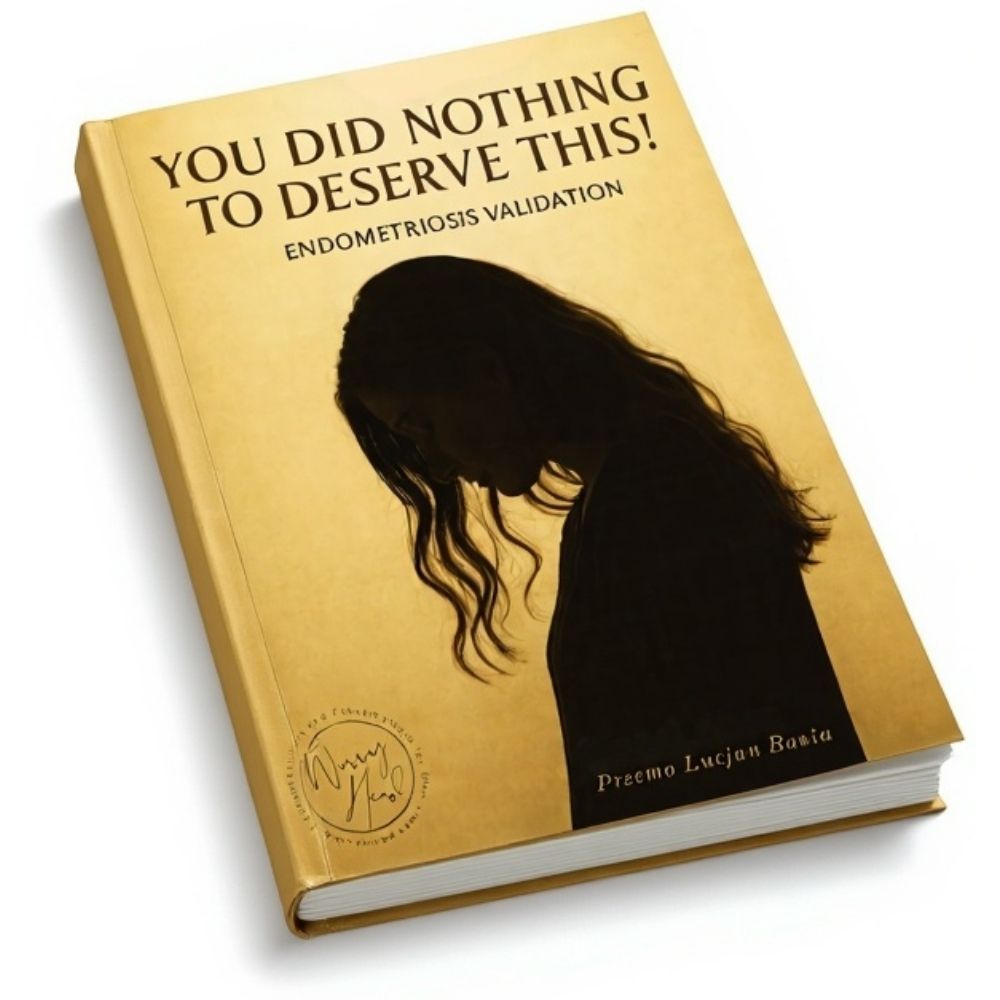
I know that distinction because I have watched my wife live through years when pain and exhaustion changed what she could promise, plan and physically do, yet the guilt could still land on her as though she had chosen any of it. The words that later became the title of my book, You Did Nothing To Deserve This!, began as something I kept telling her because I needed her to hear that illness had changed her capacity, not her worth.
If endometriosis has made you measure yourself by everything you cannot do on your hardest days, I want to help you untangle that judgement from the woman you actually are, because those two things are not the same.
Feeling that you have failed because endometriosis changed your plans can be deeply lonely. My free eBook explores guilt, identity and the mistaken idea that your worth depends on what your body allows you to do.
You Did NOTHING To Deserve This!
Endometriosis Validation for Women with Endo
- Why Endometriosis Makes You Feel Failed Even When You Are Trying So Hard?
- Why Endometriosis Makes You Feel Failed Can Reach Far Beyond Pain?
- Why Endometriosis Makes You Feel Failed Inside a Loving Relationship?
- When to Seek Medical Help?
- Questions to Ask Your Doctor
- Final Word on Why Endometriosis Makes You Feel Failed
- FREE eBook
- You Did NOTHING To Deserve This!
Why Endometriosis Makes You Feel Failed Even When You Are Trying So Hard?
The feeling often starts when the standards you use to judge yourself stay the same while your physical capacity becomes unpredictable. You still expect yourself to work, keep plans, manage the house, be present in relationships and recover quickly, while your body may be dealing with pelvic pain, fatigue, heavy bleeding or pain around sex, bowel movements or urination. The NHS recognises that endometriosis can affect everyday life, work and relationships for years, and that low mood or anxiety can sit alongside the physical symptoms.
That gap between what you believe you should be able to do and what your body allows on a particular day can become fertile ground for guilt. You cancel once and feel disappointed, cancel repeatedly and may begin calling yourself unreliable, then need help with something simple and wonder why everybody else seems to manage it.
After enough repetitions, it becomes frighteningly easy to stop thinking, “my symptoms stopped me today”, and start thinking, “I am the problem”.
Research gives language to this loss of self: in a qualitative study of 315 women with endometriosis, researchers identified themes involving feelings of inadequacy, conflict with the body and alienation from it. A separate analysis of endometriosis experiences has also described disrupted identity and self-concept, which helps explain why the emotional damage can reach much further than the hours when pain is at its worst.
A 2026 systematic review of mental-state research reported that fatigue, sleep disturbance, impaired sexual functioning, reduced self-esteem and relationship difficulties were among factors contributing to the psychological burden surrounding the condition.
Work can be especially brutal because endometriosis has repeatedly been associated with reduced work productivity as well as poorer quality of life. If you were once the person who never called in sick, never missed a deadline and always carried your share, needing adjustments or time off can feel like a verdict on your character even though it is actually a response to illness.
The same distortion can enter your relationship when pain affects intimacy, energy, household tasks or plans, because love does not automatically silence the guilt you may feel about what your partner has to adapt around.
Years of not being believed can deepen that wound too, because repeated dismissal can teach you to question whether your symptoms are serious enough to justify the help you need. Qualitative research into healthcare encounters found that being acknowledged and having your experience confirmed could strengthen self-esteem, which tells us something important about why dismissive care can hurt far beyond the appointment itself. In other words, the sense of failure may be fed not only by pain but by the messages you receive from workplaces, relationships, healthcare and your own old expectations of yourself.
None of this means every woman with endometriosis will experience the same emotional pattern, and it does not mean that feeling guilty or inadequate is inevitable. It does mean the psychological and quality-of-life burden deserves to be taken seriously, which is why ESHRE recommends discussing strategies that address wellbeing while also noting that the evidence is not strong enough to recommend one specific non-medical intervention for everyone.
I have watched my wife fight through days when her body could not give her what her mind still expected from it, and I never once looked at her and saw failure.
What hurt me was watching her apologise for needing rest, for changing plans, for not being able to give the day what she wanted to give it, because from where I stood she was already giving more courage than most people could see. Over time, I learned that loving her properly meant helping her separate what illness had limited from who she still was, and these are the practical shifts I would want you, and the person who loves you, to have within reach:
- Separate Capacity From Character
- Stop Apologising for Symptoms
- Redefine What a Good Day Means
- Name the Loss Without Self-Blame
- Protect Your Energy Before Crashing
- Let Trusted People Help
- Challenge the Comparison Trap
- Keep Evidence of What You Manage
- Ask for Support Earlier
Separate Capacity From Character
One of the hardest things endometriosis can steal is the ability to judge yourself fairly. When your body gives you less energy, more pain or an unpredictable flare, it is easy to read that as laziness, weakness or failure instead of recognising that your capacity has changed for that day. Your character has not disappeared because you needed to lie down, cancel dinner or ask someone else to carry the shopping.
I learned this by watching my wife push herself long after her body was asking for less. What helped me support her better was separating what she could physically do from who she was as a woman, partner and person. On difficult days, try asking, “What is my body capable of today?” rather than, “What should I be able to do?” That small change can stop illness from becoming a judgement about your worth. You are still responsible for your choices, but you are not morally responsible for symptoms you did not choose.
Stop Apologising for Symptoms
You may have become so used to saying sorry that you barely notice it anymore. Sorry for cancelling, sorry for being tired, sorry for needing the toilet again, sorry for not wanting sex, sorry for taking longer, sorry for being in pain. An apology makes sense when you have harmed someone, but endometriosis symptoms are not misconduct, and treating them as though they are can quietly teach your mind that your body is an inconvenience.
I used to hear my wife apologise for things I never blamed her for, and that always struck me more deeply than she realised. I did not need an apology because she was hurting; I needed to understand what she needed from me in that moment. Try replacing “I’m sorry” with clearer language such as “I need to change our plans,” “I’m having a difficult pain day,” or “Thank you for being patient with me.” You can still be considerate without taking blame for being unwell.
Redefine What a Good Day Means
Before chronic illness, a good day may have meant getting everything done, being productive, going out, exercising, cooking, socialising and still having energy left. Endometriosis can make that old definition impossible on some days, and if you keep grading yourself against it, even sensible choices can feel like failure. A good day sometimes needs a different measure: you listened to your body, took your medication as prescribed, ate something, rested before the crash or said no before pain made the decision for you.
This was something I had to understand with my wife too. Progress did not always look like doing more; sometimes it looked like stopping sooner and avoiding the price she would otherwise pay tomorrow. Your life does not become smaller because you change the scoreboard. Redefining success around what protects your health can help you notice victories that an able-bodied version of your expectations would completely miss.
Name the Loss Without Self-Blame
There are real losses with endometriosis, and pretending otherwise can make you feel even more alone. You may grieve spontaneity, confidence, intimacy, work ambitions, fertility hopes, friendships, exercise, travel or simply the version of yourself who never had to calculate pain before saying yes. Grief does not mean you are negative or ungrateful; it means something mattered to you, and its change has hurt.
What matters is where you place the blame. I have watched my wife mourn things her illness altered, and I learned that rushing to cheer her up could sometimes skip over what she actually needed: permission to say, “This is hard, and I hate what it has taken from me.” You can name what you miss without turning that loss into an accusation against yourself. Try writing down what endometriosis changed, then beside each item write, “This happened to me; it was not caused by a failure in me.” That distinction is simple, but emotionally it can be enormous.
Protect Your Energy Before Crashing
Many women learn their limits only after they have crossed them. You feel slightly better, try to catch up on everything, push through warning signs and then spend the next day or two paying for it. That cycle can create another layer of guilt because the crash looks, from the outside, like you suddenly stopped functioning when in reality you spent more energy than your body could comfortably replace.
I saw this pattern in my wife often enough to understand that pacing is not surrender. It is planning with the body you actually have today instead of bargaining with the body you wish you had. Leave space between demanding tasks, sit down before you become desperate to sit down, and treat rest as part of the activity rather than something you earn afterwards. Protecting energy early may feel frustrating when your mind wants to continue, but it can give you more control over the rest of your day and reduce the sense that symptoms are always making the decisions for you.
Let Trusted People Help
Accepting help can feel surprisingly painful when independence is part of how you see yourself. You may think you should manage the house, work, appointments, shopping or childcare without involving anyone else, and every request for help can feel like proof that endometriosis is taking too much. But needing support during illness does not make you a burden; it means some tasks now cost your body more than they cost somebody who is well.
As a husband, I would rather know what my wife needs than watch her exhaust herself trying to protect me from helping. The strongest support is often specific: “Could you cook tonight?”, “Can you drive me?”, “Can you take this task off my list?” or simply “Please sit with me.” Choose people who respect your limits rather than debate them. Letting someone carry one practical thing can preserve your energy for something only you can do, and that is not dependence in the shameful sense you may fear. It is partnership.
Challenge the Comparison Trap
Comparison becomes cruel when you compare your most difficult body to somebody else’s ordinary Tuesday. Social media, colleagues, friends and even your own past can make it seem as though everyone else is working harder, travelling more, exercising more, keeping cleaner homes or managing relationships with less effort. What you cannot see is that they are not doing those things while carrying your exact pain, fatigue, bleeding, appointments and uncertainty.
I have seen my wife compare herself with the woman she used to be, and that comparison can hurt just as much as comparing yourself with strangers. Your old capacity is not a fair benchmark if your health circumstances have changed. When you catch yourself thinking, “She can do it, so why can’t I?”, add the missing sentence: “We are not doing it from the same starting point.” You do not need to lower your value to acknowledge a different physical reality. Measure progress against what is sustainable for you now.
Keep Evidence of What You Manage
When pain takes over your attention, your brain can become very good at recording what did not happen. The laundry you left, the meeting you missed, the walk you cancelled or the meal you could not cook can feel louder than everything you still managed. Keeping a small record of what you did can correct that distorted picture without turning your life into another productivity contest.
Write down three things at the end of a difficult day, even if they sound small: you made the appointment, answered an email, showered, ate, rested before pain escalated or told somebody honestly that you needed help. I have learned from my wife that surviving a hard day can involve far more effort than an outsider sees. The point is not to prove that you are productive enough. It is to give yourself evidence that your life contains effort, judgement, courage and care even on days when endometriosis prevents the visible achievements you once used to measure yourself by.
Ask for Support Earlier
A lot of suffering happens before anyone else knows how bad things have become. You may wait until pain is unbearable, work is falling apart or you are emotionally exhausted because asking earlier feels dramatic, inconvenient or weak. But support usually works better before you reach the point where you have nothing left to give, whether that support comes from your partner, family, employer, GP, specialist or a mental health professional.
This is one lesson I wish more couples understood sooner. You do not need to wait until you are crying on the bathroom floor before saying, “I am struggling today.” Earlier conversations give the people around you a chance to respond before everything becomes a crisis. Be specific about what would help and what does not help, because people who love you may still guess badly. Asking sooner is not making endometriosis your identity; it is refusing to let pride or fear leave you alone with more than you can reasonably carry.
Why Endometriosis Makes You Feel Failed Can Reach Far Beyond Pain?
There comes a point where the damage is no longer measured only by how much something hurts, but by how differently you begin to see yourself. That is another reason why endometriosis makes you feel failed: the condition can affect your physical, sexual, psychological and social life at the same time, so several parts of your identity can be challenged together.
Research into self-concept in endometriosis has found disruption across personal, social and physical parts of the self, which matters because you do not experience your illness as a diagnosis floating separately from the rest of your life. More recent qualitative research has also described shame, disconnection from the body and a diminished sense of identity, showing just how deeply chronic symptoms can alter the relationship you have with yourself.
This is where I think the word “failure” becomes especially dangerous, because it can take something endometriosis has changed and make it sound like something you personally did wrong. A body that cannot tolerate the day you planned is not making a moral decision, yet after enough disrupted days you can begin judging yourself as though it is.
I have watched that happen to my wife, and there were times when I could see how much more she expected from herself than I would ever have expected from her while she was struggling. There were moments when what hurt me most was not simply seeing her in pain, but seeing a woman I loved look at herself as though needing rest, changing plans or needing my help had somehow made her less of the woman she used to be.
From my side of the relationship, I never saw a woman failing me; I saw the woman I loved trying to live normally while her body was demanding far more from her than most people around us could see. What I wanted was not for her to prove that she could still do everything, but for her to stop believing that my love, attraction, respect or need for her depended on how productive her body happened to be that day.
I think partners need to understand this because endometriosis can affect the relationship too, including intimacy, daily routines, finances and the practical balance between two people. Research involving partners confirms that the effects can extend into relationship quality, sex life, work and everyday living, but that does not mean the woman with the disease has caused those difficulties or owes her partner an apology for them.
Sometimes the most supportive thing a man can do is make that distinction unmistakably clear: “Yes, this illness affects our life, but you are not the problem in our life.” I wish more women heard that before guilt had years to settle in, because support should never require you to earn kindness by suffering quietly.
And if you are reading this while worrying that your partner would be happier with somebody healthier, easier or more spontaneous, please be careful about turning that fear into a fact. The person who genuinely loves you can be frustrated by circumstances, tired from a difficult week and worried about the future while still looking at you and knowing, without hesitation, that you are the person they want beside them.
Endometriosis may force you to renegotiate parts of your life, but renegotiation is not defeat. When your health changes the rules, learning to live by different rules is not evidence that you failed; sometimes it is the strongest evidence that you refused to abandon yourself.
Why Endometriosis Makes You Feel Failed Inside a Loving Relationship?
This is another reason why endometriosis makes you feel failed: illness can quietly change the balance between giving and receiving until needing more from your partner starts feeling like owing them something. A relationship that once felt effortless may suddenly involve medication, appointments, changed plans, practical help and conversations about pain that neither of you ever imagined having.
Research shows that endometriosis can affect intimacy, sexuality and relationship wellbeing for both partners, although positive relationship growth has also been reported when couples face the illness together rather than treating it as one person’s problem.
Painful sex can add another particularly private form of guilt because endometriosis is associated with impaired sexual functioning, while sexual difficulties can affect closeness, confidence and satisfaction within a relationship. If intimacy changes, you may start worrying that you are depriving the person you love of something, when what is actually happening is that pain has entered a part of your relationship where nobody invited it.
I have seen how easily my wife can worry about what her health asks of me, but from where I stand, helping the woman I married through a difficult day is not a debt I am quietly adding to some invisible account. I do not love her only when her body behaves, when plans work, when the house is organised or when affection looks exactly as it did before illness complicated things; I love her, and therefore we adapt the life around us rather than asking her to earn her place inside it.
At the same time, being supportive does not mean pretending that a partner never becomes tired, worried or affected, because healthy relationships need room for both people to speak honestly without turning his feelings into her guilt. For us, the healthier lesson has been that I can carry more when she needs me to, protect my own wellbeing when I need to, and still make absolutely certain that she knows those adjustments do not reduce her value to me.
That balance matters because NICE specifically recommends considering physical, psychosexual and emotional needs in endometriosis care and, when the woman wants it, involving her partner or other important people in those discussions. The goal is not to pretend the disease has no effect on your relationship, but to stop confusing its effects with your worth, because the person beside you can hate what endometriosis does to you while loving you more fiercely through every change it forces you both to make.
When to Seek Medical Help?
One thing I want you to remember is that you do not have to become completely overwhelmed before you are allowed to ask for help. If endometriosis is affecting your work, relationships, sleep, daily activities or emotional wellbeing, that is already a valid reason to speak with your GP, gynaecologist or endometriosis team. The NHS specifically advises seeing a GP when symptoms are affecting everyday life, work or relationships, or when treatment has not helped or symptoms are getting worse.
I would also make an appointment if you notice yourself becoming increasingly low, anxious, withdrawn or consumed by guilt about what your body can no longer manage. Feeling disappointed after a bad day is one thing, but regularly believing that you are useless, burdensome or failing everyone around you deserves attention, particularly when those thoughts are changing how you eat, sleep, work, socialise or connect with the person you love. The NHS recognises mental health support as part of the support some people living with endometriosis may need.
Please mention the emotional part at your appointment rather than presenting only the pelvic symptoms. You can say plainly, “The pain is one problem, but I am also starting to feel like I am failing because I cannot live the way I used to.” A good consultation should care about the effect of the disease on your life, not merely produce a pain score and send you home.
It is also sensible to ask for another medical review when your established symptom pattern changes. Pain that becomes more frequent, stronger or different from your usual pain, increasing bowel or bladder problems, worsening bleeding, increasing fatigue, pain during sex that is becoming difficult to manage, or symptoms returning despite treatment are all worth discussing rather than automatically assuming that every new problem must be endometriosis. Pelvic pain has many possible causes, and even when you already have a diagnosis, something new still deserves to be assessed on its own merits.
NICE recommends further assessment or referral when symptoms are persistent or recurrent, when initial treatment is ineffective, not tolerated or unsuitable, or when symptoms are having an important effect on daily living. That means you do not need to prove that you are “sick enough” by struggling silently for another six months.
Before an appointment, I would keep a simple symptom record for a few weeks if you can. Note your pain, bleeding, fatigue, bowel or bladder changes, sleep, treatment, missed work, cancelled activities and how all of this affects your mood. NICE specifically notes that a pain and symptom diary can make conversations with healthcare professionals more useful.
There are also times when you should seek help more quickly rather than waiting for a routine appointment. Get urgent medical advice if pelvic pain is accompanied by difficulty passing urine or stool, blood in your urine or stool, unusual vaginal bleeding or discharge, fever, vomiting, or possible pregnancy. Severe or worsening pelvic pain together with fainting, marked dizziness, heavy vaginal bleeding, breathing difficulty or other suddenly serious symptoms needs emergency assessment because not every acute pelvic problem is caused by endometriosis.
And I want to say something equally clearly about your mind. If that feeling of having failed moves into thoughts of harming yourself, feeling unable to keep yourself safe, or believing that others would be better without you, please treat that with the same seriousness you would treat a physical emergency. In England, the NHS advises using NHS 111 and selecting the mental health option for urgent mental health support, while 999 or A&E is appropriate if you cannot keep yourself or somebody else safe.
Living with endometriosis can teach you to tolerate an extraordinary amount before you speak up, and I have learned through loving my wife that endurance is not always the same thing as coping well. Sometimes strength is saying, “Something has changed, I am struggling, and I need somebody to take this seriously.”
You are not wasting a doctor’s time by explaining how much this disease is affecting you. You are giving them information they need to understand the whole problem, and asking for that help is not another thing you have failed at. It is one of the ways you begin protecting yourself from carrying more than you should have had to carry alone.
Questions to Ask Your Doctor
Appointments can be difficult when you have spent weeks thinking about your symptoms and suddenly have twenty minutes to explain years of your life. I have learned from my wife’s experience that it helps to arrive with a few questions written down, especially when pain, anxiety or previous dismissal makes it harder to remember everything you wanted to say.
NICE guidance says endometriosis care should take account not only of symptoms, but also your priorities, daily life, work or study, physical needs, psychosexual needs and emotional wellbeing. That means you are allowed to talk about much more than where the pain is.
You do not have to ask every question below. Choose the ones that describe what is happening to you now, write them on your phone or on paper, and take somebody you trust with you if having another pair of ears would help.
“Could we look at how much endometriosis is affecting my whole life, not only my pain score?”
This is one of the questions I would put near the top. Tell your doctor about the days you miss from work, plans you cancel, sleep you lose, intimacy that has changed, tasks you struggle to complete and the emotional price of continually rearranging your life around symptoms. The NHS recognises that endometriosis can affect everyday life, work and relationships, so these consequences are medically relevant information, not complaints you should minimise.
“My symptoms are making me feel guilty and like I am failing. Can we talk about that too?”
Please say this aloud if it is true. Your doctor cannot see the thoughts you carry home after the appointment, and you should not have to hide the psychological impact simply because you originally came to discuss pelvic symptoms. You might explain that you are becoming more withdrawn, losing confidence, apologising constantly, struggling with anxiety or feeling unable to cope as you once did.
“Is my current treatment controlling my symptoms well enough?”
Sometimes you become so accustomed to functioning badly that you stop asking whether your treatment could be improved. Describe what a normal month genuinely looks like rather than only describing how you feel on the day of the appointment. If treatment has not helped, cannot be tolerated or your symptoms continue to have an important effect on daily life, NICE provides pathways for further assessment and referral rather than expecting you simply to endure the same situation indefinitely.
“Could anything besides endometriosis be contributing to these symptoms?”
Having endometriosis does not mean every new pain, bowel change, bladder problem, episode of bleeding or worsening fatigue automatically comes from endometriosis. Asking this question gives your doctor permission to think broadly instead of fitting every symptom into an existing diagnosis. I would much rather my wife had something properly investigated than assume, “It is probably just the endo again.”
“Do my symptoms suggest that I need specialist endometriosis care?”
This becomes particularly important if symptoms remain difficult to control or there is suspected or confirmed deep endometriosis, an endometrioma, or disease involving structures such as the bowel, bladder or ureter. NICE recommends specialist referral in specific circumstances, including suspected or confirmed deep endometriosis and endometriomas. You are not being demanding by asking whether your situation has reached the point where specialist input would be appropriate.
“What are my realistic treatment options from here?”
Ask what each option is intended to improve, what it may not improve, what the common downsides are and what would make your doctor recommend one approach over another. Treatment decisions can involve pain relief, hormonal treatment, surgery and other forms of support depending on your symptoms, priorities and circumstances. A useful conversation is not simply, “What can you prescribe me?” but, “What are we trying to achieve, and how will we know whether this is working?”
“Could my bowel, bladder or painful-sex symptoms need further assessment?”
These symptoms can be embarrassing to describe, which is exactly why they are sometimes left until the end of an appointment or never mentioned at all. Write them down if speaking about them feels difficult. Your doctor needs to know if you experience cyclical bowel or urinary symptoms, pain opening your bowels, pain passing urine, deep pain during or after sex, or other symptoms that may help build a fuller picture of what is happening. NICE specifically includes gastrointestinal, urinary and deep sexual pain among symptoms that should raise suspicion of endometriosis.
“Can we discuss what this is doing to my sex life and relationship?”
You are not being inappropriate, dramatic or ungrateful to your partner by asking this. Pain can alter desire, anticipation, confidence and intimacy, and sometimes the fear of pain begins affecting closeness before anything physical even happens. NICE explicitly says physical, psychosexual and emotional needs should be considered when assessing support needs.
From a husband’s perspective, I would rather my wife be able to say honestly that something hurts than feel she has to endure it to protect my feelings. Love should create somewhere safe enough to tell the truth about pain.
“Would keeping a symptom diary help us make better decisions?”
A diary can help you show patterns that are almost impossible to remember accurately during one appointment. Record pain, bleeding, fatigue, bowel and bladder symptoms, medication, sleep, periods, missed work and anything else that repeatedly changes with your cycle or symptoms. NICE specifically advises that a pain and symptom diary can help discussions with healthcare professionals.
“What support is available for the emotional impact of living like this?”
You do not have to wait until your mental health collapses before asking. If chronic pain, uncertainty, fertility worries, disrupted intimacy or continually having to prove that you are unwell is wearing you down, ask what psychological or emotional support is available locally and whether your GP can help you access it. Seeking that support does not mean somebody has decided the pain is psychological; it means your mind deserves care while your body is living through something difficult.
“What should make me come back, and what happens next?”
I particularly like this question because it stops an appointment ending with you walking away unsure whether you are supposed to wait three weeks, six months or until things become unbearable. Ask what improvement you should reasonably expect, how long to give the current plan, what symptoms should trigger another review and who you should contact if things worsen.
Before leaving, I would also ask your doctor to summarise the plan back to you if anything remains unclear. You should know what is being investigated, what treatment you are trying, what the next step will be if it fails and when you are expected to be reviewed.
And please do not feel that you have to sound medically knowledgeable to deserve a serious conversation. You can walk into that room and simply say, “I am managing less and less of my normal life, and it is beginning to change how I feel about myself.”
If my wife said those words to me, I would not hear weakness. I would hear somebody who has carried too much for too long finally telling the truth, and I would want the healthcare professional sitting opposite her to hear it that way too.
Final Word on Why Endometriosis Makes You Feel Failed
If there is one thing I hope stays with you, it is this: a disease can change what you can do without changing who you are. Endometriosis can interrupt work, relationships, sleep, sex, plans, confidence and routines that made life feel predictable. When enough of those things shift at once, your mind may turn loss of capacity into a judgement about your value.
That is why endometriosis makes you feel failed. You did not choose the lesions, inflammation, pain, fatigue, bleeding, appointments, treatments or uncertainty. You did not decide that some days would require more rest, that intimacy might need adapting, or that a simple plan could become impossible. None of those things are character flaws.
I have learned this by watching my wife. There have been days when she has seen what she could not do, while I have been beside her seeing everything she was still doing just to get through the day. She might notice the meal she could not cook or the plan we had to cancel; I noticed how much strength it took to live inside a body asking so much of her.
That difference matters. Sometimes the person living with endometriosis becomes the harshest judge in the room because she remembers who she used to be, what she used to manage and how little thought things once required. But your previous capacity is not a fair standard when the circumstances have changed.
You are allowed to grieve what has been lost without making yourself responsible for losing it. You are allowed to need treatment, adjustments, rest, reassurance, practical help and emotional support. You are allowed to tell the truth when something hurts instead of protecting everyone else from the reality of your illness.
And if you love a woman with endometriosis, make sure she knows that distinction too. Do not only tell her that you understand when she cancels something. Show her that her place beside you is not conditional on productivity, sex, housekeeping, income, cheerfulness or how well she hides pain.
That is something I have tried to give my wife over the years. I cannot remove her disease, and I cannot promise her a body that behaves predictably tomorrow. What I can do is refuse to let illness write the definition of who she is inside our relationship.
You can begin doing the same for yourself. Measure a difficult day by what it required from you, not only by what appeared on the outside. Ask for help before you collapse, question the guilt when it arrives, and stop treating symptoms as evidence against your character.
Endometriosis may alter the shape of your life. It may force decisions you never wanted to make. But adaptation is not failure, receiving care is not failure, and surviving differently from the way you once imagined is certainly not failure.
You are still you. And you are worth loving on the days when your body gives you everything, and on the days when getting through is enough.
Endometriosis may change what you can manage, but it does not reduce what you are worth. You are not failing because you need rest, help, different plans or a different pace. Your body is dealing with illness, not revealing a weakness in you. You still deserve love, respect, support and a life shaped around what helps you live well.
If any part of this felt like your own story, I would genuinely love you to leave a comment below. And if you need more validation on the difficult days, you can also find my FREE 130+ page eBook at the bottom of this post.


About Me
Hi, I’m Lucjan! The reason why I decided to create this blog was my beautiful wife, who experienced a lot of pain in life, but also the lack of information about endometriosis and fibromyalgia for men…
READ MORE
Grab a FREE eBook!
“You Did NOTHING To Deserve This!”
Finally hear the words nobody ever said to you, that your pain is real, your tears make sense, and you did nothing to deserve endometriosis, the dismissal, or the way it has rewritten your life.
Related Questions You May Be Asking About Why Endometriosis Makes You Feel Failed
1. Can Endometriosis Affect Your Self-Esteem?
Yes. When pain, fatigue, cancelled plans, changes in intimacy or difficulties at work happen repeatedly, you can begin measuring yourself by what your body cannot do. That can gradually damage confidence and self-esteem. The important distinction is that reduced physical capacity is not reduced personal worth, even when living with endometriosis makes those two things feel painfully connected.
2. Why Do I Feel Guilty About Resting with Endometriosis?
You may feel guilty because rest can conflict with the expectations you once had of yourself, especially if you were used to being busy, independent or dependable. You might also worry that others are carrying more because of you. But resting when symptoms demand it is not laziness. It is responding appropriately to what your body is experiencing instead of punishing yourself for having limits.
3. Can Endometriosis Make You Feel Like a Burden?
It can, particularly when you need practical help, cancel plans, miss work or rely more heavily on a partner during difficult periods. But feeling like a burden does not prove that you are one. Healthy relationships naturally involve periods when one person carries more. The illness creates additional needs; it does not make you less deserving of care, companionship or love.
4. Why Do I Compare Myself to Who I Was Before Endometriosis?
Because your previous self can become the easiest reference point for everything you believe you have lost. You remember working, exercising, socialising or planning without calculating symptoms first. That grief is understandable, but constantly measuring today’s body against an earlier version of yourself can become cruel. Your circumstances changed, so your definition of progress may need to change with them.
5. How Can I Stop Feeling Like I Am Failing Because of Endometriosis?
Start by separating symptoms from character. Notice when thoughts such as “I am useless” actually mean “I cannot manage this today because I am in pain.” Adjust expectations to your current capacity, accept appropriate help, speak openly with people you trust and seek professional support if guilt or low mood becomes persistent. You do not have to earn compassion by pushing beyond your limits.
Why Endometriosis Makes You Feel Failed References
- https://www.who.int/news-room/fact-sheets/detail/endometriosis
- https://www.nice.org.uk/guidance/ng73/chapter/Recommendations
- https://www.nhs.uk/conditions/endometriosis/
- https://www.eshre.eu/-/media/sitecore-files/Guidelines/Endometriosis/ESHRE-GUIDELINE-ENDOMETRIOSIS-2022_2.pdf
- https://pmc.ncbi.nlm.nih.gov/articles/PMC8516876/
- https://pubmed.ncbi.nlm.nih.gov/37248670/
- https://pubmed.ncbi.nlm.nih.gov/39618124/
- https://pubmed.ncbi.nlm.nih.gov/42194560/
- https://pubmed.ncbi.nlm.nih.gov/21718982/
- https://pubmed.ncbi.nlm.nih.gov/17609078/
- https://pubmed.ncbi.nlm.nih.gov/28493635/
- https://pubmed.ncbi.nlm.nih.gov/41531258/
- https://pubmed.ncbi.nlm.nih.gov/32781264/
- https://academic.oup.com/humupd/article/22/6/762/2420607
- https://www.nhs.uk/symptoms/pelvic-pain/
- https://www.nhs.uk/nhs-services/mental-health-services/where-to-get-urgent-help-for-mental-health/
