
Endometriosis Surgery and a Possible Stoma: Talking With Your Partner
Has a conversation about endometriosis surgery and a possible stoma left you unsure how to explain your fears to your partner? Hearing a possibility can make it feel as though your whole future has changed before anyone has explained what applies to you. You deserve clear information and support that leaves room for uncertainty.
Endometriosis surgery and a possible stoma can raise fears about recovery, privacy and closeness. Ask your surgical team what the possibility means in your case, and whether you can speak with a stoma nurse. Tell your partner what support you want, without treating a possible outcome as a certainty.
I am a husband and the researcher behind Worry Head, not a surgeon or stoma nurse. I am not describing my wife’s surgical history here; this is a practical guide to a conversation, supported by the clinical information listed at the end.
My wider guide to endometriosis relationship communication explores how to make room for difficult feelings together. Here, the focus is narrower: talking about a possible stoma before surgery, deciding what to ask the team and agreeing how your partner can help without taking over.
The word “possible” matters, because being told about a surgical risk is not the same as being told what will definitely happen. At the same time, uncertainty does not make your feelings premature or unreasonable.
You may want information, reassurance, practical preparation or simply someone who can stay with the conversation without closing it down. Those needs can change from one day to another, and you do not have to choose a single way of coping for the whole period before surgery.
As a husband, I would want to understand what kind of support was being asked of me before rushing to offer an answer. Writing about endometriosis has made me careful about the difference between listening to fear and trying to remove it with a promise I cannot make.
Let us begin with what you have actually been told, then make space for the questions and feelings that belong beside it.
If the uncertainty is difficult to put into words, my free eBook offers space for the emotional side of living with endometriosis. You do not have to turn fear into certainty before you are allowed to ask for support.
You Did NOTHING To Deserve This!
Endometriosis Validation for Women with Endo

- Understanding Endometriosis Surgery and a Possible Stoma Together
- Partner Support Before Endometriosis Surgery and a Possible Stoma
- Preparing Questions About Endometriosis Surgery and a Possible Stoma
- Privacy and Closeness Around Endometriosis Surgery and a Possible Stoma
- Medical Support for Endometriosis Surgery and a Possible Stoma
- Final Word on Endometriosis Surgery and a Possible Stoma
- You Did NOTHING To Deserve This!
- FREE eBook
Understanding Endometriosis Surgery and a Possible Stoma Together
A stoma is an opening made on the abdomen through which bowel contents can leave the body into a bag, and different operations can involve different types. In some surgery involving bowel endometriosis, the team may discuss a stoma as part of the possible plan or as a response to circumstances during or after an operation.
This does not mean that everyone having endometriosis surgery will need one. The reason, likelihood and intended duration must be explained in relation to your own proposed surgery rather than another person’s story.
Ask the team to distinguish what they expect to do from what they may need to do if particular findings or complications arise. If a stoma is described as temporary, ask what that means and what would need to happen before reversal could be considered.
Temporary describes an intention, not a guarantee of a particular date or outcome. Your surgeon and stoma care team are the people who can explain the relevant possibilities and uncertainty.
For a partner, the first task is often to hear what was actually said before responding to what they imagine it means. You can read the clinic information together if you want, or ask them to help make a short question list for the next appointment.
There is no requirement to show every letter or share every worry immediately. You may need time to absorb the information yourself before deciding what you want another person to know.
A helpful conversation can separate known facts, unanswered questions and fears without suggesting that only the first category deserves attention. It can also establish whether you want your partner at a future appointment and what role you would like them to have.
Consent to treatment remains a matter between you and the clinical team when you have capacity to make that decision; a partner’s support is not a substitute for your choice. With those boundaries clear, preparation can become something you share rather than another responsibility you must manage alone.
I would begin by asking which part feels hardest to carry today, because the answer may not be the part that first caught my attention. These eight steps can help you find a starting point without pretending that one conversation must settle everything.
- Clarify What Was Actually Said
- Choose the First Conversation
- Name the Fear Beneath It
- Ask About Specialist Support
- Decide Your Partner’s Role
- Protect Your Privacy and Choice
- Make a Flexible Practical Plan
- Return to Unanswered Questions
Clarify What Was Actually Said
Write down the words you remember and check them against any information the team provided. Separate “this may be needed” from “this is the planned operation”, because those statements carry different meanings.
If you are unsure which you heard, ask the service for clarification rather than relying on a partner’s interpretation or an online example. You can ask what circumstances would make a stoma necessary and whether the team expects a bowel surgeon to be involved.
Do not turn a general leaflet’s figures into your personal risk estimate. The explanation should relate to your condition, the proposed procedure and what remains uncertain.
A short factual note can help you tell your partner where the conversation currently stands. It is fine for that note to contain unanswered questions; its purpose is to prevent guesses from quietly becoming facts.
Choose the First Conversation

Pick a moment with enough privacy and time to pause, rather than beginning while one person is about to leave or answer another call. You might start with “The team mentioned a possibility, and I need you to listen before we try to solve anything.” Say whether you want to explain the information, talk about your feelings or make a list of questions together.
Your partner does not need to respond perfectly, but knowing the kind of support you want can make the beginning less confusing. If speaking feels too difficult, a short note or message can introduce the subject and ask for a later conversation.
You can stop before everything has been discussed. A first conversation is allowed to be incomplete, especially when you are still trying to understand the medical plan yourself. Agree when you might return to it rather than forcing an ending.
Name the Fear Beneath It
The most immediate fear may concern the operation, but it could also be about being seen differently, needing help or losing privacy. You do not have to choose the fear that sounds most sensible to someone else.
Try describing the thought in your own words, such as “I am worried that I will feel unfamiliar to myself” or “I do not know how much help I would want from you.” A partner can ask what would help today without arguing that the feared outcome is unlikely. Reassurance is more useful when it stays within what they can honestly offer, such as listening, attending an appointment if invited or helping with practical arrangements.
Avoid making your body into a test of whether the relationship is strong enough. You are discussing a possibility that affects you, not asking permission to remain worthy of affection and respect.
Ask About Specialist Support
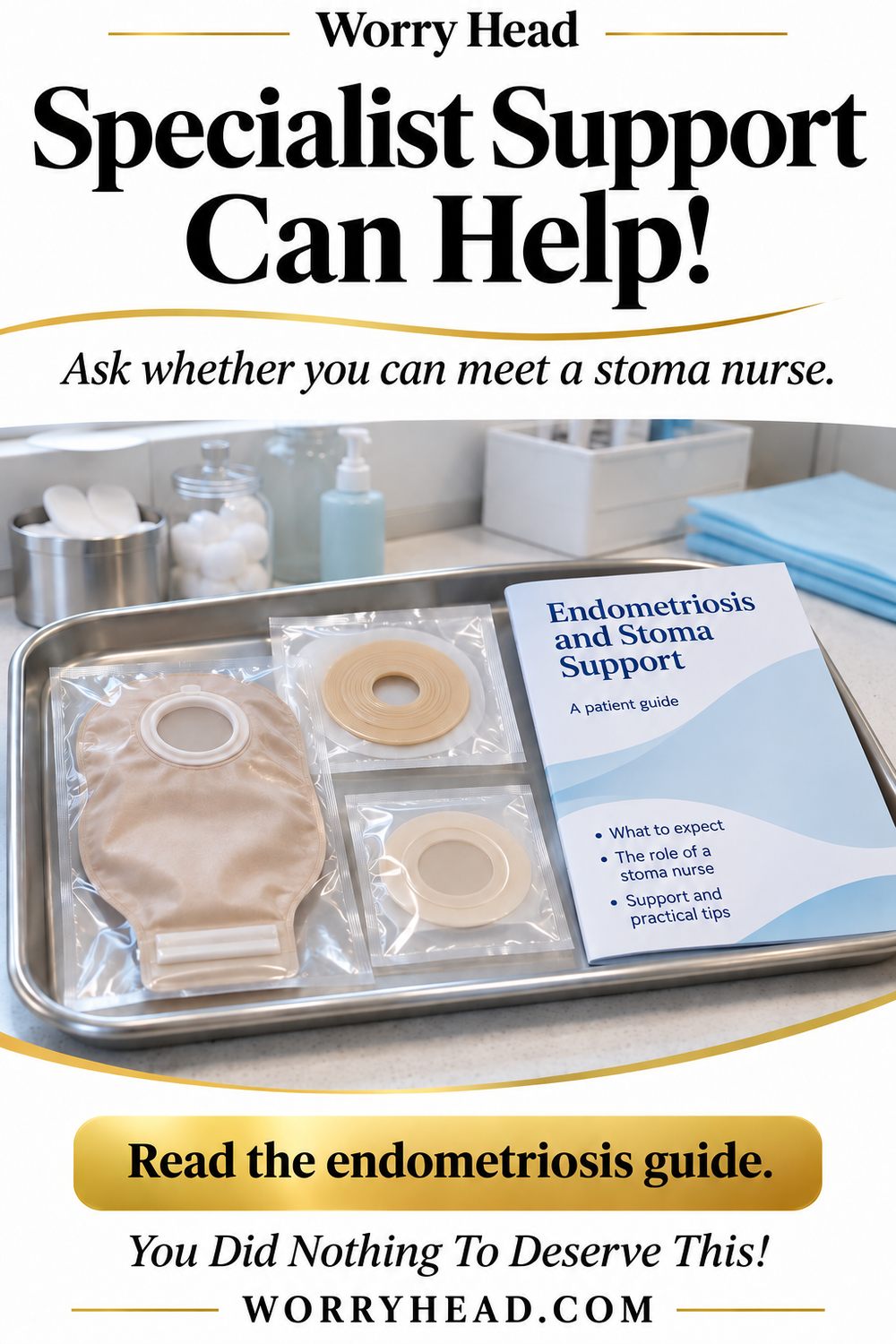
Ask whether you can speak with a stoma nurse before surgery and what that appointment would cover in your circumstances. Specialist support can include information about the operation, practical questions and preparation if a stoma may be needed.
The exact process depends on the service and proposed procedure. You can ask to see an appliance or discuss daily life if that would help, while saying if you would prefer information in smaller amounts.
Your partner may attend with your agreement, but you can also request time to ask personal questions on your own. Keep a note of the contact route and which concerns belong with the surgeon rather than the nursing team.
A planned discussion can replace some uncertainty with specific information without requiring you to feel ready for every possible outcome. You are allowed to ask basic questions more than once.
Decide Your Partner's Role
Explain what would make an appointment easier if your partner comes with you. They might take notes, remind you of a question you wanted to ask or help check the next practical step.
Agree that they should not answer for you unless you ask, and that they can pause their own questions while you finish speaking. At home, the role may be different: arranging transport, preparing a meal or managing updates to others with your permission.
Do not assume that a partner must provide intimate care or that you must accept it from them. Any practical care needs should be discussed with the team, including what training and other support are available.
A useful role is one you have chosen and can revise. It should reduce the work you are carrying, rather than make you responsible for reassuring the person who came to help.
Protect Your Privacy and Choice

Decide who may know about the possibility and how much detail you want shared. Your partner can support you without describing your medical information to relatives, friends or colleagues.
A simple update such as “We are waiting for more information from the team” may be enough if you choose to give one. Ask before sharing letters, photographs or details from an appointment, even when the intention is to seek advice.
You can change your mind about what you want to discuss later. Privacy also matters between you: wanting time alone, private nursing support or a conversation without your partner does not mean you are rejecting the relationship.
If someone pressures you about treatment or disclosure, ask for an opportunity to speak privately with the clinical team. Support should make your choices easier to express, not make them dependent on another person’s approval.
Make a Flexible Practical Plan
Prepare for the support the team says you may need without treating the most worrying possibility as a settled outcome. Ask about transport, time away from usual responsibilities and who will explain care before discharge if a stoma is formed.
Discuss the ordinary jobs that would need covering, including meals, household tasks and any caring responsibilities. Keep the arrangement flexible enough to change when the actual operation and recovery needs are known.
Avoid buying large amounts of specialist supplies or following someone else’s care routine before speaking with the team. Your partner can help organise information and contacts, but should not become the only possible source of assistance.
A practical plan is useful when it gives you options and reduces uncertainty. It should not create another standard you feel obliged to meet while recovering or learning something unfamiliar.
Return to Unanswered Questions
Keep one short list of questions that remain open, and mark which professional is best placed to answer each one. A surgeon may need to explain the operative possibilities, while a stoma nurse can discuss practical preparation and ongoing support.
Relationship worries may need a separate conversation or appropriate emotional support. Review the list after appointments so that an answer does not become lost among new information.
If you and your partner remember something differently, ask the team rather than turning memory into an argument. You can request information in a form that is easier to revisit.
Returning to a question is not evidence that you were not listening the first time. Stress and unfamiliar language can make it difficult to absorb everything, and an important decision deserves an explanation that remains clear after you leave the room.
Partner Support Before Endometriosis Surgery and a Possible Stoma
It is tempting for a loving partner to respond immediately with certainty, because saying that everything will be fine can feel like the quickest way to reduce distress. Yet a promise about an outcome neither of you controls may leave the person facing surgery feeling more alone with the uncertainty.
A steadier response is to acknowledge what you have heard and ask what would help with the next step. You can say that you will help write questions, accompany an appointment if invited or take responsibility for a practical task.
These are commitments you can discuss and act on, rather than predictions about an operation. If you feel frightened yourself, recognise that feeling without making your partner responsible for settling it before they can talk about their own concerns. Choose appropriate support for your feelings while respecting the privacy boundaries you have agreed.
Listening does not require pretending that the possibility is small or that a stoma would be easy for everyone to adjust to. It means allowing the person to describe what matters to them without deciding in advance which emotion is acceptable.
Some people want detailed information, while others need a slower pace or a pause before looking at practical examples. Ask before bringing them another video, personal story or photograph that you found online.
Information offered without consent can feel like another thing arriving faster than someone can absorb it. You can be present through uncertainty without repeatedly asking whether the fear has gone away. The conversation becomes more supportive when it leaves the person with more choice about what happens next, including the choice to stop talking for now.
Preparing Questions About Endometriosis Surgery and a Possible Stoma
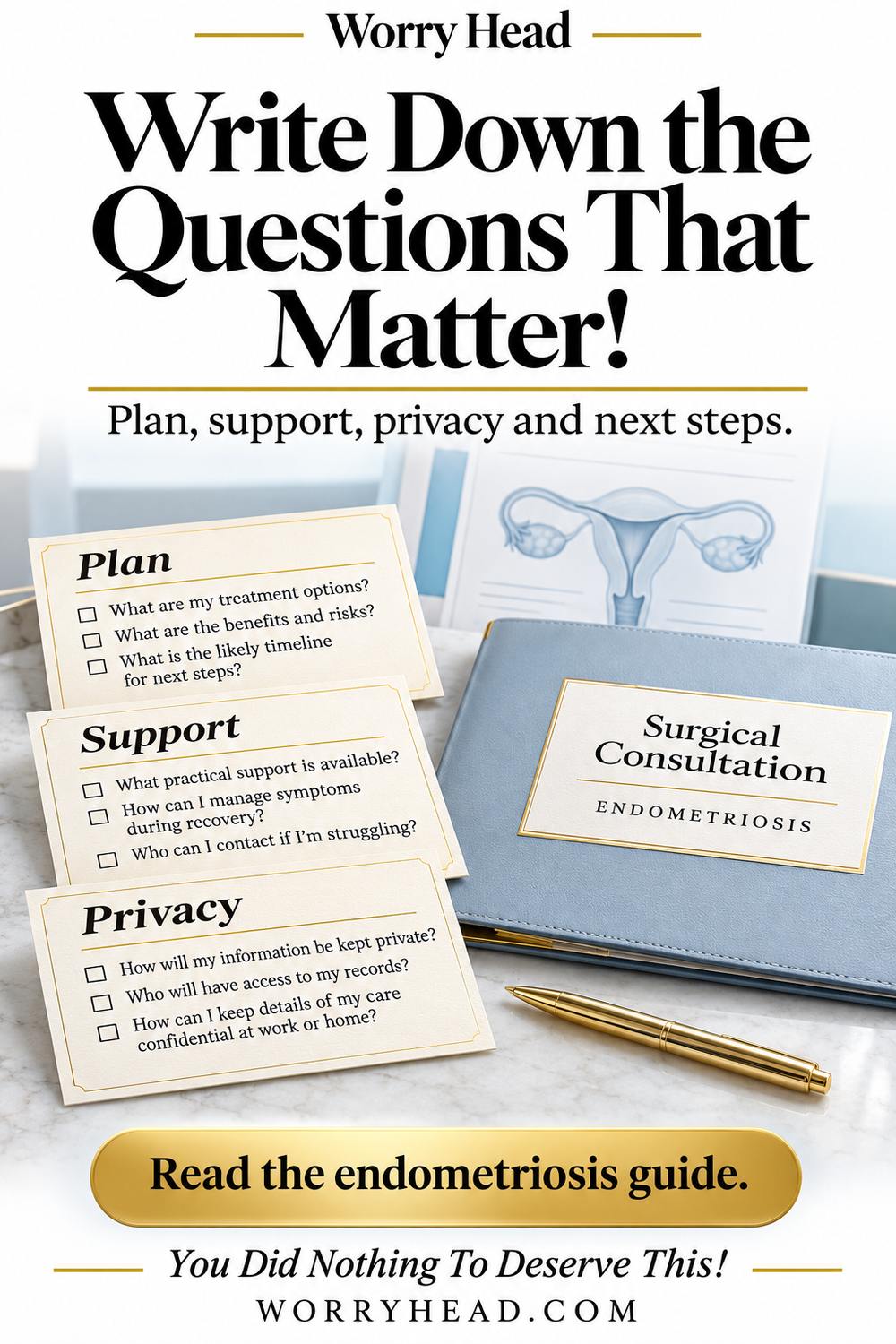
Begin with the question that determines how you understand the plan: “Is a stoma expected, a possibility in particular circumstances, or a response to a complication?” Ask the surgeon to explain the relevant circumstances in plain language and how they relate to your proposed procedure. You can ask which type of stoma might be involved, why it might be needed and what uncertainty remains before surgery.
If it is intended to be temporary, ask what factors would affect whether and when reversal could be considered. Avoid leaving with a date you inferred from someone else’s experience when the team has not given you that expectation.
Ask whether a preoperative discussion with a stoma nurse is available and how to arrange it. Find out what teaching and support would be provided in hospital and after discharge if a stoma were formed.
Ask how your partner could be involved if you want their help, and what alternatives exist if you prefer professional or other support. Check whom to contact with further questions so that uncertainty does not depend on waiting for the next routine appointment. Before leaving, summarise your understanding back to the team and invite them to correct anything you have misunderstood.
Privacy and Closeness Around Endometriosis Surgery and a Possible Stoma
Some of the hardest questions may never appear on the operation leaflet. You might wonder whether you will want to be touched, how you would feel changing clothes near your partner or whether you would want help with care. Those concerns deserve respect even before anyone knows whether a stoma will be needed.
You can tell your partner that reassurance about attraction is welcome while practical questions still need time. Neither person has to make promises about future intimacy to prove commitment.
Closeness can include conversation, company and ordinary affection that you choose, without becoming a timetable for returning to any particular activity. Medical advice about recovery and physical activity remains with your own team.
If a partner says they are willing to help with everything, you can appreciate the intention and still set limits. Wanting a nurse to teach you privately or wanting to manage something yourself is not a rejection.
Equally, asking for help does not mean surrendering control over how it is given. Preferences can change as the actual situation becomes clearer.
A useful question is “Would you like me to stay, help or give you some privacy?” It offers choices without assuming that the same answer will apply every time. Ask before touching an appliance, looking at a care task or sharing a detail with someone else. These small decisions can matter when a person is already facing a great deal of unfamiliarity.
If the conversation brings up shame or distress that feels difficult to carry, ask the clinical team about suitable emotional support or reputable peer support. Other people’s experience can be valuable, but choose when and how you want to hear it. A personal account can help you feel less alone without serving as a prediction of your own surgery or relationship.
Medical Support for Endometriosis Surgery and a Possible Stoma
This guide is about communication before surgery, not instructions for managing a stoma or deciding which operation to have. Your team needs to explain the benefits, risks, alternatives and implications of the proposed treatment in your circumstances. Ask for another discussion if you do not understand what is being proposed or what you are being asked to consent to.
In the UK, NHS information explains that consent must be voluntary and informed, and that an adult with capacity makes their own treatment decision. A partner can help you think, remember or ask questions, but cannot replace your consent simply because they are close to you.
If pressure from anyone is making it hard to express your wishes, request a private conversation with the team. This is especially important when you feel that agreement is being assumed because an appointment or date has already been arranged.
Before discharge after any operation, ask for written instructions about expected recovery, warning symptoms and the correct contact routes. If a stoma is formed, the relevant team should explain the care and support that apply to your particular situation.
Do not copy another person’s medicine, diet, fluid or appliance routine without appropriate advice. Different operations and individual needs can require different arrangements.
If you develop severe or worsening abdominal or pelvic pain, feel faint, have breathing difficulty or become acutely unwell, seek urgent or emergency assessment according to the symptoms and local guidance. After surgery, worsening pain with fever or vomiting also warrants prompt clinical advice.
Do not wait for a relationship conversation or a routine follow-up to address a possible complication. Your own discharge information should make the route clear, and uncertainty about whom to contact is itself a question to resolve before going home.
Final Word on Endometriosis Surgery and a Possible Stoma
Hearing about a possible stoma can make the future feel crowded with questions. Some concern the operation, while others belong to privacy, identity and the closeness of a relationship.
You do not have to decide which kind of question is more legitimate before asking for help. You can need clinical information and emotional support at the same time. A conversation with your partner does not replace the explanation your surgical team owes you, but it can make the uncertainty feel less solitary while you work out what to ask next.
Start with what you have been told. Keep the distinction between an expected procedure and a possible response to circumstances.
Ask the team to explain the reason, likelihood and intended duration in relation to your operation. If temporary is the word being used, ask what would need to happen before reversal could be considered.
That word should not become a promise of a date that nobody has given you. Clear questions are a way of understanding the plan, not a sign that you are refusing to accept reality.
Tell your partner what kind of support would help today. You might want them to listen, write down questions, attend an appointment or take responsibility for something practical.
Tomorrow, you may want a different kind of help or some time without discussing surgery at all. Neither response makes you inconsistent or difficult.
Uncertainty is demanding, and your needs can change as information arrives. A supportive role should remain something you can shape, rather than an arrangement that takes over because another person is anxious to be useful.
Privacy belongs in the plan too. You decide what to share with other people and whether your partner attends particular conversations.
You can ask for specialist teaching without them present, or invite them to learn alongside you if that feels helpful. Needing care does not remove your right to boundaries.
Nor does accepting help mean that every question must be answered now. The relationship can hold affection and respect while leaving space for a person to understand what is happening to their own body.
For partners, the helpful promise may be a modest one that can be kept. You can commit to listening carefully, asking before sharing information and following through on an agreed task.
You cannot guarantee the surgical outcome or decide how quickly someone should feel comfortable with a change. If your fears need attention, seek appropriate support without making the person facing surgery carry all of them. Being steady does not mean having no feelings; it means taking responsibility for how you bring those feelings into the room.
As a husband, I would want the person beside me to know that uncertainty does not make them harder to love or less entitled to choice. The next step may be a question for the surgeon, a conversation with a stoma nurse or a quiet evening together. You do not need the whole future settled before you can ask for that kind of care.
A possible stoma is a reason to ask clear questions, not a reason to face every imagined outcome alone. Keep the clinical facts with your team, let your partner know what support you want and protect your privacy throughout. You can prepare thoughtfully while leaving room for uncertainty, changing feelings and your own choices.
If you feel comfortable, share the question you would most want help asking your team, and download my free 130+ page eBook for support with the emotional side of endometriosis.


About Me
Hi, I’m Lucjan! The reason why I decided to create this blog was my beautiful wife, who experienced a lot of pain in life, but also the lack of information about endometriosis and fibromyalgia for men…
READ MORE
Grab a FREE eBook!
“You Did NOTHING To Deserve This!”
Finally hear the words nobody ever said to you, that your pain is real, your tears make sense, and you did nothing to deserve endometriosis, the dismissal, or the way it has rewritten your life.
Related Questions You May Be Asking About Endometriosis Surgery and a Possible Stoma
Does mentioning a stoma mean I will definitely need one?
No. The team may be discussing a planned part of surgery, a possibility in particular circumstances or a response to a complication. Ask which applies to you and why. Your own surgeon can explain the relevant likelihood and uncertainty. A general leaflet or another person’s experience cannot provide an individual prediction for your operation.
Does temporary mean reversal is guaranteed?
No. A temporary stoma is intended to be reversed, but whether and when that can happen depends on clinical circumstances. Reversal involves further assessment and surgery, and it is not always possible. Ask your team what would need to happen in your case and avoid treating a general timescale as a personal promise.
Can my partner attend a stoma nurse appointment?
Ask the service about its arrangements and decide whether you want your partner there. They may help with notes or questions if you choose. You can also request time alone for personal concerns. Attendance should support your understanding and preferences, rather than create an expectation that your partner will provide every aspect of care.
Do I have to tell relatives about the possibility?
You can choose what medical information to share and with whom. Agree with your partner before either of you gives updates or forwards letters. A brief statement that you are waiting for further information may be enough if you want to say anything. Your need for support does not remove your right to privacy.
What if my partner keeps saying everything will be fine?
You can explain that you appreciate the wish to reassure you but need space for uncertainty. Ask for something concrete, such as listening, helping with questions or joining an appointment if invited. A partner can offer reliable support without predicting the outcome. It is reasonable to ask them not to close the conversation too quickly.
Endometriosis Surgery and a Possible Stoma References
- https://www.chelwest.nhs.uk/your-visit/patient-leaflets/medicine-services/bowel-endometriosis
- https://www.nhs.uk/tests-and-treatments/colostomy/preparing-for-a-colostomy/
- https://www.nhs.uk/tests-and-treatments/colostomy/how-a-colostomy-is-done/
- https://www.nhs.uk/tests-and-treatments/ileostomy/how-its-done/
- https://www.porthosp.nhs.uk/departments-and-services/stoma-care
- https://www.nhs.uk/tests-and-treatments/consent-to-treatment/
- https://www.nhs.uk/symptoms/pelvic-pain/
