
Feeling Unproductive with Endometriosis: Your Worth Is Not Your Output
Have you ever finished a low-capacity day and judged yourself by the tasks still waiting? Feeling unproductive with endometriosis can make necessary rest feel like a personal failure. You are not lazy because pain, fatigue or uncertainty changed what was possible today.
Feeling unproductive with endometriosis is not proof that you are lazy or failing. Pain, fatigue, disrupted sleep, treatment and emotional strain can reduce capacity. Measure the day by what your body can safely manage, separate worth from output, and seek support when symptoms limit daily life.
I am a husband, blogger and researcher rather than a clinician; years of learning grew from my wife’s experience, and I have placed the NHS, WHO and published research used for health context at the foot of this article.
The broader article on the mental toll of endometriosis explores how pain, uncertainty and loss can weigh on emotional wellbeing. Here I am focusing on one particular pressure: the belief that your value rises and falls with your output.
I have watched my wife carry guilt even while her body was asking for rest. Endometriosis is only one part of her health picture; adenomyosis, fibromyalgia, ME, chronic fatigue and iron-loss anaemia can also affect her capacity. I cannot turn that into a universal story, but it has taught me how cruel a simple to-do list can become.
This article is not a productivity system or a medical plan. It is about separating worth from output, describing capacity honestly and making daily choices without using shame as fuel. Any personal activity, work or treatment advice from your clinical team remains more important than a general article.
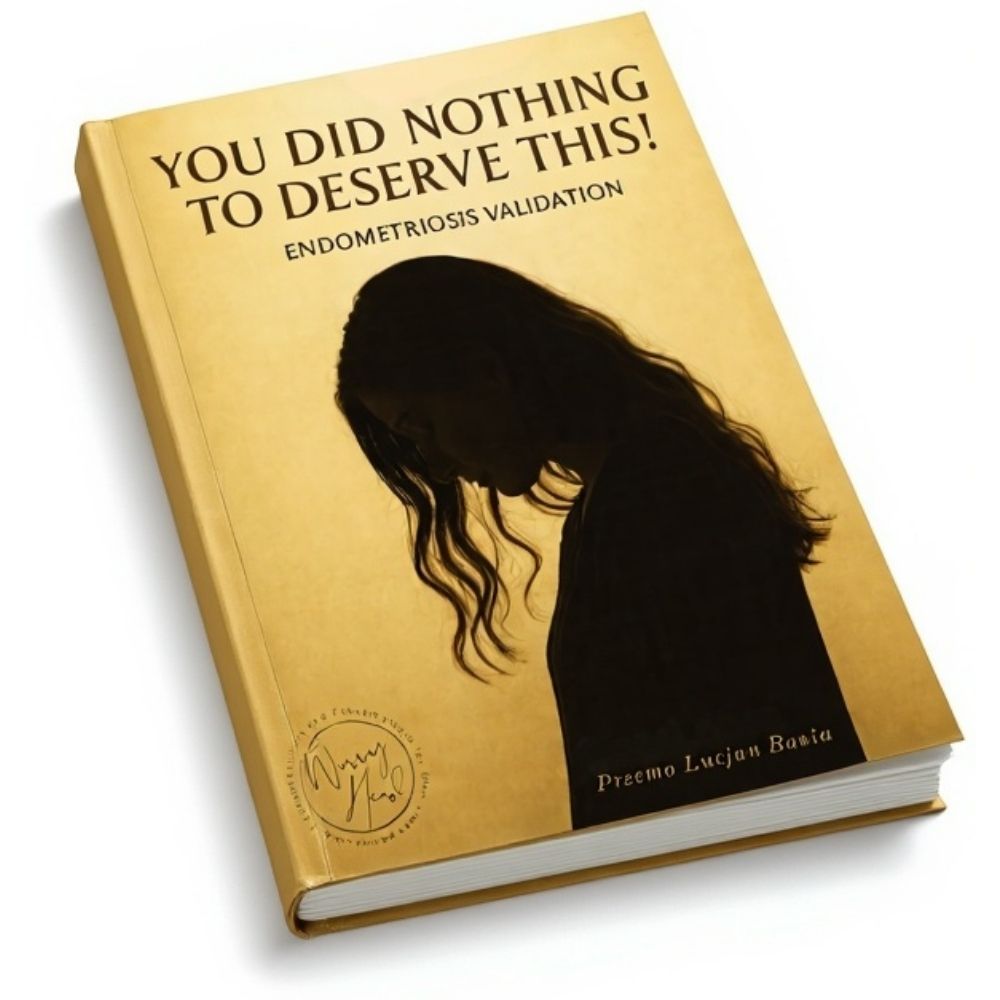
If the unfinished list has started to sound like a verdict on your character, my free book, You Did NOTHING To Deserve This!, offers a gentler human conversation. It was written for the moments when illness makes you question your value, not to promise a cure or ask you to perform positivity.
You Did NOTHING To Deserve This!
Endometriosis Validation for Women with Endo
- Why Feeling Unproductive with Endometriosis Hurts Your Sense of Worth
- At Home, Feeling Unproductive with Endometriosis Is Not a Moral Failure
- At Work, Feeling Unproductive with Endometriosis Needs Honest Limits
- For Partners, Feeling Unproductive with Endometriosis Calls for Steady Support
- When Feeling Unproductive with Endometriosis Needs More Support
- Final Word on Feeling Unproductive with Endometriosis
- You Did NOTHING To Deserve This!
- FREE eBook
Why Feeling Unproductive with Endometriosis Hurts Your Sense of Worth
Productivity is easy to measure because it leaves visible evidence: messages answered, rooms cleaned, hours worked and plans kept. Pain and fatigue often leave a different kind of evidence, such as the energy you protected, the flare you did not push through or the honest boundary you set. Other people may never see that work, but invisibility does not make it meaningless.
The NHS lists pain, heavy periods and fatigue among experiences that can affect everyday life, work and relationships. WHO also describes endometriosis as a chronic disease with wide social and economic effects. Those facts do not tell us how you should feel about a quiet day, but they do provide important context: reduced capacity is not automatically a defect in attitude.
When work and usefulness become closely tied to identity, one difficult day can feel larger than itself. My wife still works, and feeling needed matters to her. Working from home helps enormously, yet it does not make symptoms disappear. I have learned not to confuse her determination with unlimited capacity or her exhaustion with a lack of care.
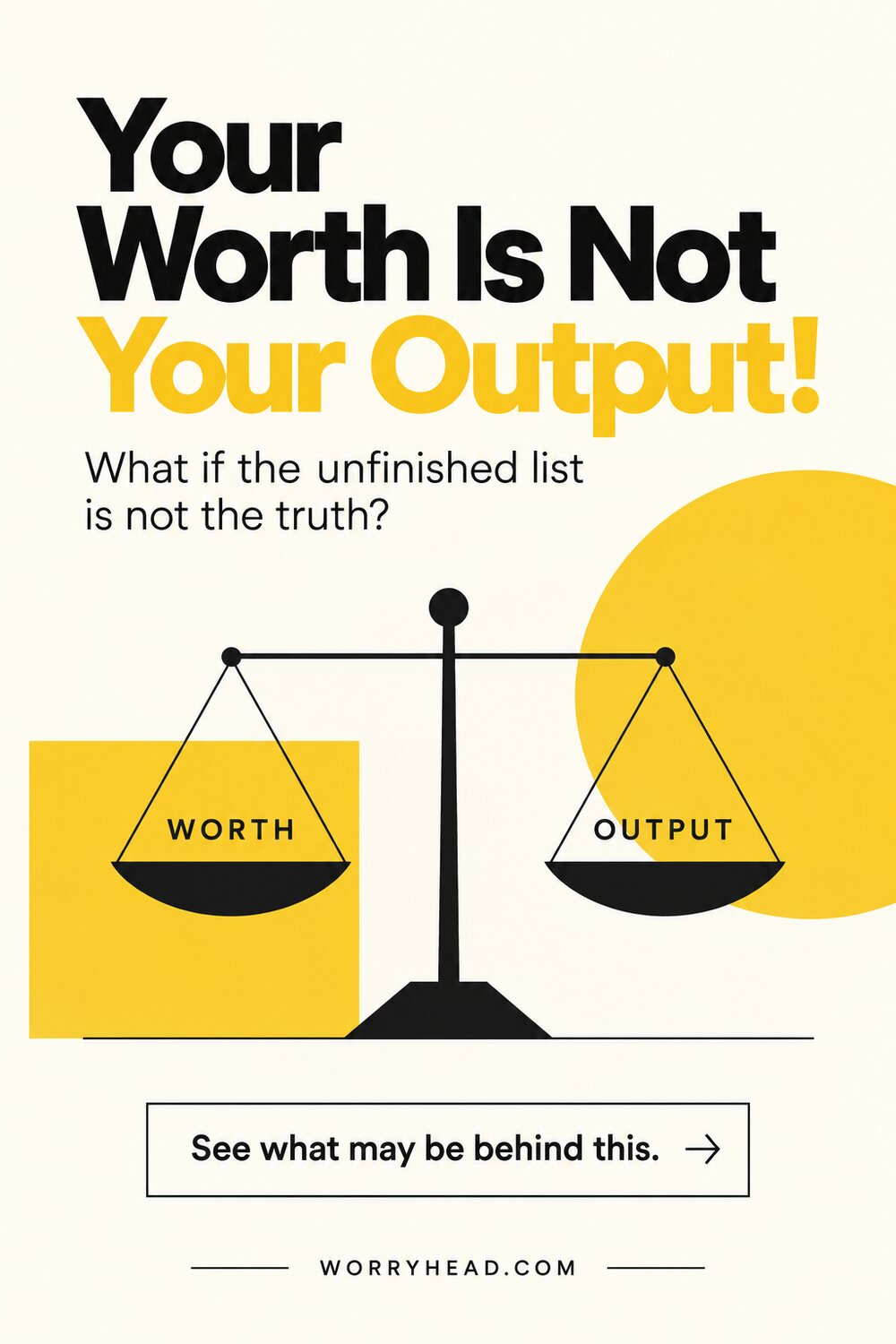
Try noticing the sentence you use after a task remains undone. “I could not finish this today” describes an event. “I am useless” turns an event into an identity. That second sentence may feel convincing because it is familiar, but it contains far more than the evidence can support.
At Home, Feeling Unproductive with Endometriosis Is Not a Moral Failure
Home can make productivity guilt especially sharp because the work never fully ends. Laundry returns, meals need planning and ordinary clutter can become proof, in your mind, that you are letting everyone down. Yet a shared home is not a courtroom, and an unfinished task is not evidence that one person cares more than another.
In our marriage, I try to look at what the day actually contains before I look at what remains. Pain, broken sleep, medical appointments and the concentration needed to keep working all use energy. I do not always get that balance perfect, but I know love should not require my wife to earn rest by reaching the bottom of a list.
You might divide tasks into three groups: necessary today, useful later and safe to leave. The purpose is not to squeeze more work from yourself. It is to remove the false urgency that makes everything feel equally important. On some days, taking medication as prescribed, eating something and sending one essential message may be the complete list.
If another person shares the home, describe the practical gap rather than apologising for your existence. You can say which task is urgent, what you can manage and what needs to move. That is information for teamwork. It does not require a speech proving that you tried hard enough.
I work with disabled children, and that part of my life has reinforced something our marriage already teaches me: support should increase dignity, not turn a person into a project. Helping with a task does not make the recipient less adult, less loving or less valuable. It means the day called for cooperation.
At Work, Feeling Unproductive with Endometriosis Needs Honest Limits
Paid work adds financial pressure to the emotional pressure. You may worry that slowing down will affect your job, that colleagues will misunderstand fluctuating capacity, or that one easier day will be used to question a harder one. Those are real concerns, and a warm slogan cannot settle the employment details for you.
Focus first on what is within your role and control. If you can, identify the task that genuinely matters most, clarify the deadline and avoid promising tomorrow’s capacity from today’s brief improvement. Keep any workplace disclosure proportionate to what you want to share and what is needed to request support. You do not owe every colleague your medical history.
My wife’s ability to work from home has helped, but it has not removed the strain of pain, fatigue or brain fog. Part of why I build my blogs is the hope that they can ease or replace some of her income pressure over time, so rest is not made frightening by money. We both still work; I am sharing the direction I am trying to build, not claiming that blogging has already solved it.
If symptoms materially affect your work, consider discussing appropriate support with your clinician, employer, occupational health service, union or another qualified adviser relevant to your circumstances. This article cannot tell you what adjustment or legal route applies. It can remind you that asking for accurate information is different from admitting failure.
A reduced-output day can still contain judgement, communication and care. You may have prevented an error by pausing, protected tomorrow by not overcommitting or completed the one task only you could do. Productivity measures often miss those decisions because they count volume more easily than wisdom.
For Partners, Feeling Unproductive with Endometriosis Calls for Steady Support
If you love someone with endometriosis, be careful with praise that only appears when she achieves more. Celebration is welcome, but if warmth rises and falls with output, a difficult day may feel like disappointment. Ask what would help without making assistance sound like a rescue from laziness.
I know how tempting it is to fix the visible problem. I can clear a task, reorganise a plan or search for information, yet the deeper fear may be that my wife feels like a burden. The most useful response is sometimes practical help and sometimes a clear reminder that our relationship is not an invoice she must repay when she feels better.
Make expectations explicit where you can. Decide which household responsibilities can move, which can be shared and which need outside help. A vague atmosphere of unfinished work invites shame to write its own story. A clear plan gives both people something concrete to respond to.
Partners also have limits. Saying that kindly is healthier than helping resentfully and presenting the bill later. You can be honest about your own capacity while refusing the idea that illness is a character flaw. Mutual honesty protects closeness better than silent scorekeeping.
Do not use another person with endometriosis as a comparison. Different symptoms, jobs, support networks and other health conditions change what is possible. Even the same person may have very different days. Support begins with the person in front of you, not with an example found online.

When Feeling Unproductive with Endometriosis Needs More Support
Productivity guilt may ease when expectations change, but sometimes low mood, anxiety or hopelessness becomes persistent. If harsh self-judgement is affecting sleep, relationships, eating, work or your ability to care for yourself, it is reasonable to ask a GP or qualified mental-health professional for support. Needing that help is not another failure.
Changes in pain, bleeding, fatigue or other symptoms also deserve proper medical attention. NHS guidance advises seeing a GP when possible endometriosis symptoms affect daily life or when symptoms persist or return after treatment. Keep a wider pattern in view rather than assuming every difficult day is something you should solve through discipline.
You might prepare one honest sentence before an appointment: what has changed, how often it happens and what part of daily life it affects. That information is more useful than minimising symptoms to appear capable. You are allowed to describe the impact without proving that you have handled it perfectly.
If the problem is mainly external pressure, identify whose expectation you are carrying. Is it an employer’s stated deadline, a family habit, a social-media comparison or a rule you learned years ago? Different pressures need different responses. Not every demand deserves equal authority over your body.
An article can offer language and recognition, but it cannot assess your health or safety. If you feel at immediate risk or unable to keep yourself safe, seek urgent local help now. You deserve a human response that is appropriate to the seriousness of the moment.
Final Word on Feeling Unproductive with Endometriosis
I do not want illness to take your energy and then persuade you that the loss says something shameful about who you are. A quieter day can still hold care, judgement, courage and love. You remain a whole person when the measurable output is small.
If you feel comfortable, you can share in the comments below what helps you separate your worth from your to-do list. Keep any details private that you do not want online. For more companionship with guilt, burden and self-blame, you can also read my free book, You Did NOTHING To Deserve This!.


About Me
Hi, I’m Lucjan! The reason why I decided to create this blog was my beautiful wife, who experienced a lot of pain in life, but also the lack of information about endometriosis and fibromyalgia for men…
READ MORE
Grab a FREE eBook!
“You Did NOTHING To Deserve This!”
Finally hear the words nobody ever said to you, that your pain is real, your tears make sense, and you did nothing to deserve endometriosis, the dismissal, or the way it has rewritten your life.
Related Questions You May Be Asking About Feeling Unproductive with Endometriosis
Does Feeling Unproductive Mean I Am Lazy?
No. A low-output day can reflect pain, fatigue, sleep disruption, treatment, emotional strain or competing demands. Describe what limited you and what support you need instead of turning one day into a judgement about your character.
How Can I Explain a Low-Capacity Day to My Partner?
Be concrete about what is difficult, what is urgent and what can wait. Ask for one practical form of help rather than apologising for everything. Your partner can also state their limits so the plan stays honest and shared.
Should I Push Through to Feel More Productive?
A general article cannot tell you what activity is safe for your circumstances. Follow individual advice from your clinical team, pay attention to meaningful symptom changes and avoid using shame as a substitute for medical guidance.
Feeling Unproductive with Endometriosis References
- https://www.nhs.uk/conditions/endometriosis/
- https://www.who.int/news-room/fact-sheets/detail/endometriosis
- https://pubmed.ncbi.nlm.nih.gov/21718982/
Health sources checked on 22 October 2026. NHS and WHO describe endometriosis, its variable symptoms and effects on everyday life; the cited multicentre study examined quality of life and work productivity. The practical discussion of household expectations, work boundaries and self-worth is personal reflection and editorial guidance, not a treatment.
