Endometriosis and Accessible Toilets: Asking for What You Need
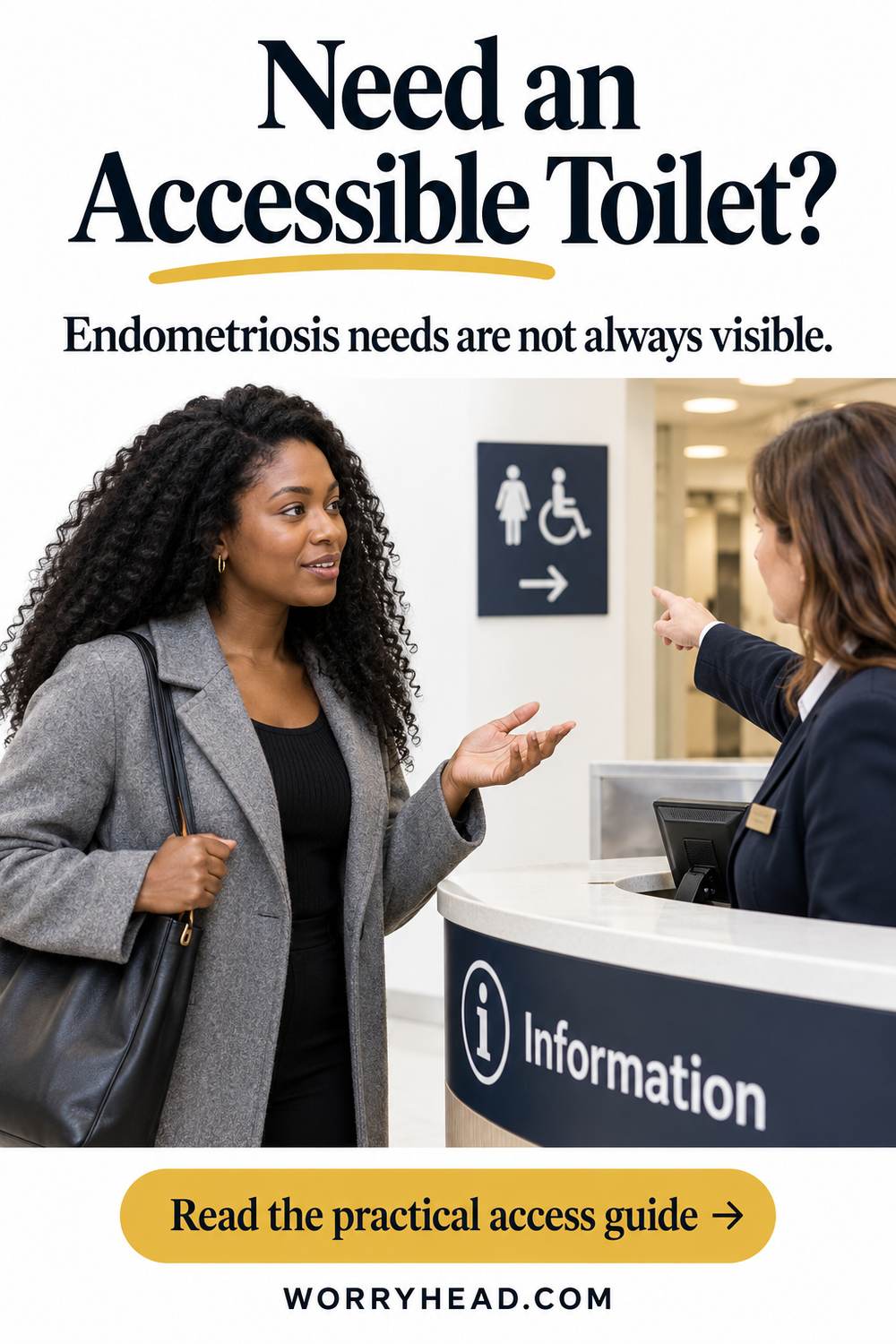
A toilet sign can bring relief, followed by the uncomfortable thought that someone might question you. Endometriosis and accessible toilets can become a difficult subject when the support you need is not obvious from the outside. You should be able to think about reaching a suitable facility without also rehearsing a defence of your appearance.
An accessible toilet may help when endometriosis affects your ability to use standard facilities. Base your request on what you need, check local access arrangements, and keep health details private if you wish. Keys and access cards can help with some facilities, but they do not guarantee entry.
As a husband, blogger and researcher who has spent years learning because of my wife’s experience, I am not a clinician, and I have listed the NHS and access organisations used for this article in the references at the bottom.
Understanding why you can look fine while feeling unwell with endometriosis includes recognising how much an ordinary outing can ask of you. A brief walk through a doorway does not show the planning, discomfort or privacy needs behind it.
If being questioned about an invisible need has left you doubting yourself, my free eBook, You Did NOTHING To Deserve This!, offers a gentler place to put those feelings. It is there for the emotional weight of needing understanding, even when you would rather not explain yourself again.
You Did NOTHING To Deserve This!
Endometriosis Validation for Women with Endo
- Start with Your Needs Around Endometriosis and Accessible Toilets
- When Endometriosis and Accessible Toilets Meet the Fear of Being Judged
- Before an Outing, Check Endometriosis and Accessible Toilets Together
- What Keys and Cards Add to Endometriosis and Accessible Toilets
- Asking About Endometriosis and Accessible Toilets Without Oversharing
- Keep Endometriosis and Accessible Toilets from Taking Over the Whole Day
- Final Word on Endometriosis and Accessible Toilets
- You Did NOTHING To Deserve This!
- FREE eBook
Start with Your Needs Around Endometriosis and Accessible Toilets
The useful starting point is the difficulty you are trying to solve. You might need a toilet you can reach without stairs, more room to move, a support rail, or space for someone to assist you. Another person’s needs may be different, even if you share the same diagnosis.
The NHS describes pain when passing urine or having a bowel movement among possible endometriosis symptoms. It also recognises pelvic pain and fatigue. Those facts help explain why toilet access can matter, but they cannot tell you which facility suits you or what causes an individual symptom.
My wife’s illness has made me think differently about how much effort can sit behind something other people barely notice. I do not need to turn that observation into a claim that every woman needs the same arrangement. Listening to the practical difficulty is more useful than making assumptions from a condition’s name.
Ask yourself what would make the facility usable today. If an ordinary cubicle meets your needs, that is fine; if it does not, you can describe the missing feature. Needing a different arrangement on another day does not make today’s assessment dishonest.
This is not a guide to legal eligibility or a way to diagnose bowel or bladder involvement. Access planning and medical assessment answer different questions. New, persistent or worsening symptoms deserve clinical advice rather than being treated only as a problem of finding the nearest toilet.
When Endometriosis and Accessible Toilets Meet the Fear of Being Judged
You may worry about walking out and finding someone studying you. That possibility can make an already private need feel public. It is understandable if the thought of explaining yourself becomes another reason an outing feels tiring.
The wheelchair symbol does not describe every person who may need an accessible facility. Equally, appearance cannot tell you what another person waiting needs. You can recognise your own difficulty while leaving that same room for somebody else’s invisible circumstances.
As a husband, I want my wife to be believed without having to make her pain more visible. I also know that my wish to defend her must not turn a private moment into a louder conversation she did not choose. Support should reduce the attention placed on you when that is what you want.
If someone challenges you, a short response might be, “I need this facility because of a health condition.” You can add, “I would prefer to keep the details private.” These are optional examples, not words you must remember or a guarantee that the other person will respond well.
You do not have to stay for an argument to prove that your need was reasonable. If you feel unsafe or someone prevents access, seek help from venue staff where possible. Your immediate needs matter more than persuading a stranger to agree with your whole story.
Before an Outing, Check Endometriosis and Accessible Toilets Together
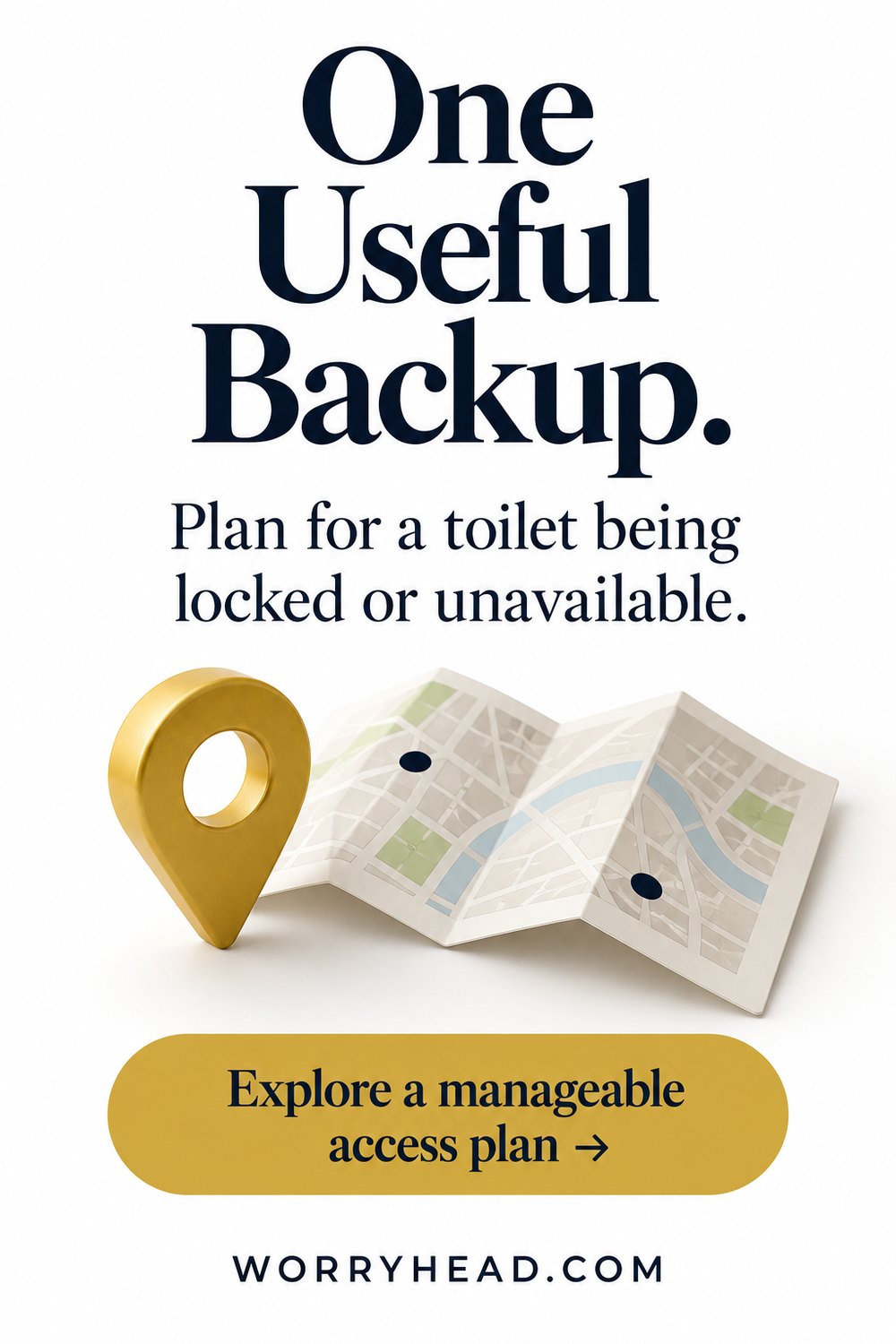
A map symbol is a starting point, not a complete description. Opening times, stairs on the route, a locked door or a facility being out of use can change whether the option works. A small check beforehand can reduce uncertainty without turning the outing into a research project.
You could ask the venue whether an accessible toilet is available during your visit and how to reach it. If a key is needed, ask whether staff provide one or whether it uses the National Key Scheme. Mention a particular feature only when it matters to you, such as step-free access or room for assistance.
I began blogging partly because I wanted to understand how to support my wife better. For me, that makes a simple practical question more valuable than an impressive amount of general knowledge. Knowing where help is available can be useful; collecting every possible detail can become another burden.
Save the answer somewhere easy to find, perhaps beside your booking information. If the venue cannot confirm the arrangements, consider whether one nearby alternative would make you more comfortable. You do not need a perfect map of every toilet before deciding what is manageable.
If even that small check feels like too much, someone you trust could ask on your behalf with your agreement. They can enquire about the facilities without sharing your diagnosis. Planning can be shared while your medical information remains yours.
What Keys and Cards Add to Endometriosis and Accessible Toilets
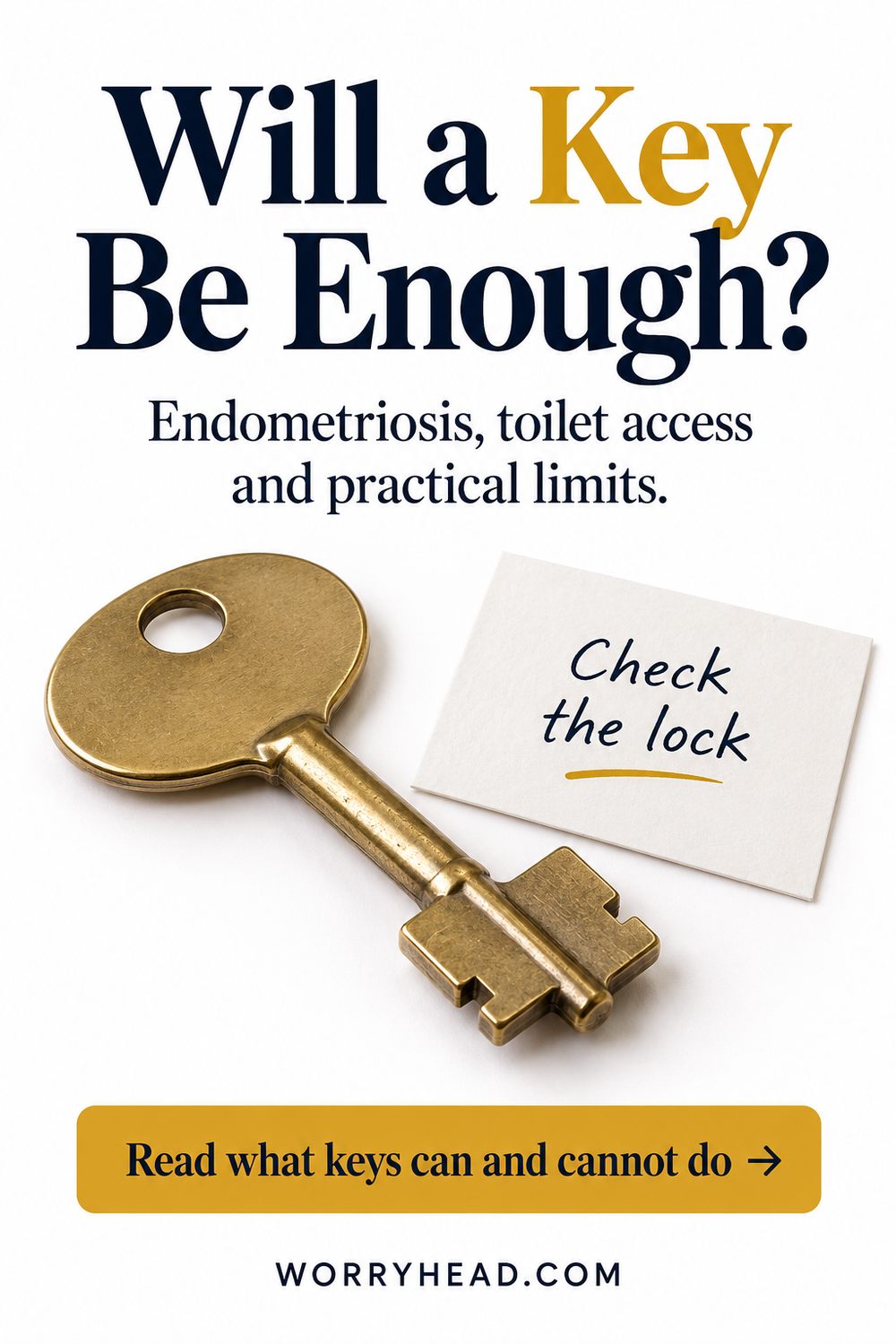
Disability Rights UK explains that the National Key Scheme, often called the RADAR key scheme, provides access to participating locked accessible toilets. A suitable key can remove the need to find a member of staff for some doors. It will not open every accessible toilet or make an unavailable facility usable.
Check the provider’s current information before obtaining a key, including the scheme, the key offered and any ordering conditions. This article does not endorse an unverified seller or promise that a particular venue participates. If you already have a key, checking the venue’s arrangements is still worthwhile.
The Bladder & Bowel Community offers a Just Can’t Wait card to help communicate an urgent toilet need. Its digital card and separate participating-location scheme can be useful aids to a request. The card is not a promise that every business will provide access or that a toilet has the features you need.
I would want any tool intended to help my wife to reduce effort, rather than become another thing she is blamed for not carrying. A key or card may be useful, but forgetting one does not make a symptom less real. It means the practical question becomes how to ask staff for help.
Choose an aid because it fits your circumstances, not because you feel you must collect proof of being unwell. Read what the organisation actually offers and keep expectations realistic. A short explanation, a card and a key each do a different job.
Asking About Endometriosis and Accessible Toilets Without Oversharing
A request can focus on the facility rather than your medical history. “Could you tell me where the accessible toilet is?” may be all that is needed. If the door is locked, you can ask who holds the key or whether there is another suitable option.
If there is urgency, say that clearly rather than hoping someone will infer it from your expression. You might say, “I have a health-related toilet need and cannot wait comfortably; is there a toilet I can use?” Adapt the wording to what is true for you rather than using a phrase that overstates your situation.
I can speak about my wife’s needs with care and still get the balance wrong if I start answering before she has chosen what to say. For a partner, a useful first question is whether you want help asking. Being beside you does not automatically make your health information mine to explain.
You may prefer to show a short note on your phone if speaking feels difficult. Keep it limited to the practical request and anything staff need to know to help. It does not need a list of diagnoses, intimate symptoms or photographs of medical records.
A refusal can feel personal, but the immediate response is to find out whether another usable facility exists. If you want to raise the experience afterwards, record the relevant details when you have space to do so. You do not have to handle the access problem and compose a complaint at the same moment.
Keep Endometriosis and Accessible Toilets from Taking Over the Whole Day
Having a plan can help, but constant checking may consume attention you hoped to spend elsewhere. Aim for enough information to make the next part of your outing manageable. One confirmed option and one possible backup may be more useful than an exhausting list you cannot easily navigate.
Use facilities with consideration for the next person and keep routes and equipment clear. If something is broken or access is obstructed, tell staff when you can. Respecting other users does not require deciding that their needs must be more real than yours.
My wife’s social life has already been affected by illness, and I do not want support to shrink her choices further through assumptions. The point of preparation is to make a chosen activity more workable. It should still be possible to change the plan, leave earlier or decide that today is not the day.
Do not make reducing drinks or ignoring the need to use a toilet your workaround for poor access. If symptoms repeatedly disrupt outings, discuss them with your healthcare team. A practical access plan can sit alongside care; it cannot replace assessment or an individual management plan.
After a difficult experience, you might need a quiet pause rather than advice about how to organise the next trip. A partner can ask what would help now and leave the analysis for later. You deserve support after the stressful moment as well as directions before it.
Final Word on Endometriosis and Accessible Toilets
What matters to me is that my wife can remain a person with preferences, privacy and places she wants to go. A toilet need should not become a public test of how unwell she looks. I want that same dignity for you, whatever your own access needs happen to be.
Endometriosis and accessible toilets are best approached through the practical details of your situation. Identify what would help, check what is available, and ask in words that protect the information you want to keep private. Keys, cards and thoughtful support may help, while none can remove every obstacle.
If you would like to comment, you can share an access question or a phrase you found helpful without describing private symptoms. And if the hardest part has been the feeling of having to justify yourself, my free eBook, You Did NOTHING To Deserve This!, offers words of understanding for that part of the experience.


About Me
Hi, I’m Lucjan! The reason why I decided to create this blog was my beautiful wife, who experienced a lot of pain in life, but also the lack of information about endometriosis and fibromyalgia for men…
READ MORE
Grab a FREE eBook!
“You Did NOTHING To Deserve This!”
Finally hear the words nobody ever said to you, that your pain is real, your tears make sense, and you did nothing to deserve endometriosis, the dismissal, or the way it has rewritten your life.
Related Questions You May Be Asking About Endometriosis and Accessible Toilets
Do I Have to Use a Wheelchair to Need an Accessible Toilet?
A wheelchair is not the only reason someone may need an accessible facility. Think about the features that make a toilet usable for you, and check the venue’s arrangements. This article does not determine individual legal entitlement or a venue’s specific access policy.
Will a RADAR Key Open Every Accessible Toilet?
No. The National Key Scheme covers participating facilities with suitable locks. A key does not guarantee that a toilet is open, working or appropriate for your needs. Ask the venue about its current arrangements rather than relying only on a general listing.
Does a Just Can’t Wait Card Guarantee Entry?
No. It can help communicate a need related to a bladder or bowel condition, but it does not guarantee access everywhere. Check the Bladder & Bowel Community’s current information about the card and its separate participating-location scheme.
Must I Explain My Symptoms to a Stranger?
You can keep a practical request brief and choose how much personal information to share. Asking for directions or a key does not require volunteering your whole medical history. If a conversation becomes difficult, staff may be able to help with the immediate access problem.
Does Needing a Toilet Prove Endometriosis Affects My Bladder or Bowel?
No. Symptoms and access needs do not establish where endometriosis is present or explain every possible cause. Tell a clinician about new, persistent or changing difficulties and ask what assessment is appropriate. Use this guide for planning access, not for diagnosing yourself.
Endometriosis and Accessible Toilets References
- https://www.nhs.uk/conditions/endometriosis/
- https://www.disabilityrightsuk.org/radar-key
- https://www.bladderandbowel.org/free-just-cant-wait-card/
- https://www.bladderandbowel.org/help-information/toilet-scheme/
