
Requesting Your Endometriosis Medical Records in England
Would having your endometriosis medical records help you understand what has happened in your care? It can feel unsettling to know that important information exists without knowing where to find it. You deserve a manageable way to ask for copies, even when the thought of another administrative task feels exhausting.
You can request copies of your endometriosis medical records from the GP practice, hospital or other organisation holding them. A subject access request is usually free and normally answered within one calendar month, though identity checks, clarification and some extensions can affect the deadline.
I am Lucjan, a husband, blogger and researcher rather than a clinician or legal adviser; years of learning because of my wife’s health experiences shape my approach, while the NHS and Information Commissioner’s Office guidance used here is listed at the bottom.
If asking for information feels difficult after being dismissed, our guide to endometriosis medical gaslighting explores that wider experience and ways to prepare for a more useful conversation.
This article is about obtaining copies of your own records in England, rather than interpreting an individual result or making a clinical diagnosis. The record you want might be a single operation note, a scan report or a longer history held by several services.
Those are different requests, and identifying the useful document can make the task smaller. Receiving a copy also does not replace asking your clinical team what it means for your treatment now.
My wife’s endometriosis and other long-term conditions have taught me how much work can sit around healthcare as well as within appointments. I write with that burden in mind, without assuming that everyone wants to read every detail at once.
We will work through where to ask, what to include and how to handle an incomplete response, with room for your energy, privacy and choice throughout.
Paperwork can bring back the feeling that you have to prove how much you have been carrying. My free 130+ page eBook, You Did NOTHING To Deserve This!, offers a husband’s perspective on living alongside chronic illness and feeling understood. You can read it at your own pace alongside this practical guide.
You Did NOTHING To Deserve This!
Endometriosis Validation for Women with Endo
Where to Begin With Endometriosis Medical Records
Start with the question you hope a copy will help you answer. You might want to know which procedure was recorded after an operation, or gather documents for an appointment with a different service. You might simply want your own copy of information about you.
None of those reasons requires you to turn the request into a complaint. Accessing information and challenging an aspect of care are separate steps. Keeping them separate can make your first message easier to write.
A GP record and a hospital record are not necessarily the same collection of documents. A letter sent to your GP may summarise a hospital visit without containing every note from that visit. An imaging report is also different from the underlying image files.
The NHS App may already show some useful information. What appears there depends on the record, the provider and the access available to you. Something missing from the App is not, by itself, evidence that it was never recorded.
You can make a request without becoming an expert in data protection language. The usual formal route for copies of personal information is called a subject access request, often shortened to SAR. A straightforward request for one recent letter may also be something the relevant service can help you obtain directly.
Choose a route that fits what you need, and ask the organisation if you are unsure which team handles it. You do not need to organise your whole medical history before making a useful start.
As a husband, I am conscious that an apparently small task can compete with work, pain, fatigue and ordinary life. My aim is to help you break this into decisions you can actually use, rather than give you another standard to meet. These eight steps form a practical roadmap:
- Choose Which Records You Need
- Find the Organisation Holding Them
- Describe a Specific Time Period
- Use the Right Request Route
- Confirm Identity and Delivery Safely
- Keep a Trackable Request Log
- Check What Has Actually Arrived
- Ask About Gaps and Corrections
Choose Which Records You Need
Write down the document or information you are trying to obtain before deciding how broad your request should be. An operation note, a discharge summary and a pathology report can describe different parts of the same episode of care. Asking for one does not necessarily tell the organisation that you want all three.
If you need imaging, say whether you want the written report, copies of the images or both. You can ask for your wider personal information instead if that is what you want; a focused request is a practical choice, not a requirement to give up access to other records.
I would keep the first decision small: what information would be useful to have next? You can make a short list headed “essential now” and leave other documents for later consideration. That gives you a starting point without making the size of your folder a measure of how well you are managing illness.
Find the Organisation Holding Them
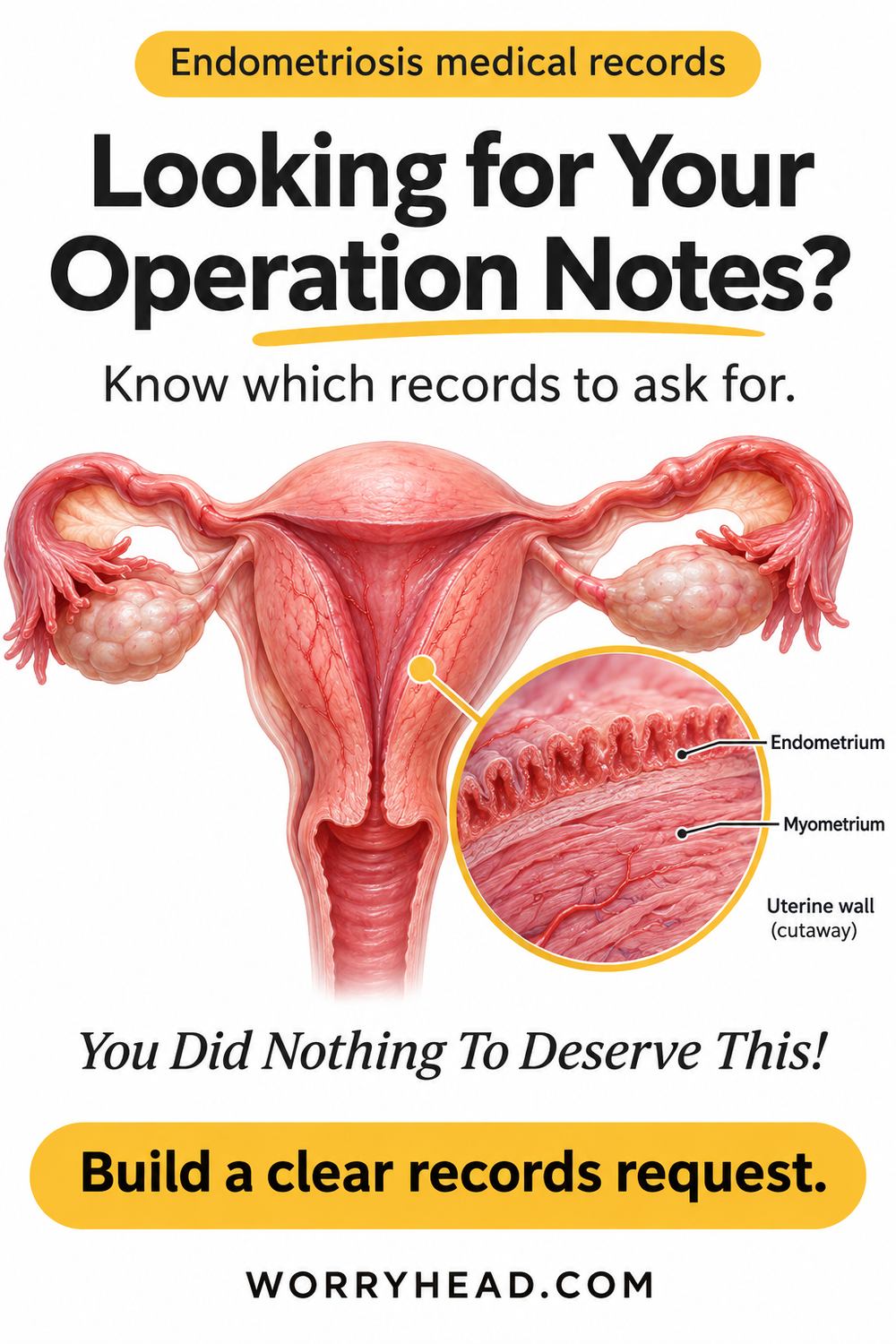
Send the request to the organisation that holds the information, such as your GP practice or the hospital trust involved in your care. NHS England explains that the relevant organisation is responsible for responding to requests for its records. There is not one central patient file that every NHS office can send you.
Look on the provider’s official website for medical records, subject access or information governance contact details. If you cannot find them, ask its reception or patient services team where to direct your request. For care across different providers, you may need separate requests rather than one message copied everywhere.
This distinction matters emotionally as well as practically: being redirected does not automatically mean you have asked an unreasonable question. Keep the provider’s name beside each document you want. A simple two-column note can reduce the amount you have to remember while you work through the process.
Describe a Specific Time Period
Include the period or episode of care you mean, using approximate dates if you do not remember the exact ones. A month, hospital department or operation date may help staff locate the relevant information. Be clear when a date is an estimate rather than presenting a guess as a fact.
You might ask for records relating to a gynaecology admission during a named month and list the types of documents you want. If your name or address has changed since that care, the relevant earlier details may help the organisation identify the correct record. Only provide information through a verified contact route.
You do not need to explain intimate symptoms in a long narrative just to make the request understandable. I would separate identifying the episode from explaining how it affected you. That keeps the administrative message manageable while leaving space for the fuller conversation with the right clinician when you want it.
Use the Right Request Route
The ICO explains that a subject access request can be made verbally or in writing, including by email, letter or an online route. You do not have to use a particular legal phrase or pay a solicitor to ask. An organisation’s form can be helpful, but the right of access does not depend on using that form alone.
For a written request, say that you want a copy of personal information held about you and describe the records involved. Add enough identifying information for the organisation to recognise you, along with a safe way to contact you. Keep a copy of the message you send.
Choose the method that you can use comfortably. If speaking is easier, make a brief note afterwards of the date and what you requested; if writing helps you think, use that instead. A clear, ordinary message is enough to begin a conversation about access, without turning your request into a formal argument.
Confirm Identity and Delivery Safely
Health information is sensitive, so an organisation may reasonably need to check that it is releasing records to the right person. Follow its verified instructions and ask for clarification if the requested identification seems excessive or the upload route is unclear. Do not send documents to an address found in an unexpected message without checking it.
Tell the team how you can receive information safely and whether you need an accessible format. A large digital file may be difficult to open on your phone, while a posted envelope may create privacy difficulties in a shared household. Discuss practical alternatives rather than assuming the first offered method will work.
As someone trying to support my wife, I think usefulness includes whether information is actually usable. You should not have to choose between receiving a record and exposing it to people you have not chosen. Raise those concerns early, when the delivery arrangements can still be discussed.
Keep a Trackable Request Log
Keep a short record of the organisation, what you requested and the date you sent it. Add any acknowledgement, reference number and request for identification or clarification. One note on paper can be enough; you do not need a complicated spreadsheet or a new app.
The usual response period is one calendar month, but the starting point or running of the period can be affected by necessary identification or clarification. More time can be allowed for complex requests or multiple requests, with an explanation. Ask the organisation to confirm the deadline it is using if you are uncertain.
This is a way to reduce the need to keep checking, not a demand to monitor your inbox constantly. You could choose one date to review progress and put the task away until then. If a trusted person helps, agree what they may track or see, so practical support does not quietly become wider access to your private information.
Check What Has Actually Arrived
Compare the response with the list you sent before trying to understand every clinical term. Check the date range, provider and types of documents supplied. A large file can still be missing the particular report you wanted, while a short response may fully answer a narrowly focused request.
Look for an explanation of anything withheld, unavailable or held by another organisation. Access rights have exceptions, including circumstances involving other people’s information or serious harm, so a redaction is not automatically evidence of wrongdoing. Ask for a clear explanation if the response does not tell you why something is absent.
Then decide what needs a clinical explanation and what needs an administrative follow-up. I would keep those on separate lists, because asking for a missing attachment is different from asking what a finding means. You can also pause here: receiving the files does not oblige you to read difficult material immediately or alone.
Ask About Gaps and Corrections
If something appears missing, refer back to your original request and name the document or period you cannot find. Ask whether it was included under a different heading, held elsewhere or excluded for a stated reason. A specific follow-up gives the records team a clearer question than saying that the whole file looks wrong.
For an apparent factual error, contact the organisation that made the record and explain the correction you are requesting. Give supporting details where you have them. A historical clinical opinion is not necessarily erased simply because a later assessment differs, and records need an audit trail of changes.
If you disagree with an opinion, ask how your concern or disagreement can be recorded. You can pursue the organisation’s complaint process and seek ICO guidance about data handling where needed. None of this makes your experience less important; it helps distinguish the kind of response each concern needs.
Making Endometriosis Medical Records Requests Manageable
It is possible to want information and dread opening it. Records can bring you back to an appointment, a period of uncertainty or language that felt distancing. That reaction does not mean you were wrong to ask for access.
You can decide when to read, how much to read and whether someone sits with you. You can also choose to obtain the files now and review them later. There is no obligation to absorb years of healthcare in one evening.
My wife lives with several conditions, and I know that the work of understanding illness can take space from the rest of life. Research has helped me learn, but I do not see endless reading as something every patient owes their care. Information should serve a purpose that matters to you.
A useful purpose might be preparing three questions for a forthcoming review. Another might be having a copy available without relying on your memory of dates. Neither requires you to interpret every abbreviation yourself.
Try separating the tasks of receiving, organising and understanding the record. Completing the first does not mean the other two have to happen that day. A pause between them can make room for the feelings that the paperwork brings up.
For example, you might first check that a requested operation note is present, save it somewhere private and write down the clinic’s contact details. At a later point, you could mark the passages you want explained. That is a practical sequence, not a clinical assessment of what those passages mean.
Keep your own notes visibly separate from the clinical document. A heading such as “questions I want to ask” can prevent your interpretation becoming mixed with the original wording. It also helps a supporter see where you want assistance without assuming they should rewrite the record for you.
If a file contains distressing language, try not to make a major decision about treatment from one phrase in isolation. Ask the relevant clinician to explain its context and whether it affects the current plan. A records team can usually help locate information, but it is not a substitute for that clinical conversation.
I would not want my wish to help to turn into another source of pressure for my wife. A useful question for a supporter is whether the task would help today, rather than whether it could theoretically be finished today. Leaving a folder closed can be a deliberate choice about energy, not a failure to advocate for yourself.

Privacy and Support With Endometriosis Medical Records
Your records may contain much more than information about endometriosis. They may include reproductive history, mental health discussions, relationship details or information from other consultations. Agreeing that someone can help with one task does not mean you want them to read all of that.
A partner, relative or friend does not gain an automatic right to your records simply because they support you. Where someone makes a request on your behalf, the organisation will need an appropriate basis for dealing with them, such as your authority. It may need to verify that authority and the person’s identity.
You can be specific about the help you want. One person could help you draft a message without receiving the response, while another might help organise selected documents you have chosen to share. Those are different roles and can be agreed separately.
As a husband, I believe that support should leave room for privacy rather than treat it as a barrier between us. Being close to someone does not mean knowing every detail is necessary to care about them. Ask before opening, forwarding or storing their medical information, even when your intention is kind.
This also applies to technology. Sharing your login details is different from arranging an authorised proxy service where one is available. Ask your GP practice or the relevant service about appropriate access rather than assuming a shared password is the only way to get help.
When documents arrive electronically, think about where they will remain after you read them. A download on a shared computer, an attachment forwarded to a work account or a photograph left in a shared photo library may be seen by people you did not intend. Choose storage that fits your circumstances, and check sharing settings before using it.
You do not need to send your whole record to everyone involved in helping you. If a particular service needs information, ask what is relevant and how it should be supplied securely. This can reduce unnecessary sharing while still allowing useful communication.
For a supporter, practical care might mean writing down the contact details you dictate, helping you locate the official website or making time for you to read. It might also mean accepting that you do not want help with this part. Respecting that boundary can be a meaningful form of support in its own right.
Requests involving children, someone who cannot make a particular decision, or the records of a person who has died can involve different rules. This guide focuses on an adult requesting their own information. Ask the organisation or consult the relevant official guidance if your situation is different, rather than assuming that ordinary partner permission covers it.
When to Seek Medical Help Alongside Endometriosis Medical Records Requests?
Do not wait for a records response if you need medical help now. A subject access request is an information process, not a way to assess a new symptom, change medication or obtain urgent treatment. Tell the appropriate clinical service what is happening and ask for care through its usual route.
If you need medical help urgently in England and are unsure what to do, NHS 111 can direct you to appropriate support. For an emergency, use the emergency services. A records office cannot provide the clinical assessment those situations require, even if you have explained that the documents matter to you.
If a coming appointment depends on a report, contact the team arranging that appointment as well as the records service. Explain which report appears to be needed and ask how the clinical team will obtain or review it. Do not assume that sending a SAR automatically alerts the clinician responsible for the appointment.
Reading records can also be emotionally difficult. If the experience is affecting your sleep, anxiety or ability to cope, you can speak with your GP or another appropriate health professional about that impact. You do not have to finish the paperwork before asking for support.
I cannot tell you what an individual entry means for your health. What I can say, as a husband who has spent years learning alongside illness, is that understanding information should not come at the cost of postponing care you need today. Keep the administrative request and your current healthcare needs moving through their appropriate routes.
Questions to Ask Your Doctor About Endometriosis Medical Records
The most useful question depends on what you hoped to learn from the record. Before an appointment, choose a few uncertainties that affect your next decision rather than bringing an expectation that every page must be explained. You can ask whether another appointment or a different team is needed for questions outside that consultation’s scope.
If the wording differs from what you remember, ask the clinician to help you understand that difference. There may be a distinction between a provisional impression, a confirmed finding and a plan that was being considered. Asking for the distinction is more useful than assuming that every unfamiliar phrase is either a mistake or a new diagnosis.
You might ask: “Which document best describes the procedure that was carried out?” That can help identify whether the relevant information is in an operation note, discharge summary or another report. It also avoids asking one short letter to answer a question it was never intended to cover.
Another question is: “Does this older entry still affect my current treatment plan?” A record of what was thought at an earlier point does not necessarily tell you what the team believes now. Ask what has changed and where the updated plan is documented.
If you have more than one provider, ask: “Which information do you already have, and is there anything you need from another service?” You may be able to help identify the provider without becoming responsible for personally carrying every piece of information between teams. Clarify who will take the next step and how you will know it has happened.
For an apparent error, ask: “Who should I contact about correcting this factual detail?” A wrong date or an inaccurate medication history may need a different response from disagreement with a clinical opinion. Explain the concern clearly and ask whether anything needs addressing now for safe ongoing care.
Finally, ask: “What do I need to understand before making the next decision?” A long record can draw attention towards everything that has happened, while your immediate need may be narrower. This question brings the conversation back to what is relevant to you today.
From my perspective as a partner, helping prepare two useful questions can be more supportive than arriving with a stack of explanations I found online. The aim is to make your priorities easier to hear. You remain the person whose information and healthcare are being discussed.
If Endometriosis Medical Records Are Late or Incomplete
First compare the response date with any acknowledgement, identity request, clarification or extension notice. The usual limit is a calendar month, not a fixed four-week period in every case. If the organisation has used a different deadline from the one you expected, ask it to explain that date.
If you have not received a response when expected, follow up through the verified contact route and refer to your original request. Keep the message focused on the outstanding information and the response you need. You can attach or quote your original request without rewriting your whole experience of care.
If the answer remains unsatisfactory, raise the concern with the organisation and consult the ICO’s guidance on complaints about access to information. A complaint about data handling is distinct from a clinical complaint about treatment. The ICO can consider data protection concerns, but that is not the same as obtaining a clinical second opinion or an award of compensation.
It can be frustrating to chase information when you are already tired. I would treat keeping a clear record as a way to support the next conversation, not as a promise that persistence will make every process straightforward. You are allowed to ask someone to help with the administrative steps while keeping control over what they can see.

Conclusion on Endometriosis Medical Records
Requesting your records can be a way to bring information within reach. It does not mean you are preparing for an argument, distrusting clinicians or agreeing to become the person who interprets your own care. You may want a copy of information about you.
Begin with what would help next. That might be an operation note, a report from imaging or a collection of letters from a particular period.
Naming the document and the organisation gives the request a starting point. You can ask for a wider record when that is what you need.
Remember that information may be held in different places. A hospital file, the information sent to your GP and the documents visible in an app are not identical. If something is missing, ask where it is held and what the response includes before deciding what that absence means about your care.
The administrative process also has limits. Receiving a document does not tell you how to interpret every term, and a request for information does not arrange clinical follow-up. Keep questions about the meaning of a finding, a change in symptoms or a treatment decision directed to a healthcare professional.
You can approach the paperwork at a pace that fits your life. There is no requirement to read everything immediately.
Saving the files safely, checking that the requested documents are present and choosing a few questions for later can be separate tasks. Each is progress.
As a husband, I think support matters most when it follows the wishes of the person living with the illness. Helping with a request can be useful, but it should not remove your privacy or your choices. You can decide who helps, what they see and which parts you would rather handle yourself.
If the record brings up difficult feelings, those feelings deserve room as well. A clinical document is written for particular purposes and cannot contain the whole experience of being unwell. Your work, relationships, uncertainty and efforts to get through ordinary days are not made less real because they are absent from a note.
Where the response is unclear, a focused follow-up can help identify the next step. Ask about a missing document, the reason for a redaction or the route for a factual correction. Keep copies of the exchange so you do not have to reconstruct it from memory each time you contact the organisation.
Please also keep today’s needs in view. Do not postpone medical help while waiting for access to older information.
A record can support a conversation, but it is not a substitute for care. You deserve both useful information about what has happened and a response to what is happening now.
You are not expected to become an administrator, researcher and clinician all at once. One clear request and one manageable next step can be enough for today. Let the information serve your needs, rather than allowing the task of collecting it to become another measure of what you should be able to carry.
You deserve information you can access, privacy you can choose and explanations you can ask for without feeling difficult. Start with the document that matters most, keep the next step small and allow yourself support if you want it. Your right to understand your care does not depend on having endless time, energy or confidence.
If you would like to comment, share what made requesting information easier without posting private medical details. For more understanding alongside the paperwork, my free 130+ page eBook, You Did NOTHING To Deserve This!, offers a husband’s perspective on living with the emotional weight of chronic illness.


About Me
Hi, I’m Lucjan! The reason why I decided to create this blog was my beautiful wife, who experienced a lot of pain in life, but also the lack of information about endometriosis and fibromyalgia for men…
READ MORE
Grab a FREE eBook!
“You Did NOTHING To Deserve This!”
Finally hear the words nobody ever said to you, that your pain is real, your tears make sense, and you did nothing to deserve endometriosis, the dismissal, or the way it has rewritten your life.
Related Questions You May Be Asking About Endometriosis Medical Records
Do I have to explain why I want my records?
You do not need to justify a subject access request by giving a reason for wanting your information. You do need to make clear what information you are requesting and allow the organisation to identify you appropriately. Explaining a particular document or period can help locate it without sharing a long personal account.
Will the NHS App show my complete endometriosis history?
Not necessarily. What appears depends on the information available from your GP and participating services, your access and the documents shared. Older entries or separate hospital records may not all appear. If you need information that is absent, ask the organisation holding it rather than assuming the App is a complete medical archive.
Can my partner request the records for me?
Someone can help or act on your behalf where there is an appropriate basis, such as your authorisation, and the organisation may need evidence of that authority. Being your partner does not automatically provide access. Decide what help you want and what information you agree to share before arranging the request.
Is there always a fee for hospital records?
Subject access requests are usually free. There are limited circumstances in which a reasonable fee may apply, such as certain excessive requests or requests for additional copies. If a charge is proposed, ask the organisation to explain the basis rather than assuming that every hospital routinely charges for access to your information.
Can I make an old diagnosis disappear from the record?
You can ask for inaccurate factual information to be corrected, but an earlier clinical opinion may remain as a record of what was understood at that time. Changes also need an audit trail. Ask how an updated assessment or your disagreement can be recorded, and discuss any implications for current care with your clinician.
Endometriosis Medical Records References
- https://ico.org.uk/for-the-public/getting-copies-of-your-information-subject-access-request/
- https://ico.org.uk/for-the-public/getting-copies-of-your-information-subject-access-request/what-to-expect-after-making-a-subject-access-request/
- https://ico.org.uk/for-the-public/time-limits-for-responding-to-data-protection-rights-requests/
- https://www.england.nhs.uk/contact-us/common-questions/how-do-i-get-a-copy-of-my-health-medical-records/
- https://digital.nhs.uk/data-and-information/information-governance/guidance/access-to-patient-records-through-the-nhs-app
- https://www.nhs.uk/nhs-app/help/documents/
- https://digital.nhs.uk/data-and-information/information-governance/guidance/amending-patient-and-service-user-records
- https://ico.org.uk/for-the-public/getting-copies-of-your-information-subject-access-request/what-to-do-if-you-dont-get-a-response-or-youre-unhappy-with-it/
- https://commonslibrary.parliament.uk/research-briefings/cbp-10686/
- https://www.nhs.uk/nhs-services/urgent-and-emergency-care-services/when-to-use-111/
