
When Being Called Strong with Endometriosis Feels Like Pressure
Have you ever smiled at a compliment while wishing someone would ask how you were really managing? Being called strong with endometriosis can feel comforting one day and strangely lonely the next. You can appreciate someone’s kindness and still wish their words left more room for the effort, fear or exhaustion they cannot see.
Being described as strong can feel supportive, but it can also leave you feeling expected to cope without help. Endometriosis can affect emotional wellbeing regardless of how composed you appear. You can say what the praise misses and ask for care without having to reject the person’s kindness.
My wife’s experience has kept me learning for years as a husband, blogger and researcher, not a clinician, and the NHS guidance and published research informing the health context here are listed at the bottom.
You may not dislike the word itself. You may dislike what seems to happen immediately afterwards: the conversation moves on, the practical question remains unanswered, and you are left holding a compliment where you needed a hand. That difference deserves attention without turning every well-meant remark into an offence.
I write from beside a person living with illness, rather than from inside her symptoms. From that position, I want my admiration to leave space for an honest answer. If the person I love has to reassure me that she is coping before I can feel comfortable, my praise is asking too much of her.
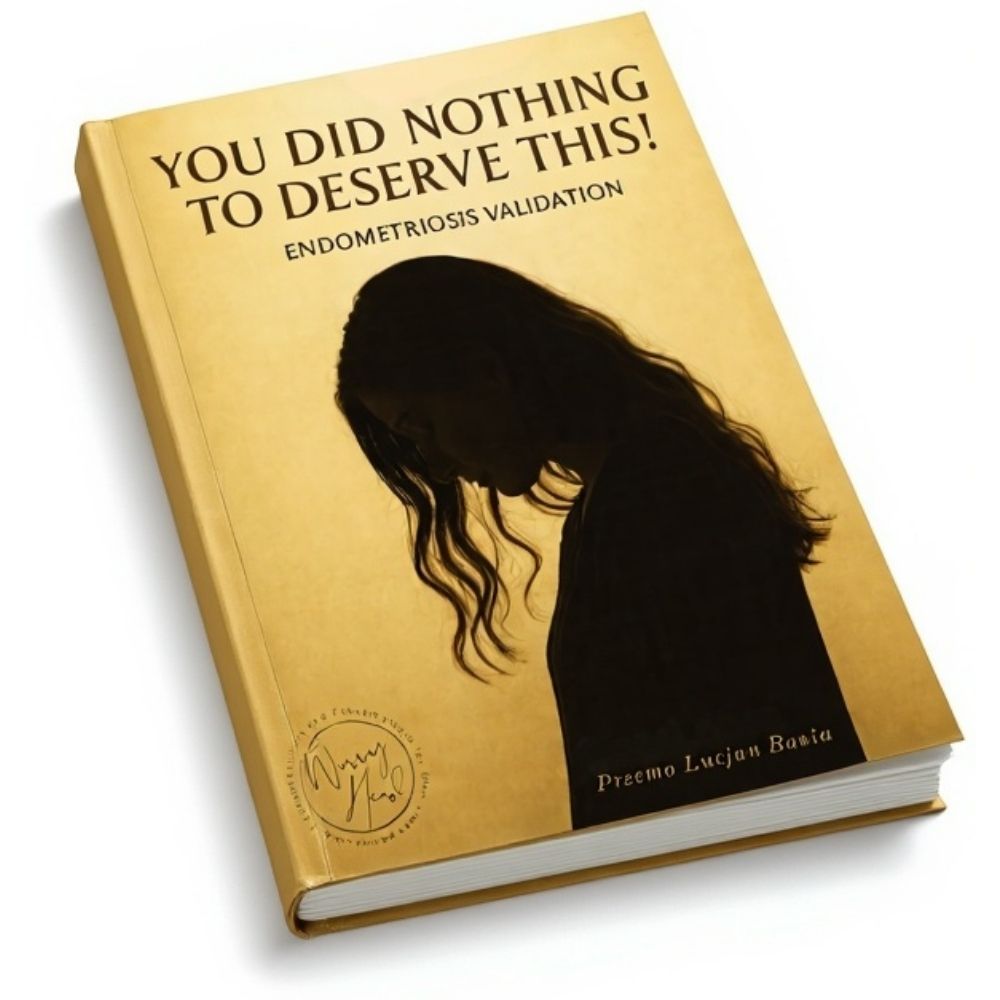
If praise has left you feeling that you must keep everything together, my free book, You Did NOTHING To Deserve This!, offers room for the feelings that do not fit that picture. It is a human companion to the experience of endometriosis, with no requirement to turn a difficult day into an inspiring story.
You Did NOTHING To Deserve This!
Endometriosis Validation for Women with Endo
What Being Called Strong with Endometriosis Leaves Unsaid
The NHS recognises that endometriosis can involve pain, fatigue and emotional difficulties, and can affect everyday life and relationships. None of those effects can be measured by how steadily you speak during a visit. Looking composed tells someone very little about what getting through that visit has cost you.
The wider mental toll of endometriosis includes more than the reaction to a single remark. Here, the smaller question is what to do when admiration seems to close a conversation you needed to keep open. You do not need to prove that the speaker intended harm before you can explain what would help.
Notice the Moment After the Compliment
When I think about my wife’s pain and exhaustion, admiration on its own feels incomplete. If someone tells you shopping has become difficult, calling them strong does not get the bags home. I want my response to leave room for the actual difficulty they trusted me enough to mention.
You could return to the practical point: “Thank you. I am still struggling with the bags, though. Could we work out that part?” This is suggested wording to adapt, not a conversation from my marriage. It accepts the kindness while keeping your actual need in view.
Sometimes there is no task to solve. You wanted someone to stay with the admission that you are frightened or tired. In that case, “I appreciate that, but I would like to talk about how hard this feels” can be enough. You are allowed to finish the thought you started.
Separate Recognition from Expectation
My wife still works and wants to feel needed. I admire her, but I do not want yesterday’s effort to become today’s obligation. If praise starts to mean that you must keep managing everything, you can question the expectation without rejecting the care behind it.
You do not need to accept that conclusion. What you managed on one occasion does not create an agreement to manage it every time. You can explain the changed situation without presenting a complete history: “I got through it last week, but I cannot take it on today.”
As a husband, I think this is a useful question to ask myself: am I recognising the person, or quietly relying on her to keep making a difficult arrangement work? Admiration should not become an excuse to leave the same person carrying everything.
Let the Word Have More Than One Meaning
Some people genuinely value being called strong. Others find it tiring, and some feel both ways. In a qualitative study published in 2023, Moore and colleagues interviewed 30 UK-based people with endometriosis about illness perceptions and quality of life. Accounts included changes in identity and complex emotions; some participants also described finding strength or resilience.
That small interview study does not establish how everyone responds to praise, and it did not test the effect of this particular phrase. It does remind me to leave ownership of the meaning with the person receiving it. There is no need to make strength a forbidden word or a compulsory identity.
Does Being Called Strong with Endometriosis Still Feel Kind to You?
I cannot decide for you whether a compliment feels kind. Living beside my wife has made that boundary important to me. You might welcome encouragement from one person and feel unseen by another; notice what their words leave room for afterwards.
Ask What You Wanted to Be Heard
Try completing this privately: “When I told them that, I wanted them to understand…” Your answer might be that you need a lift, that you are disappointed, or that managing an ordinary task took much more effort than it appeared to. Naming the missed point gives you something concrete to return to.
You do not have to analyse every interaction. One remark may be easy to let pass. A repeated pattern may deserve a conversation, particularly if you regularly leave feeling that you have performed coping rather than received support. The aim is to make an important relationship more usable, not to monitor every word.
You might also realise that the compliment was welcome and the day was simply hard. You can enjoy being recognised without turning that recognition into a duty to stay upbeat. Gratitude and tiredness can occupy the same afternoon.
Keep Your Right to an Ordinary Bad Day
My wife already carries guilt about being a burden, despite my love for her. The last thing I want is to add a role she must perform for me. You should be able to have an ordinary bad day without feeling that you have disappointed everybody who admires you.
“I can keep going with some things and still need help with others” is one possibility. Another is, “I do not need encouragement today as much as someone who can listen.” Neither asks the other person to stop caring. Both give care a clearer direction.
You also do not owe anyone a display of distress to correct their impression. You can be calm and need support. You can laugh during a visit and still be exhausted afterwards. Your right to describe your needs does not depend on making your outside match someone else’s idea of illness.
Choose How Much Energy the Conversation Deserves
An acquaintance’s passing comment may not merit a personal explanation. A partner who repeatedly uses praise to move away from difficult feelings may need a longer conversation. You get to choose which relationships deserve your limited time and which comments can remain uncorrected.
If you do want to explain, a quieter moment may give you more room than the middle of a difficult day. You could say that encouragement is sometimes welcome, but you would prefer a question about what you need before the conversation ends. There is no perfect script, and you are not responsible for making every explanation effortless to receive.
Writing helps me focus when thoughts feel tangled; it is one reason blogging matters to me. A short private message might help you explain one useful change, too. You do not need to produce a perfect account of every remark that has hurt.
Respond to Being Called Strong with Endometriosis in Your Own Way
I would not ask you to choose between pretending the words helped and pushing someone away. There can be a gentler middle response. The examples here are suggestions to adapt, not conversations from our marriage or a promise about how another person will react.
Accept the Care and Add the Missing Truth
You might say, “I know you mean that kindly. I am finding things difficult, and I need to be able to say that too.” This gives the other person a chance to hear the part that praise has missed. It does not require you to decide whether their intentions were good enough.
If you like being called strong sometimes, say so. “That usually encourages me, but today I would rather hear that it is okay to rest” communicates a preference for this moment. You do not need to announce a permanent ban on a word to ask for something different today.
A caring person may be relieved to understand the distinction. They may also feel awkward at first. You can allow ordinary awkwardness without taking responsibility for removing every trace of it. Being honest about what helps is a contribution to a relationship, even when the conversation takes practice.
Ask for Something That Can Actually Happen
I began blogging partly because I wanted to make life easier for my wife. That intention still needs practical action. For you, help might mean one item brought from the shop or a visit without hosting; ask for what would make a real difference today.
A specific request does not guarantee that the other person can meet it. It does make the difference between appreciation and practical capacity easier to discuss. If they cannot help, you can consider another arrangement without concluding that you failed to ask correctly.
You may also want acknowledgement without a task. “Please let me finish before we look for a positive side” is a complete request. Not every difficult feeling needs to become a project for you or the person listening.
If You Are the Person Offering Praise
This is a reminder for me as much as for anyone reading: listen before reaching for praise. My wish to encourage my wife must not hurry her past what she is telling me. A useful question is what she needs, not how quickly I can find something positive.
Be specific if you do express admiration. Recognising the effort involved in making an appointment is different from making endurance the person’s whole identity. Leave room for the next sentence to be, “Actually, I cannot manage another thing today.”
Our life includes losses that affection cannot undo, including the chance of becoming parents. I love my wife without needing her to turn those losses into an inspiring story. Whatever you are carrying, you should be able to speak honestly without protecting someone else’s image of your strength.
Notice Whether Anything Changes
After you explain, look for a practical difference over time. Does the person leave more room for your answer? Do they take your limits seriously? Do they follow through on help they offered? A relationship is easier to assess through repeated behaviour than through one imperfect sentence.
If a conversation repeatedly turns into blame or dismissal, you can limit how much personal information you share and seek support elsewhere. If distress is persistent or affecting daily life, discuss it with a qualified health professional. Emotional support belongs alongside care for physical symptoms; you do not have to manage either by appearing brave enough.
On a day when you have nothing encouraging to report, your experience is still worth hearing. Care should not depend on the strength of your performance.
Final Word on Being Called Strong with Endometriosis
I want my wife to feel loved when she has energy and when she has none left. Building my blogs is part of my effort to ease her work and financial pressure, not a reason to ask her to keep pushing. You deserve care that makes room for limits as well as effort.
If you feel like sharing, what do you wish someone would say instead? The comments are open to your experience.
For the moments when praise leaves you feeling you must hide the hard parts, my free eBook, You Did NOTHING To Deserve This!, offers a more forgiving conversation.


About Me
Hi, I’m Lucjan! The reason why I decided to create this blog was my beautiful wife, who experienced a lot of pain in life, but also the lack of information about endometriosis and fibromyalgia for men…
READ MORE
Grab a FREE eBook!
“You Did NOTHING To Deserve This!”
Finally hear the words nobody ever said to you, that your pain is real, your tears make sense, and you did nothing to deserve endometriosis, the dismissal, or the way it has rewritten your life.
Related Questions You May Be Asking About Being Called Strong with Endometriosis
Is It Ungrateful to Dislike a Compliment?
You can recognise a kind intention and still dislike how the words land. Explaining a preference is not the same as denying that someone cares. You can also choose not to discuss a passing comment.
What If I Like Calling Myself Strong?
Keep language that feels right to you. The issue is whether the label leaves room for your needs and changing feelings. You do not have to give it up because somebody else experiences it differently.
Do I Have to Tell People How Bad Things Really Are?
You decide what to disclose. A short statement about the help or boundary you need can be enough. You do not owe detailed symptoms, tears or private information as evidence.
Being Called Strong with Endometriosis References
Sources checked on 20 October 2026. The NHS supplies the medical context; the 2023 qualitative study supplies limited context about identity and emotional experience. The discussion of praise and suggested wording is editorial reflection, not evidence that one phrase causes a particular health outcome.
