Endometriosis and Good Days: Enjoying Relief Without Guilt
Have you ever felt a little better, then worried that enjoying yourself would make people doubt the difficult days? Endometriosis and good days can bring a confusing mixture of relief, caution and guilt. You deserve room for the lighter moments without turning them into a statement about your whole health.
A better day does not invalidate endometriosis or prove that it has gone away. You can enjoy what feels possible without promising the same tomorrow. Describe today’s needs honestly, keep support flexible and let pleasure be part of your life, rather than evidence you must produce for someone else.
Years of learning because of my wife’s experience have shaped my work as a husband, blogger and researcher, not a clinician, and the NHS and WHO sources informing the health context here are listed at the bottom.
I write this knowing how much illness has taken from our life together. We have lost our dancing life and parts of the social world we once knew. I would hate for the moments my wife can enjoy to become another thing she has to defend. My role as her husband is to make space for her life, not inspect it for contradictions.
This article is about the emotional and social pressure around a better day. It is not a programme for increasing activity or a way to judge whether treatment is working. Your own experience and any individual advice from your clinical team matter more than an outsider’s interpretation of a photograph or afternoon out.
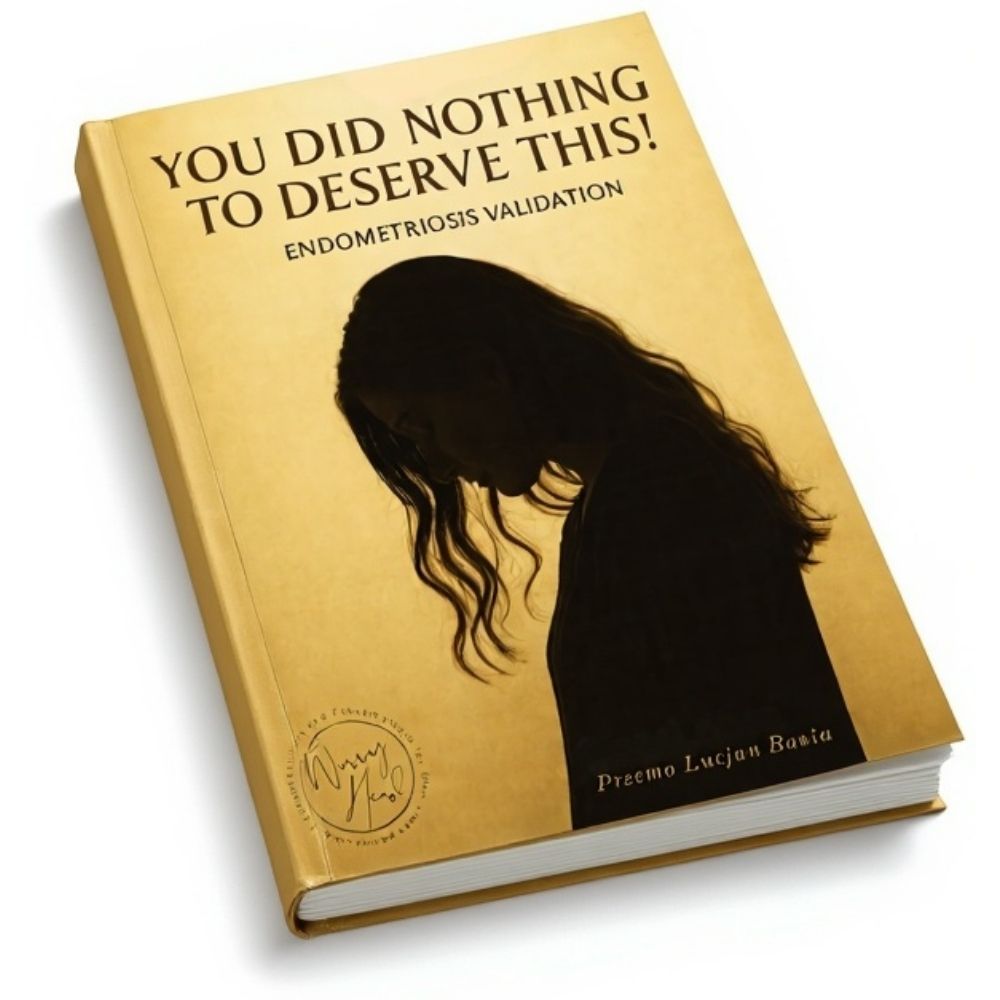
If a moment of happiness leaves you wondering whether you still deserve understanding, my free book, You Did NOTHING To Deserve This!, speaks to that pressure to justify yourself. It offers companionship for the human side of illness, including the days that do not look how other people expect.
You Did NOTHING To Deserve This!
Endometriosis Validation for Women with Endo
- Why Endometriosis and Good Days Can Bring Mixed Feelings
- Let Pleasure Have a Place in Endometriosis and Good Days
- Talking About Endometriosis and Good Days Without Promising Tomorrow
- You Decide What to Share About Endometriosis and Good Days
- Keep Support Steady Through Endometriosis and Good Days
- Final Word on Endometriosis and Good Days
- You Did NOTHING To Deserve This!
- FREE eBook
Why Endometriosis and Good Days Can Bring Mixed Feelings
Relief does not always arrive by itself. You might be pleased to have a little more energy and immediately wonder whether you should use it to catch up. You might want to meet a friend, then imagine being questioned about why you could not manage the same thing last week. Those are different pressures, and neither needs to become the price of enjoying today.
When I think about my wife’s guilt around needing support, I do not want a better afternoon to become an unpaid debt. The help I offer is not something she must reimburse the moment she feels more able. If you recognise that urge to repay every cancelled plan or unfinished task, it may help to name what you think you owe, and to whom.
The NHS describes endometriosis as different for everyone, with symptoms that can affect everyday life and relationships. WHO describes it as a chronic condition for which there is currently no cure. My practical conclusion is modest: one better day cannot, by itself, establish that the condition has disappeared. Equally, genuine improvement is allowed to be good news. You do not have to minimise it to protect your credibility.
Try separating what happened from what you fear it means. What happened might be that you enjoyed lunch. The feared meaning might be that nobody will believe you need help tomorrow. Naming that distinction does not magically remove the worry, but it gives you a clearer problem to address. Lunch itself was not dishonest, and pleasure did not rewrite your medical history.
Our broader discussion of looking well while living with invisible symptoms explores the gap between appearance and experience. Here, I want to give a better day its own room, including when you actually do feel better rather than merely look better.
Let Pleasure Have a Place in Endometriosis and Good Days
There is a quiet difference between choosing something you want and using a better day to prove that you are trying hard enough. You may genuinely want to finish a piece of work. You may want music, company or an ordinary hour with no health conversation. None of those choices has to be ranked according to how useful it looks to someone else.
My wife still works, and feeling needed matters to her. That does not mean I want every available bit of her energy assigned to work. Part of why I am building these blogs is to ease that financial pressure over time. We both still have jobs; this is an aim, not a claim that we have escaped all those pressures. It has made me think carefully about how easily worth gets confused with output.
Before filling the day, you could ask yourself what you would choose if you did not have to impress anybody. The answer might still be a practical task. It might be something small that reminds you of yourself. You do not need to make the day memorable, photograph it or turn it into a recovery milestone. An uneventful afternoon can be enough.
If a clinical team has given you an individual activity or recovery plan, keep that guidance in view. I cannot tell from here what amount of activity suits you, especially when other conditions are involved. I am talking about permission to value enjoyment, not advising you to push through symptoms or change prescribed care.
It is also all right if you cannot relax into the day immediately. Being told to make the most of it can create its own pressure. You may feel cautious, tired in a different way, or simply unsure what you want. A better day is an opportunity, not another assignment you can fail by spending it quietly.
Talking About Endometriosis and Good Days Without Promising Tomorrow
Sometimes the difficult part begins when another person celebrates more certainty than you feel. They hear that you went out and assume you can resume every commitment. You may then feel pushed to choose between sounding grateful and being honest about what remains difficult. I would rather a conversation leave room for both.
A short explanation can describe the present without predicting the future. For example, you could say that you enjoyed today and still need tomorrow’s plans to stay flexible. That is suggested wording, not a conversation I am claiming my wife and I have had. Use whatever sounds like you; a sentence you can actually say is more useful than a polished speech that feels borrowed.
If a friend asks whether you are better, consider which question they mean. They may be asking how you feel today, whether a particular symptom has eased, or whether the condition has resolved. You can answer the smaller, accurate question: today is easier; this symptom is quieter; you are pleased with the improvement. You do not have to supply a prognosis to be friendly.
With someone who regularly helps you, be more concrete. Explain which help you still need and which task you would like to do yourself today. Being supported should leave room for independence as well as rest. As a husband, I would not want my eagerness to help to make my wife feel that she must stay in one fixed role.
Nor should one successful outing become a standing agreement. If invitations have become complicated, the discussion of keeping connection when plans change may help you explain the difference between wanting to be included and being able to promise attendance. Your interest in people can stay steady while your capacity changes.
You Decide What to Share About Endometriosis and Good Days
A happy photograph can feel surprisingly exposed when you worry about how it will be interpreted. Perhaps you want to share a moment with friends but feel tempted to add a paragraph about everything that was difficult before or afterwards. You are allowed to provide context. You are also allowed to keep a private moment private, or post a happy picture without attaching your full history.
I know that friends turning away can leave a mark on how safe it feels to be seen. That has been part of our life, and I do not want to pretend that a clever caption fixes it. The useful distinction is between sharing because you want connection and documenting because you feel constantly on trial. Those experiences can look similar from the outside while feeling very different inside.
For an ordinary social post, you might keep the caption about the moment itself. If you want a boundary, you could add that you are enjoying today without making predictions. If you would rather tell one trusted person than a large audience, that is a complete choice too. There is no obligation to turn every personal experience into education.
When someone makes an unfair assumption, you do not have to reply instantly. Decide whether a correction would help, whether a private conversation is worth your energy, or whether you prefer to leave it. I cannot promise that everyone will understand. I can say that their limited view of your day is not a complete account of your life.
Sharing less is not an admission that you were misleading anybody. Sharing more is not a duty you owe other people with endometriosis. Your experience belongs to you. I write publicly because learning and sharing give me a sense of purpose, but that does not make public storytelling the right choice for everyone, every time.
Keep Support Steady Through Endometriosis and Good Days
If you are the partner reading this, try welcoming improvement without immediately reallocating every task. Ask what feels possible today and what still needs support. A pleased response can be simple. It does not need to become an announcement that life is back to normal or a list of things you can finally do together.
The illness and losses in our marriage have taught me to be careful with my own hope. Wanting my wife to feel better is loving; making her responsible for maintaining my relief would be unfair. She needs space to tell me when something is harder again without feeling she has disappointed me personally. That is a standard I want to keep practising, rather than a claim that I always get everything right.
If symptoms become difficult again, returning to support is not going backwards morally. You can update the practical plan without searching for a mistake that explains everything. A changed day does not prove that you were careless to enjoy the easier one. Avoid making unsupported conclusions about causes from a single event.
Better days can also be useful information for your clinician when considered alongside the harder ones. Give an honest account of both if you are discussing symptoms or treatment. The NHS advises seeking help when symptoms affect daily life, work or relationships, or do not improve or worsen after treatment. An easier appointment day does not erase those reasons to discuss the wider pattern.
If guilt or anxiety is regularly stopping you enjoying life, you can also ask for emotional support. You do not need to wait until you have found perfect words for it. My suggestions here are ways to think and talk about a specific difficulty; they are not a psychological treatment, and you are not failing if you need more help than an article can offer.
Final Word on Endometriosis and Good Days
I want you to have moments that belong to you, without illness or other people’s expectations taking ownership of every one. You can be glad about today and uncertain about tomorrow. You can accept help and still enjoy yourself. Those are ordinary human possibilities, not contradictions you need to solve.
As a husband, I want my love to make that room larger. If you would like to share in the comments below, what helps you enjoy a better day without feeling you must explain it? Keep anything private that you would rather not disclose. For more companionship with the guilt behind that question, you can explore my free book, You Did NOTHING To Deserve This!.


About Me
Hi, I’m Lucjan! The reason why I decided to create this blog was my beautiful wife, who experienced a lot of pain in life, but also the lack of information about endometriosis and fibromyalgia for men…
READ MORE
Grab a FREE eBook!
“You Did NOTHING To Deserve This!”
Finally hear the words nobody ever said to you, that your pain is real, your tears make sense, and you did nothing to deserve endometriosis, the dismissal, or the way it has rewritten your life.
Related Questions You May Be Asking About Endometriosis and Good Days
Does a Good Day Mean My Endometriosis Has Gone Away?
A better day alone cannot establish that. Endometriosis is a chronic condition, and symptoms differ between people. Share meaningful changes with your clinician when discussing your care, while allowing yourself to appreciate improvement without making a medical conclusion from it.
Do I Have to Explain Every Happy Photo?
No. You can share an ordinary happy moment without a public account of your symptoms. Add context if you want to, especially with someone whose understanding affects your support, but do not feel required to document suffering beside every smile.
What If I Feel Guilty for Choosing Something Enjoyable?
Notice whether you wanted the activity or felt you had to earn it through chores first. You can value enjoyment alongside responsibilities. If guilt is persistent or limiting your life, talking with someone you trust or seeking professional emotional support may be useful.
Endometriosis and Good Days References
- https://www.nhs.uk/conditions/endometriosis/
- https://www.who.int/news-room/fact-sheets/detail/endometriosis
Health sources checked on 21 October 2026: NHS, reviewed 27 August 2024; WHO, updated 15 October 2025. The discussion of guilt, sharing and everyday conversations is personal reflection and practical editorial guidance, not evidence that a particular approach treats endometriosis.
