
Medical Students at Endometriosis Appointments: Your Choices
Are you unsure about medical students at endometriosis appointments? You can value the next generation of doctors and still need some privacy today. Wanting a clear explanation before another person joins your consultation is a reasonable part of feeling comfortable with your care.
You can decline medical student involvement without your care being affected. Ask who will be present, what they would do and who supervises. Agreeing to observation is not blanket consent to examination; you can change your mind, and teaching examinations under anaesthesia need specific consent.
I am Lucjan, a husband, blogger and researcher rather than a clinician, and years of learning alongside my wife’s endometriosis experience have led me to the GMC, NHS and medical education guidance listed at the bottom of this article.
If being heard in consultations has already been difficult, my guide to endometriosis medical gaslighting explores that wider experience; a student’s presence alone does not mean your concerns are being dismissed.
An appointment may involve talking, reviewing information, an examination or planning treatment, and you do not have to make one decision that covers every possible activity. The useful starting point is finding out what is actually being proposed, before deciding whether it fits your needs on that particular day.
You might welcome a student listening to your history but want a private conversation about sex, fertility or mental health. You might also decide that you would rather have the whole appointment without teaching involvement, even if you have helped students previously.
My wife’s health has affected our work, friendships and the possibility of having children, so I understand why a medical history can contain far more than a neat list of symptoms. I would never want the wish to be helpful to make someone feel they had to share more than they wanted.
We will look at introductions, supervision, intimate examinations and privacy, with practical ways to prepare that do not require you to justify your feelings. This guide concerns adults making their own decisions about planned care, and your team can explain arrangements specific to your appointment.
If preparing for an endometriosis appointment has left you feeling exposed or unheard, my free 130+ page eBook, You Did NOTHING To Deserve This!, offers the perspective of a husband learning to support someone he loves. It is an invitation to feel less alone alongside your own medical care, without any expectation that you must share your story with others.
You Did NOTHING To Deserve This!
Endometriosis Validation for Women with Endo

Understanding Your Choices About Medical Students at Endometriosis Appointments
A teaching hospital helps future clinicians learn, but its educational purpose does not remove your place at the centre of your appointment or make every form of participation automatic. The important question is what the team is asking you to agree to, with enough explanation for that decision to feel like your own.
A medical student is still studying medicine, while a doctor in training is already qualified, so the words student and trainee do not always describe the same role. You can ask for an introduction that makes this distinction clear without having to work it out from someone’s age, clothes or badge.
The GMC expects patients to be told when students are involved and to have the opportunity to object without their care being prejudiced. Its placement guidance also places responsibility for obtaining appropriate permission and arranging supervision with the professionals responsible for the setting, rather than leaving you to manage it alone.
An invitation to speak with a student may mean describing your symptoms before the doctor arrives, or it may mean a student listening while the doctor leads the consultation. Those are different experiences, and neither description should leave you guessing whether an examination is also being requested.
Being agreeable in the waiting room does not tell the team how you feel about every sensitive subject that might come up once the appointment begins. You can ask for a private part of the conversation, particularly when your concerns are difficult to explain in front of someone you have only just met.
There is also room for a positive choice: you may want a future doctor to hear how pain, fatigue and uncertainty affect ordinary life beyond a textbook description. That contribution should come from willingness, not from feeling responsible for fixing medical education or proving that you are a cooperative patient.
I write as a husband whose wife’s illnesses have changed what daily life looks like, and I know that explaining those consequences can take emotional effort as well as time. Some appointments may leave you with enough energy to talk more widely, while others may need to focus closely on getting your own questions answered.
You do not need to predict perfectly how you will feel, because a decision about participation can be revisited when the situation becomes clearer. A useful plan is therefore less about preparing a flawless speech and more about knowing the small points you would like the team to explain.
The following steps are the things I would want someone I love to feel able to clarify, without turning the consultation into a confrontation. They give you a way to separate the different decisions so that your care, privacy and willingness to help with learning can all be discussed honestly.
- Identify Everyone in the Room
- Separate Observing From Being Examined
- Ask About Supervision
- Choose What Feels Manageable
- Discuss Intimate Examinations Separately
- Keep Sensitive Information in Context
- Change Your Mind Clearly
- Check the Plan Afterwards
Identify Everyone in the Room
Start with names and roles, including who is leading your care and who is there to learn. A medical student, a qualified doctor undertaking further training and a visiting observer are not interchangeable descriptions, so ask the team to explain any unfamiliar introduction in ordinary language.
You can also ask whether the same people will stay for the whole appointment or whether others may join later. Knowing this before discussing something personal gives you an opportunity to say that you would prefer a smaller group or a private conversation for part of the visit.
I think this matters because an endometriosis history can include losses and changes that are not obvious to anyone looking at an appointment list. You should not have to begin sharing them while still wondering who is listening or what their involvement will be.
Separate Observing From Being Examined
Listening to a consultation, asking you questions and examining you are separate activities, even when they happen during one visit. Ask which activity the student is being invited to undertake, and whether the clinician plans to repeat or check any part of it as part of your care.
A yes to observation should not be treated as an open invitation to anything else. If the proposal changes, there should be a new explanation and an opportunity for you to decide, rather than an assumption that your earlier agreement covers the change.
It may help to decide what is manageable today instead of making a general rule about all students or all future appointments. As a husband, I can see the value in keeping that choice specific: you may feel comfortable talking about symptoms but have very different feelings about an examination.
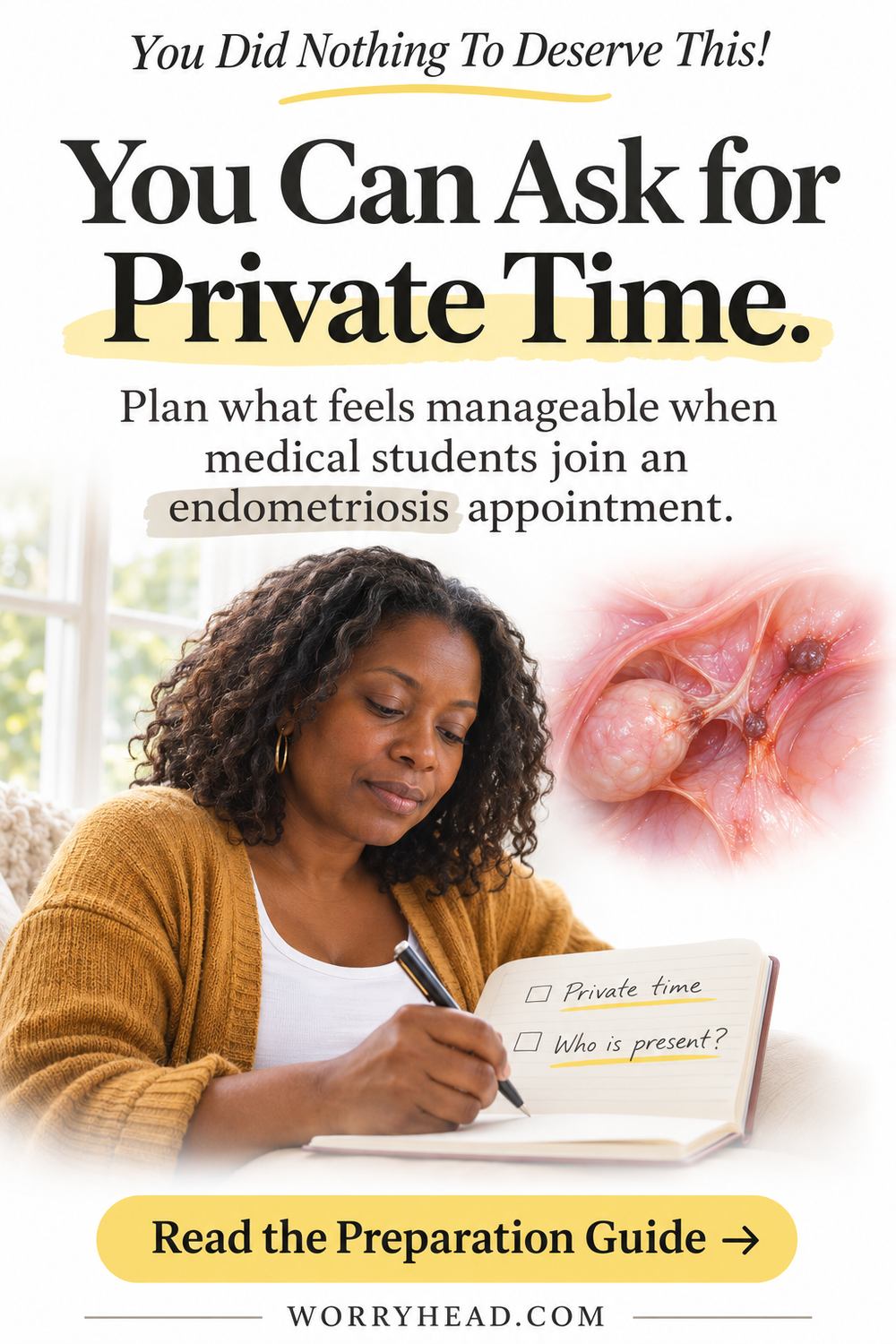
Ask About Supervision
Ask who is responsible for supervising the student and how the information gathered will reach the clinician making decisions about your care. The answer may differ between a student taking a history and one assisting with a particular activity, so a clear explanation is more useful than a vague reassurance.
You do not have to assess someone’s competence yourself or decide how their placement should be organised. The team is responsible for appropriate involvement, and you can ask to speak to the supervising professional if something about the arrangement leaves you uncertain.
When energy is limited, uncertainty can add another task to an already demanding appointment. I would want you to leave this discussion knowing who can answer your medical questions, rather than feeling you have to decide whether a student’s preliminary explanation is the final clinical plan.
Choose What Feels Manageable
You may welcome student involvement on one day and decline it on another, without either decision cancelling out the other. Think about the purpose of this appointment, how much you need to discuss and whether an additional conversation would feel helpful or tiring.
If the request comes before the appointment, you can ask what it involves before answering. If it comes after everyone is already in the room, you can still ask for a moment with the responsible clinician to make your choice without an audience.
My wife can feel guilty or like a burden despite my love, which is one reason I am careful about language that makes helping others sound like an obligation. Being a considerate person does not require you to put your own comfort aside whenever an educational opportunity appears; a simple preference is enough to begin the conversation.
Discuss Intimate Examinations Separately
Before an intimate examination, ask what is clinically needed and what involvement, if any, is proposed for teaching. The explanation should cover what will happen, possible discomfort, privacy and the option of a chaperone, with an opportunity to ask questions and request that the examination stops.
For an intimate examination undertaken for educational purposes while you are anaesthetised, GMC guidance requires the professional to check that your consent is recorded in writing or as a signed entry in your records. Discuss the proposed examination before anaesthesia, while you can consider it and ask for clarification.
I would not want an important distinction like this hidden inside a rushed general conversation about surgery. You can ask the team to show where your particular agreement or refusal is documented, and to explain how that choice is communicated to those involved.
Keep Sensitive Information in Context
Ask how information shared with a student will be used, particularly if someone proposes a teaching discussion beyond your immediate care. Information relevant to your treatment may need to be shared with the responsible clinician, so it is better to clarify this than to assume a student conversation is separate or off the record.
Identifiable information used for education outside the care team raises additional confidentiality considerations. GMC guidance favours anonymised information where practicable and normally requires explicit consent for identifiable disclosure outside the relevant care arrangements.
You can ask for a sensitive part of your history to be discussed privately with your clinician. I know that subjects such as lost parenthood or changes in intimacy carry a personal weight that cannot be measured by how briefly they appear in medical notes.

Change Your Mind Clearly
If the arrangement no longer feels comfortable, tell the clinician that you want student involvement to stop or that you want to continue privately. You do not have to wait for the end of a consultation to raise a concern about what is happening during it.
During an examination, say that you want it to stop if that is your decision; the professional should stop when asked. If speaking is difficult for you, discuss beforehand how you will communicate a pause or a change of mind so the team understands what you need.
These are practical suggestions for communication, not a test of whether you used the right words quickly enough. Someone who freezes, becomes tearful or struggles to interrupt still deserves attention and care, and I would never want a reader to take responsibility for a professional overlooking visible distress or an expressed boundary.
Check the Plan Afterwards
Before leaving, confirm the clinical plan with the professional responsible for your care, especially if several people have spoken with you. Ask which findings have been reviewed, what happens next and who to contact if a promised letter, test or follow-up does not arrive.
If student involvement was uncomfortable, you can raise that separately from your medical questions, either with the team or through the service’s patient advice route. A short factual note about what happened and what you would like clarified may help you explain the concern later.
I find writing useful for sorting through complicated information, although it is not clinical treatment and it does not make every difficult experience easy. You might find the same practical benefit in noting your agreed plan, while giving yourself permission to leave the emotional processing for another time.
Making Space for Privacy With Medical Students at Endometriosis Appointments
Privacy can mean more than being covered during an examination; it can also mean being able to decide who hears about the parts of your life that feel especially personal. You may be comfortable describing pain in a group and less comfortable discussing sexual difficulties, fertility, medication concerns or how your mental health has been affected.
Rather than deciding that you must either share everything or say nothing, you can ask whether a section of the consultation can take place with the clinician alone. This is a practical request about the conversation you need, and it does not have to be presented as criticism of the student who has been invited to attend.
If you know in advance that a subject will be difficult, consider writing a short note asking for private time and giving it to the team when you arrive. That note can describe the arrangement you would prefer without setting out the sensitive details for reception staff or everyone in the waiting area to read.
My wife’s illnesses have affected our chance of having children and the lives we imagined, and I know that facts which look straightforward on paper can contain years of grief. I would not assume that a person can speak about such things in the same way with every listener, or that being quiet means the subject does not matter.
A partner or friend can help you remember a preference if you want their support, but the conversation should still be directed towards you and your choices. I see my role as helping my wife feel supported, not answering on her behalf simply because I have read about a condition or feel strongly about her care.
You can also ask for communication adjustments, such as more time to understand the explanation or an appropriate interpreter, if these would help you participate in the decision. The aim is a conversation in which you understand what is being requested and can answer freely, rather than an appointment that rewards the person who speaks fastest or sounds most confident.
Helping Future Doctors Through Medical Students at Endometriosis Appointments
Some people actively want students to learn from their experience, and that can be a considered, positive choice rather than something to feel suspicious about. A student who listens carefully may learn about the practical consequences of illness as well as the symptoms that first brought you to the clinic.
You might choose to explain how fatigue affects work, why a cancelled plan matters or how difficult it is to describe pain that changes from day to day. There is no requirement to turn that conversation into your entire life story, and the part you choose to share can be brief and focused on what feels useful to you.
My own blogging began with trying to understand and support my wife, so I appreciate the value of learning from the human experience surrounding medical information. That personal motivation does not make me a clinician, and it also reminds me that no one owes another person unlimited access to their story in the name of learning.
If you agree to a student taking your history, you can ask how much time is expected and when you will speak with the supervising clinician about your own priorities. Clear expectations can make it easier to contribute willingly while still protecting the purpose of the visit, particularly when travelling to an appointment or managing symptoms has already taken considerable effort.
You may leave pleased that you helped, or you may decide that another appointment would be better kept private; neither reaction needs to become a permanent rule about who you are. Good educational experiences depend on respectful invitations and clear boundaries, and a student’s opportunity to learn should include seeing those boundaries accepted without argument or guilt.

When to Seek Medical Help Around Medical Students at Endometriosis Appointments
A concern about teaching involvement and a change in your health need different responses, even if they happen during the same visit. If you are in pain, distressed or unsure what is happening, tell the clinician promptly so they can address the immediate situation and explain the next step.
Do not assume new or worsening pelvic pain is simply endometriosis. NHS advice is to call 999 or go to A&E for pelvic pain with features such as severe or worsening pain, faintness, breathing difficulty, shoulder-tip pain or heavy vaginal bleeding; do not drive yourself to A&E.
For pelvic pain with difficulty passing urine or stool, blood in either, fever or shivering, unusual vaginal discharge or bleeding, or possible pregnancy, seek urgent advice from NHS 111. Ongoing or recurring pelvic pain also deserves a GP review rather than being put aside because an appointment felt difficult.
If your concern is about consent, privacy or conduct, ask to speak with the supervising clinician or the service manager. In England, PALS can provide confidential advice and information about resolving concerns or making a complaint; it is not a substitute for urgent medical assessment.
I would want you to have both kinds of support available, without feeling that raising a concern means abandoning your treatment or that accepting care means accepting every part of an upsetting experience. If the emotional impact persists, you can also discuss that with your GP or another appropriate health professional.
Questions to Ask Your Doctor About Medical Students at Endometriosis Appointments
I would begin with the purpose of the proposed involvement, because that makes the rest of the conversation easier to understand. You could ask who the student is, what they would be doing during your appointment and which clinician remains responsible for reviewing your symptoms and agreeing the plan with you.
If you are comfortable with listening but uncertain about examination, say that distinction in your own words. Asking whether your agreement is for observation only gives the clinician a chance to explain the boundaries, and you can discuss a different proposal separately if it arises later.
For an intimate examination, it is reasonable to ask which parts are needed for your care and which, if any, are being requested for teaching. If anaesthesia is involved, ask how your decision about an educational examination will be recorded and checked, rather than relying on a general reassurance that everything is covered by a form.
You can also explain what would make the conversation manageable, whether that is some private time, fewer people present or a clear way to request a pause. I would rather see a simple preference understood than have someone spend the whole visit trying to find a perfect, formally worded question while their own concerns remain unheard.
Towards the end, bring the discussion back to the reason you attended and ask what the clinician recommends next. Knowing who to contact about results or unresolved concerns can help you leave with a practical plan, while any decision about helping with teaching remains one part of the visit rather than its defining purpose.

Conclusion on Medical Students at Endometriosis Appointments
Medical education matters, and so does the person whose appointment makes that learning possible. When you are living with endometriosis, a consultation can already involve pain, uncertainty and the effort of explaining a life that has become more complicated than you expected. You can recognise the value of future doctors learning without treating your own privacy as something that must always come second.
The most useful starting point is often a clear introduction and a specific explanation. Knowing who is a student, who is qualified and who is supervising helps you understand the arrangement before deciding whether you are comfortable with it. Listening, asking questions and examining you are different activities, and your choice can reflect those differences rather than becoming a single answer to an undefined request.
I think about this through my experience as a husband, not as someone who can tell you what an appointment should feel like. My wife’s illnesses have affected our family hopes, her dancing life, friendships and the energy available for ordinary days. That is why I would never regard a personal history as just a useful teaching resource, detached from the person who has lived it.
You might want a student to hear exactly those wider consequences, and your willingness to explain them can be meaningful. You might instead need a quiet conversation with the clinician about something you have not yet found words for. Both choices can come from thoughtfulness, and neither requires you to prove how supportive, brave or generous you are before your preference is taken seriously.
Intimate examinations deserve their own clear discussion, including what is proposed, who will be involved and how you can ask for the examination to stop. Teaching examinations under anaesthesia need the particular consent arrangements described in professional guidance. If anything feels unclear beforehand, ask the team to explain the plan and the record of your decision while you have the opportunity to consider it.
Afterwards, your medical needs still deserve a clear plan. Check what happens next, how you will receive results and who can answer concerns that remain. If an experience with teaching involvement has upset you, you can seek an explanation or advice through the service without dismissing your own reaction as something too small to mention. Practical care and respectful communication belong in the same appointment. A written reminder of the agreed next step may also help if tiredness makes it difficult to remember everything once you have returned home.
You do not need to prepare a perfect speech before asking for privacy or more information. A short explanation of what feels manageable today can be enough to start, and you can revise your decision as the conversation develops. I hope this guide makes that possibility easier to see, whether your eventual answer is yes, no or only to a particular part of the proposed involvement. Your story can help someone learn, but the choice to share it should remain connected to your wishes, your understanding and your care.
You are allowed to arrive with mixed feelings, ask for an explanation and choose what feels manageable today. Helping a future doctor can be worthwhile when it is your decision, and keeping an appointment private is equally valid. Your comfort and your questions deserve room in the conversation alongside the care you came to receive.
If you would like to comment, you are welcome to share what helped you discuss student involvement, without identifying staff or sharing private medical details. My free 130+ page eBook, You Did NOTHING To Deserve This!, is also there if you would value a husband’s perspective on feeling supported while living with endometriosis.


About Me
Hi, I’m Lucjan! The reason why I decided to create this blog was my beautiful wife, who experienced a lot of pain in life, but also the lack of information about endometriosis and fibromyalgia for men…
READ MORE
Grab a FREE eBook!
“You Did NOTHING To Deserve This!”
Finally hear the words nobody ever said to you, that your pain is real, your tears make sense, and you did nothing to deserve endometriosis, the dismissal, or the way it has rewritten your life.
Related Questions You May Be Asking About Medical Students At Endometriosis Appointments
Can I say no to a medical student being present?
Yes. GMC placement guidance says patients should be informed about student involvement and able to object without their care being prejudiced. You can ask the responsible clinician to continue privately. If the request is unclear, first ask what the student would do, then decide whether you are comfortable with that particular involvement.
Does agreeing to observation mean agreeing to an examination?
Observation and examination are different activities. Ask the clinician to clarify what your agreement covers, and discuss any proposed change separately. A student listening to your history does not mean you have given blanket permission for an intimate examination or another teaching activity that has not been explained and agreed with you.
Is a doctor in training the same as a medical student?
No. A medical student is studying towards a medical qualification, while a doctor in training is already qualified and undertaking further training. Titles can be confusing, so ask each person to explain their role and who is supervising. Do not rely on someone’s appearance or age to work out their responsibilities.
What if teaching involves an intimate examination under anaesthesia?
Discuss the proposal before anaesthesia. GMC guidance requires a professional carrying out or supervising an educational intimate examination on an anaesthetised patient to check that consent is recorded in writing or as a signed entry in the records. Ask what examination is proposed and how your particular decision will be documented.
Who can help if I felt pressured to agree?
You can raise the concern with the supervising clinician or the service’s patient advice team. In England, PALS offers confidential advice and information about resolving problems or making a complaint. Describe what happened and what you would like clarified; if you also need medical attention, seek that through the appropriate clinical route.
Medical Students At Endometriosis Appointments References
- https://www.gmc-uk.org/education/standards-guidance-and-curricula/guidance/undergraduate-clinical-placements/guidance-on-undergraduate-clinical-placements/patient-safety
- https://www.uclh.nhs.uk/patients-and-visitors/patient-information-pages/medical-students-uclh
- https://www.gmc-uk.org/professional-standards/the-professional-standards/intimate-examinations-and-chaperones/intimate-examinations-and-chaperones
- https://www.gmc-uk.org/professional-standards/the-professional-standards/decision-making-and-consent
- https://www.gmc-uk.org/professional-standards/the-professional-standards/confidentiality—disclosing-for-education-and-training-purposes/disclosing-for-education-and-training-purposes
- https://www.bma.org.uk/advice-and-support/ethics/medical-students/ethics-toolkit-for-medical-students/seeking-consent-from-adults-with-capacity-an-overview
- https://www.nhs.uk/tests-and-treatments/consent-to-treatment/
- https://www.gmc-uk.org/professional-standards/the-professional-standards/good-medical-practice/domain-2-patients-partnership-and-communication
- https://www.nhs.uk/symptoms/pelvic-pain/
- https://www.nhs.uk/nhs-services/hospitals/what-is-pals-patient-advice-and-liaison-service/
