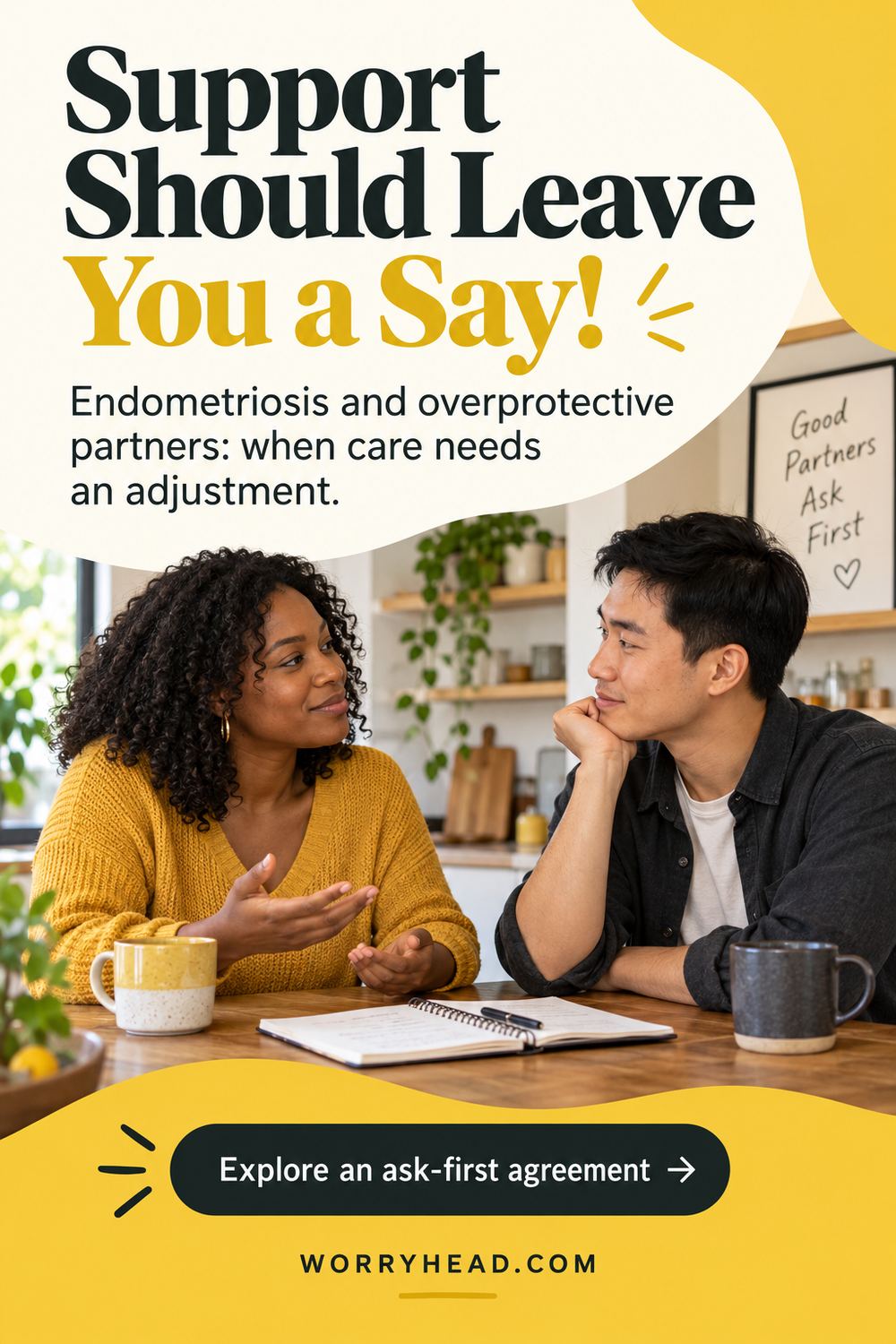
Endometriosis and Overprotective Partners: Support Without Losing Your Say
Can somebody care deeply about you and still make you feel managed rather than supported? Endometriosis and overprotective partners can become a difficult combination when concern turns into constant checking or decisions made on your behalf. Wanting a say in your own life does not mean you are rejecting love.
A partner’s concern does not remove your right to make daily and healthcare choices. Helpful support is agreed with you, can change as your needs change, and respects a refusal. Discuss behaviours and a clear ask-first plan; seek independent support if boundaries bring fear, threats or punishment.
I write from years spent learning alongside my wife as her husband, a blogger and a researcher rather than a clinician; you will find the NICE and NHS guidance, Endometriosis UK information and published research used for context at the end.
Keeping both care and personal choice in view is part of building a supportive marriage around endometriosis, especially when worry starts directing ordinary decisions.
The same offer can feel reassuring one day and intrusive the next. Bringing something you requested is different from deciding that you should not go out because you looked tired.
The issue is whether you have a meaningful choice about help. A useful agreement allows changing needs without treating you as permanently incapable.
My wife and I both still work, and she values feeling needed. I want my efforts to ease pressure on her to support what matters to her, not quietly decide her future for her.
A few specific agreements can make it clearer when to help, when to ask, and when to step back.
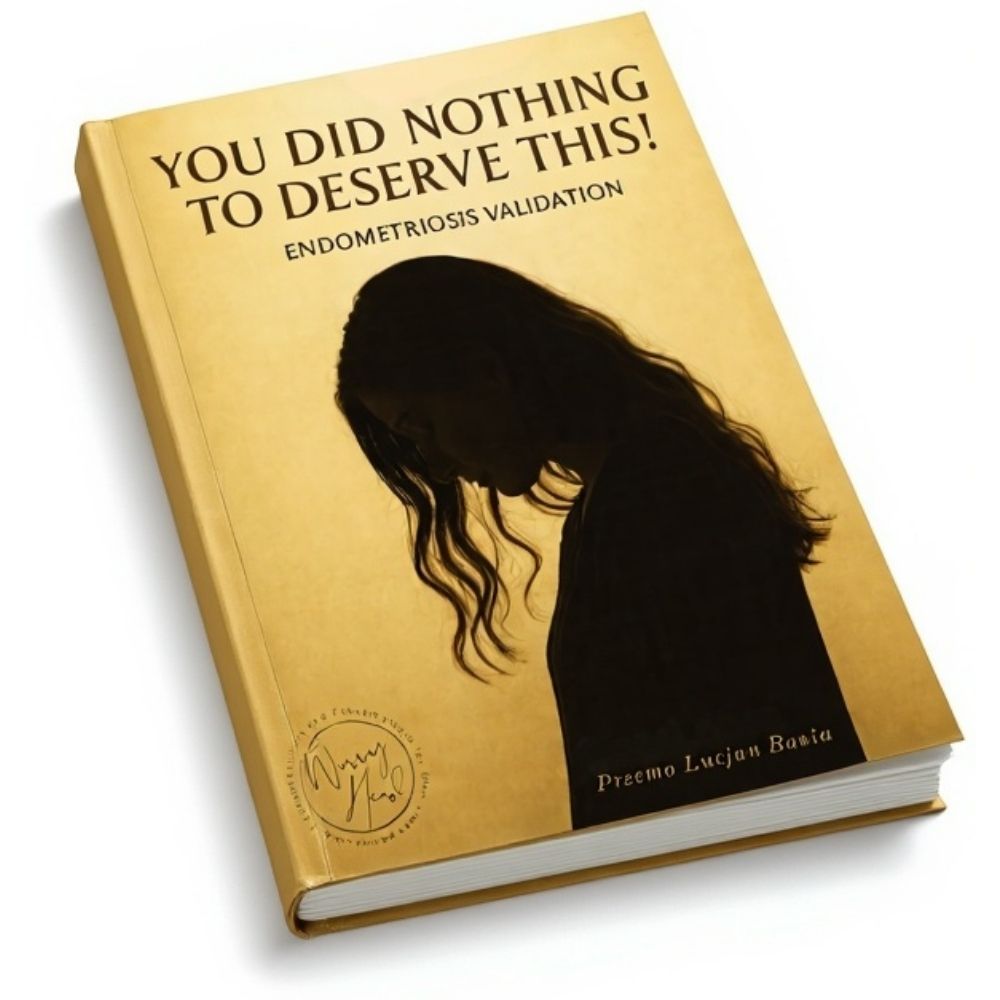
If receiving care has become tangled with guilt, my free eBook, You Did NOTHING To Deserve This!, offers reassurance that needing help does not make you a burden. The invitation below is there whenever you want that company.
You Did NOTHING To Deserve This!
Endometriosis Validation for Women with Endo
Why Endometriosis and Overprotective Partners Can Complicate Support
Concern can sound loving while leaving very little room for your answer. A partner might repeatedly ask whether you are sure about a plan. They might take over a task before finding out whether you wanted assistance.
One intervention does not define a relationship. Notice the pattern and what happens when you explain its effect. Can your partner listen, adjust and accept a different preference?
Endometriosis and overprotective partners need a conversation about behaviour, not a verdict on who loves whom most. You can appreciate an intention and still dislike its result. I would not want my wife to feel she must praise every offer before she can turn one down.
A UK qualitative study interviewed 22 couples and found that men described worry, frustration and helplessness alongside changes to everyday life. That small, self-selected study helps explain why partners may need support themselves. It does not establish that worry causes overprotectiveness or make taking control acceptable.
The distinction is practical. An offer leaves you able to answer. A decision made for you removes that opportunity.
You might welcome help with shopping but want to choose whether to see a friend. Those preferences fit together. They describe support that suits you today.
Loving my wife means remembering that her life contains ambitions and preferences as well as symptoms. I want help to leave her more room to live, rather than make our world smaller around my own concern.
- Name One Unhelpful Behaviour
- Agree What Needs Asking First
- Choose How to Check In
- Review Help Without Keeping Score
Name One Unhelpful Behaviour
Choose a concrete example instead of trying to settle the whole relationship at once. You could explain that repeated questions about whether you should attend an event leave you feeling unable to make an ordinary choice. Then describe the alternative you would prefer, such as one offer of help followed by space to decide. These are examples to adapt, not conversations I am claiming happened in our home.
If you feel safe discussing it, try a time when neither person is rushing or in the middle of an argument. You do not need to present a case against your partner’s character. The purpose is to make the effect of a particular action understandable. From a husband’s perspective, I would rather hear a clear request than expect my wife to hide irritation to protect my feelings. Listening includes resisting the urge to explain why my intention should outweigh her experience.
Agree What Needs Asking First
Separate help you have already welcomed from decisions that need fresh agreement. You might want someone to handle a regular household task without another discussion, while wanting them to ask before cancelling plans, speaking for you or sharing health information. The arrangement can be brief and specific; it does not need to become a contract covering every possible situation.
Healthcare decisions deserve the same attention. NICE recommends involving a partner or other important people in discussions when the person with endometriosis agrees. Attending an appointment is not permission to answer every question or decide treatment. I began blogging to learn how to support my wife, and learning should make me more respectful of her voice. Ask what role would help: listening, taking notes, remembering a question, or staying outside. A different answer next time is allowed.
Choose How to Check In
Constant symptom questions can make a day feel organised around illness, even when the person asking means well. If that is your experience, agree on a way to check in that you actually want. It could be one planned conversation, a simple offer of practical help, or letting you raise the subject when there is something to discuss. There is no correct frequency for every couple.
Make room for ordinary conversation too. My wife is more than the conditions she lives with; I do not want concern to become the only way I show interest in her. Your work, opinions, humour and plans still deserve attention. If there is a clinician-agreed safety or care plan, discuss how to follow it together rather than using this suggestion to ignore necessary care. An agreed check-in should reduce guessing, not become a system for watching, testing or policing your symptoms.
Review Help Without Keeping Score
Try the agreement for an ordinary stretch of life, then ask what felt useful and what still felt intrusive. You may discover that a task needs more help than expected, or that a well-meant reminder is unnecessary. Adjust the arrangement without treating that change as evidence that you are inconsistent or that your partner can never get anything right.
Both people’s capacity matters. We both still work, and wanting to help does not create unlimited time or energy. A partner can say what they realistically can do, while you keep a voice in how needs are addressed. The aim is neither total independence nor one person taking charge of everything. It is a workable division of effort that can be discussed honestly. If you need broader guidance on expressing those requests, our guide to communicating about endometriosis as a couple offers that wider context.

Finding Your Voice Around Endometriosis and Overprotective Partners
A boundary becomes meaningful through the response it receives. A caring partner may feel surprised or uncomfortable at first, but there should be room to listen and change. You should not have to surrender ordinary choices to prove that you appreciate support.
When thinking about endometriosis and overprotective partners, I would also separate unwanted fussing from behaviour that makes you afraid. If saying no brings threats, punishment or restrictions on contact, money or healthcare, this is not something you need to solve by finding a more persuasive sentence. Consider speaking privately with a trusted person or a qualified professional about support that fits your circumstances.
For a relationship where discussion is safe, Endometriosis UK suggests talking about what each person does that is helpful or unhelpful. It also recognises that couples can need professional support when difficulties remain unresolved. That is an option, not proof that either of you has failed.
As a husband, I am responsible for finding ways to handle my own worry that do not require my wife to give up her say. Researching and writing help me focus, but they do not make me her clinician or the manager of her life. I want support to feel like somebody beside her, with her voice still clearly her own.
Conclusion on Endometriosis and Overprotective Partners
You can need substantial support and still have the right to decide how that support reaches you. Those things belong together. Someone making a meal, taking on a task or accompanying you to an appointment does not become the owner of the decisions surrounding your day. Care is something you work out together, with room for your preferences, their realistic capacity and the fact that both can change.
If a pattern of overhelping has developed in an otherwise safe relationship, begin with one ordinary situation. Explain what is happening, how it lands for you and what would feel more useful. Perhaps you want your partner to offer assistance once without repeatedly questioning your answer. Perhaps you want them to ask before changing an arrangement. A small, observable agreement gives you something clearer to try than a promise to worry less.
For partners reading this, I know that wanting to protect the person you love can feel urgent. My wife’s endometriosis has affected our lives in ways I would never have chosen for her. But my wish to make things easier is not the only consideration. The way I help has to leave room for what she wants, including the things she values doing for herself and the work that still matters to her.
That does not mean standing back from every difficulty or waiting for a perfect instruction. It means learning which help is already welcome, which choices need discussion, and how to accept a different answer without making it a personal rejection. A person can decline your suggestion and still love you. They can ask for help tomorrow after not needing it today. Flexibility is part of living together, not a flaw that somebody needs to correct.
Endometriosis and overprotective partners can be a difficult subject because gratitude, worry and frustration may all be present at once. You do not have to decide which feeling is allowed before speaking. You can appreciate care and ask for it to change. You can love your partner and need more say. If the conversation keeps going in circles, outside support may give you a different place to think through what is happening.
An agreement also needs room for repair. If somebody forgets to ask, the next step can be acknowledging that and returning the decision to you. Repeatedly defending the intention leaves the effect unchanged. I would judge progress by whether daily choices become easier to discuss, not by how perfectly either person explains their concern at home.
What I hope remains clear is that a good arrangement should be recognisable in everyday life. You feel able to answer honestly. Offers do not become repeated pressure. Help makes room for your priorities, not only the other person’s relief from worry. When circumstances change, you can revisit the agreement without a trial about who was right. Those are the kinds of ordinary, respectful habits I want to encourage as a husband, because love is not measured by how completely one person takes over.
You are allowed to welcome care without handing over your voice. Start with one choice you want respected and one kind of help you would actually value. A supportive relationship can make room for both, with honest limits, changing needs and enough trust for your answer to matter even when it is not the answer your partner expected.
If you feel comfortable sharing, what makes help feel respectful to you? My free eBook, You Did NOTHING To Deserve This!, is also here when needing support has started to feel like something you must apologise for.


About Me
Hi, I’m Lucjan! The reason why I decided to create this blog was my beautiful wife, who experienced a lot of pain in life, but also the lack of information about endometriosis and fibromyalgia for men…
READ MORE
Grab a FREE eBook!
“You Did NOTHING To Deserve This!”
Finally hear the words nobody ever said to you, that your pain is real, your tears make sense, and you did nothing to deserve endometriosis, the dismissal, or the way it has rewritten your life.
Related Questions You May Be Asking About Endometriosis And Overprotective Partners
Is It Ungrateful to Ask My Partner to Step Back?
No. You can appreciate someone’s care while explaining that a particular action is unhelpful. Where discussion feels safe, name the behaviour and suggest what would work better. Asking before taking over, accepting a refusal or changing how often they check in can make support easier to receive without requiring less affection.
What If I Want Help on Some Days but Not Others?
An agreement can allow for changing needs rather than treating yesterday’s answer as permanent permission. Be specific about help you usually welcome and choices that need a fresh conversation. Your partner can also explain their capacity. Neither person has to guess perfectly, but both should be able to discuss adjustments without blame.
Should My Partner Speak for Me at Appointments?
Only in the role you want and have agreed. They might take notes, help you remember a question or contribute information with your permission. NICE supports involving partners when the person with endometriosis agrees. Their presence should help your voice be heard, not automatically replace it or transfer treatment decisions to them.
How Can My Partner Manage Their Own Worry?
They can acknowledge it, learn from reliable sources and seek their own appropriate support rather than making constant reassurance your responsibility. A practical agreement may reduce uncertainty about what help you want. These suggestions are not treatment for anxiety; persistent distress is a reason to consider talking with a qualified professional.
What If My Boundaries Make Me Feel Unsafe?
You do not have to confront someone or negotiate alone if doing so feels unsafe. Speak privately with a trusted person or an appropriate professional about your circumstances and options. Fear, threats, punishment or restrictions on ordinary choices deserve attention beyond a routine conversation about helpfulness. Prioritise support that respects your safety and decisions.
Endometriosis And Overprotective Partners References
- https://www.nice.org.uk/guidance/ng73/chapter/recommendations
- https://www.endometriosis-uk.org/resources/endometriosis-and-couples
- https://pubmed.ncbi.nlm.nih.gov/28637285/
- https://www.nhs.uk/live-well/getting-help-for-domestic-violence/
