
Comparing Endometriosis Symptoms: Your Pain Does Not Need to Be the Worst
Have you ever heard another person’s story and felt you had no right to mention your own pain? Comparing endometriosis symptoms can leave you ashamed of struggling, whether someone else seems much sicker or seems to manage more easily. Your experience deserves attention without a place on a suffering leaderboard.
Comparing symptoms cannot establish whose endometriosis is more deserving of care: experiences and daily impact differ, and disease stage is not a treatment priority on its own. Describe your symptoms, changes and needs to a clinician rather than using another person’s story to dismiss your pain.
My wife’s experience has kept me learning for years as a husband, blogger and researcher, not a clinician, and the NICE and NHS guidance I used for the health context is listed at the bottom.
When someone else’s experience starts to outweigh your own, understanding how doubt takes hold around endometriosis can help you recognise the wider pattern.
Two people can share a diagnosis without sharing the same working hours, support, other conditions or treatment history. A short conversation rarely tells you what their day costs them afterwards.
That missing context matters in both directions. Another person’s severe symptoms do not cancel yours, and their easier day does not expose a failure in you.
My wife lives with several overlapping illnesses, so I know how misleading it would be to judge her daily capacity by one diagnosis alone. Her effort is not visible in a neat comparison.
There is a useful way to listen to other people without turning their story into a verdict on your body.
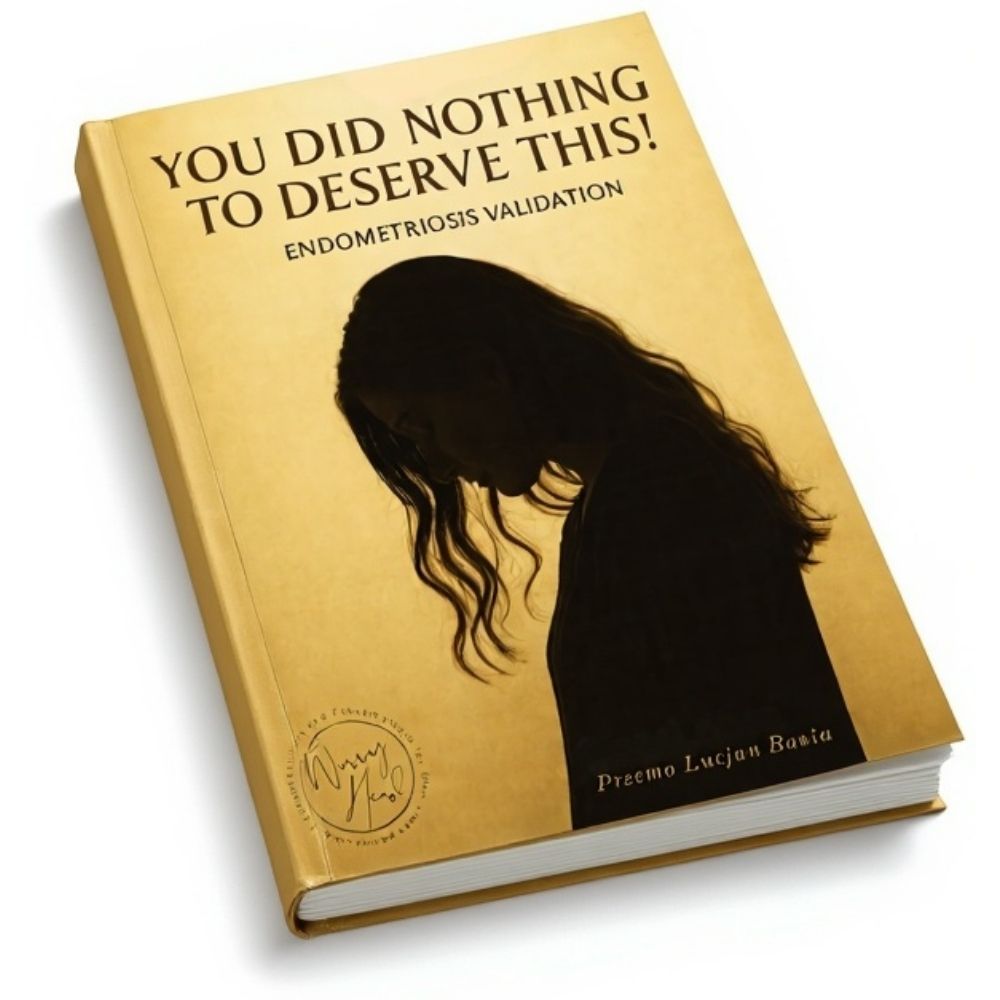
If comparing yourself with other women has left you feeling undeserving, my free eBook, You Did NOTHING To Deserve This!, offers a little more room for your own experience. You can find it below whenever that reassurance would help.
You Did NOTHING To Deserve This!
Endometriosis Validation for Women with Endo

What Comparing Endometriosis Symptoms Leaves Out
A shared diagnosis can look like a fair reference point. It often is not. You may know she went to work, but not which adjustments helped.
A photograph from an outing does not show the whole week. Someone describing intense pain may leave things out too. Nobody owes the internet a complete medical record.
Comparing endometriosis symptoms becomes unhelpful when an incomplete story starts deciding what you are allowed to need. The question quietly changes from what would support you to whether you have earned support. I do not want that second question taking over your care.
NICE says treatment should reflect a person’s symptoms, preferences and priorities rather than disease stage. That is a useful clinical boundary against turning a stage number into a ranking of whose daily life matters. It does not mean stage or the location of disease has no medical relevance.
Nor can another person’s response to treatment predict yours. A helpful account can give you a question to discuss with your clinician. It cannot tell you to copy a medicine, change a dose or dismiss a treatment concern.
I also think compassion gets unnecessarily narrowed when we behave as though only the person suffering most may speak. You can care deeply about someone else’s difficult circumstances and still say that you need help. Those two truths can occupy the same room.
My wife’s losses include her dancing life and the career she loved. I cannot make those losses smaller by finding somebody with a more difficult story, and I would not want anyone doing that to you.
- Name the Missing Context
- Describe Impact Without a Ranking
- Borrow Questions, Not Treatment Plans
- Change the Comparison Conversation
Name the Missing Context
When a comparison catches you, name one thing you do not know. Perhaps you know the diagnosis but not the person’s other health problems, support at home or flexibility at work. Simply leave room for the fact that your information is incomplete.
Then return to something you can describe about yourself: the journey you cannot manage today, the sleep you lost, or the help you need. This is not an exercise in proving that your situation is secretly worse. I see it as making a little space between a snapshot of another life and a decision about your own. My wife still works and values feeling needed; working from home helps her do that. Someone seeing only the word employed could miss the importance of that arrangement. Your circumstances deserve the same care.
Describe Impact Without a Ranking
Try describing what symptoms interrupt before deciding how they compare. You might explain that pain wakes you, that a journey needs more planning, or that you have stopped doing something important to you. Use your own accurate examples, including better days, rather than borrowing language because somebody else’s account sounds more convincing.
A short note can help if comparison makes you minimise things during an appointment. Include the change you want assessed and the question you most need answered. You do not need an impressive diary or the highest pain score in the room. I began researching because I wanted to understand my wife’s reality, not award it a mark. That remains the useful direction for a conversation: what is happening, what matters to you, and what support or assessment could help. Leave the competition out of that description.
Borrow Questions, Not Treatment Plans
A peer’s experience can still be valuable. Hearing that somebody discussed a symptom you had never mentioned might help you raise your own concern. Their account could also help you think about questions concerning work, relationships or the practical effects of treatment. Keep the question while leaving their answer attached to their circumstances.
For example, you might ask your clinician whether a particular option is relevant to your situation and what its trade-offs would be. Do not assume it must suit you because a person online has the same diagnosis. Nor does their improvement make ongoing symptoms your fault. As a husband who reads a great deal, I have to keep that boundary clear: learning gives me better questions, not authority over my wife’s care. You are allowed to be pleased for somebody whose treatment helped without turning their progress into a deadline for your body.
Change the Comparison Conversation
If someone ranks your pain against another person’s, you can return the conversation to its purpose. An example you could adapt is: I am glad she found something helpful; I am explaining what I need today. Another is: I do not want to compare how much we suffer; I would appreciate help with this particular task. These are suggestions, not words I am claiming my wife has used.
With a trusted person, you might explain which comparison keeps hurting. Perhaps stories intended to reassure you leave you feeling pressured to recover at the same pace. You can ask them to check whether you want somebody else’s experience before sharing it. I would want to know if my attempt to help made my wife feel less believed. If a discussion keeps becoming a contest, ending it or changing the subject is a reasonable option; you do not owe a longer account of your health to earn a kinder response.
When Comparing Endometriosis Symptoms Changes Your Care Decisions
The point I worry about most is when comparison makes you postpone a concern you would otherwise raise. You might tell yourself that another person manages more pain, so you should wait. Or you might feel embarrassed that a treatment has not helped as much as you expected.
The NHS advises seeing a GP when symptoms affect everyday life, work or relationships, when treatment has not helped, or when symptoms are getting worse. Another person’s circumstances do not remove those reasons to ask for advice. Comparing endometriosis symptoms is not a way to decide whether a new symptom needs assessment.
You can also tell a clinician if uncertainty or self-doubt is affecting how you describe your experience. A trusted companion may help you remember questions if you want one there. They should support your account rather than replace it with their own.
From my side of our marriage, believing my wife means taking what she says seriously without asking her to outperform someone else’s suffering. I cannot know the inside of her body through comparison. I can listen, respect her judgement and help with the next practical step she chooses.
Final Word on Comparing Endometriosis Symptoms
I do not want you to leave this page with another rule to get perfectly right. Comparing yourself with other people is something you may notice again tomorrow, especially when you are tired, uncertain or trying to understand an illness that affects people differently. The useful change is not never having that thought. It is noticing when the thought begins to take away permission to respond to your own needs.
If you recognise that happening, make the next step small. Put down the comparison for a moment and name what would make today more manageable. Perhaps you need to ask a question, change an arrangement, describe a symptom accurately or accept help you had been refusing. None of those decisions requires you to establish that your experience is the most difficult one anyone has ever had.
There is room to respect another woman’s story without making yours disappear beside it. You can acknowledge that her circumstances are painful, wish her good care and still talk honestly about yourself. That is not taking anything away from her. In the same way, someone having a good day does not take away your right to be having a hard one. Compassion does not need a winner before it becomes useful.
As a husband, I think about what this means for the person listening. We can stop answering a difficult disclosure with an example of somebody who has it worse or copes better. We can ask what the person beside us wants us to understand. We can offer the practical help they actually request. These are ordinary choices, but they can change whether sharing a concern feels worthwhile or like another exhausting defence.
My wife has lost things that mattered enormously to her, including dancing and parts of the social life she knew. I do not need to compare those losses with anyone else’s to care about them. I also know she values the work she still does and the feeling of being needed. Neither her losses nor her remaining abilities tell the whole story by themselves. I want to leave space for both, without turning either into a judgement about how well she is living with illness.
You can keep that distinction in the way you ask for help, too. Describe the task, the difficulty and the support that would be useful, without adding an apology about other people having harder lives. Whoever is listening can respond to that actual request. You are giving them a clear, practical opportunity to understand you, rather than inviting them to judge a comparison.
That is the space I hope you can keep for yourself. Comparing endometriosis symptoms might occasionally help you discover a question, but it should not become the test you must pass before seeking support. Your clinician needs your own account, your relationships need honest communication, and you deserve a life with room for what matters to you. Start with the situation in front of you, not an imagined ranking of everyone else’s pain.
You can care about someone else’s struggle and still take your own seriously. You do not need the most dramatic story, the longest treatment history or the hardest day to deserve a thoughtful response. Let your next decision begin with what you are experiencing and what you need, rather than what someone else appears able to bear.
If you would like to share, what helps you step out of an unkind comparison? You are also welcome to my free eBook, You Did NOTHING To Deserve This!, when you need a reminder that your experience deserves room.


About Me
Hi, I’m Lucjan! The reason why I decided to create this blog was my beautiful wife, who experienced a lot of pain in life, but also the lack of information about endometriosis and fibromyalgia for men…
READ MORE
Grab a FREE eBook!
“You Did NOTHING To Deserve This!”
Finally hear the words nobody ever said to you, that your pain is real, your tears make sense, and you did nothing to deserve endometriosis, the dismissal, or the way it has rewritten your life.
Related Questions You May Be Asking About Comparing Endometriosis Symptoms
Does a Higher Stage Mean Someone Deserves More Help?
A stage describes aspects of disease findings; it is not a ranking of personal worth or permission to ask for care. NICE recommends treatment based on symptoms, preferences and priorities rather than stage. Your own symptoms and their effect on your life are important to discuss, whatever another person’s findings show.
Can I Ask for Support If My Symptoms Are Milder Than a Friend’s?
Yes. You can acknowledge that your friend has difficult symptoms without making their experience the threshold for your own support. Explain what you need in concrete terms. Practical help, a listening ear or a medical discussion does not have to be reserved for whoever appears to be struggling most that day.
What If Someone with Endometriosis Says I Should Cope Better?
Having the same diagnosis does not give somebody a complete understanding of your circumstances. You could say that your symptoms, treatment and support differ, then return to the specific issue you wanted to discuss. If they continue judging you, you can limit that conversation without defending every detail of your health.
Should I Leave a Support Group If I Keep Comparing Myself?
You do not have to make an all-or-nothing decision. Consider whether particular discussions, notifications or frequent visits leave you feeling worse, and adjust your participation if useful. Our guide to support groups that feel overwhelming explores those choices. Peer support should leave room for different experiences, not require you to compete.
Can Somebody Else’s Treatment Success Help Me Choose Mine?
It can give you a question to take to a qualified clinician, but it cannot establish what is suitable for you. Your health history, priorities and potential benefits and risks matter. Do not change medicines or abandon a care plan solely because another person’s experience sounds more promising or more frightening.
Comparing Endometriosis Symptoms References
- https://www.nice.org.uk/guidance/ng73/chapter/recommendations
- https://www.nhs.uk/conditions/endometriosis/
