
Not Wanting Touch with Endometriosis Is a Boundary, Not a Rejection
Can you love someone deeply and still not want their hand, hug or sexual touch on your body right now? Not wanting touch with endometriosis can be difficult to say because a physical boundary is easily misheard as emotional distance. Consent and closeness are not opposites; a respected no can protect trust.
Not wanting touch with endometriosis can reflect pain, fatigue, fear, sensory overload or preference; it is not automatic rejection of a partner. Ask before contact, accept no without bargaining, name what kind of closeness is welcome, and seek clinical help for symptoms or pain that concern you.
I am not a clinician; I write as a husband, blogger and researcher after years of learning through my wife’s experience, and the NHS, WHO, ESHRE and published relationship research used here are listed at the bottom.
The parent guide on how endometriosis affects sex and intimacy covers the wider relationship impact. This child focuses specifically on saying, hearing and respecting a touch boundary while keeping emotional connection available.
As a husband, I know affection can become tangled with the wish to comfort or reconnect. My wife’s body is hers, including during pain and fatigue. I must not use love, worry or my own disappointment to turn a request for space into something she has to defend.
This article offers communication ideas for adults in relationships. It is not sex therapy, medical advice or a safety plan. Pain during or after sex and other concerning symptoms deserve individual assessment from an appropriate clinician; fear, coercion or abuse requires specialist support.
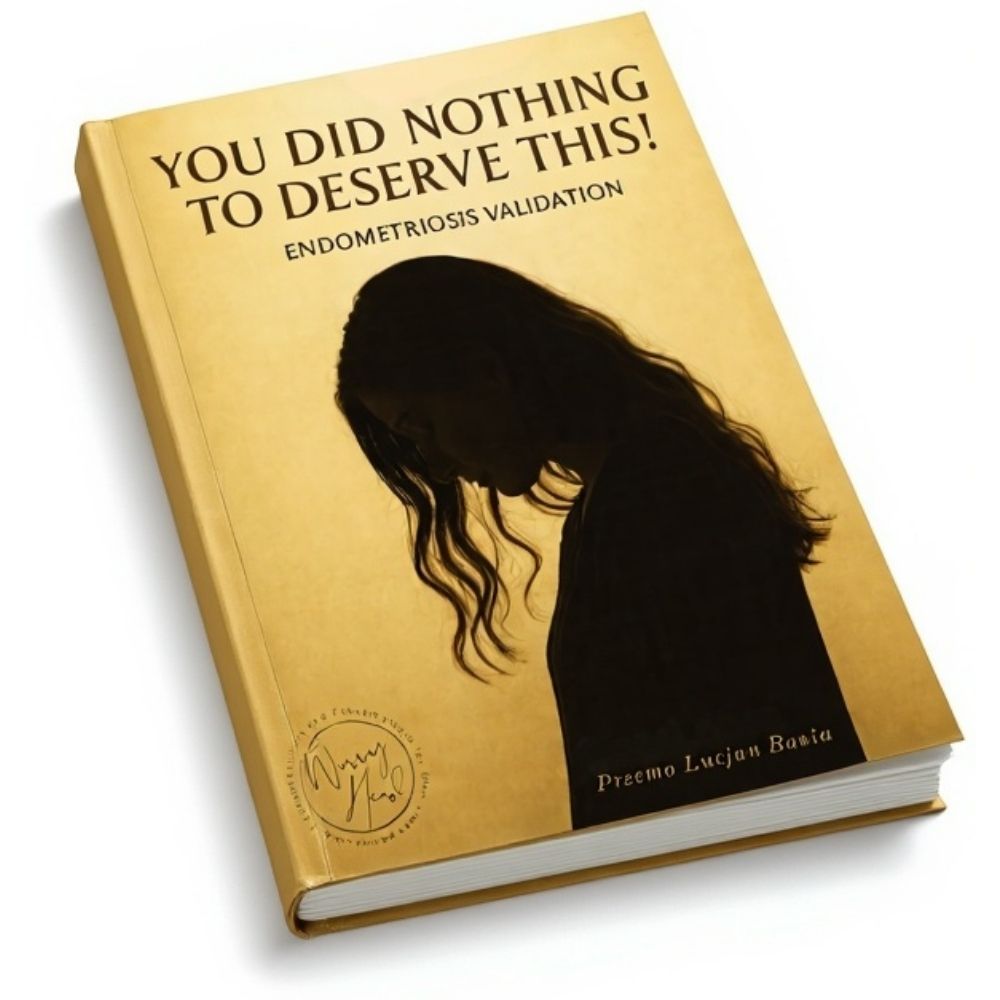
If setting a boundary has made you feel guilty or unlovable, my free eBook, You Did NOTHING To Deserve This!, offers a compassionate pause before the practical conversation. It does not promise to fix intimacy; it reminds you that pain and limits are not moral failures.
You Did NOTHING To Deserve This!
Endometriosis Validation for Women with Endo
- Why Not Wanting Touch with Endometriosis Can Be Misread
- Say Not Wanting Touch with Endometriosis Before Pressure Builds
- Partners Should Hear Not Wanting Touch with Endometriosis Without Bargaining
- Find Other Closeness When Not Wanting Touch with Endometriosis
- Get Help When Not Wanting Touch with Endometriosis Involves Pain or Fear
- Conclusion on Not Wanting Touch with Endometriosis
- You Did NOTHING To Deserve This!
- FREE eBook
Why Not Wanting Touch with Endometriosis Can Be Misread
Touch carries many meanings: comfort, desire, reassurance, habit, play and care. When one person says no, a partner may hear “I do not love you” even when the message is “my body cannot welcome this sensation now.” Separating those meanings is essential.
The NHS and WHO include pain during or after sex among possible endometriosis symptoms, while research describes broader effects on intimacy and relationships. Not every touch boundary is caused by pain, and not every person with endometriosis has the same experience. The person setting the boundary is the authority on what is welcome now.
Anticipation can matter as much as the contact itself. If touch has previously led to pain, pressure or a difficult conversation, the body may feel guarded before anything happens. That response should not be diagnosed by a partner; it should be met with curiosity, patience and respect.
A boundary does not need a courtroom-standard explanation. Context can help a caring partner understand, but consent remains necessary even when the reason is brief, changing or private.
People sometimes treat affectionate touch as too harmless to require a question. Yet a hug, hand on the abdomen or attempt to cuddle can be uncomfortable or startling when symptoms are high. Familiarity does not cancel consent; it should make listening easier.
Say Not Wanting Touch with Endometriosis Before Pressure Builds
Use language that identifies the present boundary and, if you want, an alternative. “I do not want to be touched right now; I would like you to sit beside me” gives clear information without promising when the boundary will change.
Avoid softening a no until it becomes unclear. Words such as “maybe” can feel safer when you fear disappointing someone, but they may invite negotiation. A respectful partner can hear a direct boundary without requiring you to manage every feeling it creates.
If you know certain times or kinds of contact are difficult, talk outside the moment. Agree how to ask, what signals mean stop and whether a check-in later would feel supportive. An advance conversation cannot replace consent in the moment; it makes that consent easier to communicate.
My wife can feel guilty or like a burden despite my love. I do not want her to offer touch to settle my anxiety about being loved. Closeness built on her overriding herself would not be the closeness I am trying to protect.
If speaking feels unsafe because you expect anger, punishment or coercion, ordinary relationship communication advice is not enough. Contact a trusted professional or specialist support service in a way that protects your safety.

Partners Should Hear Not Wanting Touch with Endometriosis Without Bargaining
The first job is to stop. Do not ask for one more hug, make a joke, sulk or demand reassurance before respecting the boundary. You can care for your own disappointment later without making consent conditional on being comforted.
A useful response is simple: “Okay. Would space or company feel better?” The question offers choice without assuming another form of contact is automatically acceptable. If the answer is space, give it without turning distance into a punishment.
I have had to learn that solving is not the same as supporting. Researching symptoms, arranging practical help or expressing love does not give me authority over my wife’s body. The boundary is not a referendum on whether my intentions were good.
Partners also deserve a place for their feelings, but timing matters. Choose a calm moment and speak about the pattern without challenging a past no. “I miss closeness and want us to find forms that work for both of us” opens a shared problem; “you always reject me” assigns blame.
Repeated pressure can teach the other person that affection is unsafe because every contact may escalate. Respectful acceptance does the opposite: it makes ordinary closeness more trustworthy by proving that boundaries will hold.
Repair matters if you misread a signal or continue after someone becomes uncomfortable. Stop, apologise without asking them to comfort you, and ask what they need next. The purpose is to restore safety and change behaviour, not to secure immediate forgiveness.
Find Other Closeness When Not Wanting Touch with Endometriosis
Closeness can be verbal, practical, visual, playful or quiet. You might share a programme, exchange messages from different rooms, bring a drink, sit nearby or plan something for another day. None of these should be used as a disguised route back to unwanted contact.
Ask rather than inventing a universal substitute. One person may welcome hand-holding but not a hug; another may want no contact at all. Preferences can change within the same day. The aim is not to design a fixed intimacy ladder but to keep choice visible.
Our life has been shaped by endometriosis alongside several other conditions, and the effect on energy, mood and sensation is not always easy to separate. That complexity has made me more cautious about assuming I know what my wife needs from how she looks.
Keep affection that has no hidden invoice. A kind message should not become evidence that touch is now owed. Trust grows when every form of care is allowed to remain what it was offered as.
If both partners want support adapting intimacy, a qualified clinician or appropriately trained therapist may help, especially when pain, fear, medication, trauma or relationship distress is involved. Choose someone whose competence fits the issue and who respects consent.

Get Help When Not Wanting Touch with Endometriosis Involves Pain or Fear
Pain during or after sex is a recognised possible endometriosis symptom, but an online article cannot determine the cause of your pain or what treatment is appropriate. Speak with a clinician if symptoms are new, worsening, distressing or affecting daily life.
Prepare the information you want to share: where pain occurs, when it happens, what else accompanies it, what you have tried and what outcome matters to you. You do not need to perform pain dramatically to deserve assessment, and you can ask for explanations about options, benefits and harms.
Emotional consequences matter too. Fear, grief, anger and changes in identity or desire are not trivial because a condition has a physical diagnosis. ESHRE guidance recognises quality of life and psychological wellbeing as important parts of discussion, while noting uncertainty about specific non-medical interventions.
I began blogging to understand and support my wife, and writing helps me focus. It is not treatment for either of us. Professional help has a different role, particularly where symptoms, trauma, low mood, anxiety, coercion or persistent relationship distress are present.
No relationship goal requires enduring unwanted touch. Medical care may address symptoms; relationship support may improve communication; neither removes the right to decide what happens to your body.
Boundaries can also change after treatment, during recovery or as trust develops. Change does not prove the earlier boundary was unnecessary. Consent is current information. A yes today does not rewrite yesterday’s no, and a no tomorrow does not make today’s yes dishonest.
If a clinician minimises pain or the relationship impact, you can ask for the concern and options to be explained, seek a second opinion where available or bring a trusted person if you want one. Being heard in healthcare is different from being pressured at home, but both contexts require your experience to be taken seriously.
Conclusion on Not Wanting Touch with Endometriosis
A touch boundary can protect intimacy because it tells the truth before resentment, fear or pain takes over. Say what is not welcome, offer an alternative only if you genuinely want one and expect no to be accepted without bargaining. Love is not measured by access to another person’s body.
If you would like, share in the comments one respectful phrase that helps boundaries feel clearer, without posting private details. When guilt says that needing space makes you difficult to love, my free eBook, You Did NOTHING To Deserve This!, offers a compassionate final step.


About Me
Hi, I’m Lucjan! The reason why I decided to create this blog was my beautiful wife, who experienced a lot of pain in life, but also the lack of information about endometriosis and fibromyalgia for men…
READ MORE
Grab a FREE eBook!
“You Did NOTHING To Deserve This!”
Finally hear the words nobody ever said to you, that your pain is real, your tears make sense, and you did nothing to deserve endometriosis, the dismissal, or the way it has rewritten your life.
Related Questions You May Be Asking About Not Wanting Touch with Endometriosis
Does Not Wanting Touch Mean I No Longer Love My Partner?
No. A boundary can reflect pain, fatigue, sensory overload, fear or preference in that moment. Emotional love and consent to physical contact are separate, and a caring relationship makes room for both truths.
How Should My Partner Respond When I Say No to Touch?
They should stop without bargaining, then ask whether you prefer space, company or another form of connection. Any alternative also requires consent, and you do not owe immediate reassurance before the boundary is respected.
Should I See a Clinician About Pain During or After Sex?
Pain during or after sex can occur with endometriosis and other conditions. Seek individual assessment when pain is new, worsening, concerning or affecting your life; urgent symptoms should be handled through appropriate urgent care.
Not Wanting Touch with Endometriosis References
- https://www.nhs.uk/conditions/endometriosis/
- https://www.who.int/news-room/fact-sheets/detail/endometriosis
- https://www.eshre.eu/Guideline/Endometriosis
- https://pubmed.ncbi.nlm.nih.gov/34656789/
- https://pubmed.ncbi.nlm.nih.gov/32530359/
- https://pubmed.ncbi.nlm.nih.gov/35867527/
Sources checked on 23 October 2026. NHS, WHO and ESHRE provide current clinical and quality-of-life context; the cited studies address couples, communication, emotional intimacy and sexual experiences. Consent language is practical editorial guidance, not therapy or individual medical advice.
