Asking for Reassurance with Endometriosis Without Feeling Needy
Have you ever wanted your partner to say that you are still loved, then felt ashamed for needing to hear it? Asking for reassurance with endometriosis can feel especially vulnerable when pain, intimacy changes or cancelled plans have already shaken your confidence. Wanting closeness does not make you weak or difficult.
Asking for reassurance with endometriosis can be a healthy request for connection, not evidence that you are needy. Name the fear beneath the question, ask for one kind of support, listen to your partner’s limits, and agree how to respond without turning repeated reassurance into a test of love.
I write as a husband, blogger and researcher, not as a clinician; my wife’s experience led to years of learning, and the WHO, NHS and published relationship research I used for health context appear in the references below.
Our broader guide to talking about endometriosis without starting a fight covers timing, listening and pausing tense discussions. This article stays with the narrower moment when you want to ask, plainly, whether closeness is still there.
In our marriage, illness has affected far more than appointments. Endometriosis, adenomyosis, fibromyalgia, ME, chronic fatigue and iron-loss anaemia have touched work, social life, dancing, intimacy and our chance of becoming parents and grandparents. I will not pretend every couple shares those losses, but I understand why one small question can carry years of fear.
This article offers language for an everyday relationship need. It is not couples therapy, a diagnosis of attachment or a promise that one conversation will repair every hurt. If fear, conflict or control is persistent, support from an appropriately qualified professional may be more useful than another script.
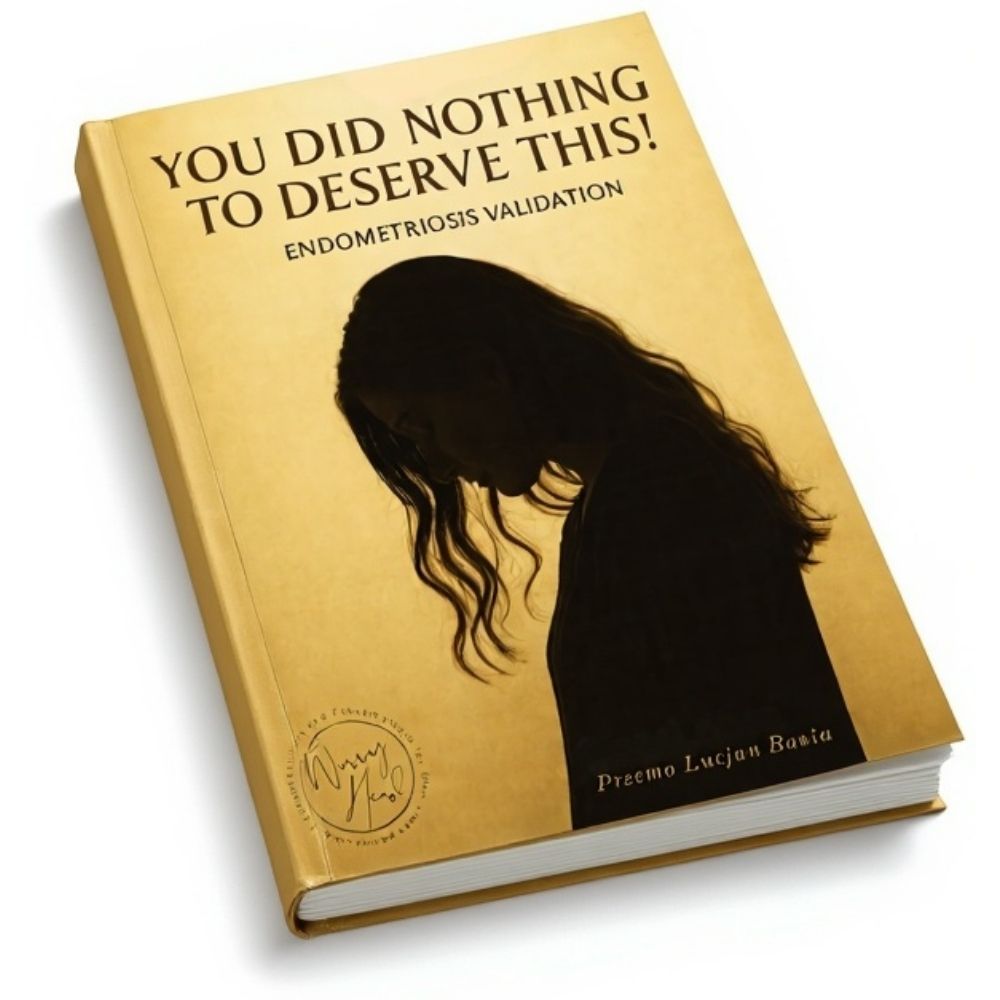
If you worry that needing reassurance makes you a burden, my free book, You Did NOTHING To Deserve This!, was written for that hidden pressure. It offers human validation from a husband’s perspective while leaving medical care and individual relationship support where they belong.
You Did NOTHING To Deserve This!
Endometriosis Validation for Women with Endo
- Why Asking for Reassurance with Endometriosis Can Feel Risky
- Begin Asking for Reassurance with Endometriosis at the Real Fear
- In a Relationship, Asking for Reassurance with Endometriosis Can Be Specific
- Avoid Turning Asking for Reassurance with Endometriosis into a Test
- When Asking for Reassurance with Endometriosis Needs Wider Support
- Final Word on Asking for Reassurance with Endometriosis
- You Did NOTHING To Deserve This!
- FREE eBook
Why Asking for Reassurance with Endometriosis Can Feel Risky
Reassurance can sound like a small request, yet the fear beneath it may be enormous. You may be asking whether pain has made you less lovable, whether another cancelled plan will be the final disappointment or whether changes in sex and affection mean emotional distance. Saying all of that at once can feel impossible, so the question comes out as “Are we okay?”
Endometriosis can affect quality of life, work, social participation and relationships. That does not mean the condition produces one predictable relationship pattern, and it does not prove that every fear is accurate. It does explain why practical disruption can accumulate emotional meaning over time.
My wife can feel guilty or like a burden despite my love. I cannot remove that fear by insisting it should not exist. What I can do is listen for the actual worry, answer honestly and show steadiness in ordinary actions. I also need to avoid making her responsible for reassuring me that my support is always perfect.
Shame often adds a second problem. First you feel afraid; then you criticise yourself for wanting comfort. Try removing the insult from the need. “I need reassurance” is information. “I am pathetic for needing reassurance” is a judgement that makes the conversation harder before it begins.
Begin Asking for Reassurance with Endometriosis at the Real Fear
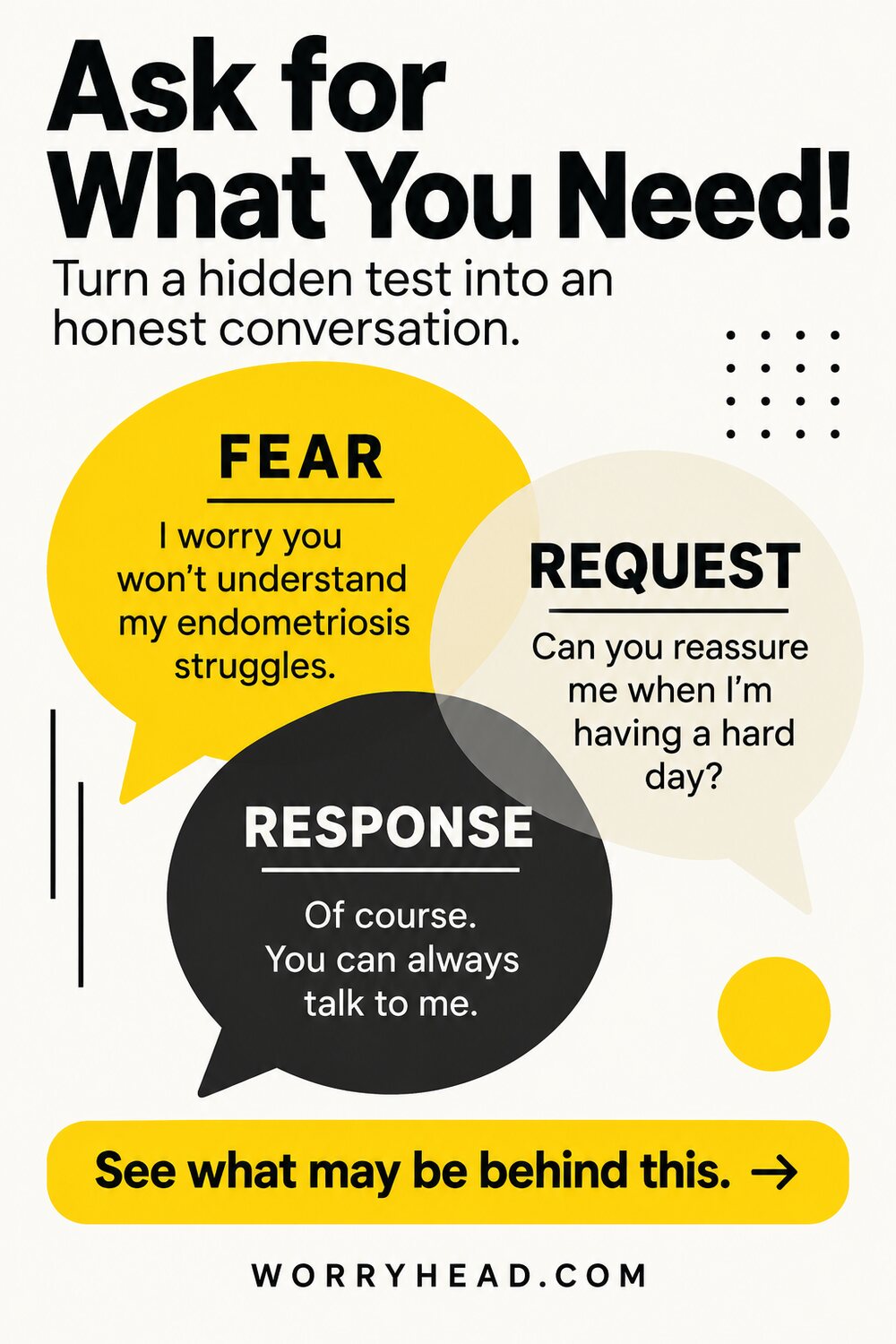
Before speaking, ask yourself what answer you are hoping to receive. Do you want affection, confirmation that a plan can change, help with a task, patience around intimacy or reassurance that your partner is not preparing to leave? A specific need is easier to answer than a general test with no clear finish.
You could begin with the feeling and the request: “I am scared that cancelling again has disappointed you. Could you tell me how you feel and whether we can make another plan?” That is suggested wording, not a conversation I am claiming happened in our home. Change it until it sounds like something you would naturally say.
Do not hide a practical request inside an emotional question if you can avoid it. “Do you still love me?” may actually mean “Will you help with dinner?” or “Can we stay close without sex tonight?” Both questions matter, but separating them gives your partner a fair chance to respond to what you need.
Timing matters too. A question asked during severe pain, exhaustion or an argument may receive a rushed answer even when the relationship is secure. If the need can wait, choose a quieter moment. If it cannot, make the request small: one kind sentence, one practical action or an agreement to return to the longer conversation.
Writing has become a way for me to focus and make sense of what chronic illness has done around us. Sometimes putting the fear into one sentence helps me see whether I am asking for information, comfort or certainty nobody can honestly promise. You might find that distinction useful in a note, without turning it into another homework task.
In a Relationship, Asking for Reassurance with Endometriosis Can Be Specific
Specific reassurance is not necessarily dramatic. It might be a hug, a message before an appointment, confirmation that a changed plan is not a rejection or a reminder that intimacy includes more than sex. The useful form depends on both people, and consent still matters in every physical expression of comfort.
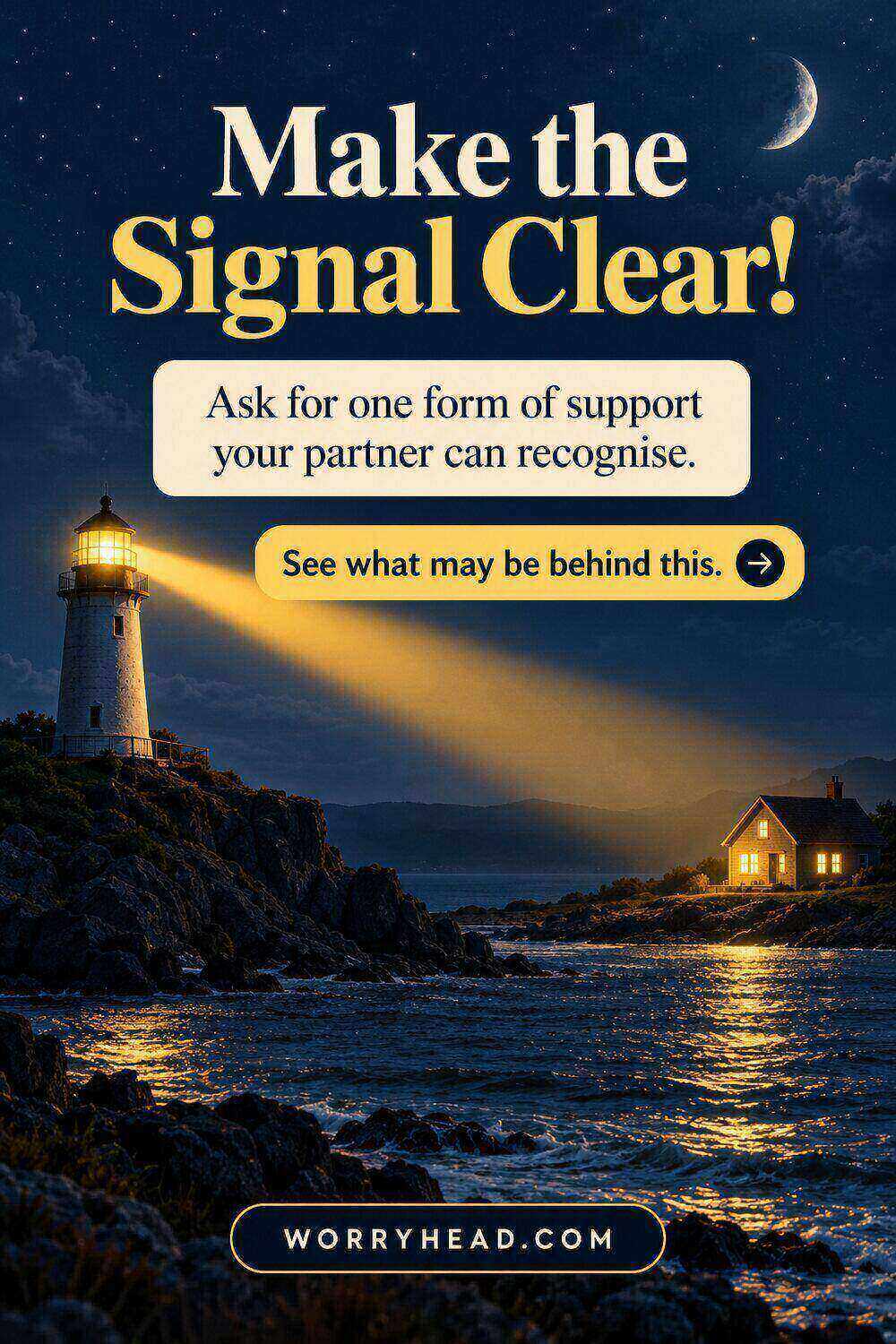
Ask for something your partner can recognise and choose. “Please reassure me” may leave them guessing. “Could you sit with me for ten minutes without trying to solve this?” gives a clearer picture. A clear request is not a command; your partner can answer honestly, suggest an alternative or explain their own limit.
I have learned that practical help and emotional reassurance are not interchangeable. Completing a task may reduce strain but still leave the fear untouched. Equally, loving words may not solve the problem of dinner, transport or a deadline. Couples often need both the emotional sentence and the practical plan.
Reassurance also becomes more believable when ordinary behaviour supports it. Keeping a promise, checking in after an appointment and returning to a paused conversation all matter. Grand declarations can feel warm, but consistency is what gives them weight over time.
If your partner responds awkwardly, do not immediately assume the worst. Some people reach for solutions because helplessness frightens them; others need time to find words. You can explain what landed badly and what would be more helpful. Understanding the intention does not require you to pretend the impact did not hurt.
Avoid Turning Asking for Reassurance with Endometriosis into a Test
Reassurance becomes exhausting when no answer is allowed to count. You may ask the same question repeatedly, search for a different tone or treat a delayed reply as proof that the loving answer was false. That cycle deserves compassion, but it also deserves an honest plan because neither partner can create permanent certainty on demand.
Agree what a sufficient response looks like in that moment. Perhaps your partner answers once, offers the agreed gesture and returns to the conversation later if a practical issue remains. You can write the reassurance down or recall the behaviour that supports it, not to suppress emotion but to give the answer somewhere to land.
Partners should not weaponise this limit. “I have already answered” does not justify contempt, punishment or refusing every emotional conversation. The aim is to protect a caring exchange from becoming an endless exam, while still taking the underlying fear seriously.
As a husband, I need boundaries too, but I want them to sound like partnership. I can say that I am tired and still make clear that tiredness is not withdrawal of love. I can ask to continue tomorrow and then actually return. A boundary that always postpones and never returns is not reassuring.
Be alert to control disguised as reassurance. Demanding access to messages, isolating someone from friends or insisting they prove loyalty is different from asking for comfort. If you feel frightened, monitored or unsafe in your relationship, seek confidential support appropriate to your circumstances rather than relying on a general communication article.
When Asking for Reassurance with Endometriosis Needs Wider Support
A partner can offer love, but one person cannot be the entire support system. If fear is frequent, overwhelming or linked to persistent anxiety, low mood, trauma or past relationship harm, a GP or qualified mental-health professional can help you consider appropriate support. That is not a verdict on the relationship.
Couples counselling may also be useful when the same conversation repeatedly ends in conflict or distance, provided both people can participate safely and the practitioner is suitably qualified. Therapy is not a punishment for failing at love. It can provide structure when pain and fear have made private conversations difficult to navigate.
Medical uncertainty belongs with your clinical team. A partner can reassure you that they will stand beside you, but they cannot honestly promise what symptoms, treatment or fertility will do. Keeping emotional promises separate from medical predictions protects both people from false certainty.
Our chance of having children and becoming parents and grandparents was taken from us, and I know reassurance cannot erase that grief. What love can do is refuse to make either person carry it alone. Some losses need witnessing more than fixing, and that is still a meaningful form of closeness.
If you are in immediate danger or unable to keep yourself safe, seek urgent local help. If the relationship includes abuse or coercion, use a confidential specialist service when it is safe to do so. A request for reassurance should never be used to keep you in danger.
Final Word on Asking for Reassurance with Endometriosis
You are allowed to ask the person you love for warmth, clarity and presence. The strongest request is not the one that hides every need; it is the one that tells the truth without making another person responsible for removing all uncertainty. Both people deserve honesty and kindness.
If you would like, share in the comments below what kind of reassurance feels genuinely helpful to you, without disclosing anything private. If burden, guilt or fear of being unlovable sits underneath the question, my free book, You Did NOTHING To Deserve This!, may offer a gentler next conversation.


About Me
Hi, I’m Lucjan! The reason why I decided to create this blog was my beautiful wife, who experienced a lot of pain in life, but also the lack of information about endometriosis and fibromyalgia for men…
READ MORE
Grab a FREE eBook!
“You Did NOTHING To Deserve This!”
Finally hear the words nobody ever said to you, that your pain is real, your tears make sense, and you did nothing to deserve endometriosis, the dismissal, or the way it has rewritten your life.
Related Questions You May Be Asking About Asking for Reassurance with Endometriosis
Is It Needy to Ask My Partner for Reassurance?
No. Asking for comfort or clarity can be a healthy part of a relationship. Make the request specific, allow your partner to answer honestly and notice whether repeated questions are helping the fear settle or keeping both of you in a cycle.
What Can I Say When I Need Reassurance After Cancelling Plans?
Name the worry and ask for one clear response. You might say you are afraid the cancellation felt like rejection and ask whether you can choose another flexible plan. Use your own natural words rather than a script that feels borrowed.
What If My Partner Is Too Tired to Reassure Me Right Away?
Acknowledge both needs and agree when to return. A brief loving sentence now and a fuller conversation later may be enough, provided the follow-up actually happens. Persistent dismissal, contempt or fear needs a different level of support.
Asking for Reassurance with Endometriosis References
- https://www.nhs.uk/conditions/endometriosis/
- https://www.who.int/news-room/fact-sheets/detail/endometriosis
- https://pubmed.ncbi.nlm.nih.gov/35420289/
Health sources checked on 22 October 2026. NHS and WHO provide condition context, while the cited published study addresses sexual function and quality of life. The communication examples are personal reflection and practical editorial suggestions, not clinical relationship treatment.
