Feeling Dramatic with Endometriosis Does Not Mean You Are Exaggerating
Have you ever described your pain honestly and then immediately tried to make it sound smaller? Feeling dramatic with endometriosis can make clear communication feel like attention-seeking. The fear often says more about how pain has been received than about whether the pain is real.
Feeling dramatic with endometriosis often grows from being doubted or struggling to describe an invisible experience; it does not prove exaggeration. Use specific symptom and function words, record patterns if useful, seek clinical assessment, and treat urgent or changing symptoms appropriately.
I am not a clinician; I write as a husband, blogger and researcher after years of learning through my wife’s experience, and the NHS, WHO, ESHRE and published qualitative studies used for health context are listed below.
The parent guide on why endometriosis pain is not in your head addresses the wider reality of pain and dismissal. Here the focus is the shame that makes you edit your account before anyone else can question it.
I have watched my wife live with endometriosis alongside adenomyosis, fibromyalgia, ME, chronic fatigue and iron-loss anaemia. I cannot measure her experience from the outside or turn it into evidence for everyone else. I can listen without requiring her to perform calmness before I take the impact seriously.
This article is about finding accurate language and resisting shame. It does not diagnose symptoms, decide their cause or tell you when a specific situation is urgent. New, severe, worsening or concerning symptoms need appropriate professional assessment rather than reassurance from a blog.
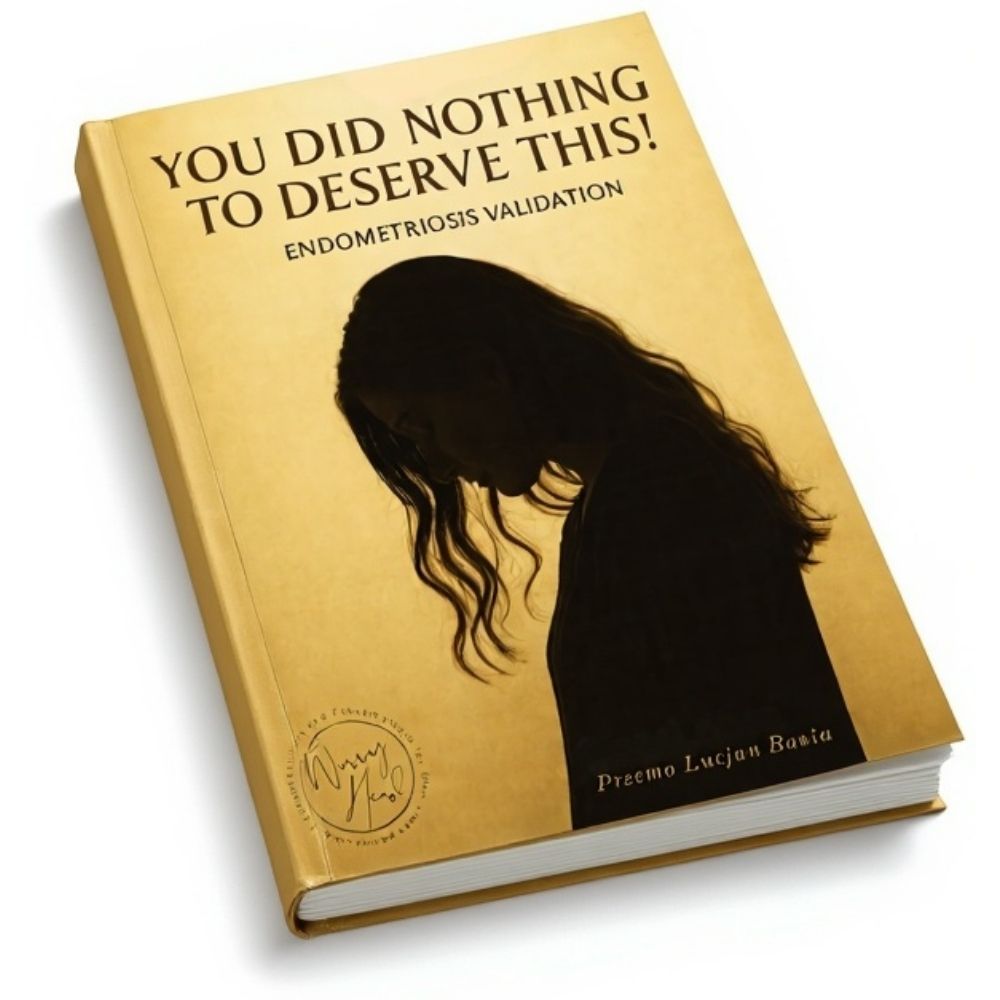
If being doubted has made you doubt your own voice, my free eBook, You Did NOTHING To Deserve This!, offers a compassionate place to put down some of that blame. It cannot replace medical care; it can remind you that asking to be heard is not a character flaw.
You Did NOTHING To Deserve This!
Endometriosis Validation for Women with Endo
- Why Feeling Dramatic with Endometriosis Can Begin with Other People’s Doubt
- Use Specific Language When Feeling Dramatic with Endometriosis Silences You
- In Healthcare, Feeling Dramatic with Endometriosis Should Not Block Questions
- At Home, Feeling Dramatic with Endometriosis Needs Belief Without Performance
- Rebuild Self-Belief After Feeling Dramatic with Endometriosis
- Final Word on Feeling Dramatic with Endometriosis
- You Did NOTHING To Deserve This!
- FREE eBook
Why Feeling Dramatic with Endometriosis Can Begin with Other People’s Doubt
Pain and fatigue are not fully visible to another person. When the outside does not match the inside, observers may reach for simpler explanations: stress, exaggeration, a low pain threshold or a normal period. Repeated doubt can become an internal voice even after the dismissive person has left.
The NHS lists pelvic pain, fatigue, pain when using the toilet and pain during or after sex among possible endometriosis experiences. WHO describes a chronic disease that can affect mental health, work and relationships. Those facts do not diagnose an individual, but they show why substantial impact should not be dismissed as melodrama.
You may compare yourself with someone who works, exercises or appears cheerful with endometriosis. Different symptoms, other conditions, treatment, support and circumstances make that comparison unreliable. Another person’s capacity cannot establish the legitimacy of yours.
Being emotional while describing a difficult experience does not make the facts less credible. Calmness is not a laboratory test, and distress is not proof of exaggeration. You deserve assessment based on the information and clinical context, not on how neatly you can present suffering.
The opposite performance can be harmful too. Forcing yourself to sound detached may hide urgency, functional loss or fear that the clinician needs to understand. The goal is not to become more dramatic or less dramatic; it is to make the account as complete and accurate as the appointment allows.
Use Specific Language When Feeling Dramatic with Endometriosis Silences You
Specific language can reduce the burden of finding one perfect adjective. Describe where the symptom is, when it occurs, how long it lasts, what accompanies it and what it prevents. “Pain stopped me standing long enough to cook” communicates function more clearly than trying to choose between severe and unbearable.
You do not need to abandon ordinary emotional words. Frightening, exhausting and isolating describe consequences that a number cannot capture. Use them alongside practical details when they help, rather than treating emotion as evidence that your account is unreliable.
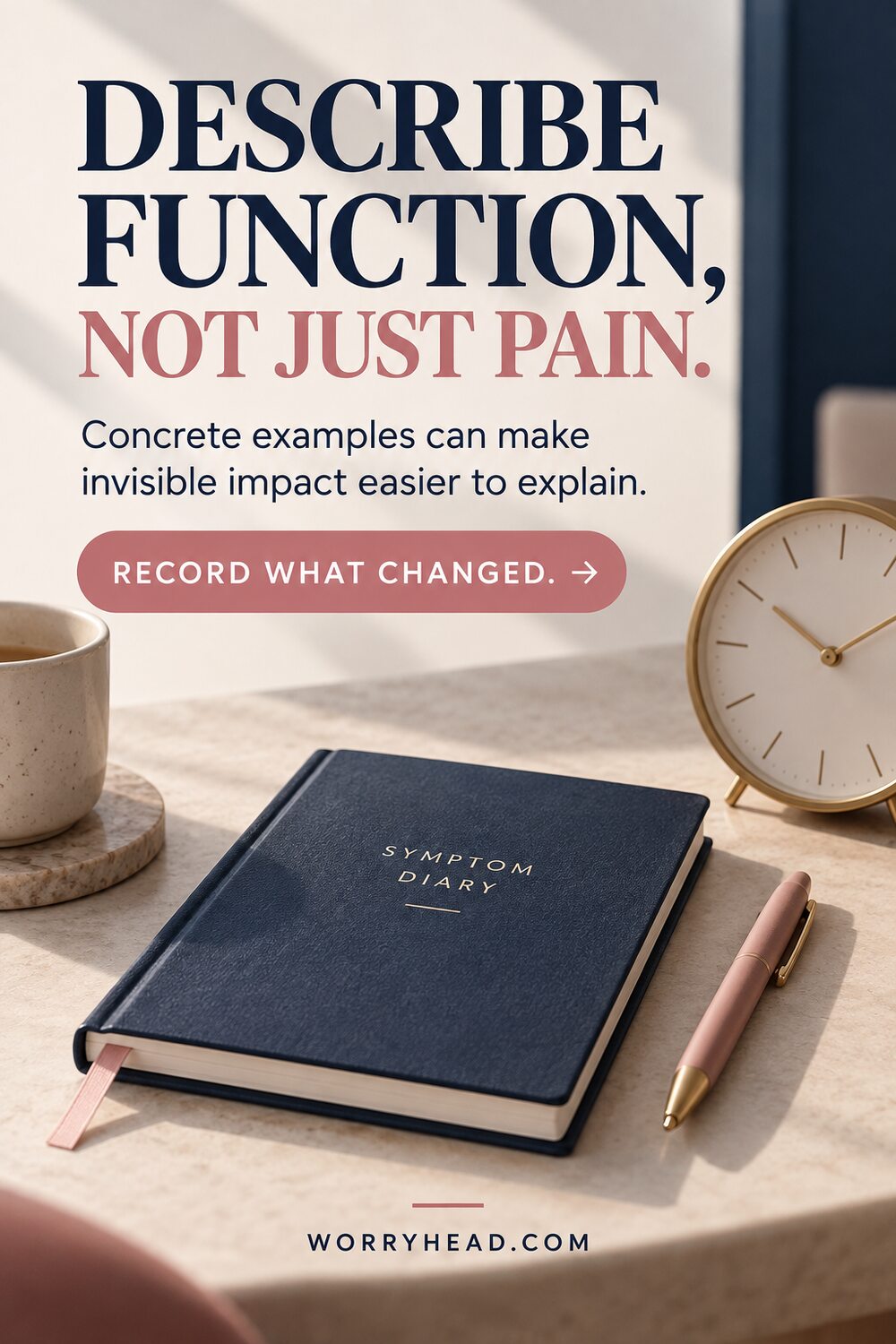
If keeping notes is useful, record patterns briefly: date, symptom, functional effect, medication or action taken and questions for the clinician. Do not turn the record into a demand to document every minute before you are allowed care. A diary is a communication aid, not an entrance exam.
I began researching because I wanted to understand and support my wife. I have learned that asking her for endless detail can feel like another form of disbelief if my starting point is that she must prove the problem. Listening comes before organising the information.
Choose words that belong to you. A borrowed script may help you prepare, but it should not force your experience into someone else’s story. Accuracy includes uncertainty: you can say you do not know why a symptom changed and still ask for it to be assessed.
In Healthcare, Feeling Dramatic with Endometriosis Should Not Block Questions
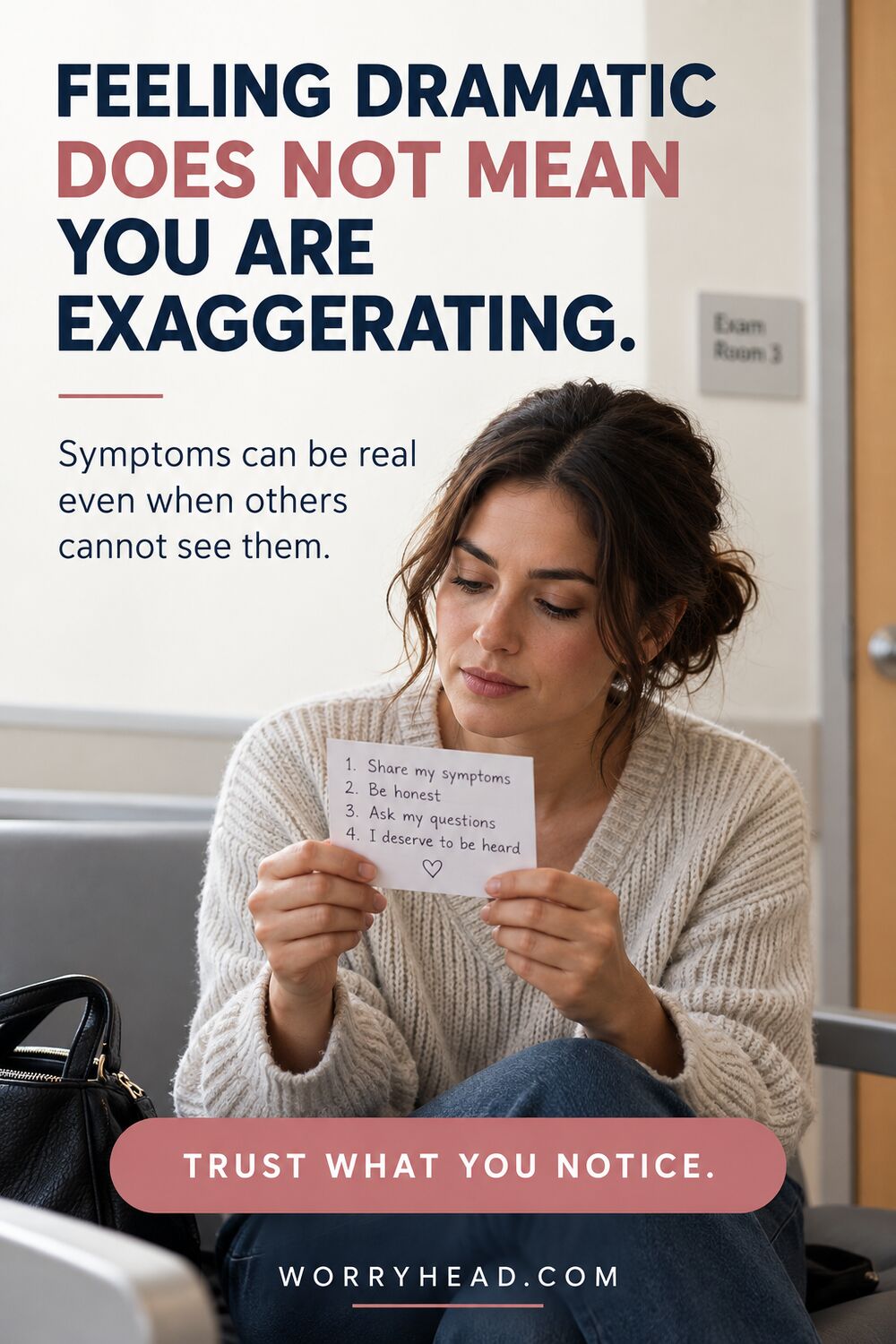
Appointments can make people compress years of symptoms into a few minutes. Write down the two or three effects that matter most and the decision you need help with. A clear priority protects the conversation when anxiety, pain or time pressure makes recall harder.
Ask what the clinician thinks may explain the symptom, what else needs consideration, which options exist and what should prompt further or urgent help. You can request plain language and ask for the reasoning behind a plan. Questions are part of informed care, not evidence that you are difficult.
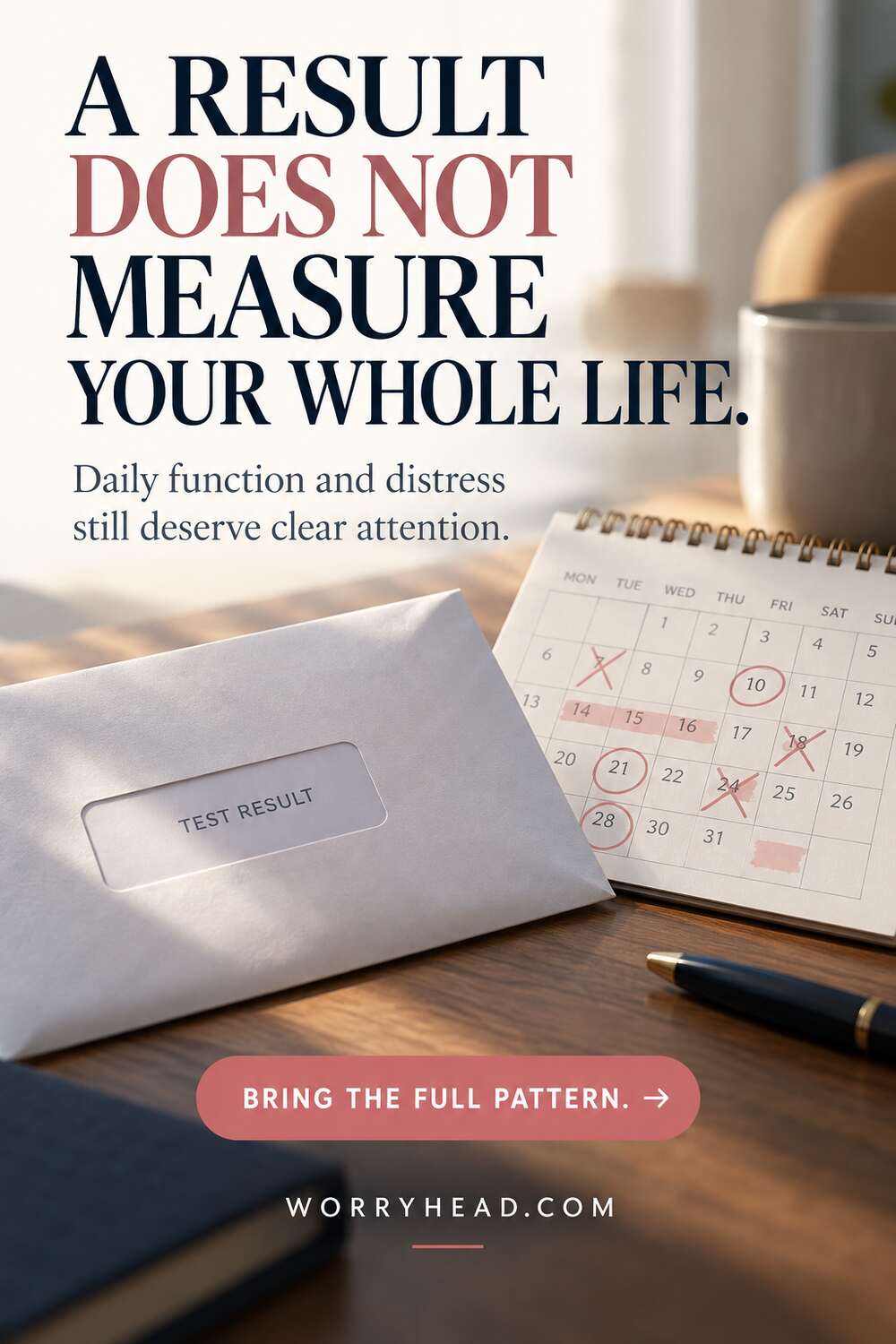
If you are told a result is normal, ask what that result rules out and what it does not. A normal test is information; it does not automatically explain every symptom. Do not use this article to interpret a scan, blood result or diagnosis yourself—those questions belong with qualified clinicians.
A trusted person can attend if you want support and the service permits it. Their role can be to take notes, remember questions and help you stay centred, not to speak over you or provide credibility your own account supposedly lacks.
If you feel dismissed, you may be able to ask for the concern to be documented, seek another opinion or use a service’s feedback process. Available routes vary, so obtain advice relevant to your healthcare system and situation rather than relying on a general checklist.
After the appointment, write down what was agreed while it is fresh: tests, treatment, follow-up, safety advice and unanswered questions. This is not about policing the clinician. It can reduce the burden of remembering details when pain, anxiety or time pressure made the conversation difficult.
At Home, Feeling Dramatic with Endometriosis Needs Belief Without Performance
Home should not require you to act visibly ill before support becomes available. If a partner only responds when you cry, collapse or reach a crisis, both people can become trapped in a damaging pattern where calm communication is overlooked.
Partners can ask what the symptom is changing now: food, transport, childcare, work, rest or the need for clinical contact. Practical questions show belief without pretending to know the medical cause. They also turn vague alarm into choices the couple can discuss.
My wife can feel guilty or like a burden despite my love. I do not want her to shrink her words to protect me from worry. At the same time, I can be honest about my own capacity and ask which help matters most. Belief and boundaries can coexist.
Avoid cross-examining inconsistencies such as why one movement was possible and another was not. Context, timing and symptom variation matter. Curiosity can be respectful when it seeks understanding; interrogation assumes a case must be won.
If conflict repeatedly becomes contempt, threats, control or fear, use support appropriate to that level of risk. Communication tips are not a substitute for specialist help or a safe environment.
Rebuild Self-Belief After Feeling Dramatic with Endometriosis
Notice the reflex to minimise. Phrases such as “it is probably nothing,” “other people have it worse” or “I am being silly” may arrive before the actual description. Try giving the information first and leaving judgement out: what happened, how it affected you and what you need next.
Keep evidence of times your body’s signals deserved attention, but do not blame yourself for occasions you waited. Dismissal teaches hesitation. Rebuilding trust is not a test you should already know how to pass; it is a gradual practice of noticing and responding.
Recent qualitative research describes self-esteem difficulties, perceived unreliability, high internal standards and changes to self-concept among people with endometriosis. Qualitative findings do not predict every individual, but they show that self-doubt is not an isolated personal defect.
Writing is informally therapeutic for me because it helps organise what I learn and share it with others. It is not clinical treatment. Your route might involve trusted people, advocacy, counselling or another form of support chosen with appropriate guidance.
You can be uncertain and still deserve care. You can be frightened and still communicate accurately. You can speak strongly without exaggerating, and you can change your wording later as you understand the symptom better.
When shame returns, ask whose standard you are using. If credibility requires silence, composure and perfect evidence, the standard excludes many people at the moment they most need help. Replace it with a fairer question: have I described what I know as honestly as I can?
Final Word on Feeling Dramatic with Endometriosis
Fear of sounding dramatic can make a real problem harder to assess because it removes the details that show impact. Use specific language, keep emotion human and seek appropriate care without apologising for every sentence. Your pain does not become more valid when described quietly.
If you would like, share in the comments one phrase that helps you describe impact clearly, without posting private medical information. When doubt still insists that being heard is asking too much, my free eBook, You Did NOTHING To Deserve This!, offers a gentler final reminder.


About Me
Hi, I’m Lucjan! The reason why I decided to create this blog was my beautiful wife, who experienced a lot of pain in life, but also the lack of information about endometriosis and fibromyalgia for men…
READ MORE
Grab a FREE eBook!
“You Did NOTHING To Deserve This!”
Finally hear the words nobody ever said to you, that your pain is real, your tears make sense, and you did nothing to deserve endometriosis, the dismissal, or the way it has rewritten your life.
Related Questions You May Be Asking About Feeling Dramatic with Endometriosis
How Can I Describe Endometriosis Pain Without Sounding Dramatic?
Describe location, timing, duration, associated symptoms and functional effect in your own words. Emotion does not invalidate the account, and you do not need to minimise symptoms to appear credible.
Should I Keep a Symptom Diary for an Endometriosis Appointment?
A brief diary can help show patterns and functional impact if it is useful and manageable. It is not a requirement for deserving care, and a clinician can advise what information is relevant to your situation.
What If a Clinician Says My Results Are Normal?
Ask what the result rules out, what it does not rule out and what the next step is for the symptoms affecting you. Seek advice within your healthcare system if you remain concerned or feel dismissed.
Feeling Dramatic with Endometriosis References
- https://www.nhs.uk/conditions/endometriosis/
- https://www.who.int/news-room/fact-sheets/detail/endometriosis
- https://www.eshre.eu/Guideline/Endometriosis
- https://pubmed.ncbi.nlm.nih.gov/42588228/
- https://pubmed.ncbi.nlm.nih.gov/39618124/
- https://pubmed.ncbi.nlm.nih.gov/40213849/
Sources checked on 23 October 2026. NHS, WHO and ESHRE provide current clinical and quality-of-life context; the cited qualitative studies address self-esteem, self-concept and dismissal. This article supports communication and validation, not diagnosis or individual medical advice.
