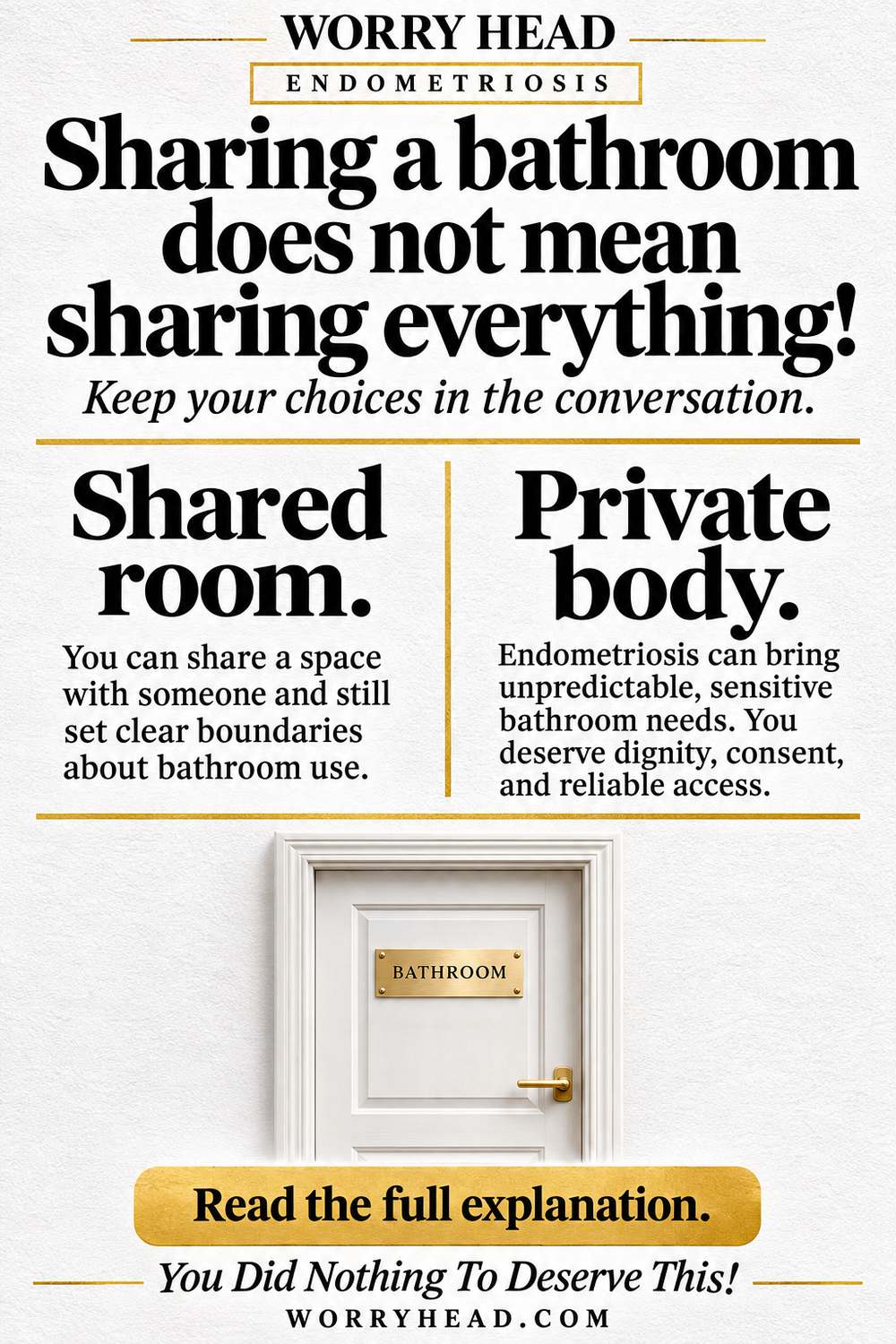
Endometriosis and Sharing a Bathroom: Privacy Without Having to Apologise
Does an ordinary knock on the bathroom door sometimes make you feel that your body is inconveniencing the whole household? Endometriosis and sharing a bathroom can bring private needs into a space where other people have plans, questions and expectations. You deserve access and dignity without having to give a running account of your symptoms.
You can agree bathroom arrangements without describing every symptom. Discuss access, privacy, supplies and what a knock means before a difficult moment. Sharing a room does not make your body public property, and needing longer does not mean that you owe the household an apology or explanation.
I am a husband, blogger and researcher, not a clinician, and years of learning beside my wife inform these reflections on privacy, with the NHS source below providing the general health context.
This is one specific part of asking your partner for help during an endo flare. The aim here is a workable household conversation, rather than advice about treating bowel or bladder symptoms or modifying a bathroom medically.
When an ordinary shared room makes you feel like an inconvenience, you may need reassurance as well as a practical arrangement. My free eBook, You Did NOTHING To Deserve This!, makes room for those feelings. Your need for privacy is part of your dignity, not something you must earn by being easy to live with.
You Did NOTHING To Deserve This!
Endometriosis Validation for Women with Endo

- Why Endometriosis and Sharing a Bathroom Can Feel Exposing
- Discuss Endometriosis and Sharing a Bathroom Outside the Doorway
- Privacy Matters When Discussing Endometriosis and Sharing a Bathroom
- Endometriosis and Sharing a Bathroom Need a Realistic Access Plan
- Agree What Help Means for Endometriosis and Sharing a Bathroom
- When Endometriosis and Sharing a Bathroom Involve Visitors
- Final Word on Endometriosis and Sharing a Bathroom
- You Did NOTHING To Deserve This!
- FREE eBook
Why Endometriosis and Sharing a Bathroom Can Feel Exposing
In a home with one bathroom, using it is rarely entirely private in practical terms. Someone notices the closed door, needs to brush their teeth or asks whether you will be much longer. None of that automatically means they are judging you. Yet a question can still feel loaded when you already worry about taking up time or space.
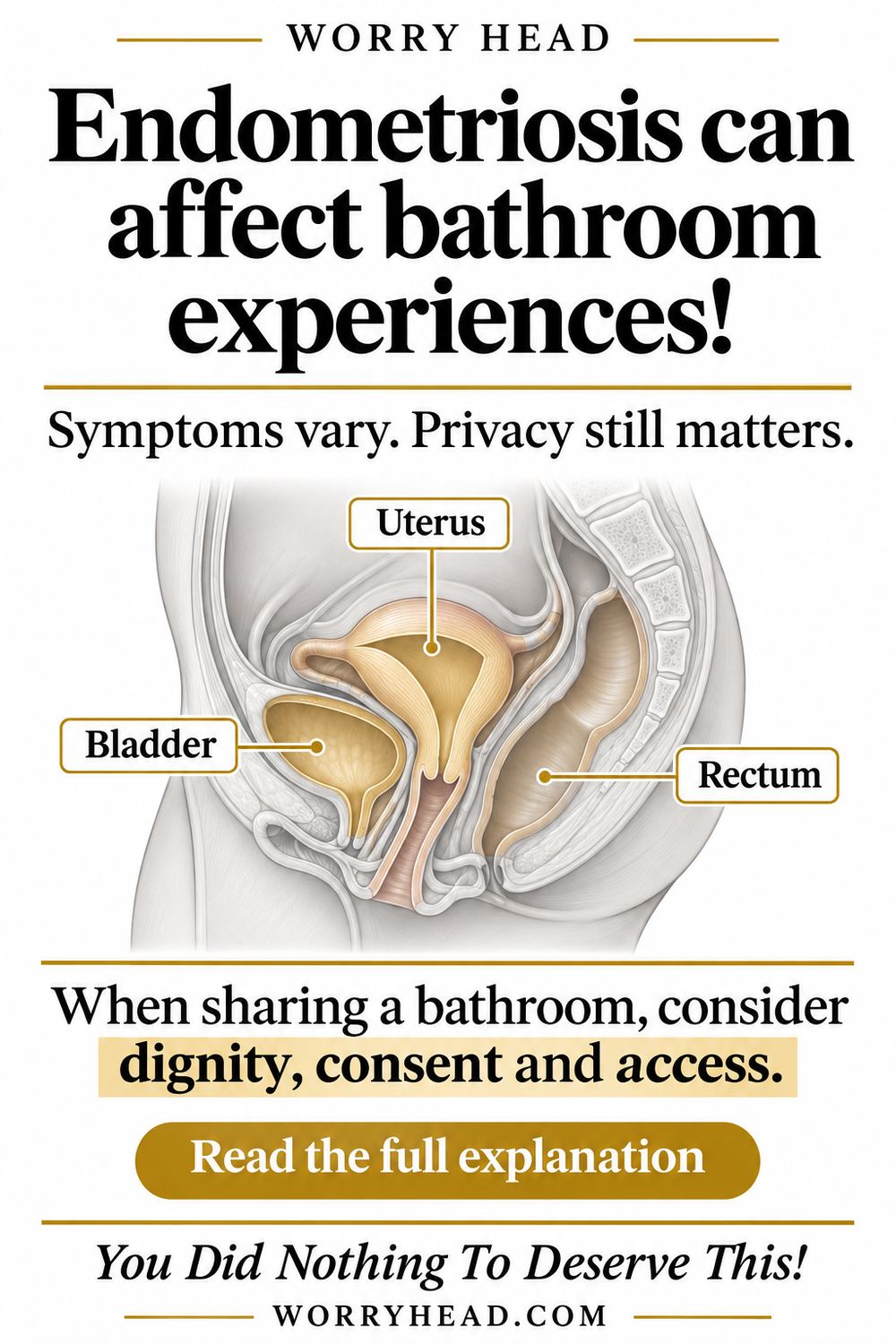
The NHS describes pain when passing urine or opening your bowels among possible endometriosis symptoms. That is general context, not an explanation for every bathroom difficulty. I cannot tell you what a symptom means, and a household agreement cannot replace individual healthcare. This article concerns how people share a room while respecting the person using it.
You may find the uncertainty harder than the time itself. You do not know whether someone will knock, ask for details or announce to a visitor that you are unwell. Anticipating that commentary can make you feel watched even behind a closed door. A conversation about behaviour can address that part without requiring you to reveal more about your body.
As a husband, I want help to protect my wife’s dignity. Being close to someone does not give me ownership of their private information. There can be affection, familiarity and years of shared life alongside a very ordinary wish to be left alone in the bathroom.
Discuss Endometriosis and Sharing a Bathroom Outside the Doorway
Choose a reasonably calm moment to discuss the room, rather than trying to negotiate through a locked door. Start with the practical difficulty you want to change. For example, “When someone keeps asking how long I will be, I feel rushed. Could we agree how to handle access instead?” identifies an action without turning the conversation into a judgement about anyone’s character.
You do not need a long meeting or a complete account of symptoms. One useful first agreement might be that a closed door means privacy, while a particular knock means somebody genuinely needs access. Another might be that people collect their toothbrush or toiletries beforehand when they know there is a tight morning timetable.
Ask about other household needs too. A child may need help getting ready, a housemate may leave early, and your partner may have their own health needs. Considering those realities does not cancel yours. It helps move the conversation from who deserves the bathroom more to what can reasonably be arranged in this particular home.
An agreement should leave room for uncertainty. Avoid promising that you will always finish within a set number of minutes if you cannot know that. A timetable can guide ordinary routines, but it should not become a rule used to shame someone when their body fails to follow it.

Privacy Matters When Discussing Endometriosis and Sharing a Bathroom
Be specific about what you want kept private. You might welcome a quiet check-in from your partner but dislike questions within hearing of visitors. You might be comfortable saying that you need the bathroom and uncomfortable explaining why. Different people draw those lines differently, and closeness does not make the answer obvious.
A useful phrase is, “If someone asks where I am, please just say I will be back shortly.” That gives your partner something practical to do. It also avoids making them invent a story or disclose health information in an attempt to be helpful. You can agree a different response when you actually want someone to know you are struggling.
Privacy also includes what happens afterwards. A joke about how long you were away, a question across the dinner table or an announcement that the bathroom is finally free may feel humiliating. You can ask for those comments to stop without debating whether the person intended to upset you. The impact matters even when the intention was casual.
If you share with housemates, keep the request at the level you choose. “I have a health condition that sometimes affects bathroom access” may be enough; you can also describe the access need without naming a condition. You do not owe the whole household your medical history in exchange for an ordinary conversation about a shared space.
Endometriosis and Sharing a Bathroom Need a Realistic Access Plan
Some homes simply have very little flexibility. If there is one toilet and several people need it, no careful wording creates another room. Acknowledge that constraint without turning it into a verdict about your needs. The purpose of an agreement is to reduce avoidable pressure, not pretend that every conflict can disappear.
Separate tasks that genuinely require the room from those that might happen elsewhere. Someone may be able to do their hair in a bedroom or keep a spare toothbrush accessible, if they want to. These are examples to consider together, not instructions for the household to reorganise everything around one person. Small changes work best when everyone understands the reason and the limits.
Consider what you want within reach before the room is occupied. Your preferred supplies should have a place that does not require asking someone to fetch them in front of guests. If you want help restocking, agree what may be bought and where it goes. Helpful organisation should not become an inspection of what you use or how often.
When two people need access at once, keep the conversation factual and private. The person outside can state their need once; the person inside can answer as far as they are able. Repeated knocking does not create certainty. If an arrangement repeatedly fails, revisit it later rather than treating every difficult morning as proof that someone is selfish.
Agree What Help Means for Endometriosis and Sharing a Bathroom
There is a difference between being available and hovering. You may want someone nearby, a glass of water left outside, or no check-in unless you ask. Your partner cannot reliably infer that preference from how quiet you are. A simple agreement gives both of you less to guess about, while leaving you free to change your mind.
For partners, ask what is welcome before offering intimate help. Do not enter, handle personal supplies or discuss symptoms with somebody else merely because you are worried. Support should follow the person’s consent and the practical circumstances. Familiarity is not a substitute for asking, and being thanked for help once does not create permanent permission.
You can also specify what you do not want. Perhaps you appreciate an offer but dislike being asked the same question every few minutes. “Please let me call you if I need anything” can be enough. If circumstances change and you want more support, that is a new request, not evidence that the earlier boundary was unreasonable.
A household privacy plan is not an emergency plan or medical advice. Keep any individual instructions from your own healthcare team separate from these everyday arrangements. The communication suggestions here cannot establish when symptoms are safe, what causes them or what treatment you need.
When Endometriosis and Sharing a Bathroom Involve Visitors
Visitors can make a familiar routine feel suddenly visible. Before people arrive, decide whether you want any change to the usual arrangement. You might want your partner to answer practical questions, keep a passageway clear or avoid sending guests to look for you. You might want nothing different at all.
You do not have to host from behind a bathroom door. If someone calls out a question about drinks or food, your partner can handle it without announcing why you are unavailable. This is a small example of sharing the social work of a gathering. It does not require making your health the centre of the occasion.
If a visitor makes an intrusive remark, a short boundary may protect more energy than a detailed explanation. “I would rather keep that private” or “Let us talk about something else” makes the preference clear. A supportive partner can change the subject instead of expanding on your answer or defending your diagnosis in public.
Afterwards, discuss only what would help next time. Did you feel rushed, exposed or unsupported? Was there a practical misunderstanding? Naming one change is often more useful than reconstructing every awkward minute. You are allowed to want a better arrangement even when the visit was enjoyable overall.
Final Word on Endometriosis and Sharing a Bathroom
You should not have to choose between practical access and privacy. A shared bathroom requires consideration from everyone, but consideration does not mean apologising for every minute or offering details you would rather keep to yourself. Your body is not a household inconvenience to be managed through embarrassment.
Start with the part that feels most difficult: repeated knocking, public comments, unavailable supplies or uncertainty about help. One clear agreement may make the next conversation easier. It may also reveal a constraint that needs another discussion. Either outcome gives you more useful information than silently trying to make your needs disappear.
From my side as a husband, the important question is whether my response leaves my wife more comfortable and in control. I want practical support to feel ordinary enough that she can accept it, refuse it or change it without having to reassure me first.
If you would like to comment, share a respectful household phrase without posting intimate health details. For the self-blame that can sit beneath these everyday moments, my free eBook, You Did NOTHING To Deserve This!, offers a gentler place to continue.


About Me
Hi, I’m Lucjan! The reason why I decided to create this blog was my beautiful wife, who experienced a lot of pain in life, but also the lack of information about endometriosis and fibromyalgia for men…
READ MORE
Grab a FREE eBook!
“You Did NOTHING To Deserve This!”
Finally hear the words nobody ever said to you, that your pain is real, your tears make sense, and you did nothing to deserve endometriosis, the dismissal, or the way it has rewritten your life.
Related Questions You May Be Asking About Endometriosis and Sharing a Bathroom
Do I Have to Explain My Symptoms to Housemates?
You can discuss the practical access you need while keeping symptoms private. The amount of health information you share is your choice; a workable agreement does not require everyone to know your medical history.
Can I Ask My Partner Not to Check on Me Repeatedly?
Yes. Explain what kind of check-in you welcome and how you will ask for help. Keep personal healthcare instructions separate from an everyday preference about knocking or conversation.
What if We Have Only One Bathroom?
Be honest about the constraint. Discuss which routines can move elsewhere and how people can communicate access needs privately. No agreement can guarantee that nobody will ever have to wait.
Is Wanting Privacy a Rejection of My Partner?
Wanting privacy can coexist with love and trust. You can appreciate someone’s concern while declining questions, entry or intimate assistance. Support becomes more useful when it respects the boundary you have actually expressed.
Endometriosis and Sharing a Bathroom References
