
Endometriosis and Another Diagnosis: Making Room for What You Feel
What happens when the explanation you hoped for arrives with another condition to understand? Endometriosis and another diagnosis can leave you holding relief, sadness and more questions at the same time. You do not have to turn that moment into a positive story before you have had time to live with the news.
Another diagnosis can add to your understanding of your health without erasing endometriosis or explaining every symptom. Ask your clinician what has been established, what remains uncertain and what happens next. You can take time to absorb the news and choose how much to share with other people.
I write as a husband, blogger and researcher, not a clinician, after years of learning through my wife’s experience; the NHS and NICE information informing this article is listed in the references below.
The wider mental toll of endometriosis can include the effort of repeatedly adjusting what you understand about your own health. Another diagnosis may answer something important while leaving you unsure what it means for tomorrow.
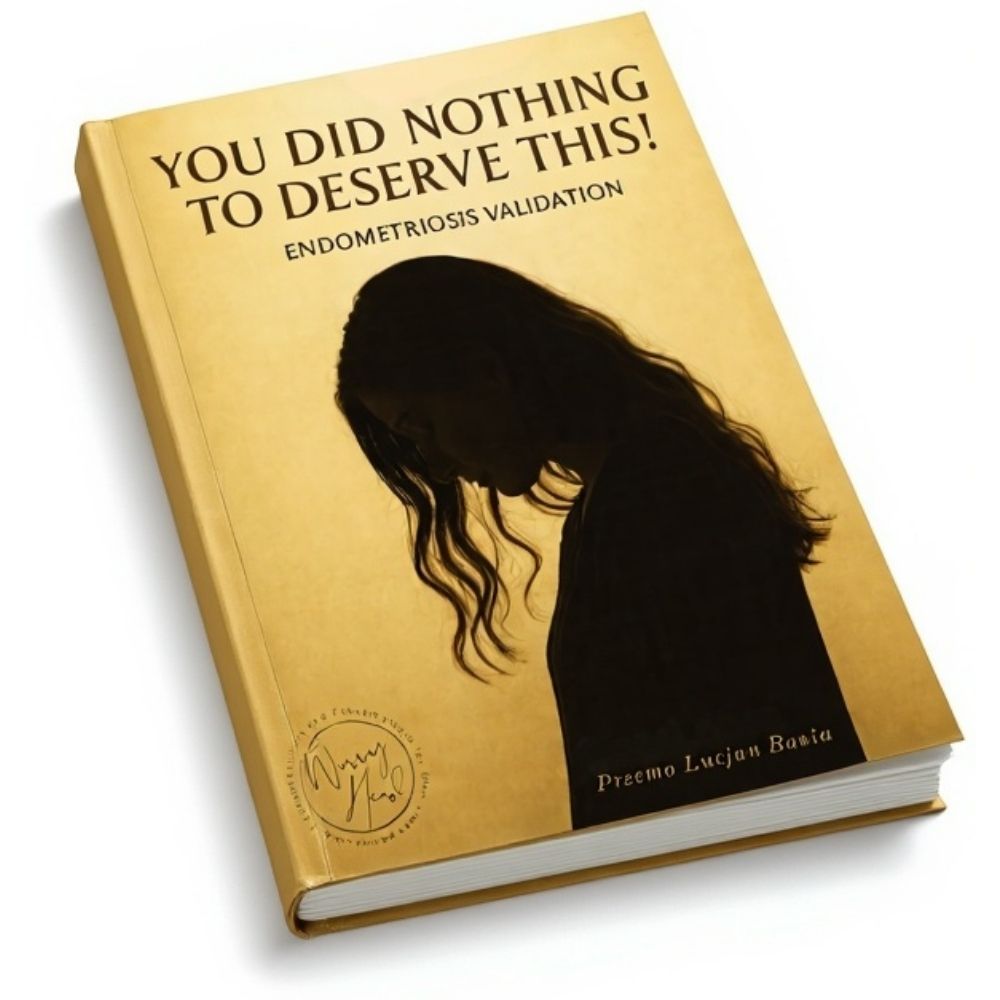
If another name for your illness has brought back the feeling that your body is asking too much of you, my free eBook, You Did NOTHING To Deserve This!, offers space for those feelings. It is a companion for the emotional weight of illness, without asking you to feel grateful for what hurts.
You Did NOTHING To Deserve This!
Endometriosis Validation for Women with Endo
- When Endometriosis and Another Diagnosis Bring Mixed Feelings
- What Endometriosis and Another Diagnosis Do Not Automatically Explain
- Give Endometriosis and Another Diagnosis a Manageable Next Step
- Deciding Who Hears About Endometriosis and Another Diagnosis
- Keep Your Own Priorities Beside Endometriosis and Another Diagnosis
- Let Learning About Endometriosis and Another Diagnosis Take Time
- Final Word on Endometriosis and Another Diagnosis
- You Did NOTHING To Deserve This!
- FREE eBook
When Endometriosis and Another Diagnosis Bring Mixed Feelings
There is no single feeling you are supposed to have when a clinician gives you another diagnosis. You might be relieved that a difficulty has a name, upset that there is more to manage, or too tired to know what you feel. Those responses can change without making your earlier reaction dishonest.
My wife has recently been diagnosed with ME/CFS. As her husband, I find myself wanting to understand what that means while also recognising that learning another name does not make the experience of being unwell suddenly easier. Information matters, but so does the person trying to absorb it.
You may have expected an answer to feel like an ending. Instead, it can open another set of questions about work, relationships, appointments or the future. That does not mean the diagnosis has been useless, or that you are failing to appreciate being taken seriously.
Try separating what you know from what you fear might happen. A confirmed diagnosis belongs in the first category; every possible difficulty you have read about does not automatically belong there too. You can ask about your own circumstances without having to predict the rest of your life that evening.

What Endometriosis and Another Diagnosis Do Not Automatically Explain
A new diagnosis does not, by itself, erase an established endometriosis diagnosis. It also does not show that one condition caused the other. Your clinical team can explain whether the diagnoses stand alongside one another, whether an earlier assessment has changed, and what evidence supports that explanation.
The NHS notes that endometriosis symptoms can resemble symptoms of other conditions. That makes careful assessment important; it does not allow a reader, partner or online article to assign every symptom to a particular condition. You should not have to solve that puzzle alone.
From beside my wife, I have learned that wanting a neat explanation and having one are different things. I can read carefully and help organise questions, but I cannot turn a symptom into a diagnosis by recognising it in a list. Neither can somebody commenting on your experience online.
A useful question is: “Which parts of what I am experiencing does this diagnosis help explain, and which still need attention?” It leaves room for uncertainty without dismissing the answer you have received. If something is new or changing, tell the relevant clinician rather than assuming it belongs to either condition.
You can also ask whether the diagnosis is confirmed or whether further assessment is planned. These are ordinary clarification questions. You do not need to apologise for wanting to understand a term that may now appear in your medical record.
Give Endometriosis and Another Diagnosis a Manageable Next Step
After difficult news, even a sensible list can feel like another demand. You do not need to build a complete system for your health before you have understood the immediate plan. Start with what needs to happen next and who is responsible for helping you with it.
NICE’s guidance on managing multiple long-term conditions emphasises individual priorities and the burden of treatment. It supports discussing how care fits into a person’s life. Having more than one condition should not mean that the practical work of coordinating everything becomes invisible.
I started researching because I wanted to support my wife, and it is easy for that intention to become a pile of information. The more useful question is what would make the next step clearer for her. Sometimes that means finding an answer; sometimes it means leaving another article unread.
If you can manage a short note, record the diagnosis as it was explained, the next agreed action, and the person or service to contact with questions. Add anything you did not understand. A note can be brief and imperfect and still help you avoid having to remember everything at once.
Ask how this new information should be shared with the professionals already involved in your care. If you have separate teams, clarify who will review the overall picture. Do not change prescribed treatment on the basis of this article; questions about treatment combinations belong with your clinician or pharmacist.
Deciding Who Hears About Endometriosis and Another Diagnosis
You may want to tell someone immediately, or you may want a little time in which the news belongs only to you. Neither choice needs to be permanent. Sharing information is not the same as offering everyone a role in interpreting it.
You could say, “I have received another diagnosis and I am still understanding it. I would appreciate listening rather than suggestions today.” That is an example you can adapt, not a sentence you have to deliver perfectly. You can be clear about what would help without explaining your entire history.
My instinct as a husband is to look for something useful to do. I also need to remember that concern does not give me permission to announce my wife’s health information to other people. A partner can ask what may be shared, with whom, and whether you want them to help explain it.
Some people may respond as though the new diagnosis finally makes your earlier difficulties believable. That can hurt, especially if you were already asking to be understood. You do not have to accept the idea that your experience only became real when someone found another word for it.
If a conversation becomes tiring, you can end it without completing an explanation. “I do not have more information to share yet” is enough. Keeping something private for now does not mean you are ashamed of it.
Keep Your Own Priorities Beside Endometriosis and Another Diagnosis
A diagnosis can take up so much attention that ordinary needs slip out of the conversation. You may still care about finishing a work task, speaking to a friend, having privacy, or simply making fewer decisions. These concerns do not become trivial because there is a medical issue to discuss.
Both my wife and I still work, and she values feeling needed. That is part of why I want conversations about support to include what matters to her, rather than assuming that a diagnosis tells me what she should want. The same condition can sit within very different lives.
Choose one practical consequence you would like help with. Perhaps appointments are difficult to coordinate, explanations are exhausting, or you need someone to take over an agreed task. Naming a concrete difficulty gives another person a clearer way to help than asking you to keep explaining how overwhelmed you feel.
You do not have to prove which condition is responsible before acknowledging that a task is difficult. Medical assessment still matters, but support can respond to a described need while questions are being worked through. A partner can believe that something is hard without pretending to know its mechanism.
There may also be things you do not want changed. Tell the people supporting you when an offer would remove a choice you value. Help should leave room for your preferences, including the preference to decide later.

Let Learning About Endometriosis and Another Diagnosis Take Time
The first search after a diagnosis can lead far beyond the question you meant to ask. Personal stories, research findings and treatment claims can appear beside one another as though they carry the same meaning. They do not, and reading more does not always make the next decision clearer.
Start with information from the service that assessed you and an appropriate trusted health source. Notice whether a page describes a confirmed finding, an individual experience or a possibility still being studied. If it raises a question about your care, keep that question for the relevant professional rather than trying to settle it through repeated searching.
Writing helps me organise what I am learning and what I still do not understand. That is a personal way of making sense of things, not a treatment or a task I would prescribe to you. You might prefer a short voice note, help from somebody you trust, or no record beyond the clinical information you receive.
It is reasonable to stop reading when it stops helping. You can return to a source later, ask for information in a clearer format, or take one question to a follow-up. Understanding your health is an ongoing process, not an examination you must pass immediately after difficult news.
Final Word on Endometriosis and Another Diagnosis
What I want for my wife is understanding that reaches beyond knowing the names of her conditions. I want her effort, preferences and feelings to matter in the conversations around her. Another diagnosis should not make the person living with it disappear behind a longer description of illness.
Endometriosis and another diagnosis can ask you to adjust your understanding without giving you the energy to do that adjustment all at once. You can acknowledge what has been confirmed, ask what remains uncertain, and leave some questions for another conversation. None of that makes you less engaged in your own care.
For the partner reading, there is value in being steady without trying to explain everything. Ask what would help today, respect what is private, and follow through on something manageable. Your wish to make the news easier should not become pressure on the person you love to reassure you about it.
If you would like to comment, you can share what helped you absorb another diagnosis without naming anything you would rather keep private. And if you need words that recognise the emotional weight of being unwell, my free eBook, You Did NOTHING To Deserve This!, is there for that quieter part of the experience.


About Me
Hi, I’m Lucjan! The reason why I decided to create this blog was my beautiful wife, who experienced a lot of pain in life, but also the lack of information about endometriosis and fibromyalgia for men…
READ MORE
Grab a FREE eBook!
“You Did NOTHING To Deserve This!”
Finally hear the words nobody ever said to you, that your pain is real, your tears make sense, and you did nothing to deserve endometriosis, the dismissal, or the way it has rewritten your life.
Related Questions You May Be Asking About Endometriosis and Another Diagnosis
Does Another Diagnosis Mean My Endometriosis Diagnosis Was Wrong?
Not automatically. People can have more than one condition, and a new diagnosis may add information rather than replace an earlier one. Ask the clinician whether anything about the previous assessment has changed and what supports that conclusion. This article cannot confirm or overturn your individual diagnoses.
Should I Tell My Endometriosis Team About the New Diagnosis?
Ask how the information should be shared with the professionals involved in your care. An updated record can help them consider the overall picture. Clarify who is coordinating follow-up, especially when different teams are involved, rather than assuming they have already received the same information.
Is It Wrong to Feel Upset After Getting an Answer?
You do not owe anybody a particular emotional response. Relief about an explanation can exist alongside sadness about what you are facing. If distress is becoming difficult to manage, tell a healthcare professional and ask what support is available. You deserve help with the emotional impact too.
Do I Need to Tell Friends Straight Away?
You can choose the timing and amount of information you share. You might tell one trusted person, explain only a practical need, or wait until you understand more. Ask a partner or family member to check with you before passing on your health information.
What If I Cannot Remember Everything from the Appointment?
Ask the service how to obtain a summary or clarify the agreed next step. A short list of unanswered questions can help. You do not need to reconstruct every sentence to ask what the diagnosis means, whether further assessment is planned, and whom to contact afterwards.
Endometriosis and Another Diagnosis References
- https://www.nhs.uk/conditions/endometriosis/
- https://www.nice.org.uk/guidance/ng56/chapter/recommendations
